
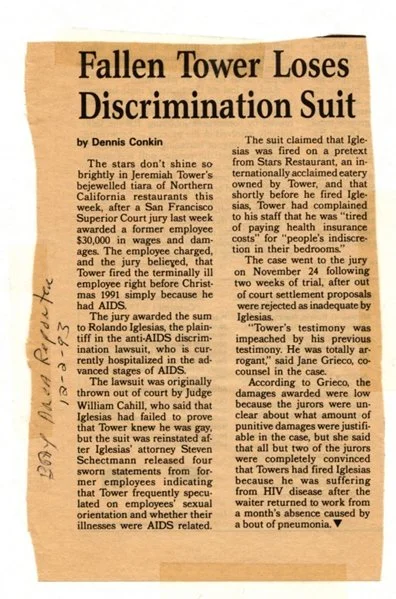
Walter “Rolando” Iglesias was a veteran waiter whose steady presence graced San Francisco’s toniest restaurants throughout the 1980s and 1990s, most notably in 1991 ‘Stars’ under owner-chef Jeremiah Tower. After a month-long bout of pneumonia in August 1991 he was told the illness was AIDS-related; on returning to the floor of Stars his patience with customers was becoming frayed and his energy flagging. One evening in December 1991, having informed a group of seven diners the thirty-minute cappuccino soufflé was not on the evenings menu because he felt unwell and wanted to go home on time, he was allegedly suspended and dismissed. Rolando stated this was a “pretext” because owner Jeremiah Tower was worried Rolando’s AIDS diagnosis would impact employee healthcare premiums and the discrimination case went to court.




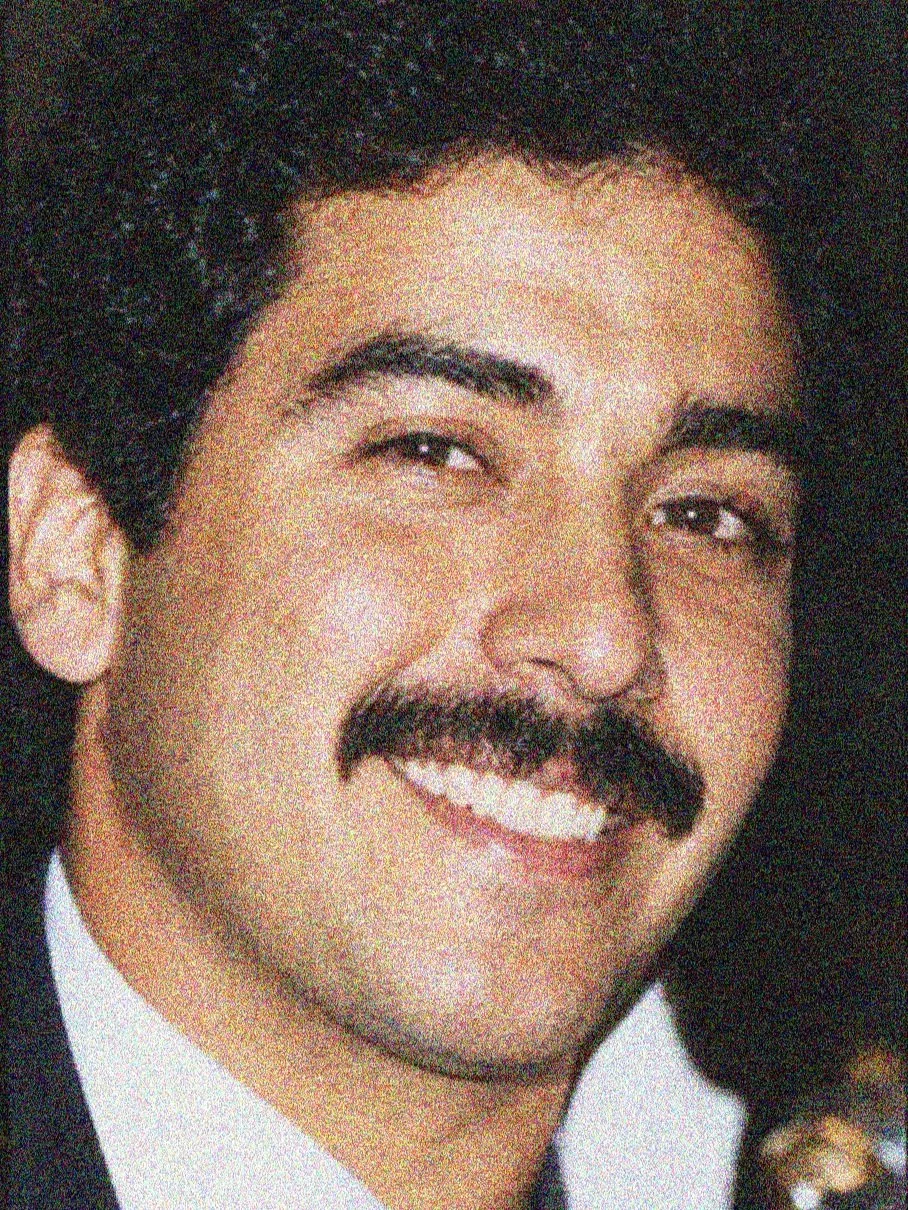

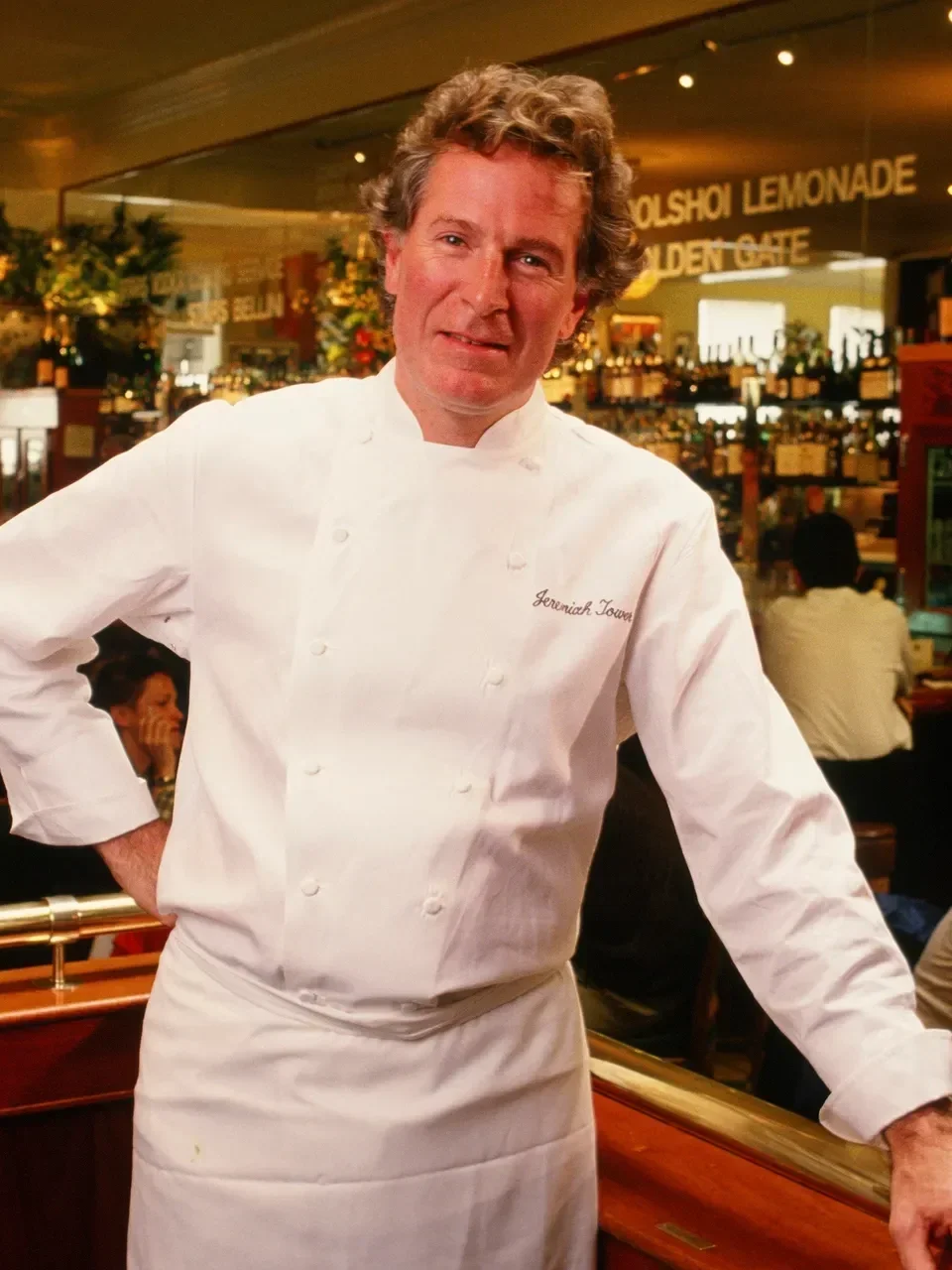
Stars: Jeremiah Tower [Credit: George Rose]

While America’s much‑celebrated chef Jeremiah Tower kept his sexuality private, the court heard he did not shy away from assisting many of San Francisco’s AIDS charities both before and after the Rolando case of 1991.
What follows is just a snapshot of Tower’s AIDS charity work, since not every charitable deed attracted press attention: he donated proceeds from special dinners and cookbook royalties. Tower hosted private benefit events for community organisations providing housing and hospice care, quietly covered medical expenses for individuals through personal patronage, lent his celebrity to awareness campaigns and fundraising appeals, and supported grassroots outreach programmes that supplied meals and counselling to those affected by HIV/AIDS. These efforts, often conducted with discretion, made a tangible difference to organisations that relied on both public and private support during the AIDS crisis.


Even with the above snapshot of charitable work for HIV/AIDS charities, such philanthropy does not absolve someone of behaving in a discriminatory manner. Like many chefs, Jeremiah Tower is described by those who knew him best in the 2017 documentary Jeremiah Tower: The Last Magnificent as a shrewd businessman. “Jeremiah was really horrible about, if you were not front and centre in his world of making things happen, then you were persona non grata, I mean you were, ok — next!” said former Stars Chef Mark Franz. Only Jeremiah knows exactly how Rolando’s dismissal came about, and it strains credulity that a veteran waiter described as “phenomenal” and “somebody who made the night good” would be sacked over a dessert, no matter how guest‑centric even a famed restaurant like ‘Stars’ might have been.
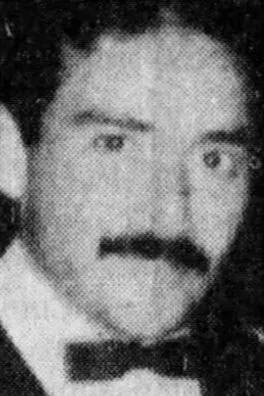
Rolando
Rolando lodged his legal claim on the grounds that his dismissal was due to his HIV/AIDS status, and for those of us not present the circumstances echo the familiar explanations used against people with the virus for decades.
I struggle to believe the decision to dismiss Rolando sprang from deliberate malice, but so much as panic and calculation: archival reports show Tower endured his own legal battles over lost salary and difficult partnerships, and a shrewd restaurateur confronted with the cost of paying for staff off sick may have rationalised the move to dismiss Rolando now living with an incurable disease as a business necessity. In short, Rolando’s dismissal feels like the intersection of prejudice against a person with AIDS and a hard‑nosed business calculus that could not—or would not—separate compassion from cost.

Golden Gate
SAN FRANCISCO
ACT UP Golden Gate: Meeting minutes 7 December 1993


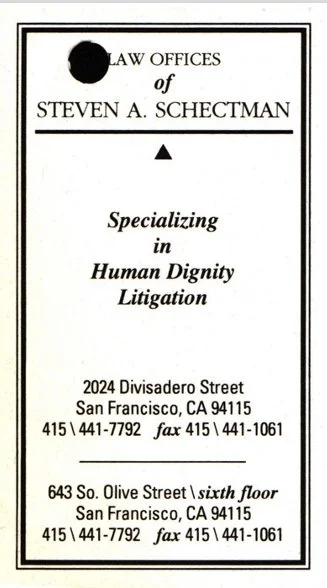
ACT UP Golden Gate: Meeting minutes 21 December 1993