AIDS: THE LOST VOICES
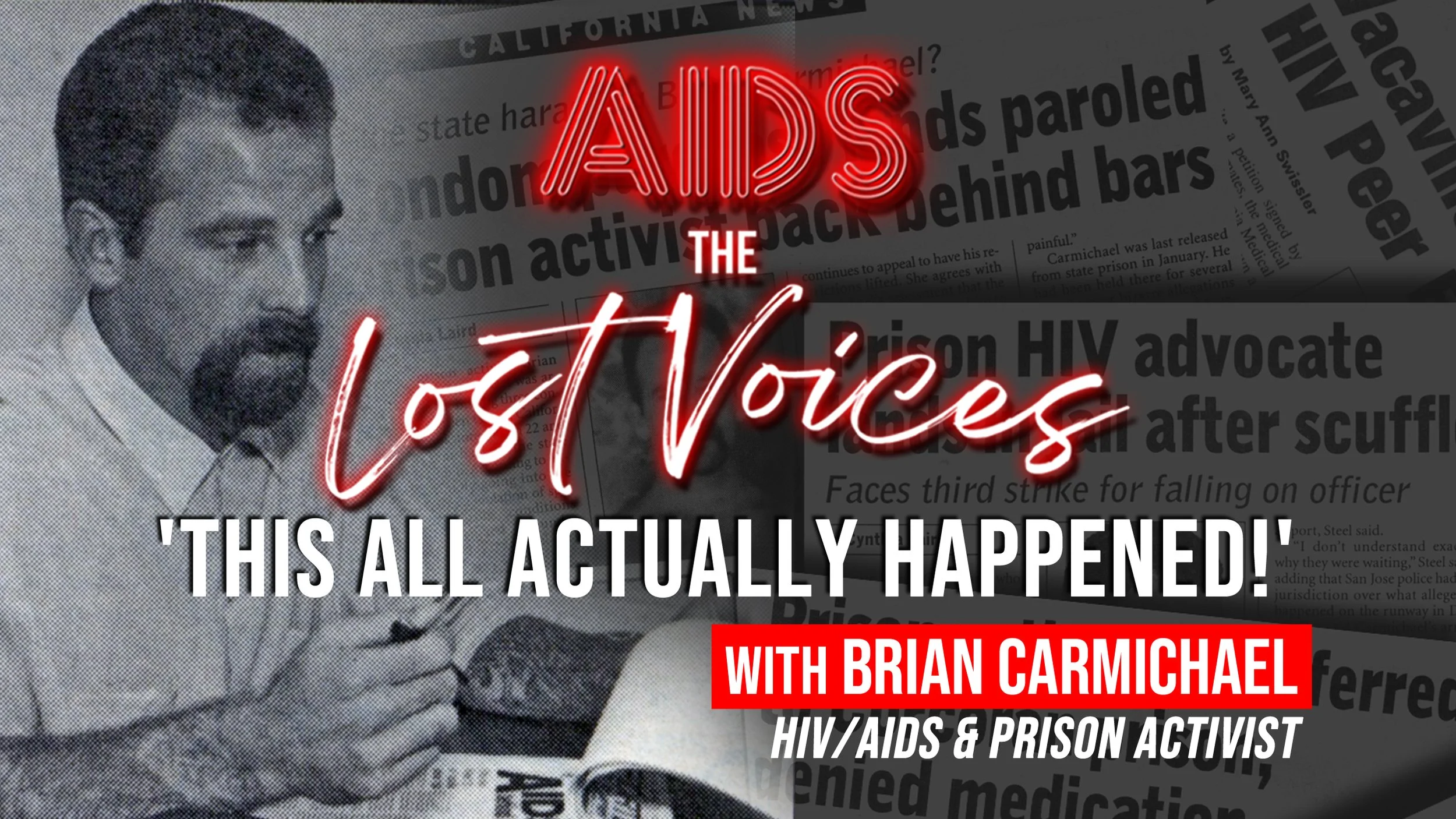
After three episodes delving into the newspaper archives and discovering the HIV/AIDS activism of Brian Carmichael in our recent “Behind Bars” series, we were delighted to connect with Brian and, across two additional episodes, hear firsthand about his HIV/AIDS activism spanning over three decades, his own diagnosis, his art and writing, and the prison activism he pursued after his release.
PART 1 of 2
Brian recalls his early HIV/AIDS activism at California Medical Facility, Vacaville. Brian & Charlie lead a 1992 hunger strike to demand proper care and recognition for incarcerated people with HIV/AIDS. As a result of his activism Brian faced intense hostility from guards and administrators as a result of securing better care and treatment for AIDS patients and America’s first prison hospice.

HUNGER STRIKE 1992
Brian had been incarcerated at California Medical Facility during the 1980s and was conscious of an earlier cohort of inmates segregated on the AIDS wing who had campaigned vigorously for much‑needed changes in how HIV‑positive prisoners were treated, a struggle that ultimately produced a legal claim against the state. HIV‑negative himself at the time, Brian nevertheless supported a group of inmates who chose to make a stand by refusing their HIV medication, (although ‘effective’ HIV/AIDS medications didn’t emerge until 1996) and helped them draft clear, uncompromising demands; the action swelled to more than a hundred inmates joining the protest. When unnecessary deaths among his comrades, including Richard “Tasha” Teague and Rico Rodriguez caused concern, Brian refused to stand by any longer. Alongside Charles Perry he helped initiate the 1992 hunger strike, a grim and resolute act of collective resistance born of grief, solidarity and a desperate demand for humane treatment for inamtes living with HIV/AIDS.

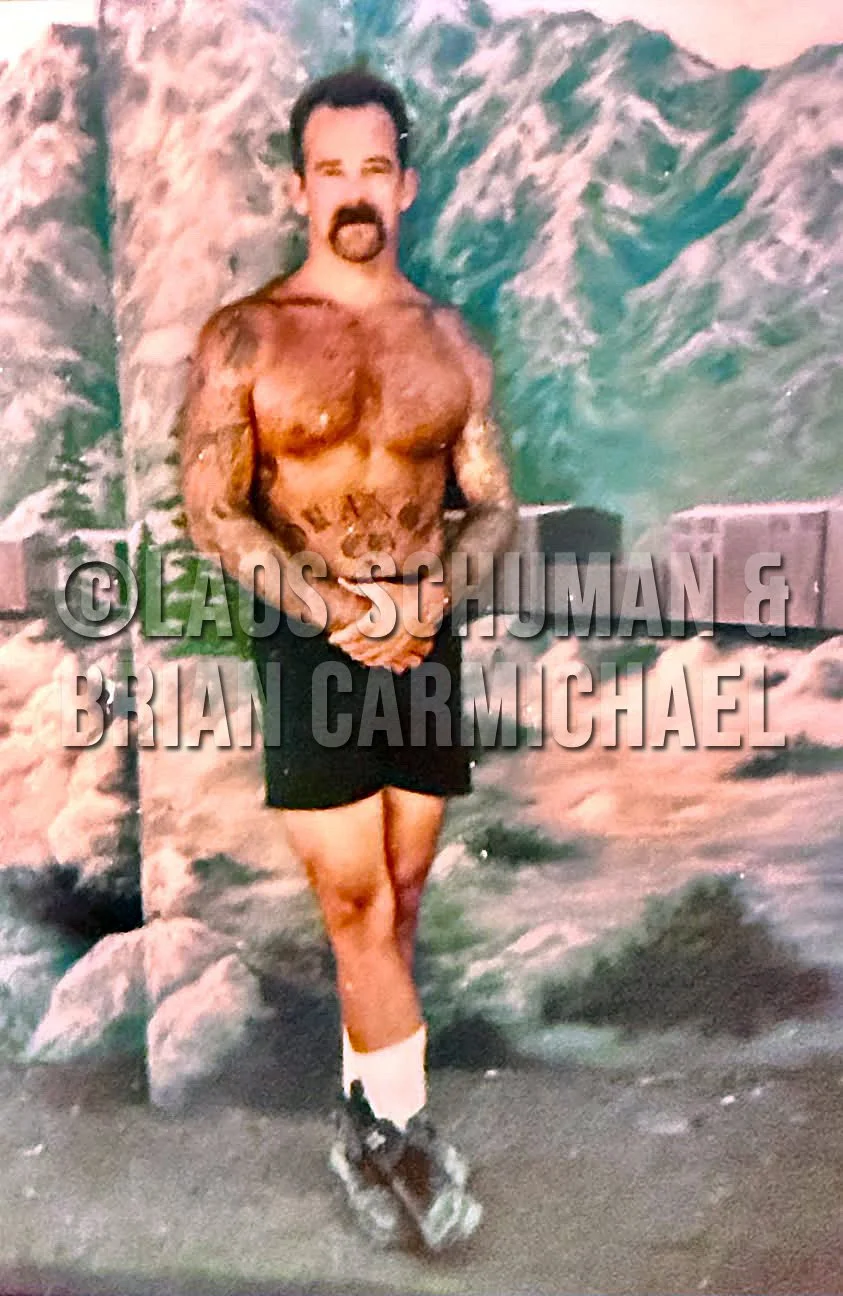
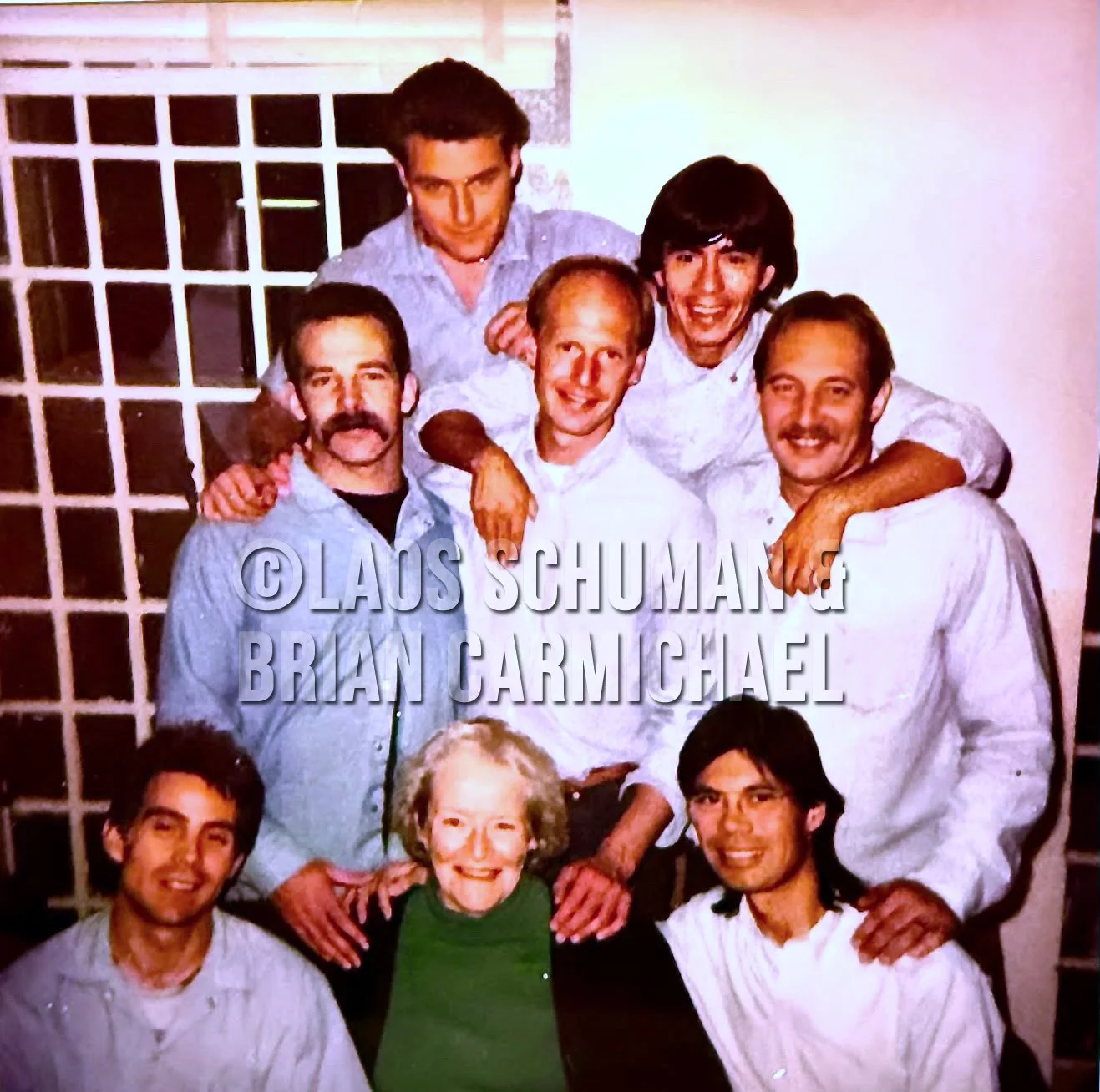
Brian and his comrades inside CMF Vacaville used the photograph token system that allowed inmates to purchase photo credits as commissary and use them to capture moments like the ones Laos and Brian have shared with us here.
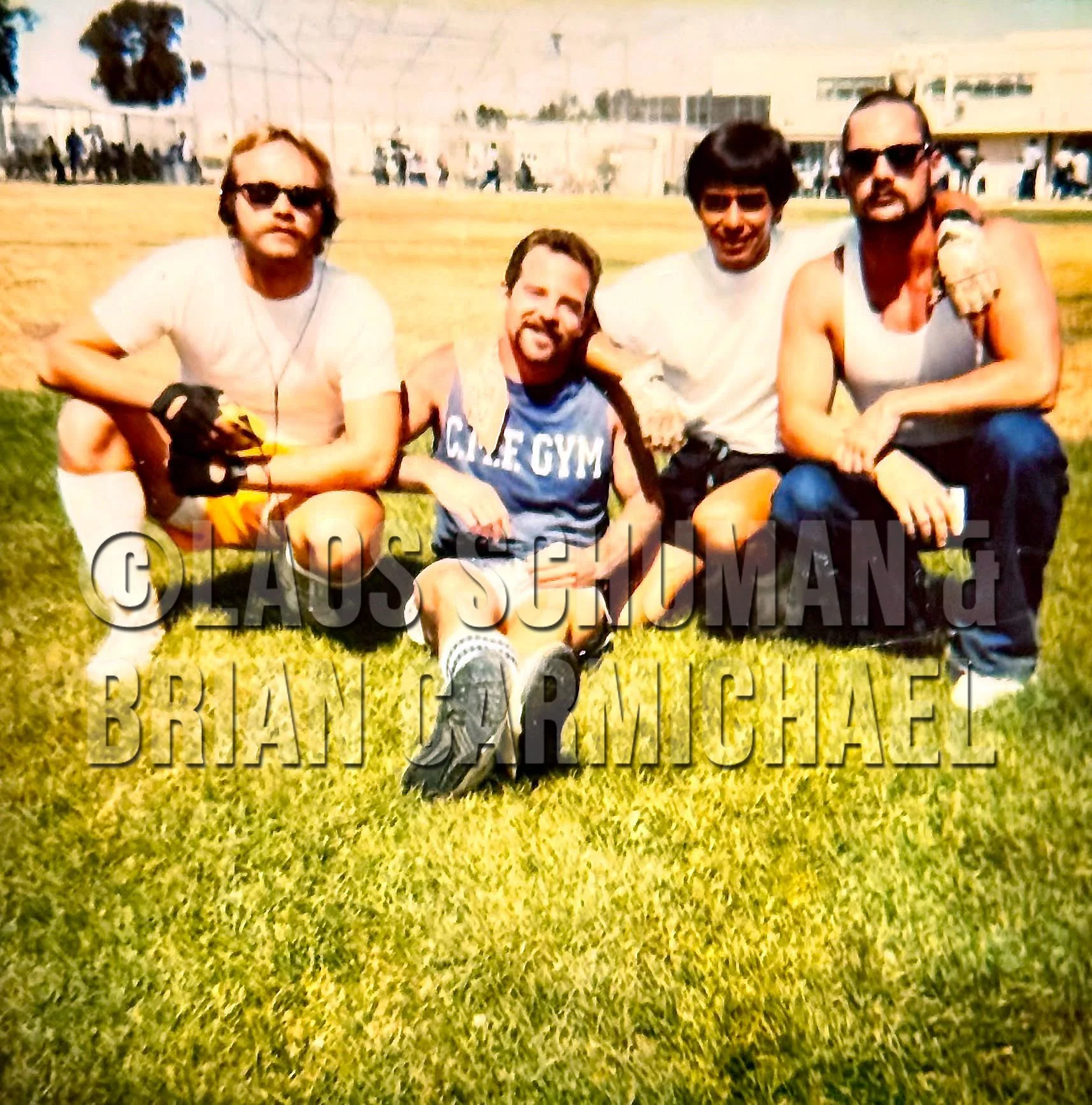
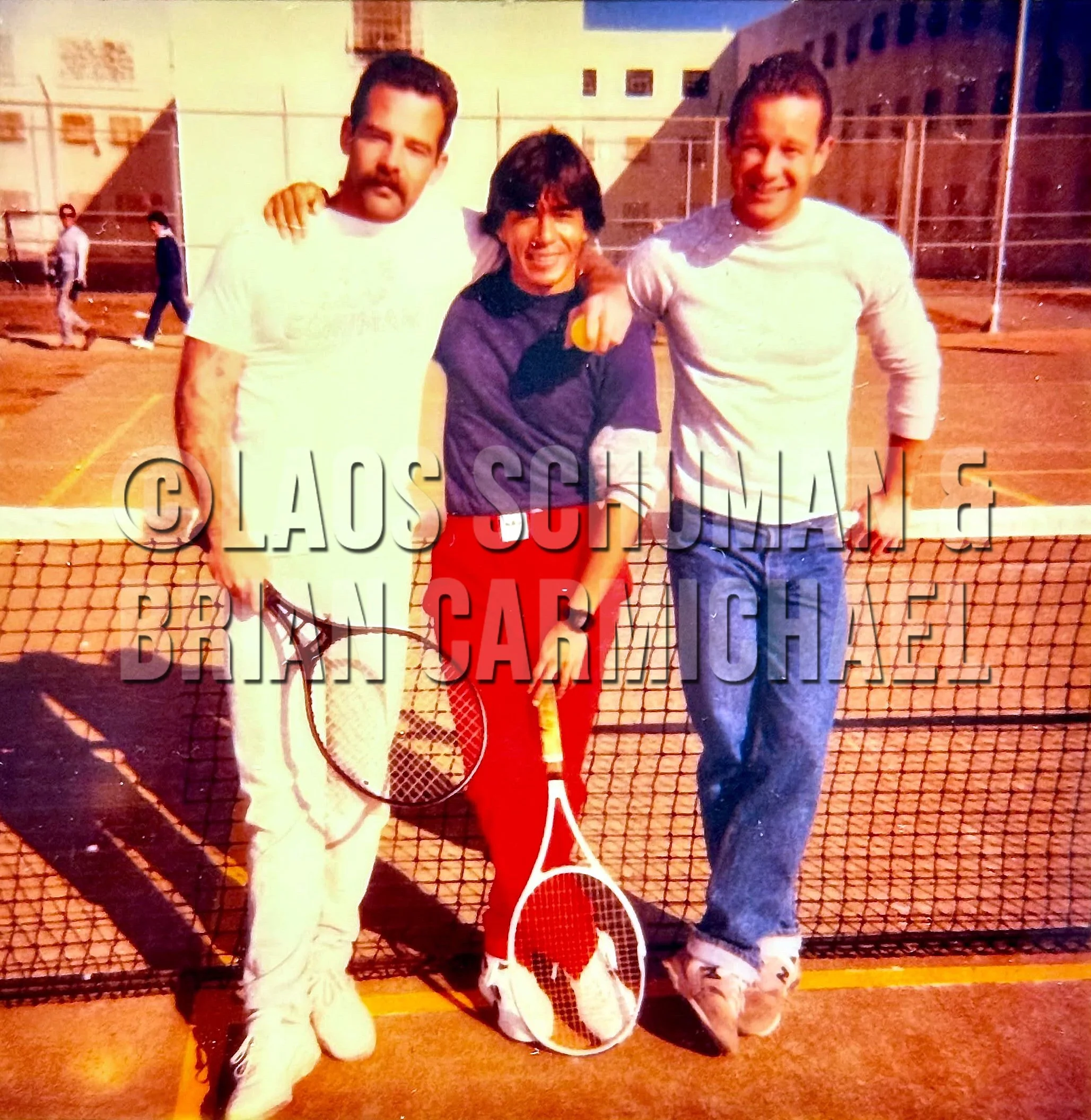
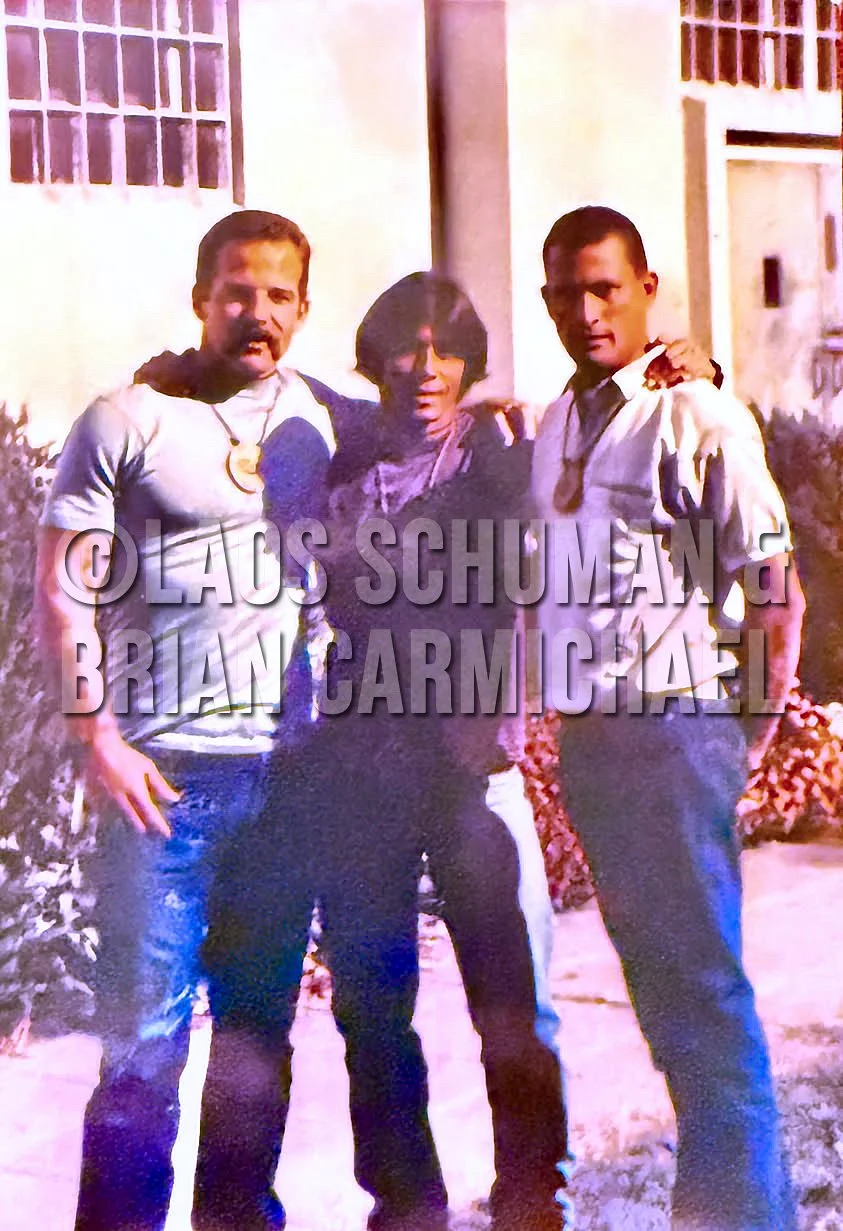

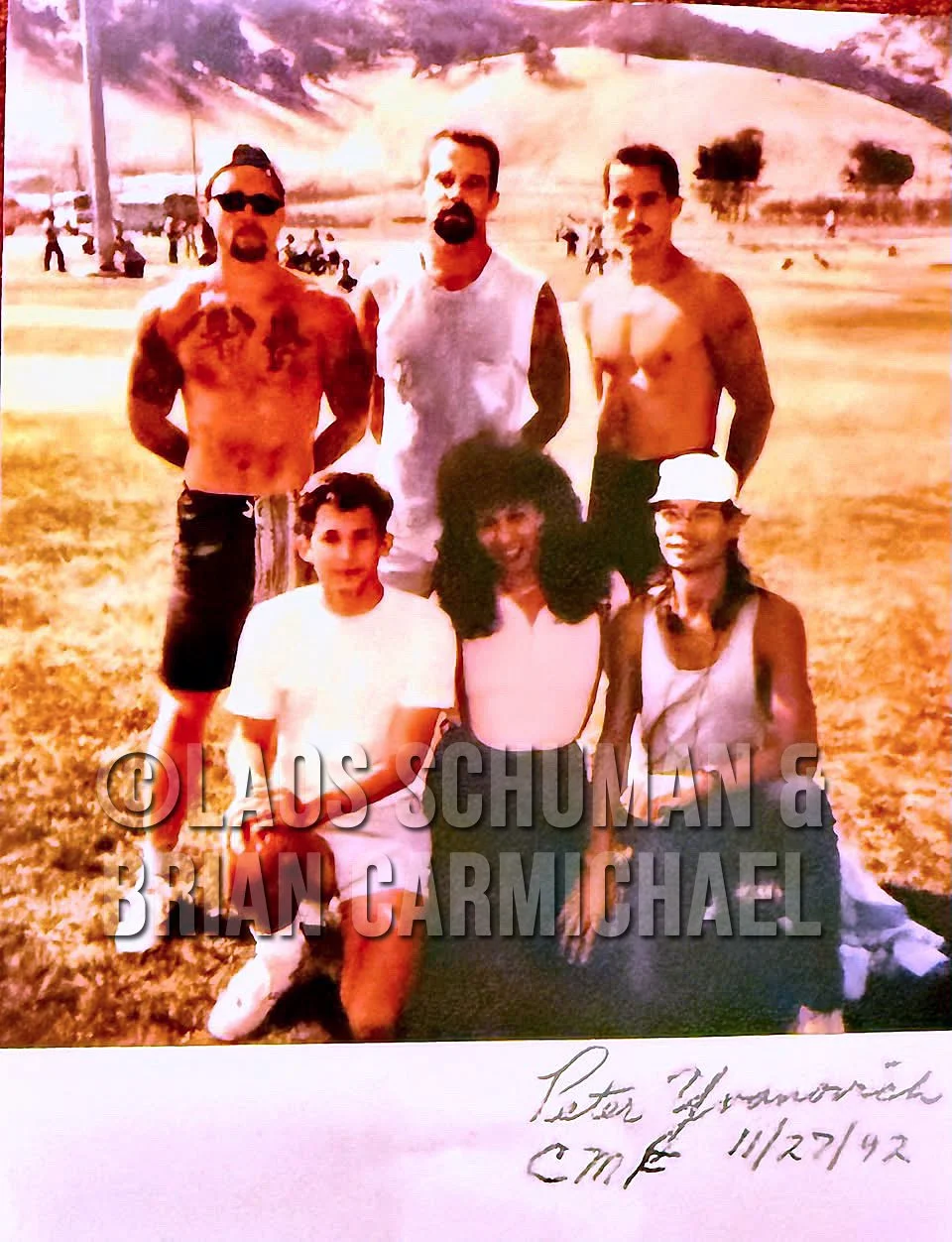
Dr. German V Maisonet Jr. M.D.
Dr Maisonet was highly regarded and considered a pioneer in HIV/AIDS medicine throughout the 1980s and 90s. Brian spoke warmly of him — not only as the first openly gay doctor he had met, but as a tireless advocate for better care and treatment for prison inmates living with HIV/AIDS. Alongside Father Leslie, Dr Maisonet helped establish the Pastoral Care Services (PCS) and was the physician present at the bedside of many of the “patients” as their lives drew to a close. When Brian’s frustration over the lack of compassion by prison staff, it was often Dr Maisonet who steadied him, observing with quiet insight that Brian sometimes resembled Ned Weeks from Larry Kramer’s play The Normal Heart.
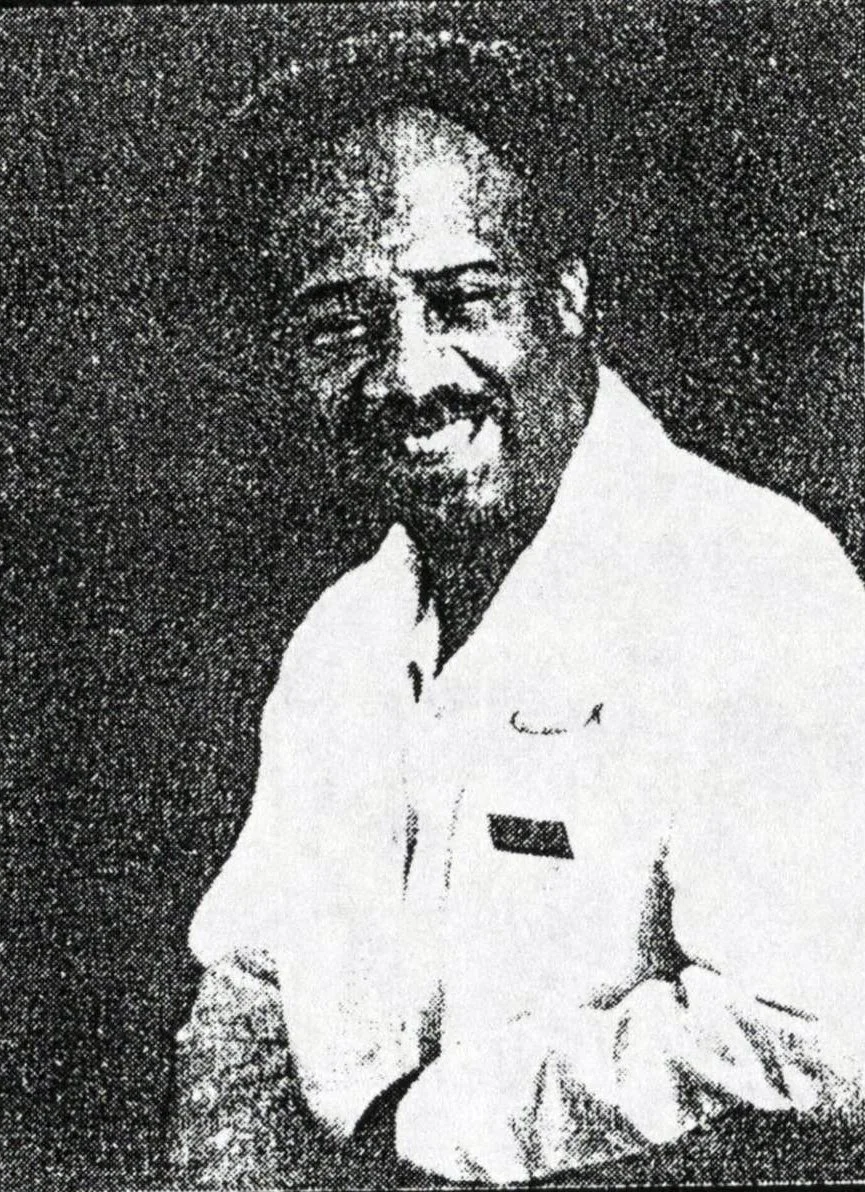
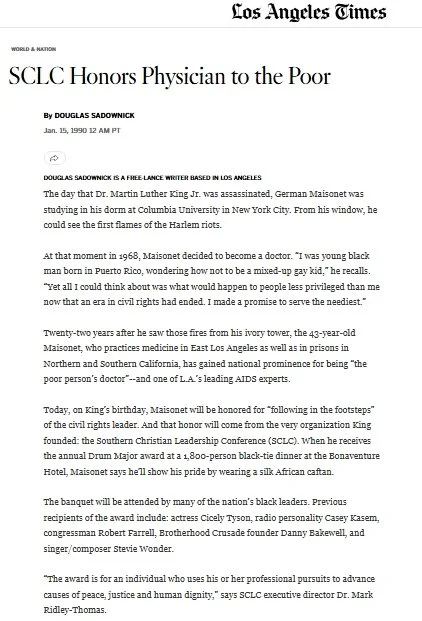
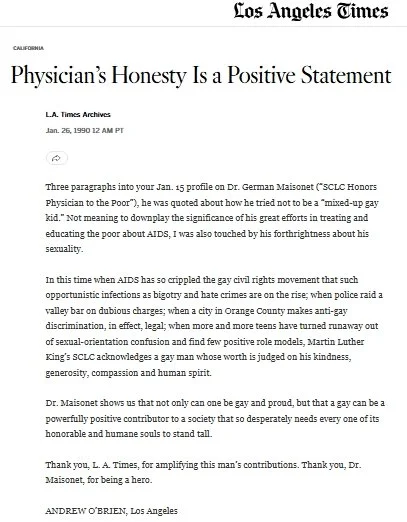



Dr Maisonet Jr. was a pivotal figure in the HIV/AIDS response, combining deep clinical expertise with fierce advocacy to expand treatment access for people living with HIV and for marginalised communities too often neglected by mainstream care. He held leadership roles across hospital and prison programmes, using each platform to amplify the voices of those most affected and to push for equitable services and culturally competent care. A proud gay man, Maisonet brought lived experience to his work, insisting that dignity and patient-centred approaches be central to clinical practice and public health decisions. He died from AIDS-related complications, and his legacy is commemorated on the AIDS Memorial Quilt on panels 5209 and 5021, a testament to his impact and to the communities he served.

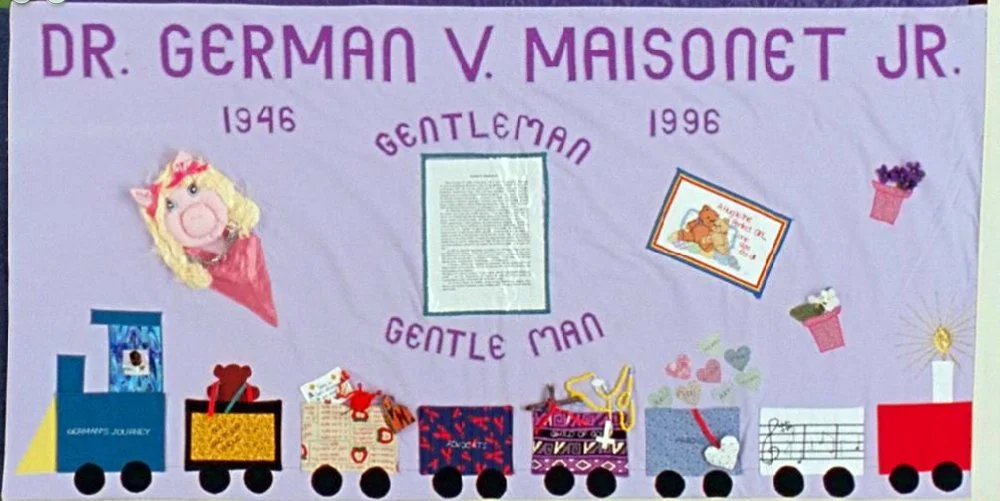
AIDS MEMORIAL QUILT: Dr. Maisonet, Quilt 5209
Dr. Maisonet: Signed quilt 6063
Dr Maisonet was instrumental in bringing the AIDS Memorial Quilt into a US prison for the first time, organising the 1992 display that allowed incarcerated individuals to confront and grieve the devastating toll of the epidemic by also submitting a deicate quilt to their fellow inmates lost to AIDS. During that display Dr. Maisnet signed the signature quilt:
“The true measure of a physcian is not the ability to cure his patients, but to be touched by the terminally ill and by their deaths. To be inspired to serve. love and serve… again and again, day after day. My beloved departed patients . Oh how you inspire me even today. - Dr. German V. Maisonet. Dor. HIV Services CMF

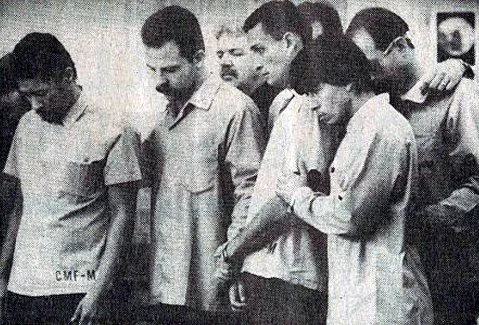
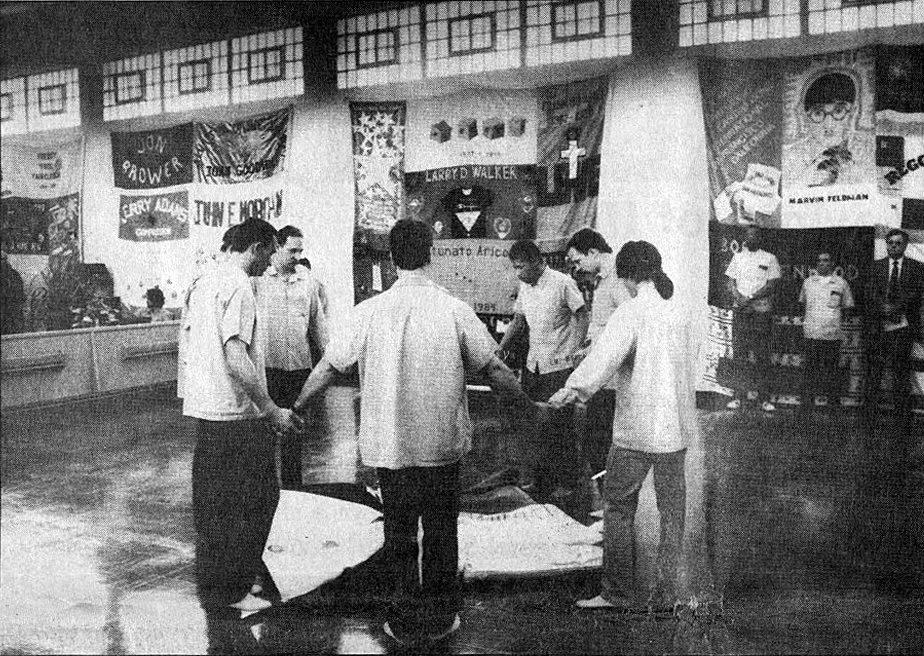
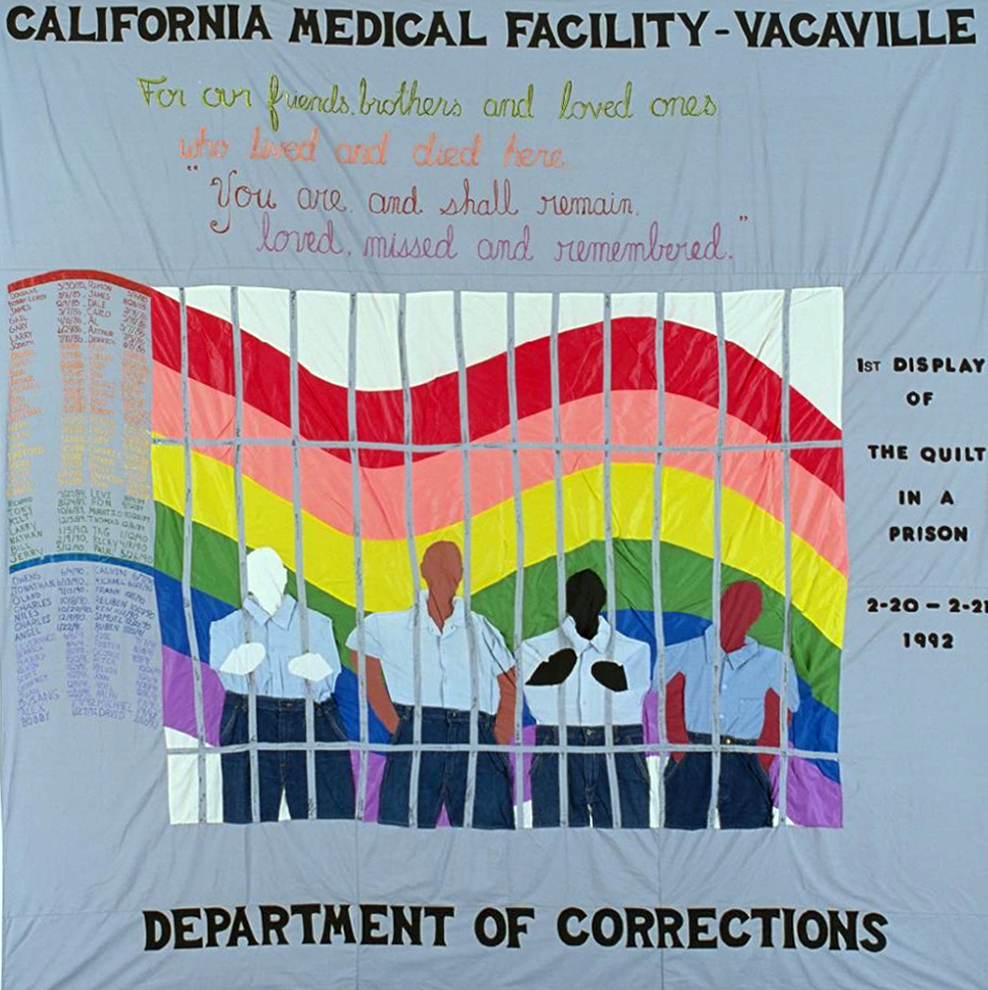
The first ever display of the AIDS Quilt inside a prison took place at California Medical Facility, Vacaville on 21–22 February 1992. It was a collaborative effort led by Dr. Masionet, the prison’s director of HIV services, Father Leslie, the Catholic chaplain, and PCS volunteers including Brian, Laos, Law Wilson and many others who came together to make it happen.
The event coincided with the presentation of the CMF Vacaville quilt—block 1943, which measured 12 ft by 12 ft, and the creation of a signature quilt—block 6063 of the same size, marking a poignant moment of remembrance and community within the prison walls.
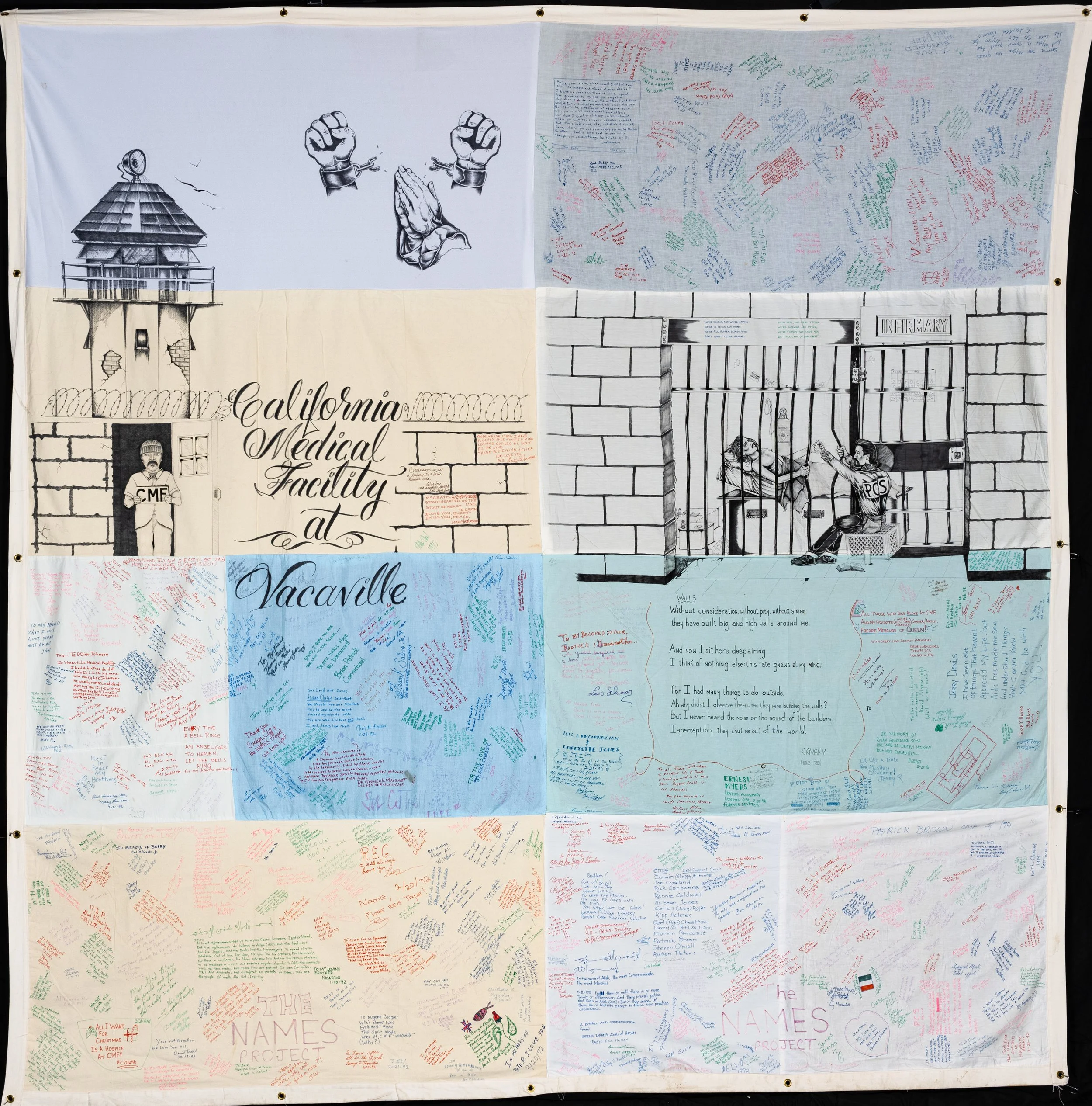
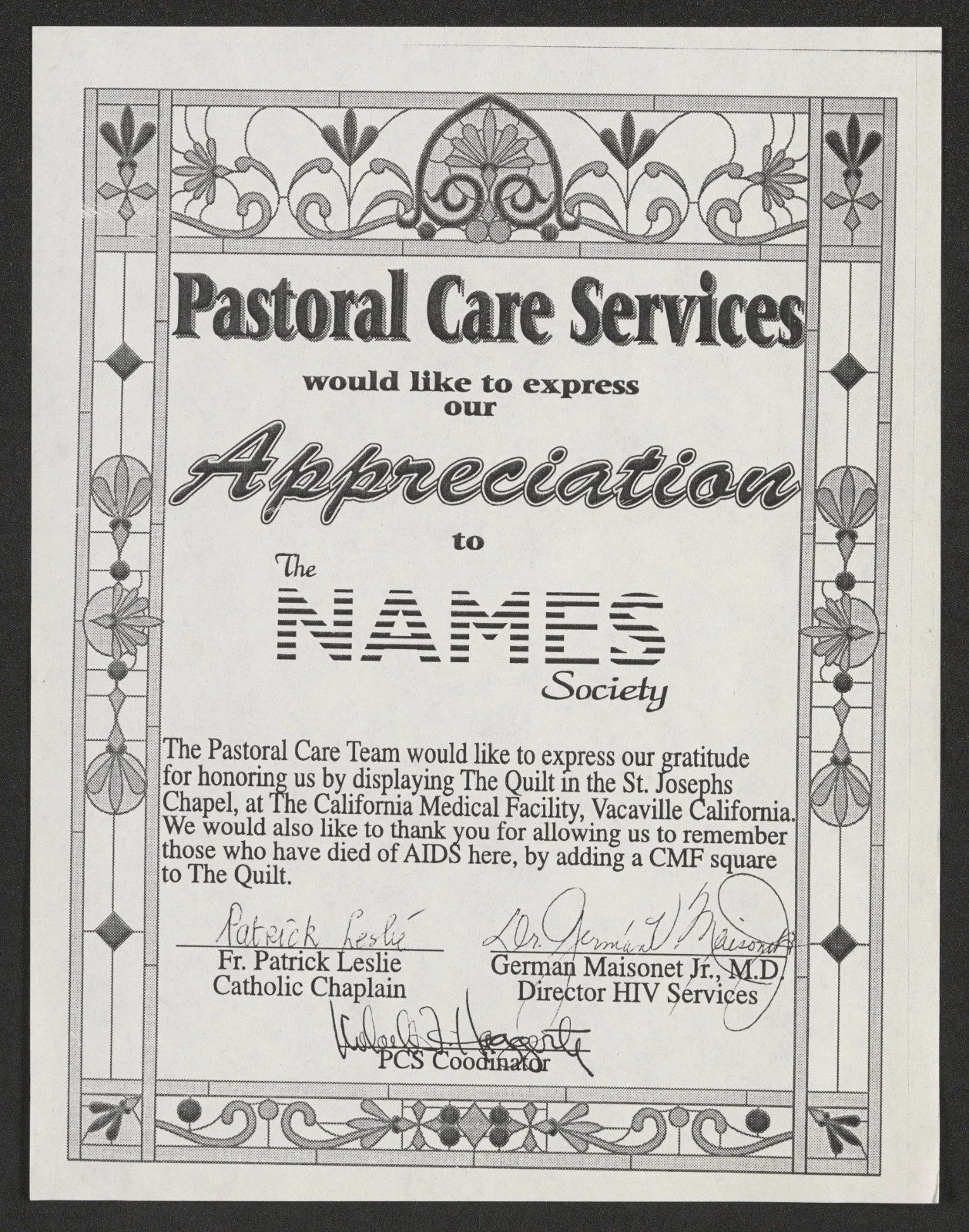
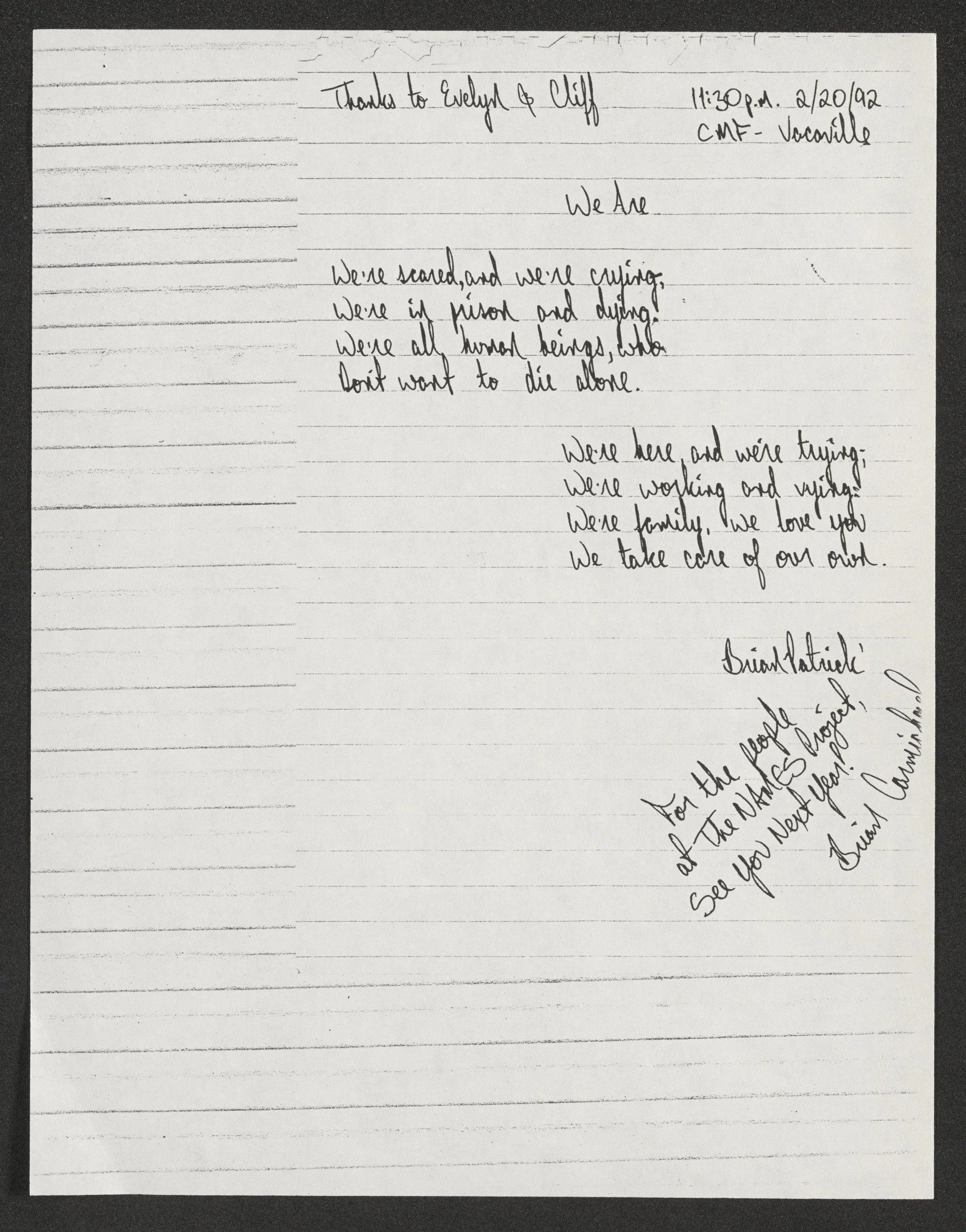
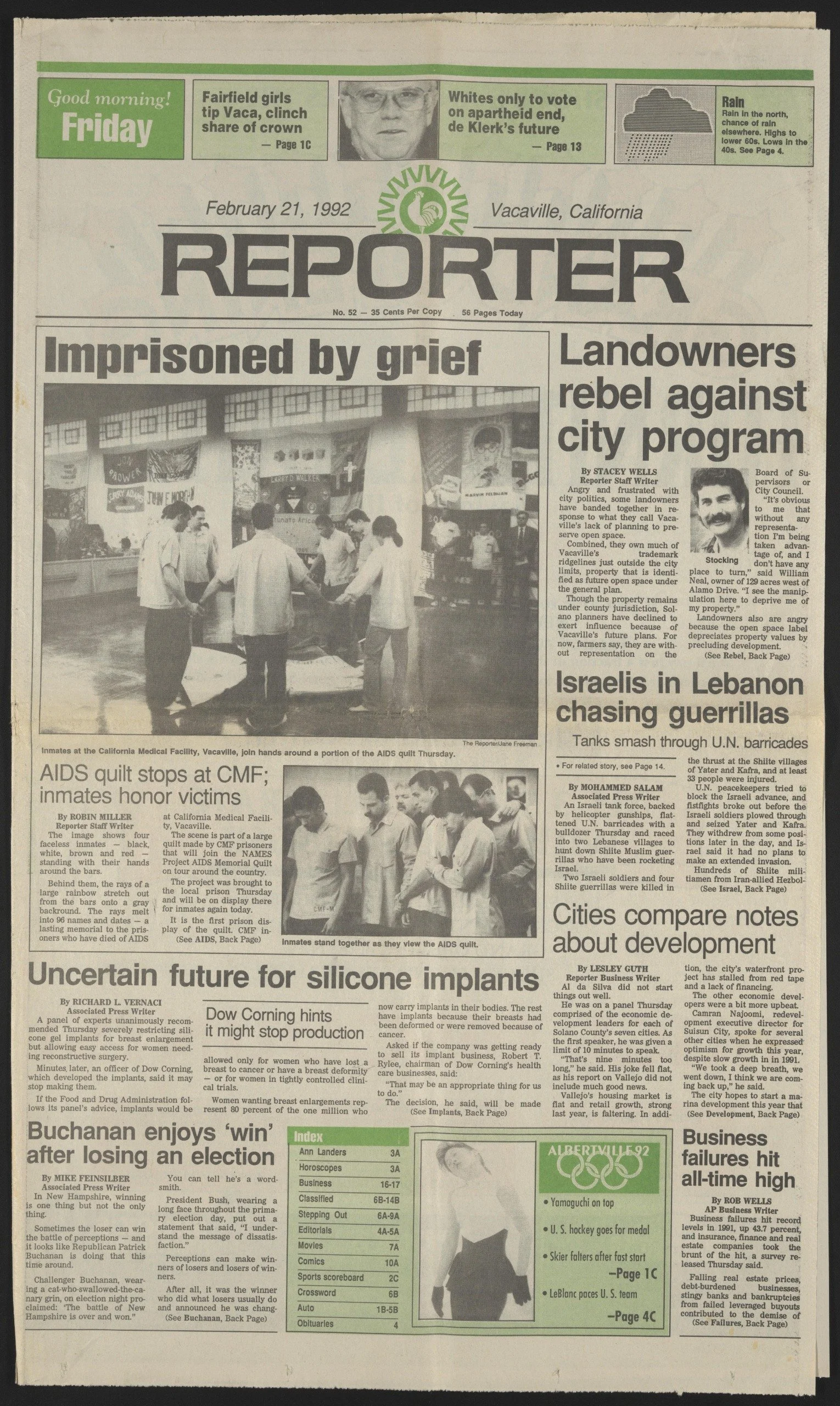
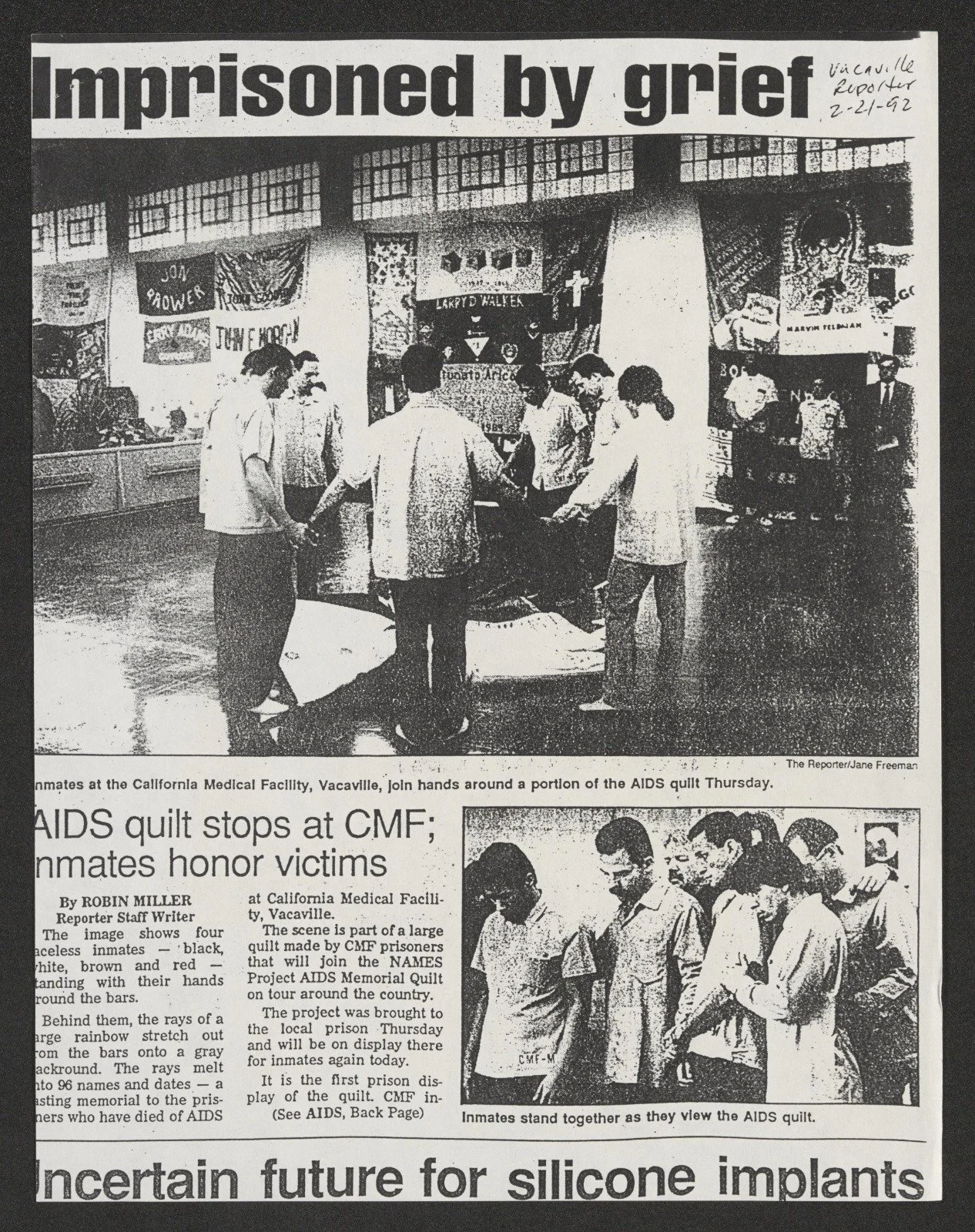
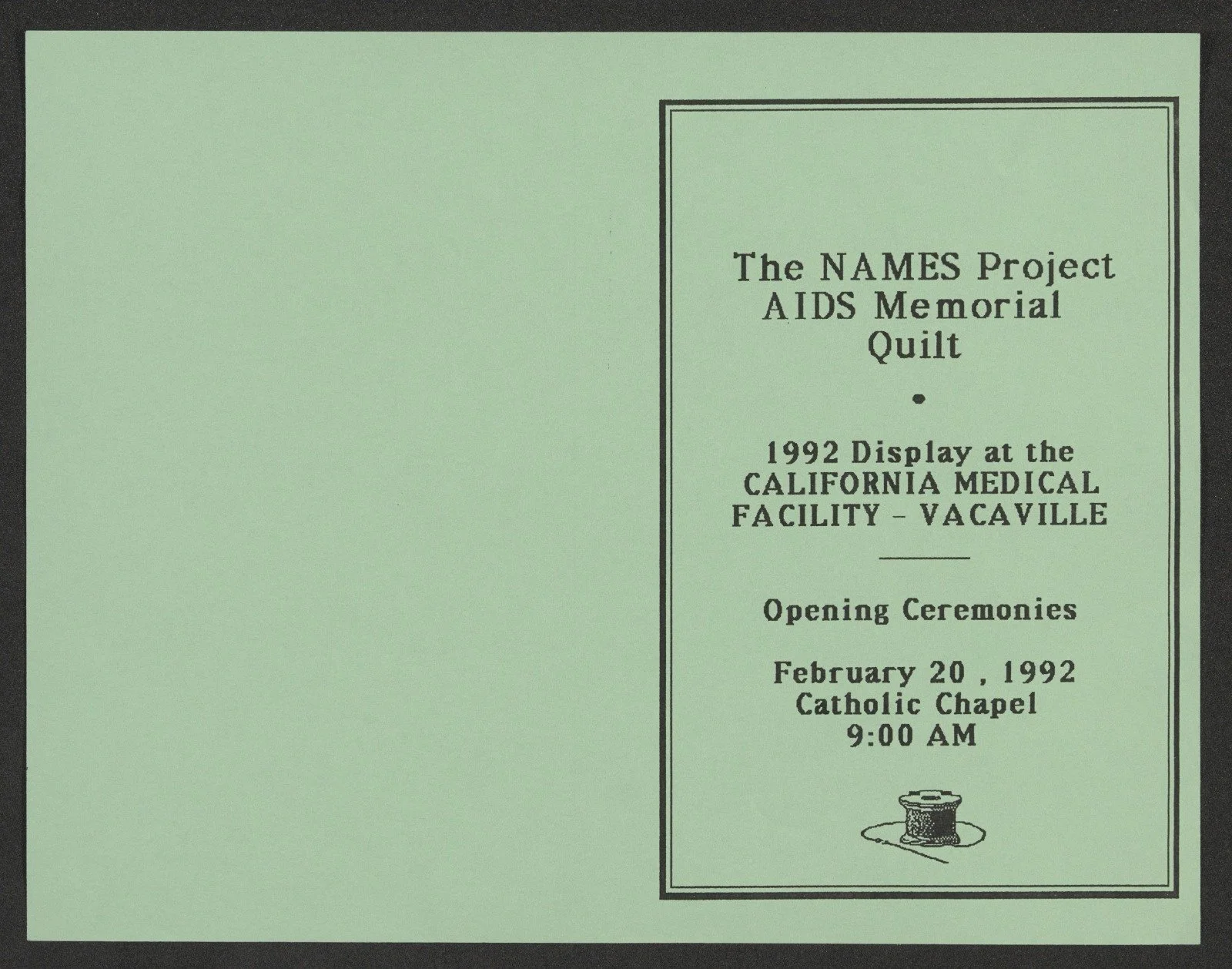
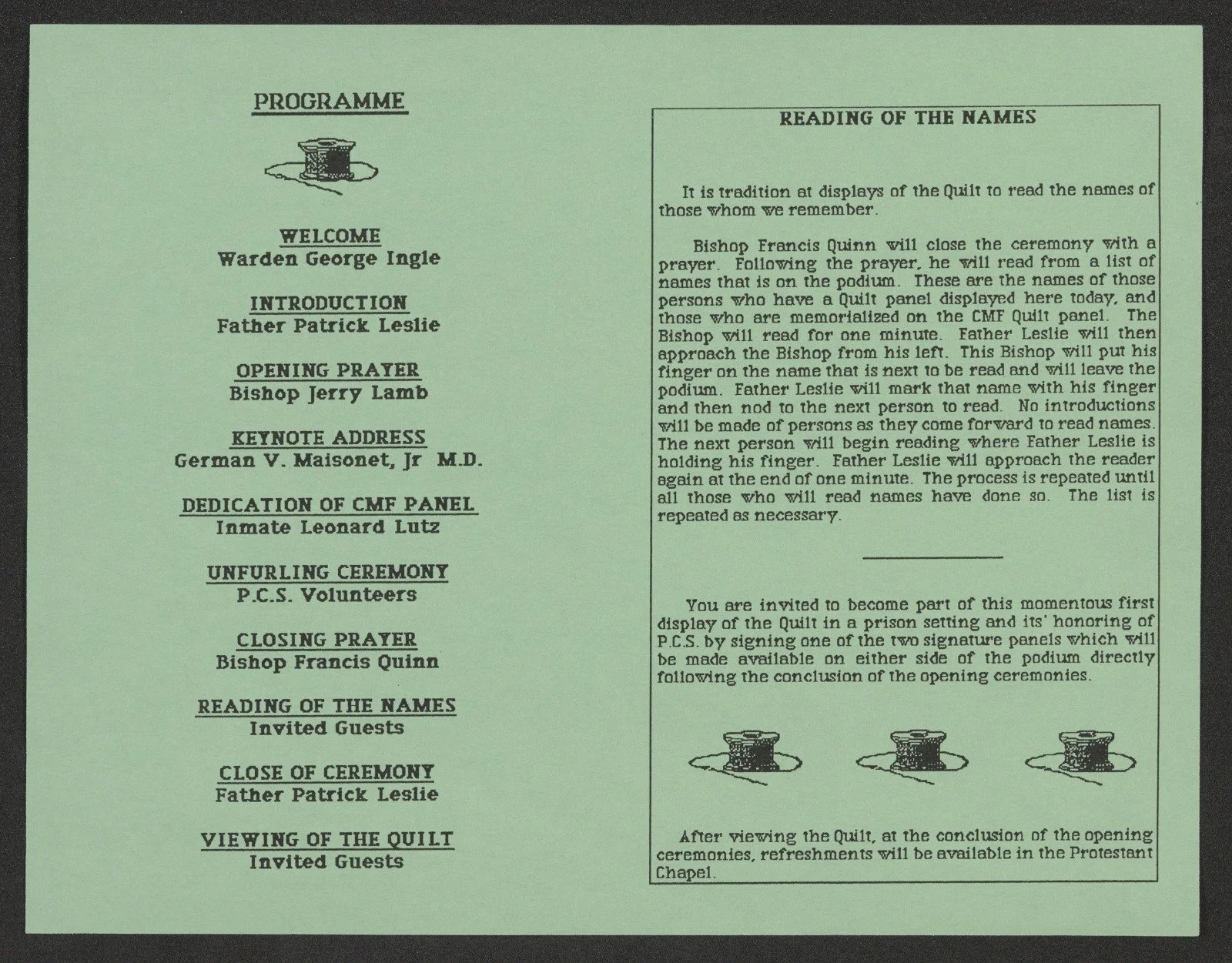
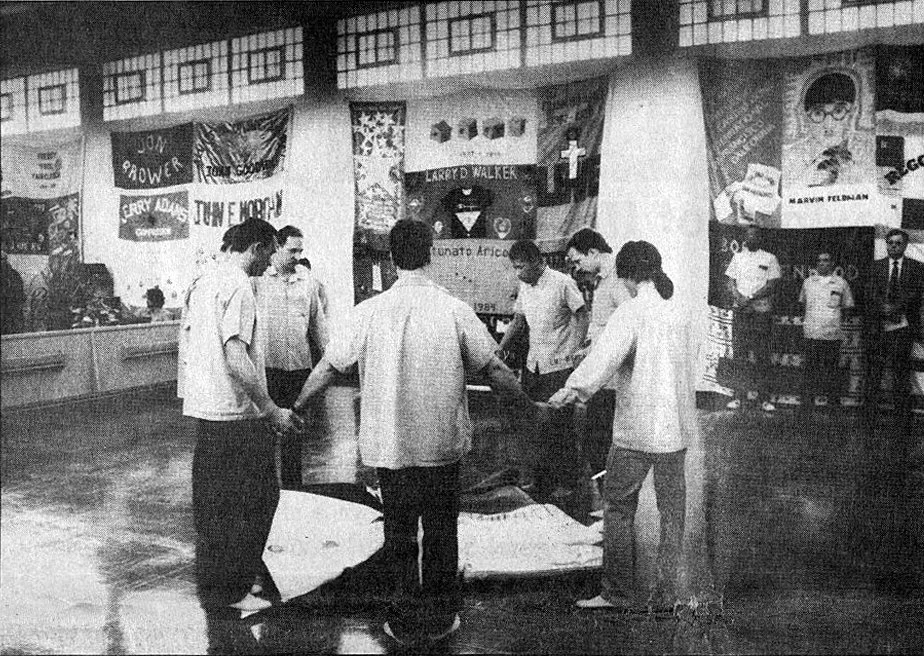
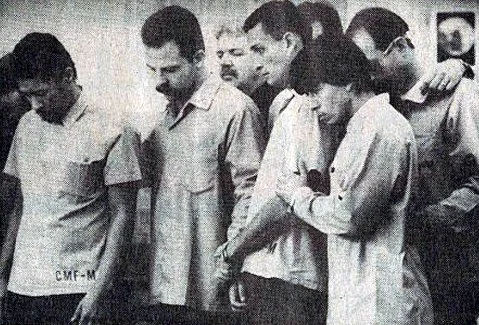
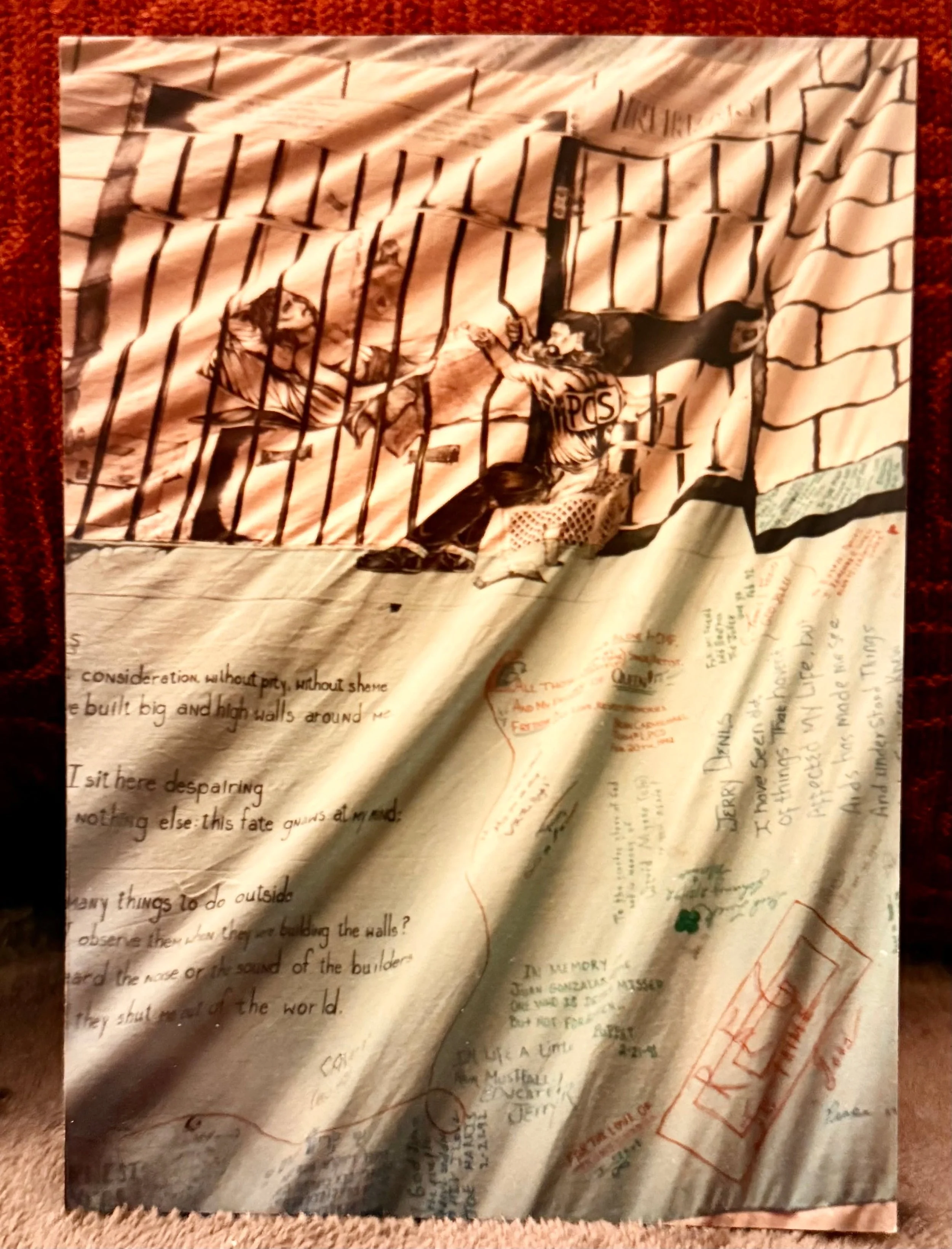

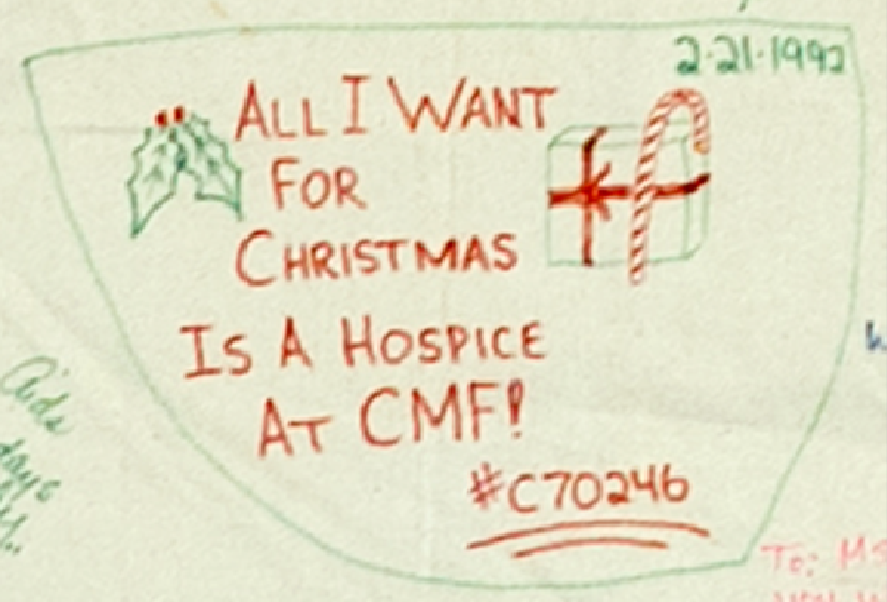
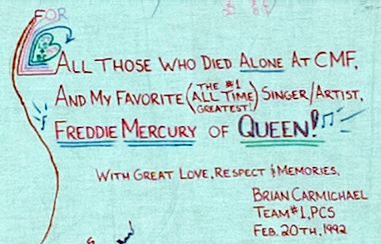
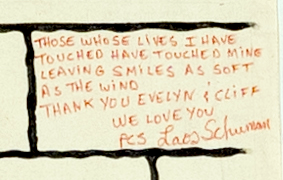
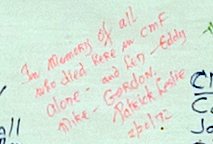
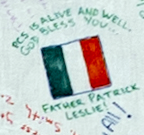
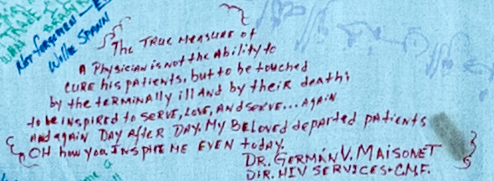
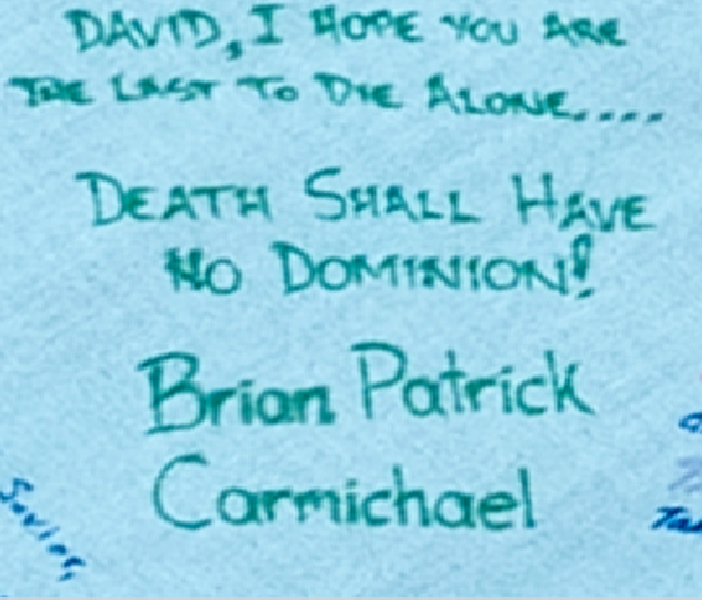
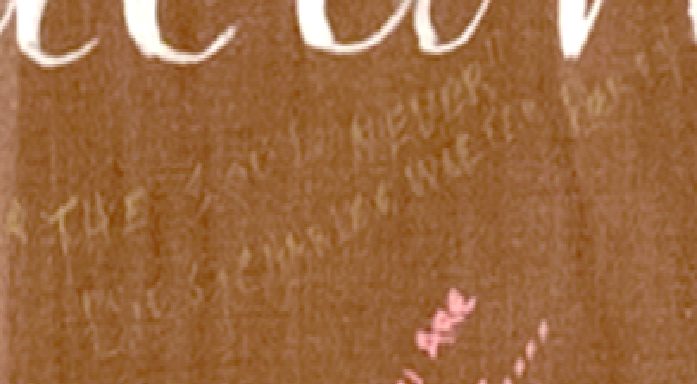
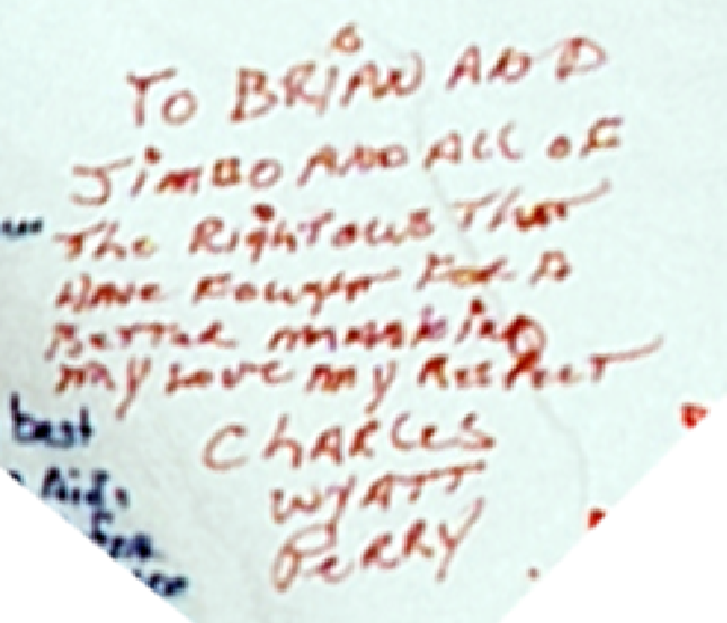
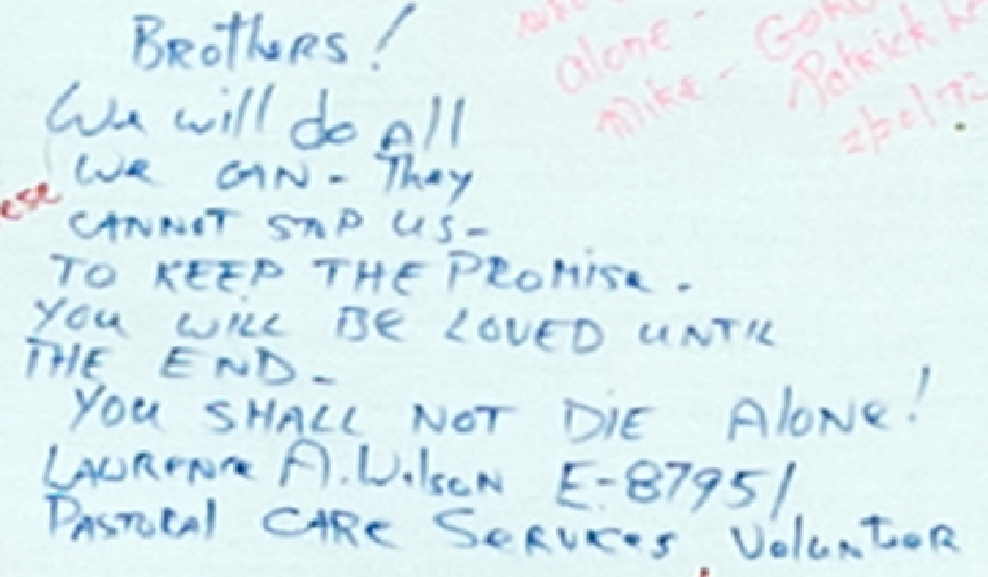
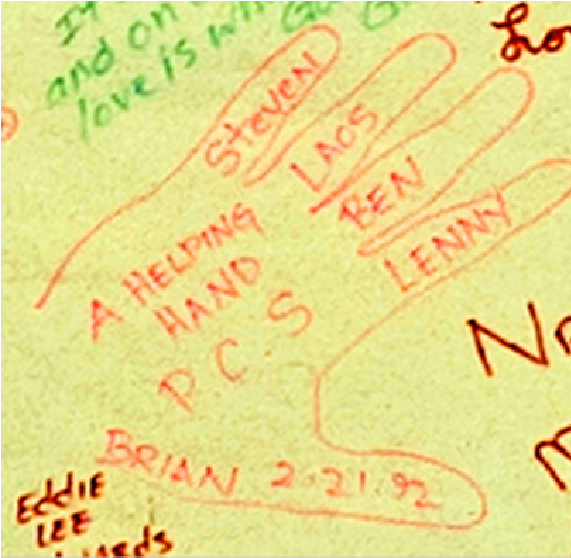
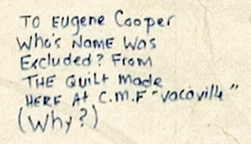
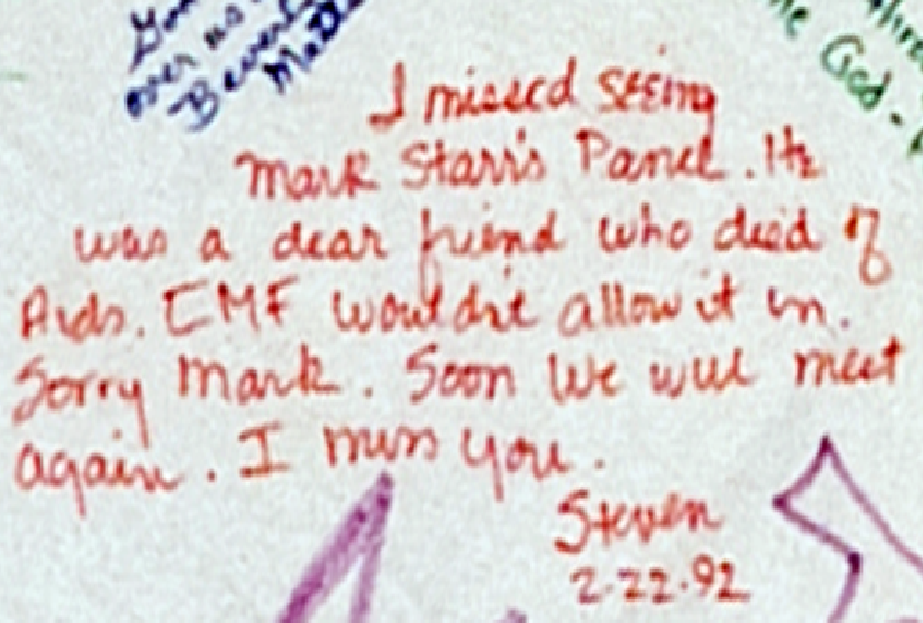
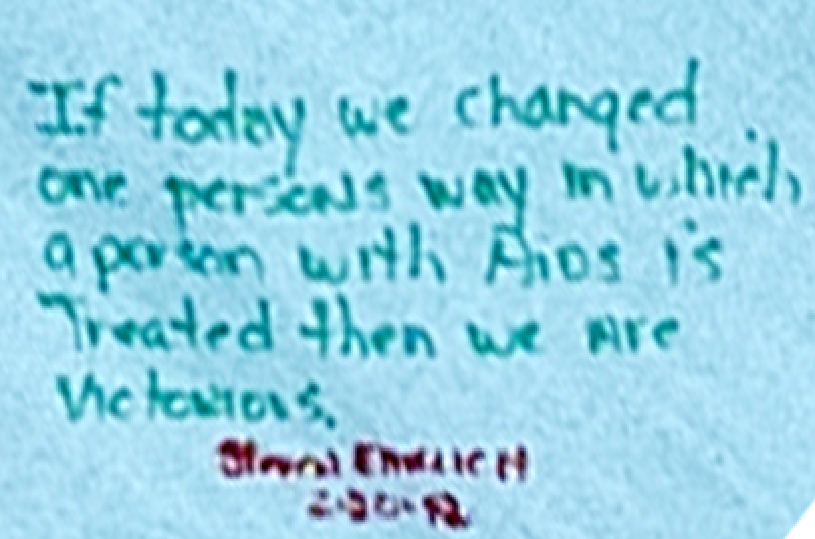
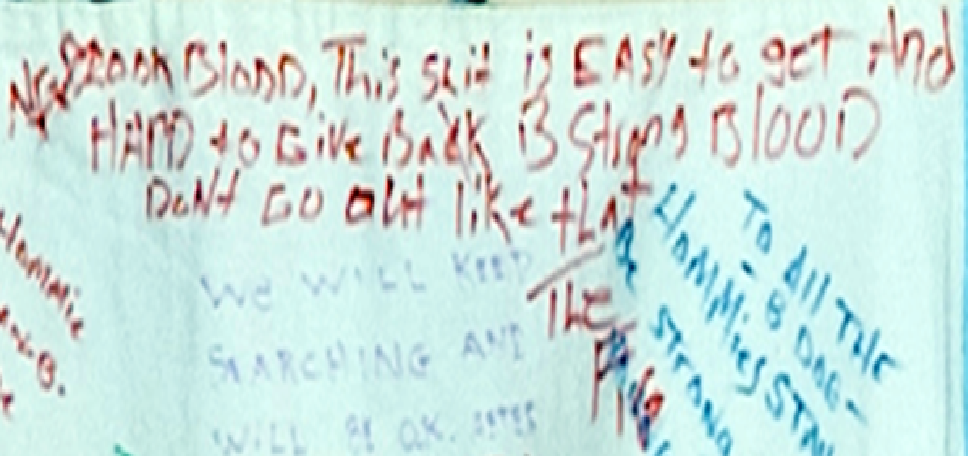
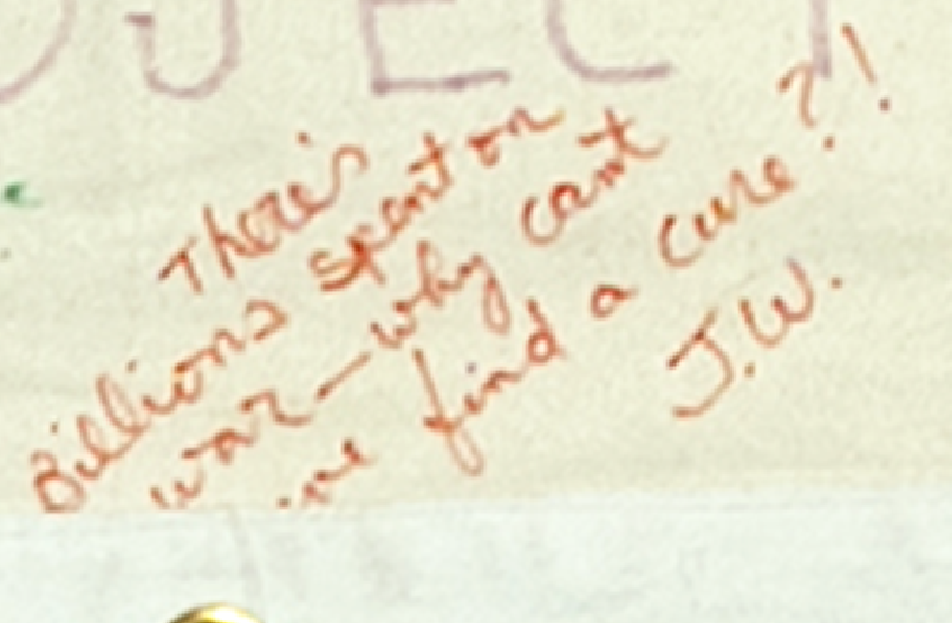
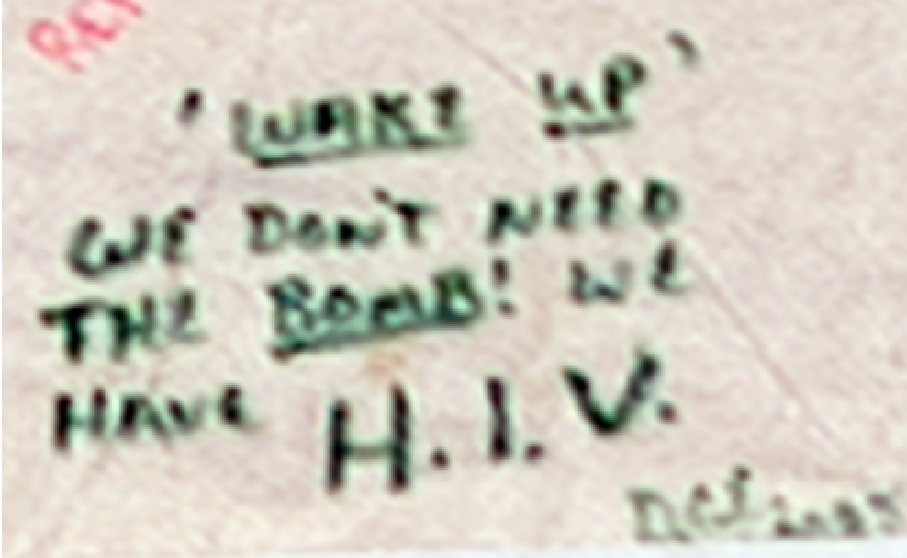
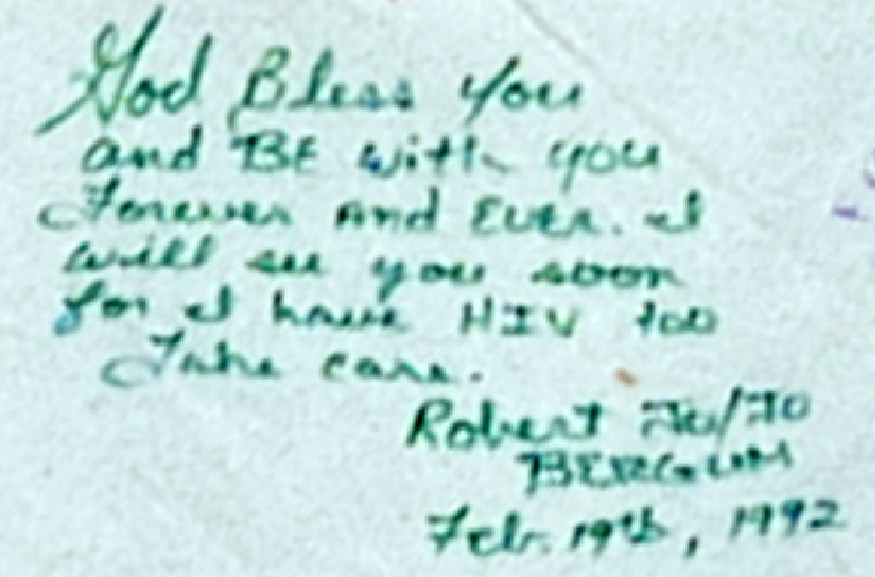
Photo Credit: AIDSmemorial.org Quilt 6063, click link to interact with the AIDS Quilt.
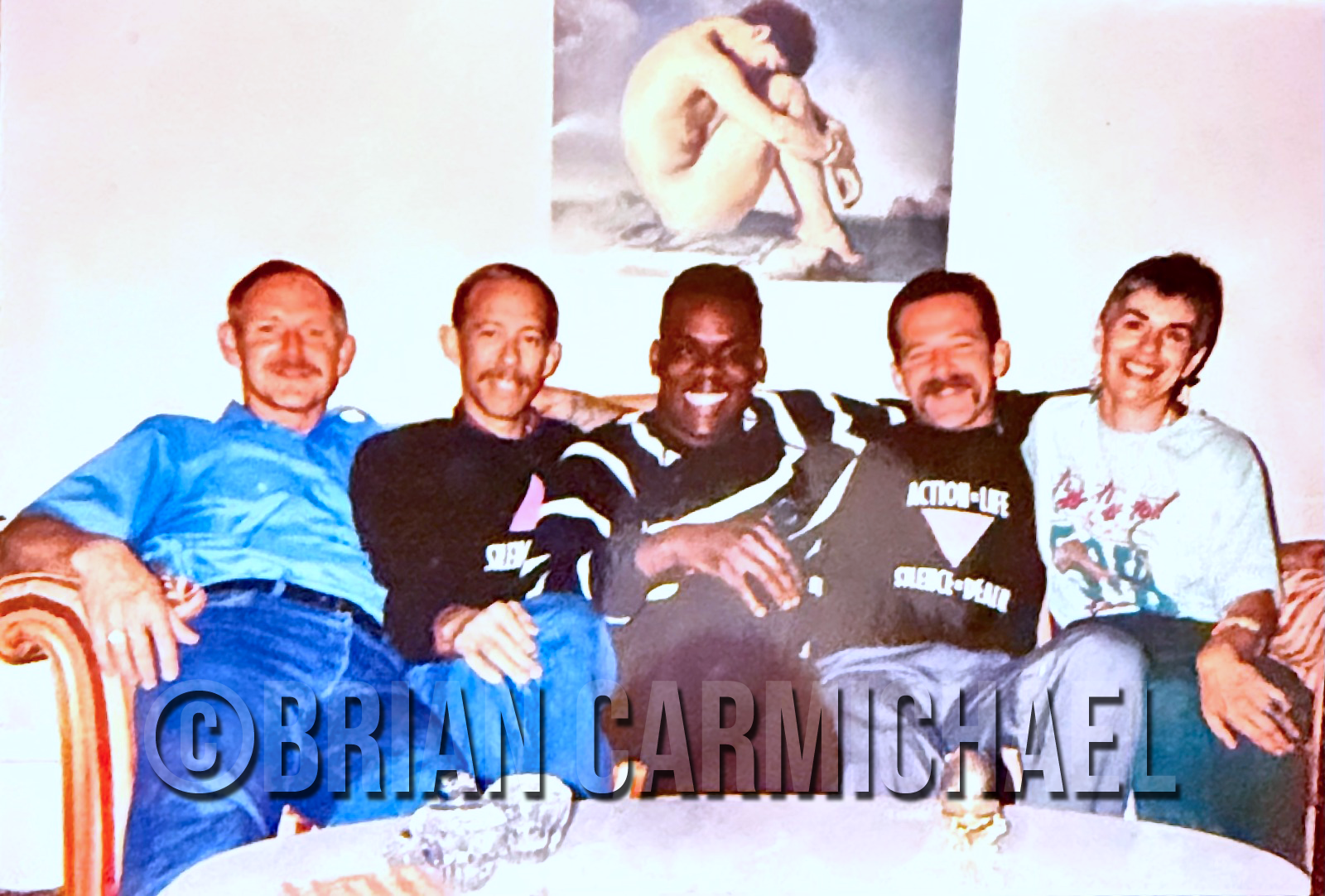
1993: Upon Brian’s release from CMF, Vacaville in 1993 he spent his first night of freeom with those he now called friends, left to right: Cliff Lowe from the AIDS quilt, Law Wilson fellow activist, an unknown male, Brian Carmichael and Evelyn Martinez of the AIDS quilt. But Brian’s activism didn’t end there….
PART 2 of 2
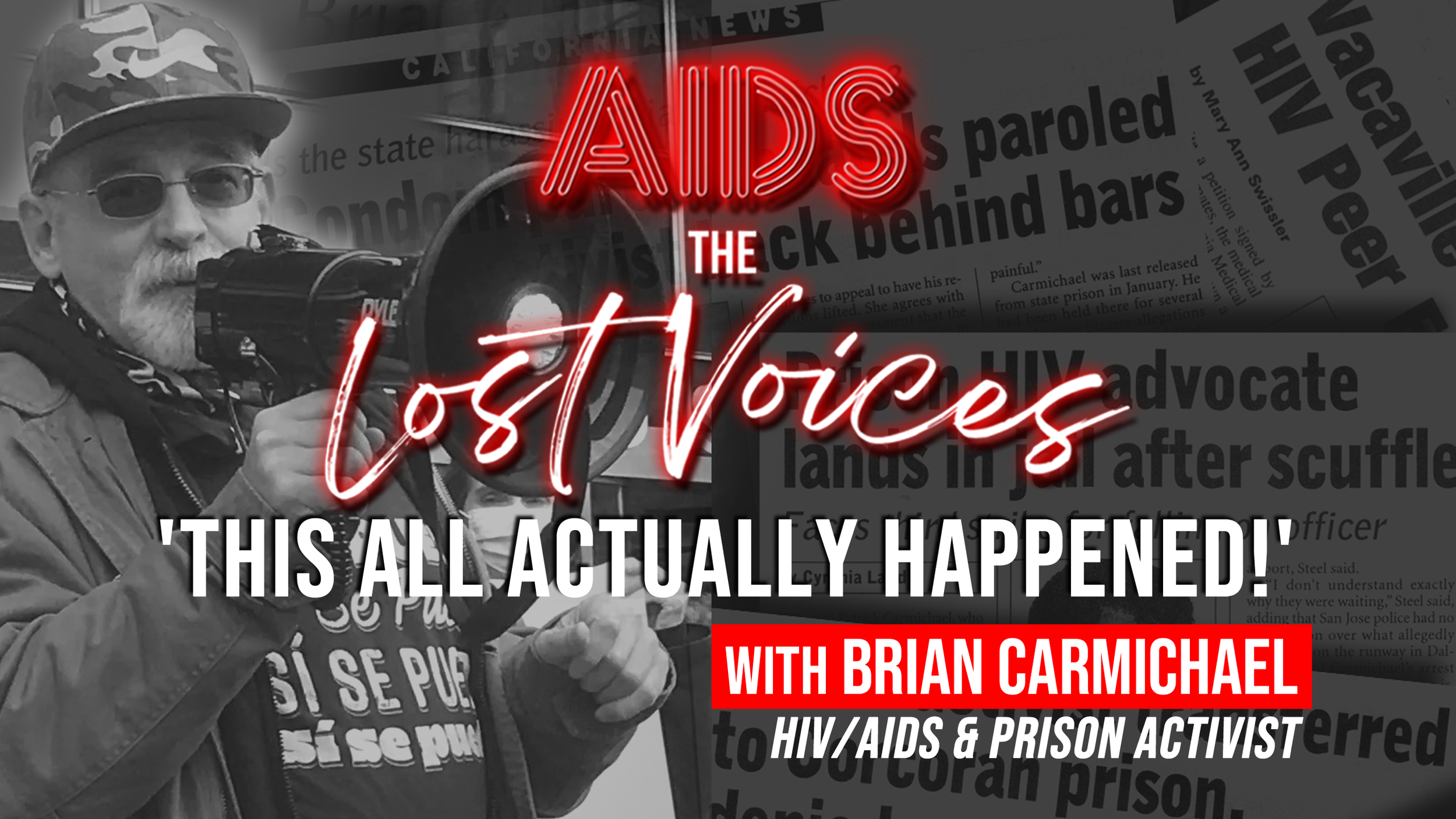
In the subsequent conversation with Brian he recounts life after his 1993 release from the California Medical Facility, Vacaville, mapping a trajectory of commitment and continued confrontation: having been an outspoken activist for HIV/AIDS awareness and prisoner rights while incarcerated, a pattern emerged in which authorities persistently targeted Brian since his release. Undeterred, Brian has remained resolute, channeling his experience into sustained advocacy for people living with HIV/AIDS and for prison reform, becoming a peer educator and activist on both sides of the bars.
We hear of the trumped-up charges brought by Trevor Patrowski in retaliation after Brian, the sober-living manager, asked Patrowski to leave the program following repeated warnings over substance abuse; removal from the program would have led to Patrowski’s parole being revoked, so in revenge he levelled false claims against Brian. Despite medical and personal testimony supporting Brian and despite Patrowski later recanting his allegations, the accusations were sufficient to see Brian returned to prison, underscoring the precariousness of those who work to help others and the damaging consequences when vengeance replaces accountability.
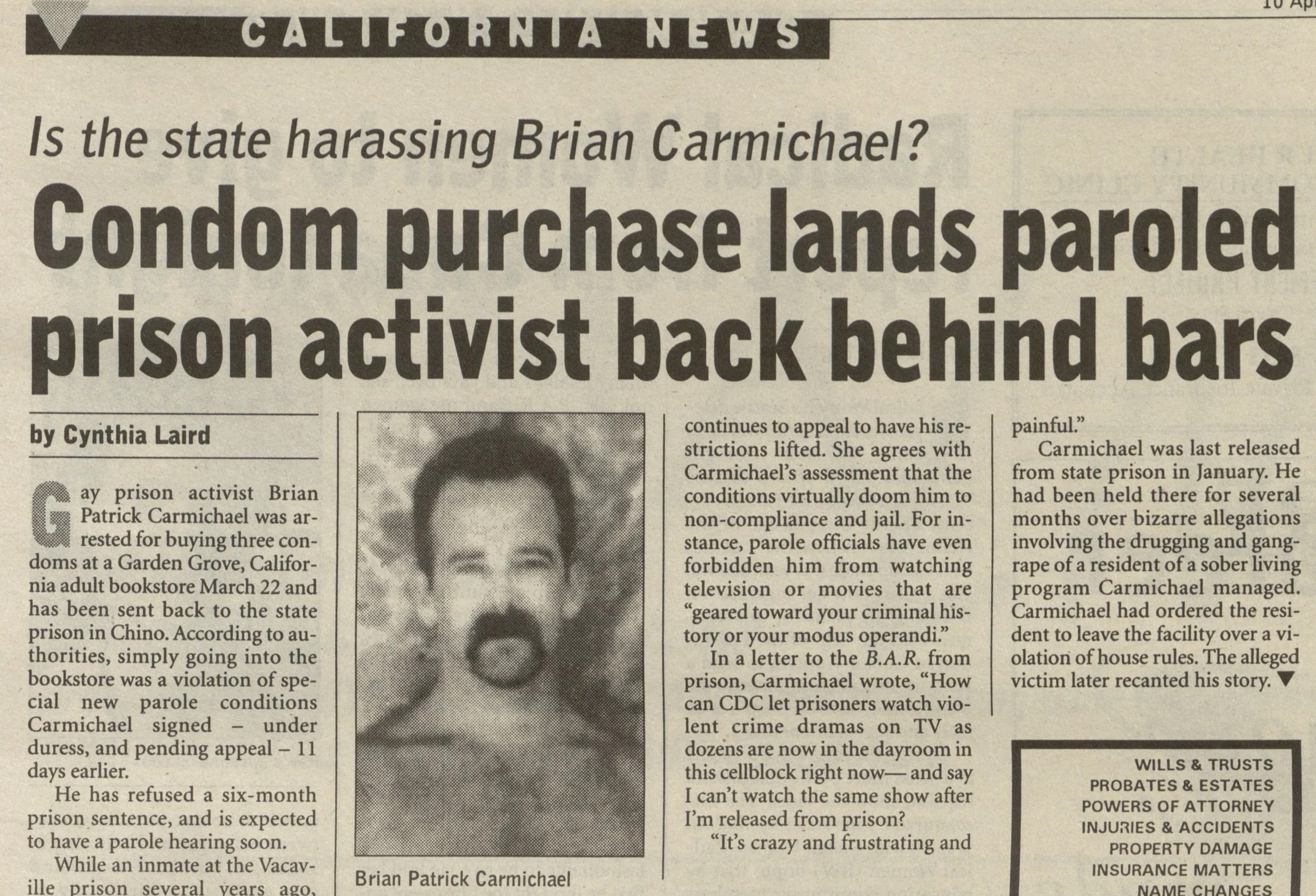
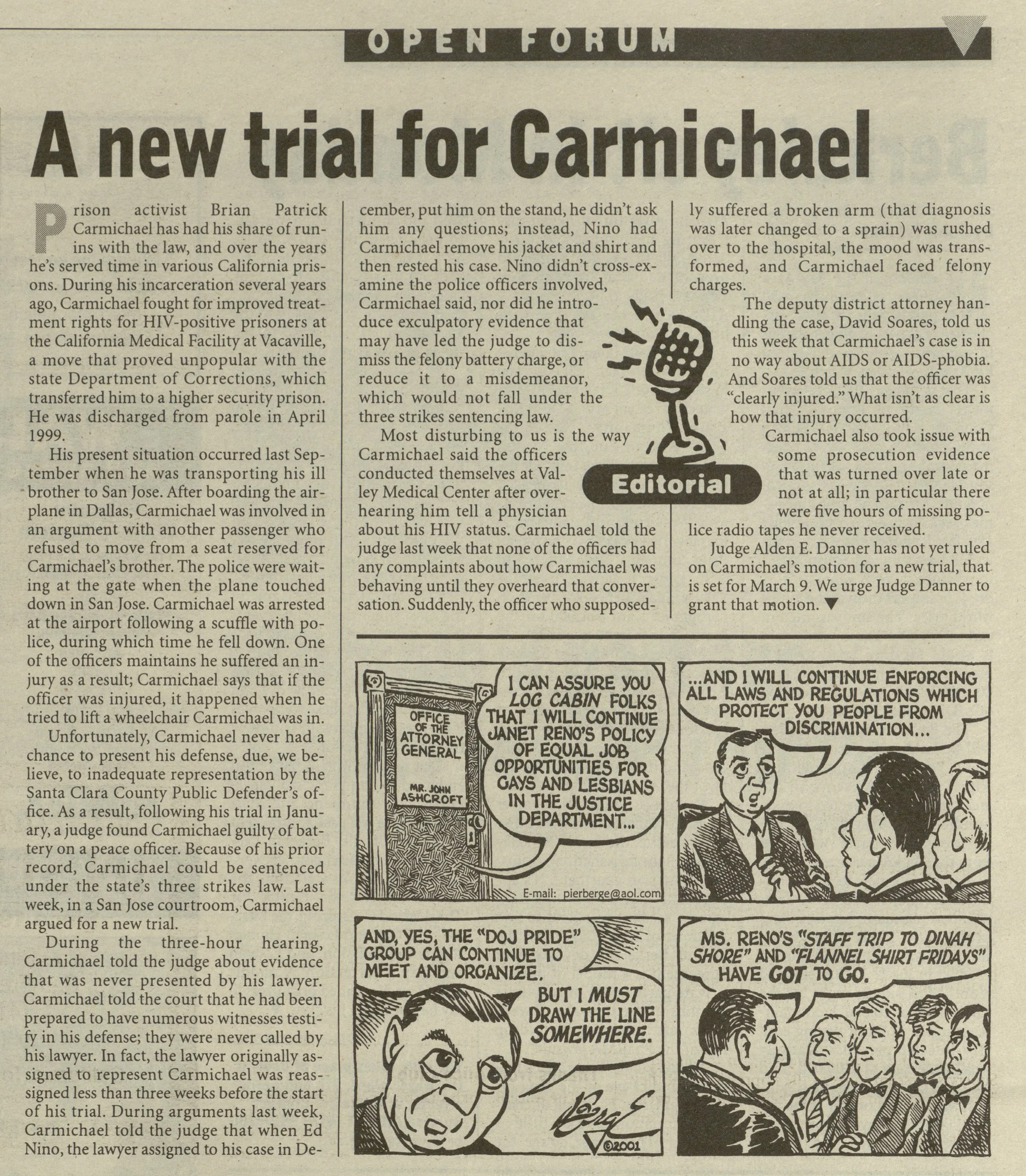
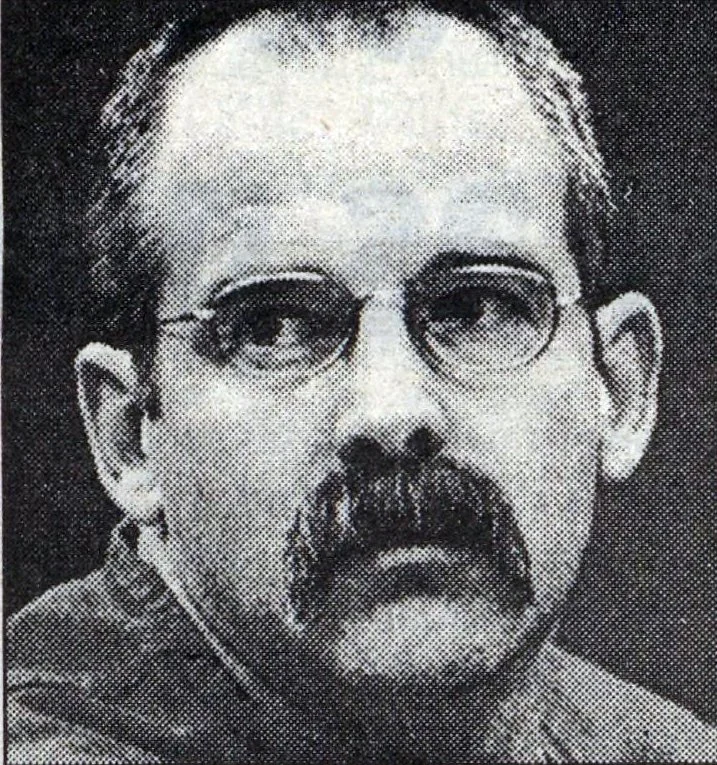
And it didn’t end there; the Bay Area Reporter ran the headline “Is the State Harassing Brian Carmichael?” after his arrest for a parole violation for entering an adult bookshop to buy condoms, and the story worsened when he was detained again after a mercy flight from Dallas to California to bring home his seriously ill brother. Brian tells of police brutality at the airport, saying officers pinned him against a jetway and kicked his feet from beneath him, causing him to fall onto an officer who initially made no complaint of injury — a claim that changed after officials learned Brian was HIV positive, prompting concern that his HIV status influenced the handling and escalation of the incident.
CORCORAN: Gladiator Fights & The Boot Bandit!
On these alleged parole violations that repeatedly resulted in Brian being found “not guilty” and released, he was eventually sent to Corcoran State Prison, where he witnessed the infamous “Gladiator Matches” — brutal, organised fights between inmates arranged by guards that frequently culminated in one of the fighters being shot and killed. He also recounted a harrowing episode of state‑sanctioned sexual violence by a prisoner referred to as “The Booty Bandit.” Years later, after two guards turned state’s evidence, CBS produced a high‑profile television special in 1997 and a follow‑up in 1998 that brought widespread attention to the abuses and corruption at Corcoran,.
Writ of Habeas Corpus
Brian, unwavering in his belief of innocence, made the prison law library his battleground; there, driven by determination, he taught himself to draft a range of legal applications. The skills he acquired proved decisive: the most effective document he learned to file was a writ of habeas corpus, which compelled the court to require the state to justify his detention. That procedural step forced the prosecution to lay bare the evidence and legal basis for holding him, giving Brian the critical opportunity to expose gaps in the case and press for his release.
Before we connected and spoke with Brian for the two episodes above, we examined his activism as reported in the press in depth, a process that culminated in three episodes you can tune into below.
AIDS: THE LOST VOICES
13 Mar 2026 • Written By Will Hampson
BRIAN CARMICHAEL
& COMRADES
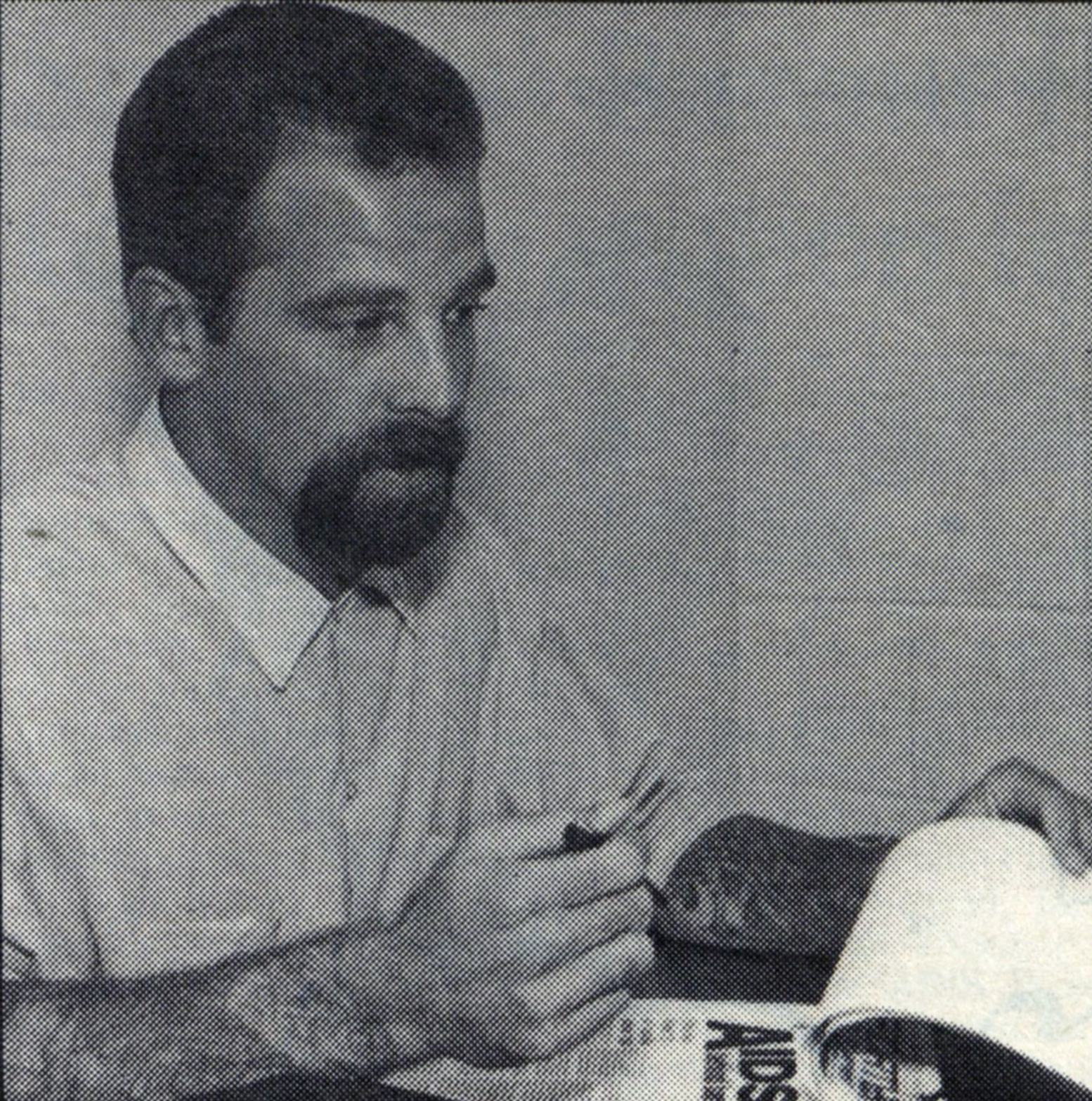
1992: Brian Carmichael [Photo: Jane P. Cleland]
California’s Medical Facility in Vacaville had long carried a reputation for poor care of inmates diagnosed with AIDS and HIV. By 1992, Brian Patrick Carmichael — though HIV negative himself at the time — began speaking out after witnessing friends and fellow prisoners die of undignified deaths at the hands of the prison authorities; he helped establish Pastoral Care Services, organising round‑the‑clock vigils to accompany those in their final days and hours. With the support of fellow inmates Charles Perry, Laos Schuman, Peter Yvanovich and more than 100 others, Carmichael alerted the press, politicians and the public to the appalling conditions, undertaking medication protests and hunger strikes to force attention and change.
Although the changes were slow, they began to take effect, and with the support of ACT UP San Francisco and fellow inmates, Brian never relented in his advocacy. That persistence, however, came at a cost: while incarcerated he and his comrades suffered retaliation from prison authorities, and on release—after being diagnosed HIV‑positive—his activism had made him a marked man, exposing him to what seemed to be further reprisals by the police. Despite the personal danger, Brian continued to press for reform, refusing to be silenced even as the stakes and the consequences escalated.
1987: concerns first raised around HIV/AIDS among inmates at the California Medical Facility five years earlier had culminated in legal action by prisoners then in custody; the suit prompted an out-of-court agreement in which the state committed to make specified improvements to medical screening, segregation policies, treatment access and staff training, acknowledging systemic failures and setting a precedent for more accountable healthcare practices within California’s prisons. Yet Brain Carmichael and his comrades raising the same concerns in 1992 demonstrated that the prison authorities didnt keep pace with the AIDS Pandemic.

Click to Open in New Window


Bay Area Reporter - 3 December 1992
INMATE ACTIVISTS
Brian has been clear in recent interviews that he cannot accept sole praise for the activism that transformed conditions for prisoners with HIV/AIDS; he insists that the real credit belongs equally to his fellow comrades—men who were themselves incarcerated and diagnosed with the disease—whose collective courage, organising and daily struggle for dignity and better care drove the campaign forward, often at great personal risk and sacrifice.
L.A. Times 29 October 1993
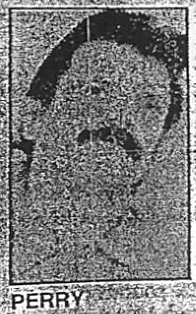
So far we have only been able to lay our hands on this grainy photo of Charles Perry taken in prison for a report featuring both him and Brian Carmichael and the hunger strike the pair undertook, calling for better care and treatment for prisoners with HIV/AIDS.
Brian described Charles as a “big tough—biker dude” who knew how to handle himself, but underneath that tough exterior was a “sweetheart.” Charlie lived with an AIDS diagnosis and had his compassionate release delayed in apparent retaliation for advocating for an AIDS hospice at California Medical Facility, a campaign he and his comrades won; he was released on compassionate grounds and died of AIDS-related complications in October 1993.
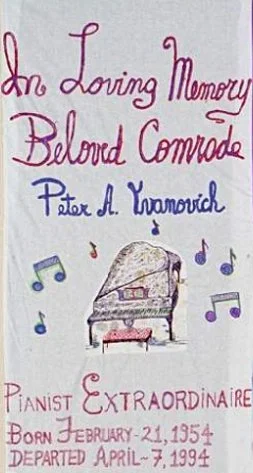
AIDS Quilt 5002
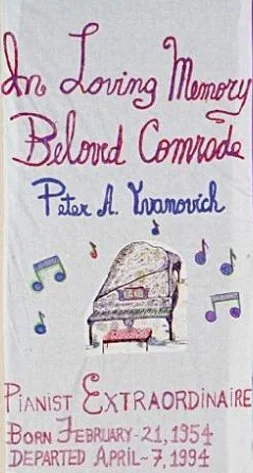
Peter Anthony Yvanovich, born in Hong Kong and later naturalised in the United States, was remembered on the AIDS Memorial Quilt as an exceptionally gifted classical pianist whose refined technique and deep musical sensitivity made him a familiar name in San Francisco and across California’s concert listings. Yet his musical promise was tragically eclipsed by an act of extreme violence: he stabbed his mother some 37 times and his younger sister more than 30 times, the sister surviving the assault leading to a sentence of 38 years behind bars. The brutality of those attacks — and the baffling contrast between his public artistry and the private collapse that produced them — remains deeply disturbing. In court he indicated he might plead insanity, a claim that invites painful questions about his mental state.
When researching individuals like Peter, who were incarcerated with an HIV/AIDS diagnosis, there is a risk of allowing the brutality of their crimes—here, the killing of his mother and the severe physical and psychological harm inflicted on his sister Laura—to harden our responses into unsympathetic verdicts that extend to their illness and death; ethical inquiry demands that we separate moral accountability for criminal acts from humane treatment of disease, recognising that the presence of a devastating diagnosis should neither erase the harm done nor licence indifference to suffering, while still allowing careful consideration of how illness, punishment and responsibility intersect in both personal histories and institutional responses.
Peter died in the new AIDS Hospice inside California Medical Facility, that he, Brian, Charles, Laos, Law and many other inmates campaigned and advocated for.
Brian Carmichael shared that Peter was an exceptional pianist and keen chess player.


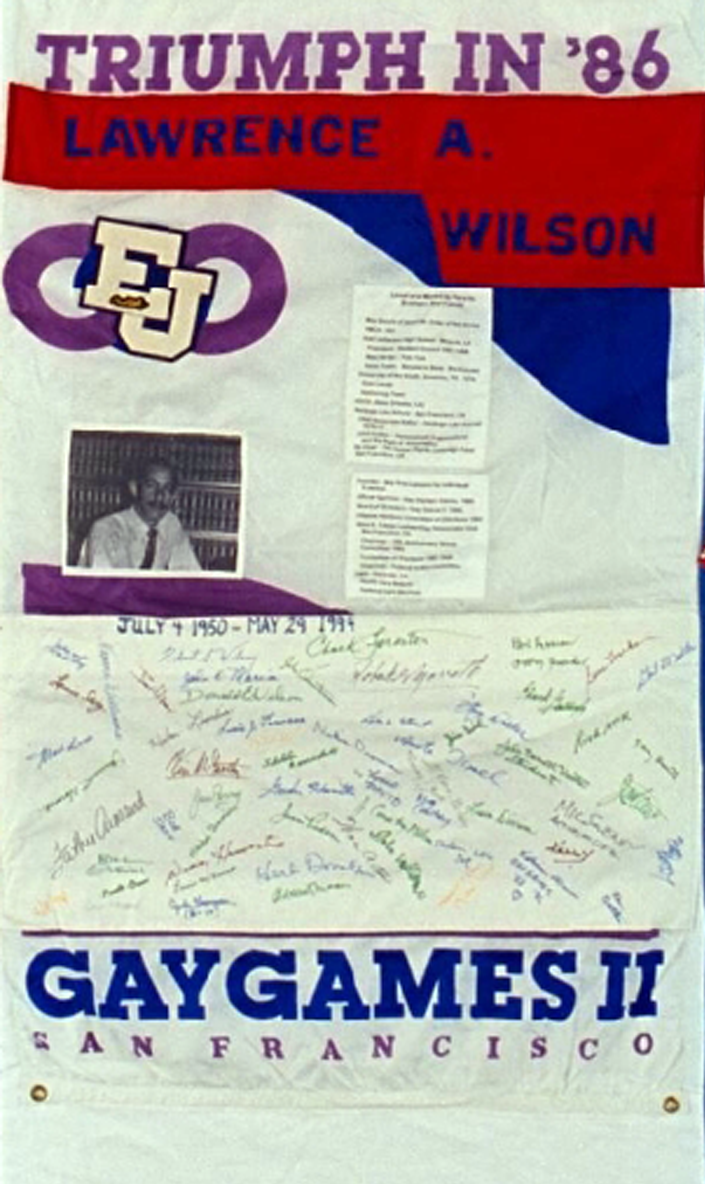
Lawrence “Law” Wilson was an extraordinarily successful lawyer whose career saw him employed at the office of the chief of police, where his remarkable record of activism spanned campaign work for racial integration, vociferous opposition to the Vietnam War, and pioneering efforts to open employment opportunities for gay and lesbian officers within the police force. As a board member of San Francisco’s Athletics and Arts and a key organiser of the Gay Games, he fused civic leadership with gay and lesbian cultural and sporting advancement.
His 1987 arrest for possession and dealing of drugs such as LSD and methamphetamine — substances that, for better or worse, were widely used on the gay scene at the time — complicated his legacy; he pleaded not to be sent to prison in part because he argued he would be unable to access life‑saving AIDS medication (then likely AZT) if incarcerated, a stark reminder of how the criminal justice system intersected with the early AIDS crisis.
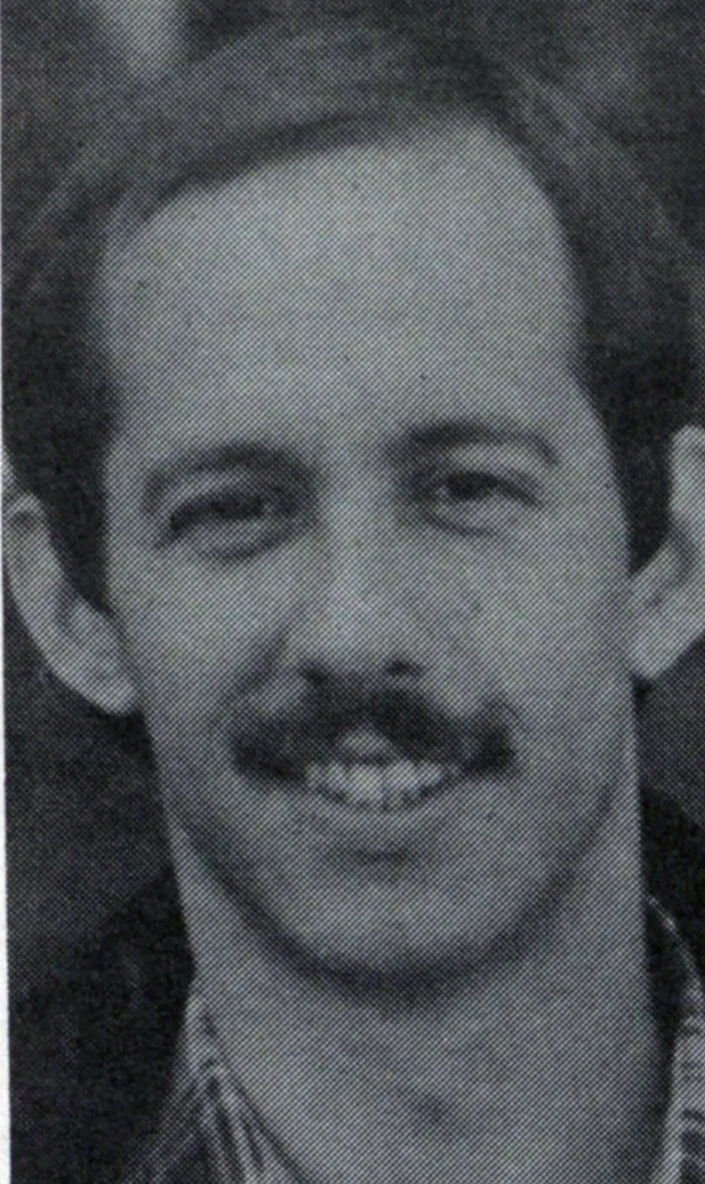
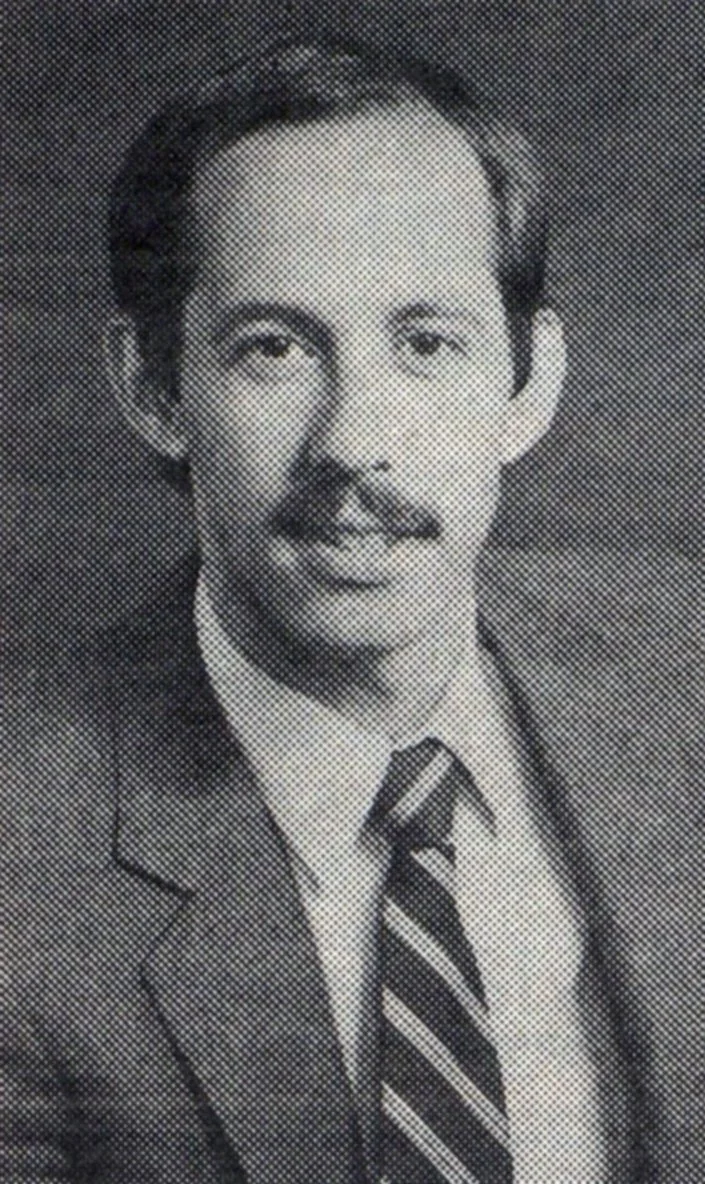
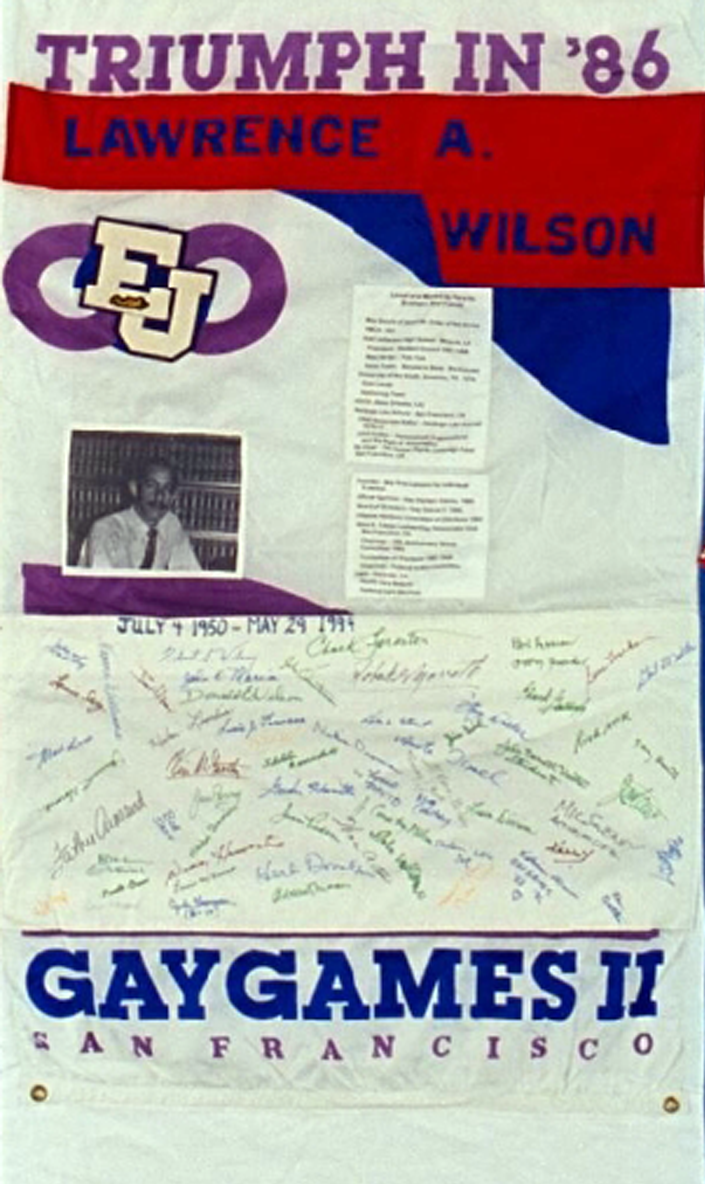
Fellow inmate, friend and prison activist Brian Carmichael suggested that Law’s friends and family may have felt embarrassed by the turn his life took, yet the irony is stark: it was Law’s first-hand experience of the appalling conditions on the AIDS segregation wing at California Medical Facility that turned him into a relentless advocate for change. Drawing on his contacts, he wrote tirelessly to anyone who could raise awareness—lawyers, journalists, policymakers and prison officials—and even while weakened by AIDS he never rested; he taught fellow inmates to read and to use computers, equipping them with skills that would be invaluable on release. The reforms sparked by that advocacy transformed treatment and care not only in California and across the United States but resonated globally, as delegations from other countries visited California Medical Facility to learn how best to treat incarcerated people with HIV/AIDS, and Law’s surviving family should be incredibly proud.


L to R: Cliff, Law Wilson, Unknown, Brian & Evelyn
“He was a beautiful person and wonderful friend.
He will remain loved, missed, and remembered”
- Brian Patrick Carmichael
AIDS Memorial Quilt
United States
"Everyone was crying,
and it was another life-altering
event for a lot of us"
-Brian Carmichael, reflecting on the Quilt being displayed at CMF, the first exhibition in a prison in 1992
In February 1992 the AIDS Quilt arrived at Vacaville, only to be subjected to prison protocol: panel by panel searches, drug-sniffing dogs traipsing across the hand-made quilts, a humiliating theatre of suspicion that, for Carmichael, epitomised the prison’s institutional contempt for people with HIV and AIDS. "That's what we were up against, every day, trying to get access to the segregation units, hospitals, etc.," he recalls, the indignity folded into routine security postures. Yet the indignation did not extinguish the Quilt’s power; hundreds filed through the chapel to view the dozens of panels on display, and the room was thick with grief and recognition. "Everyone was crying, and it was another life-altering event for a lot of us," Carmichael says, underscoring how, despite demeaning procedures, the memorial created a profound communal shift within those walls.
Visit & Explore the United States AIDS Quilt at: AIDSmemorial.org

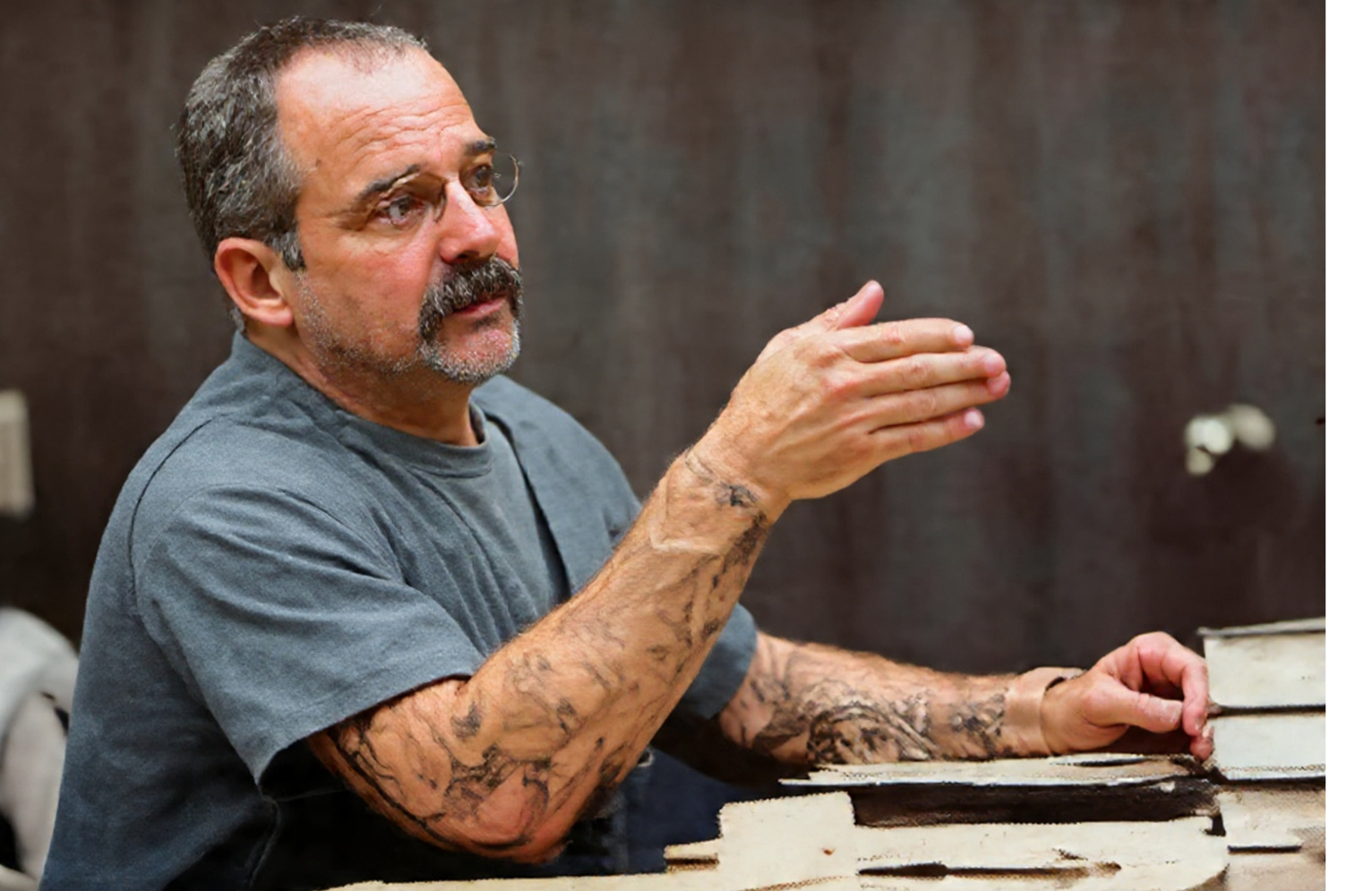
ACTIVIST: Brian representing himself in court 2001
In the second episode of three, prison HIV activist Brian Carmichael is released on parole and takes up a post as manager of a sober living programme, determined to enforce its rules and rebuild his life; his attempts to introduce structure are met with a false allegation from a resident, which, though ultimately vexatious, unleashes a barrage of harassment that Brian believes stems from the public profile he gained campaigning for better care and services for inmates with HIV/AIDS—work that drew intense press attention despite him being HIV‑negative—and that continues to shadow him as he tries to translate activism into everyday rehabilitation.
Click to Open (New Window)








1960 - 1999
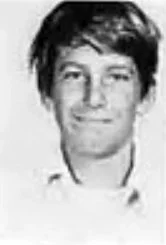
James Kevin Mahoney Jnr., born in 1960, was convicted at 22 alongside two others for the killing of 27-year-old Edward Harrison; court reports and subsequent articles contain graphic and disturbing details of that crime. Seventeen years into a life sentence without parole, Mahoney—openly gay and widely regarded within the prison as vulnerable—was placed alone in an exercise yard with a prisoner who had just emerged from confinement after killing his cellmate. The institution, notorious for tolerating so-called “gladiator fights” and for deliberately exposing vulnerable inmates to violent offenders (including a convicted rapist known among inmates as the “booty bandit”), effectively left Mahoney isolated and unprotected; the other prisoner beat him for more than an hour before strangling him to death.


The descriptions of James’s murder are disturbing and deeply saddening, and while it is natural to feel compassion for the violent way his life was taken, the brief account of how he came to be serving life without parole complicates that sympathy. James had been convicted of grave offences that warranted the harshest penalty available, reflecting a life and actions that left victims and communities profoundly harmed. That background does not lessen the horror of his death, nor does it justify extrajudicial killing; no individual has the right to take another’s life. The case forces an uneasy reckoning between empathy for the murdered and recognition of the severity of the crimes that led to James’s incarceration, underscoring the tensions between justice, punishment and the sanctity of human life.
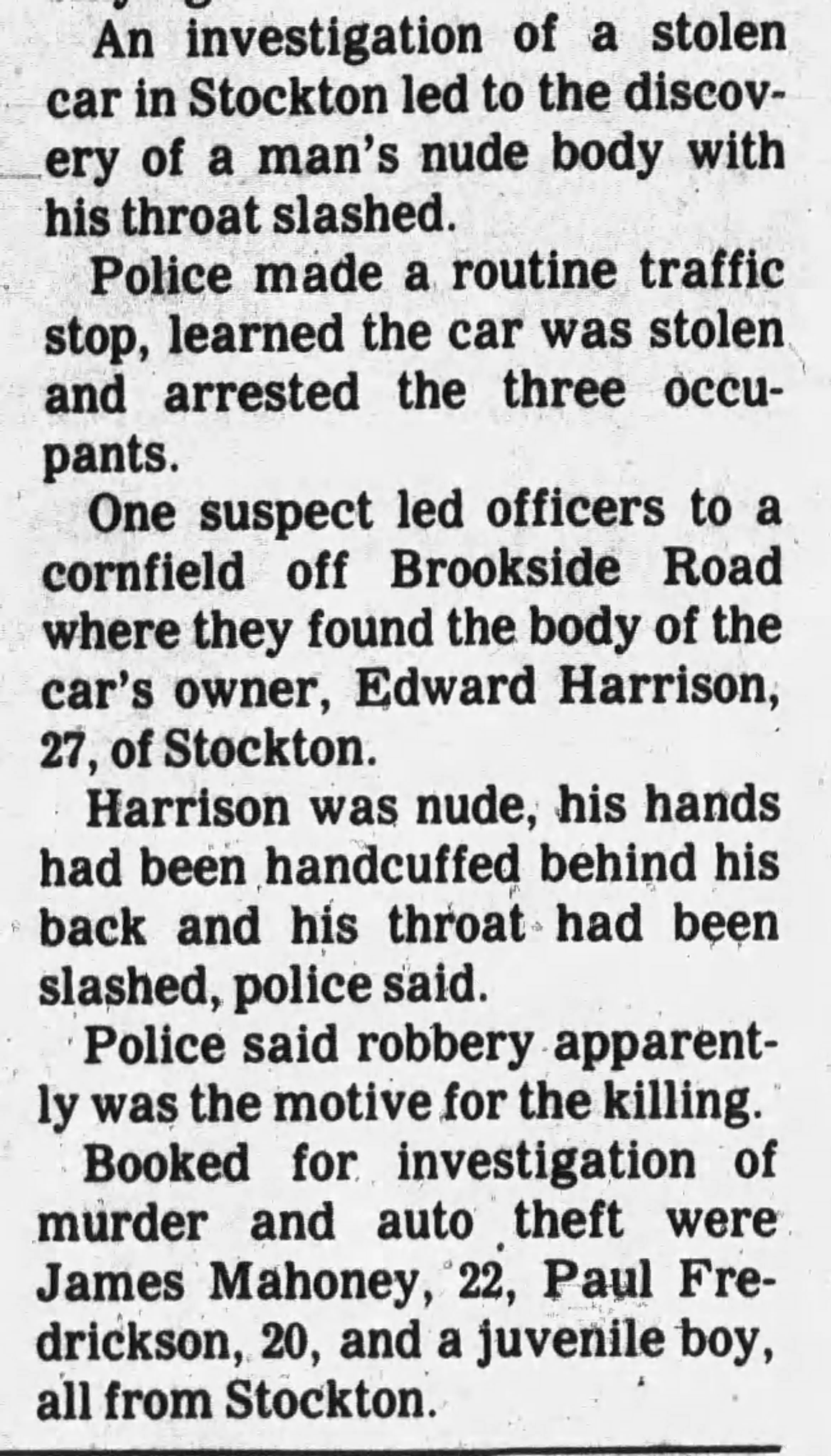
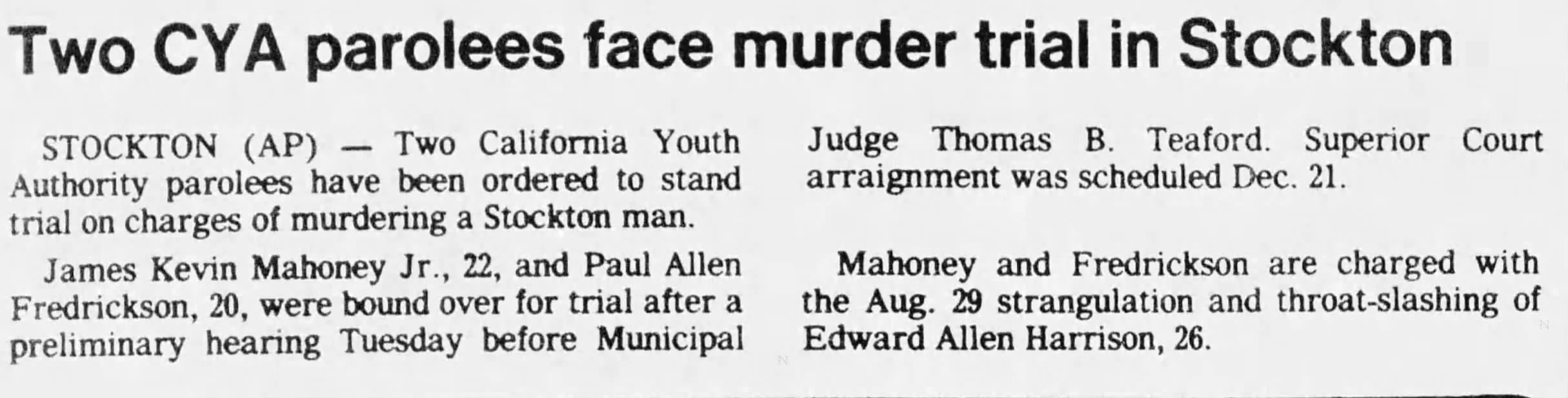
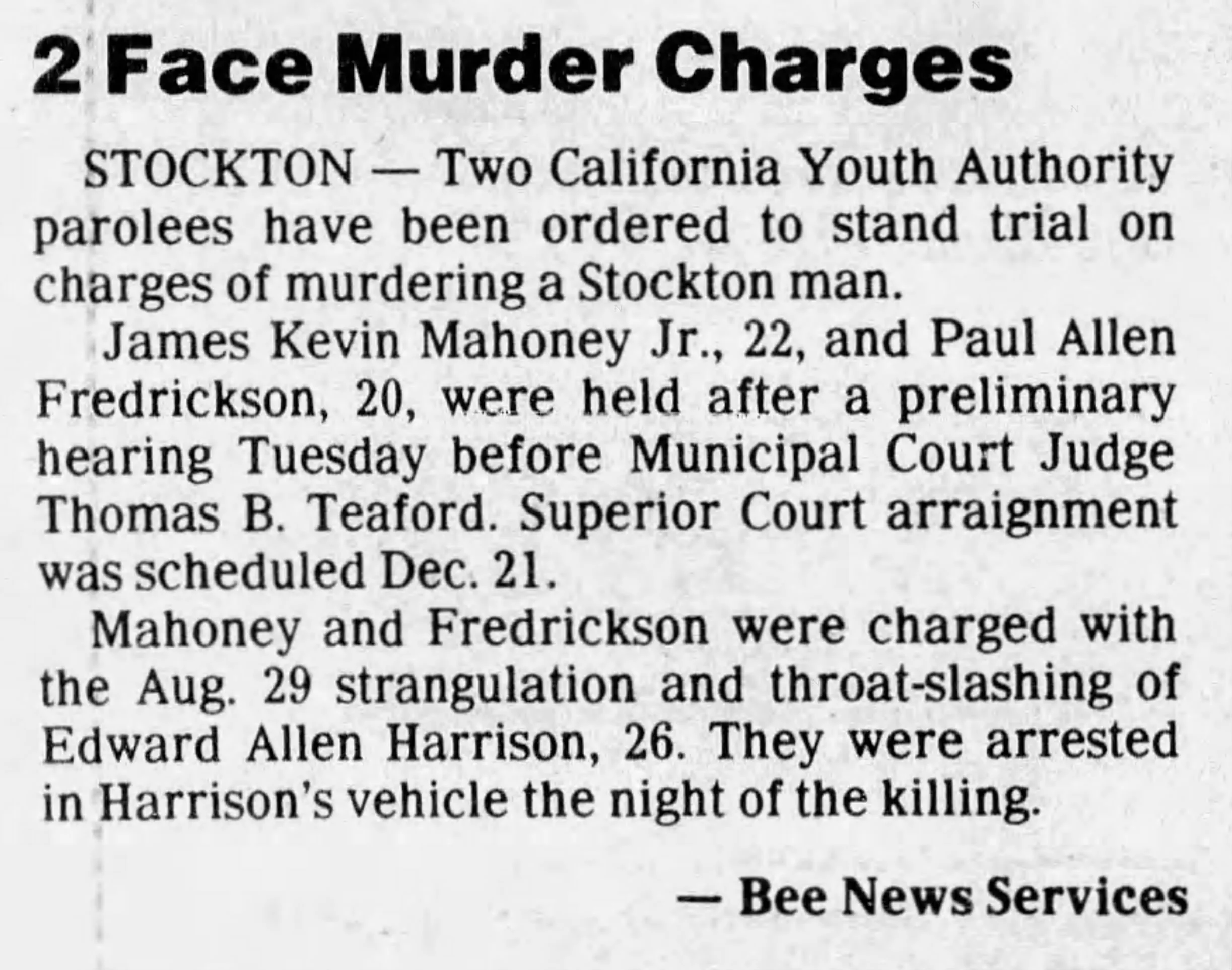

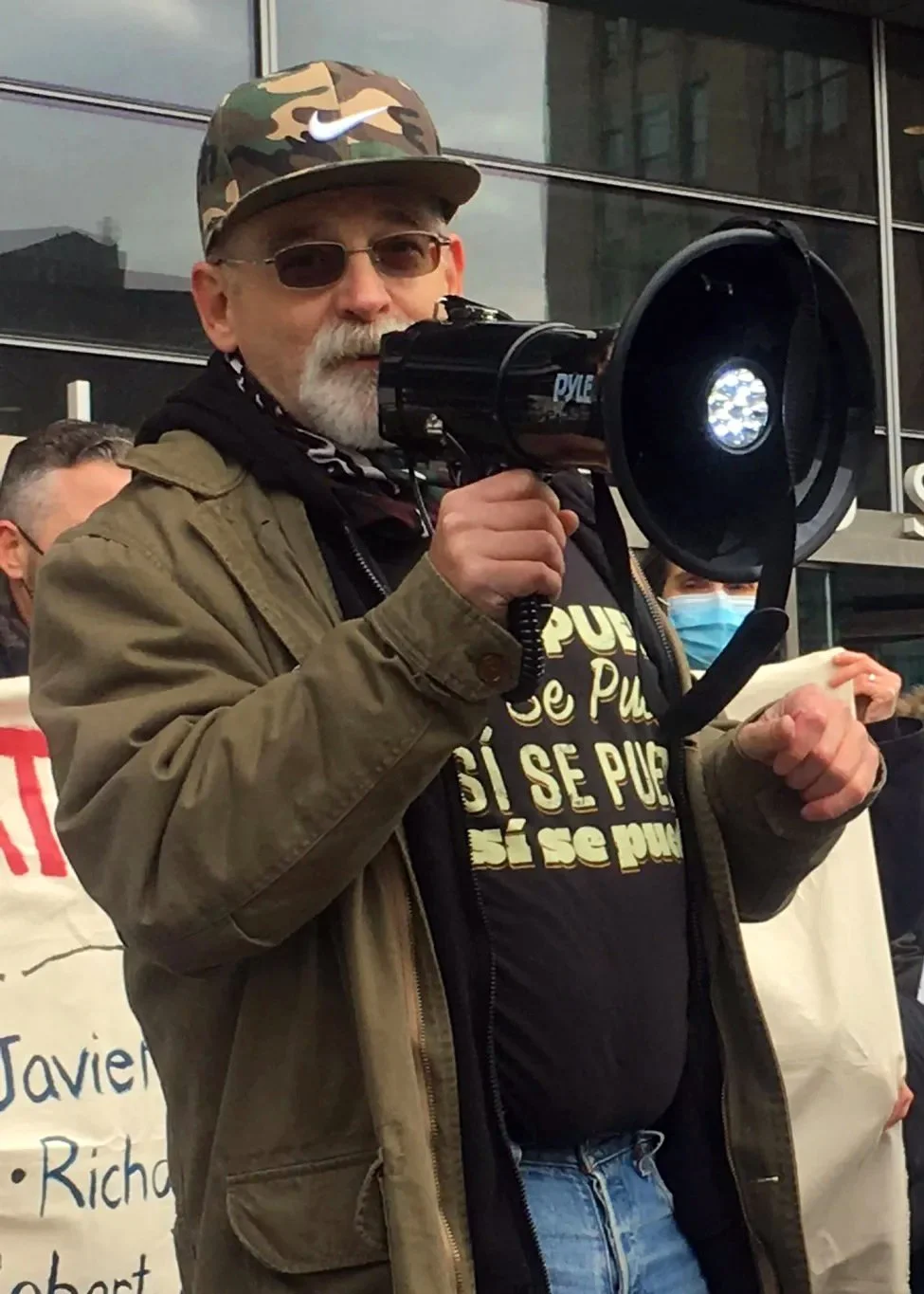
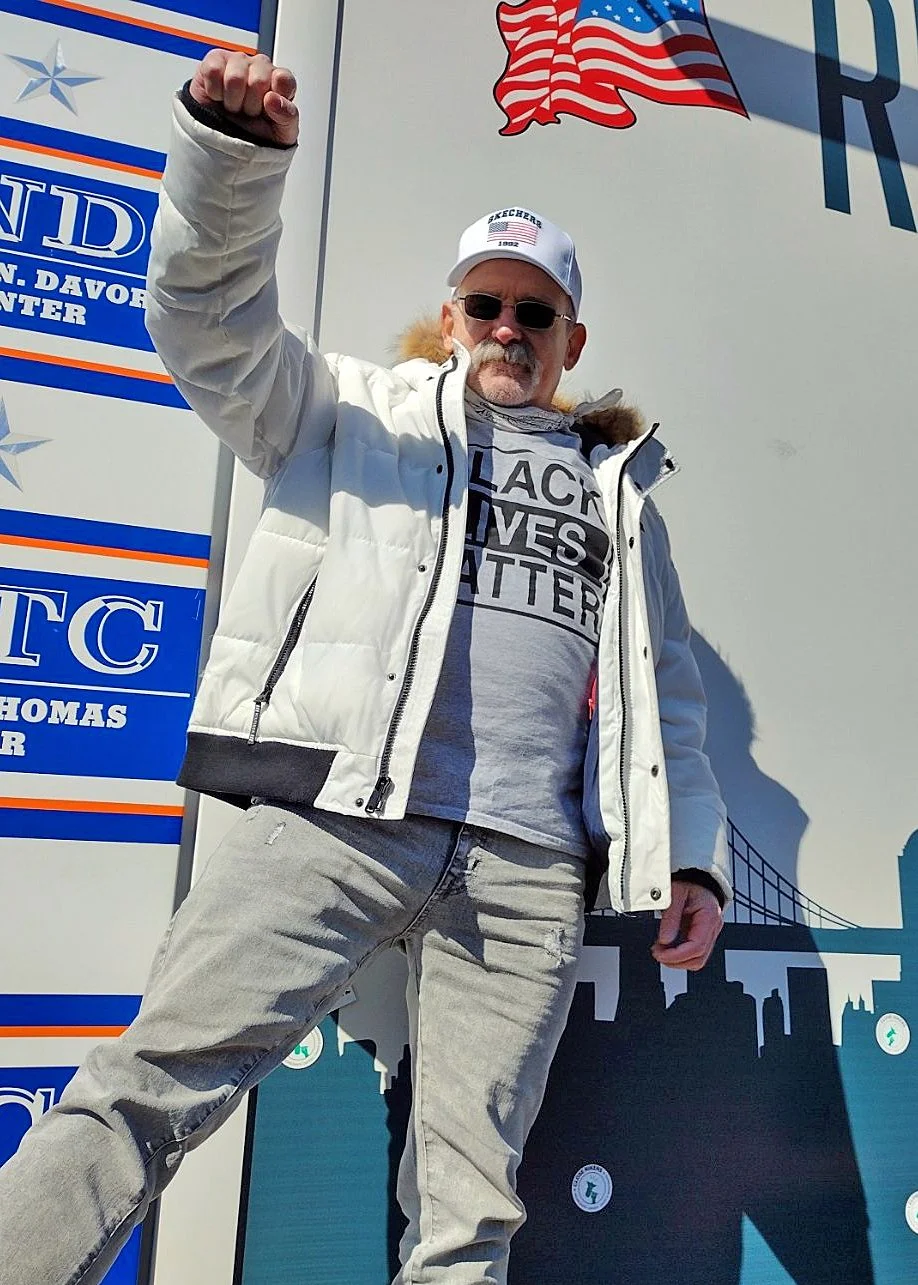
In the third and final episode of Prison and HIV Activist Brian Carmichael, we hear the sentencing outcome of Brian’s 2001 conviction after an incident in which a police officer, having kicked his feet from underneath him, alleged that Brian’s subsequent fall caused an injury and led to a battery charge; Brian contests the ruling, mounting an appeal that winds its way through the courts while he and his then partner relocate to New York City, a move that becomes both refuge and new terrain for his activism as he navigates legal uncertainty, personal upheaval and the broader struggle for justice.
Years later Brian found himself back inside on drug‑related charges, a period he later acknowledged in interviews as a deeply personal battle with drugs and alcohol. But, while incarcerated at Elmira Correctional Facility he became a highly respected peer educator for the “Know the Risks” programme, teaching thousands of inmates the basics of HIV, hepatitis C and other STIs and offering practical harm‑reduction advice.
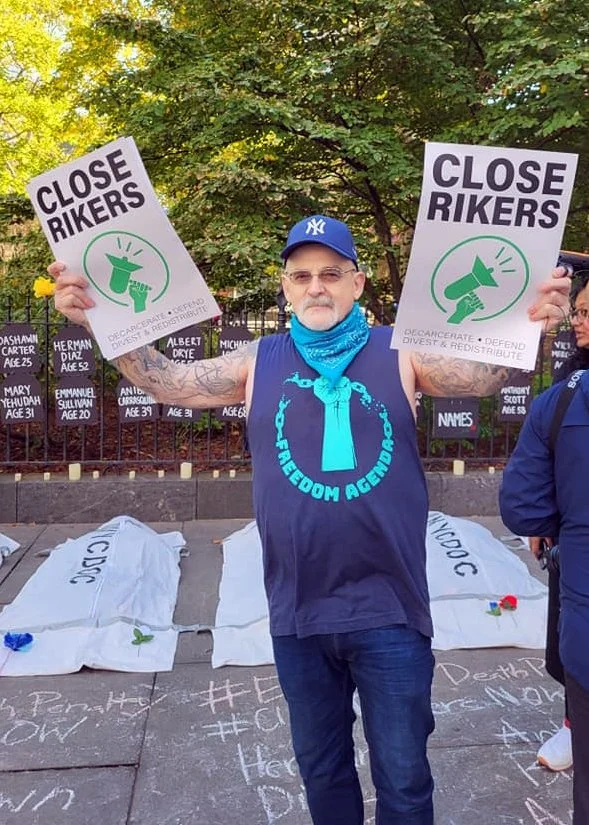
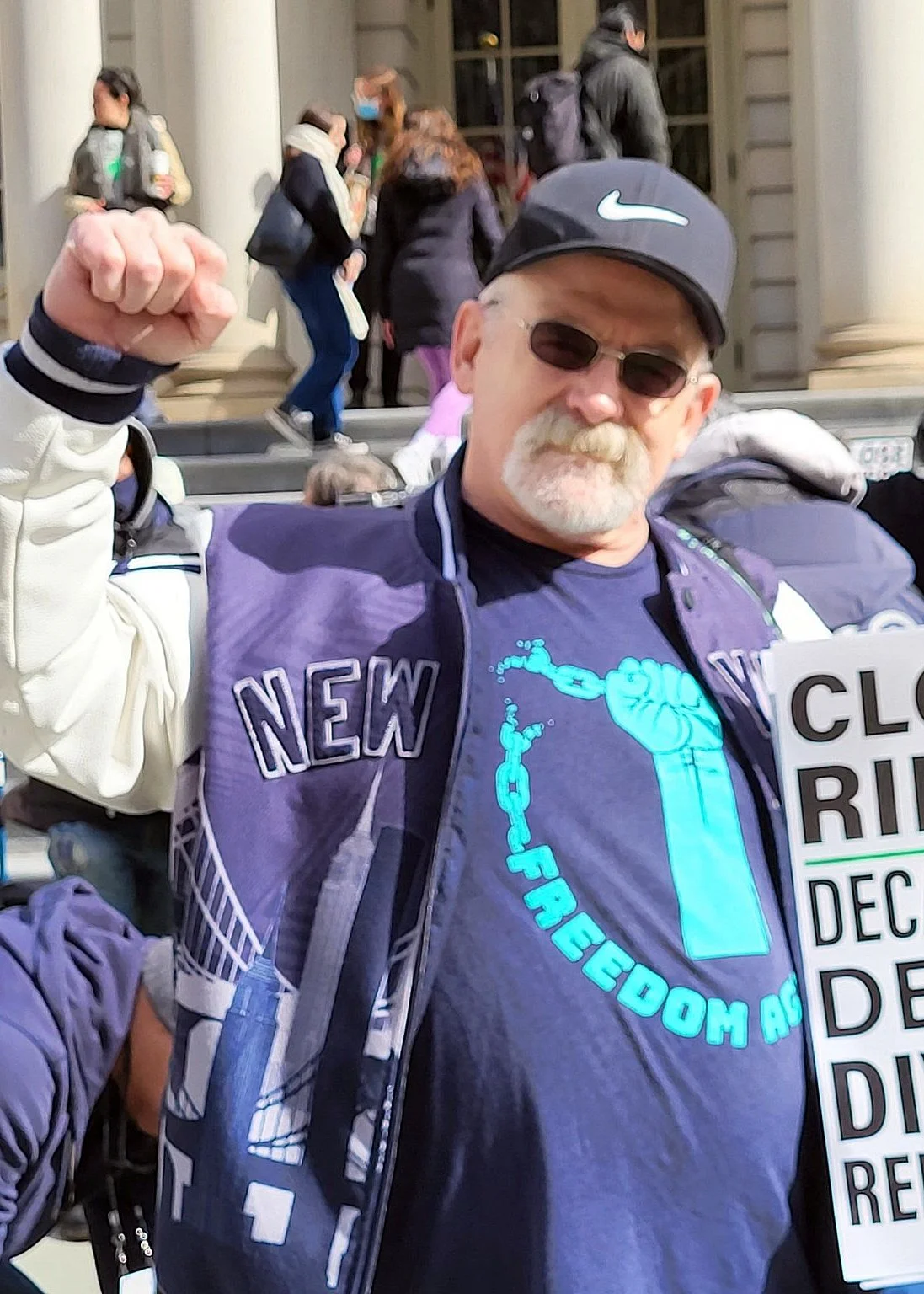
After securing parole following thirteen years, he resumed his activism, exposing appalling conditions and unnecessary deaths at Rikers Island and pressing for accountability. Celebrating years of sobriety and sober living, Brian now uses his voice and long‑standing experience to raise awareness of these abuses; his testimony and campaigning are widely regarded as a valued contribution to calls for meaningful reform.
Click to Open (New Window)


CLOSE RIKERS ISLAND!
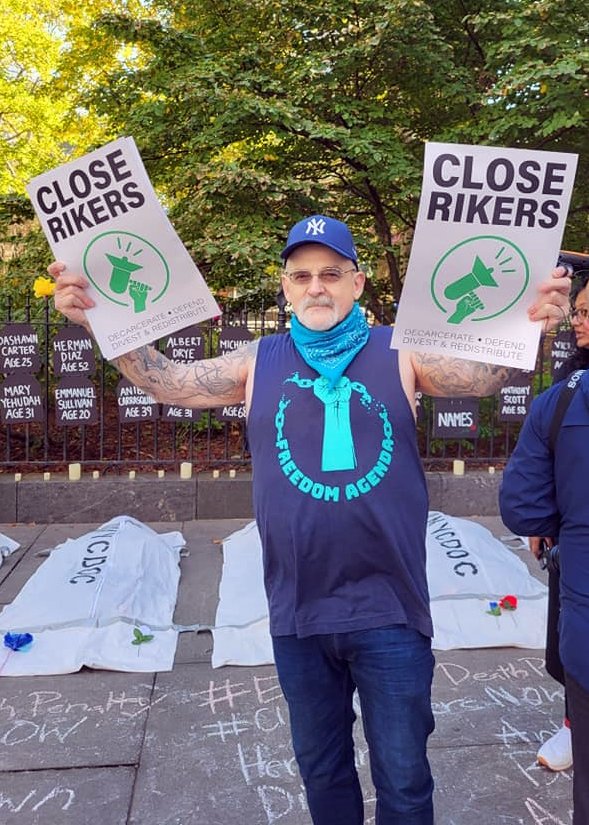
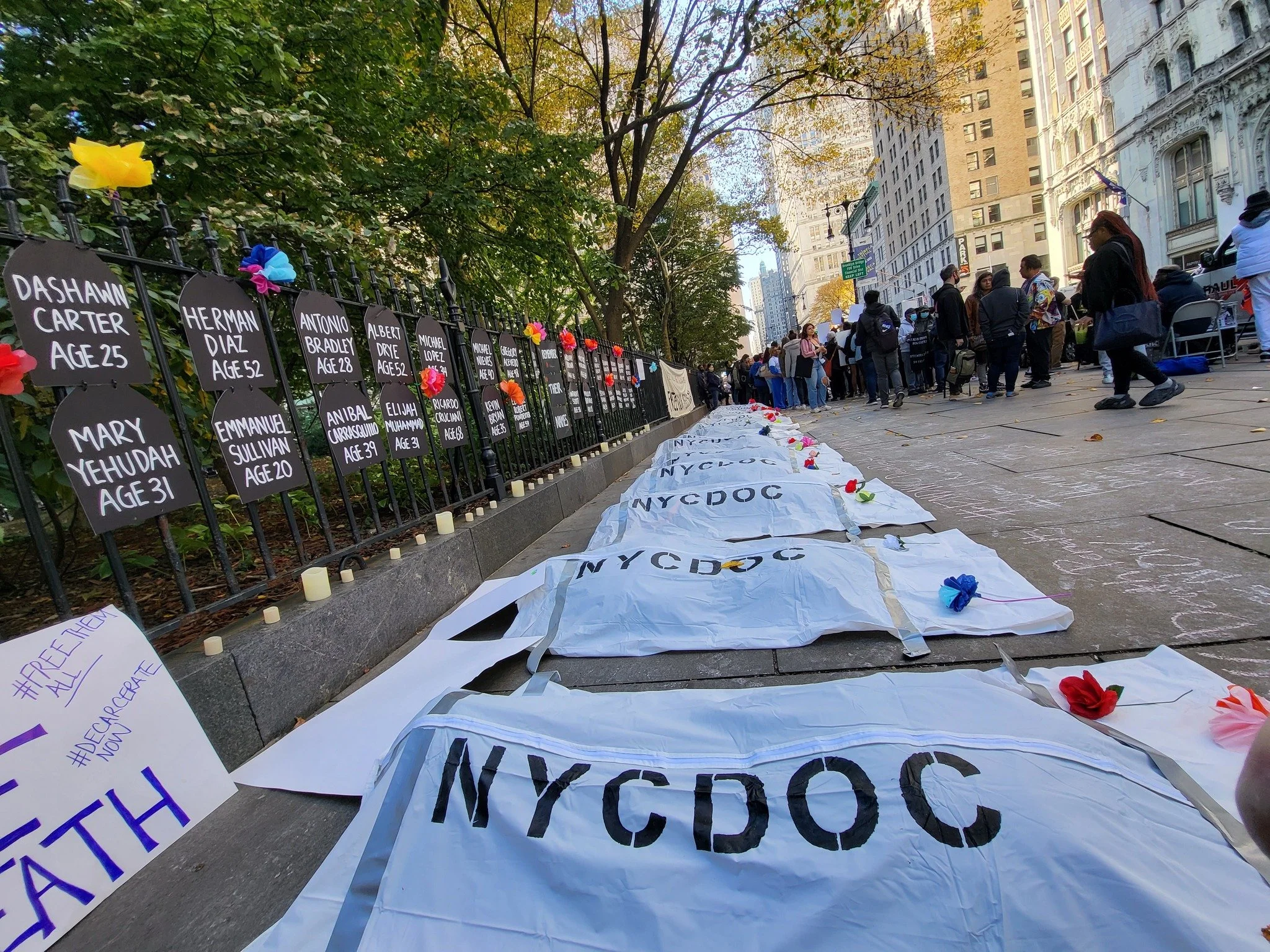
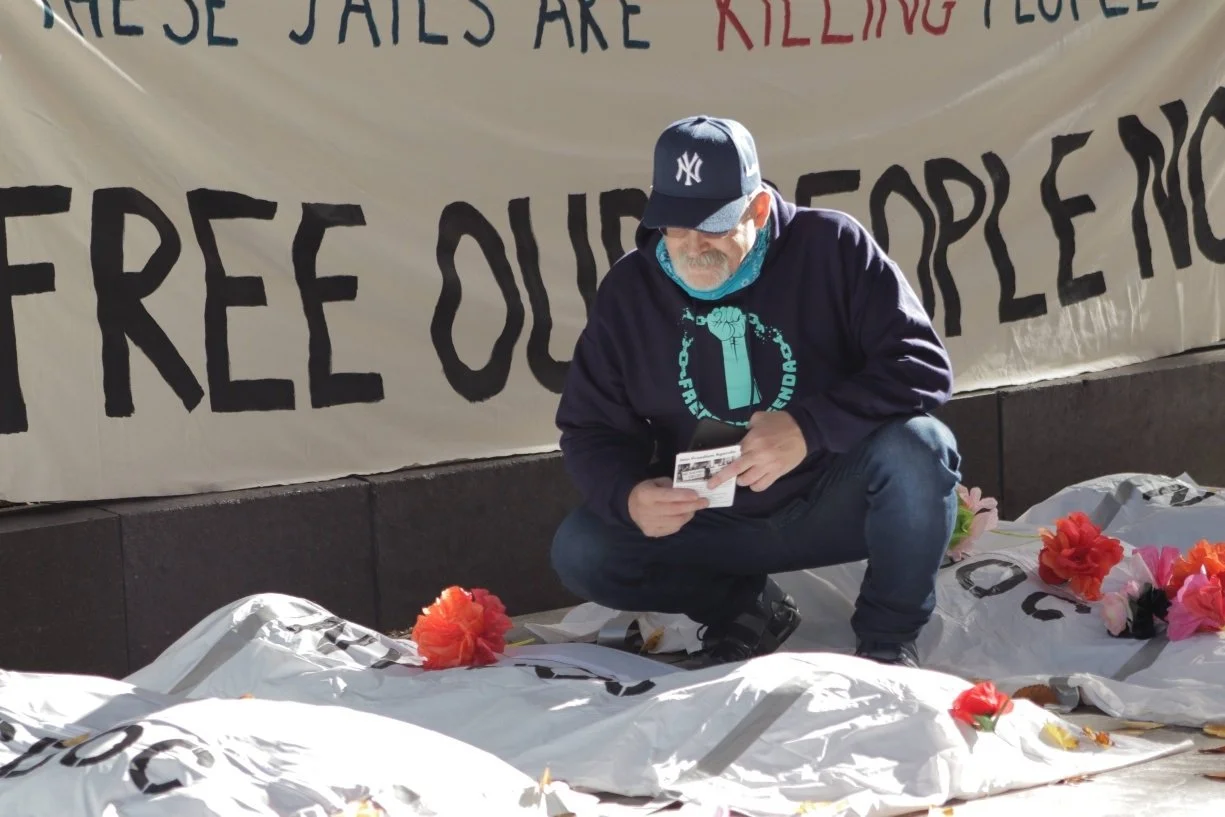
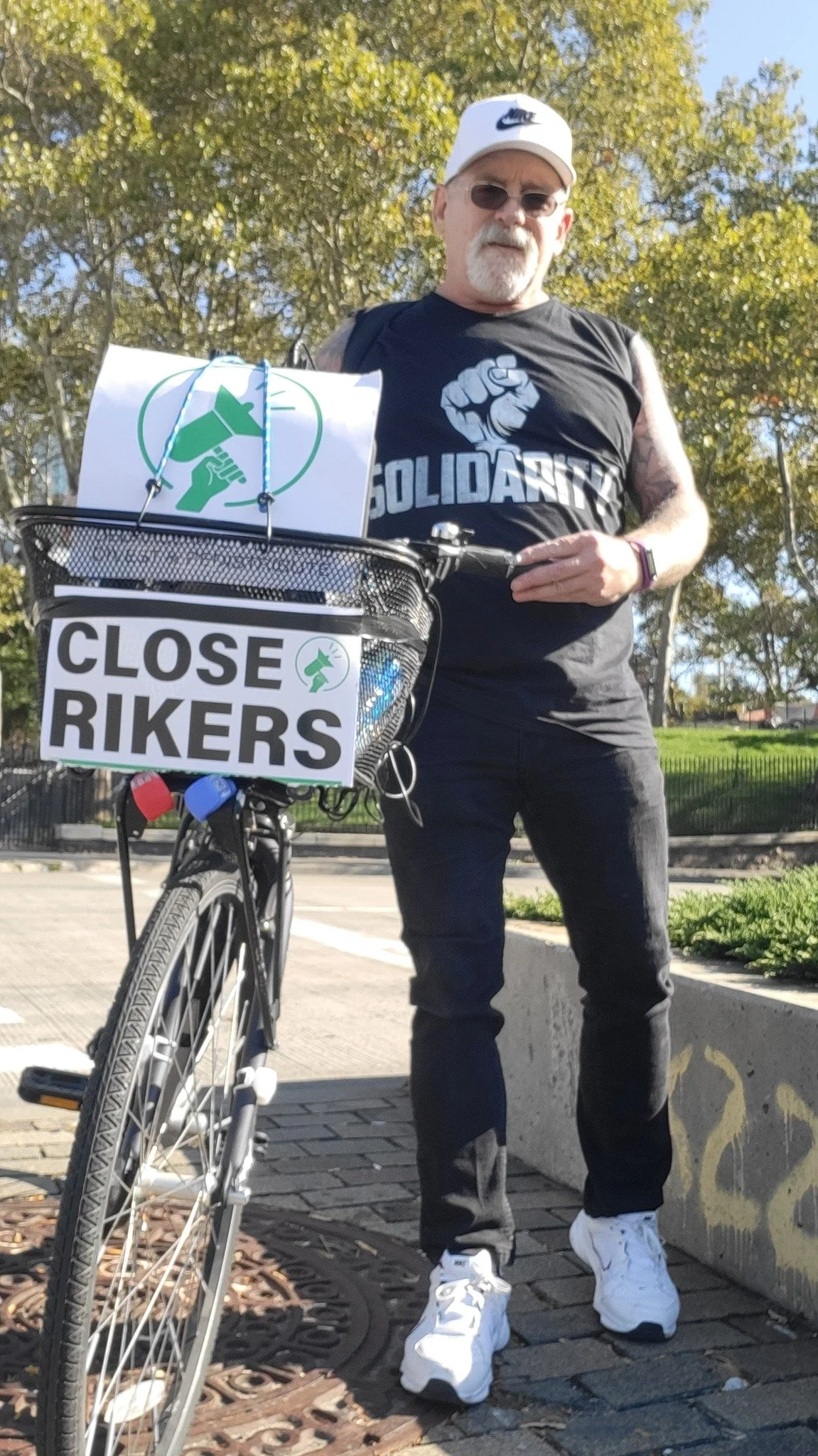
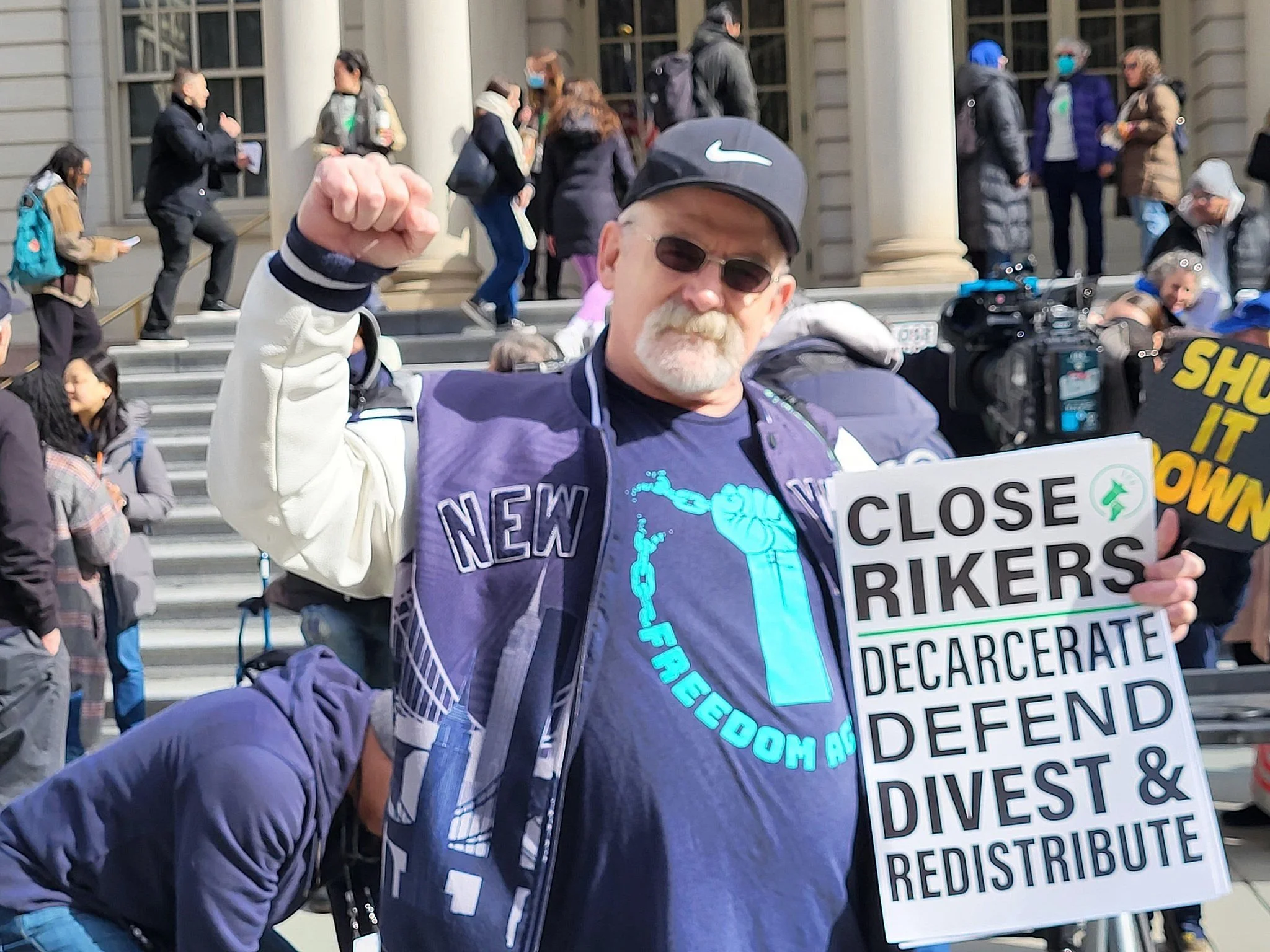
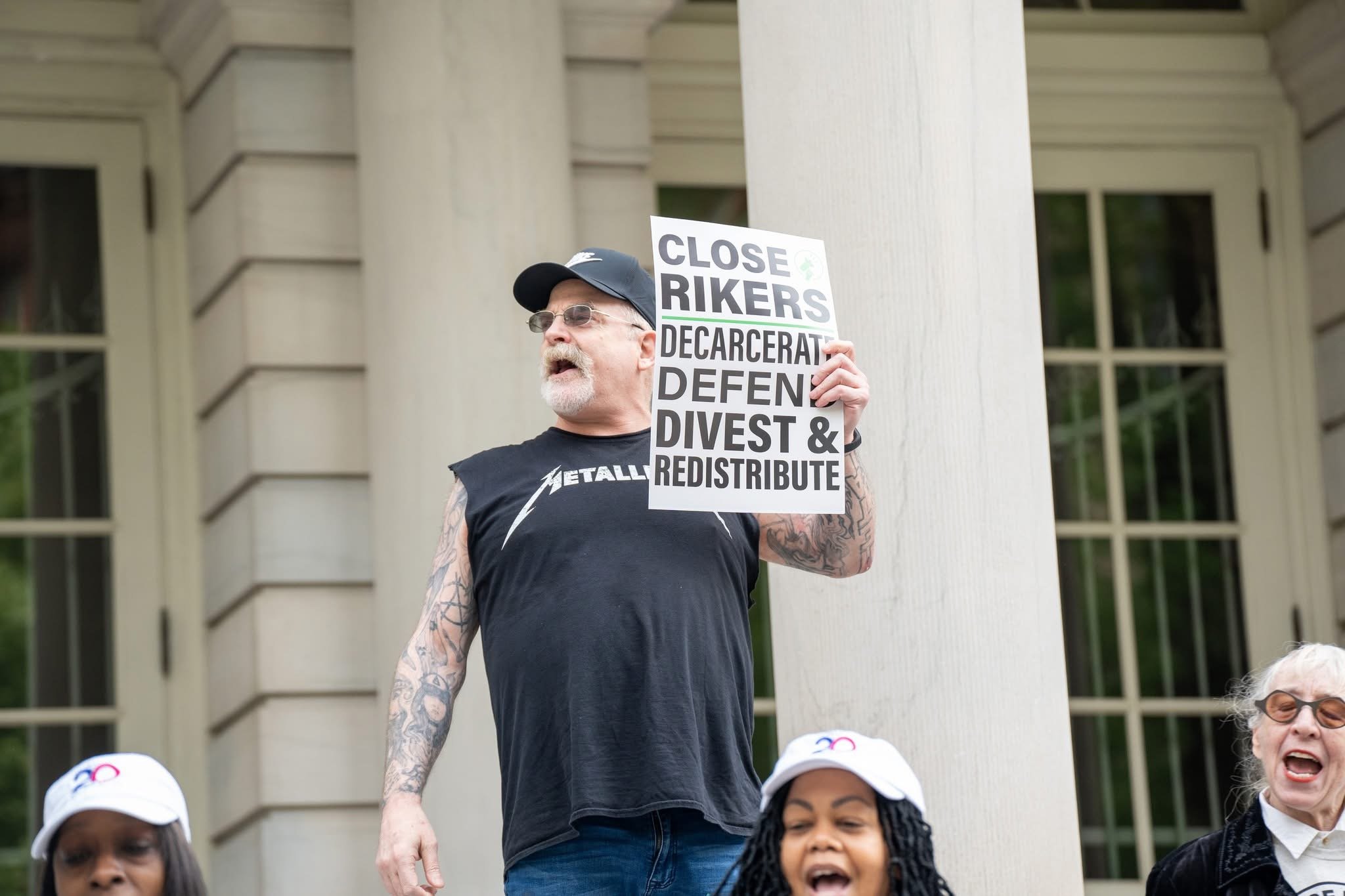
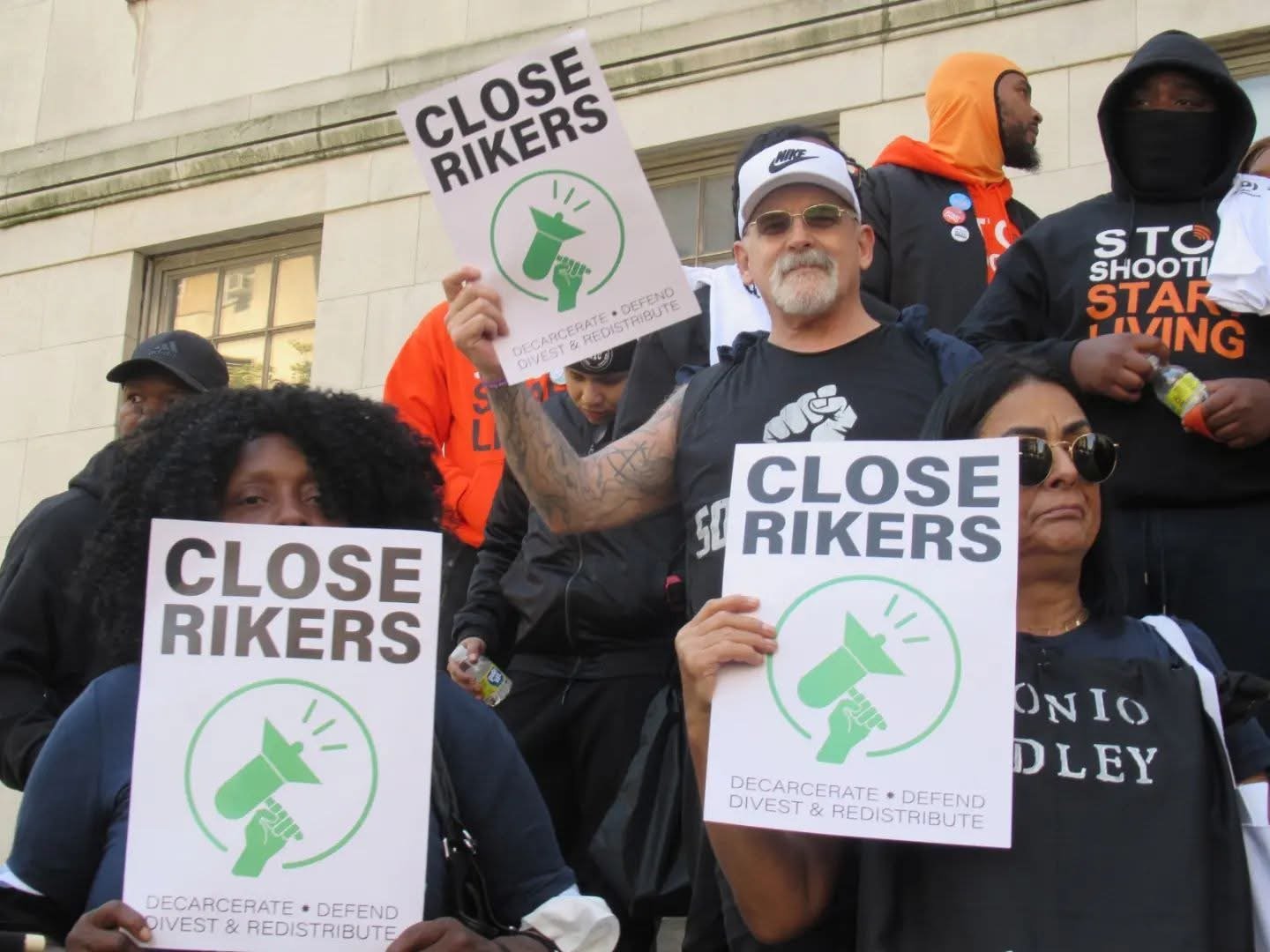
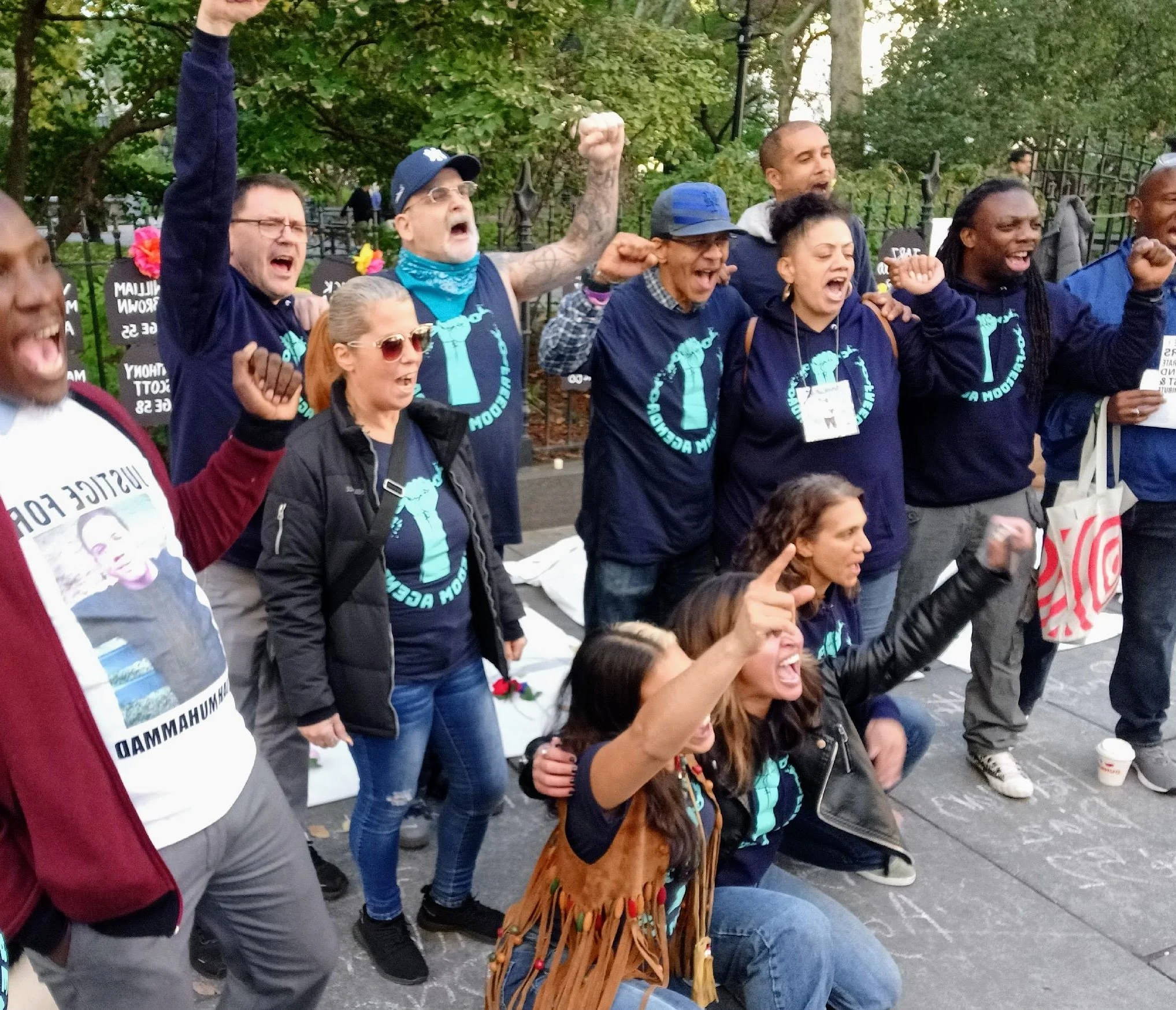
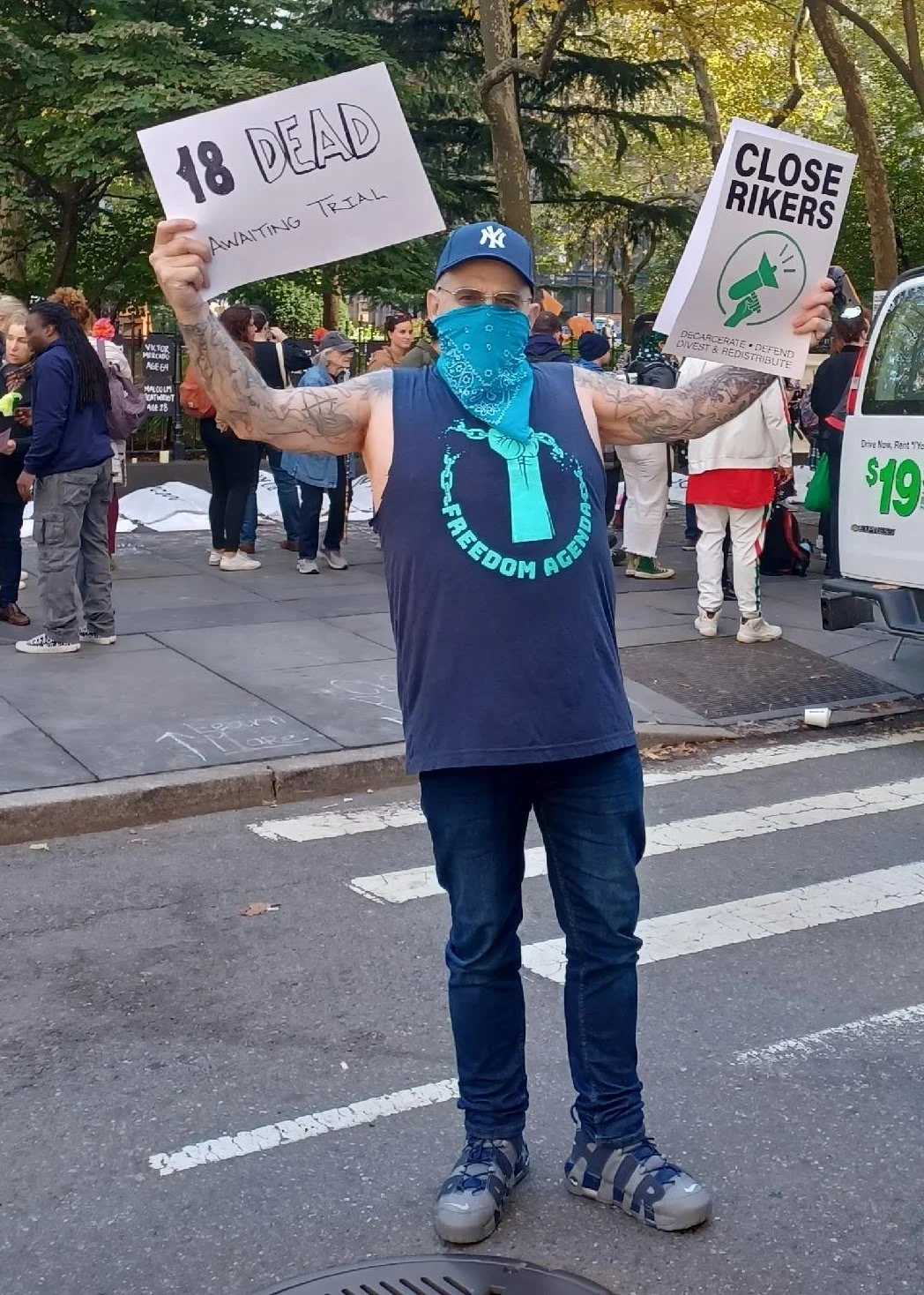
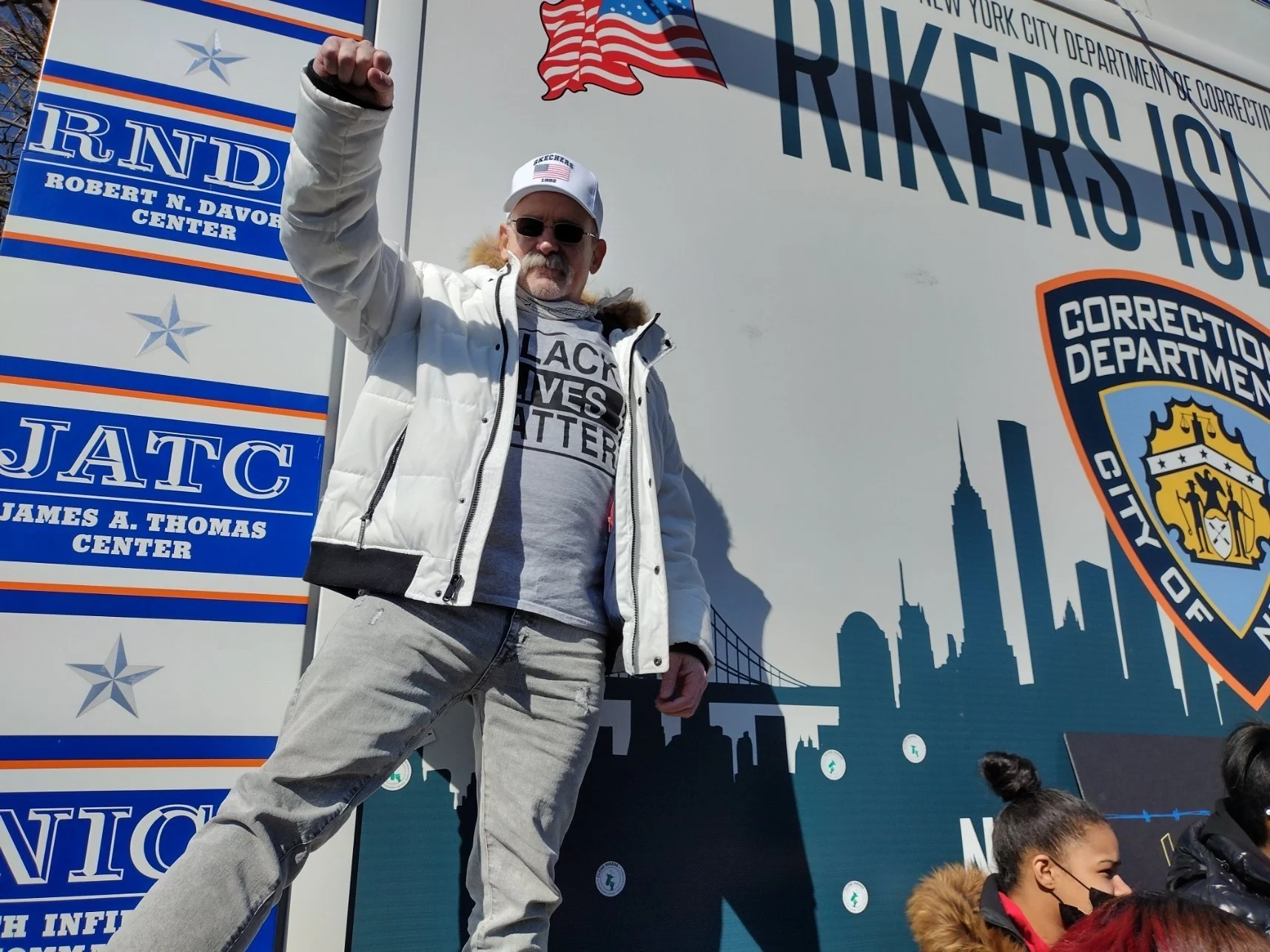
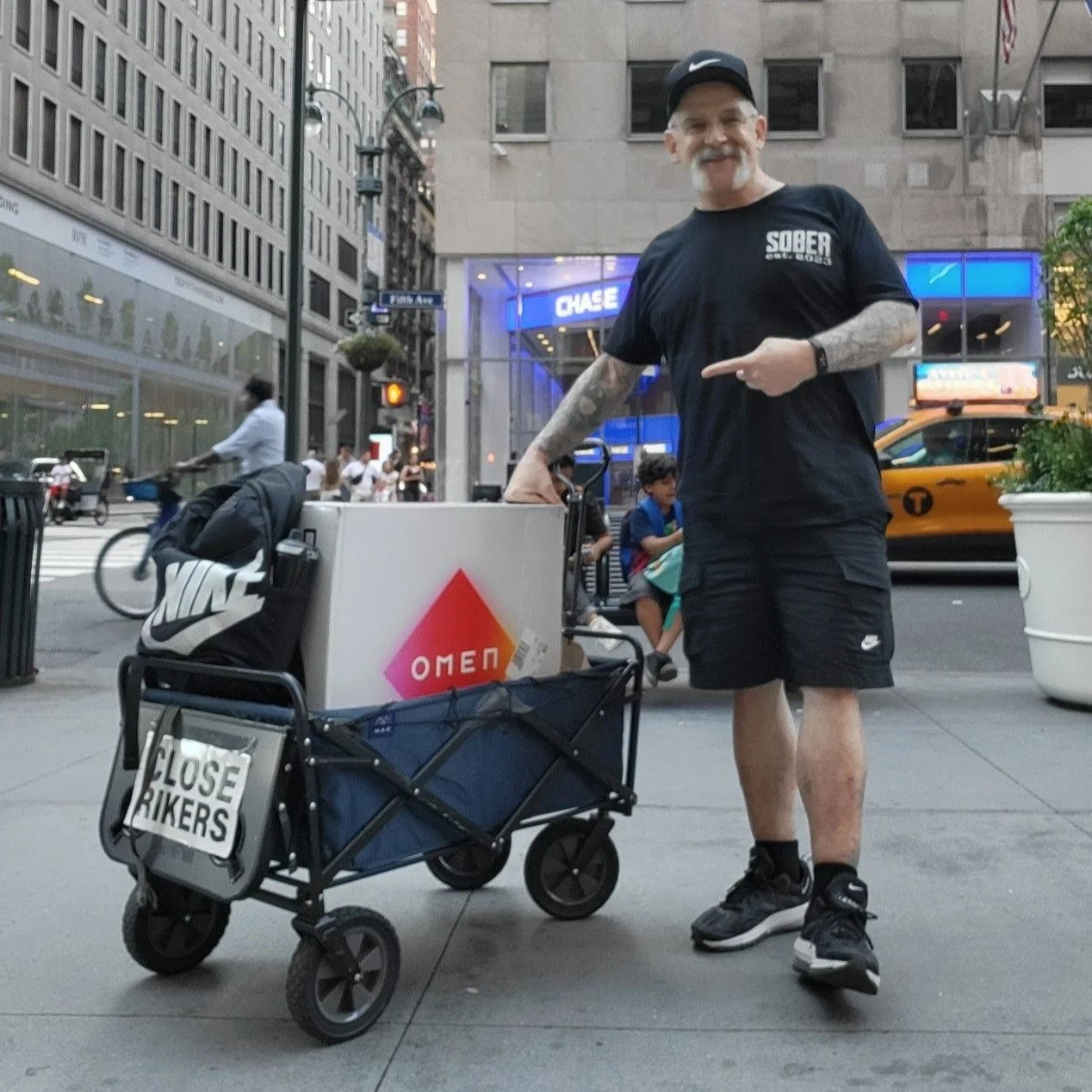
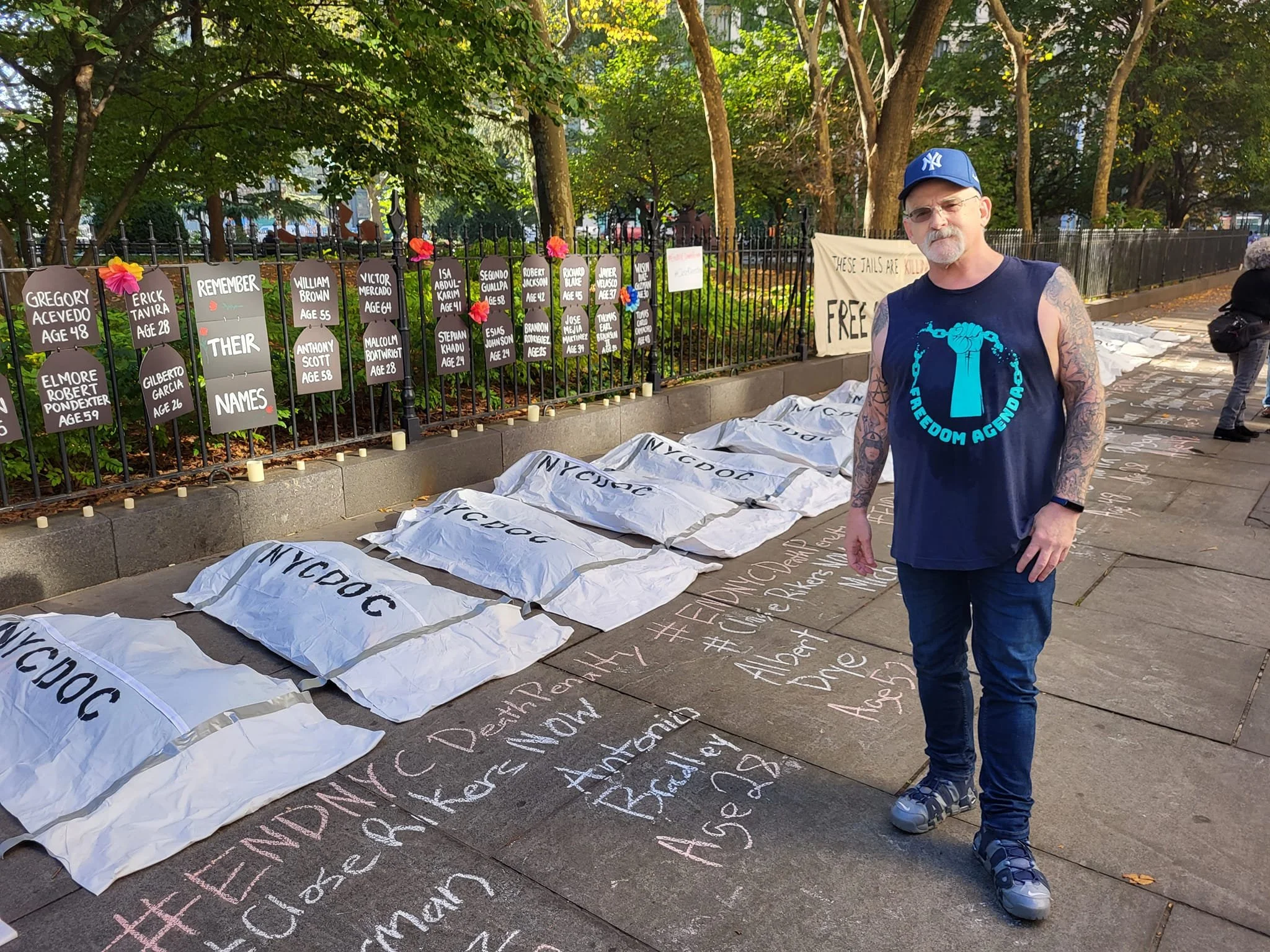
PHOTOS: Brian Carmichael VIDEO: Freedom Agenda

Upon Brian’s release from a lengthy spell inside, he naturally set about raising the alarm over a catalogue of unnecessary deaths among inmates at Rikers Island, drawing on his own time served there to give weight to his activism. A long-established and vocal activist, Brian produced a string of interviews and a pen/opp between 2017 and 2021 in which he revisited his earlier organising in the late 1980s and early 1990s—campaigning for improved care for inmates with HIV/AIDS at Vacaville’s California Medical Facility—and connected those struggles to the ongoing neglect he saw at Rikers. Candid about the difficulty of maintaining sobriety, he nevertheless played up the periods of sustained success he had achieved, using his lived experience of incarceration, HIV diagnosis and AIDS advocacy and recovery to press for accountability and reform.
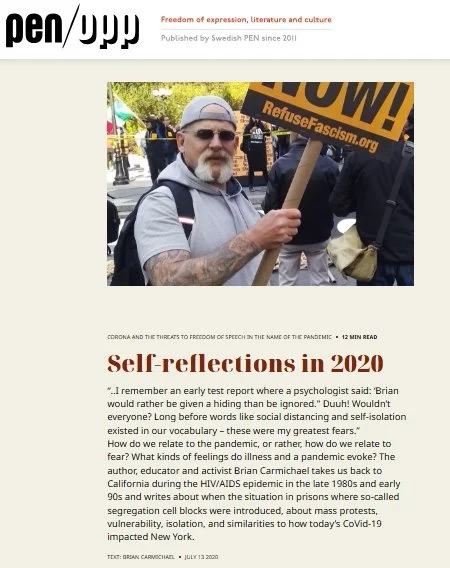
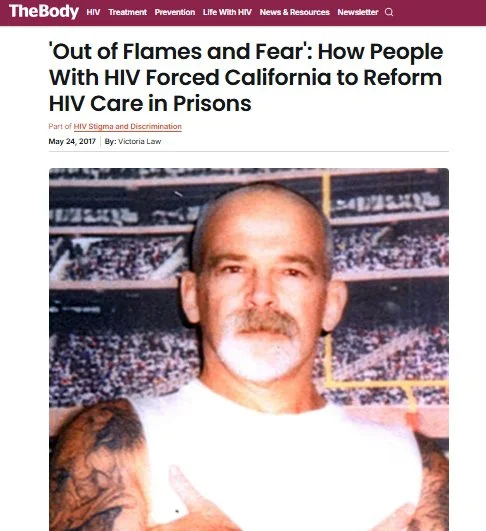
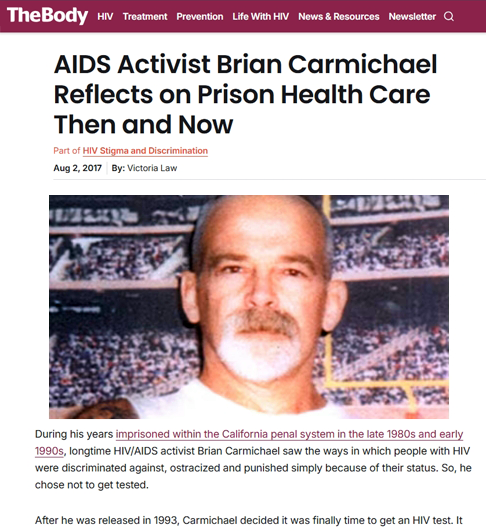
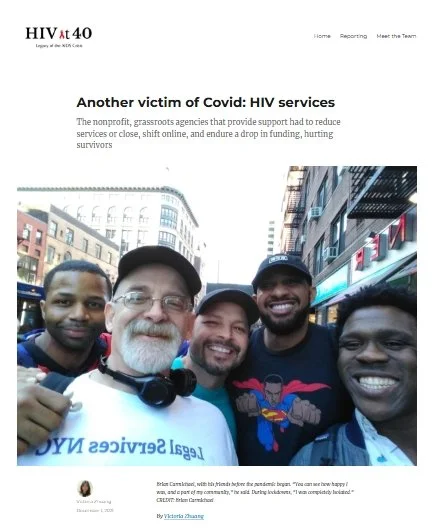
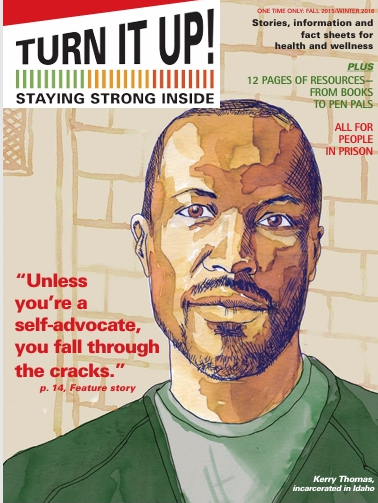

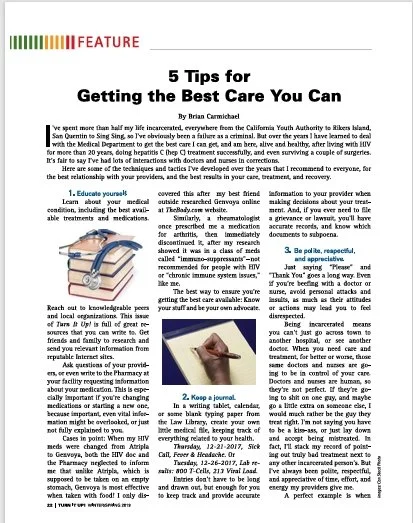
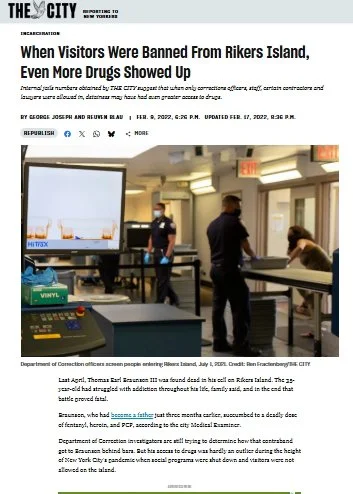
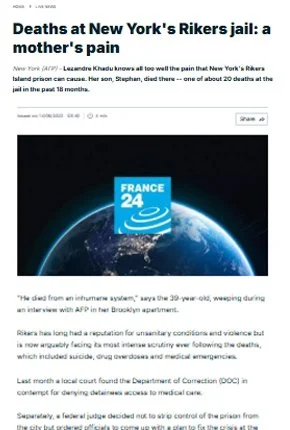
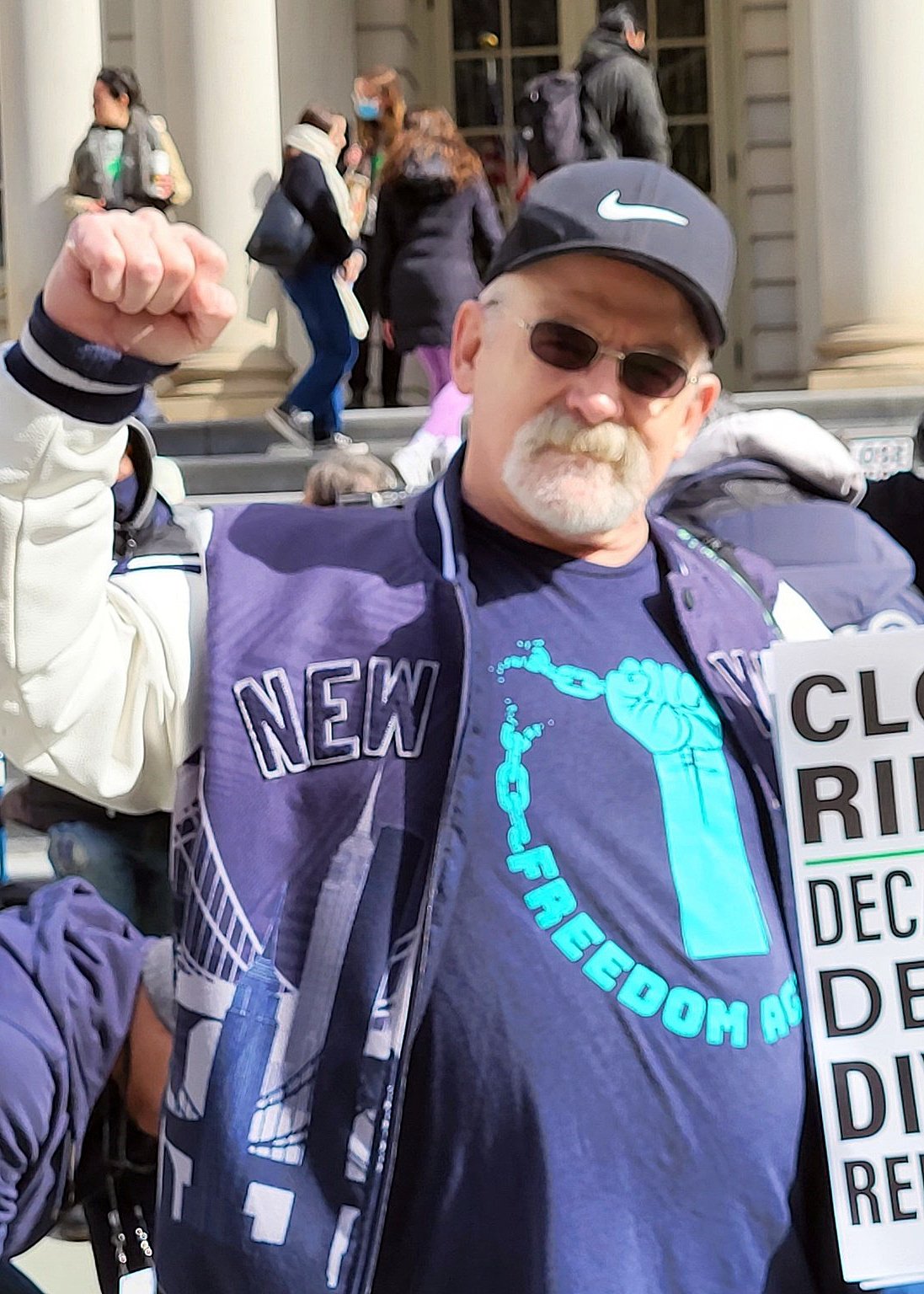
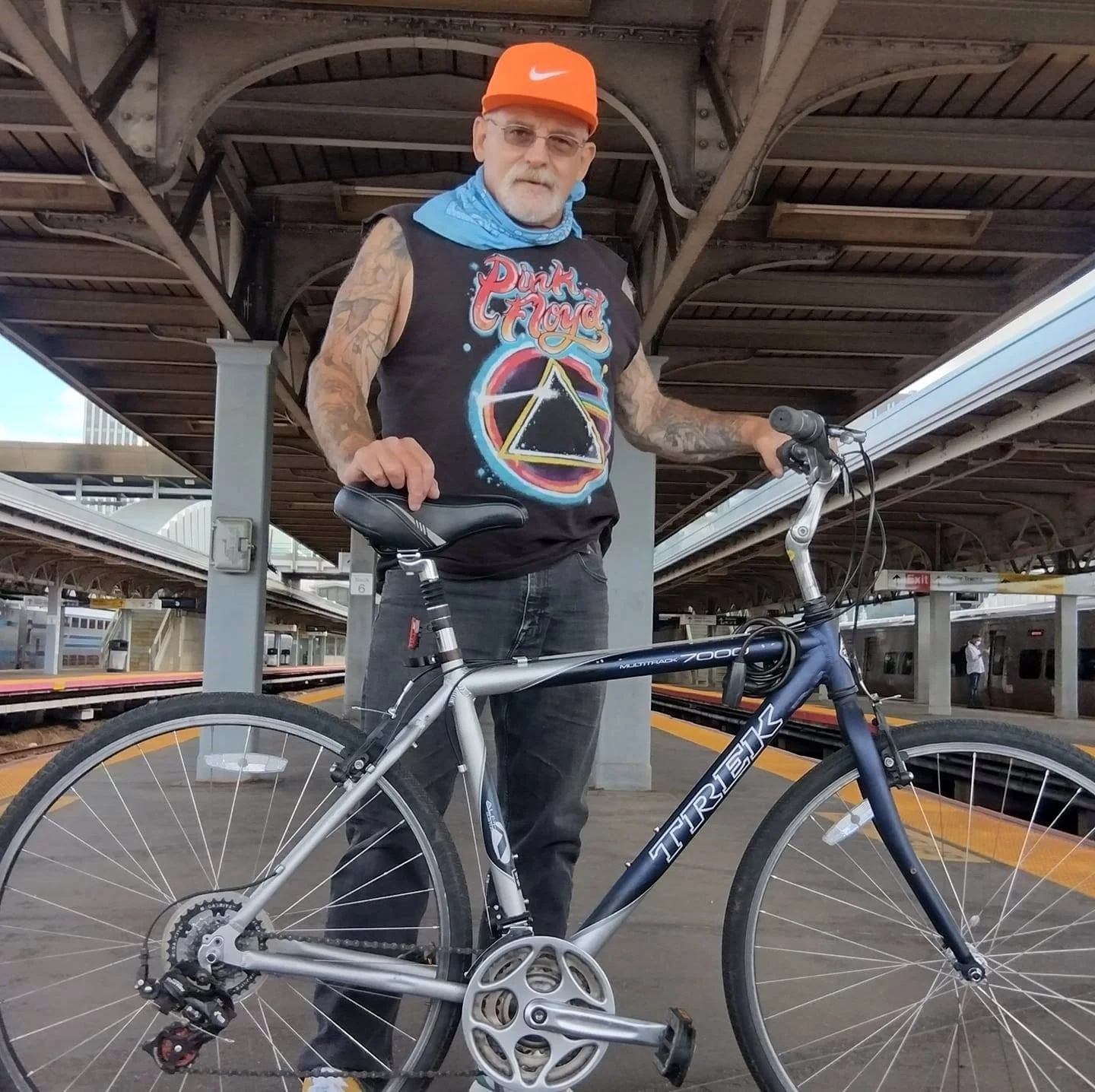
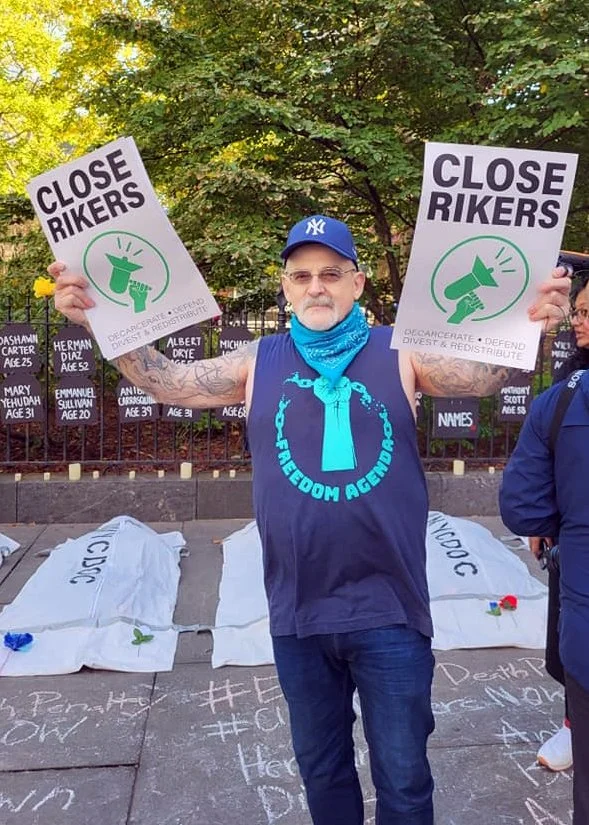
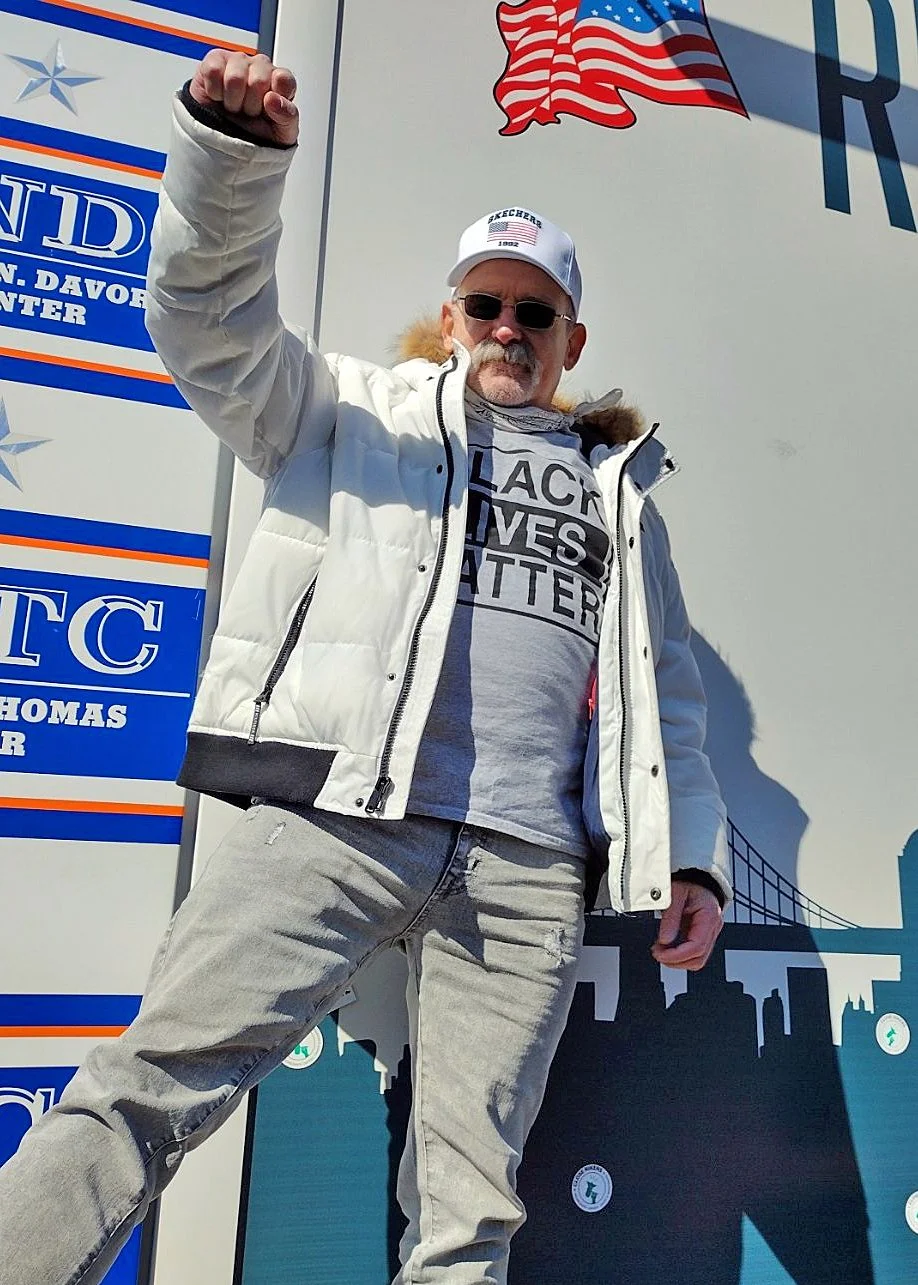
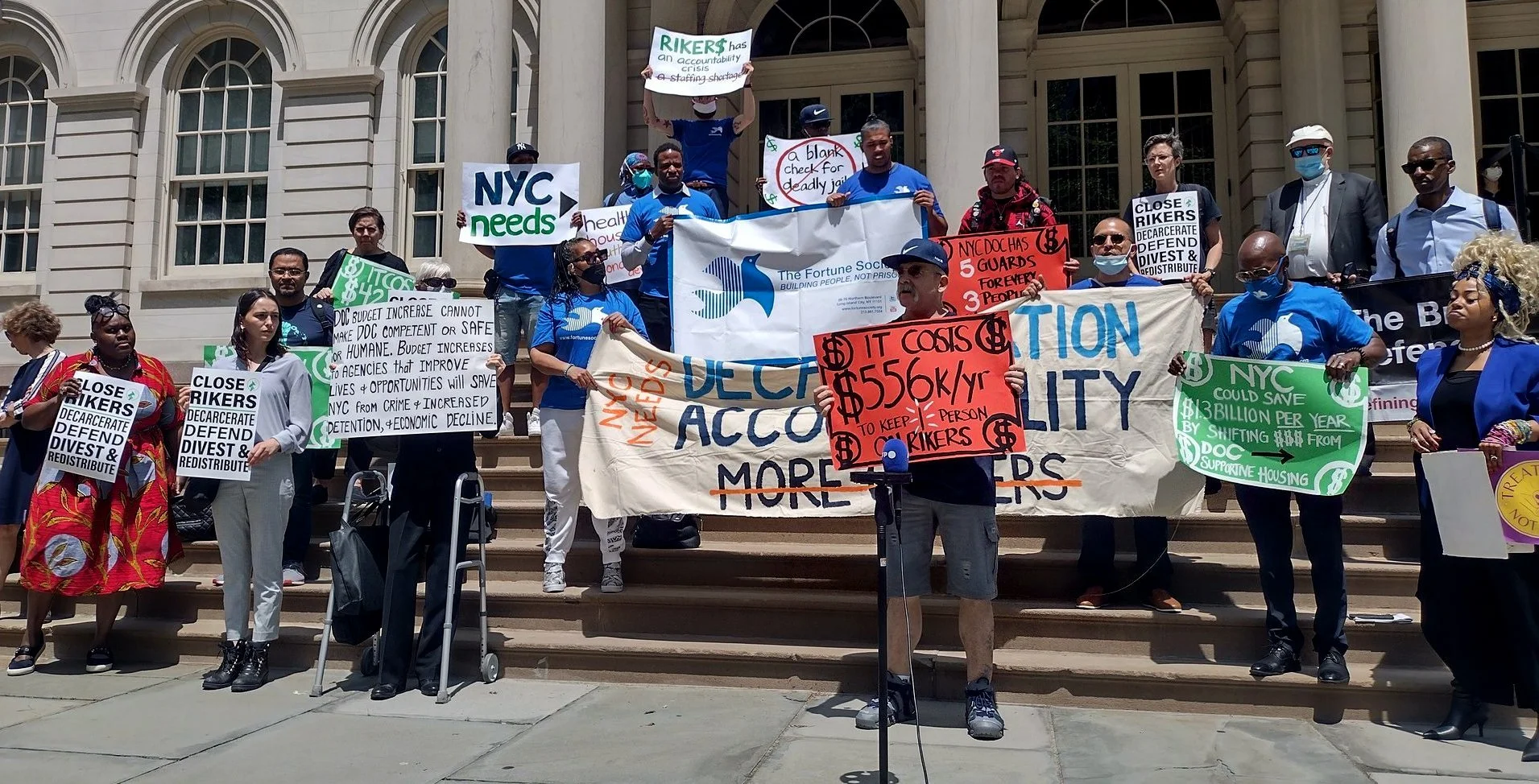
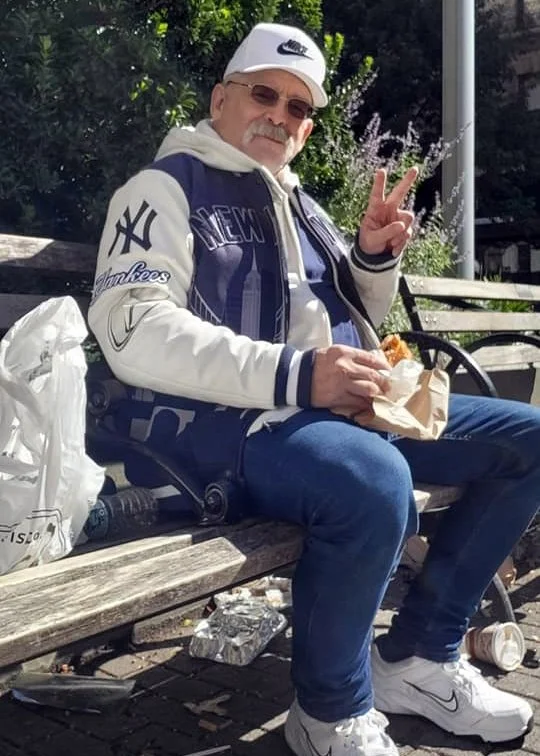
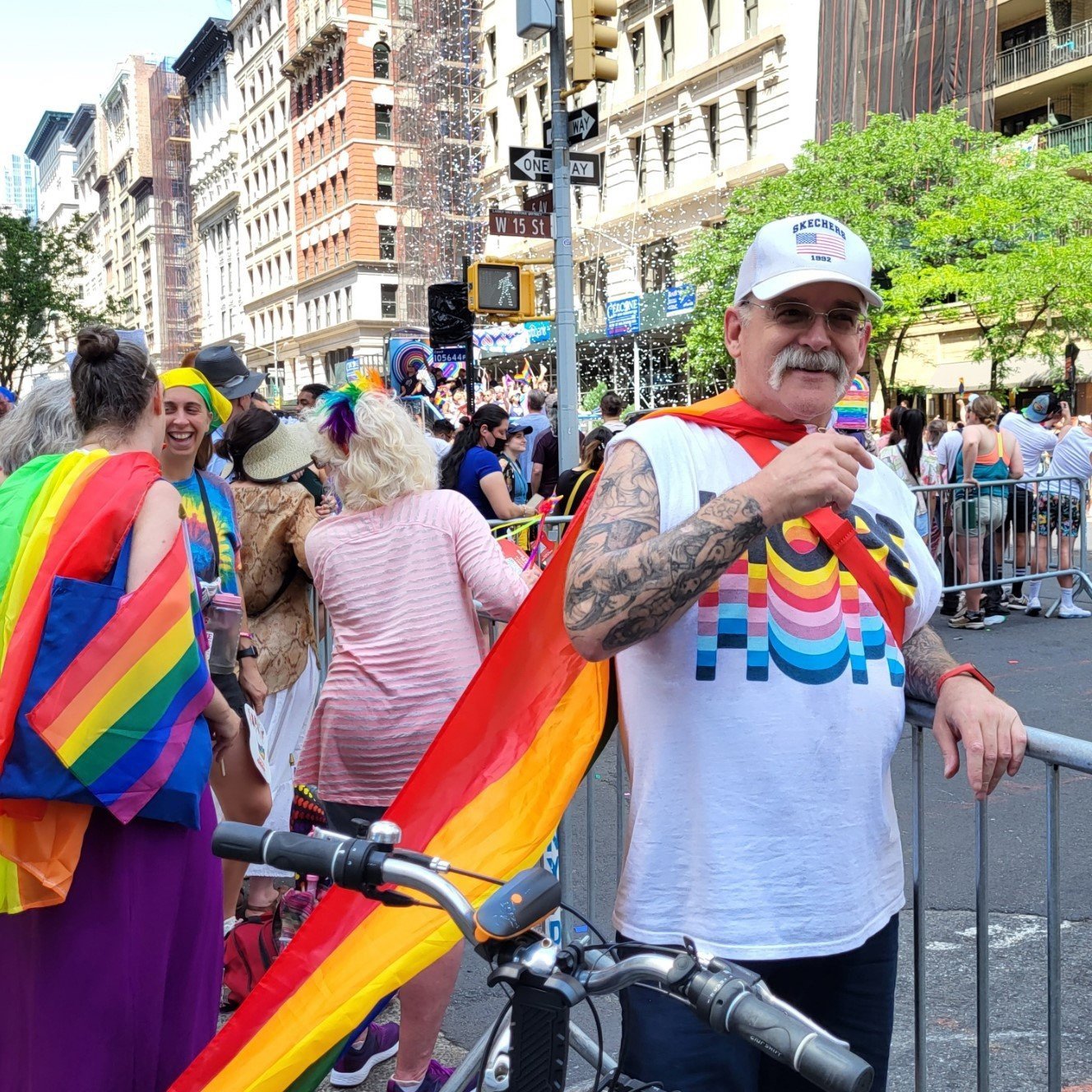
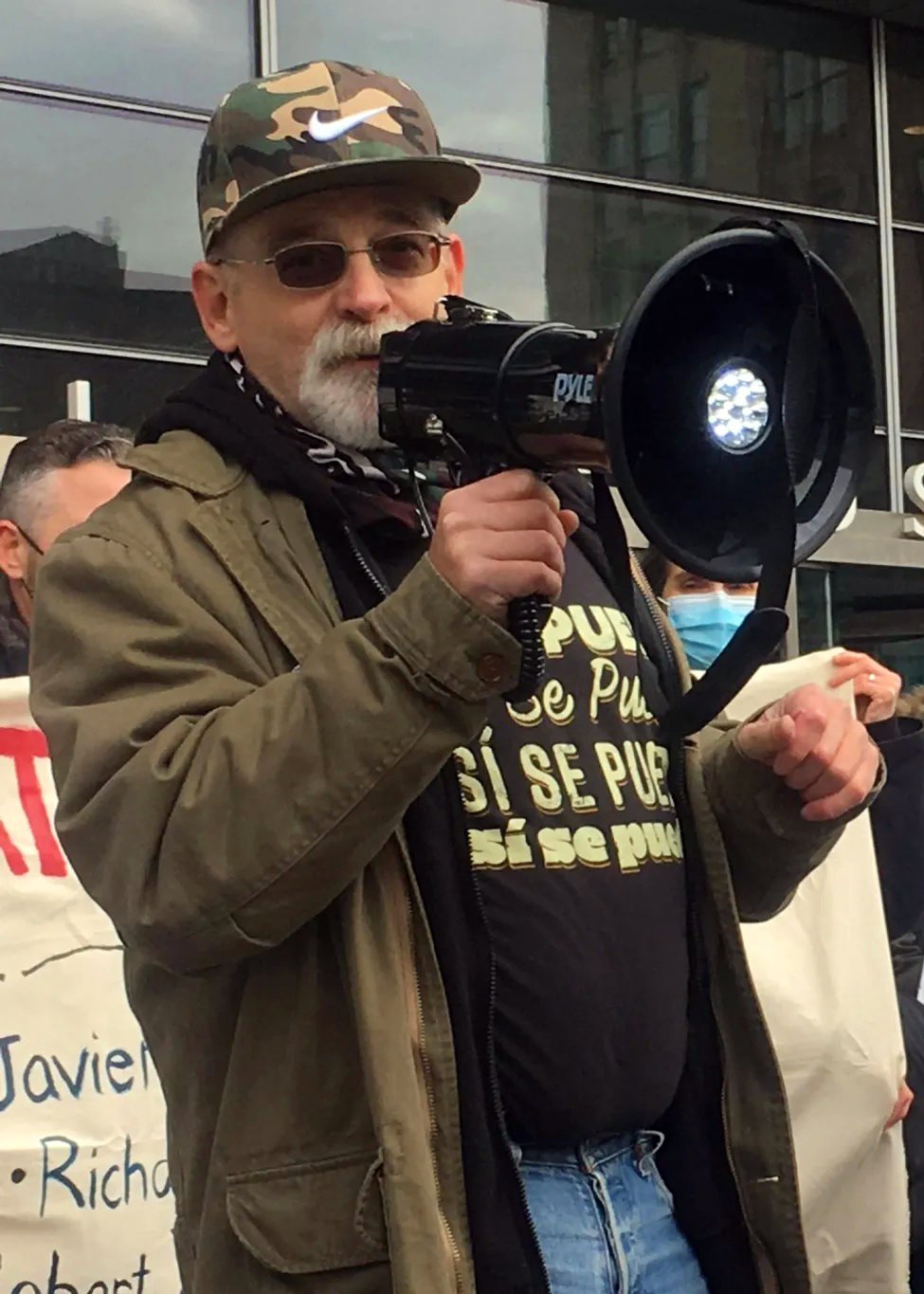
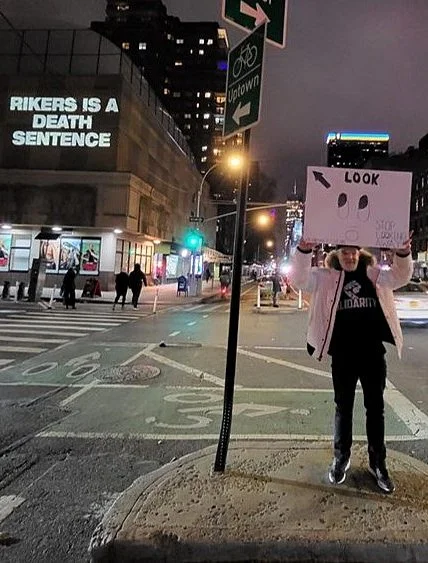
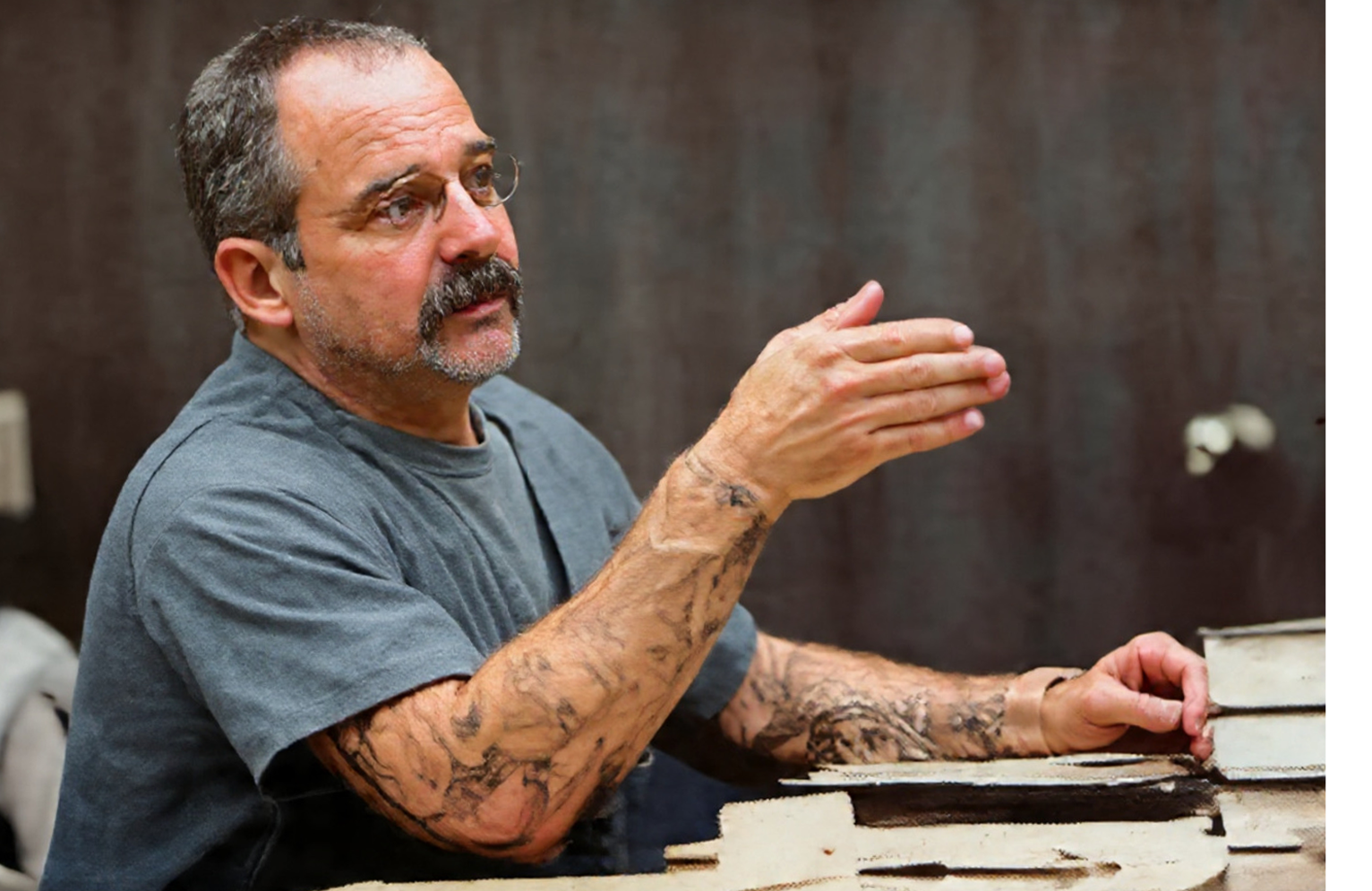
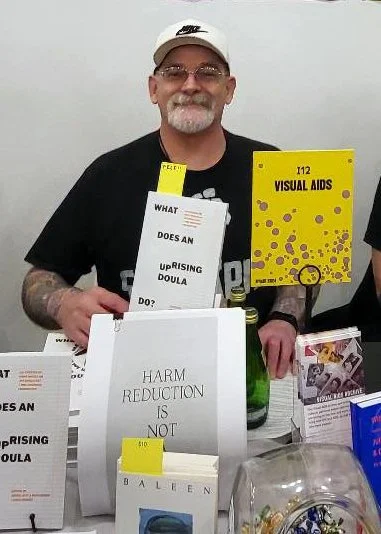
Brian Carmichael [ Credit: Brian Carmichael ]

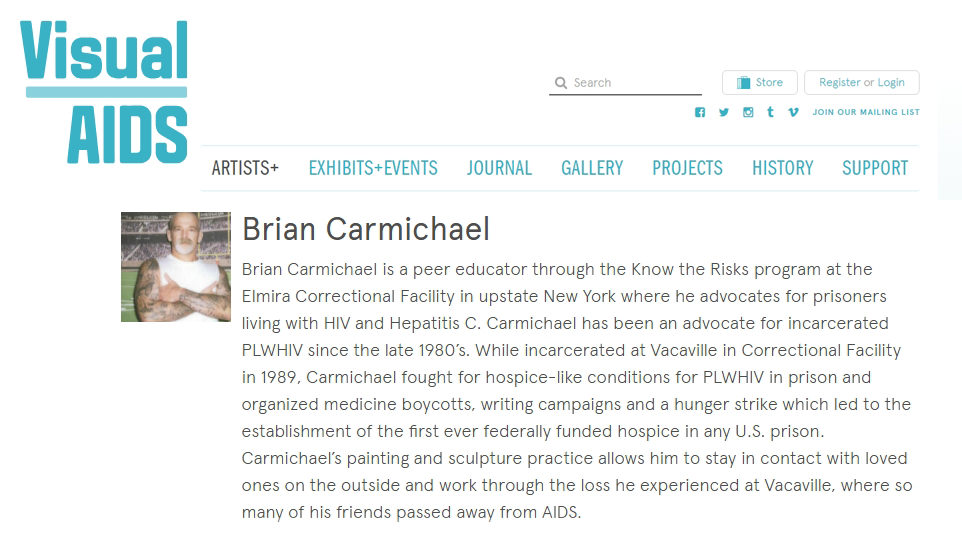
Brian has shared his artwork with Visual AIDS, contributing a vivid online exhibition that reflects his interests and, in some pieces, his activism and resilience. Among the works are acrylics on card depicting cats, prison scenes, sunsets and space vistas, some signed and dated to reveal they were created while he was incarcerated. His works are displayed online alongside a striking pen-on-paper statement piece, "HIV is not a crime," and an arresting bouquet of flowers crafted from toilet paper — a quietly subversive testament to creativity under constraint and a refusal to be defined by stigma.
VISIT: Visual AIDS Brian Carmichael
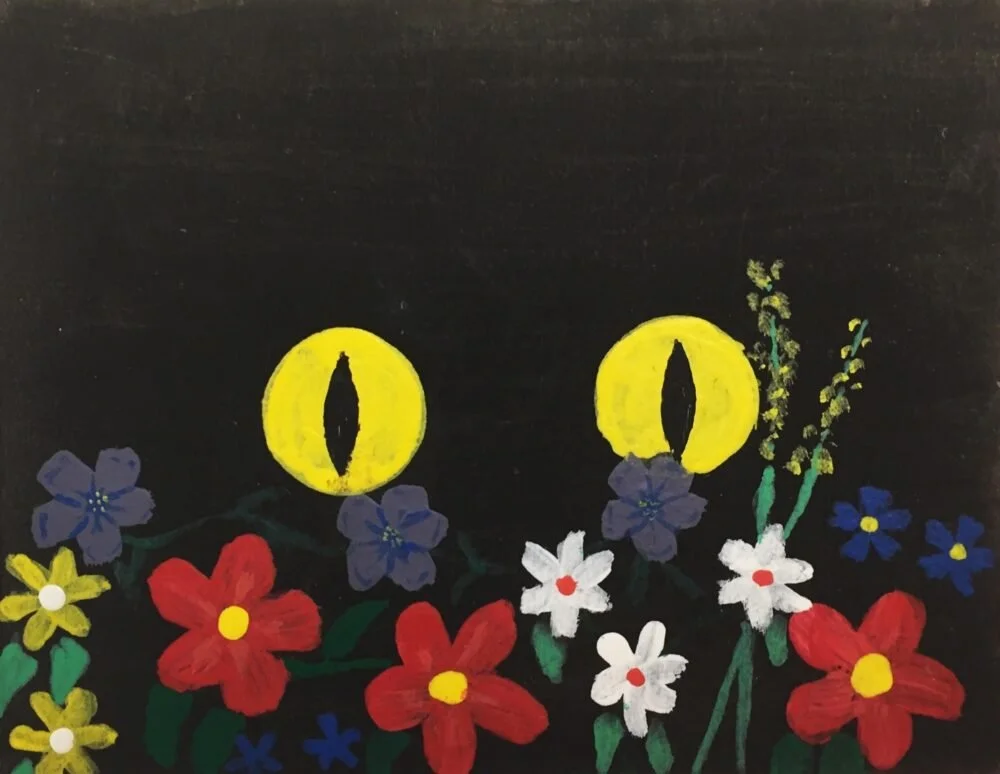
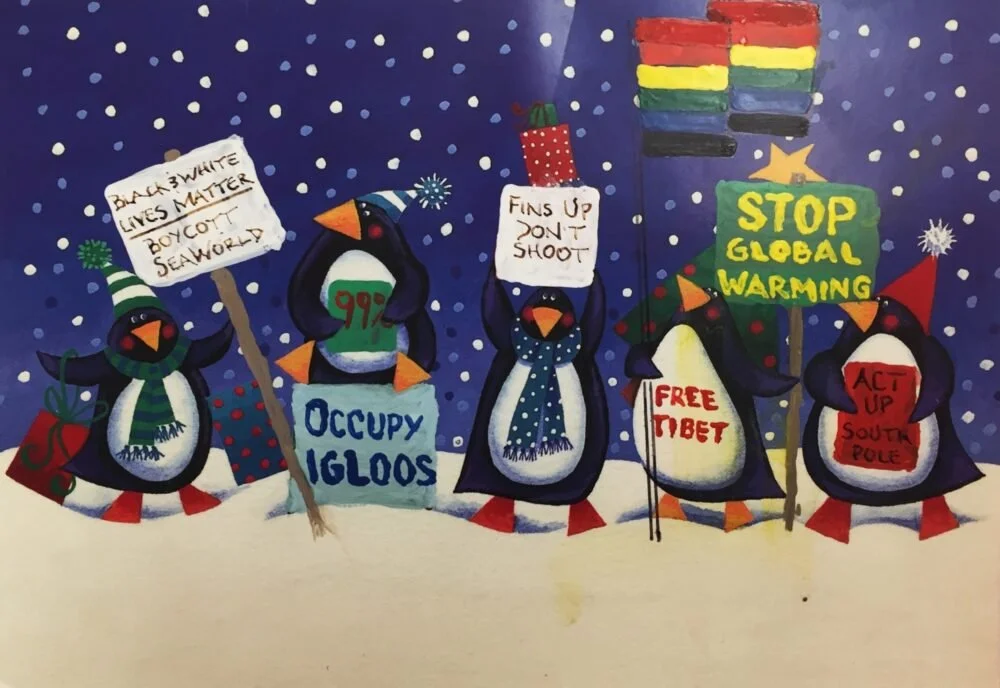
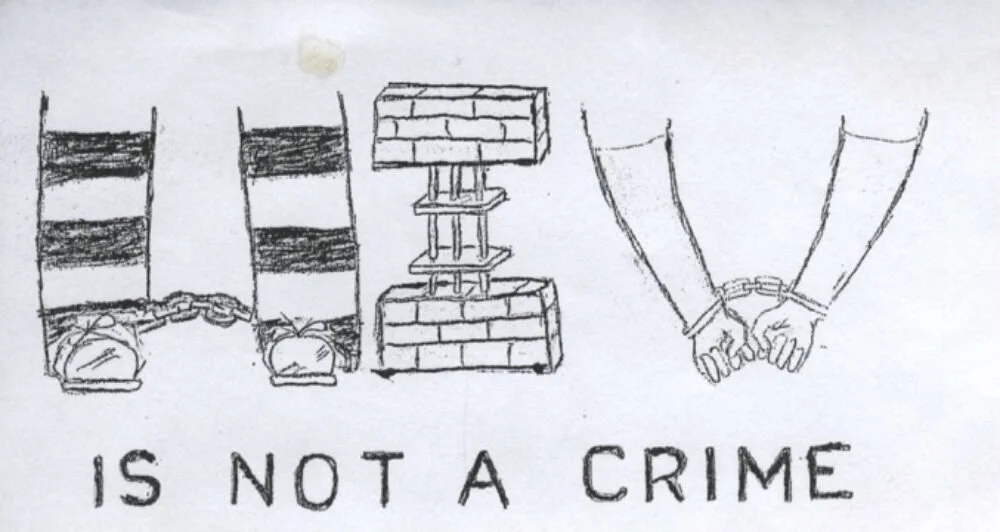

Artwork Brian Carmichael
Click to Visit: Visual AIDS Brian Carmichael
CELL COUNT
LA MAMMA GALLERIA, New York
31 MAY 2018 - 16 JUNE 2018
Cell Count brings together artists who unpack the metaphors and assumptions that enable the punishment and incarceration of people living with HIV, presenting nuanced analyses and conceptual refiguring’s as well as sardonic humour and imaginative revisions. The exhibition reframes conversations around HIV criminalization, questioning the characterization of HIV as a weapon, the conflation of serostatus with guilt, and the framing of non-disclosure as harm. Placing HIV criminalization in a broader context, the exhibition suggests that these laws echo a long history of medically sanctioned violence and incarceration in the United States.
Brian’s roses, crafted in his cell from toilet paper dyed with the ink of highlighter pens, sit in the exhibition and the accompanying book Cell Count as fragile, luminous relic of improvisation - simply stunning! Learn more about the event: Visual AIDS Cell Count
Brian’s handmade roses
Brian’s roses on display, far left. [Photos: Julia Gillard]

We were delighted to connect with Brian the day after the final episode went live and look forward to welcoming him for a future episode to share more about his life and activism. In connecting with Brian online, he shared:
"For decades I carried these stories around, with a battered, faded folder of old news clippings, but I couldn't speak about Vacaville without completely losing it, balling my eyes out, for more than 20 years.
But 'the story' of all those guys dying the way they did weighed on me like a solemn duty, so I protected and nurtured that folder. Now, with all the work you've done (with more archives and articles) than even I amassed, I feel you have moved the cause forward more than I ever have.
I feel such a weight lifted off me, and now realize it wasn't heavy from the burdon, but from the honor of keeping their stories alive. Thank you! (I'm fuckin' crying again) Dude, thank you!!"
— Brian Carmichael, Longtime Activist
Any third-party copyright material has been accessed through paid membership or incurred an administrative cost. Material has been used under the ‘fair use’ policy for the purpose of research, criticism and/or education, especially around the topic of HIV/AIDS. There has been no financial/commercial gain.