NEW AIDS QUILT: WAD25
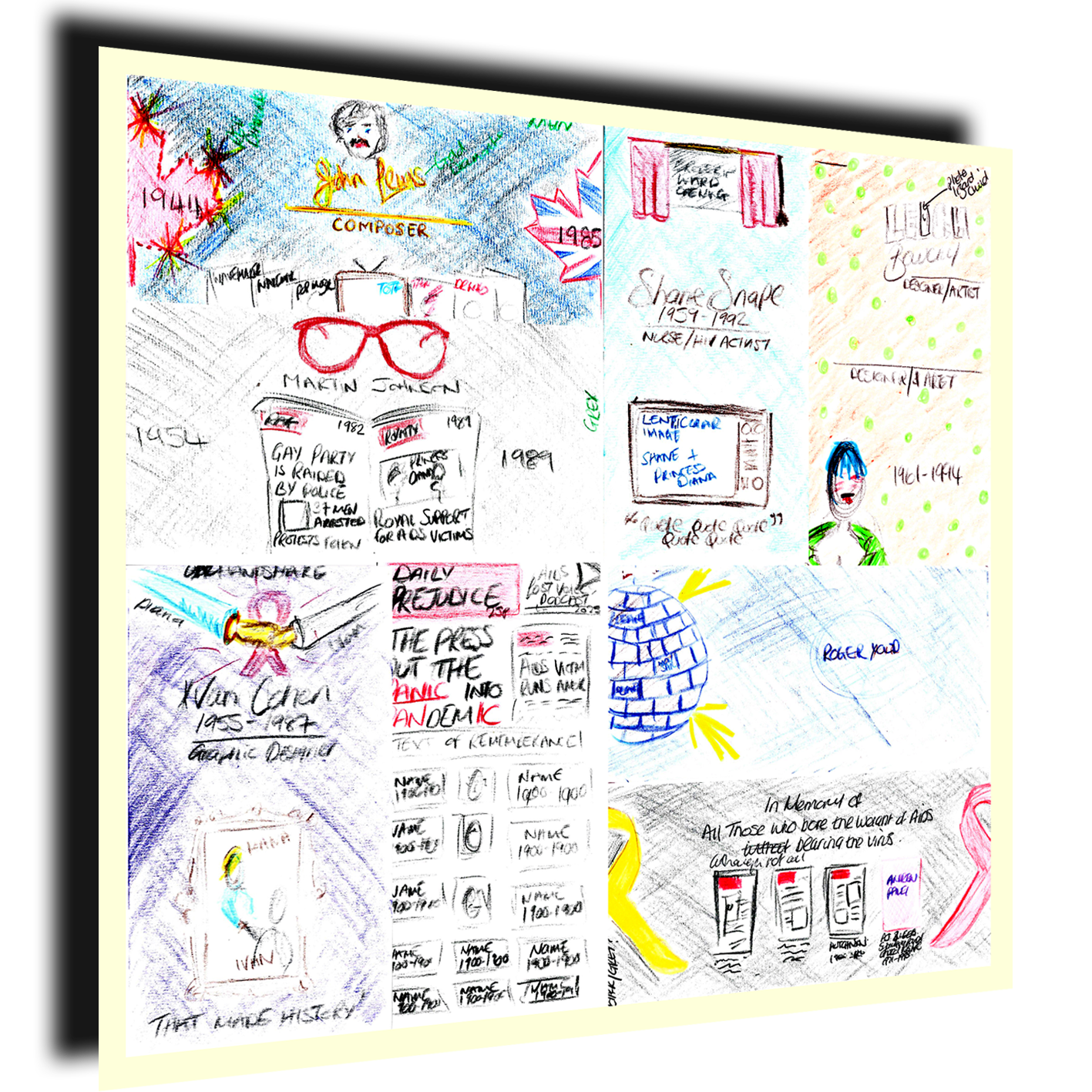
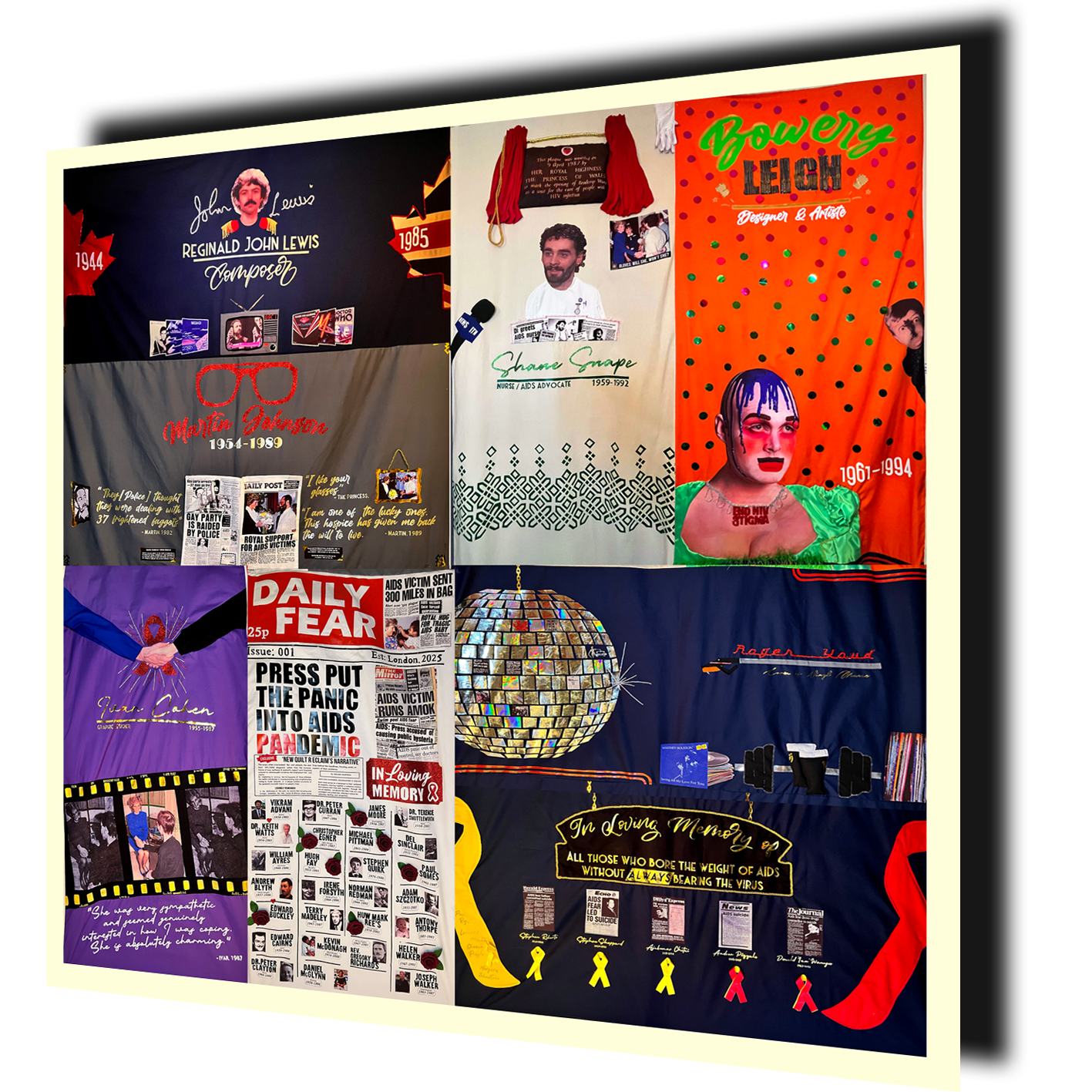
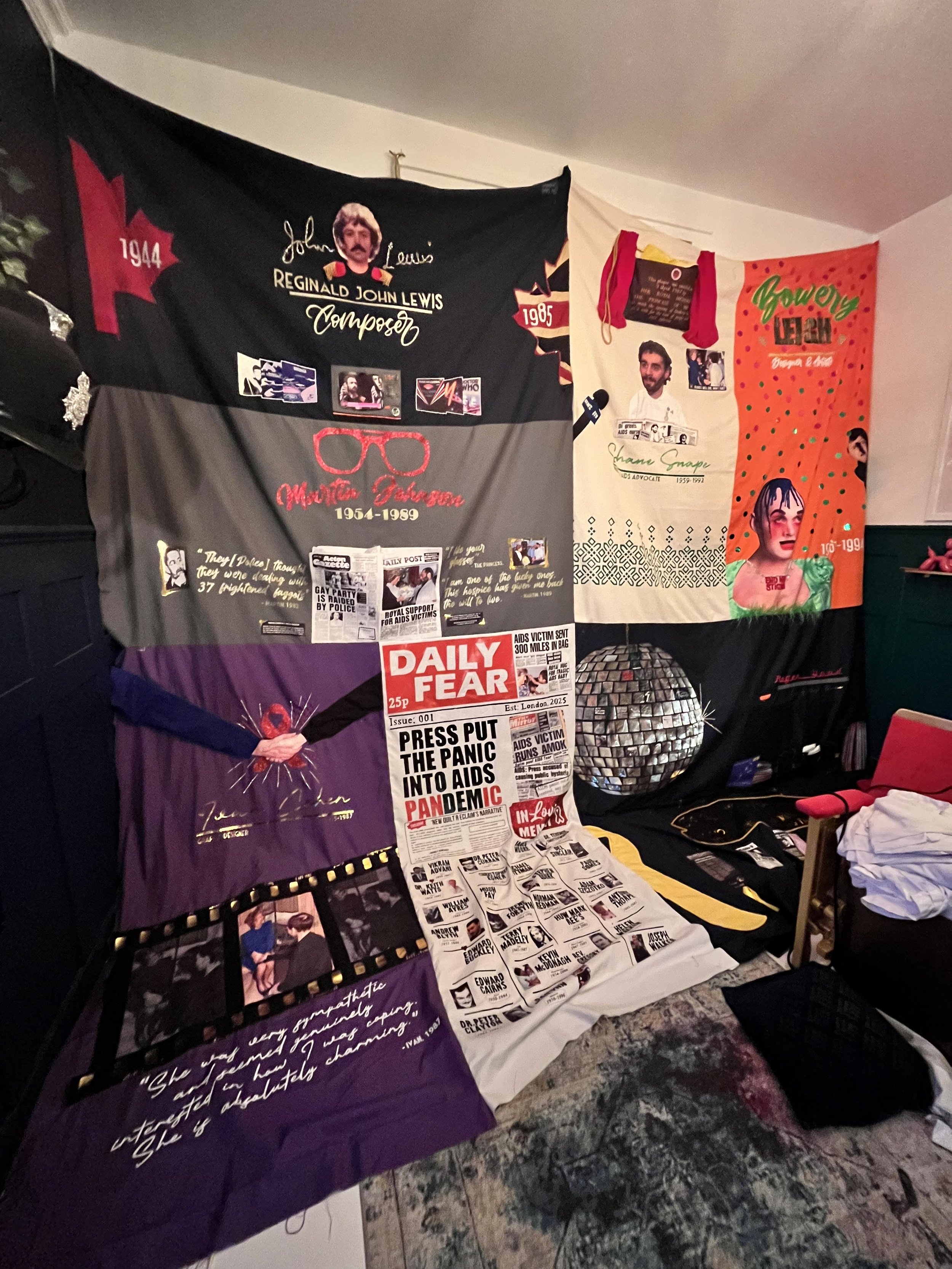
For World AIDS Day 2025 I undertook an eight‑week challenge to create eight new AIDS panels, each a piece of a single 12 ft by 12 ft display‑ready quilt intended to join the UK AIDS Memorial Quilt. The panels commemorated individuals featured in my podcast "AIDS: The Lost Voices" individuals uncovered through research and testimony, translating interviews, archival details and personal stories into stitched memory—imagery, names, dates and symbols chosen to reflect lives, activism and the quieter moments lost to the epidemic.
JOHN LEWIS
1944 - 1985
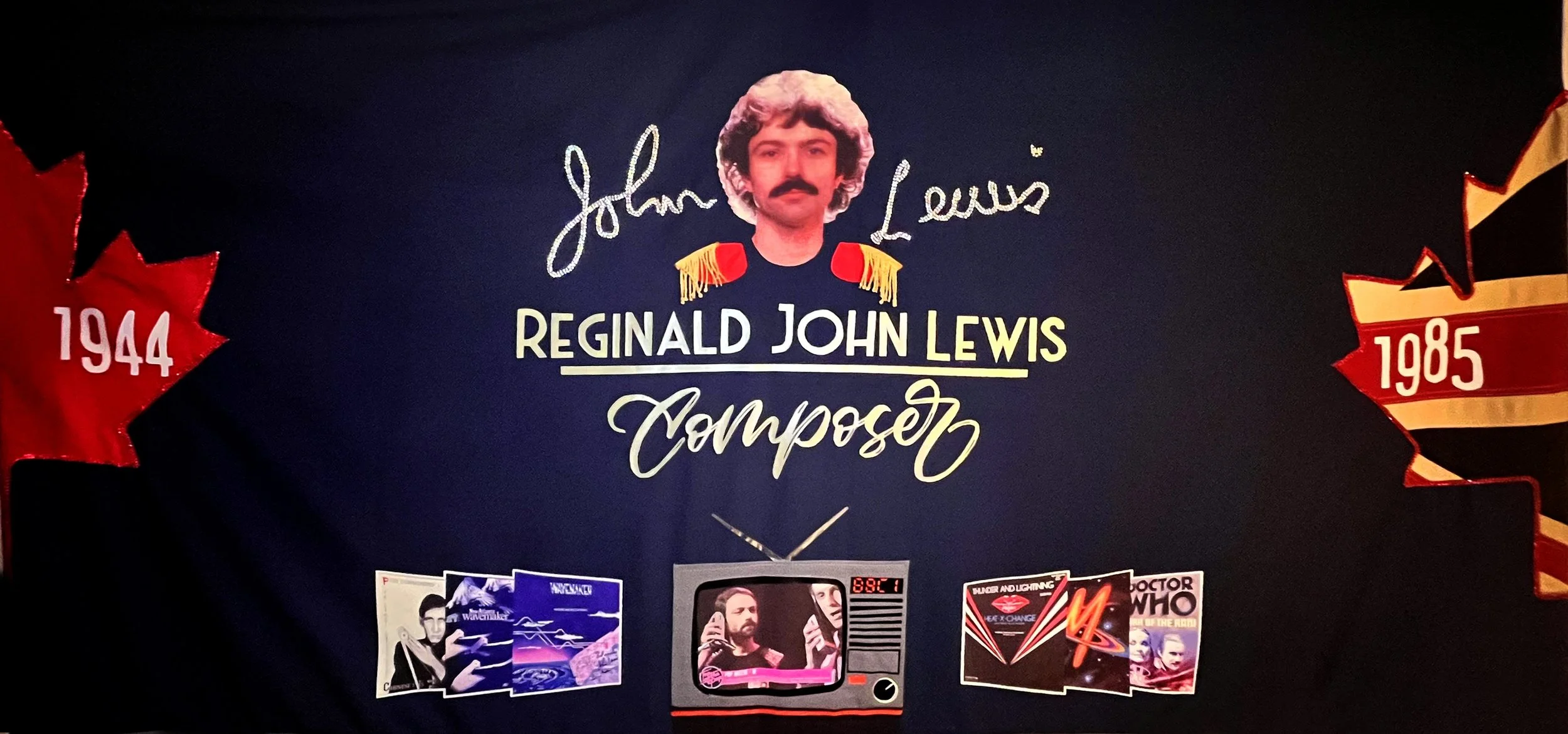
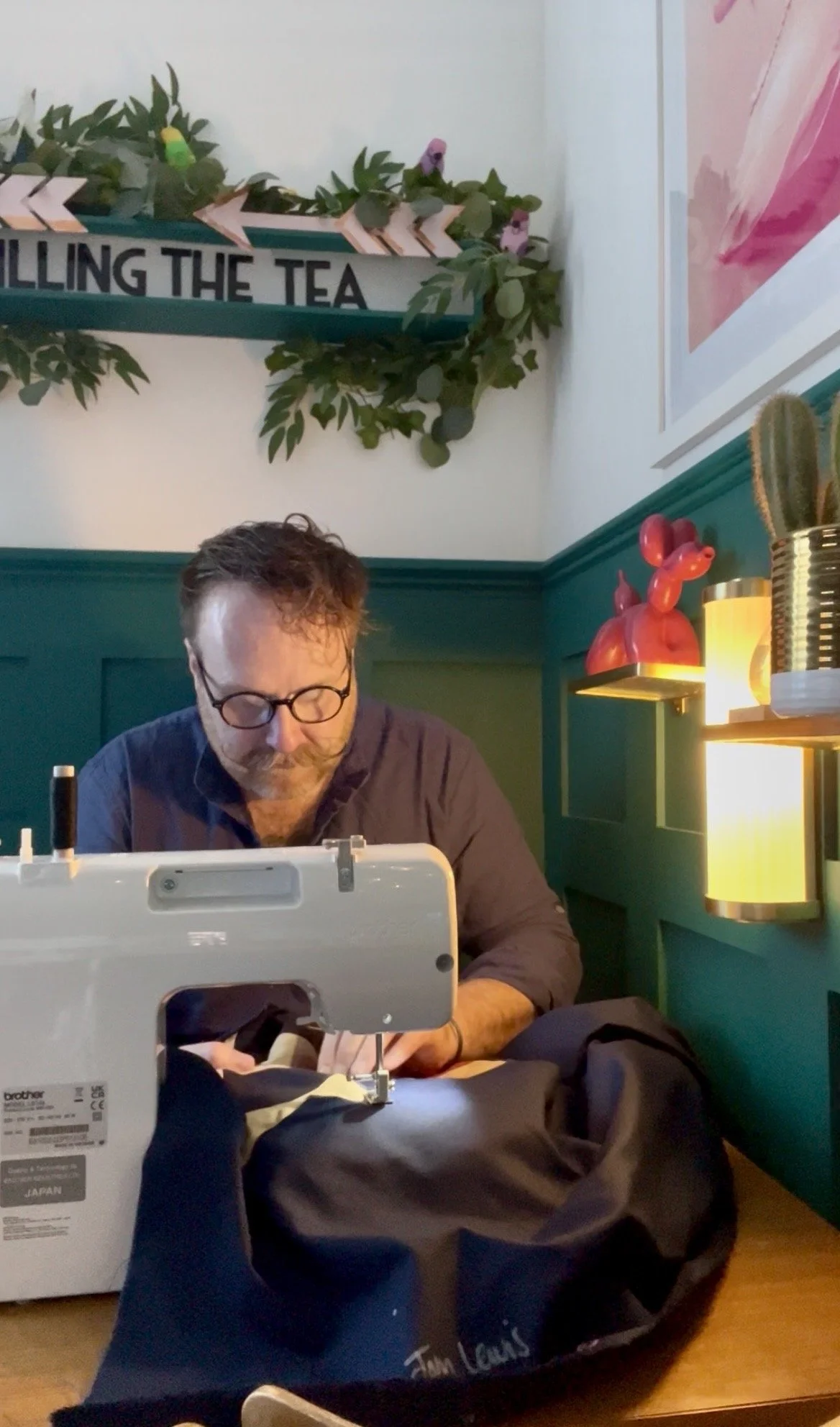
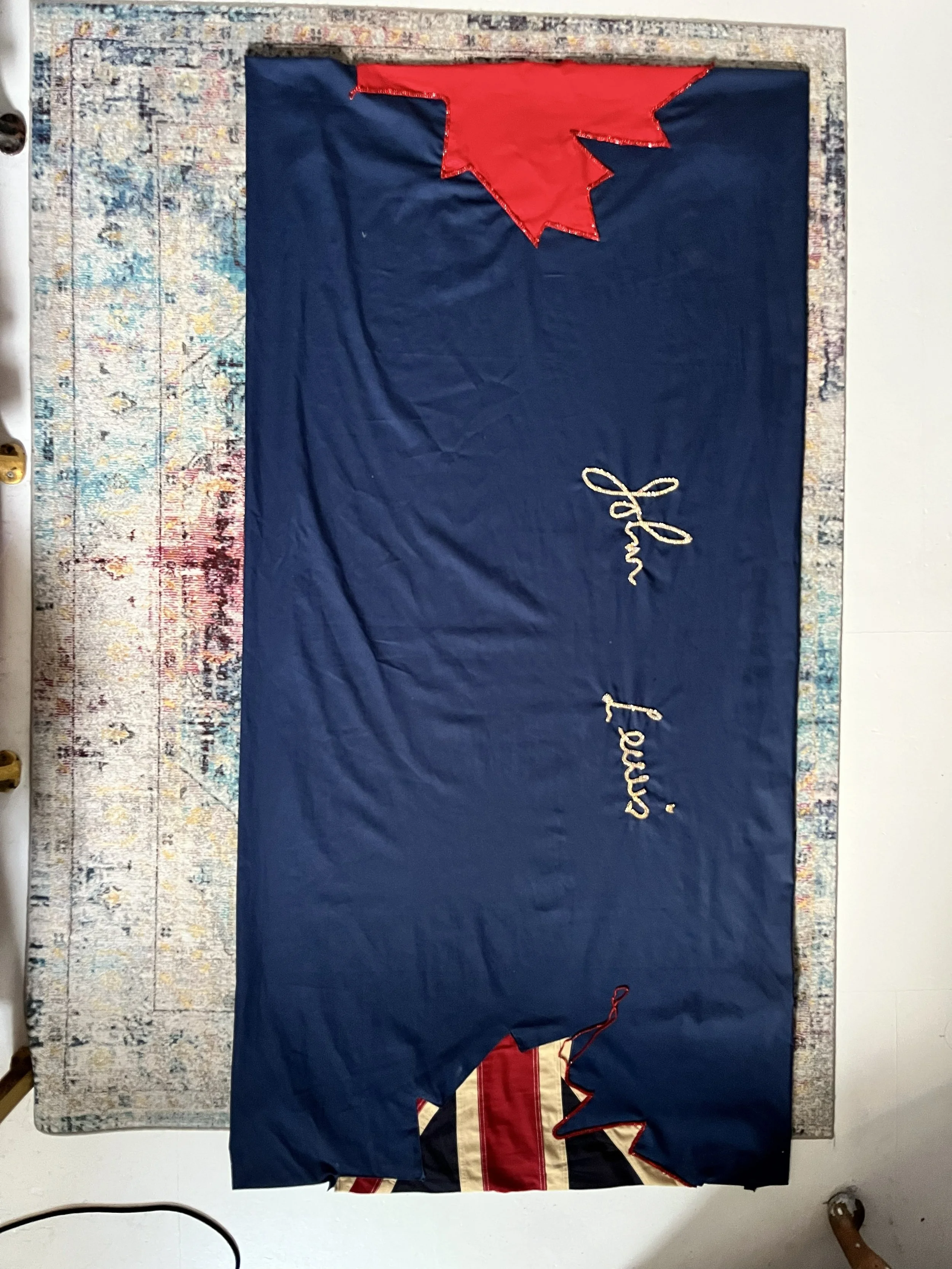
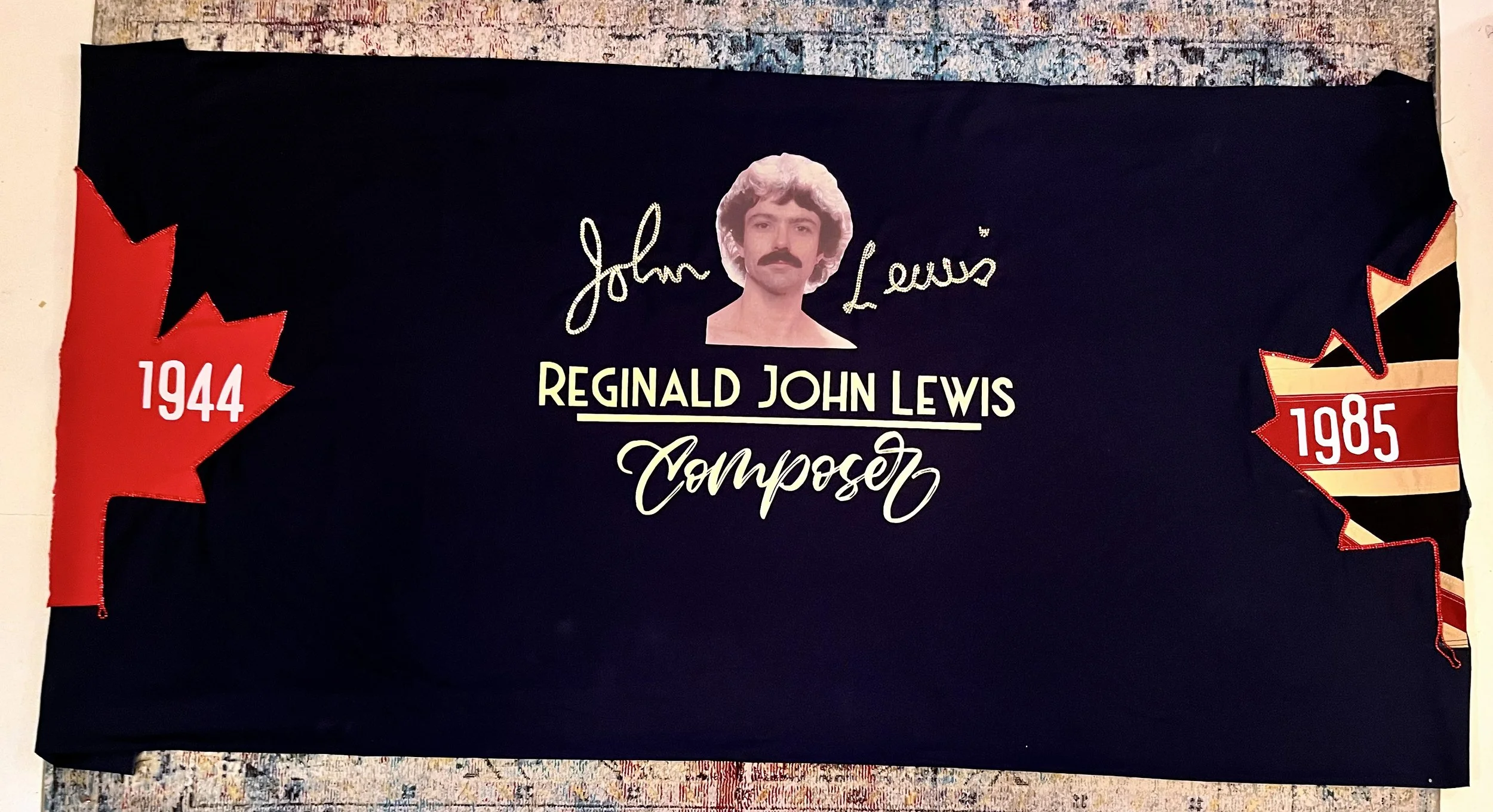
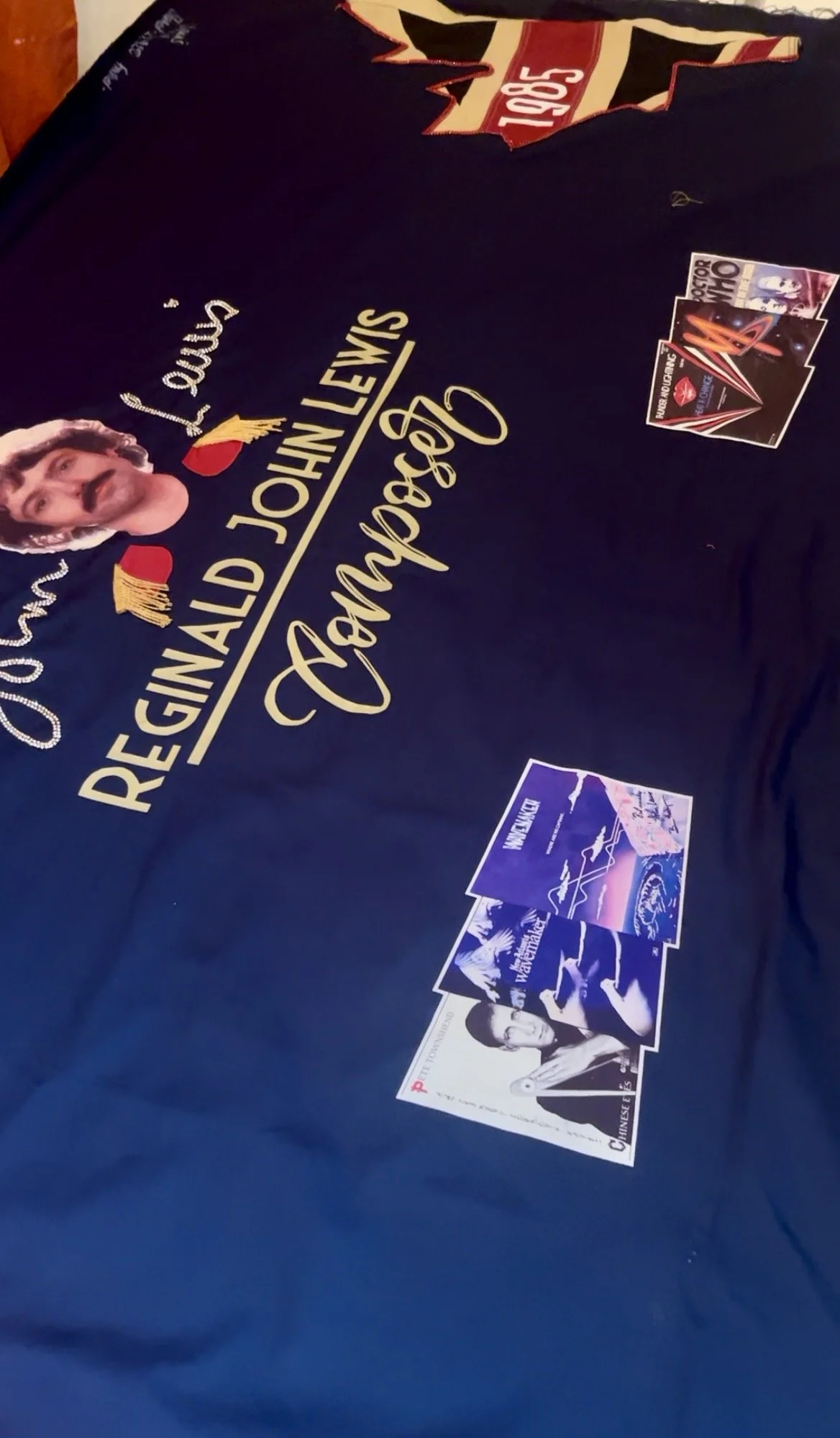
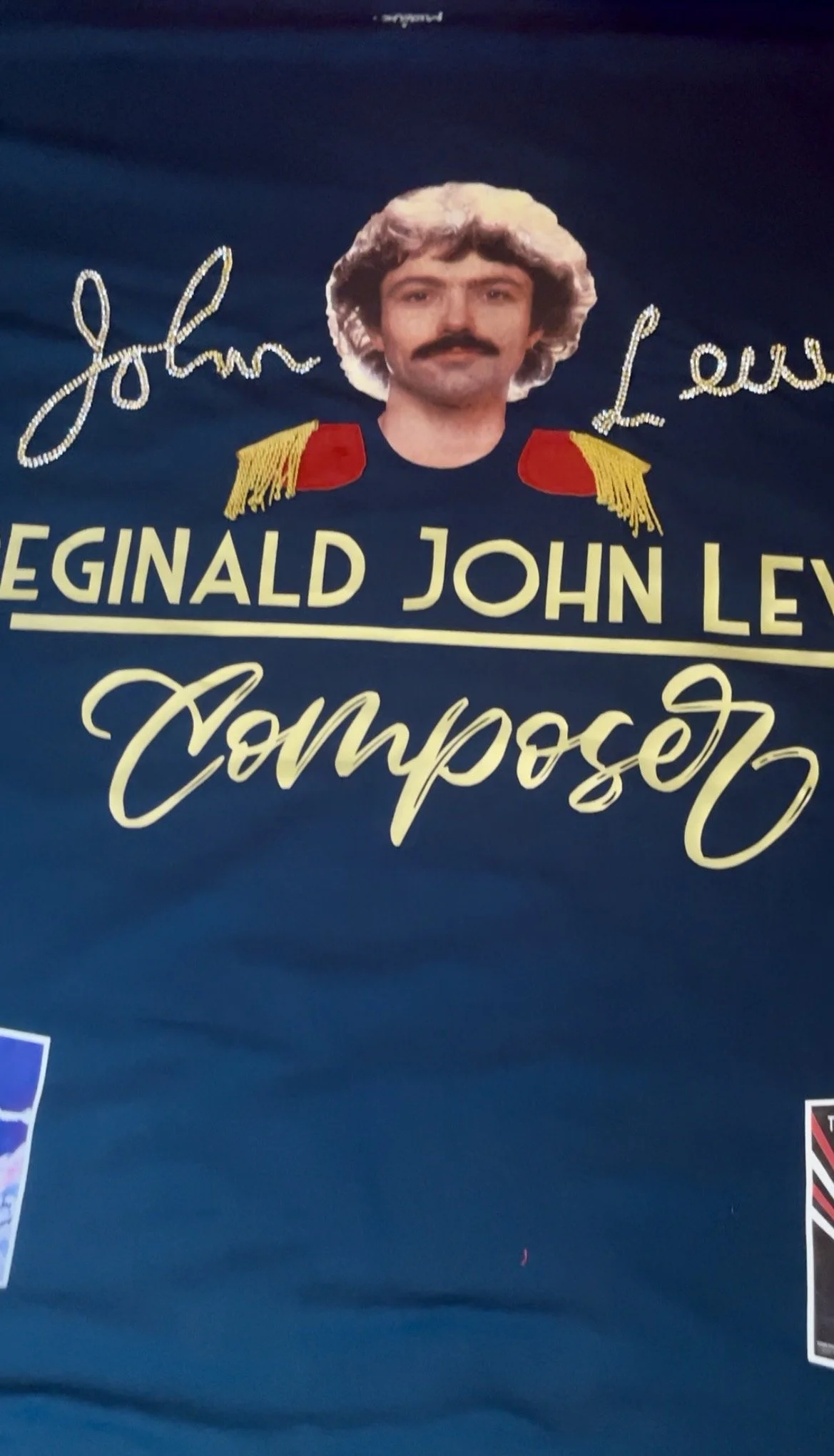
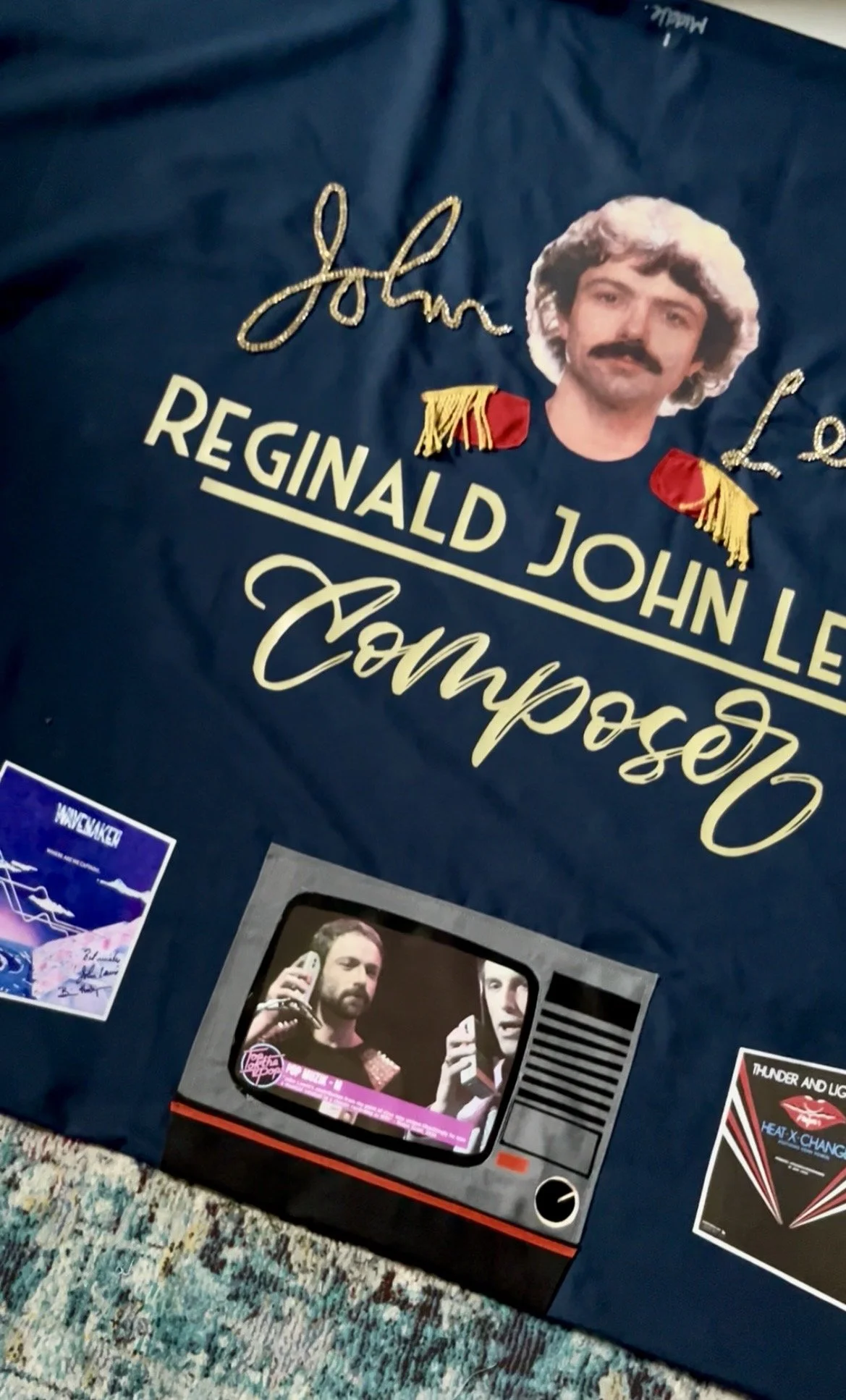
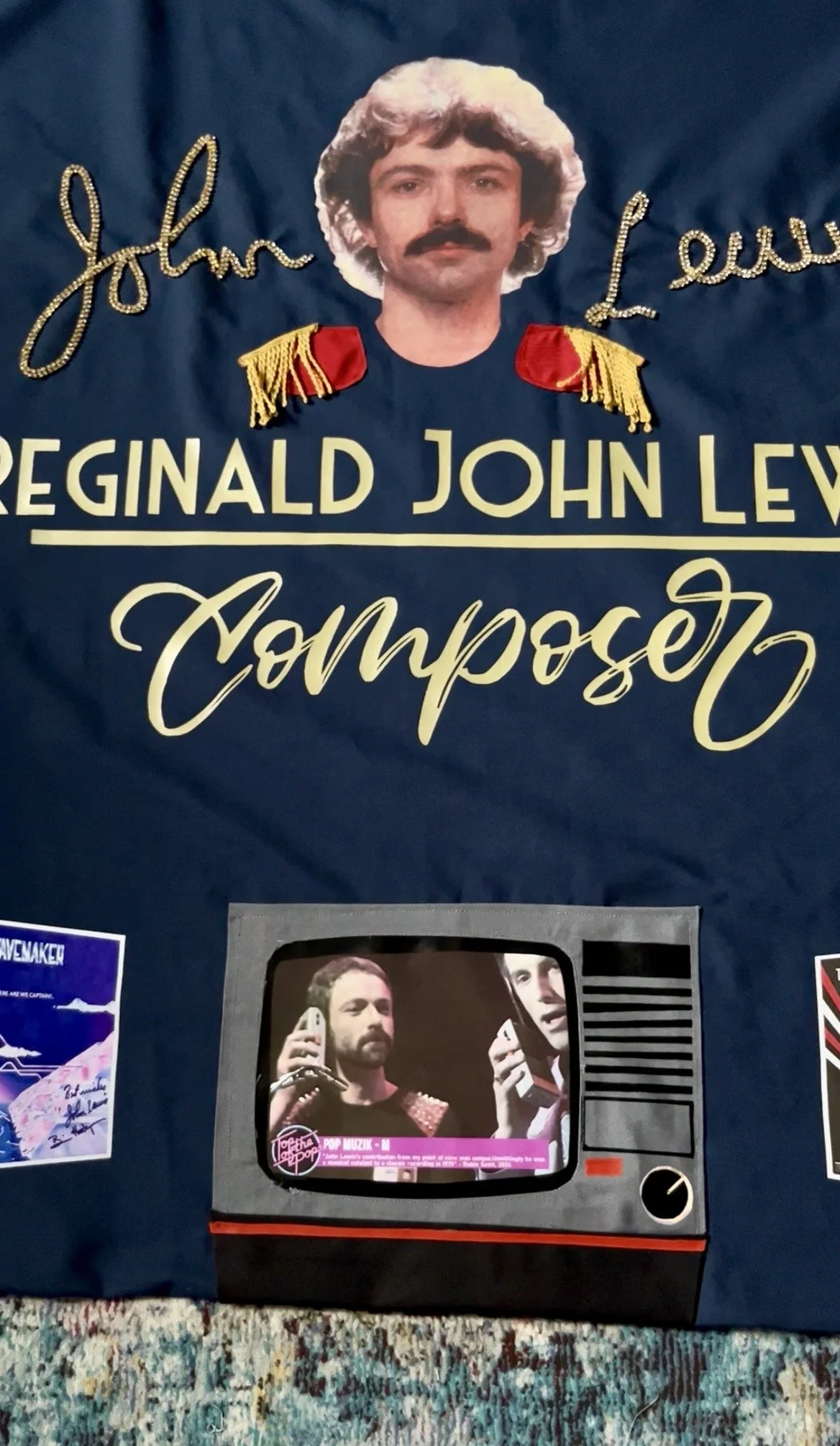
John Lewis was a music composer with a considerable legacy, his compositions continuing to resonate long after his life was tragically cut short by AIDS in 1985; it was John’s quilt that I began first on 29 September 2025, and very much stuck to the initial design idea.
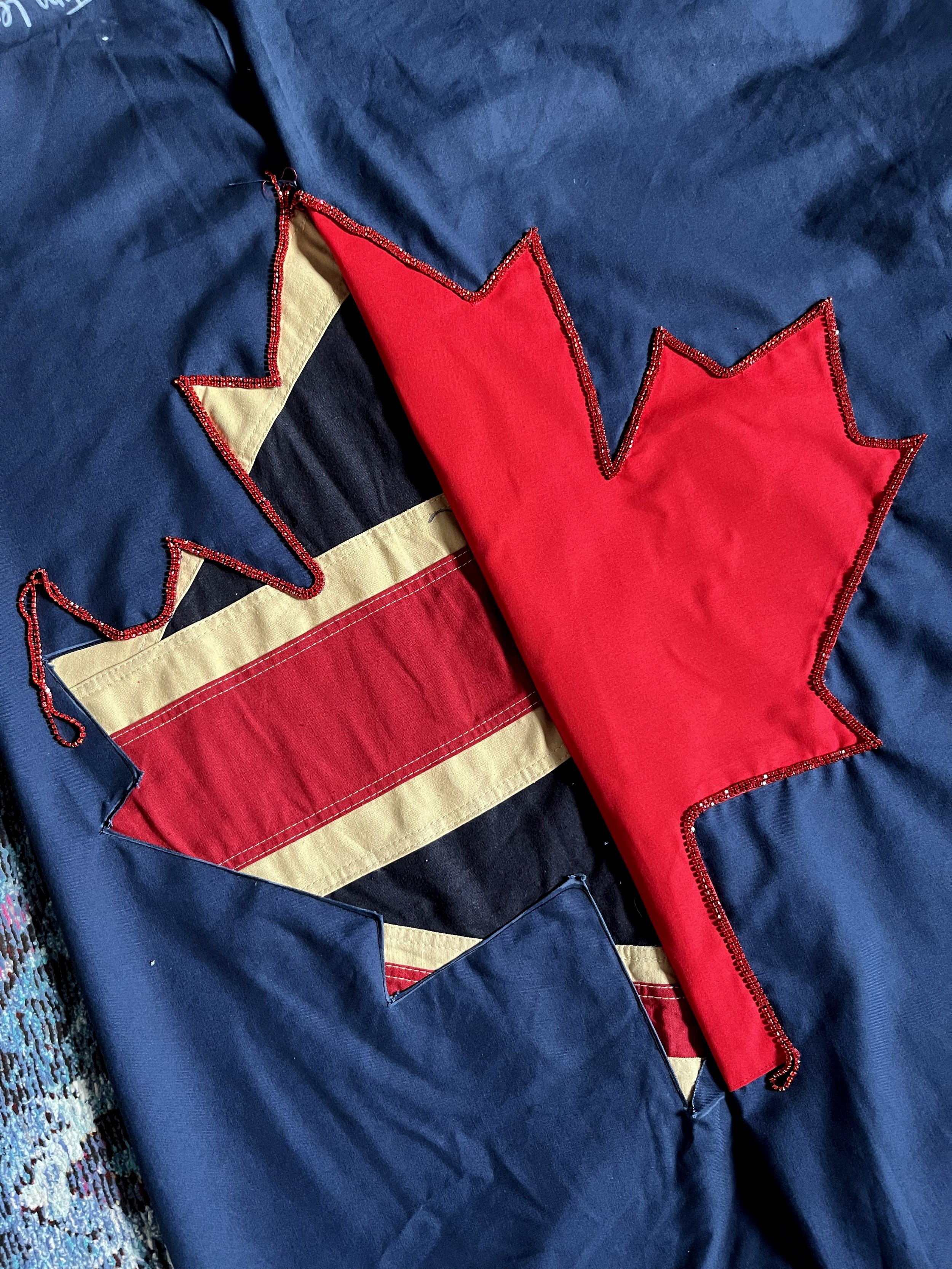
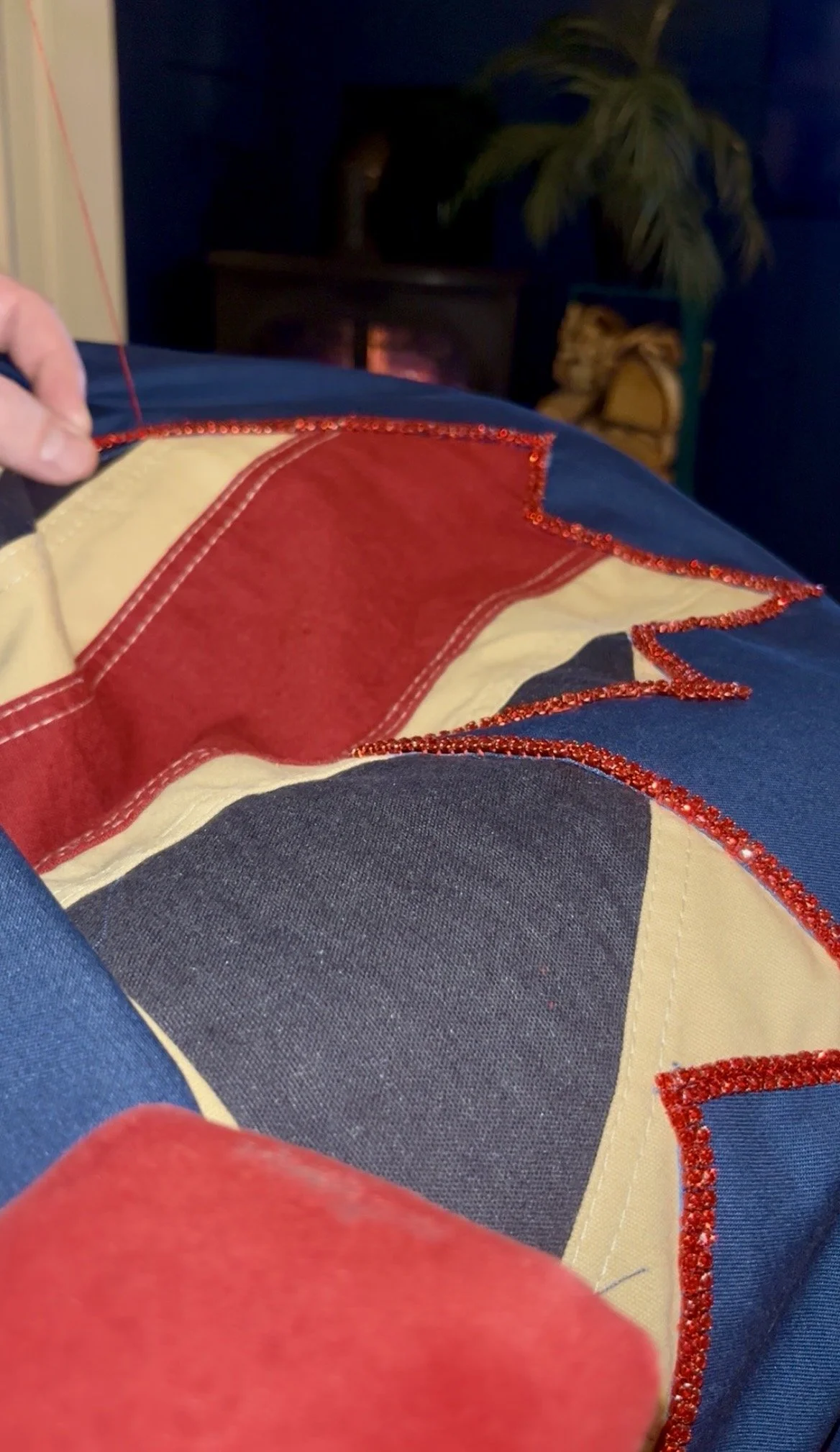
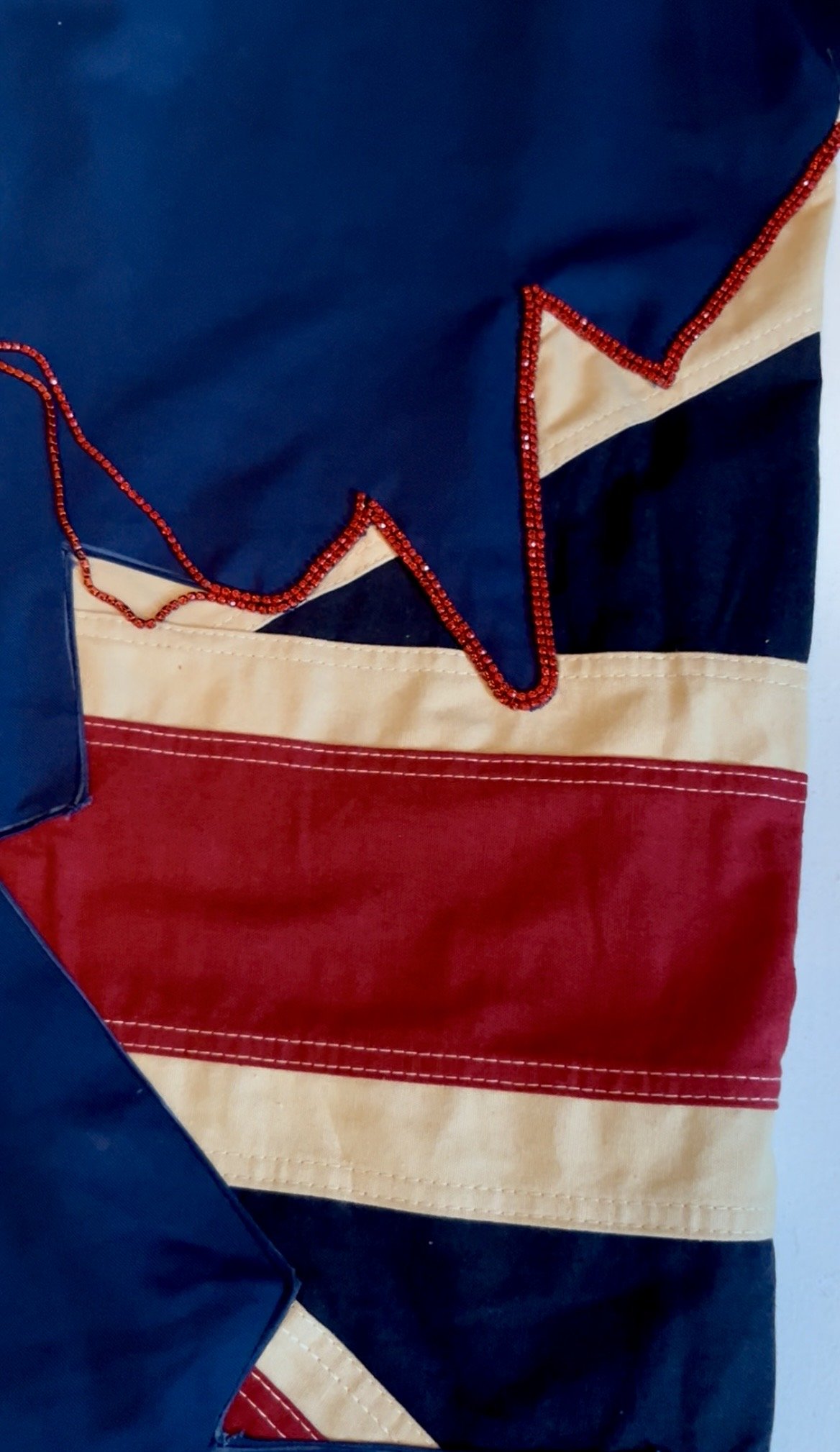
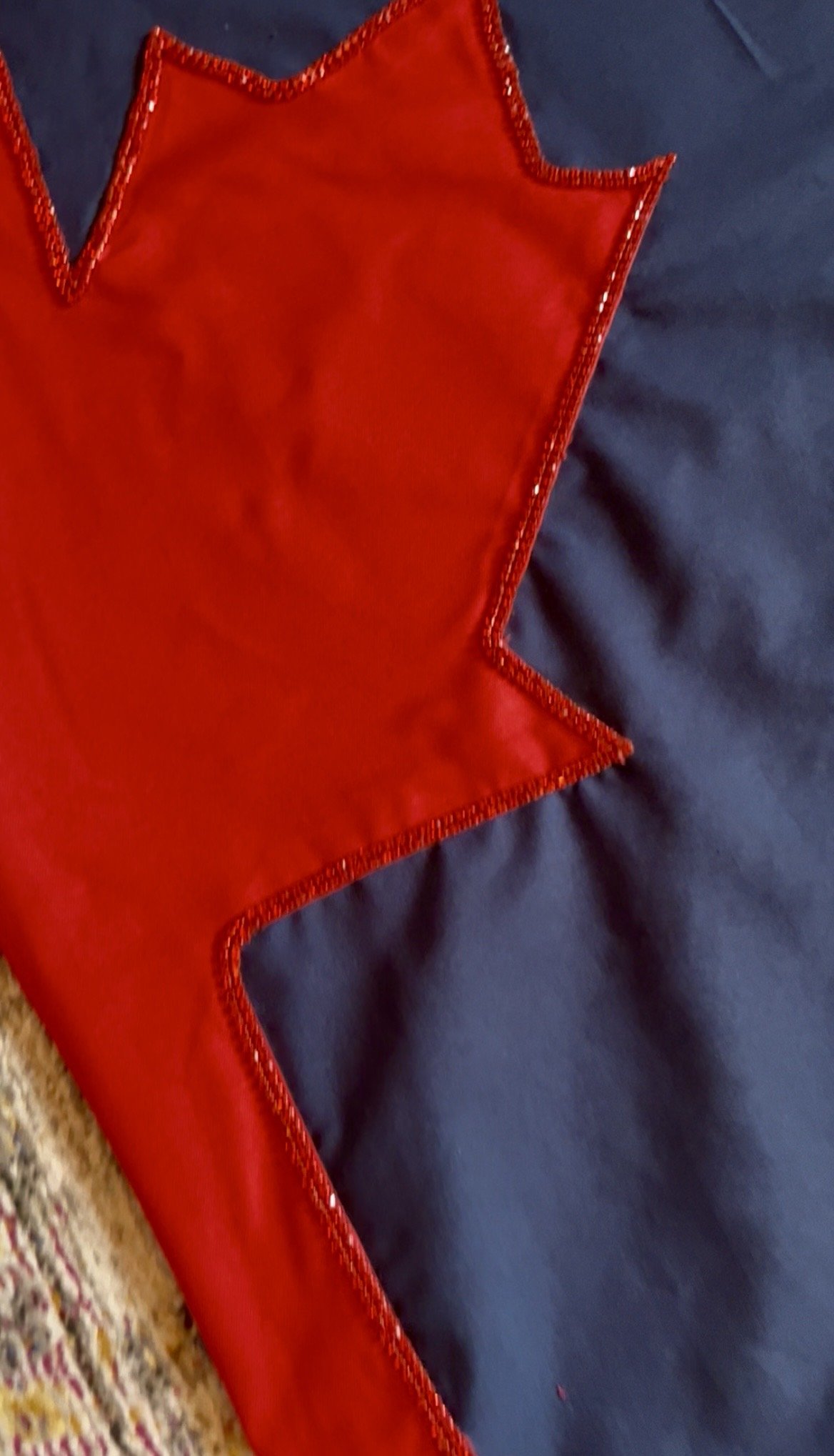
The quilt’s navy cotton background frames a Canadian maple leaf split down the middle: the left half bearing the year of his birth in Canada, the right half coloured with the Union Jack and marked with the year of his death, a deliberate symbol of a life born across the Atlantic but lived, and ended, in the United Kingdom.
Initial Design Sketch
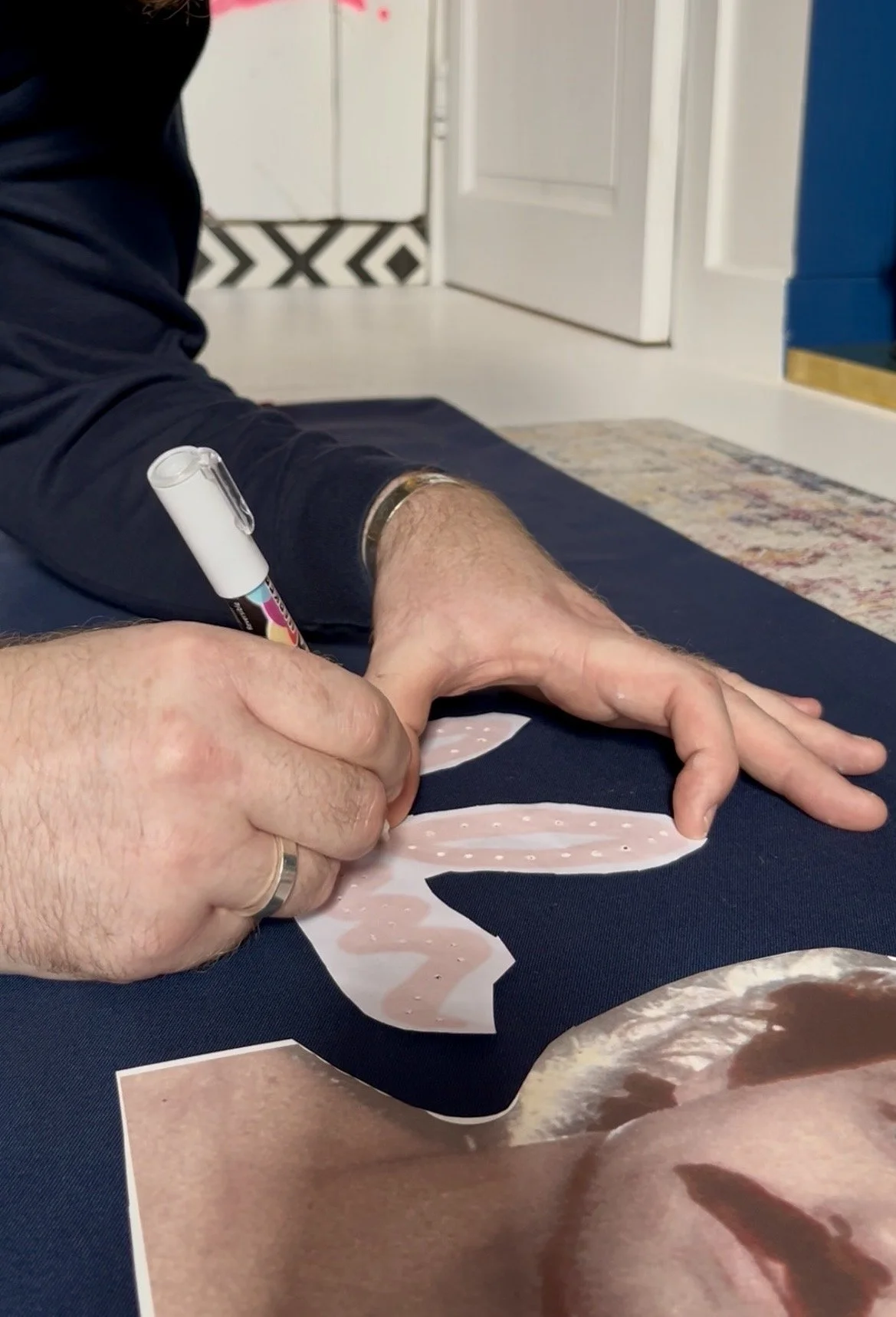
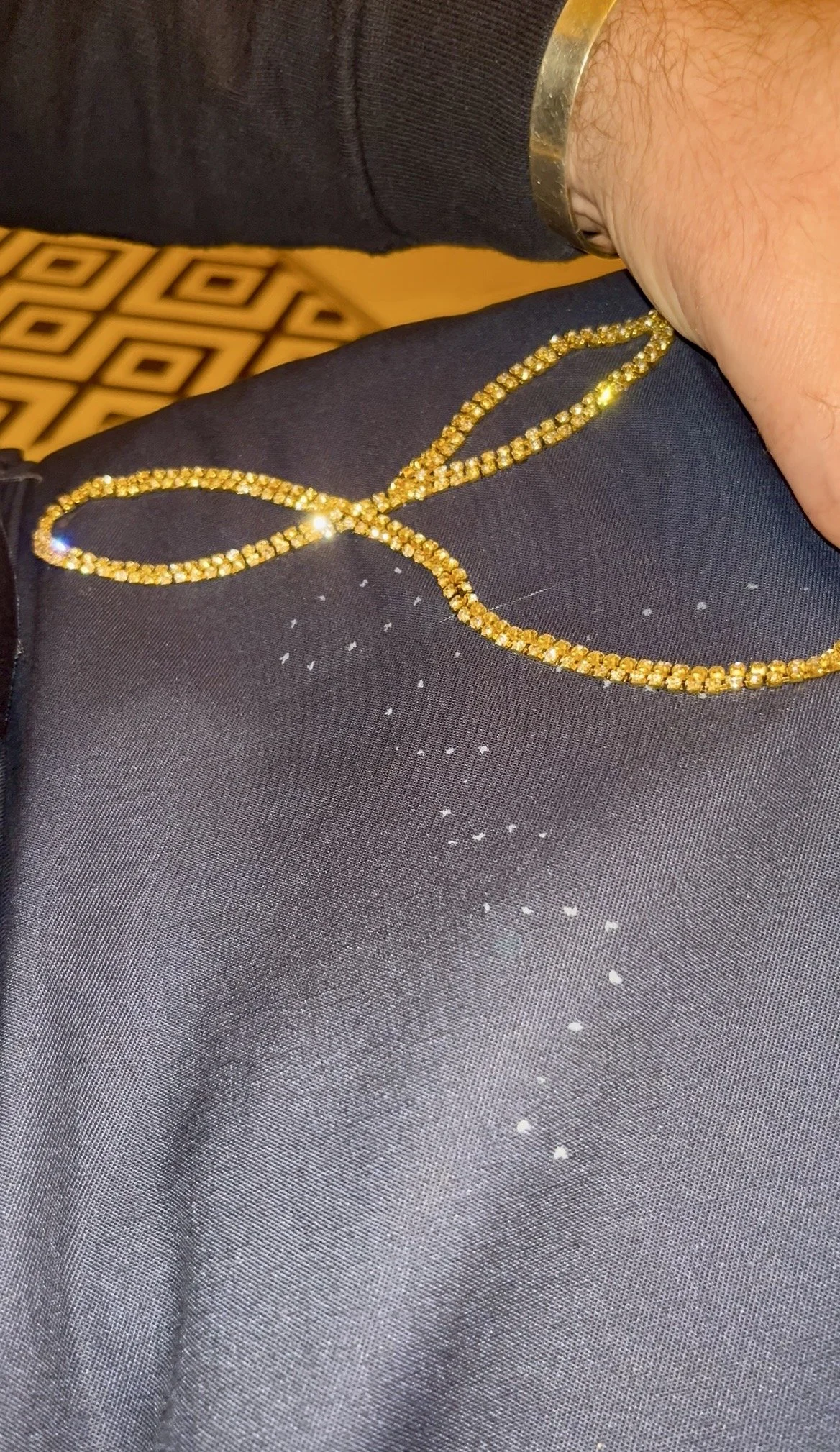
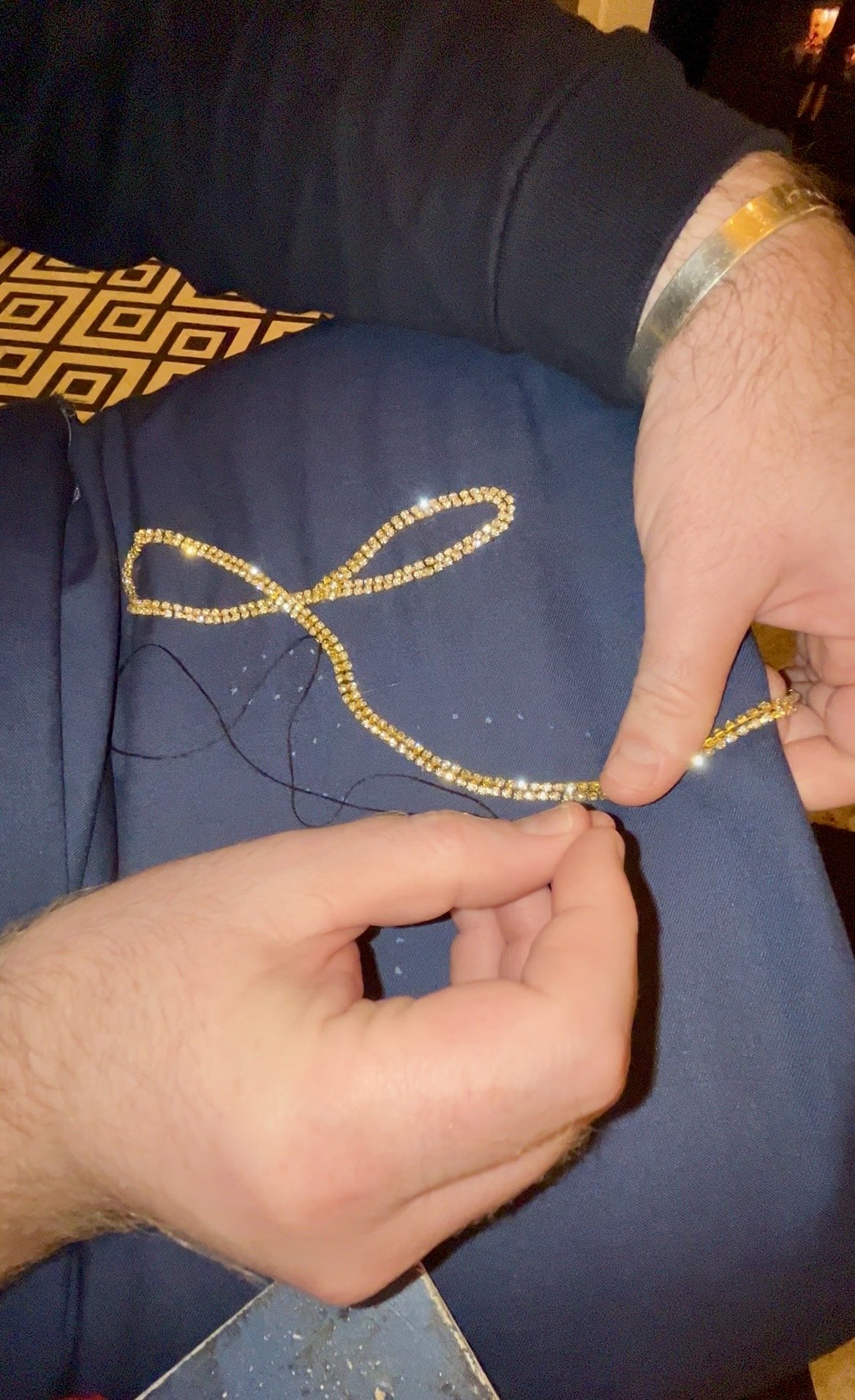
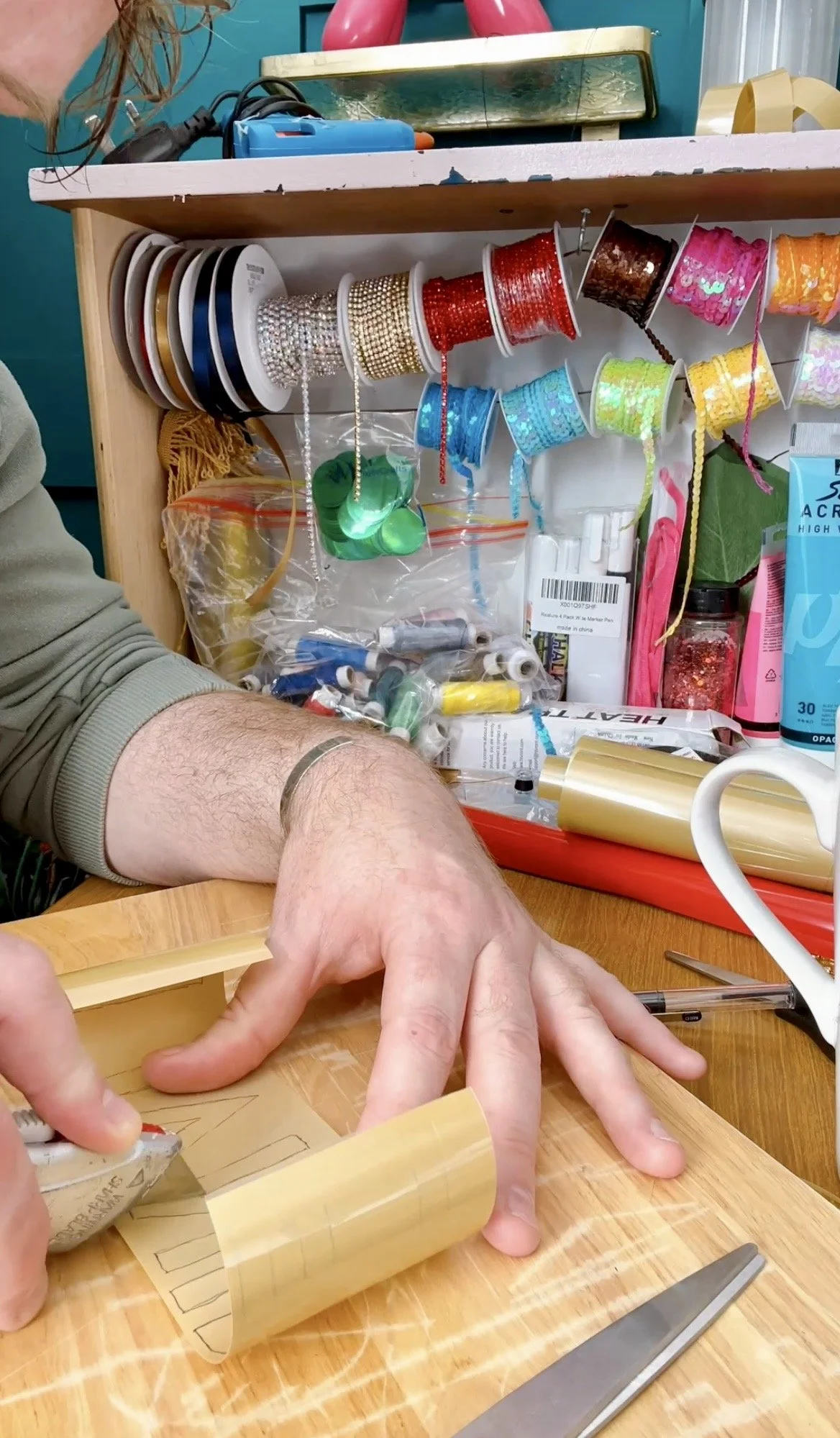
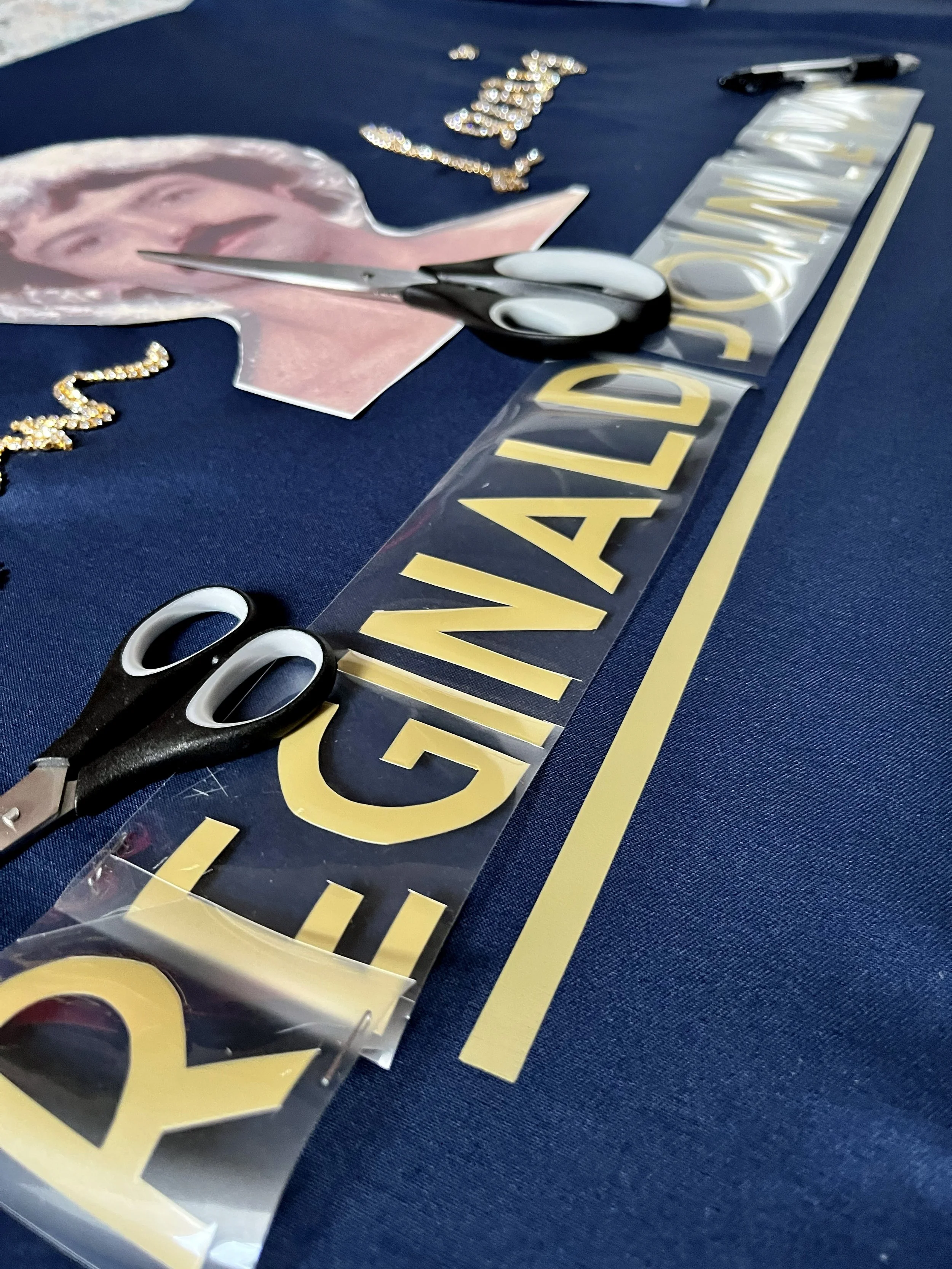
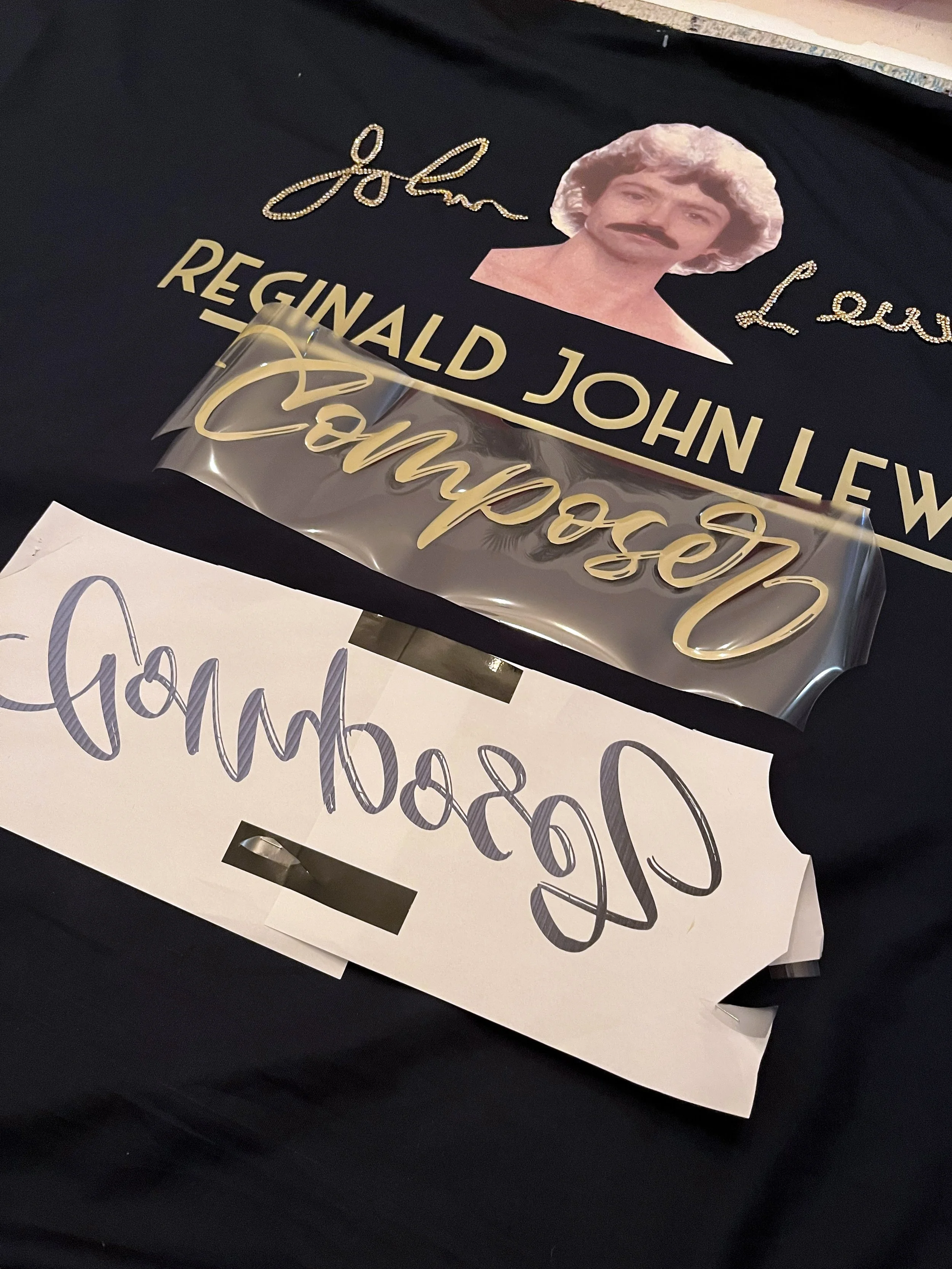
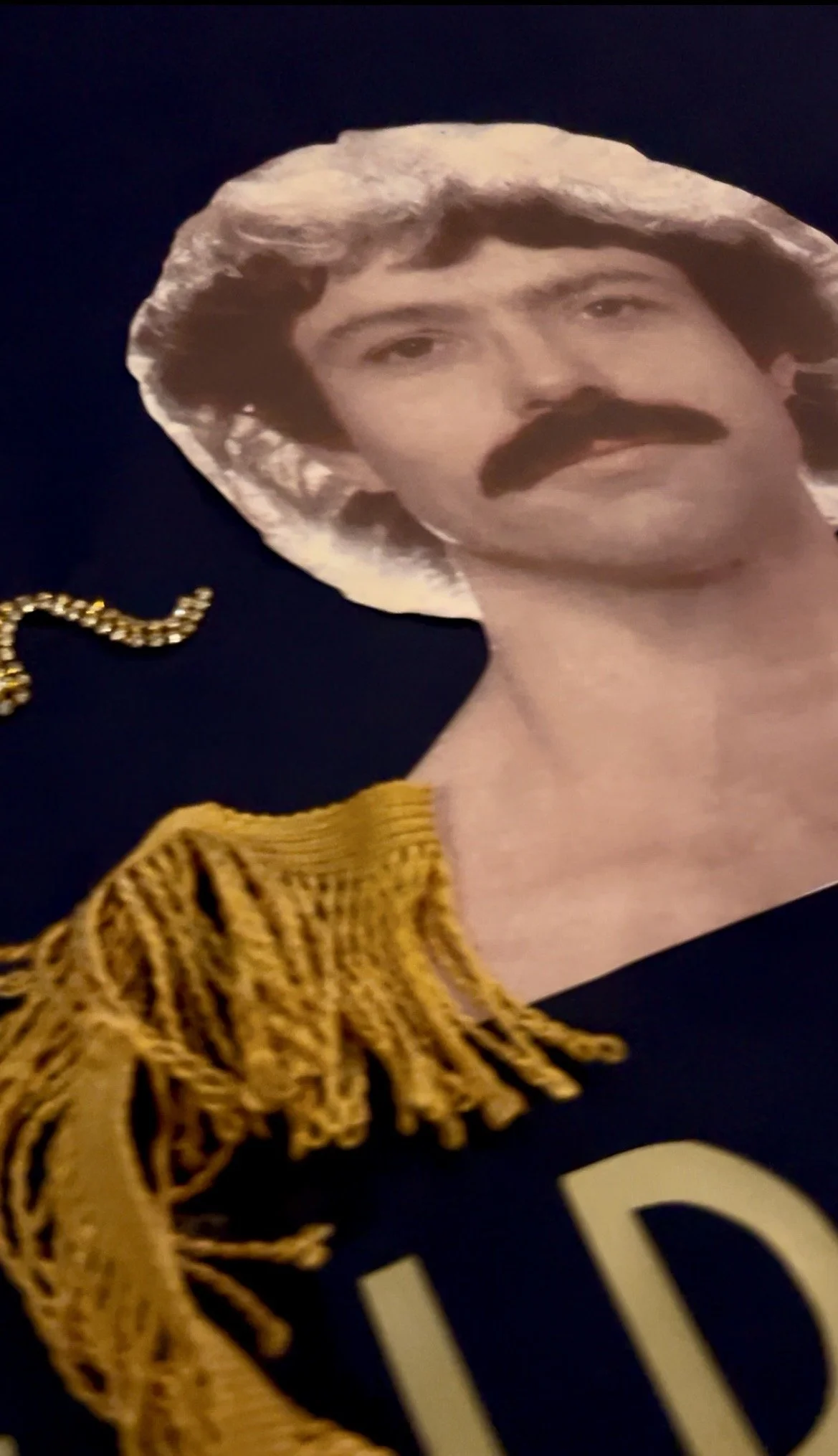
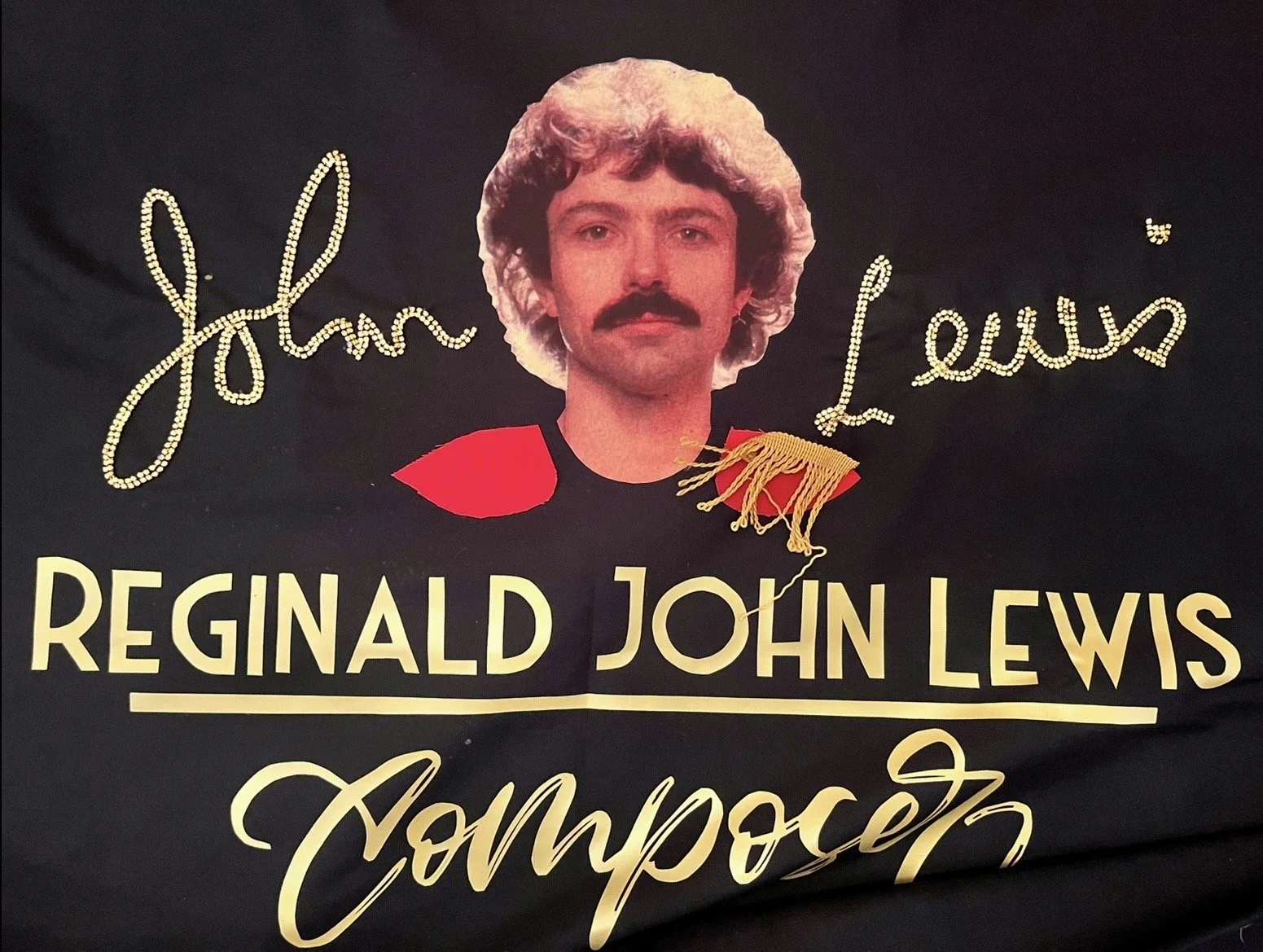
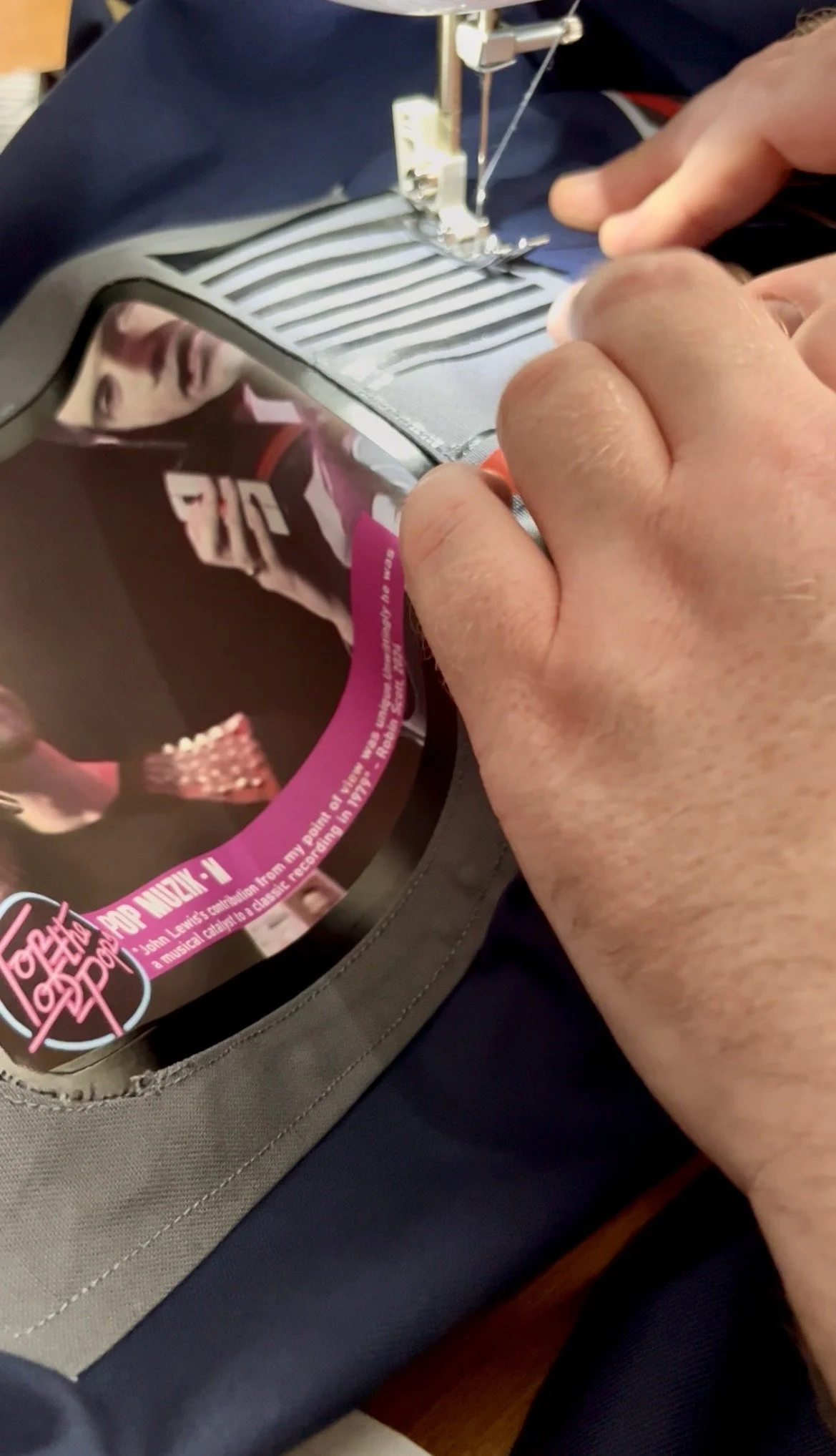
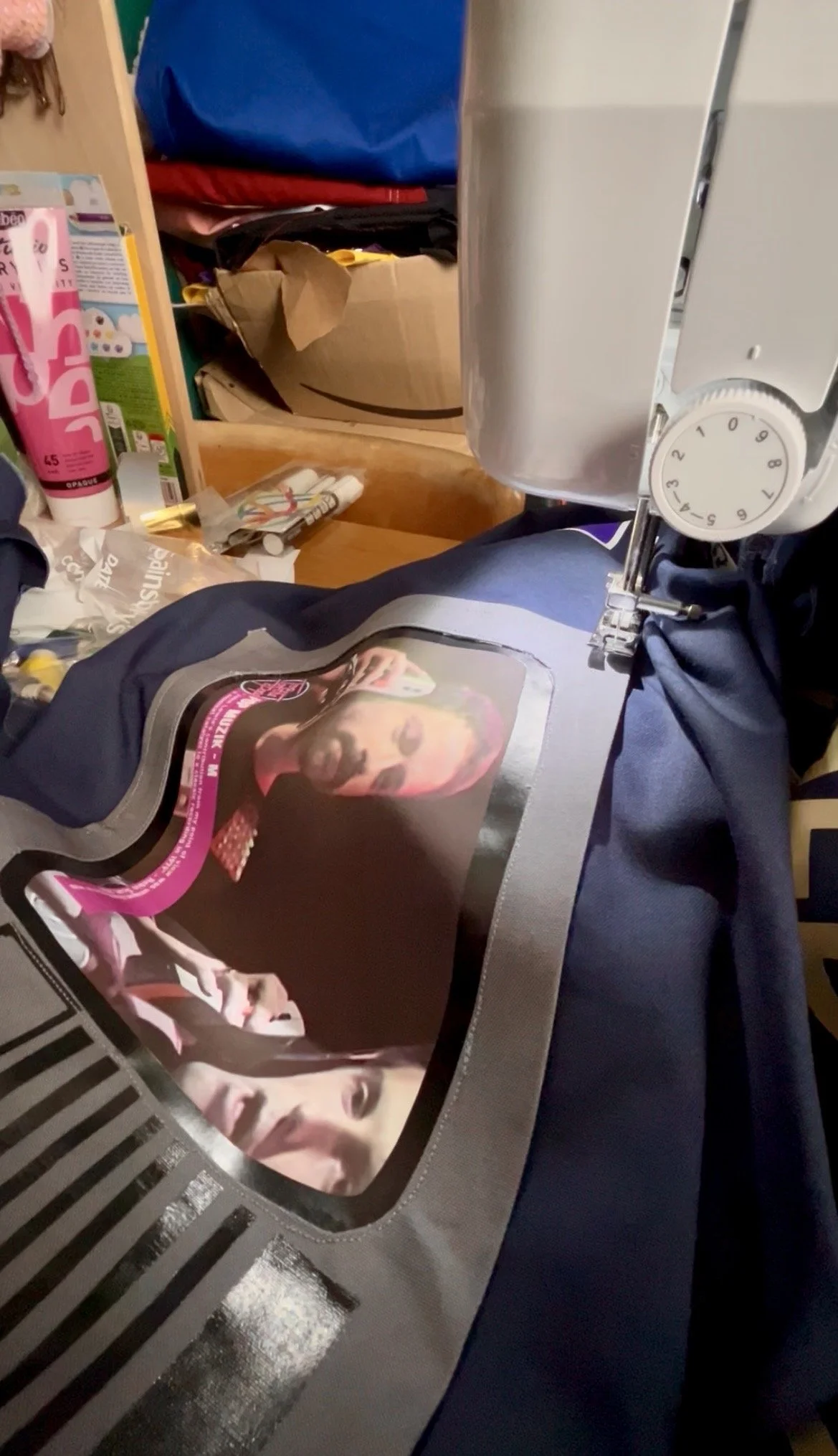
The maple leaf was edged with two rows of ruby-red diamantes, while John’s autograph echoed in two rows of gold diamantes, giving the quilt life, movement and sparkle; centred above a headshot photograph of John from the back of one of his albums with his friend and fellow composer Brian Hodgson and their duo Wavemaker. The photograph, originally topless and cut off at the shoulders, was subtly dressed with small red epaulettes to create the illusion of John wearing a navy T‑shirt—a touch borrowed from his appearance at the organ on Top of the Pops in Robin Scott’s Pop Muzik—and, in place of the gold studs, I substituted gold tassels to avoid damaging the quilt when folded for storage.
LEIGH BOWERY
1961 - 1994
Having just seen the UK AIDS Memorial Quilt displayed in its entirety at the Tate Modern in the summer of 2025, I and a friend were deeply disappointed to find no dedicated quilt panel for Leigh Bowery, especially as I had come directly from the upper‑floor exhibition celebrating his work and legacy.
Given Bowery’s profound influence on performance, fashion and gay culture, and knowing many of his friends and collaborators were themselves fashion‑literate or well connected enough to commission or contribute a panel, the absence felt like a glaring omission — a missed opportunity to honour not only an individual but a network of creativity and loss that the Quilt is uniquely placed to memorialise.
So, the way to address that was to create one myself: like Bowery, who relished in confronting, challenging and provoking through his art and performance, I felt—politely and without pretension—that given my very basic capacity for art and stitching, contributing a panel might prompt others to respond in kind; my modest effort could act as a provocation or invitation, encouraging those with greater skill to produce panels that would more fittingly honour Bowery’s iconic status.
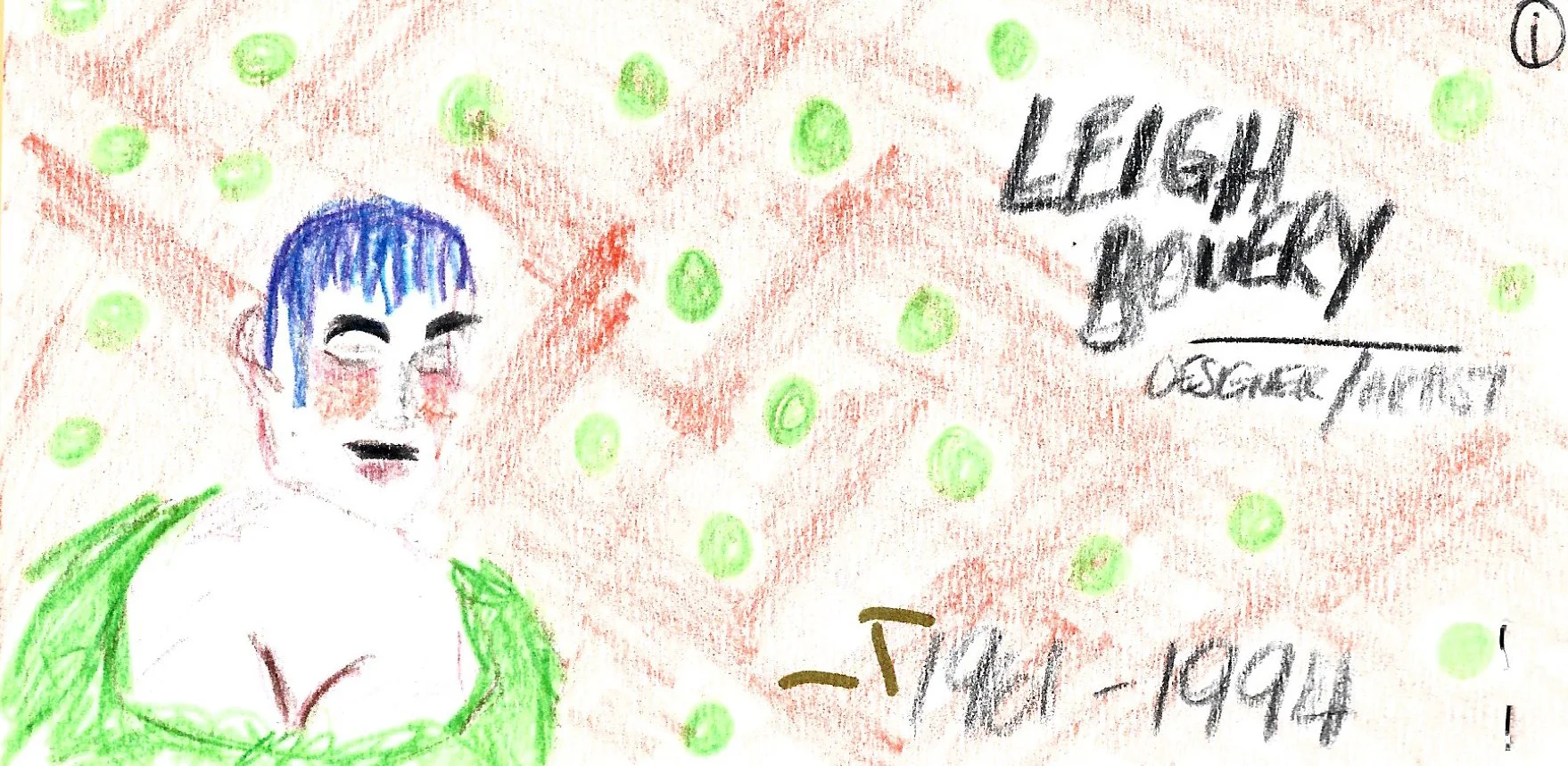
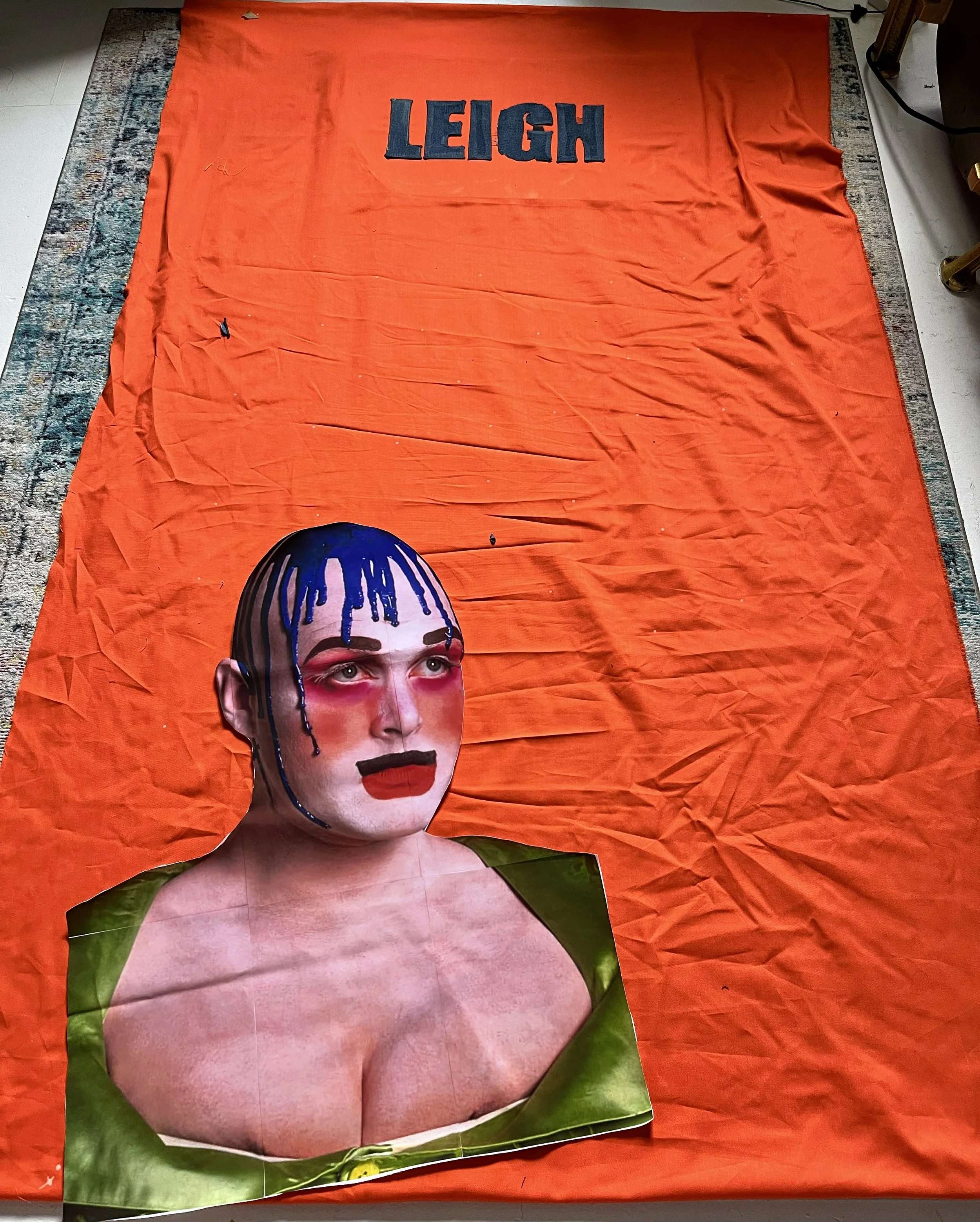
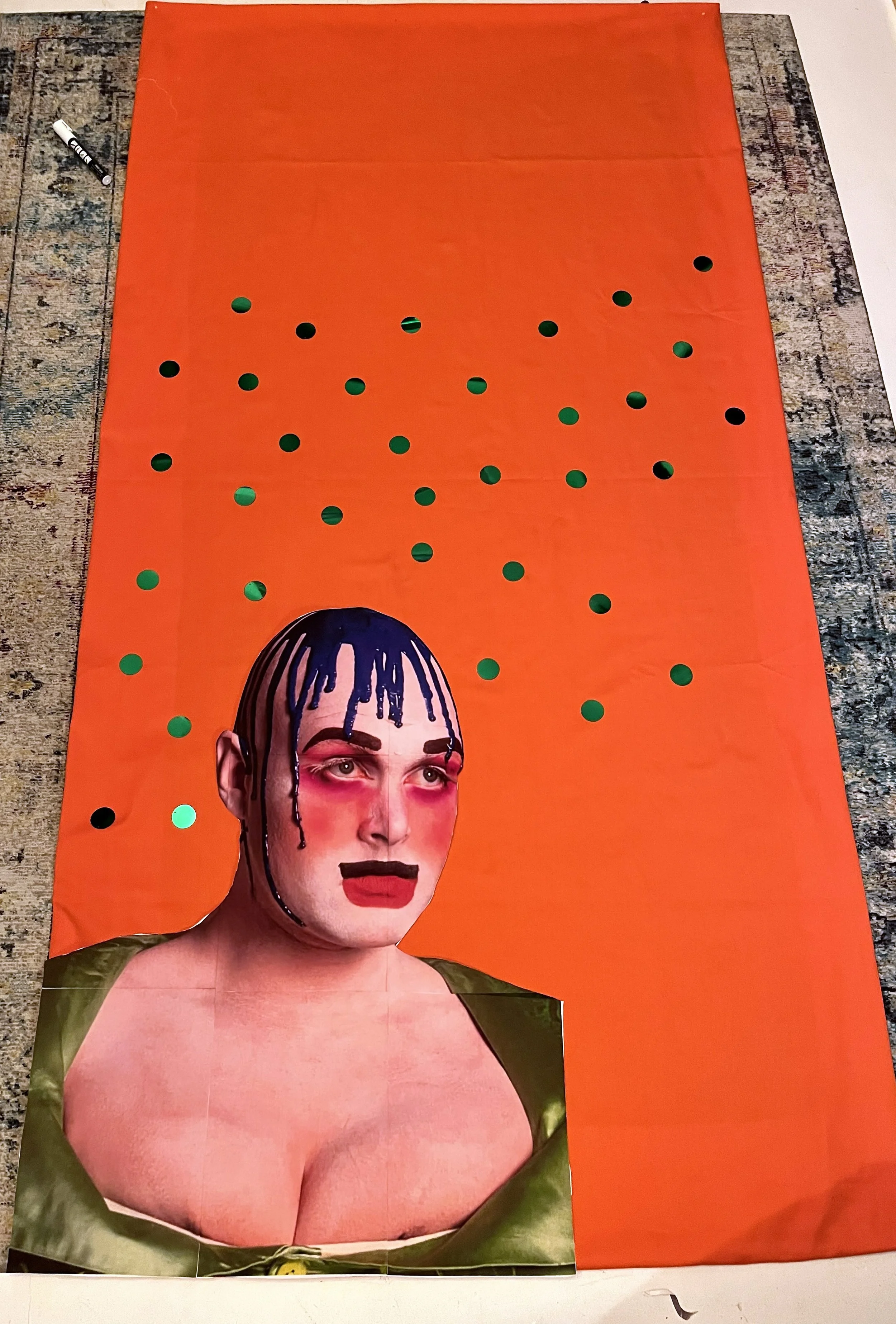
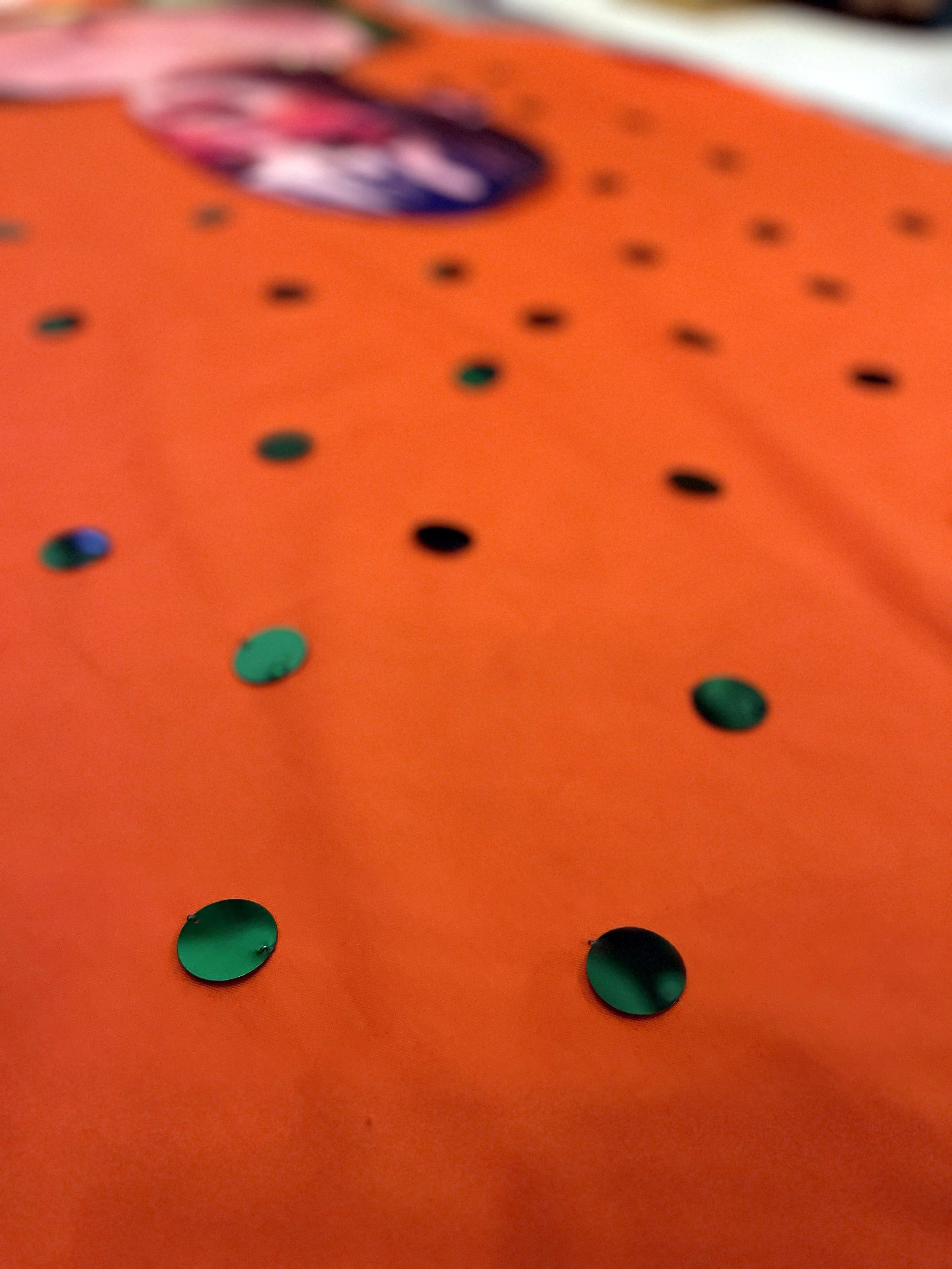
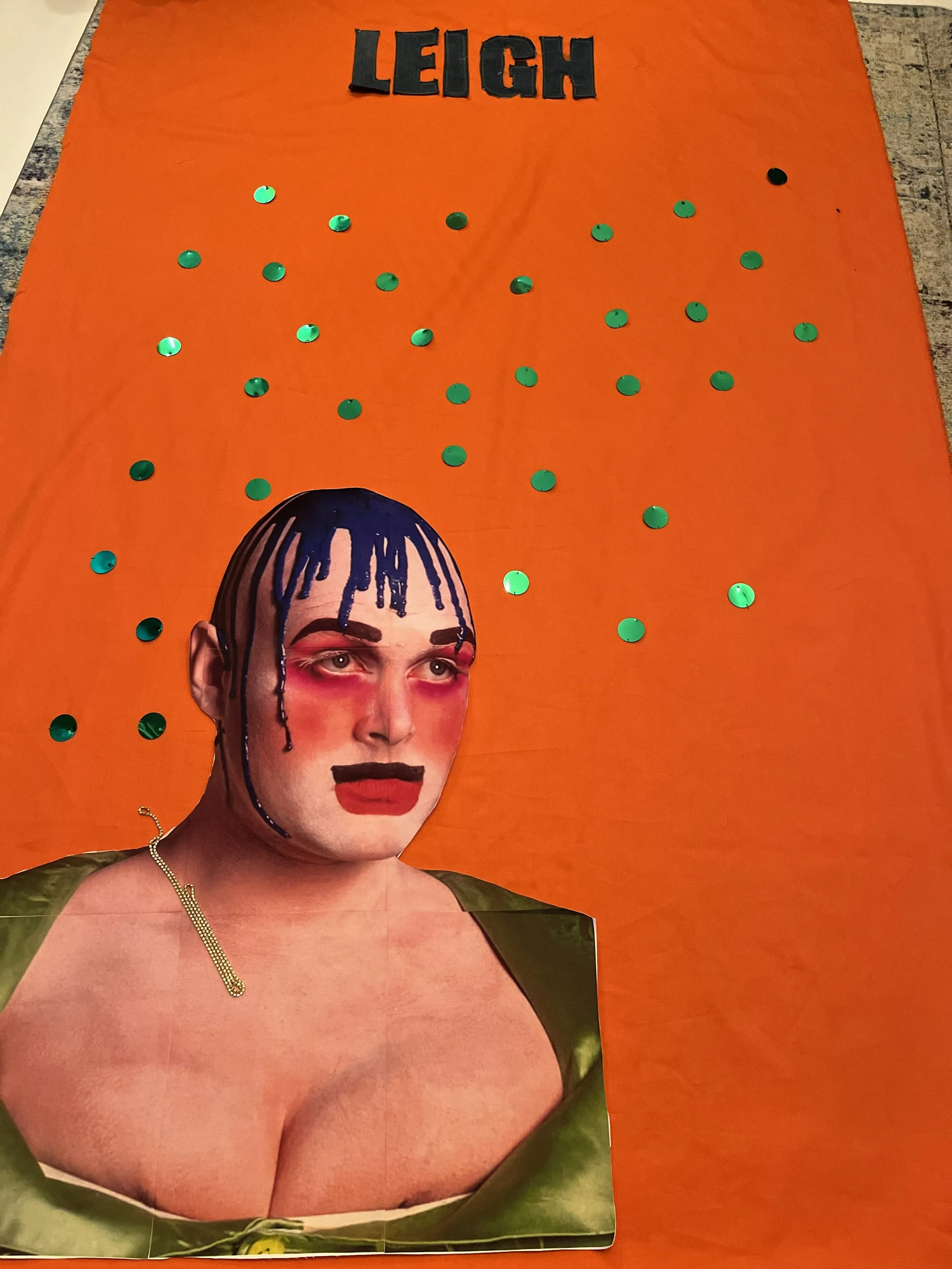
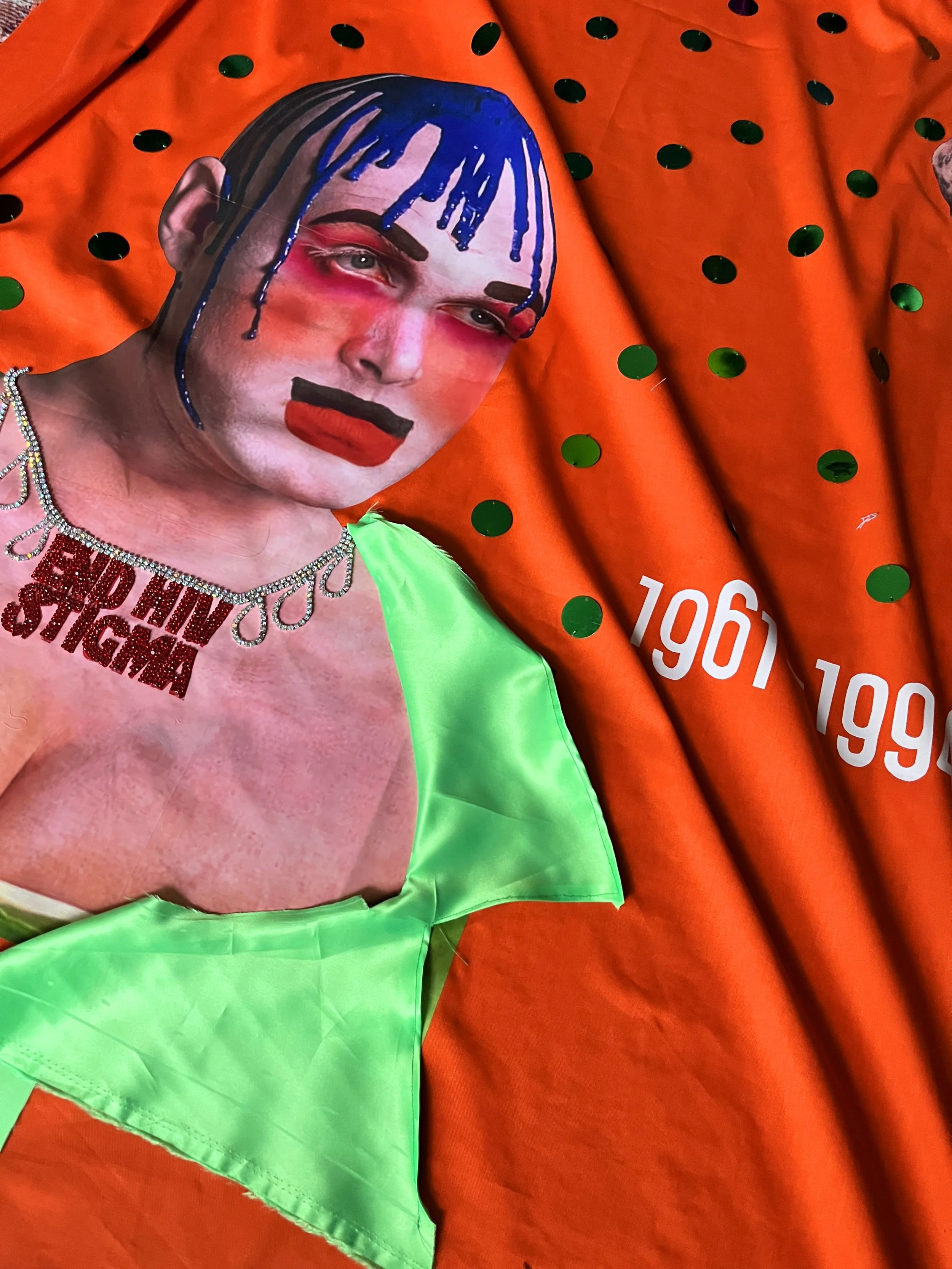
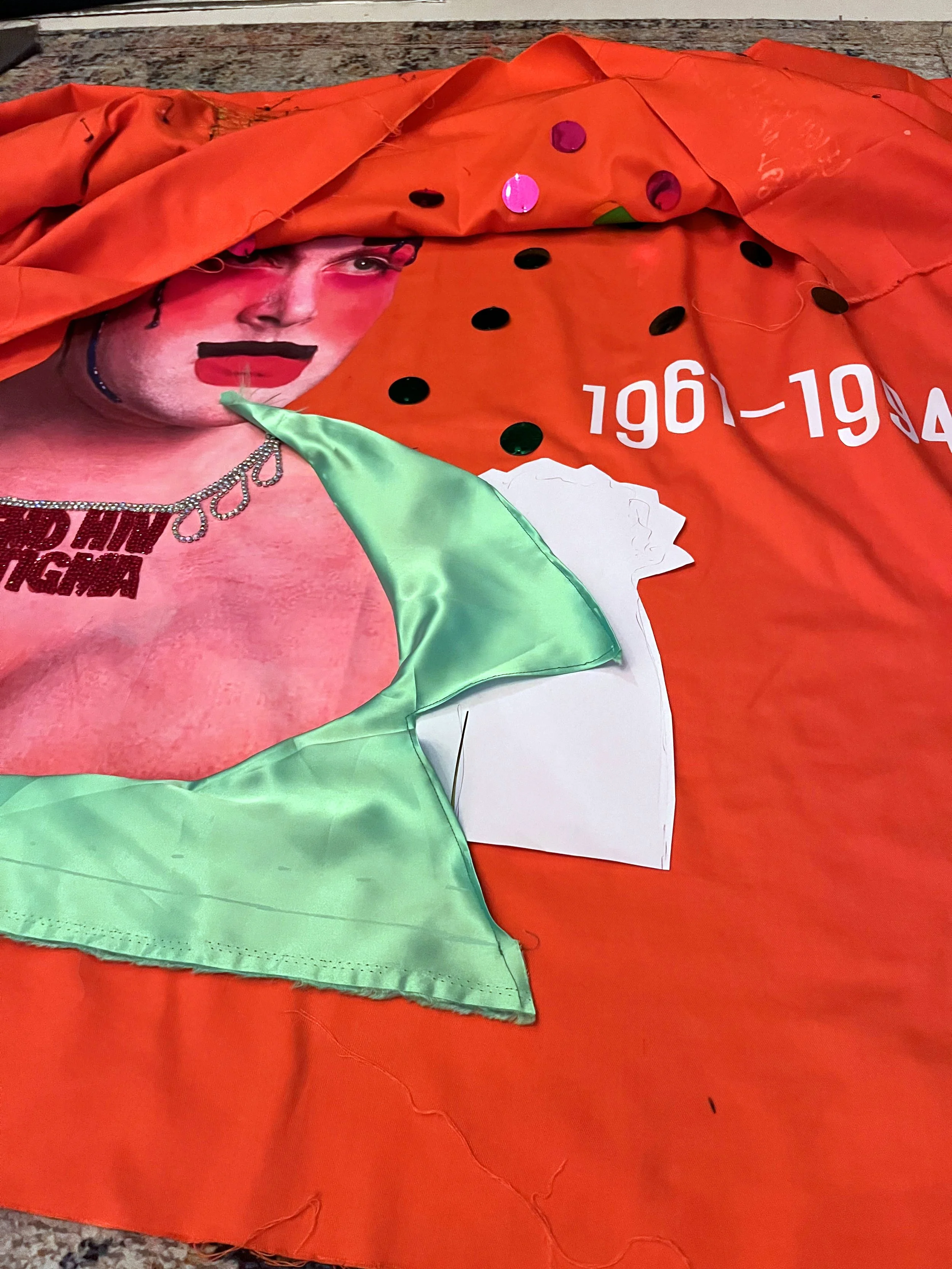
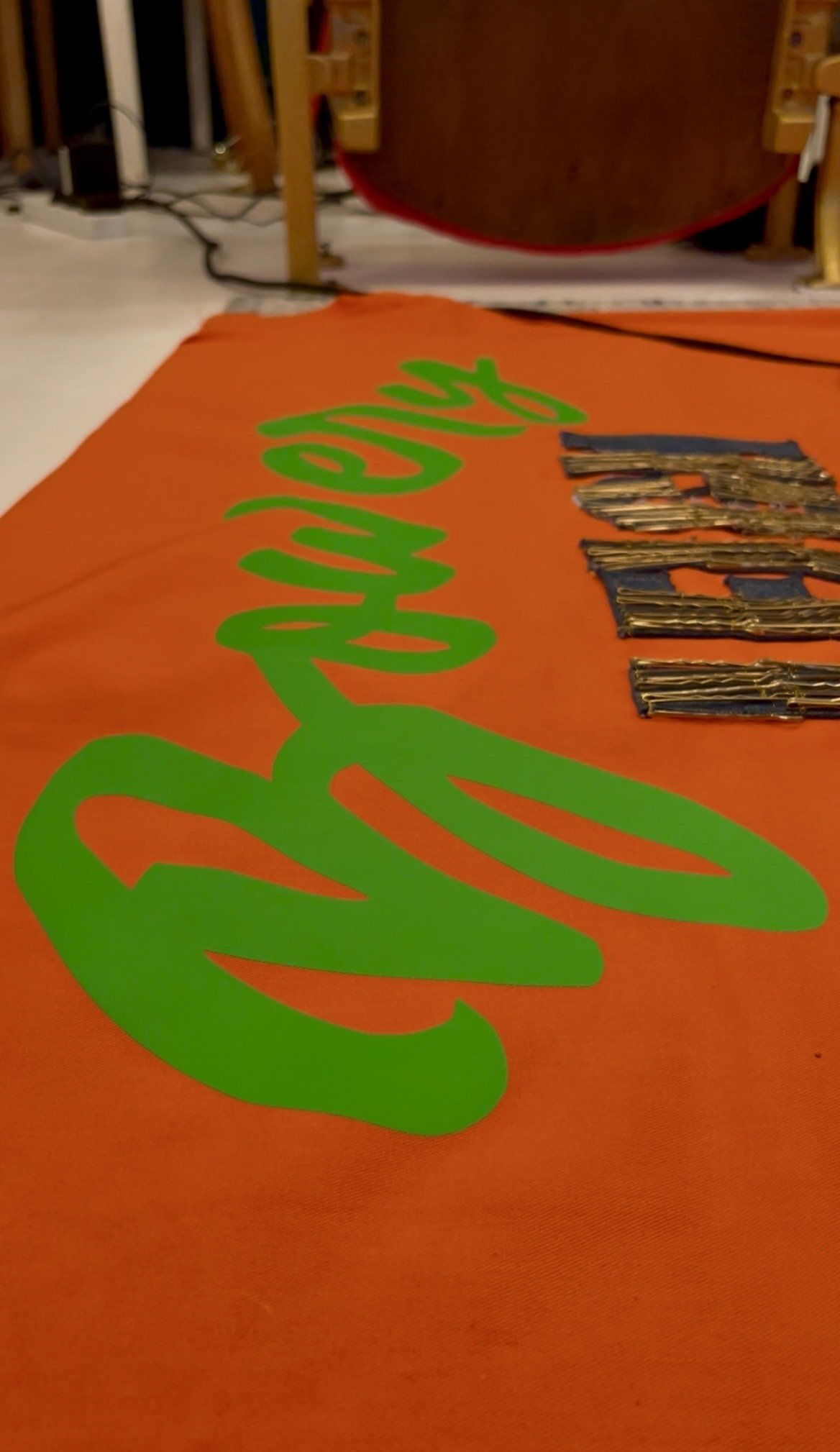
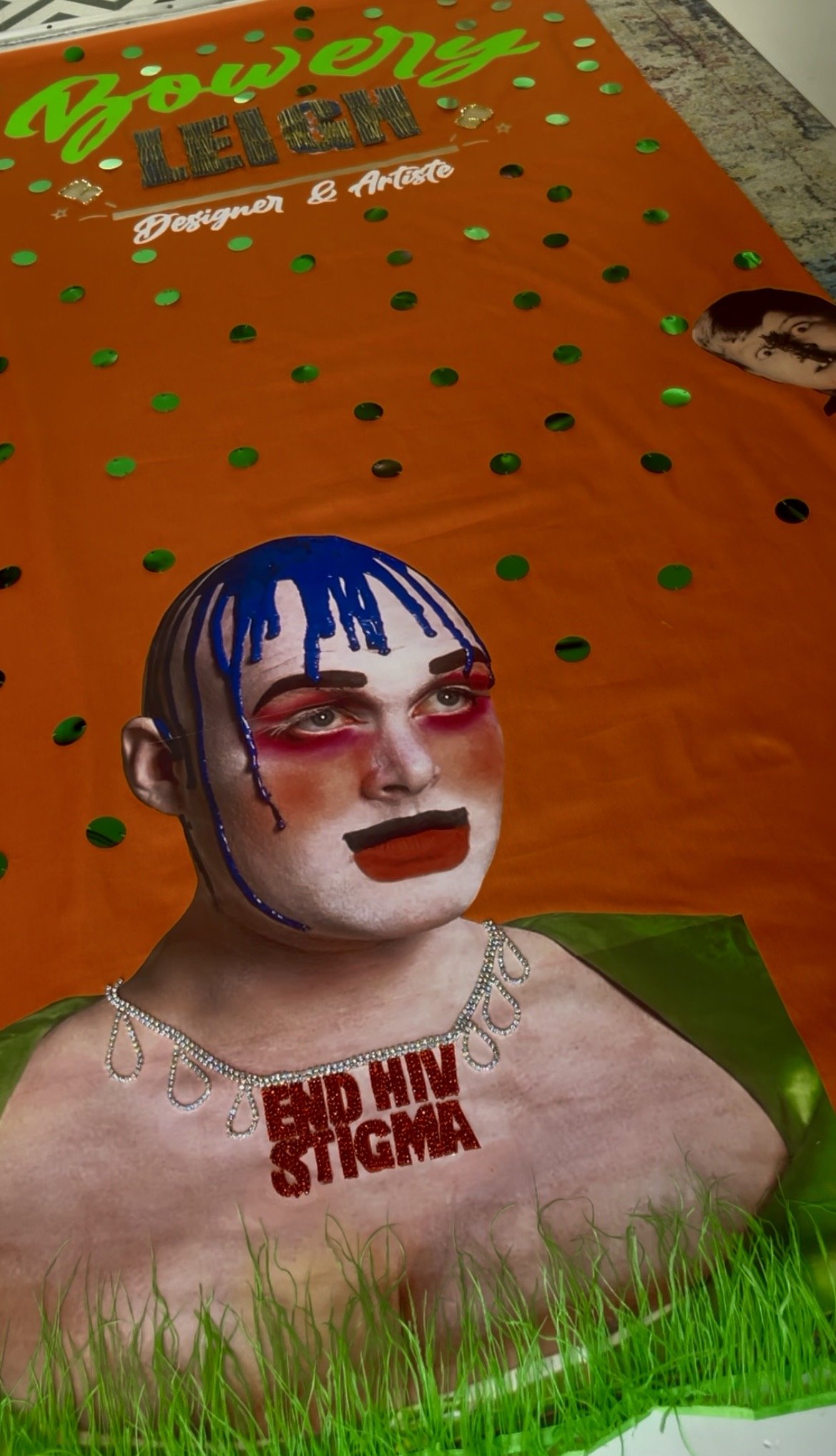
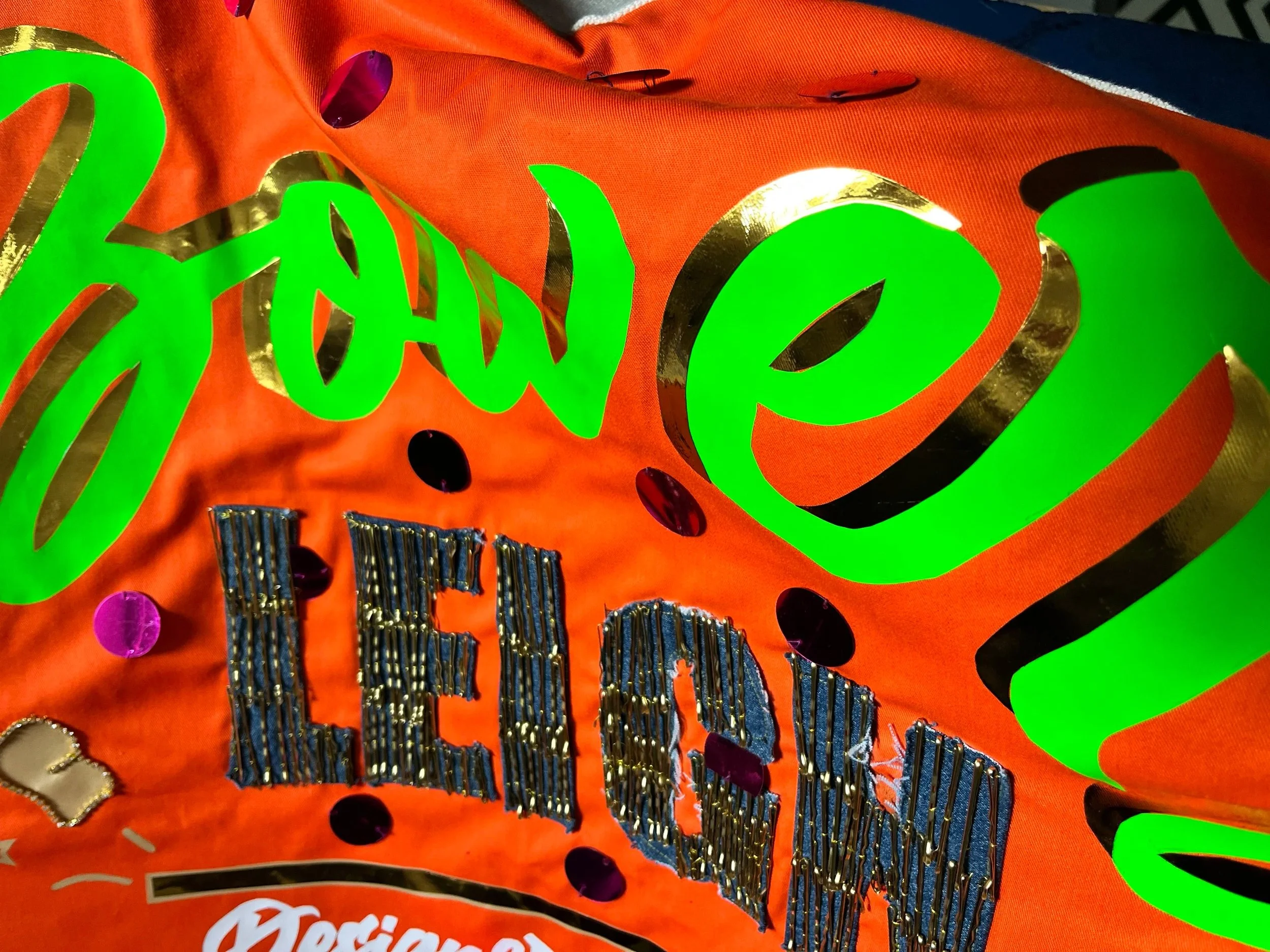
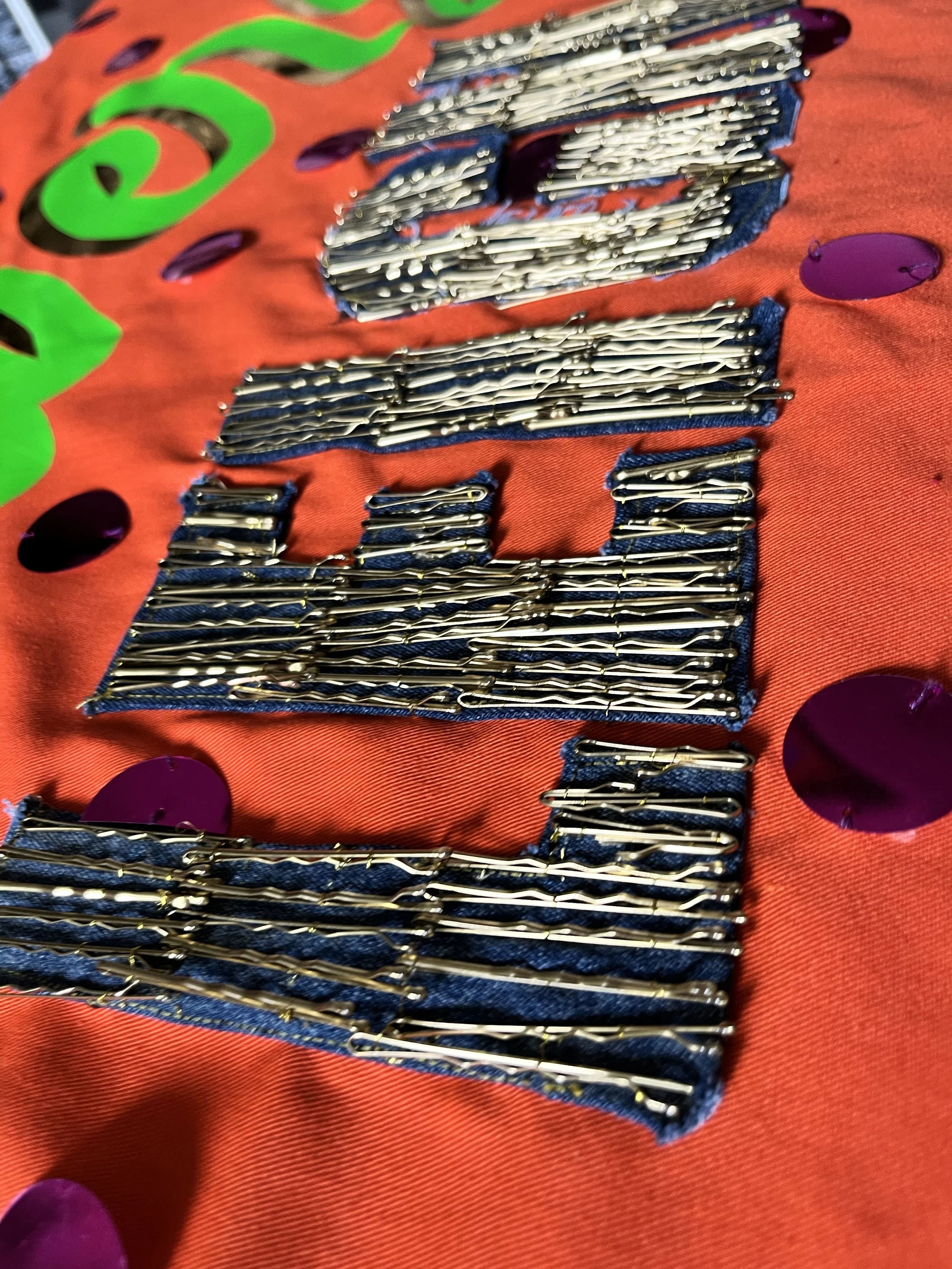
My idea was to keep things simple — not that Bowery could be mistaken for anything else — but to let his image do the talking, since he himself often read like a piece of art. I chose an orange background to echo the colour of one of his best-known creations and then inverted his usual foil spots into green, a deliberate nod to Kaposi sarcoma and the AIDS crisis that quitely marked his life.
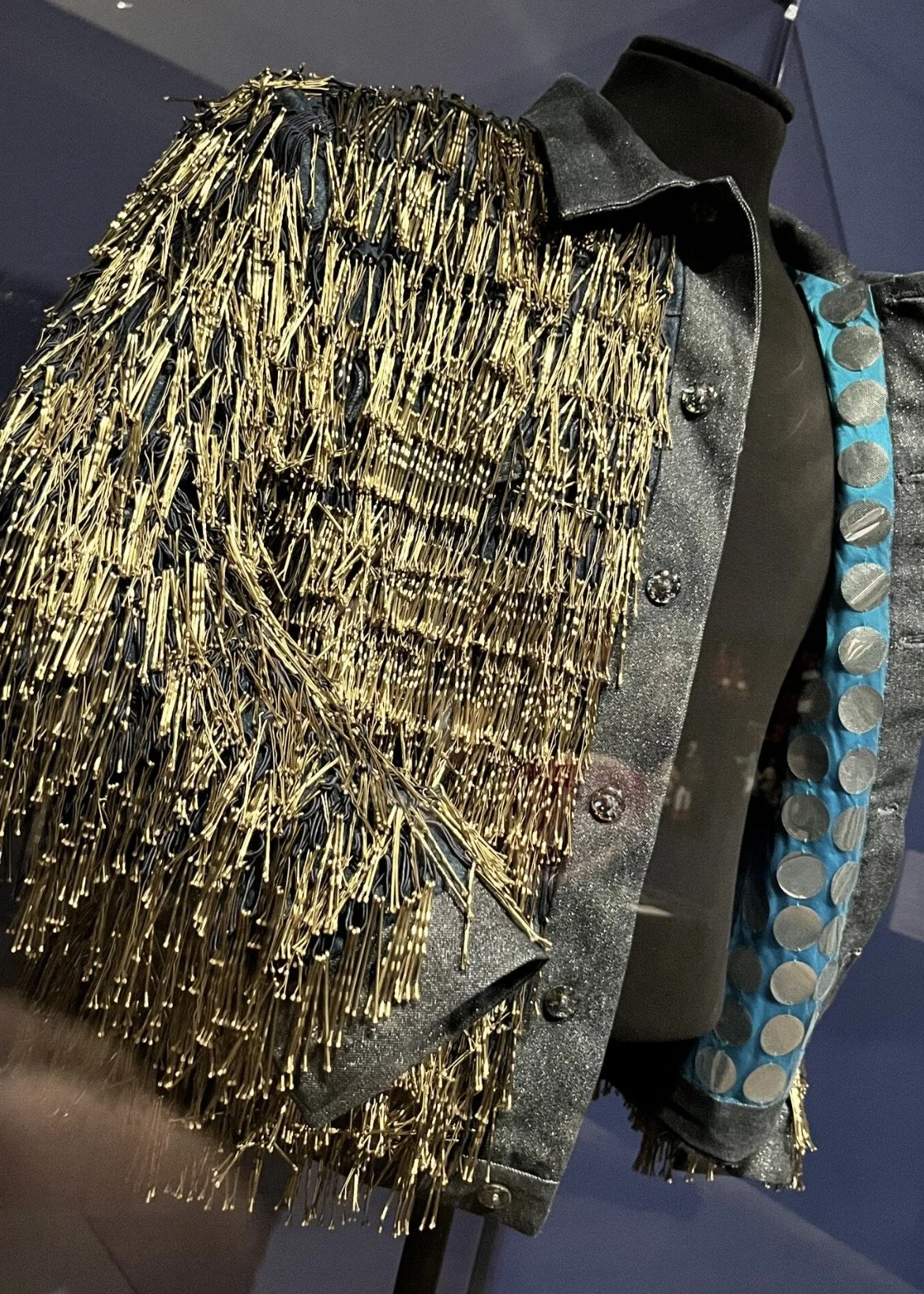
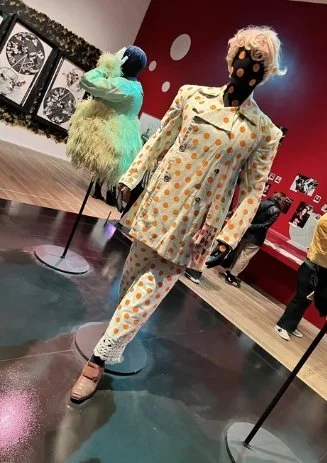
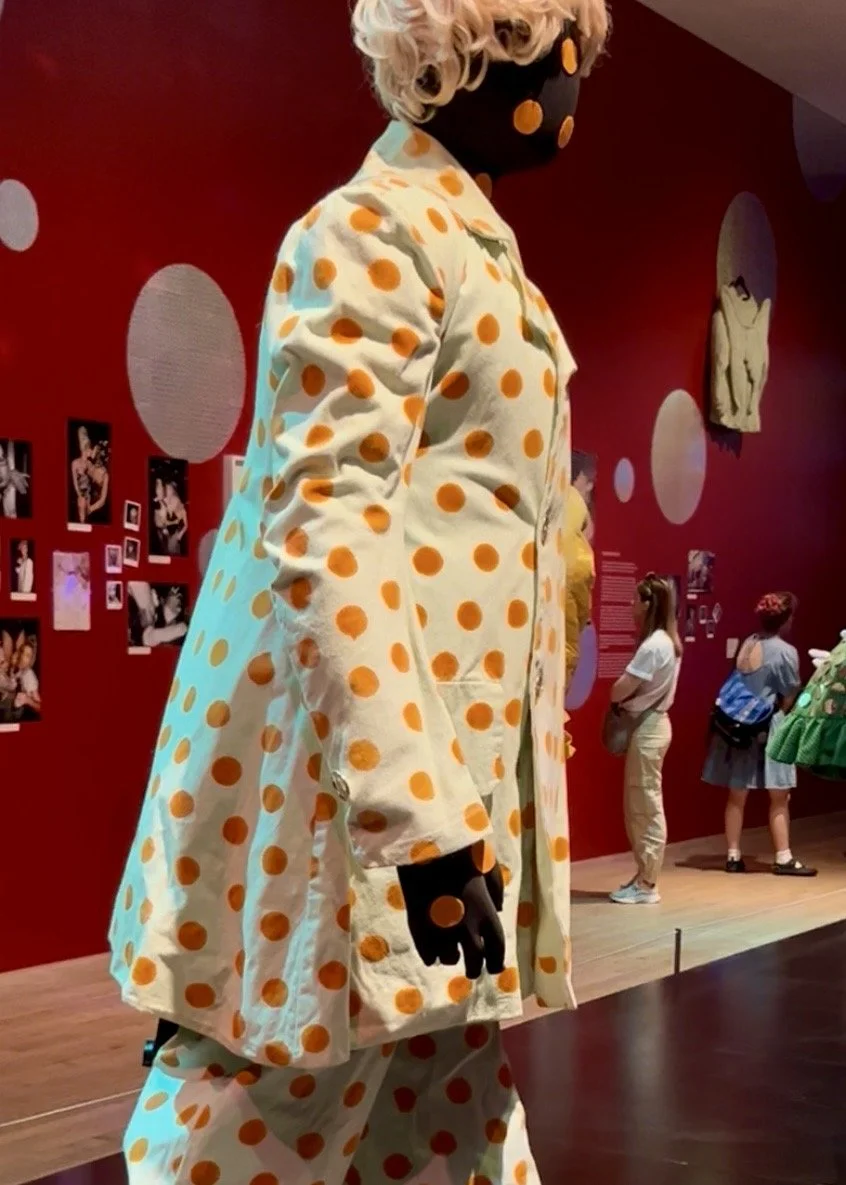
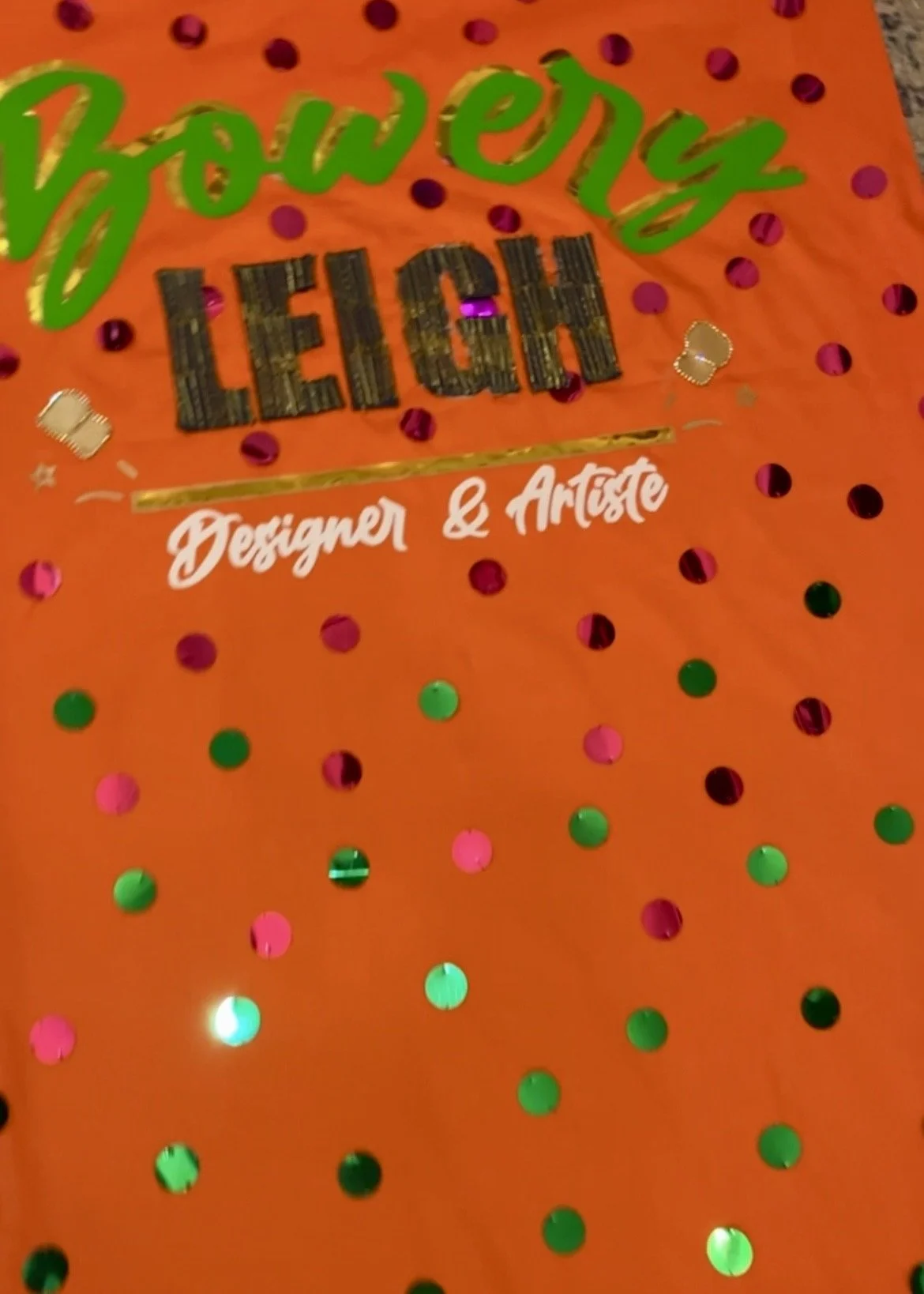
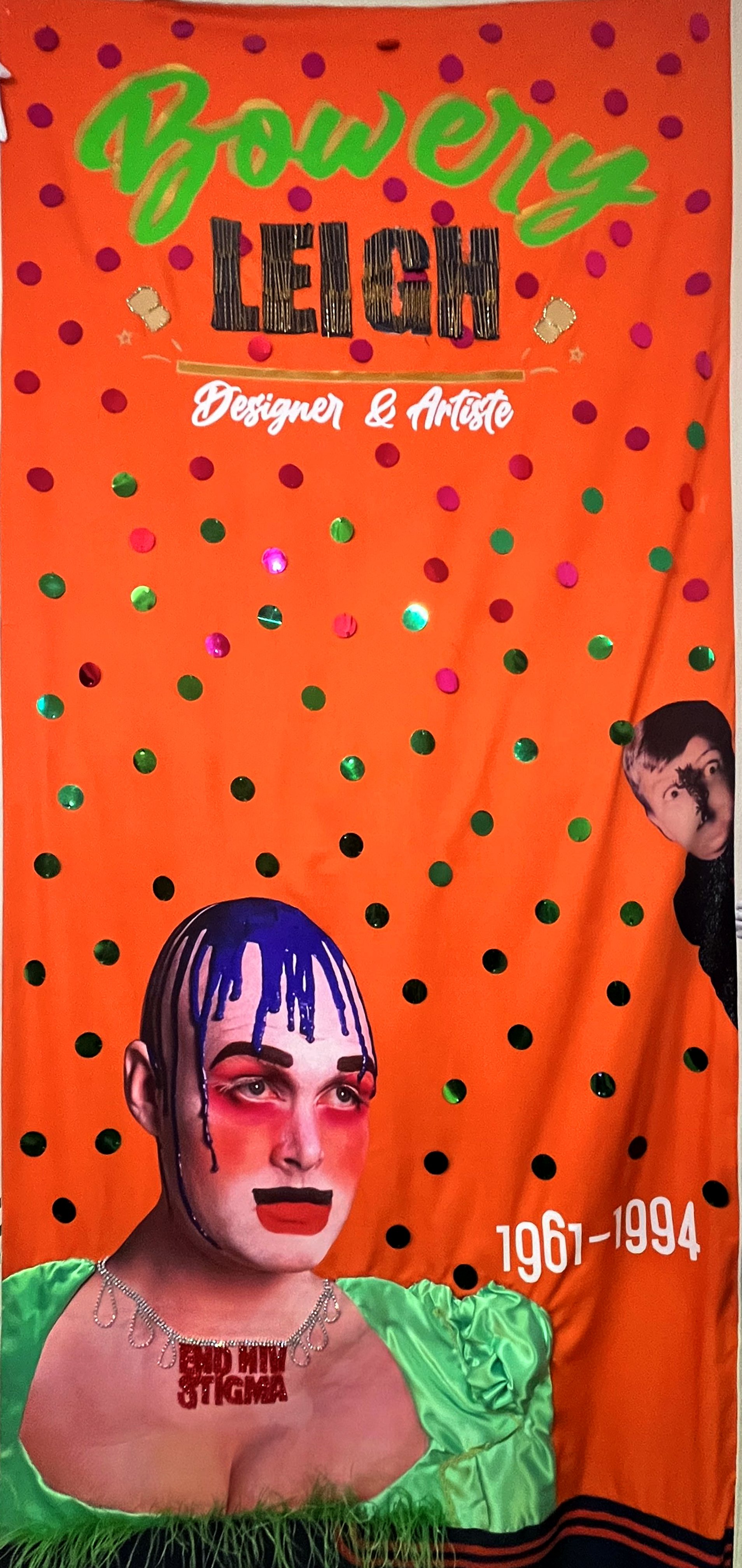
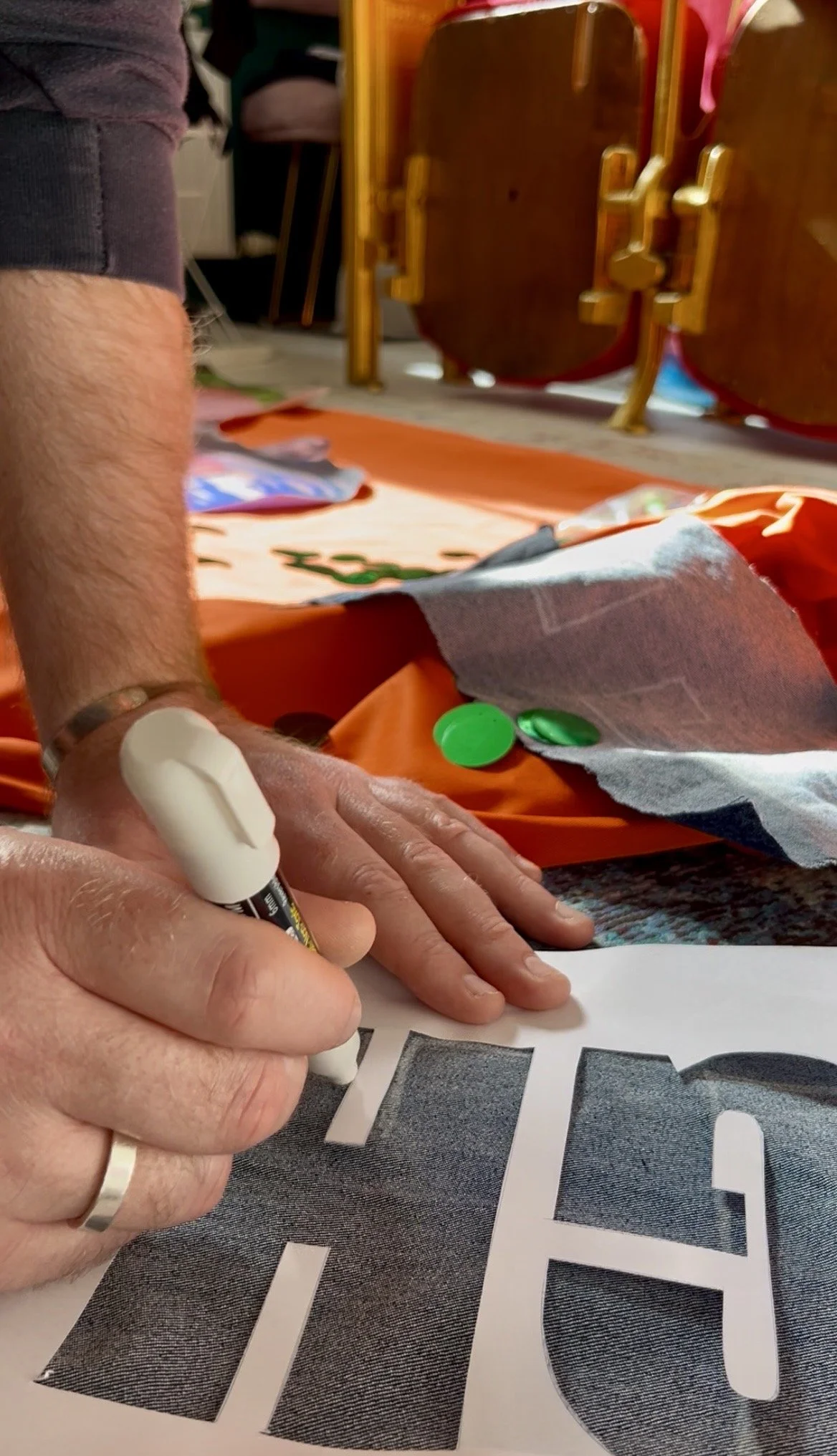
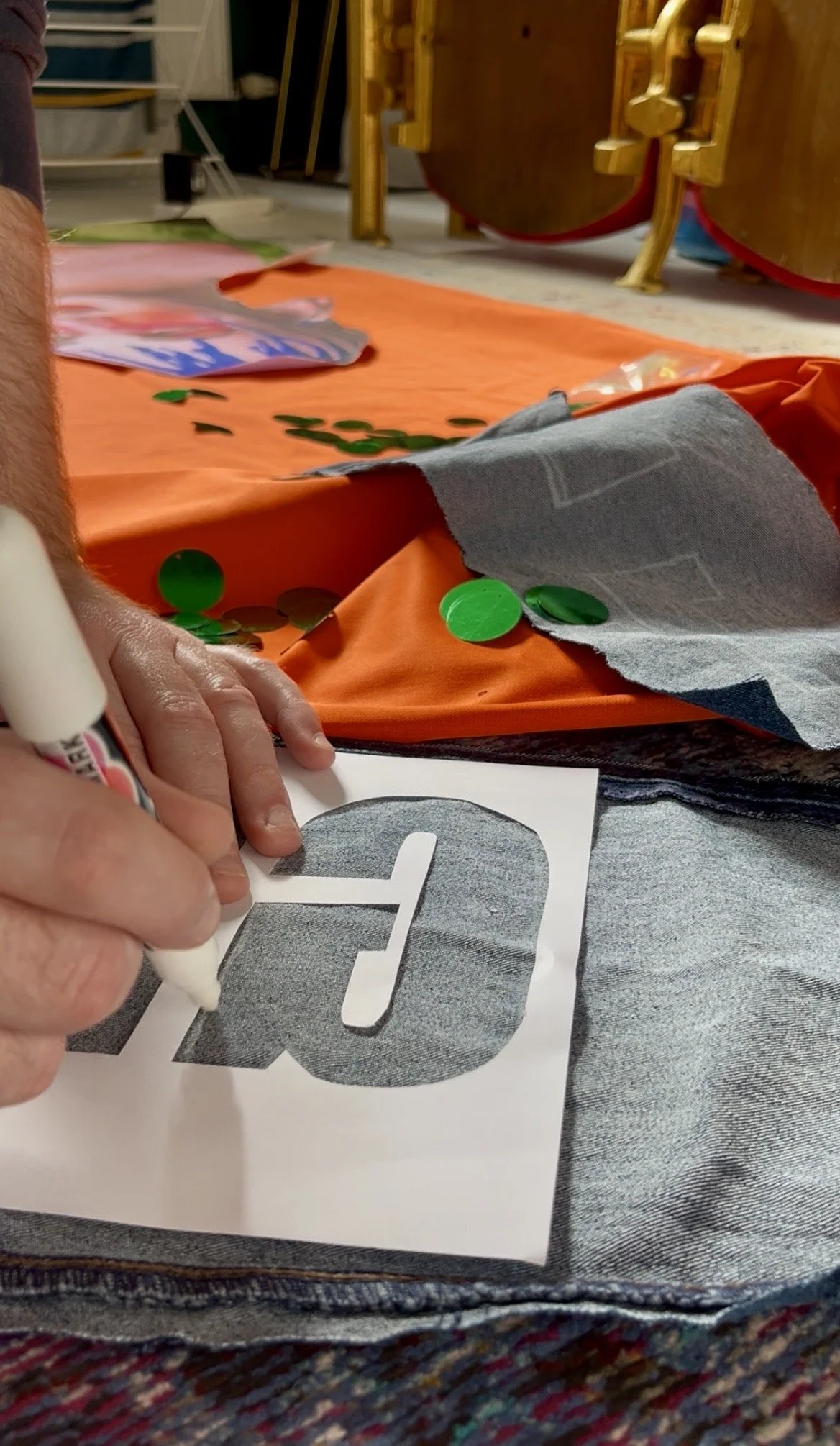
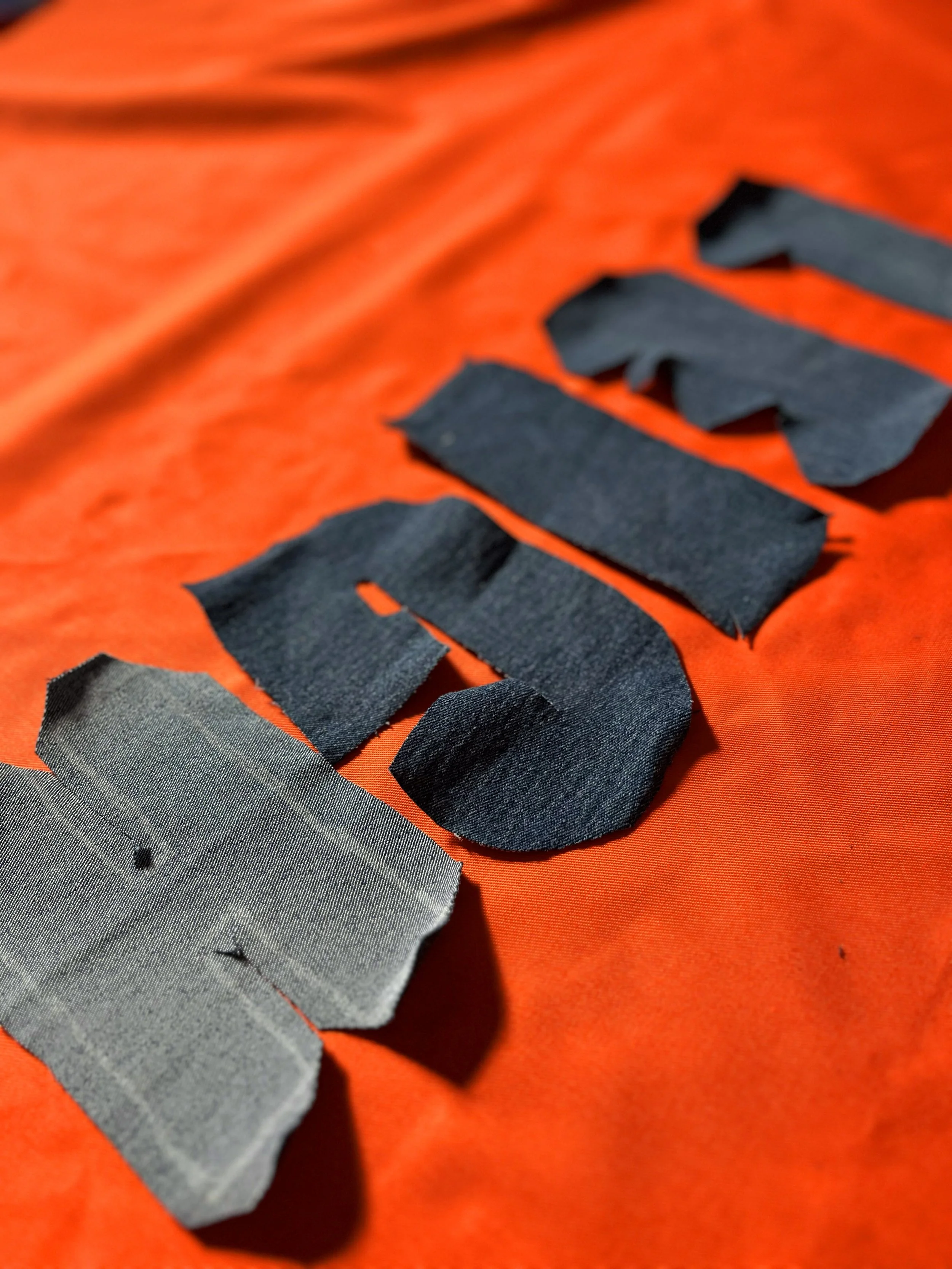
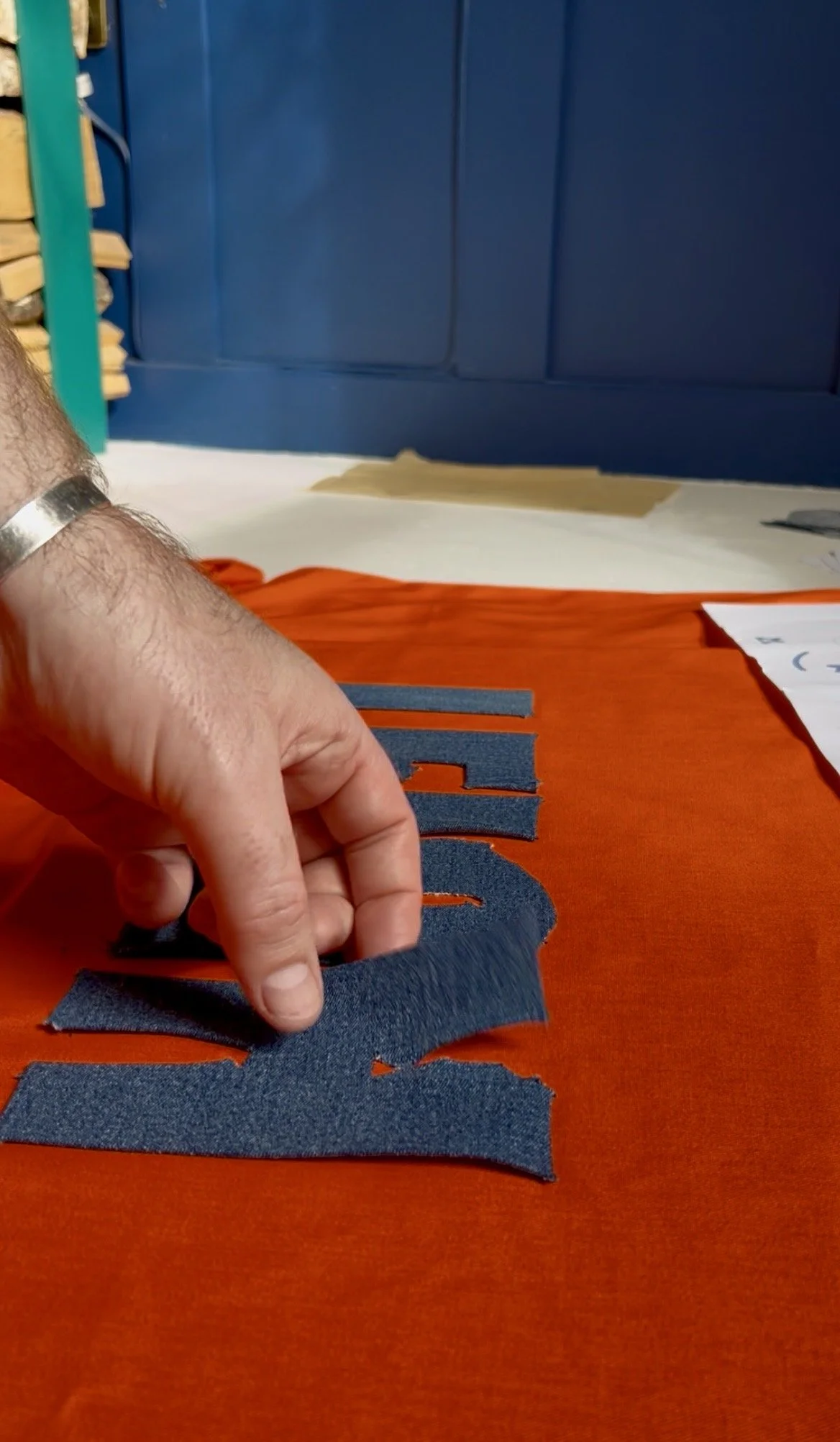
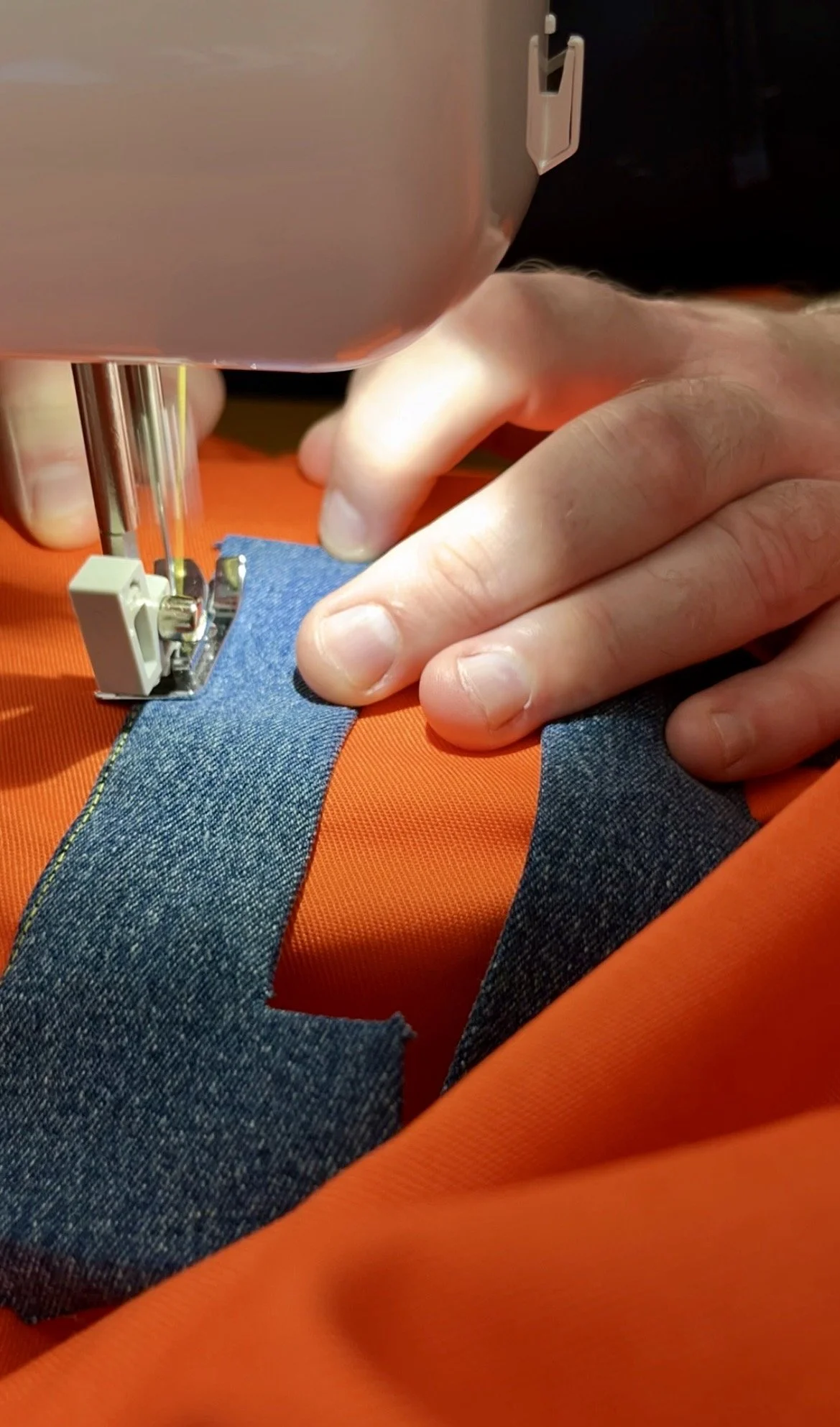
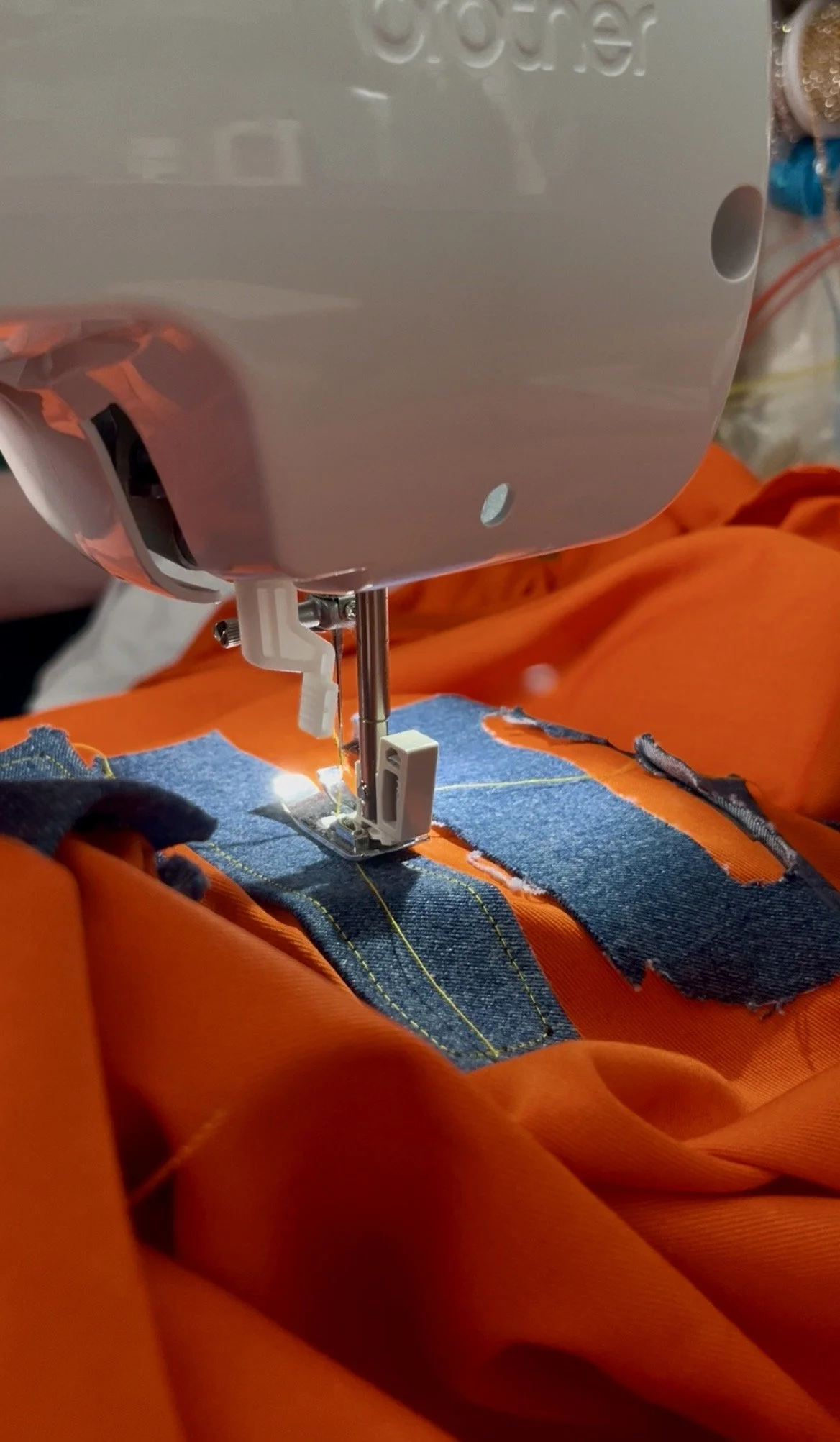
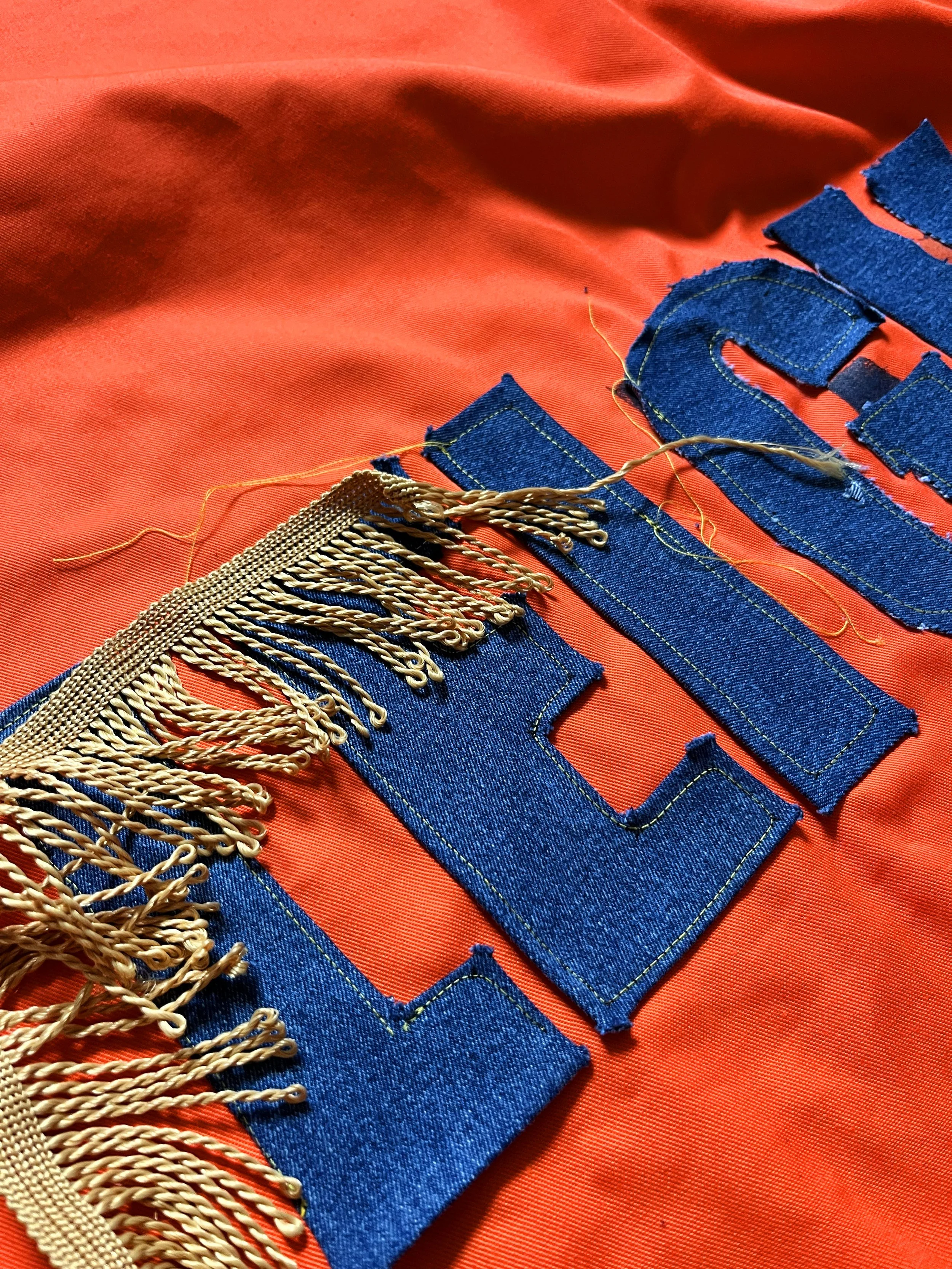
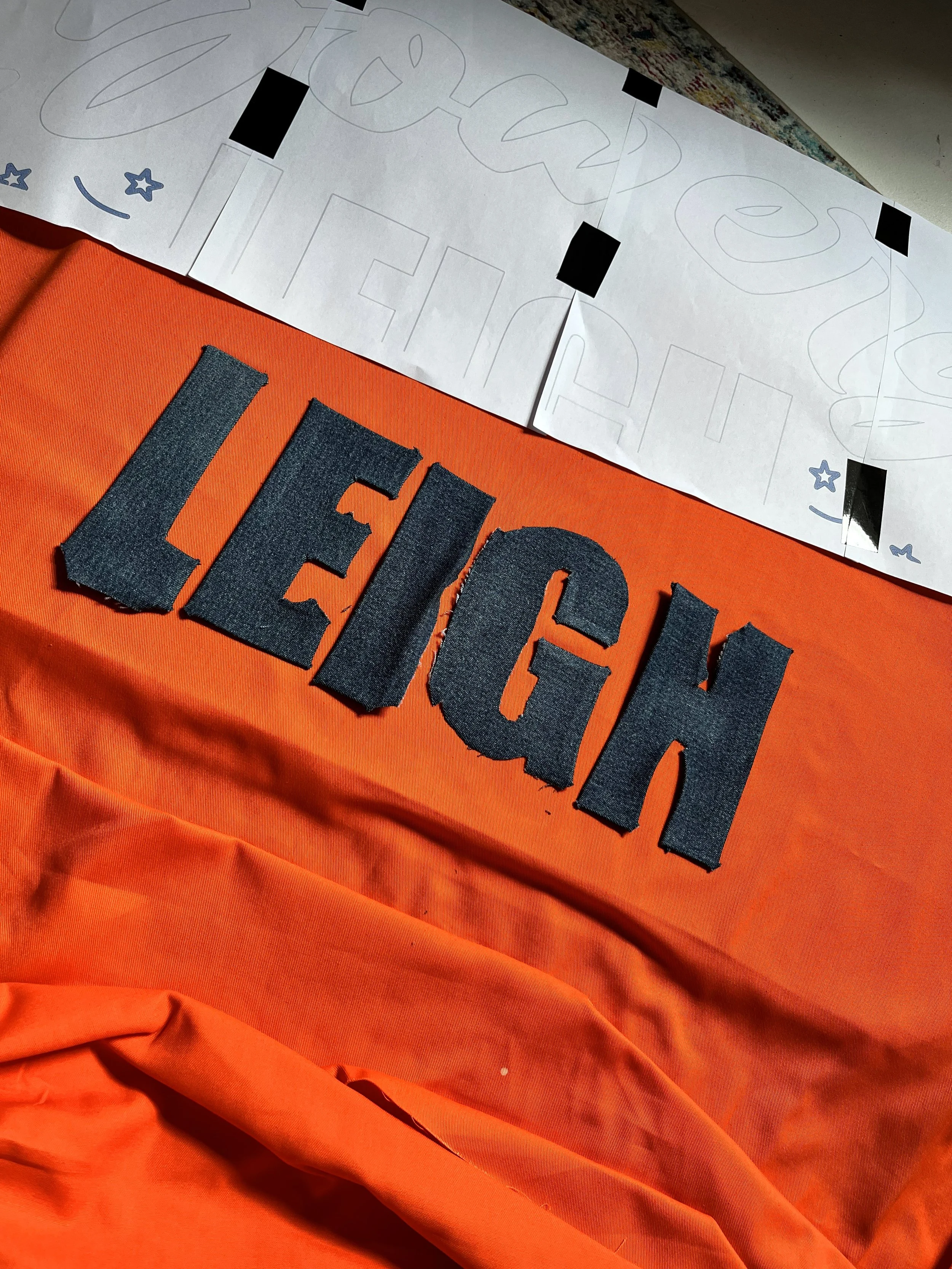
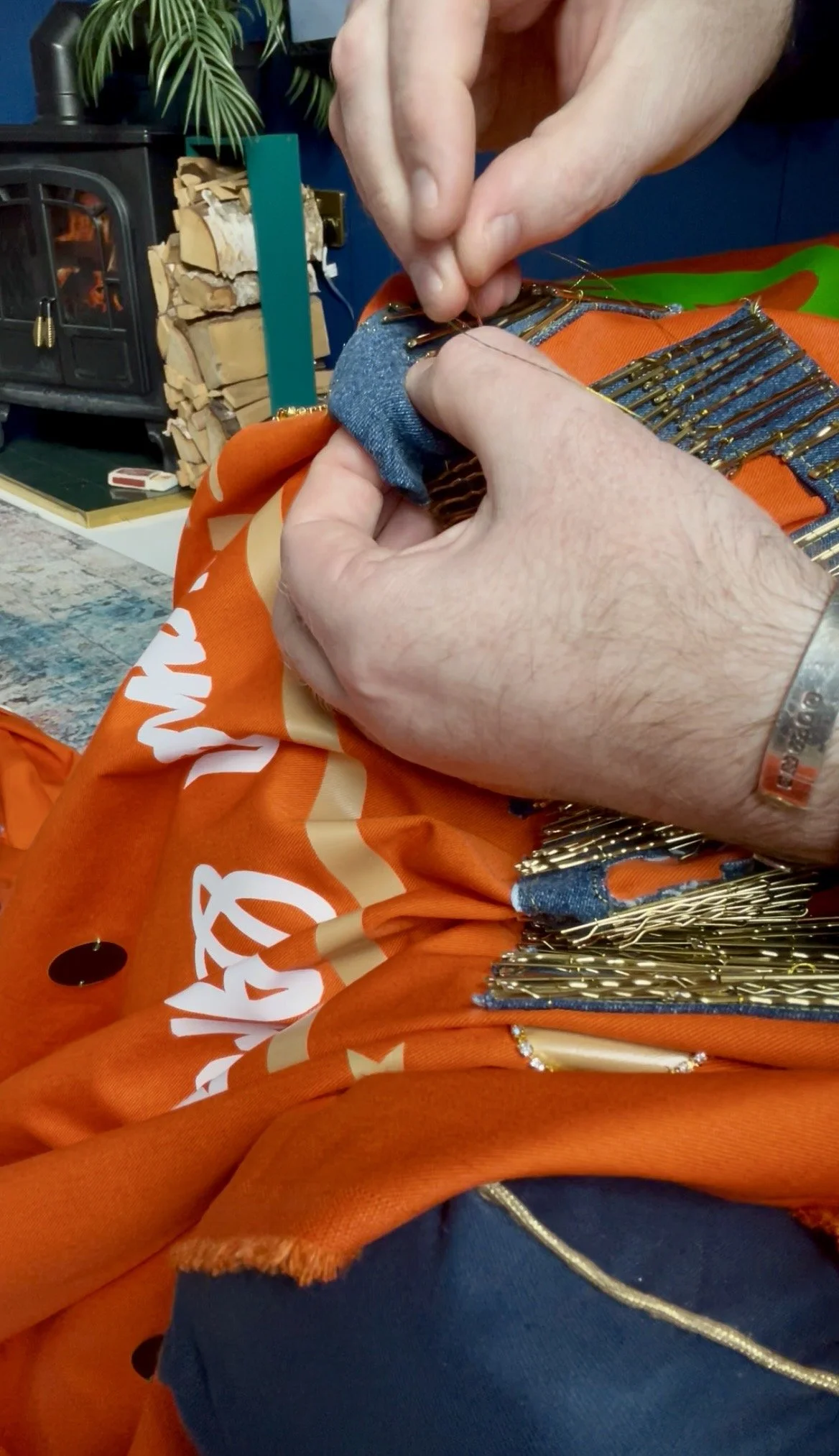
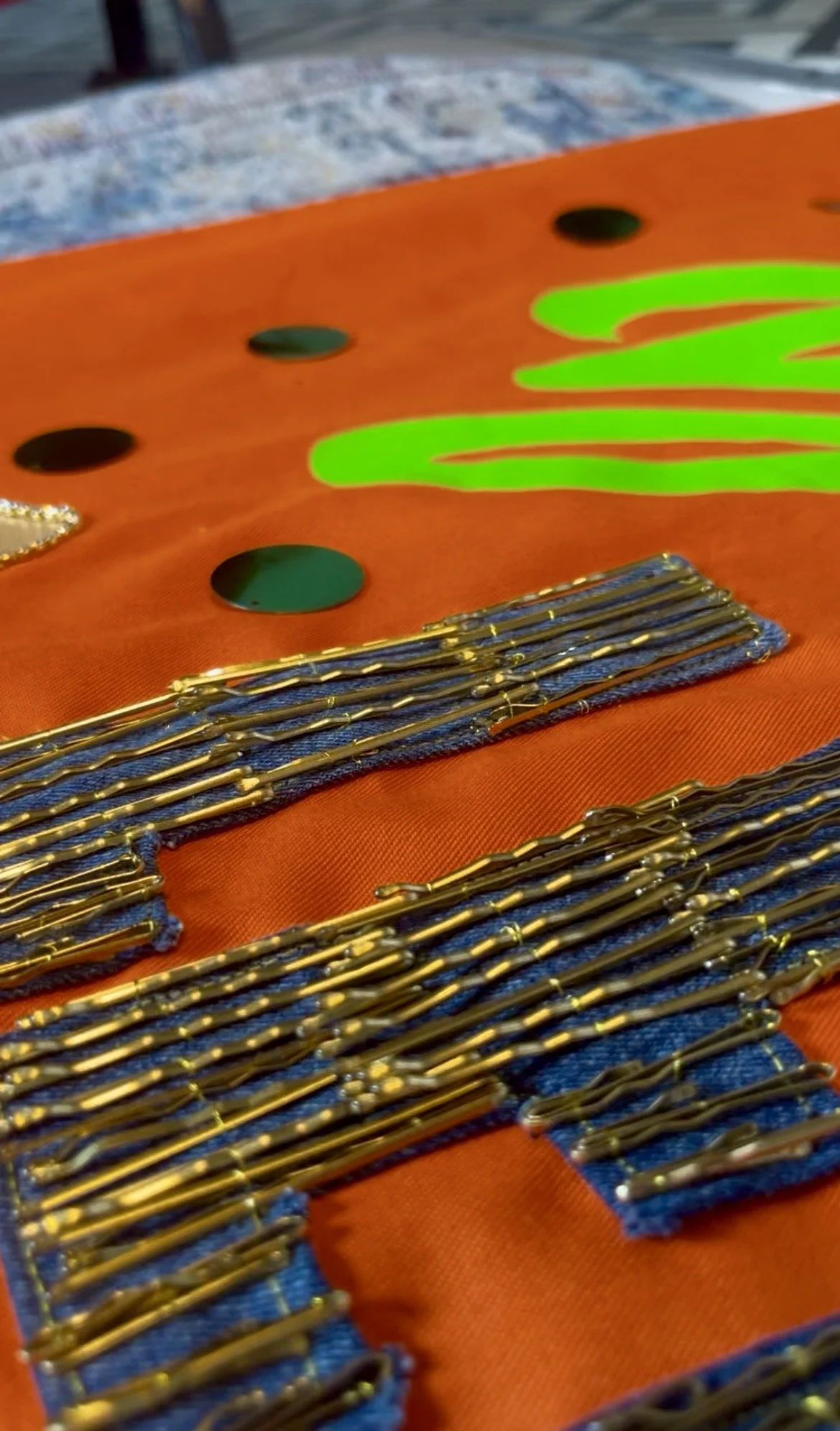
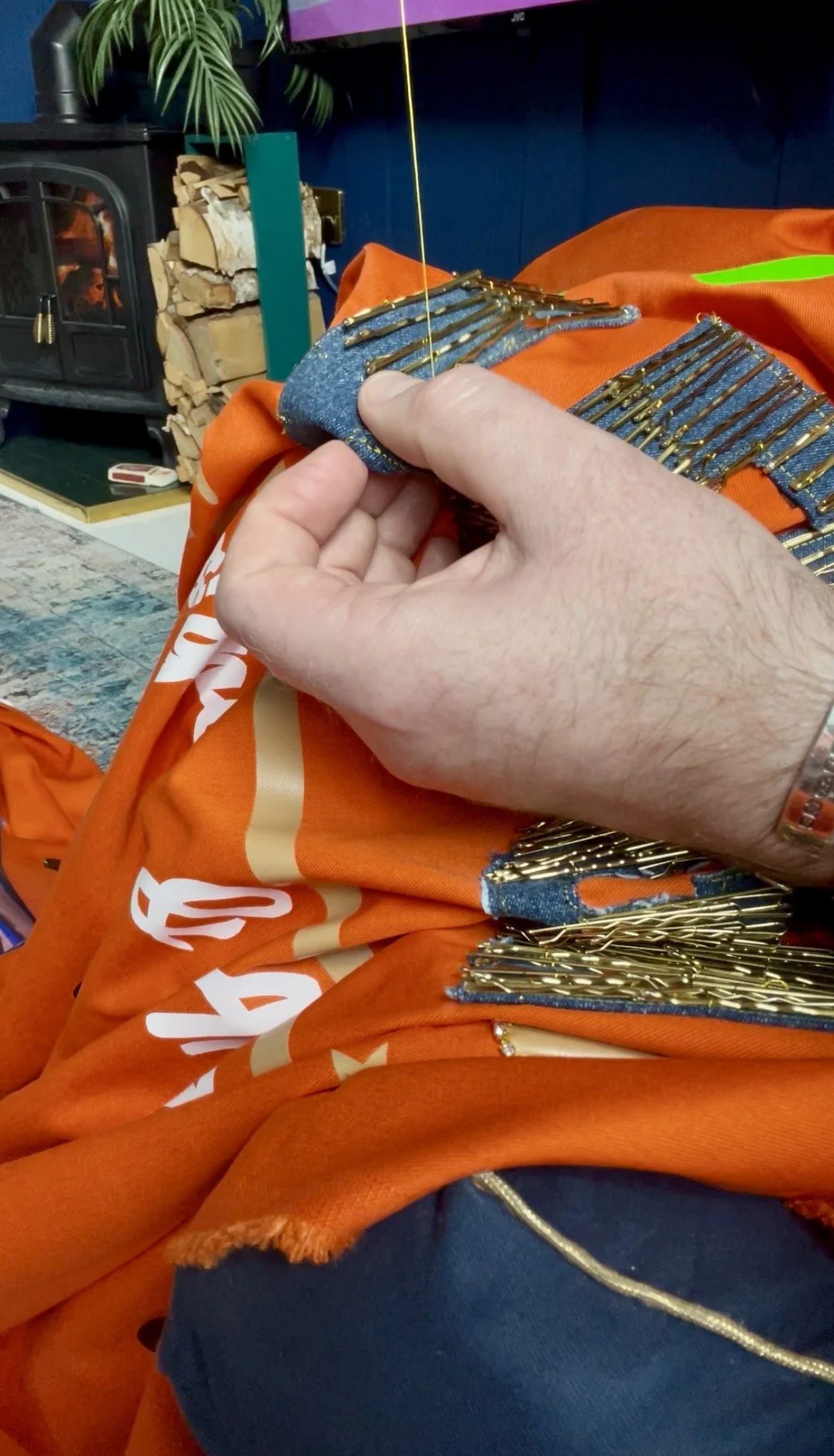
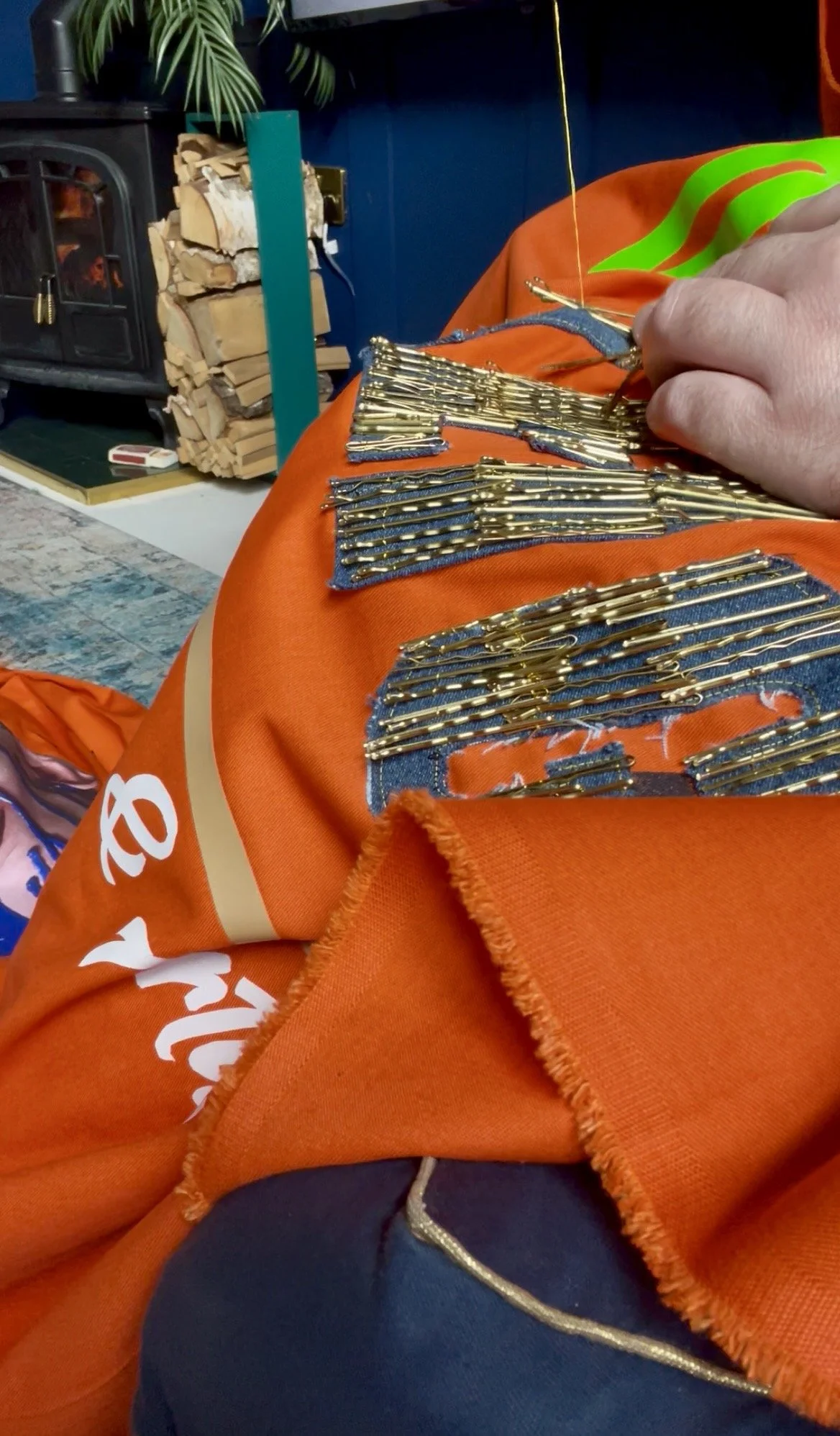
I cut ‘LEIGH’ from denim jeans and embellished the letters with gold hair grips, a small reference to the denim jacket he once customised for Holly Johnson, so the piece carries quiet, personal gestures that nod to one of his fashion creations.
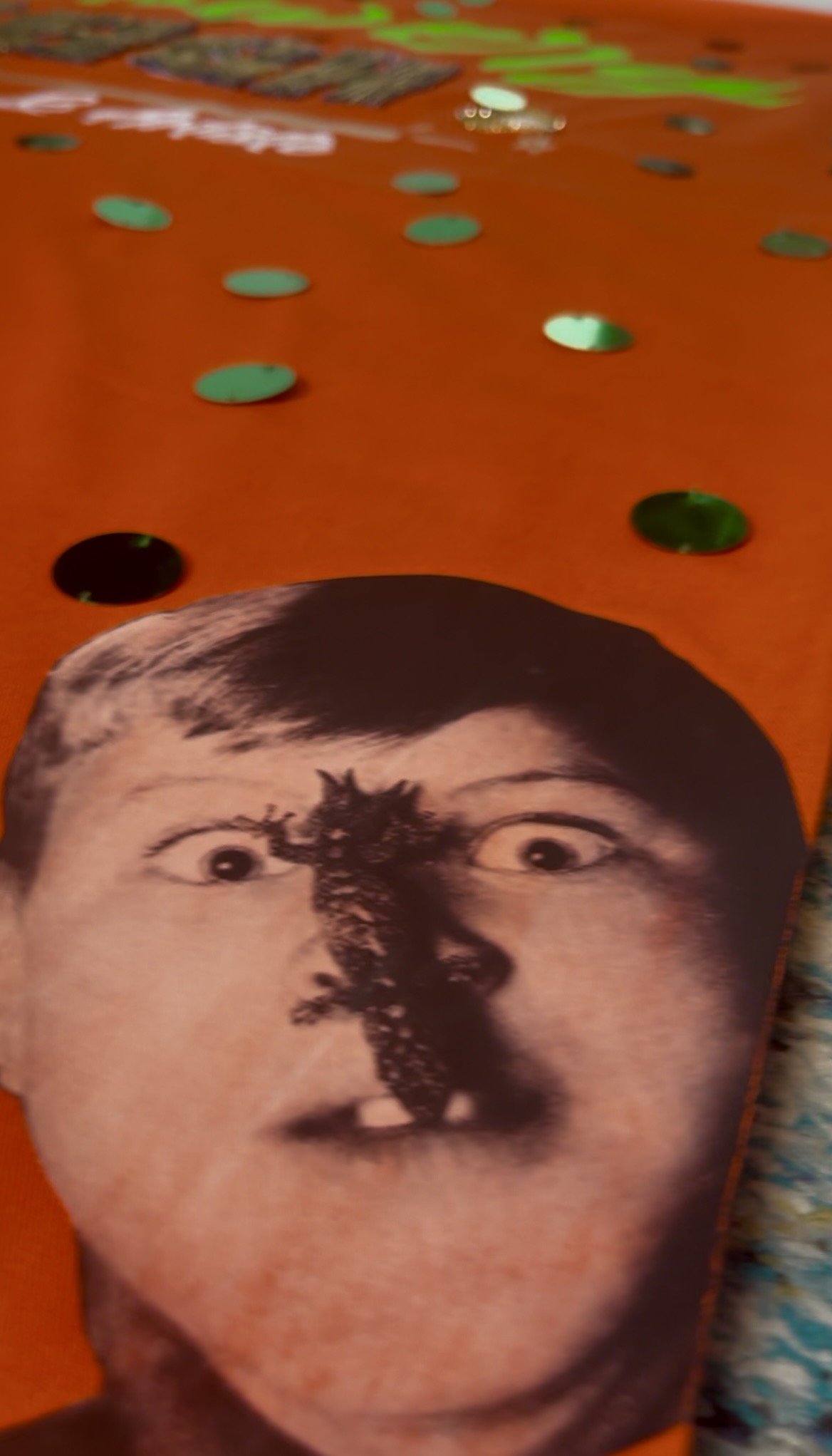
The image of Bowery, while intriguing, reads as quietly sad; with him glancing up, so I included a younger photograph of himself peering from beneath the quilt, a small counterpoint to that weary expression. Myself diagnosed HIV+, and although I didn’t know Bowery personally, but like many of us diagnosed positive I find myself looking back at earlier versions of myself and wondering whether we could have seen our diagnoses coming, or what we might have told our younger selves.
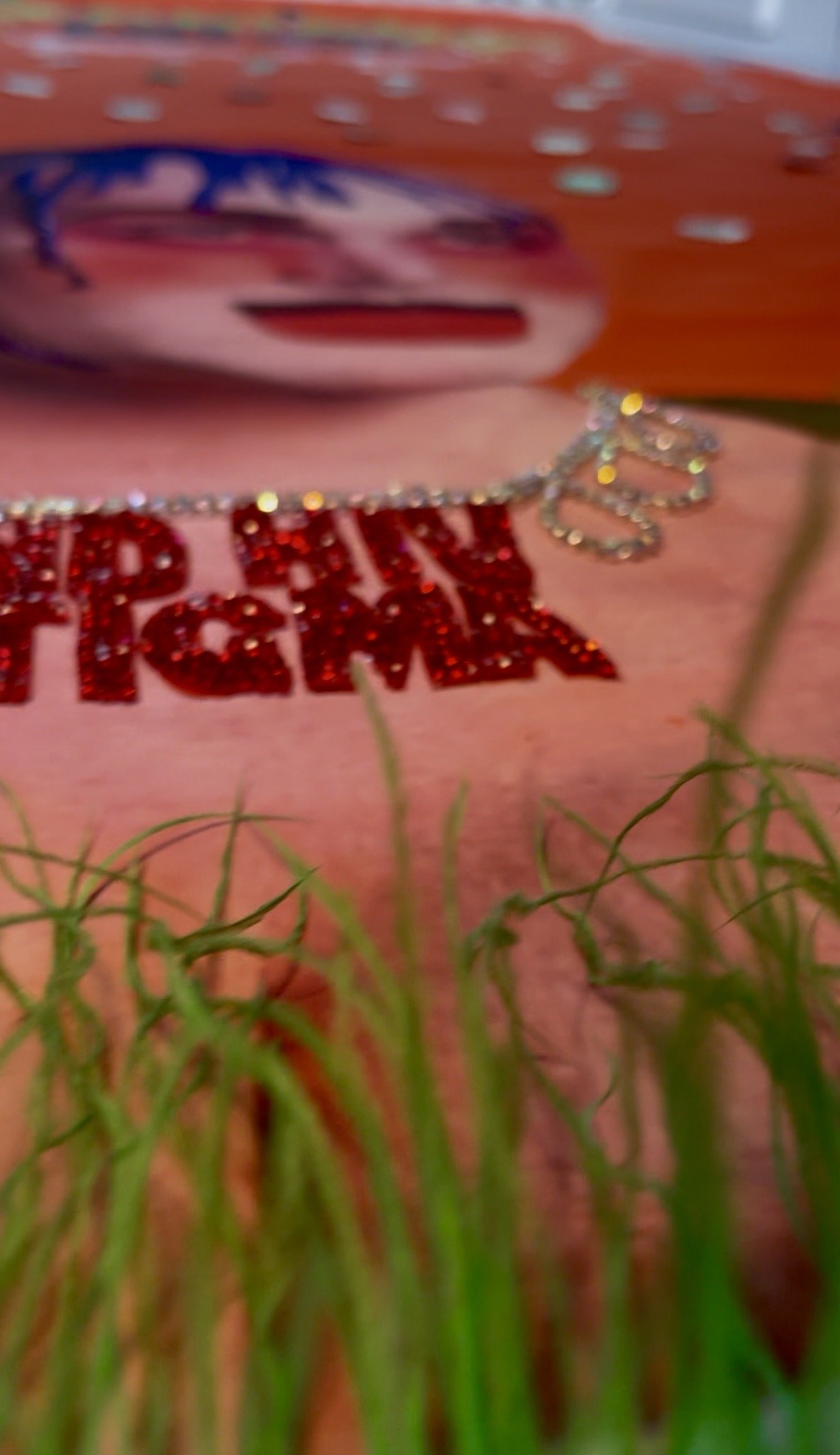
In the portrait he seemed sparse in terms of jewellery, and I caught myself wondering if he were still with us today whether he might speak up for people living with HIV — whether he might wear a bold, declarative piece, to make a statement, provoke and advocate, for change. So I stitched a diamante necklace across his cleavage that reads ‘END HIV STIGMA’, a deliberate, slightly theatrical addition that imagines his image reclaimed as a platform for, protest, visibility and conversation. Champagne corks and spray appears at each side of his name, a nod to that infamous performance (if you know, you know).

MARTIN JOHNSON
1954 - 1989
Martin Johnson stands as a quiet emblem of the ordinary gay man whose courage is rarely celebrated: not a headline activist but someone whose life and choices became a flashpoint in the struggle for gay rights and for dignity amid the HIV/AIDS crisis.
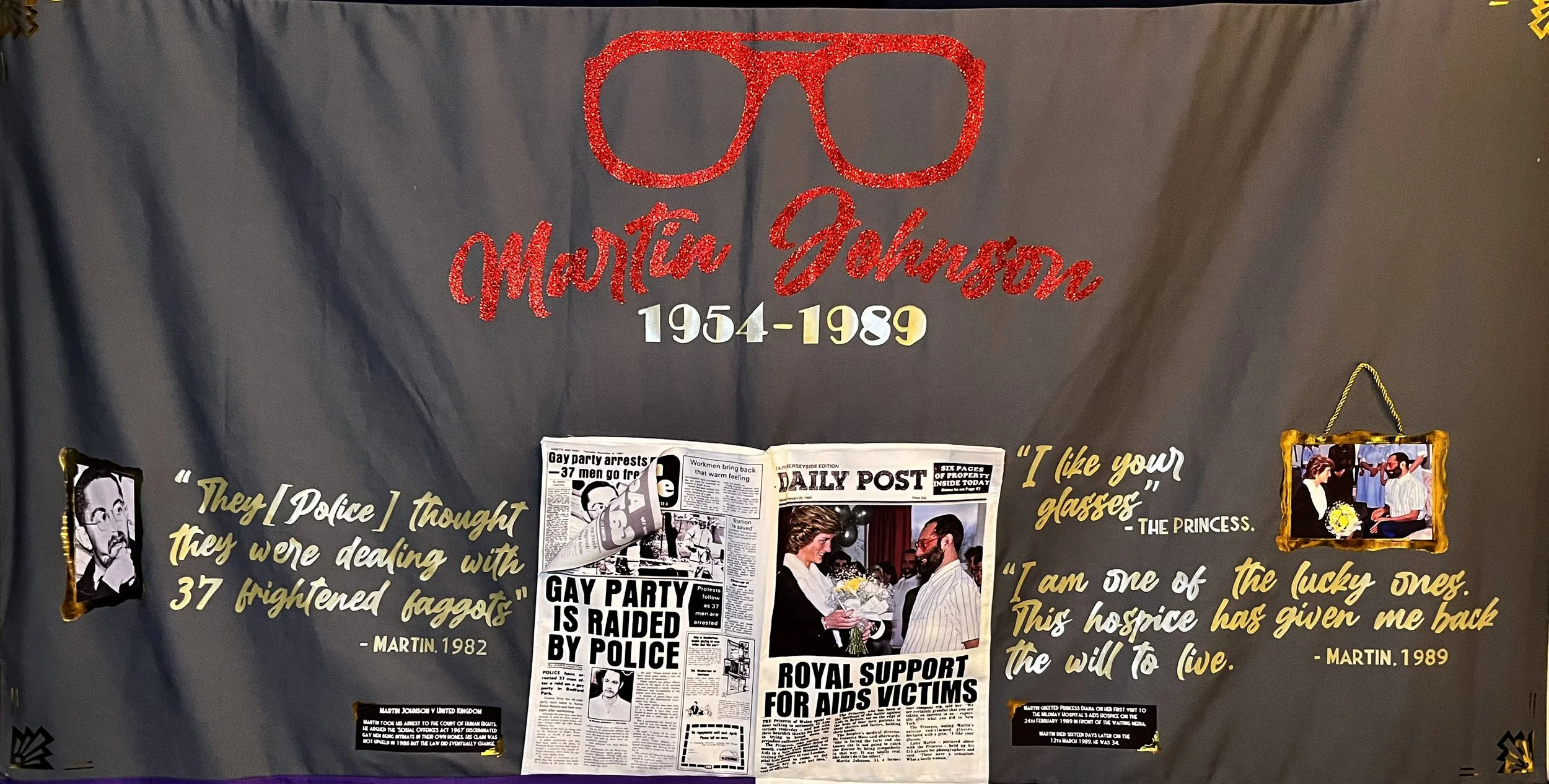
In 1982 he hosted a birthday gathering in his own home that he described on his invitations as a “Dionysic Birthday Orgy” — an event he might, if alive today, concede had an element of consensual “fun” — yet a disgruntled guest’s complaint prompted a police swoop under laws that criminalised more than two men over 21 engaging in sexual activity.
Thirty-eight men, including Martin, were arrested; rather than retreat, he took his case to the press and pursued it all the way to the European Court of Human Rights. His fight was not grandstanding but stubborn, necessary defiance: a reminder that the law and public-health debates were fought not only by prominent figures but by ordinary people willing to assert their rights and humanity at great personal cost. His case was not upheld, although the law did later change, a shift that, tragically after his death, vindicated much of what Martin had argued in his claim to the European Court of Human Rights.
MILDMAY: Diana & Martin. 12 March 1989
Before Martin himself was diagnosed with HIV/AIDS, the UK government had dismissed his arguments, insisting that they were duty‑bound to prevent the gatherings as per the law and as a necessary measure to curb the spread of AIDS; that stance, and the stigma embedded within it, framed the official response to his challenge and the wider criminalisation he fought against.
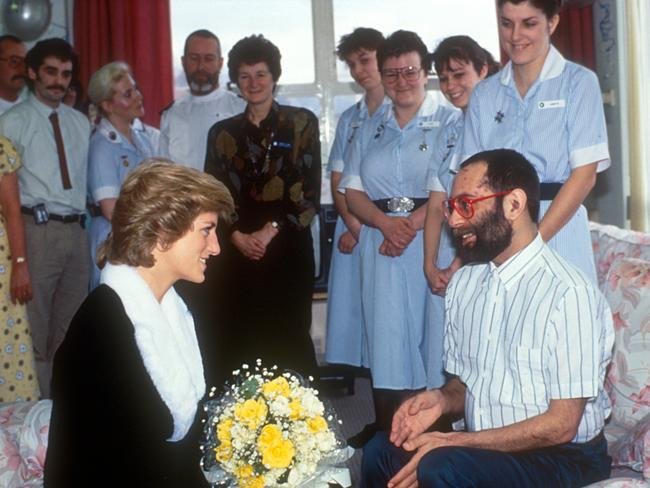
Weeks before his death, while residing at the Mildmay Mission Hospital, Martin presented the late Princess Diana with a bouquet on her first visit on 12 March 1989; after the brief ceremonial exchange they sat together for a chat in front of the waiting press and media, their conversation a rare, composed moment amid the cameras which made the newspapers the following day and is still referenced to this day. Martin died 16 days after meeting the Princess, leaving that encounter as one of his last public legacies.
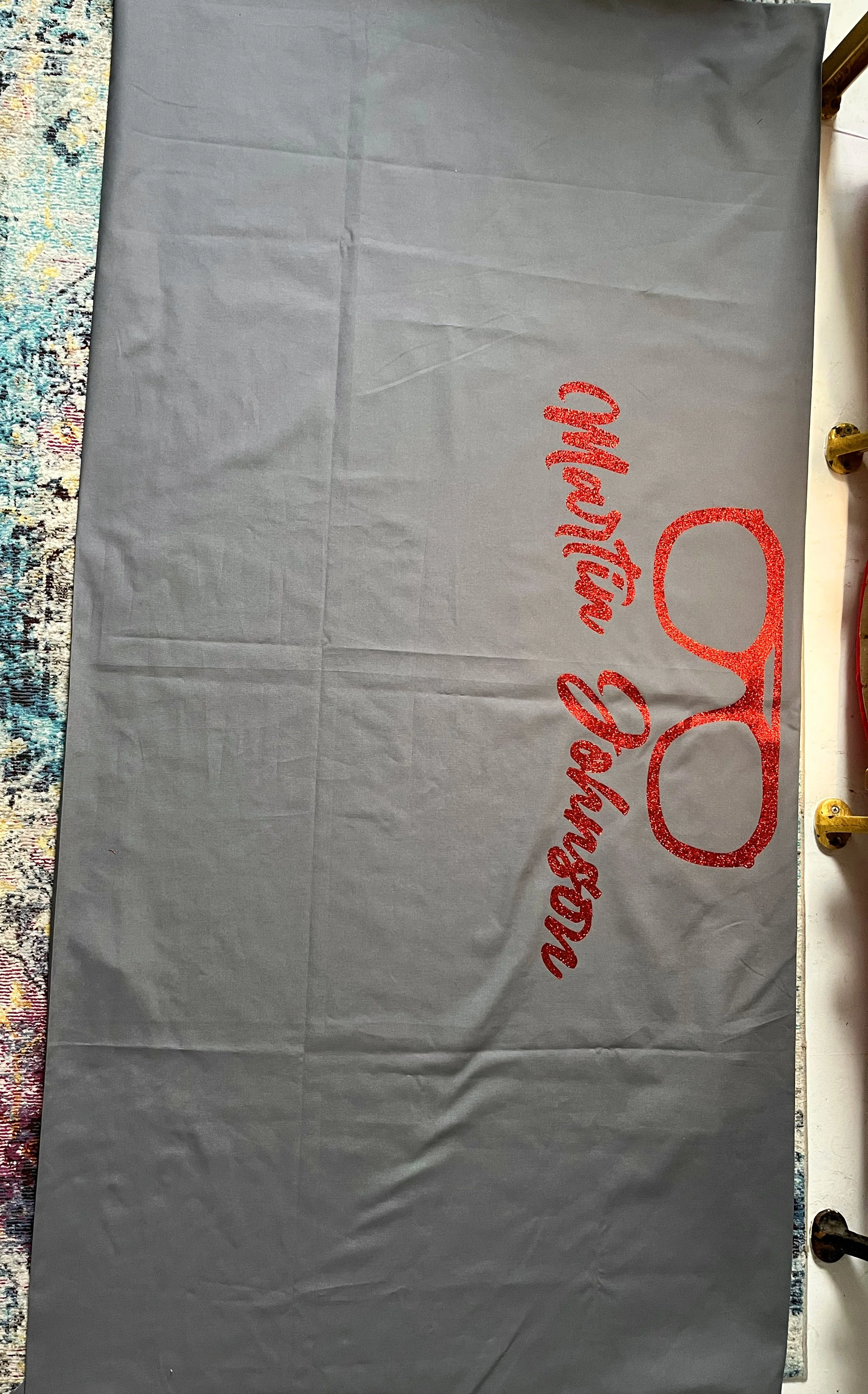
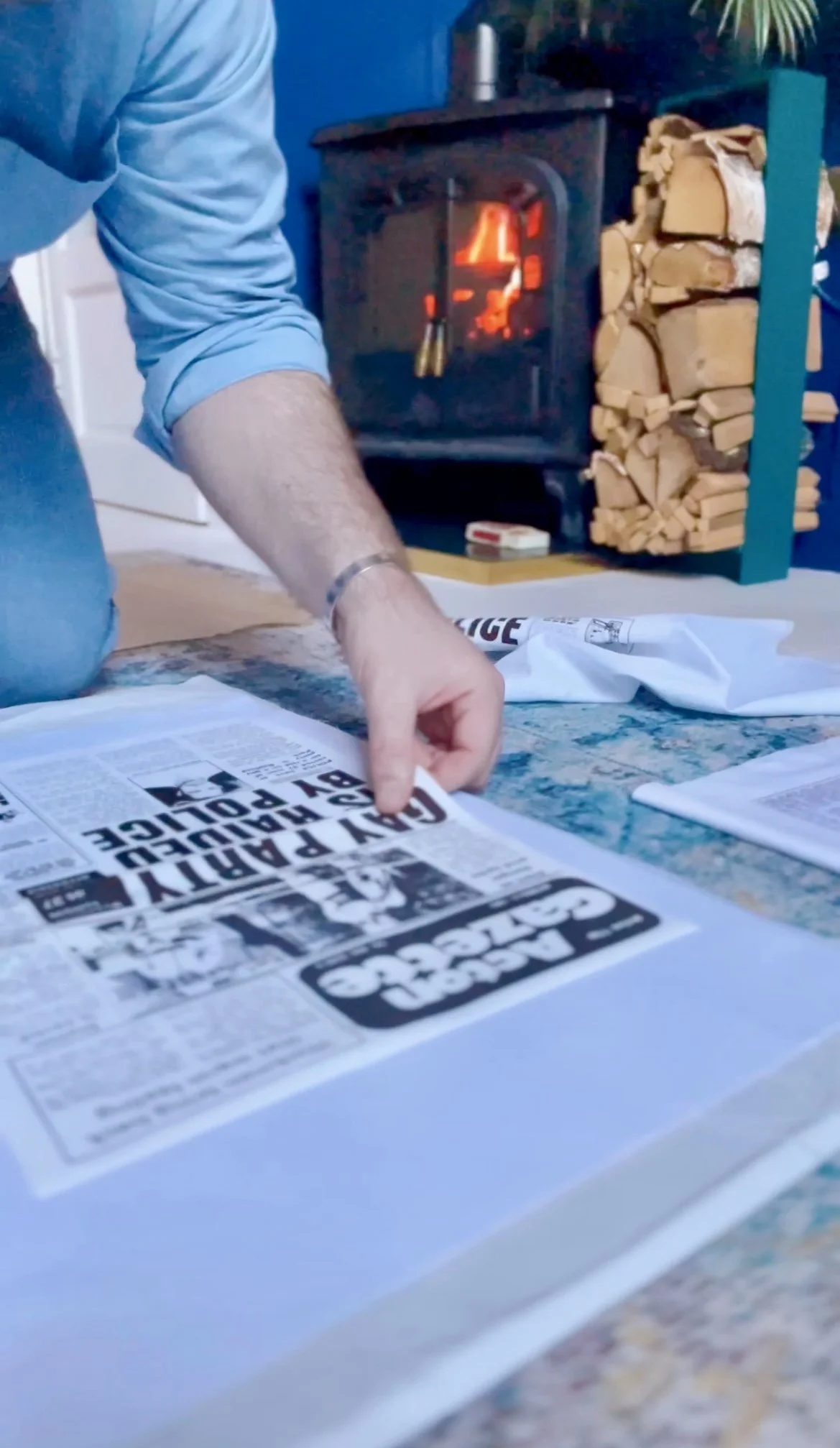
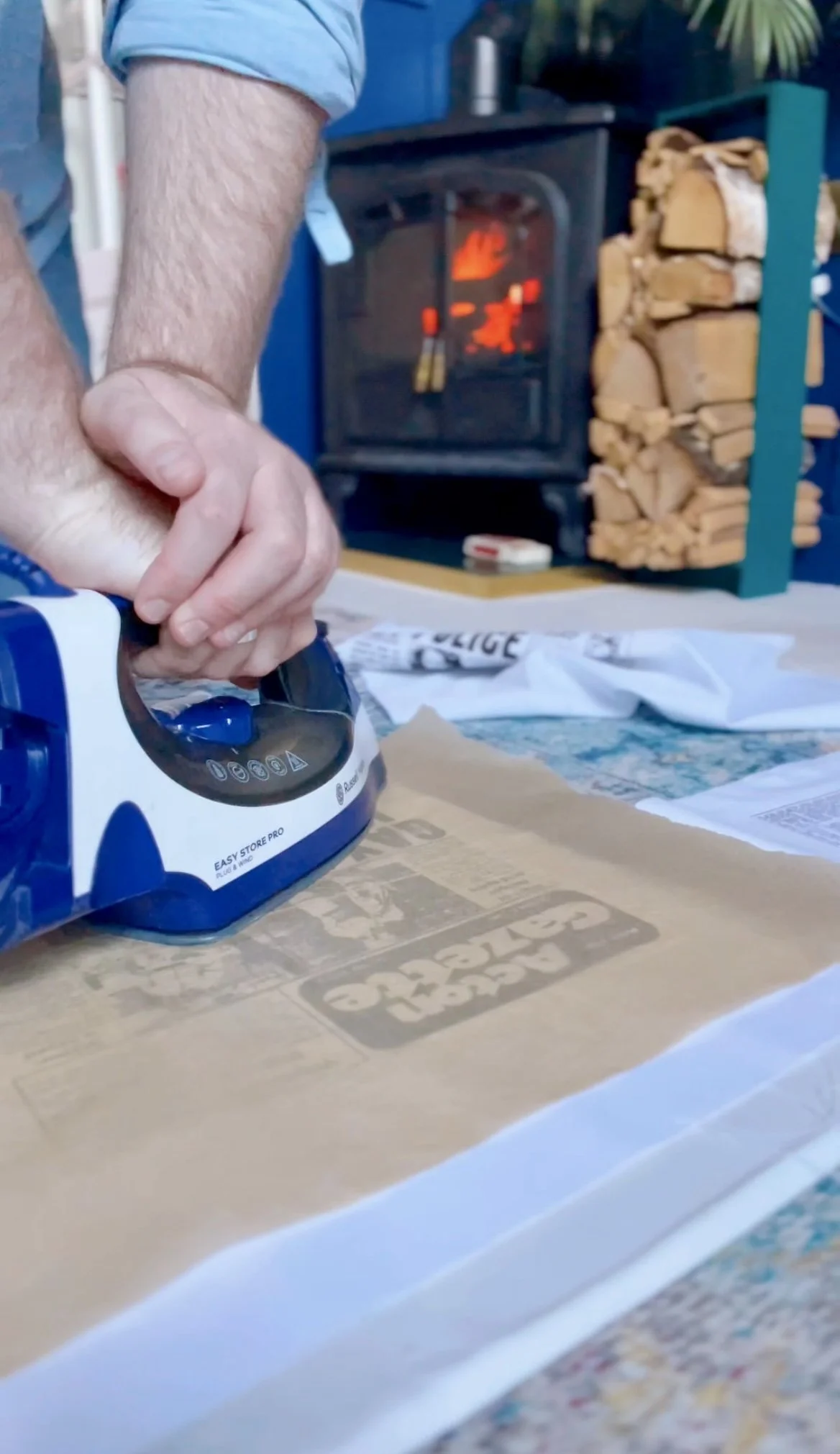
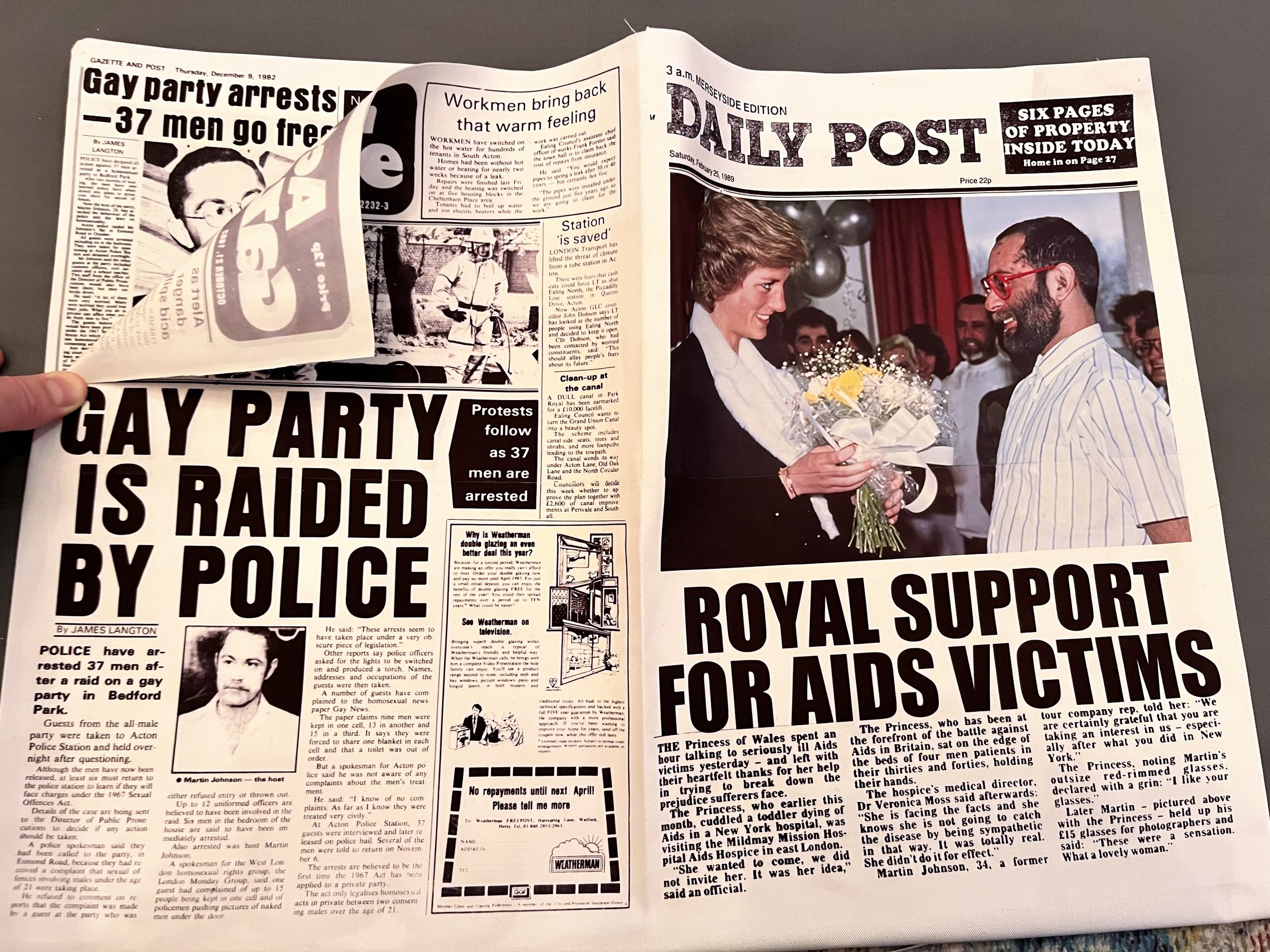
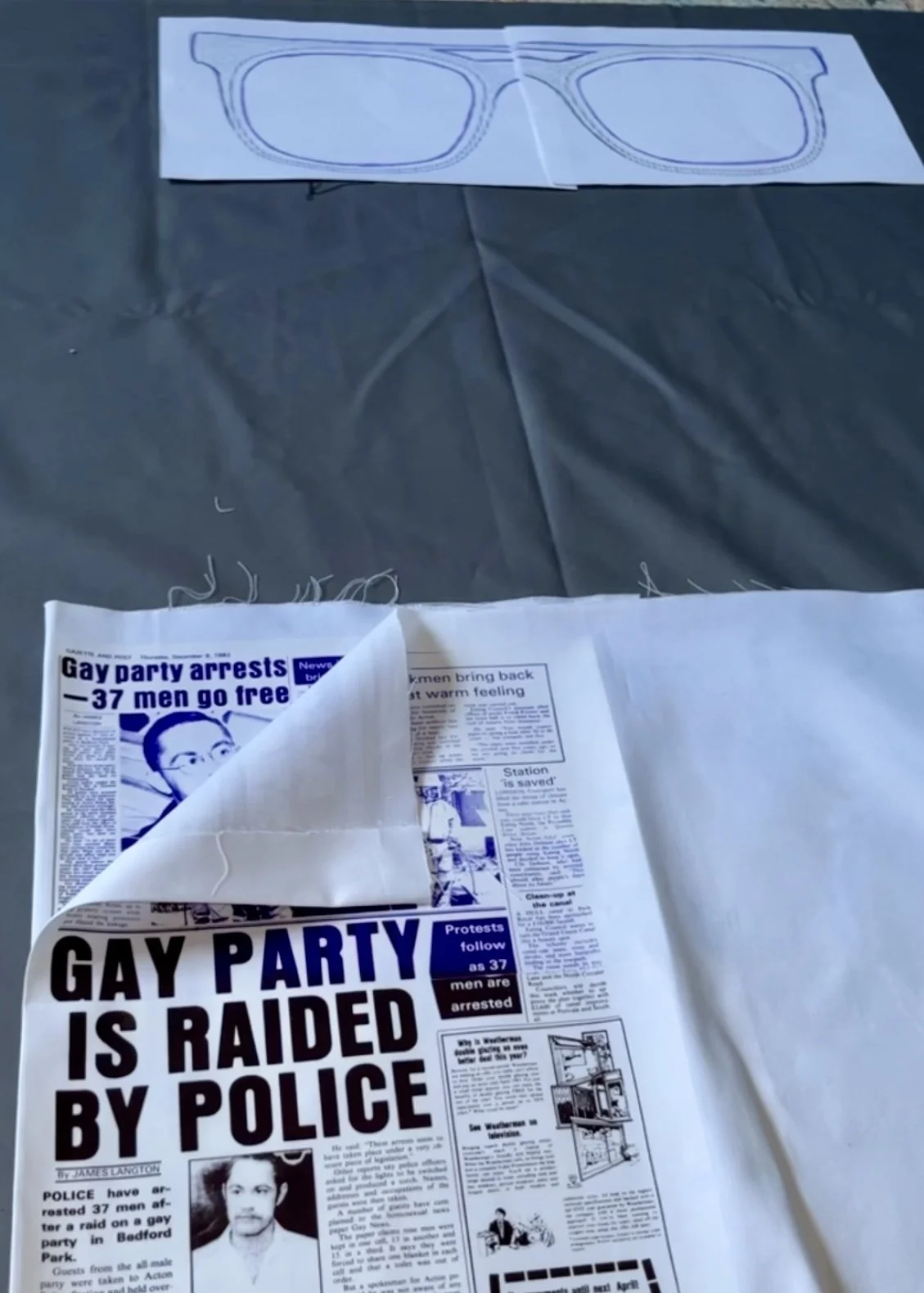

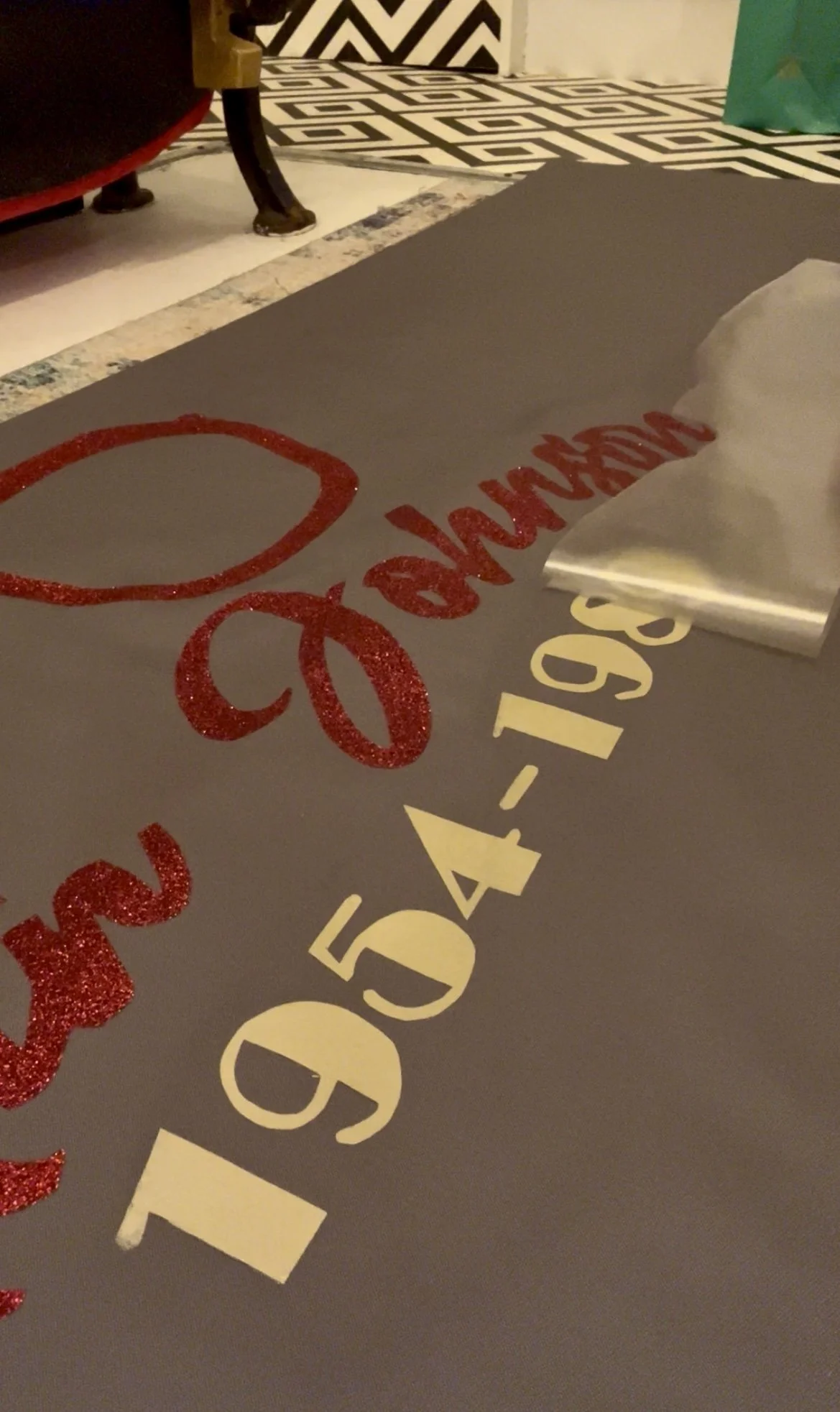

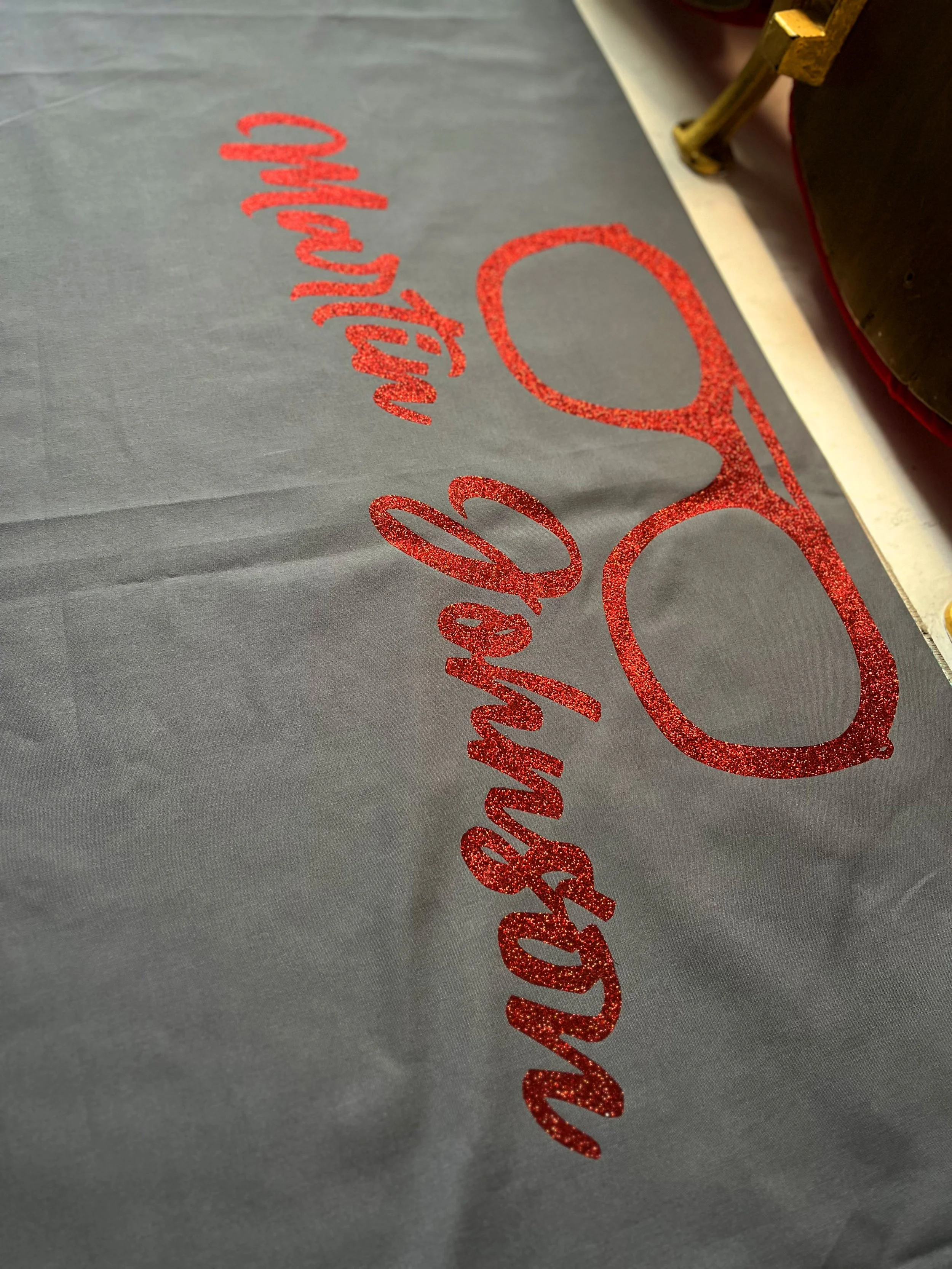
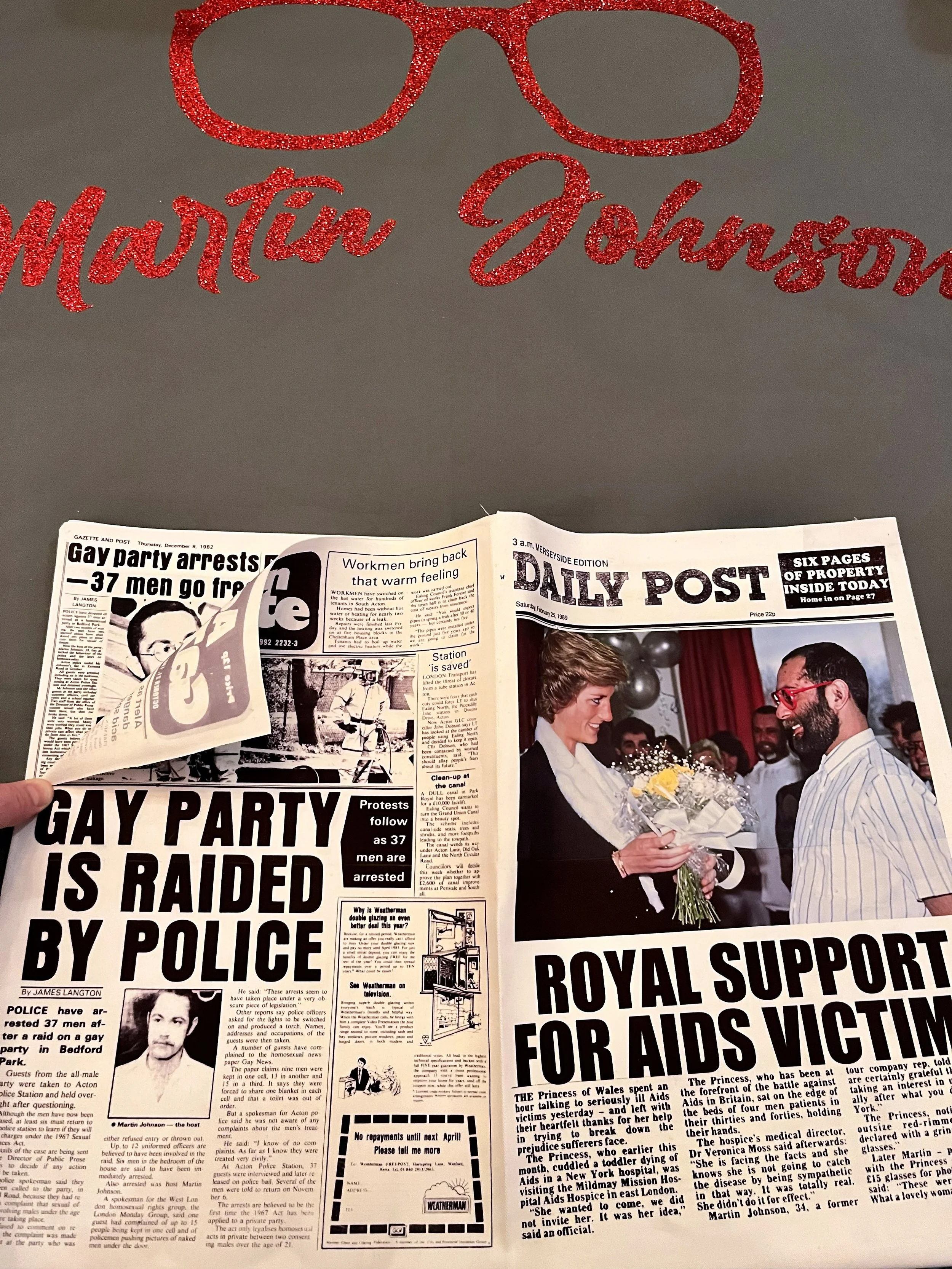
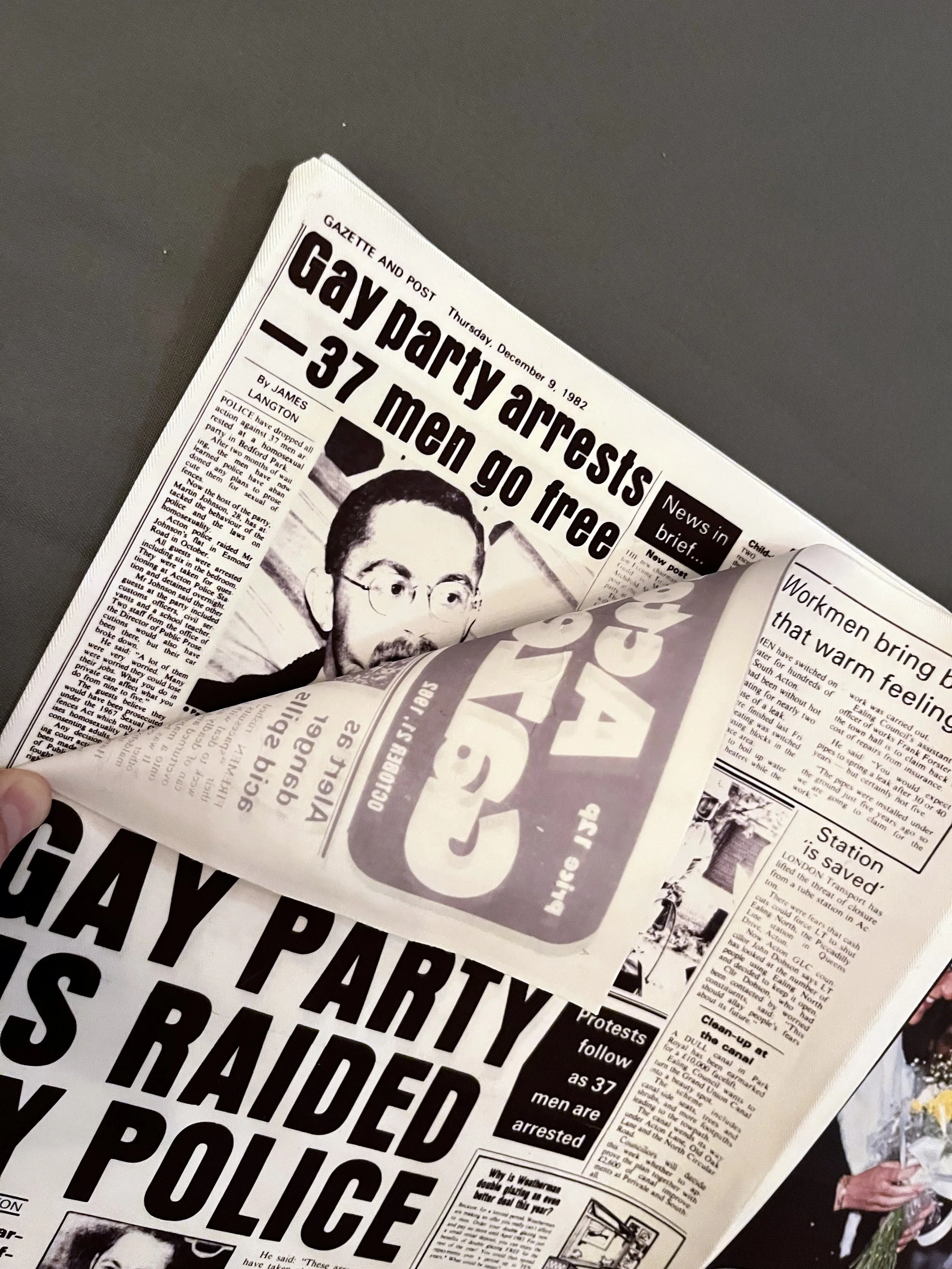
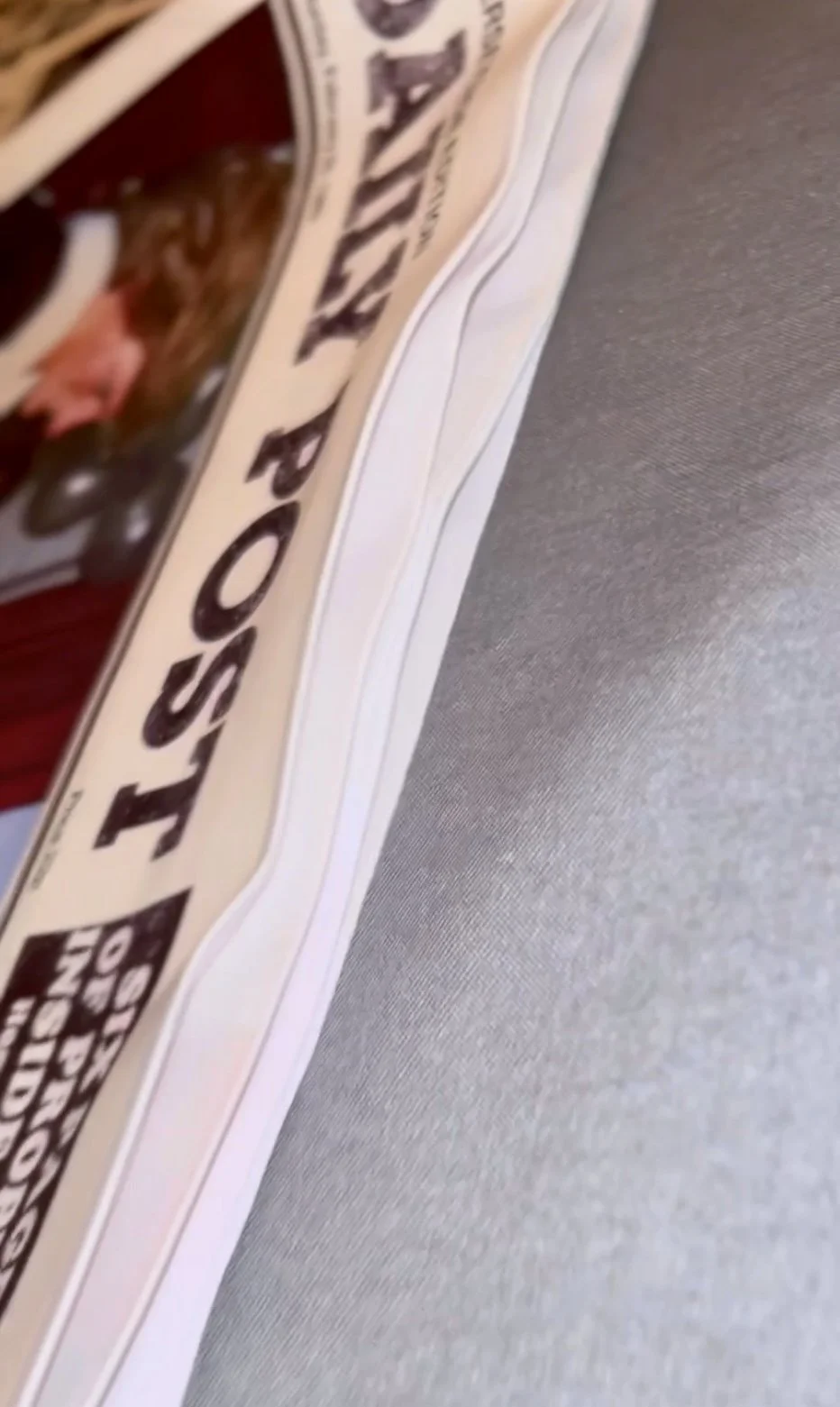
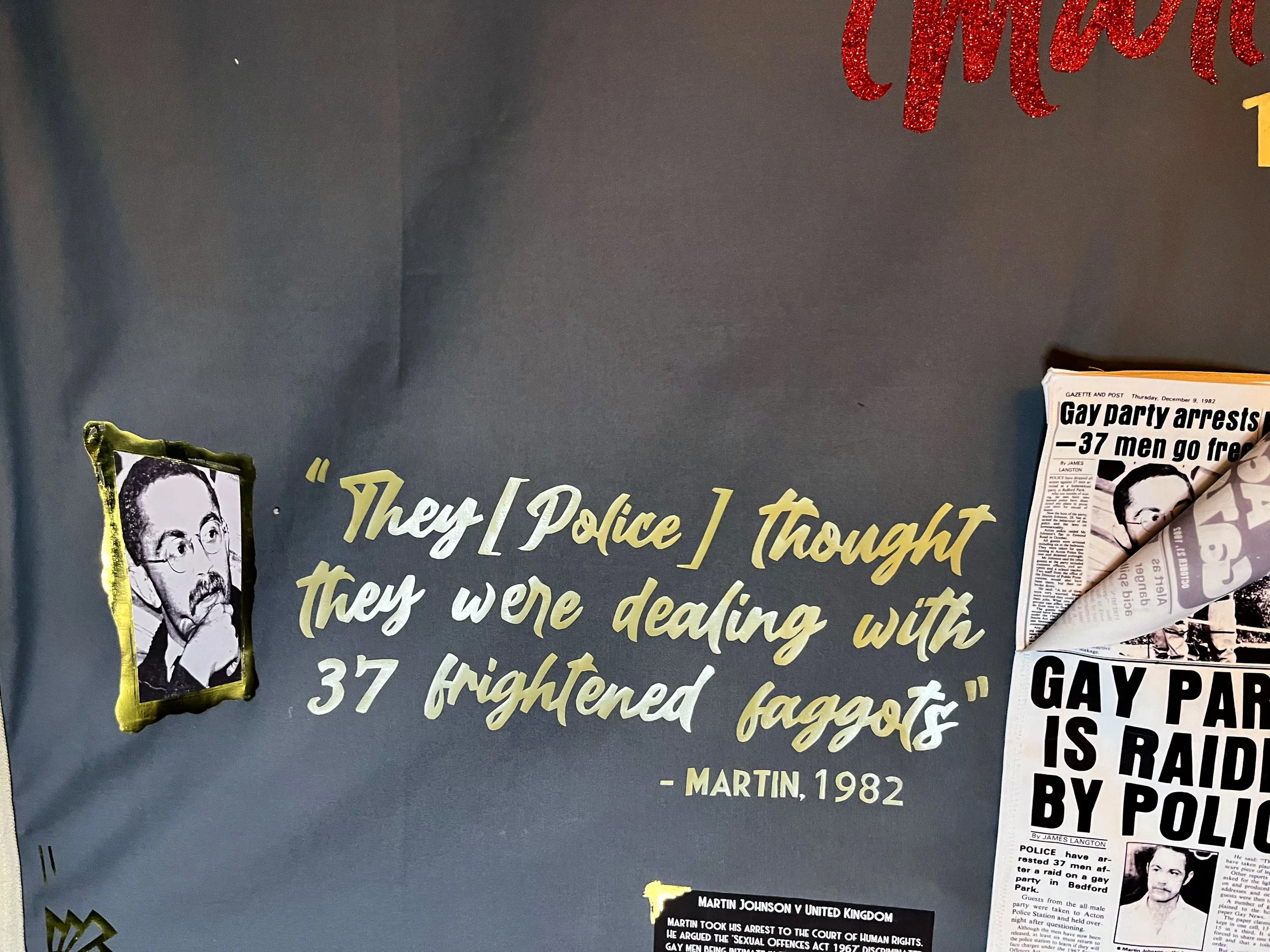
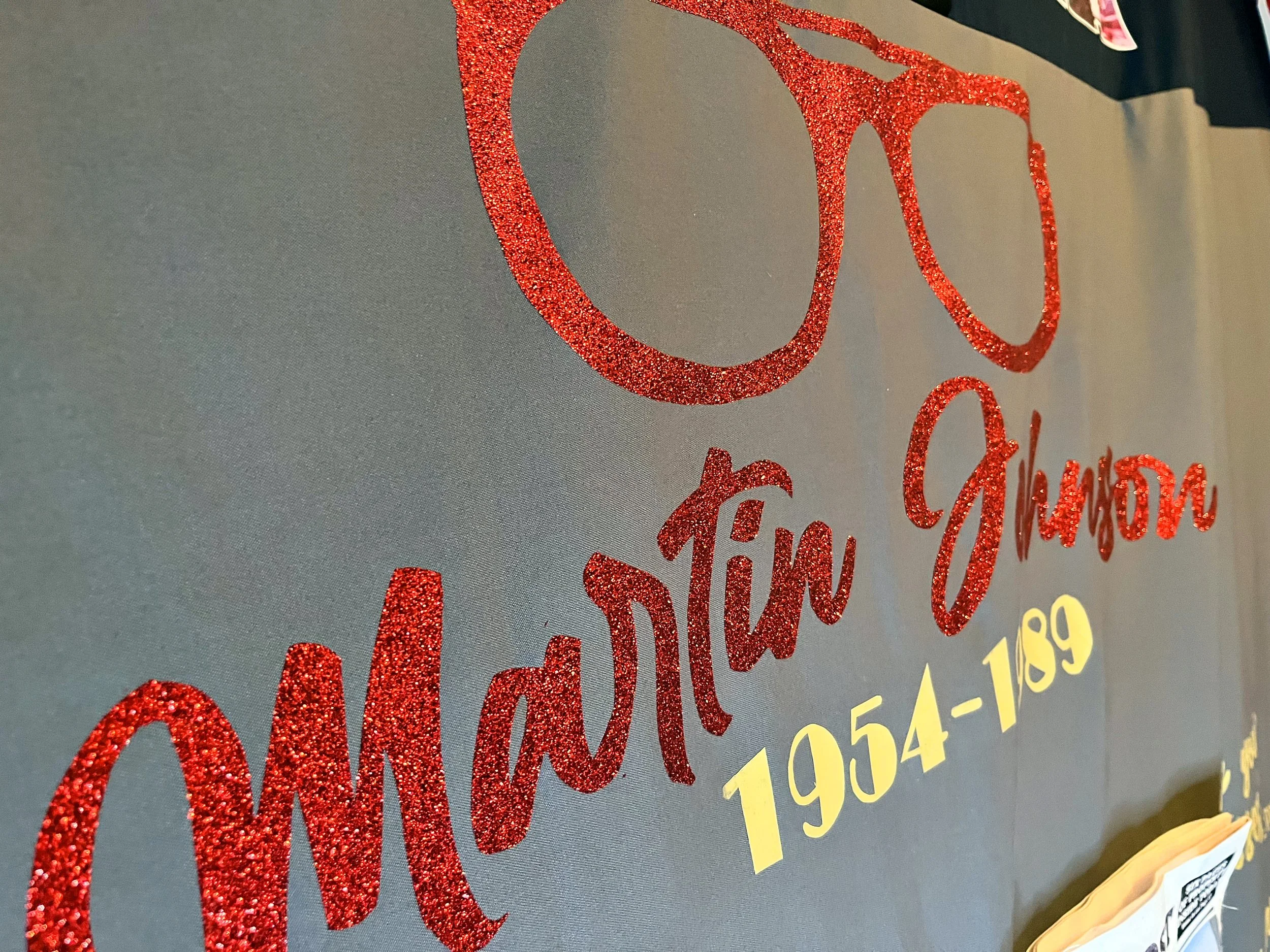
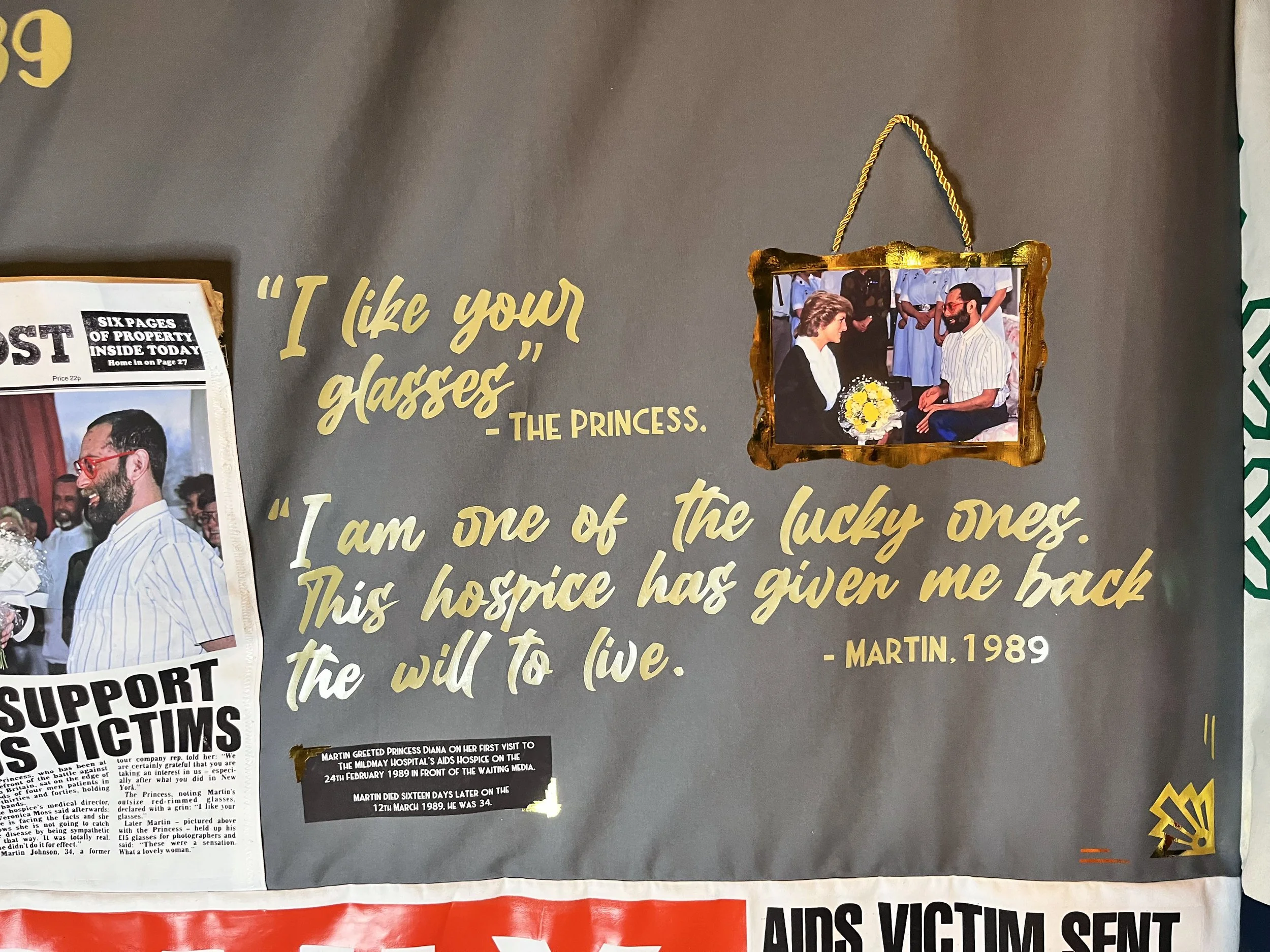
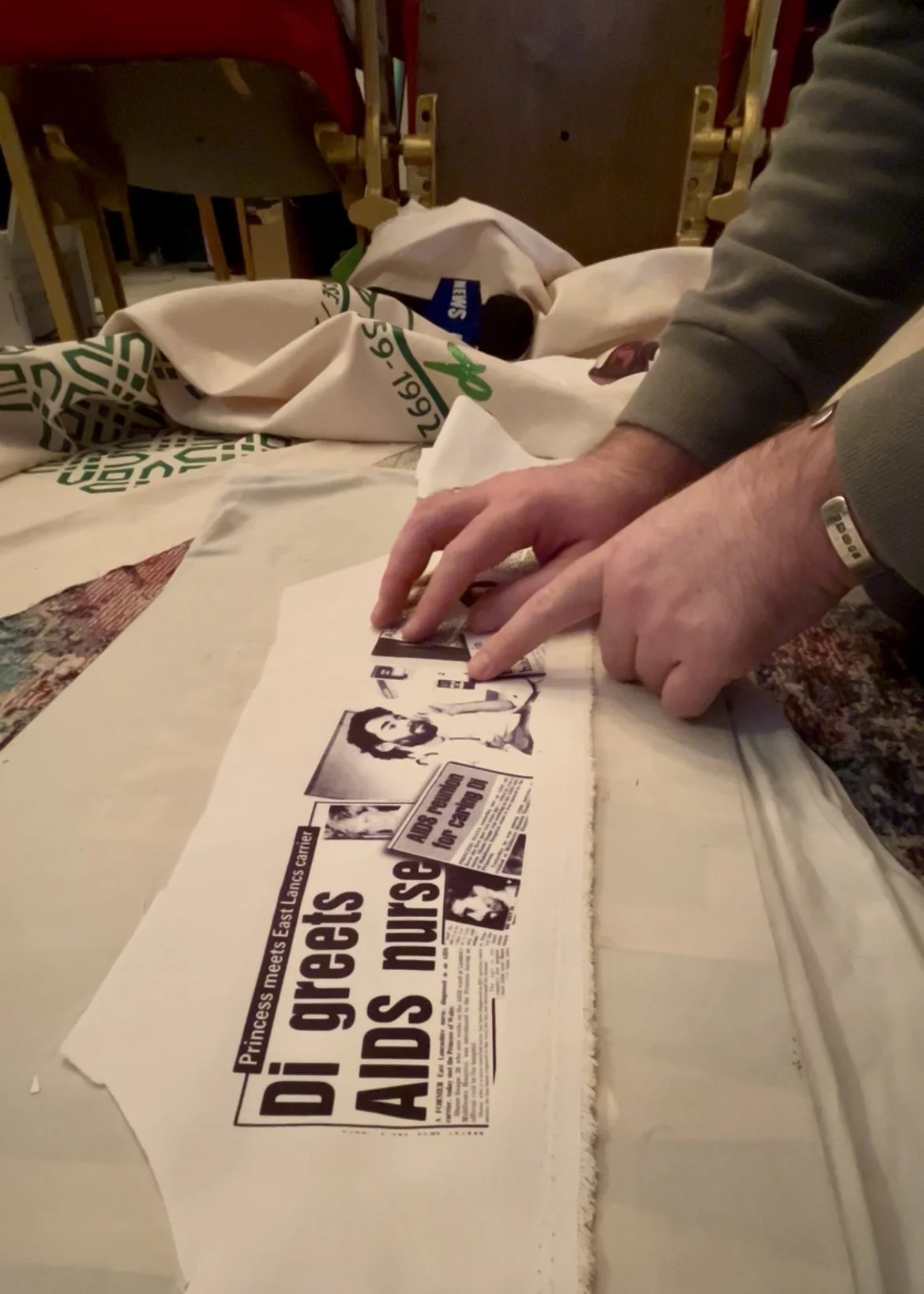
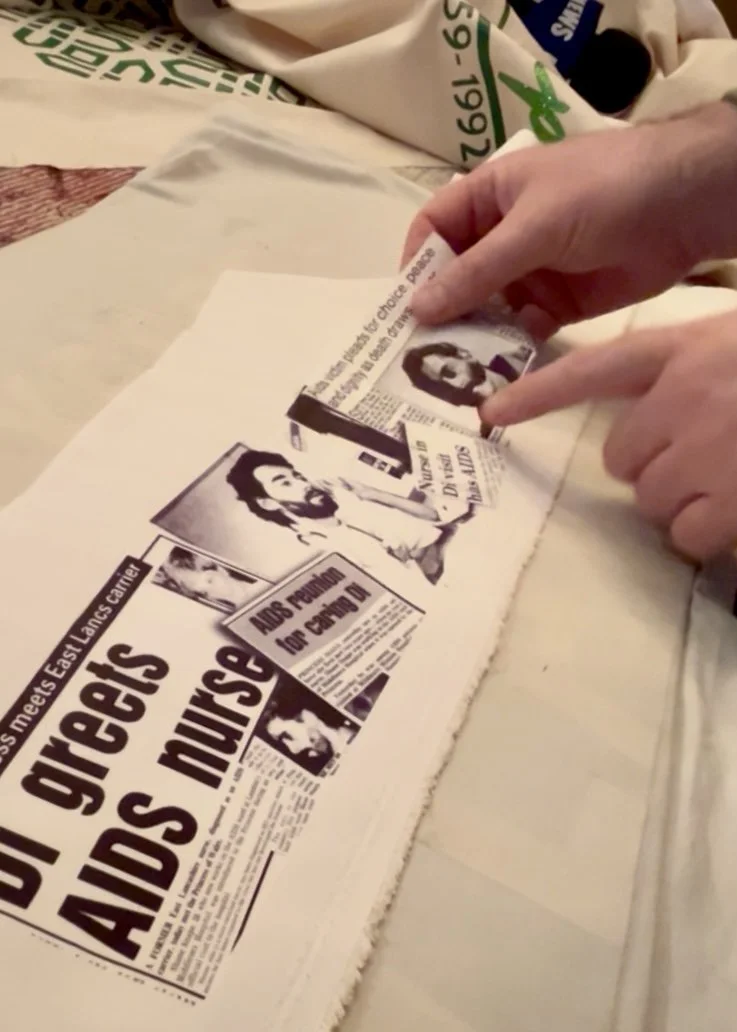
Martin’s panel centred on the oversized red glasses in red glitter vinyl that caught the late Princess’s eye—“I like your glasses,” she remarked—a playful nod to his quirky, openly gay personality and his happy‑go‑lucky demeanour. Martin told the waiting press afterwards, holding his glasses aloft, “these were a hit.” I placed, at the centre of the panel, a newspaper conceived as if read through his own lenses, the front pages carrying headlines of the 1982 police raid and the 1989 meeting with Diana. Flanking that central image are two gold‑framed photographs: a portrait of Martin and a picture of him with the Princess, each accompanied by quotes from Martin and Diana that frame these moments both as a protest — his public fight for gay rights — and as a visible declaration by a young man living with an AIDS diagnosis in 1989. The panel offers viewers a concentrated glimpse of who Martin Johnson was, an invitation to be intrigued and to seek out his fuller story.
DAILY FEAR
MULTIPLE MEMORIALS
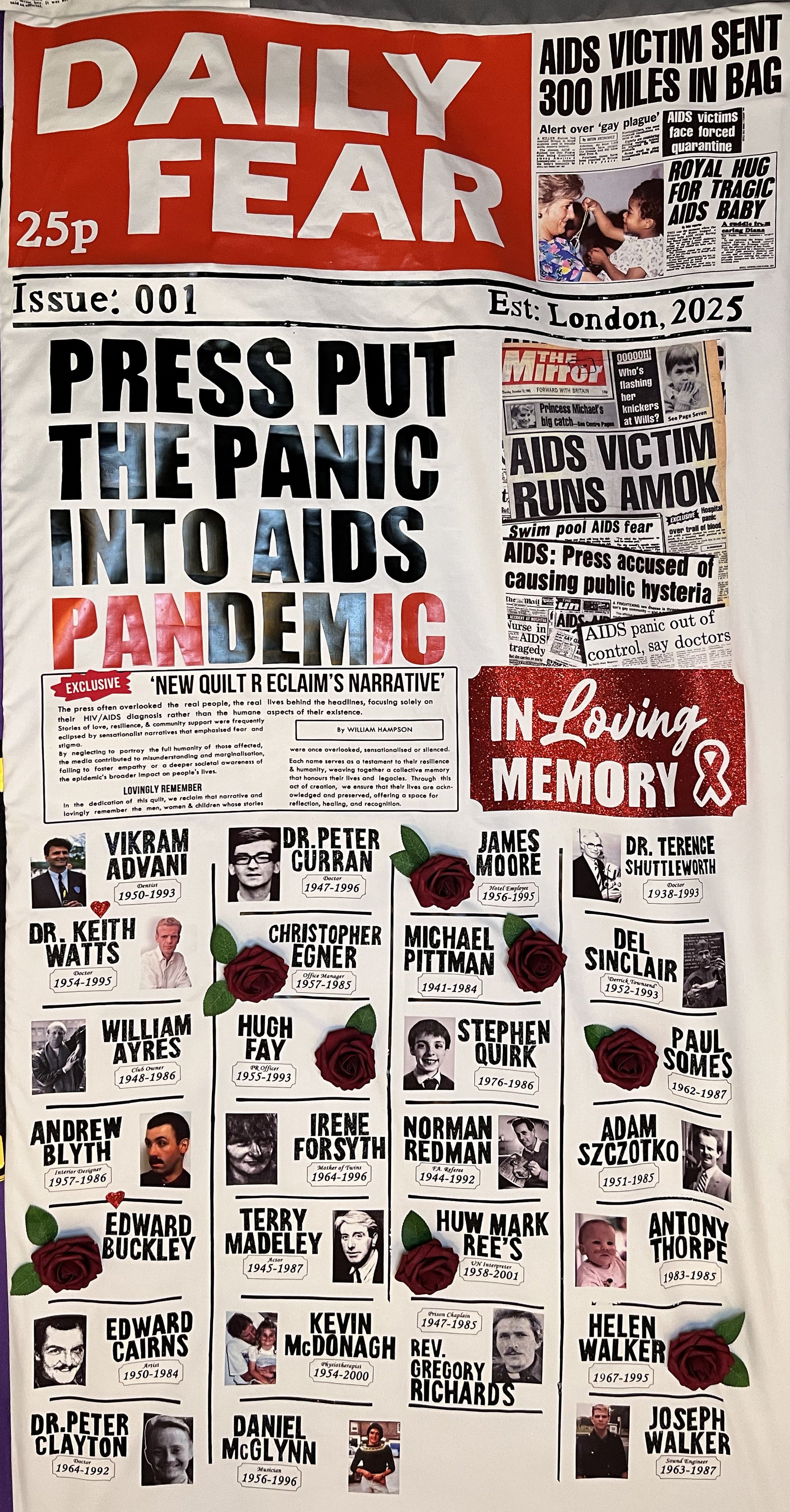
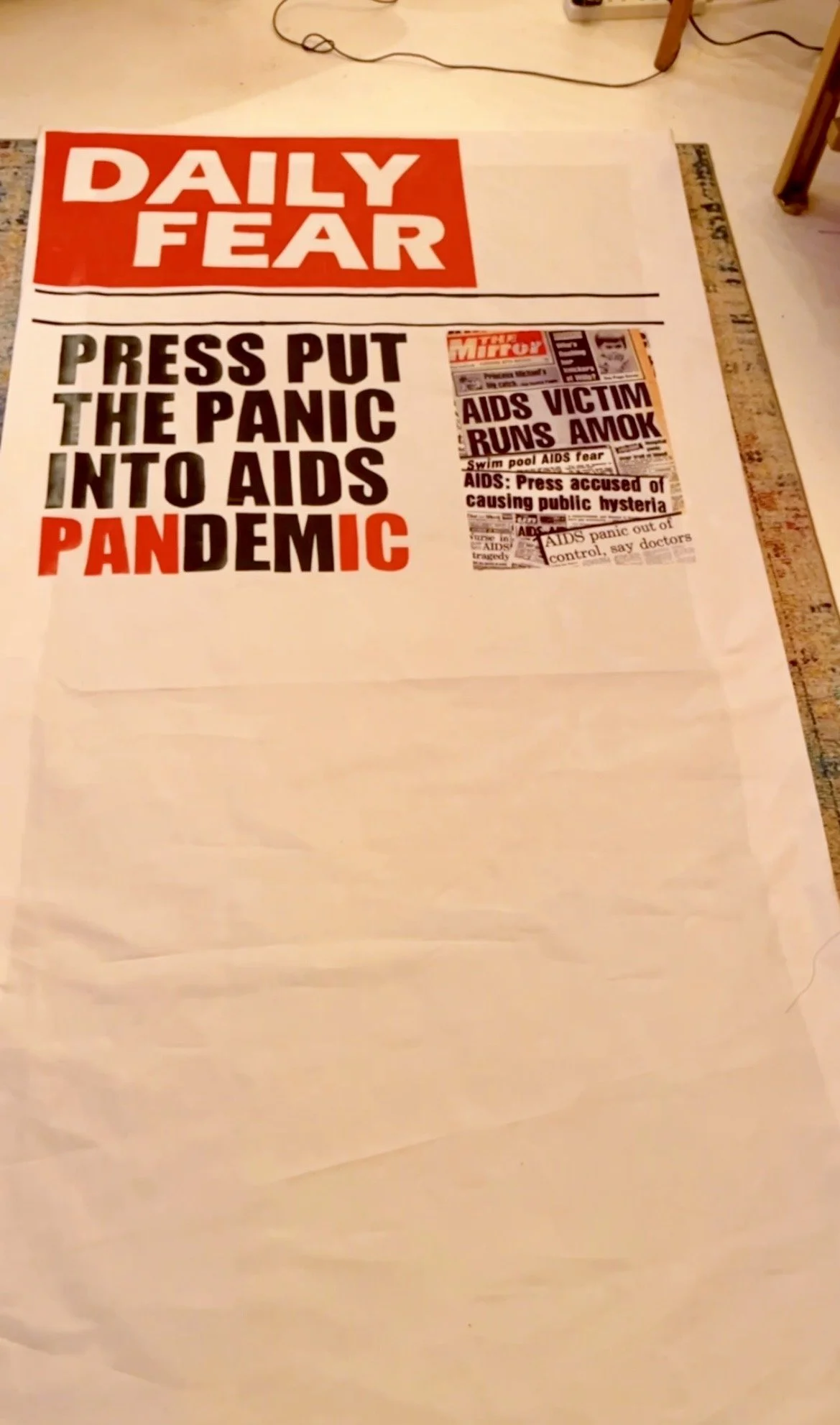
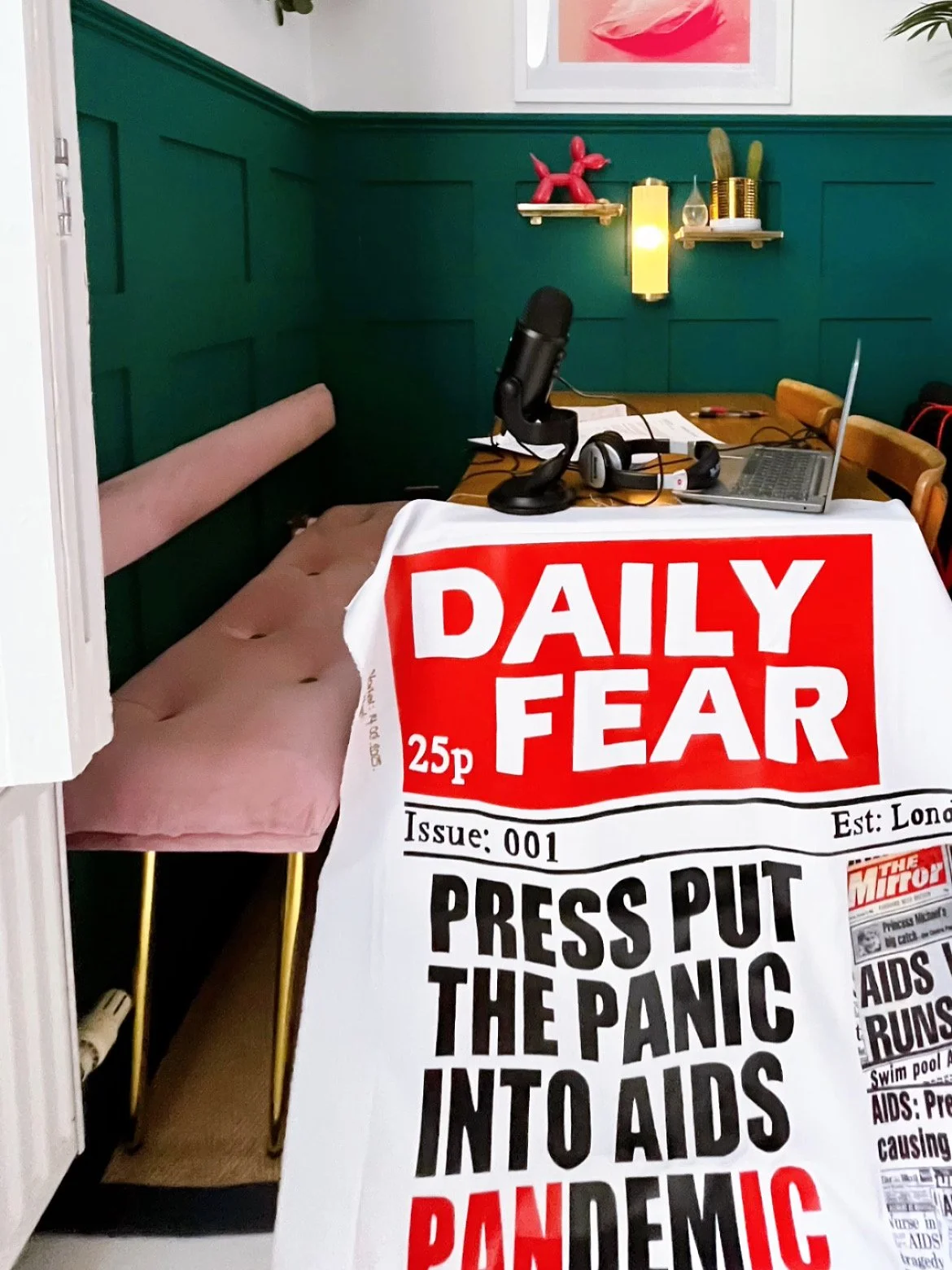
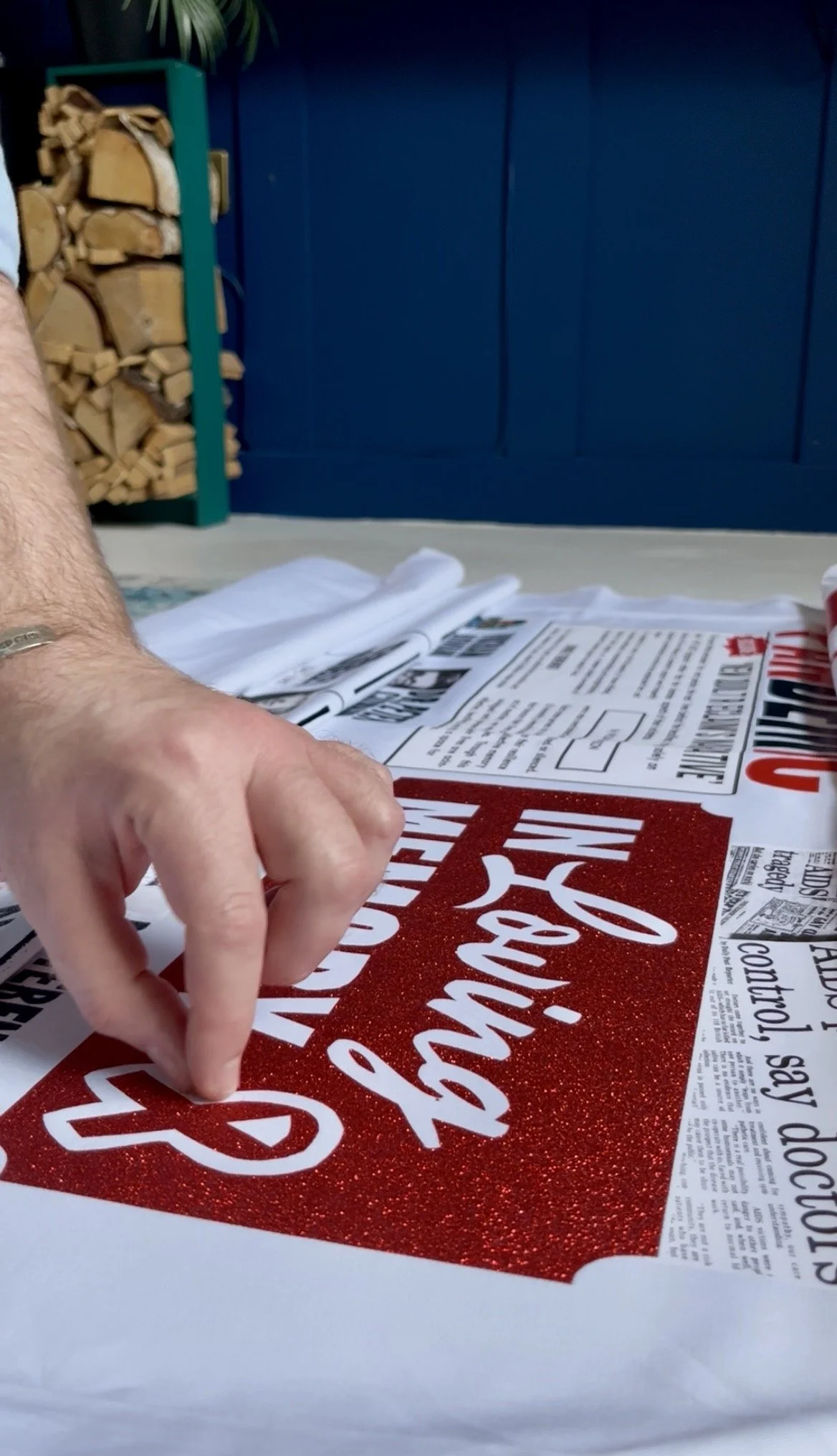
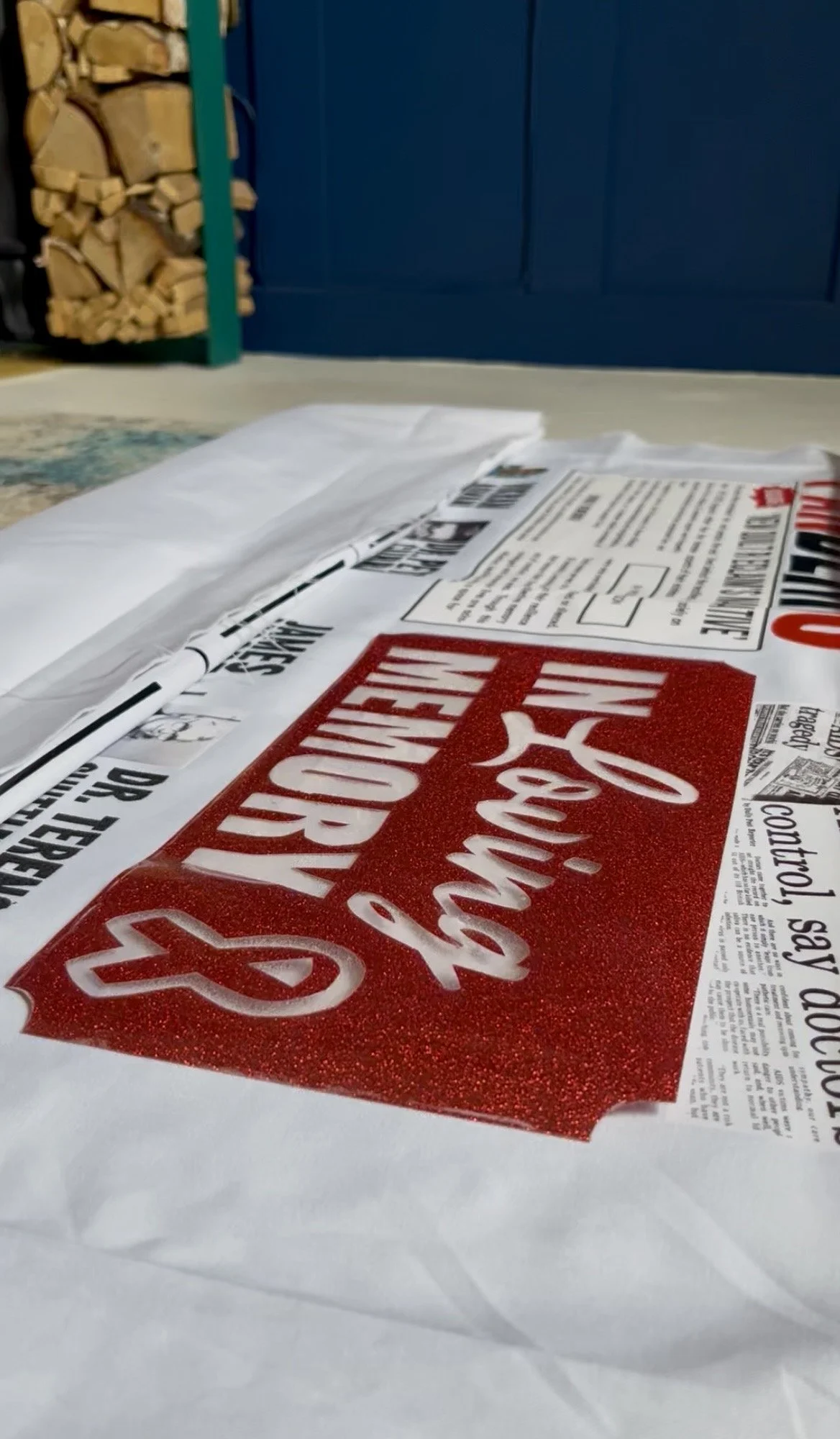
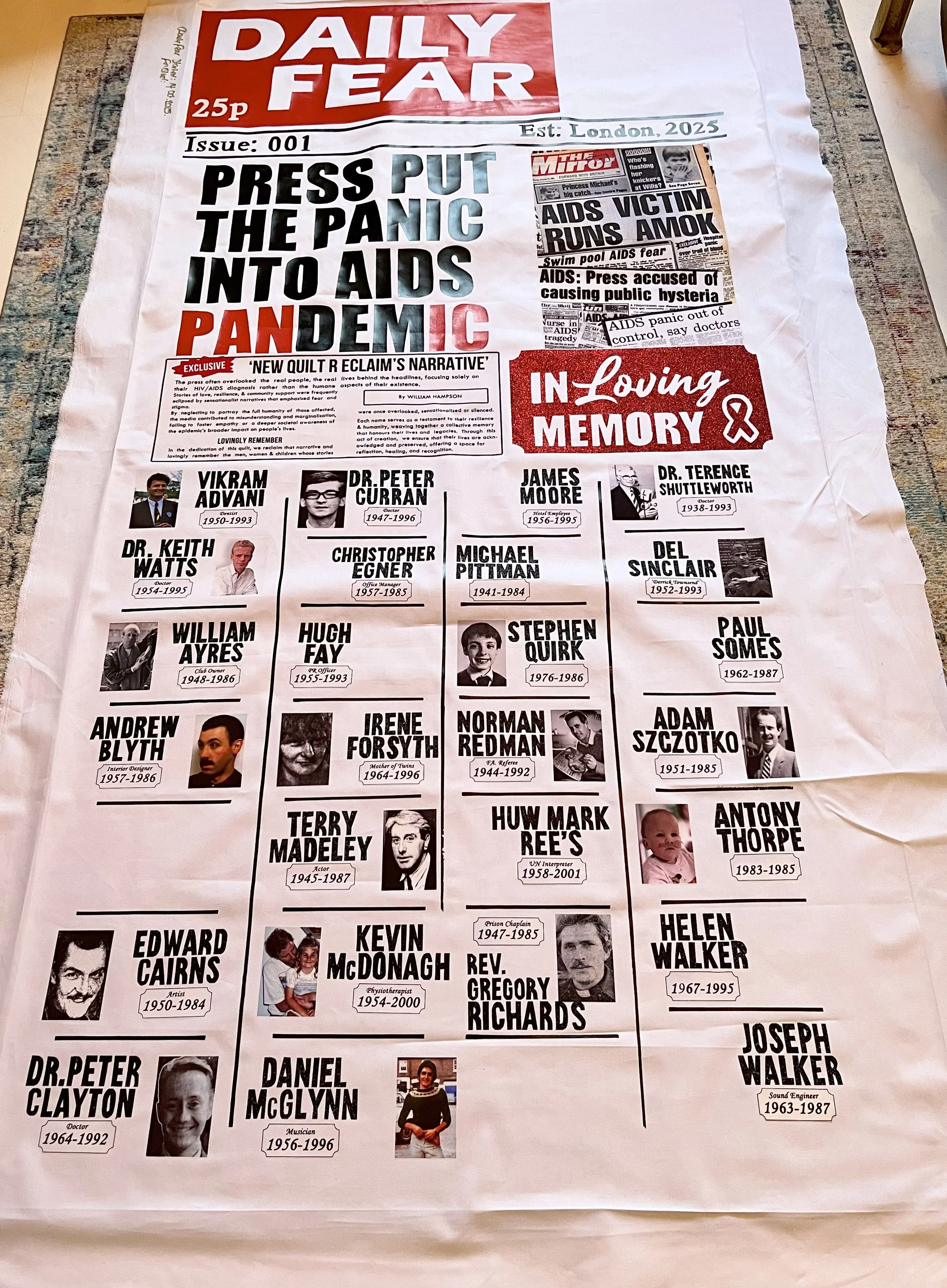
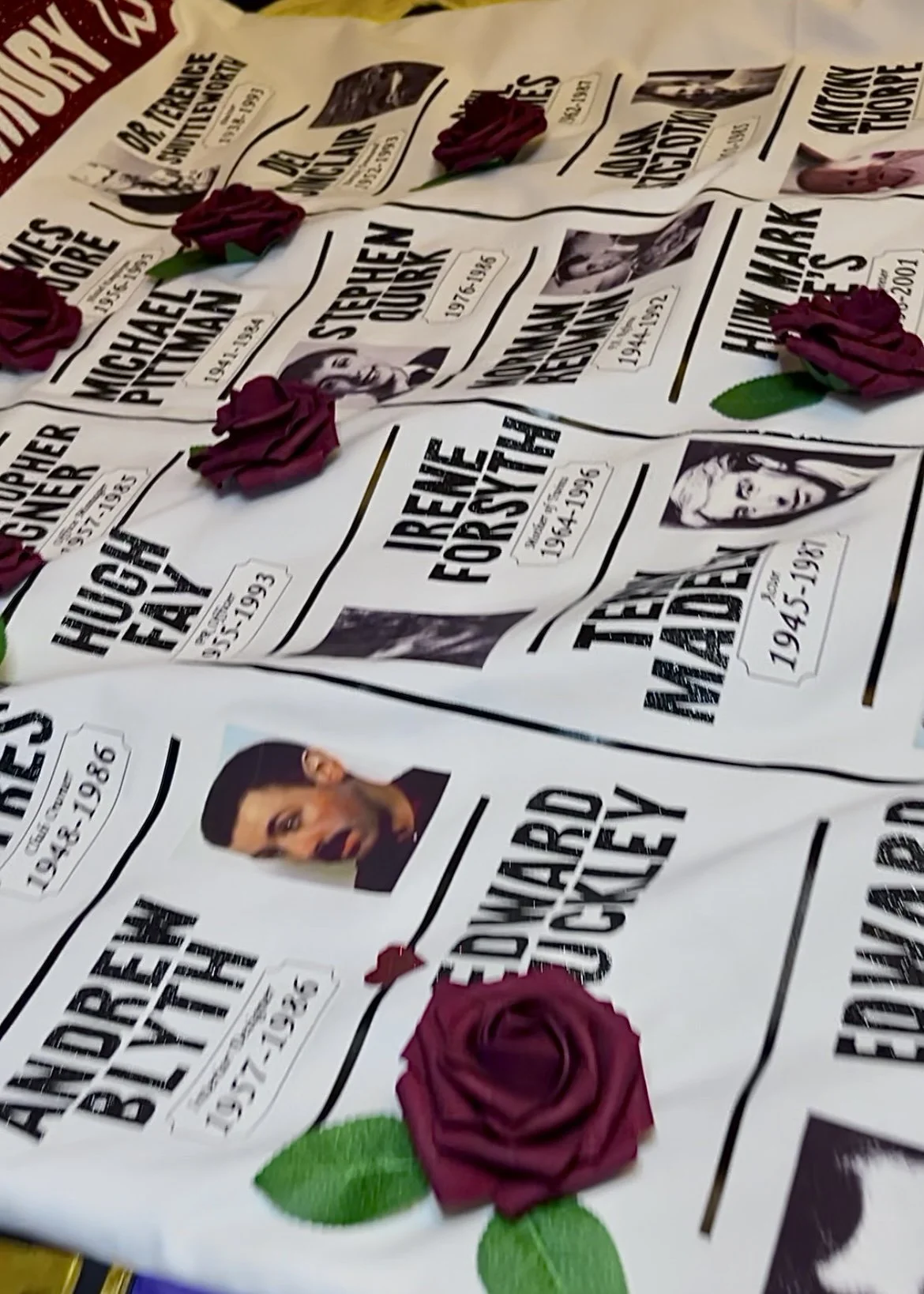
Given the quilt was created from stories I researched and featured on my podcast, it was the newspaper archives that allowed me to read articles collectively rather than remain loyal to a single paper, and thereby attempt to reconstruct a fuller, more nuanced story. One early example was a front‑page tabloid piece in the Daily Mirror headlined “AIDS PATIENT RUNS AMOK”: its description of a man in an apparently desperate state was blatantly sensationalised, yet beneath the lurid language one can discern signs of something more troubling — a patient subjected to fear and stigma, likely exacerbated by those charged with his care in hospital. Reading that account alongside reports from other papers revealed contradictions and omissions that the Mirror’s headline obscured, and it was only by piecing multiple perspectives together that the quilt could begin to hold the complex human truths the tabloids sought to erase.
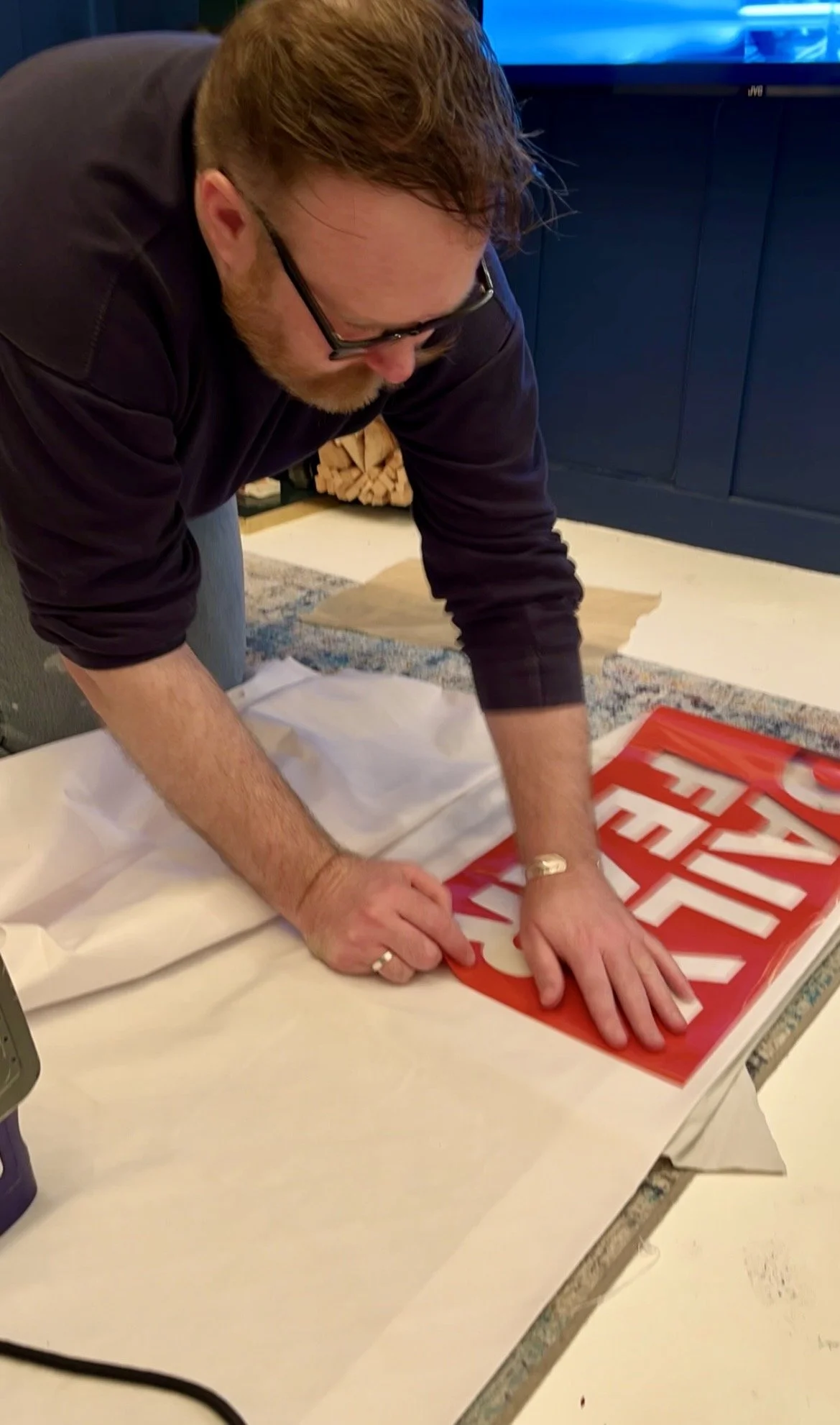
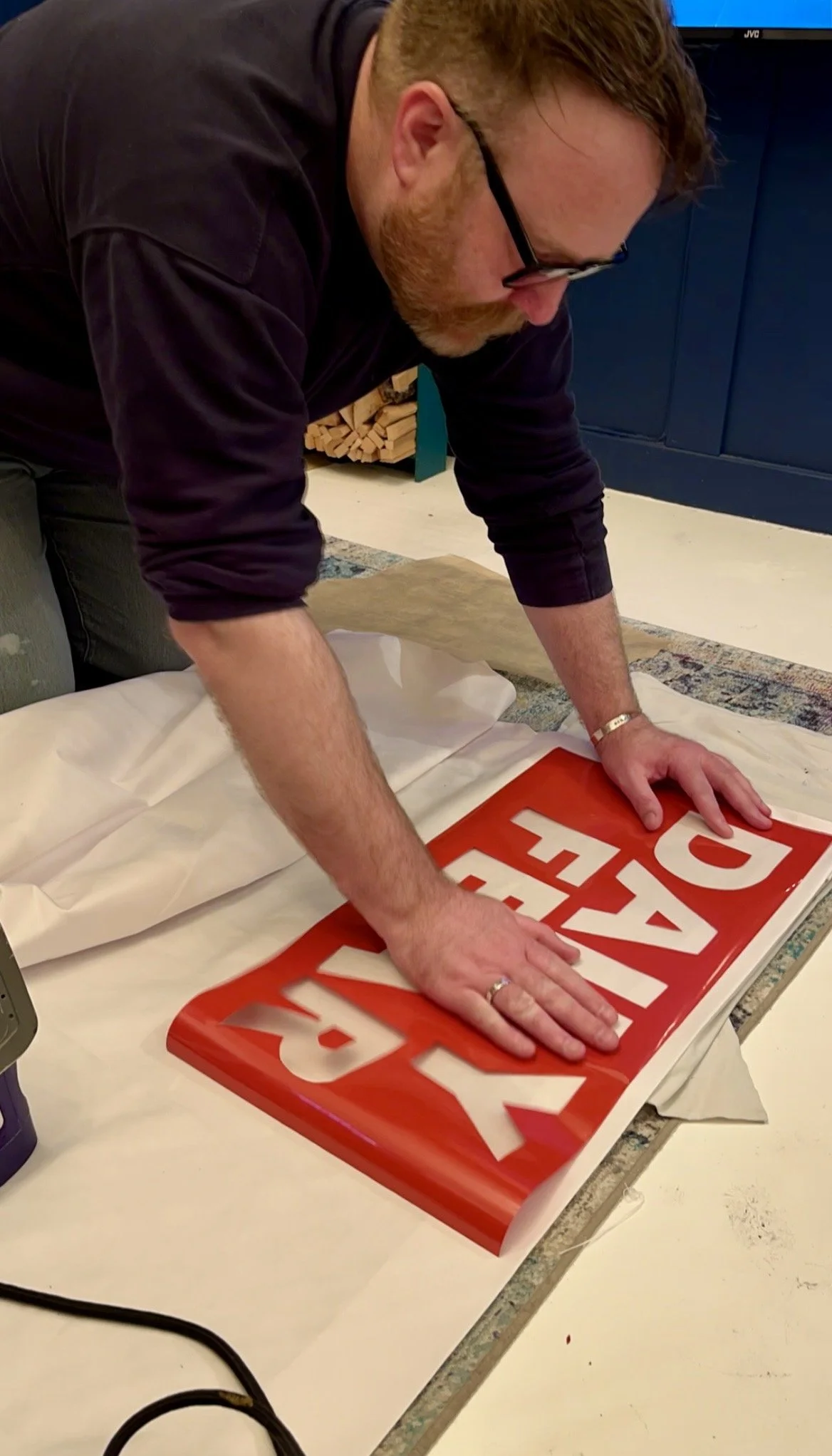
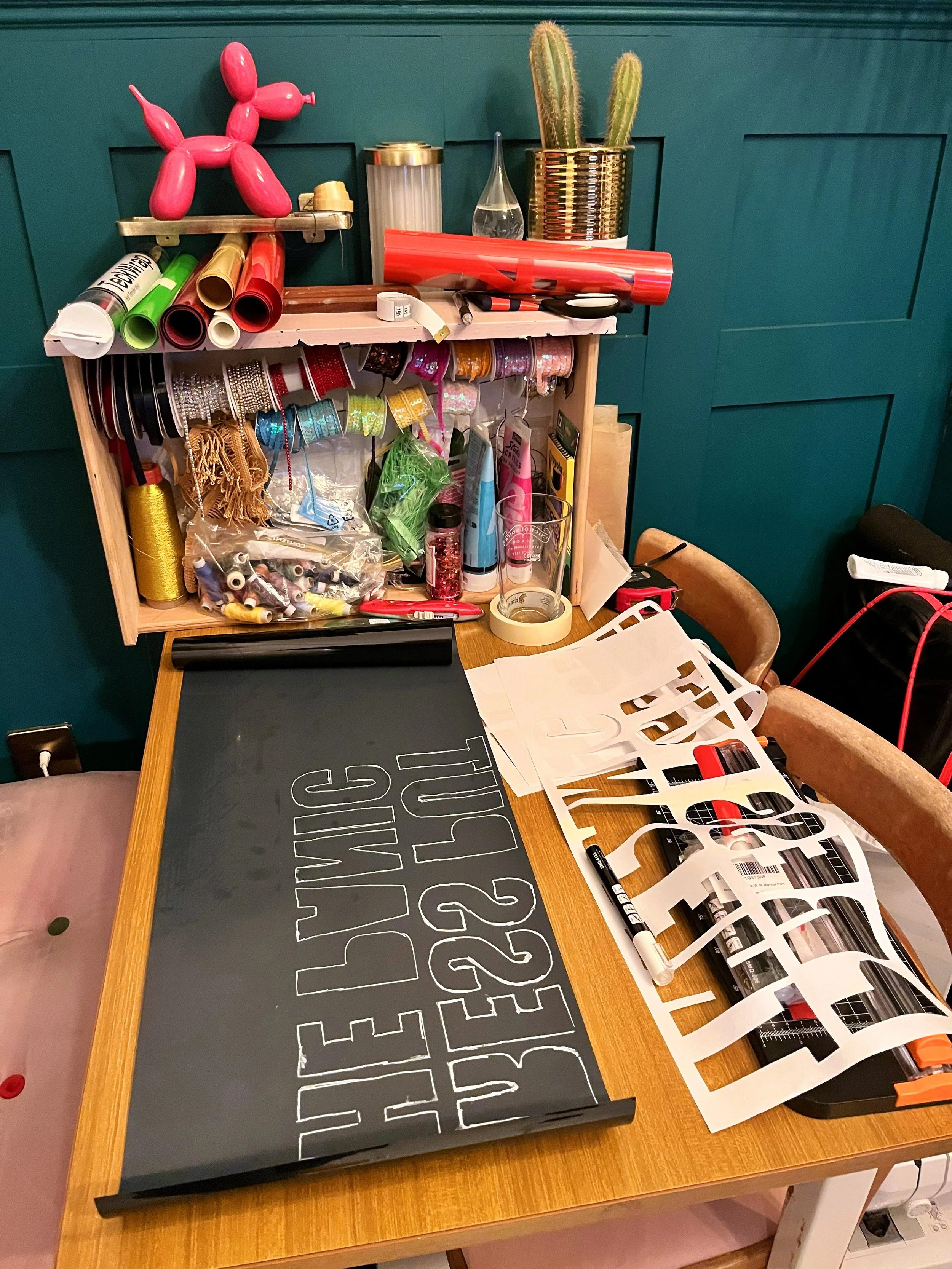
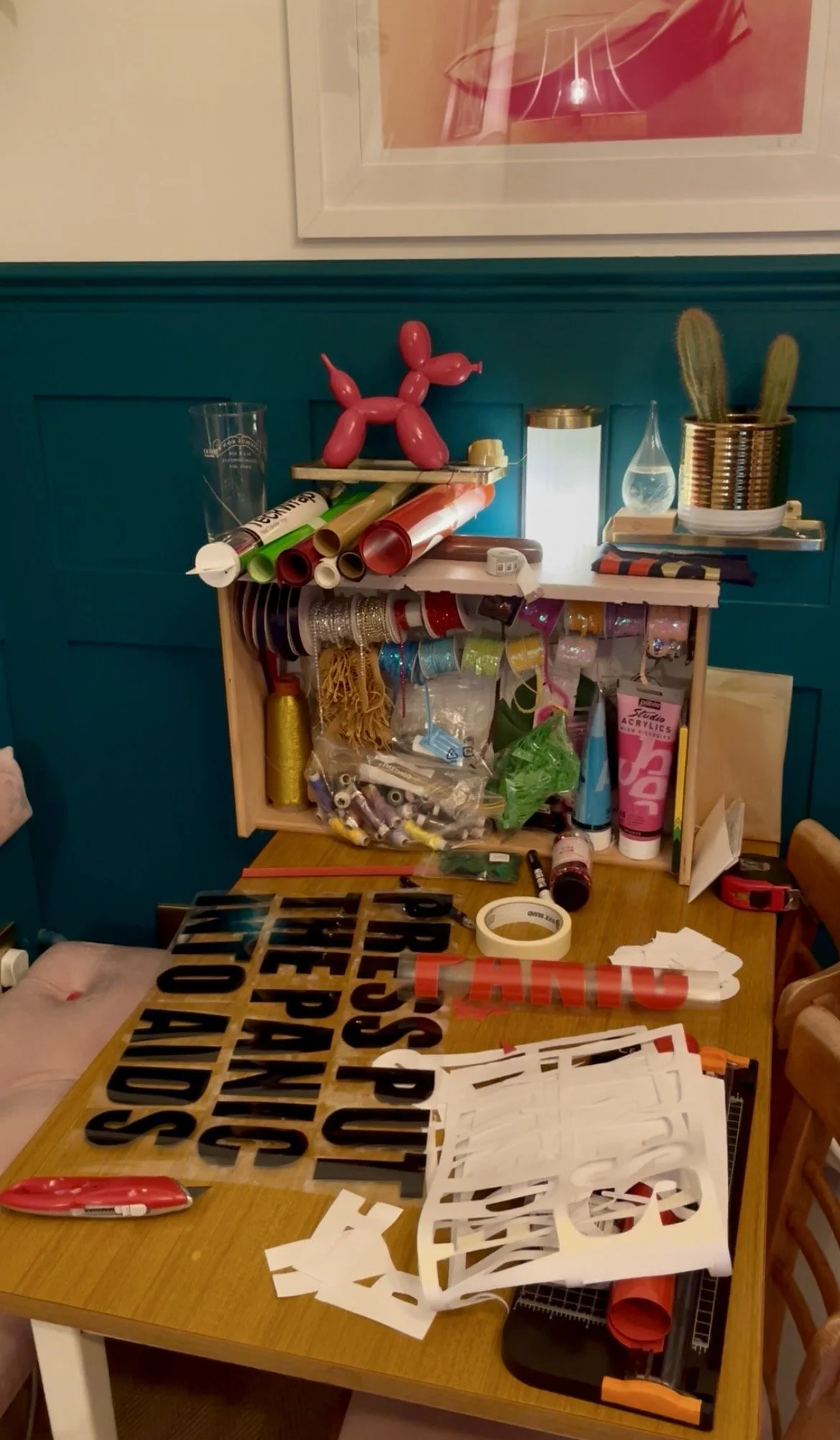
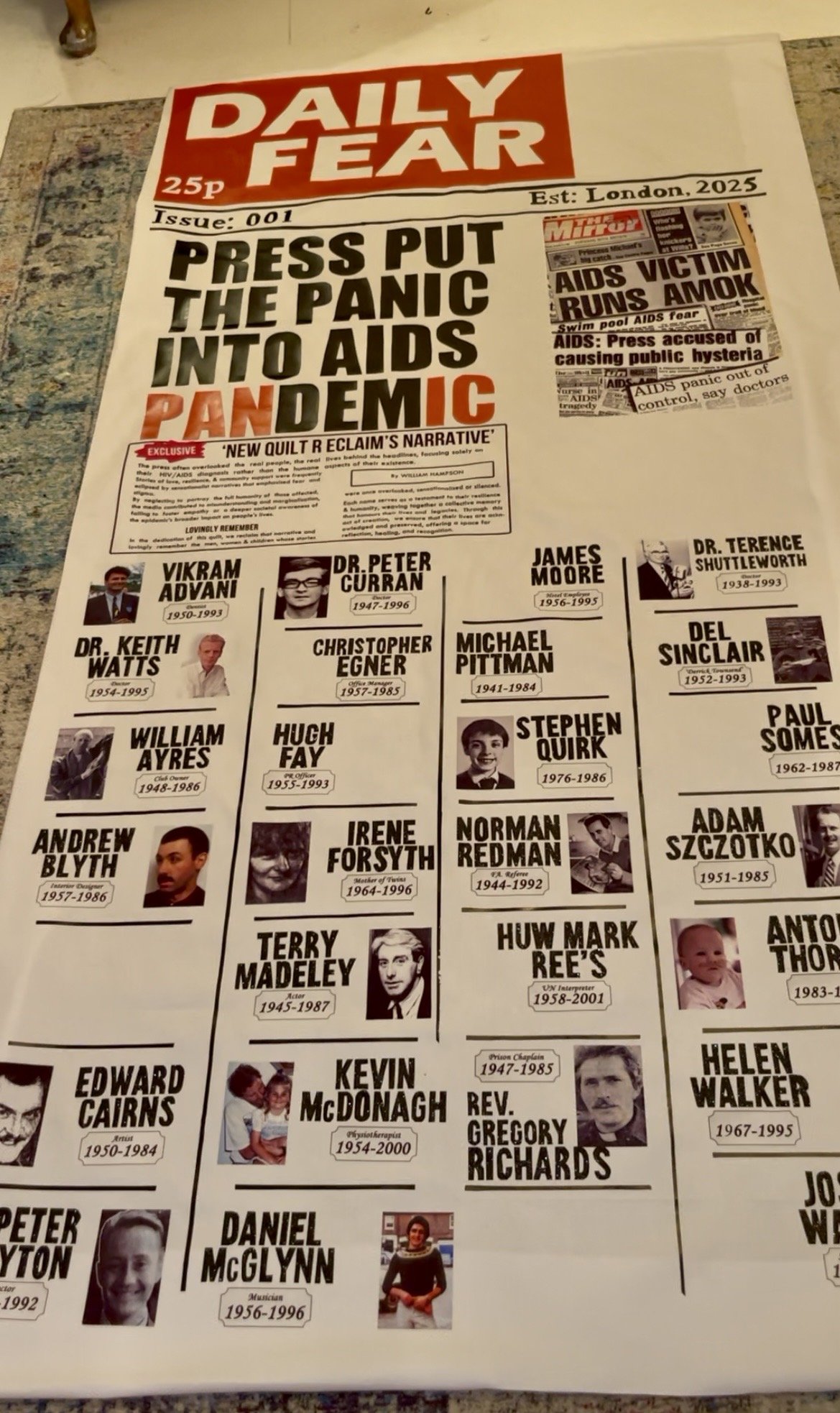
My initial sketch went for a tabloid ‘red top’ look — not just parodying the Mirror but riffing on a whole genre of sensationalist papers — headlined the ‘Daily Prejudice’, soon restyled to the blunt ‘Daily Fear’ above the fictional headline: “PRESS PUT THE PANIC INTO AIDS PANDEMIC”. It was as far as I could stretch my imagination to make the headline tabloidy, a deliberate nod to the alarmism that shaped the AIDS pandemic.
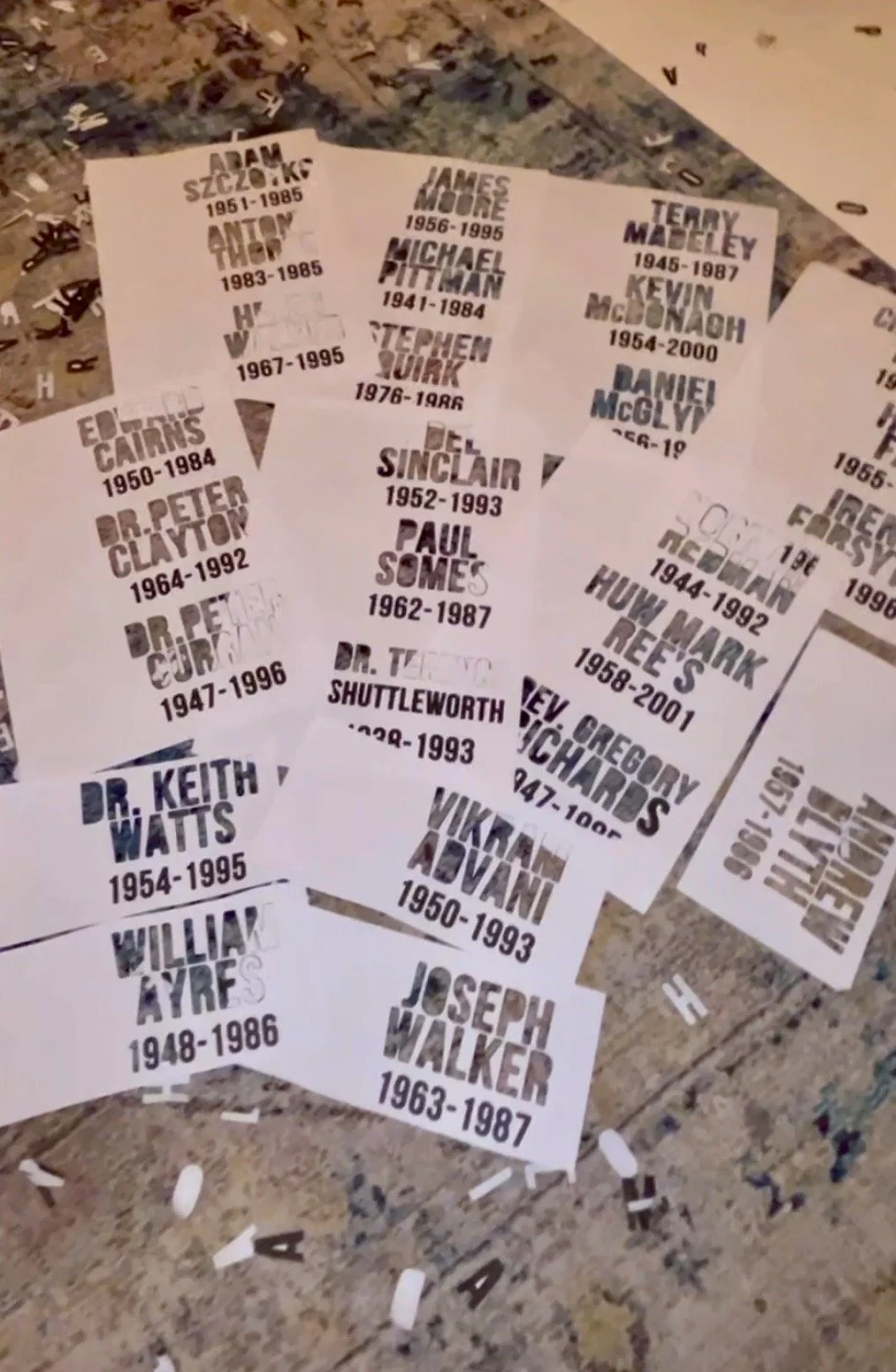
The panel’s purpose was to carry forward the spirit of the AIDS quilt’s origin: a protest. After all these years I wanted to create a protest that gave voice back to the people named underneath, to those who appeared in these newspapers and had their lives reduced to lurid copy — stories often, though not always, wildly oversensationalised — and to insist on their humanity against the glare of cheap panic.
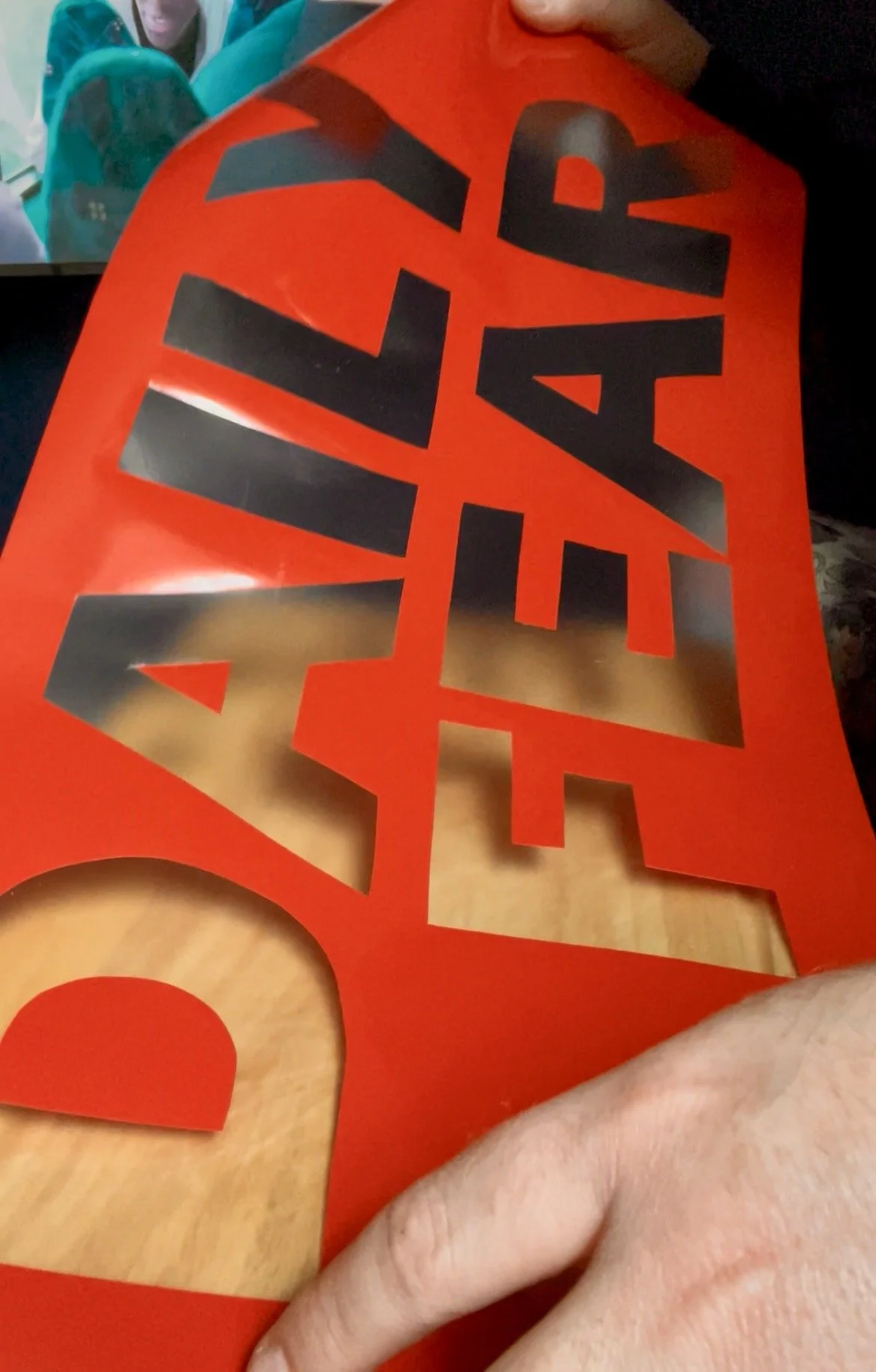
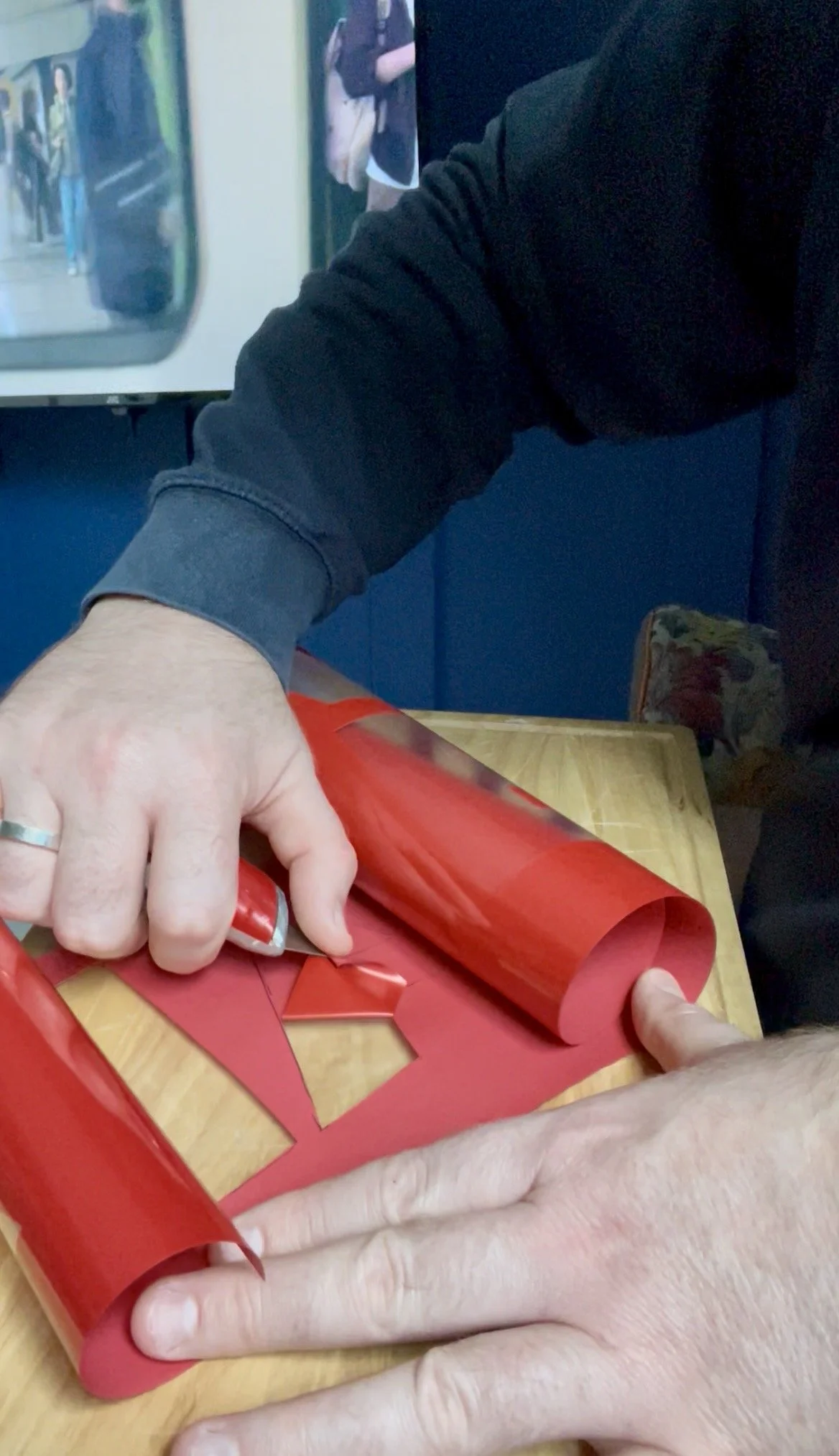
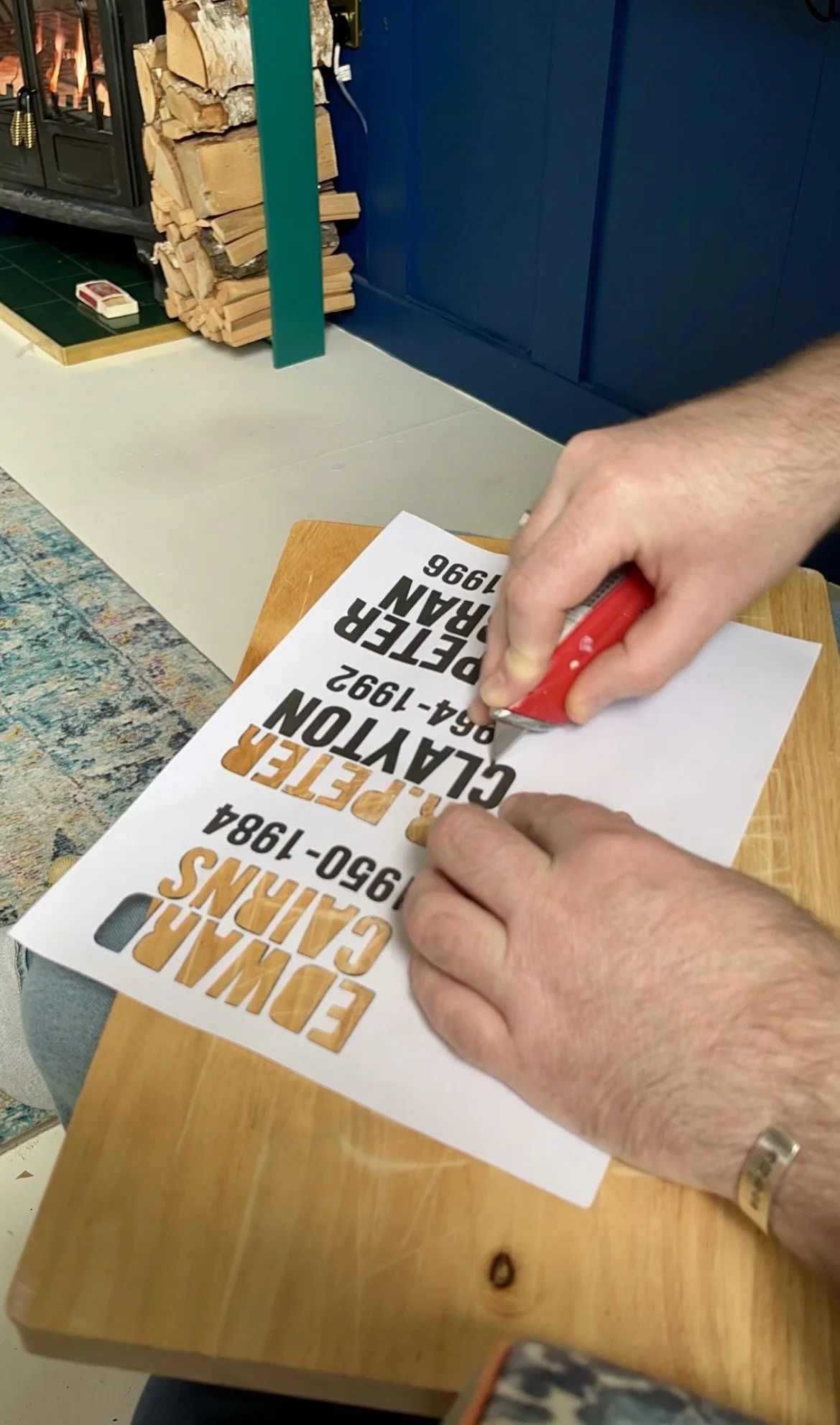
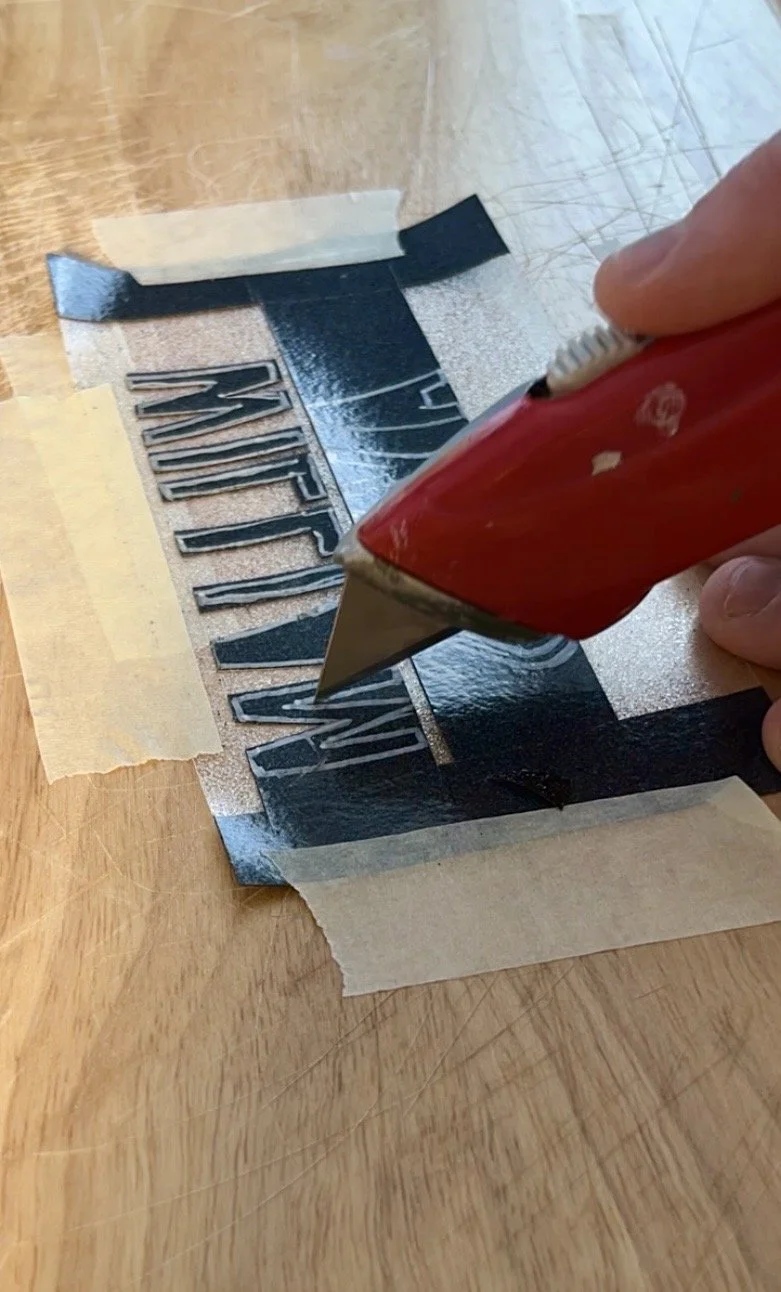
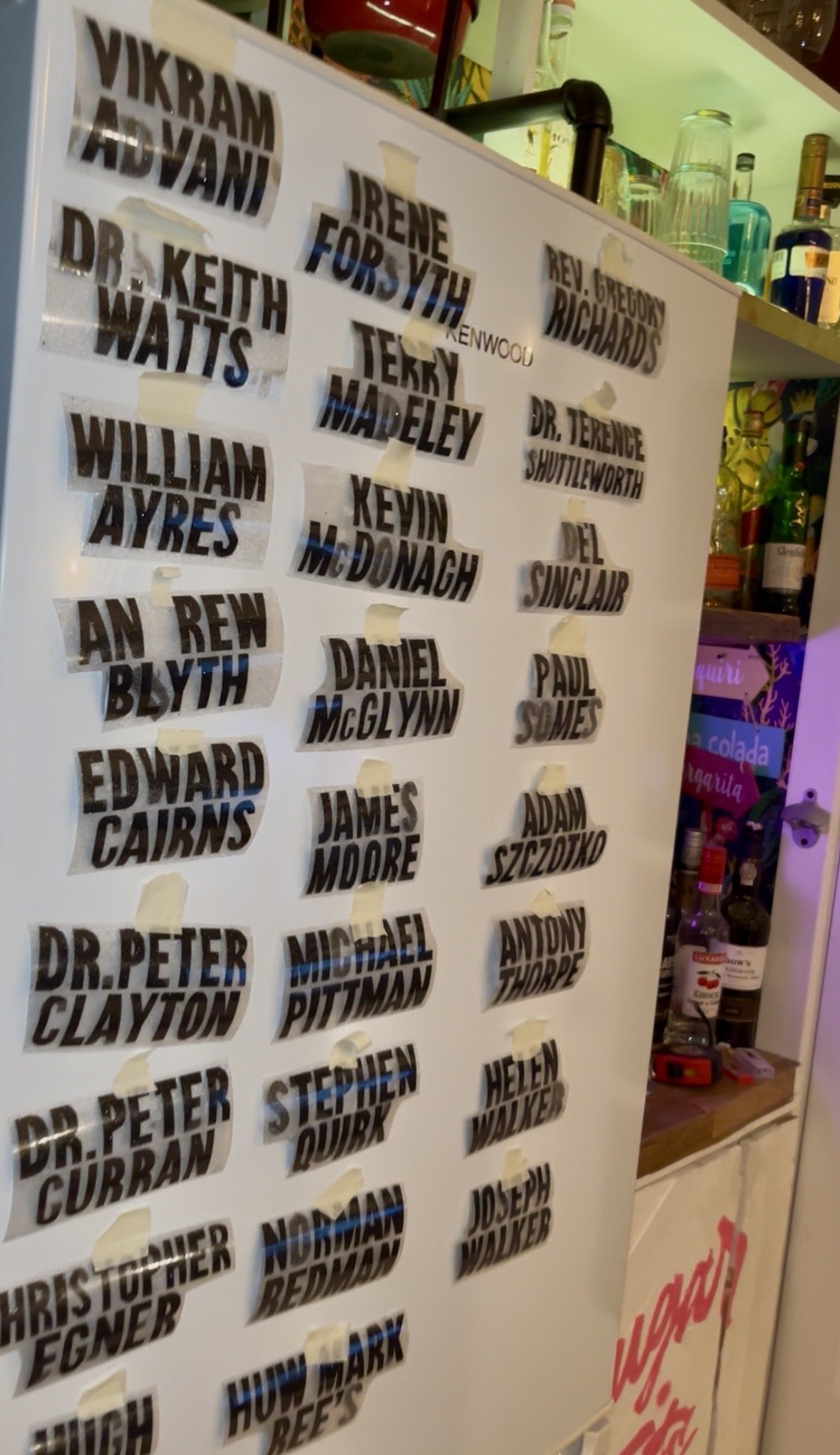
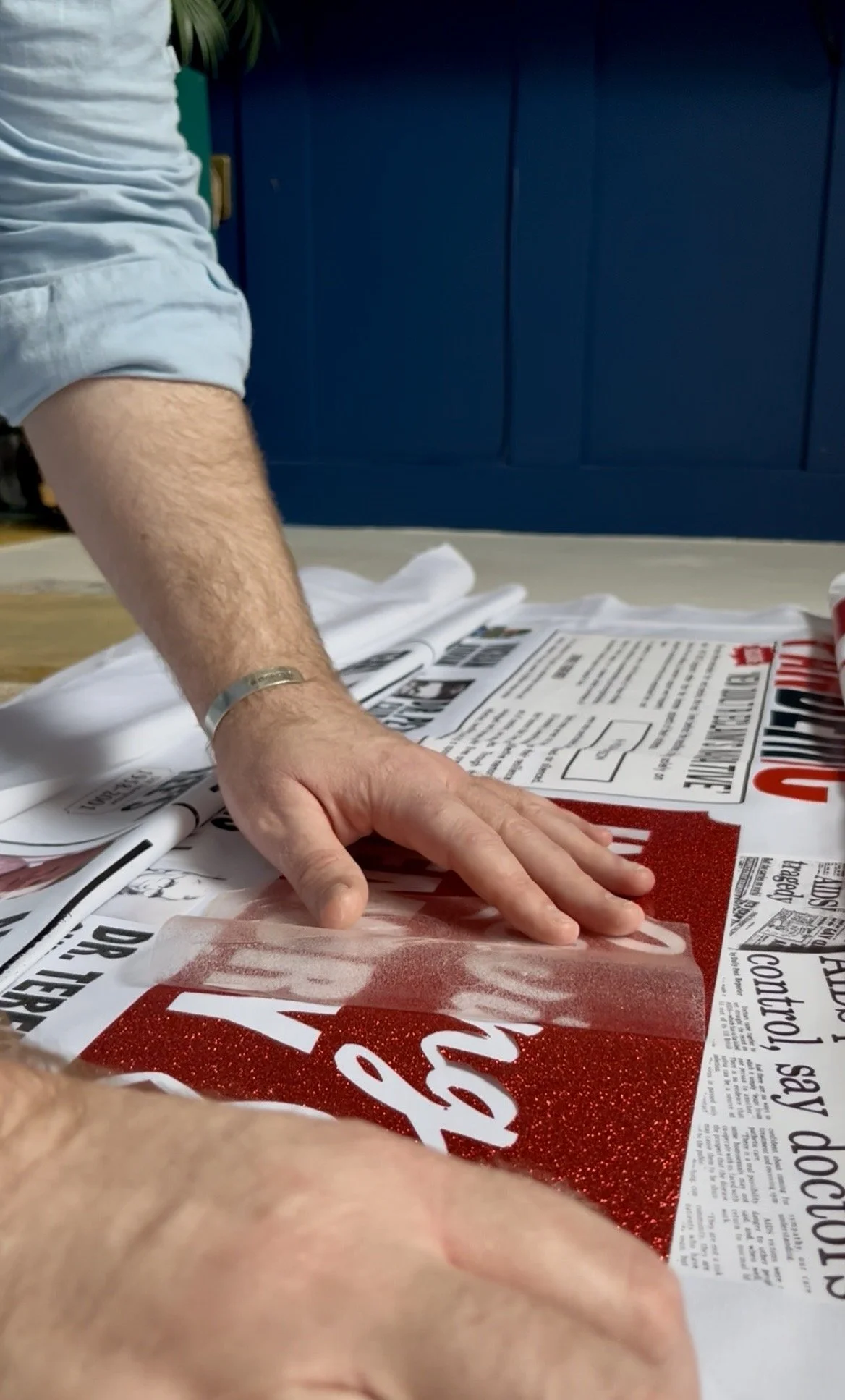
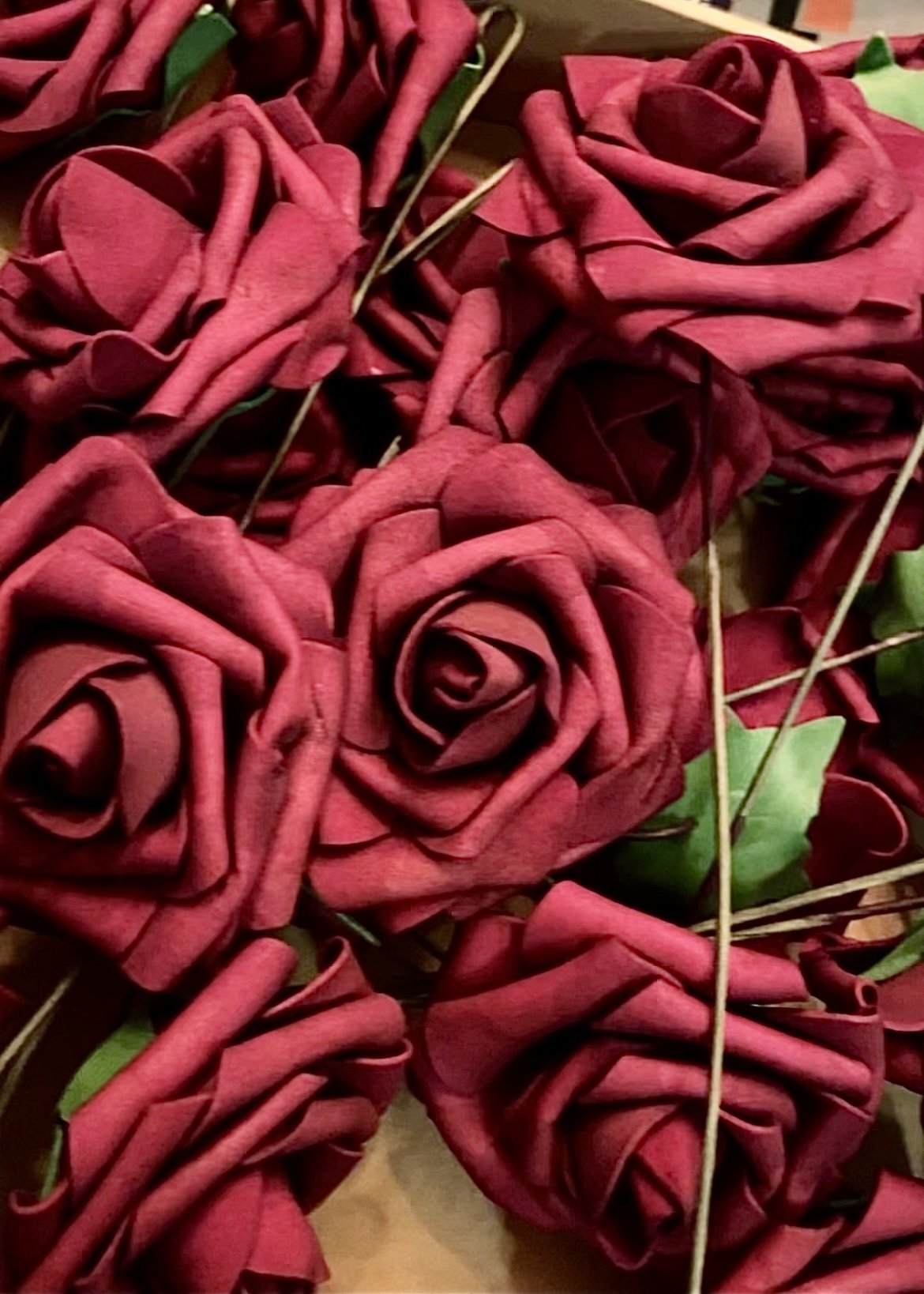
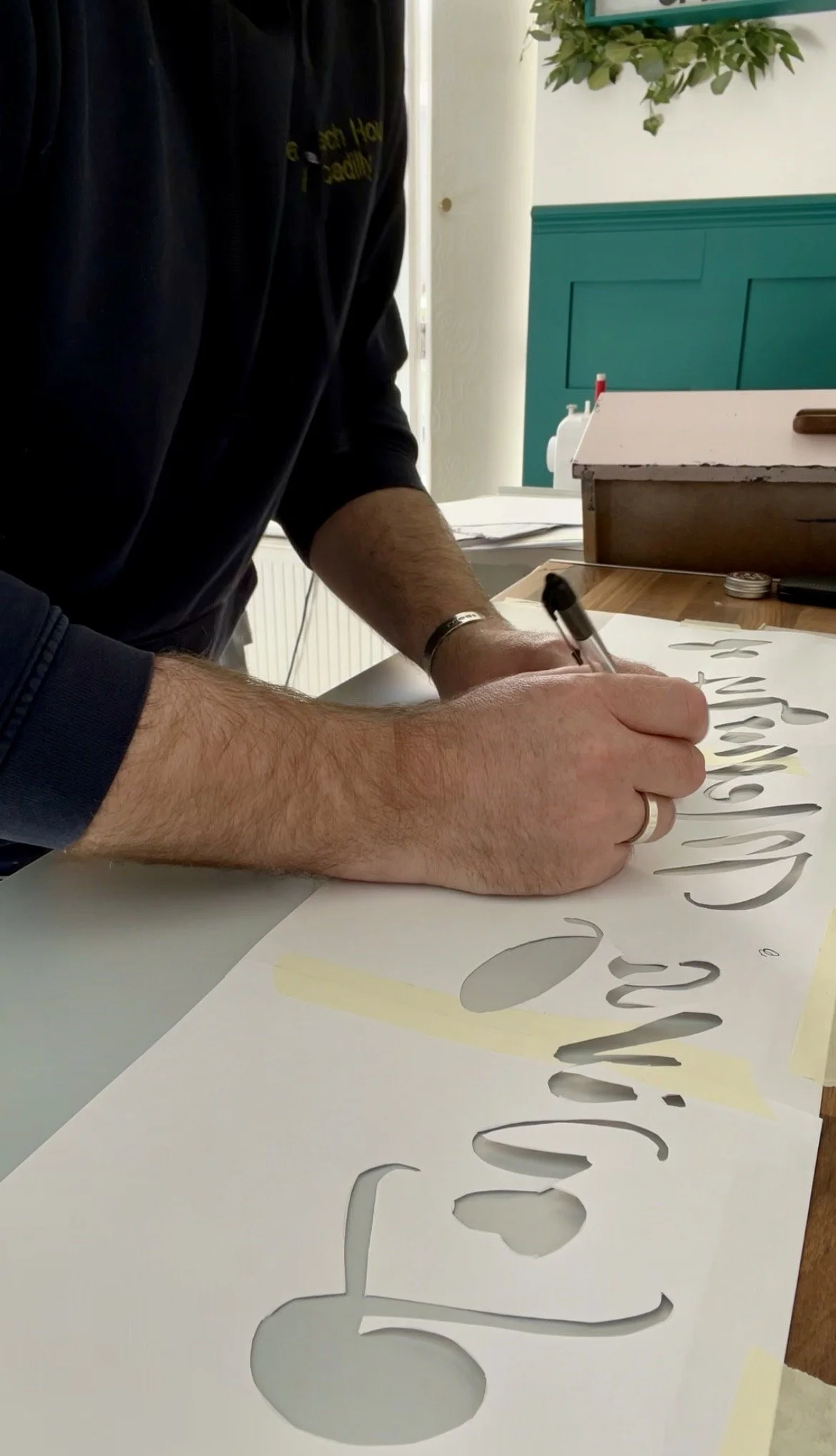
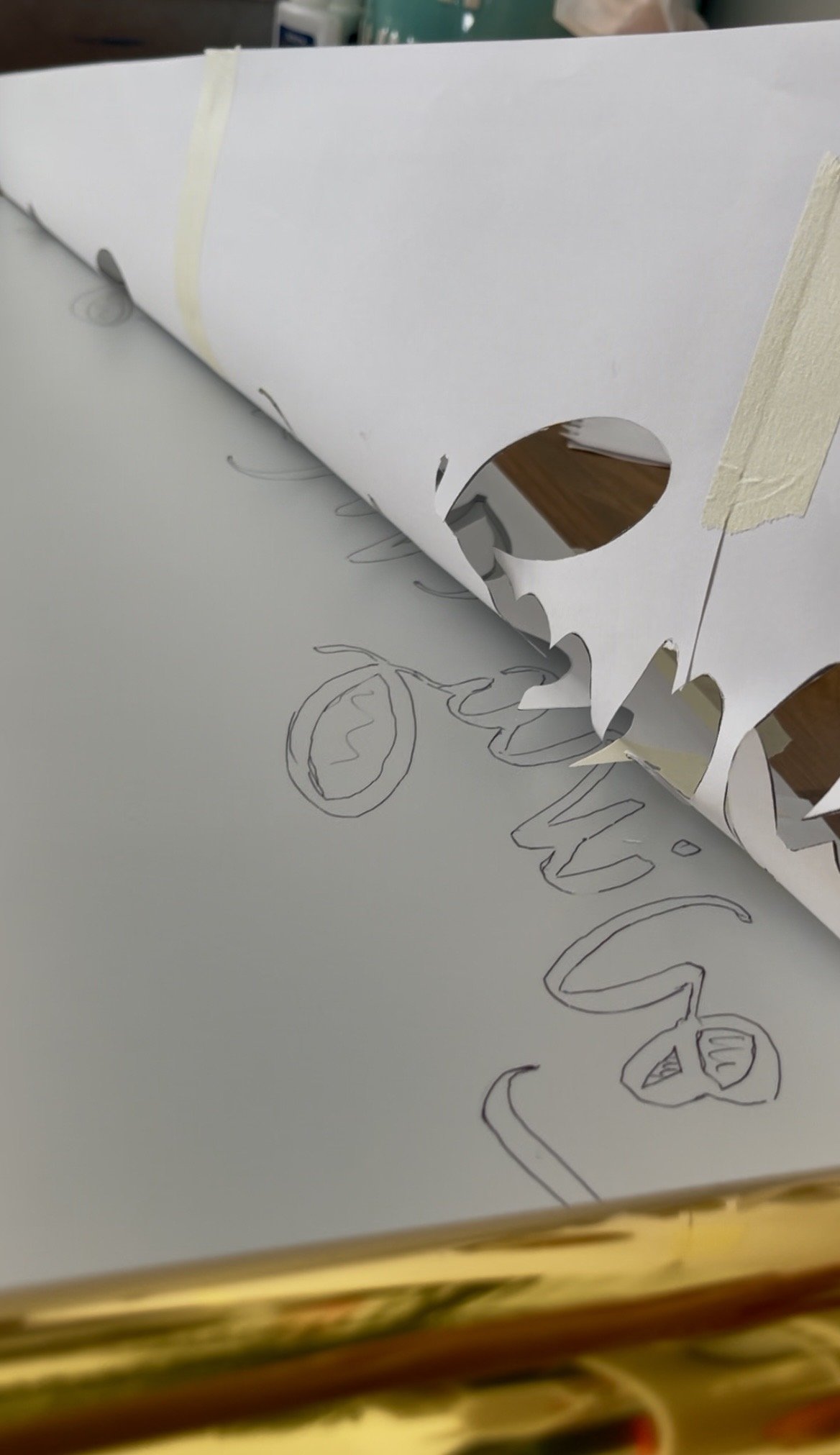
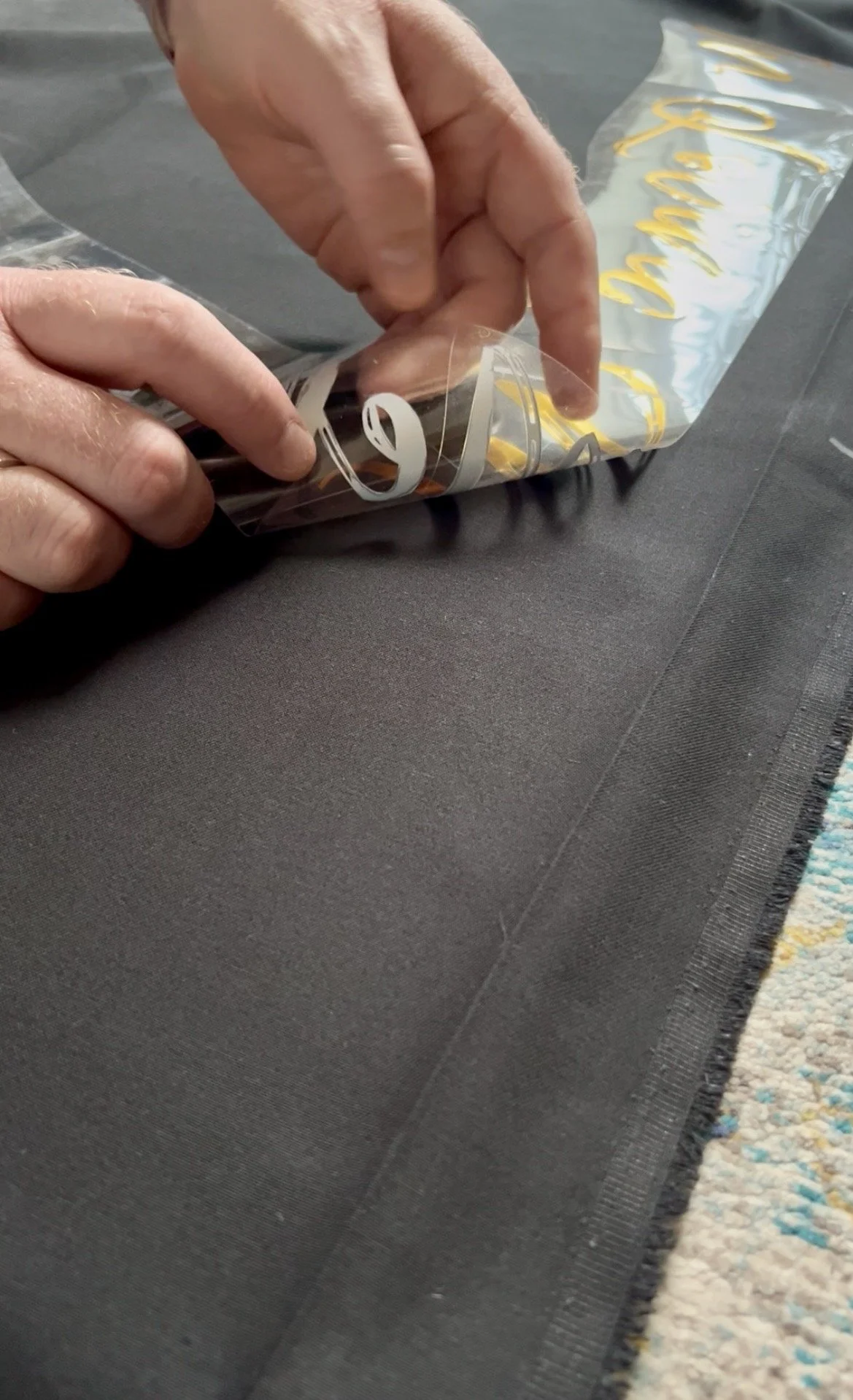
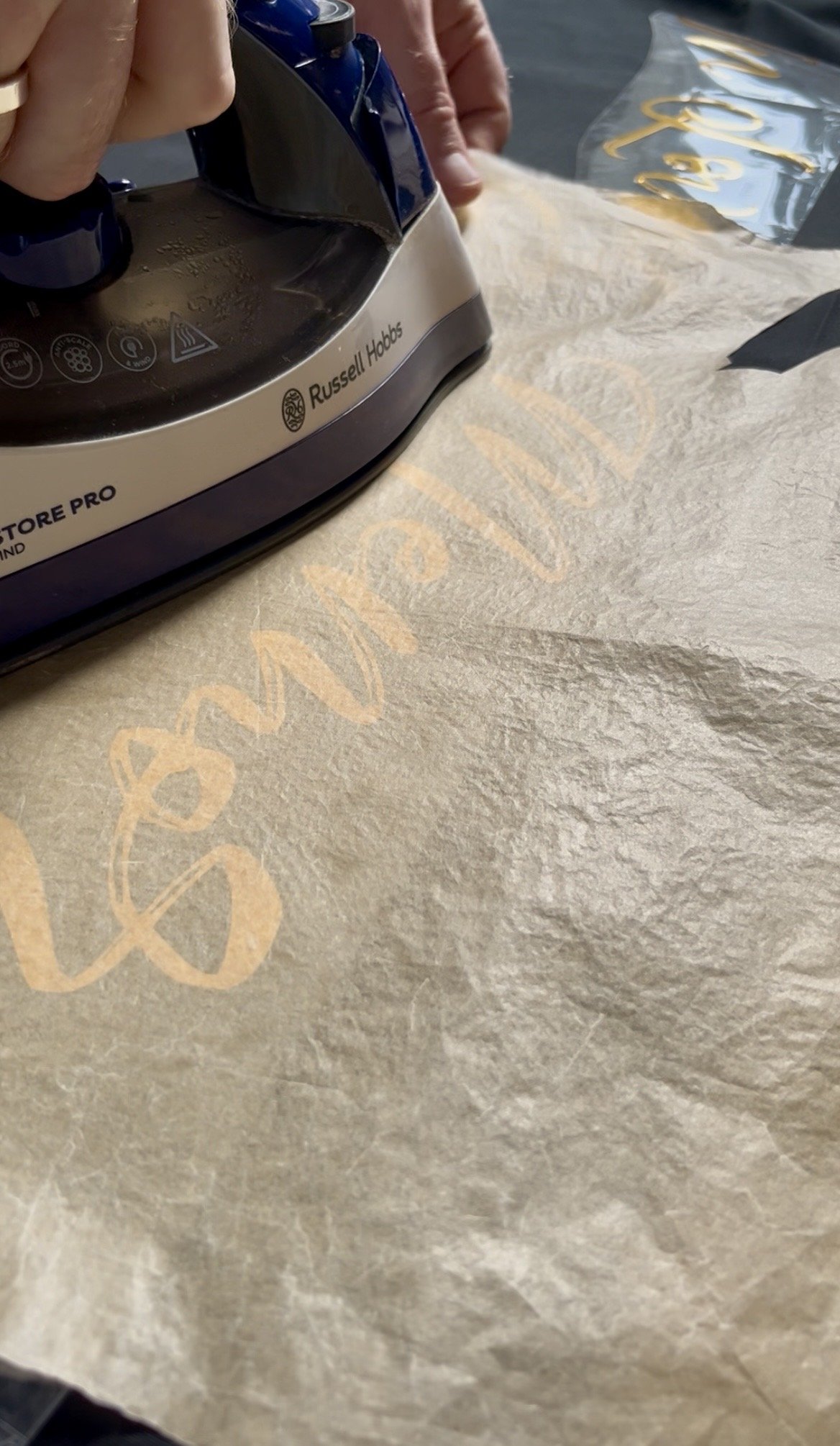
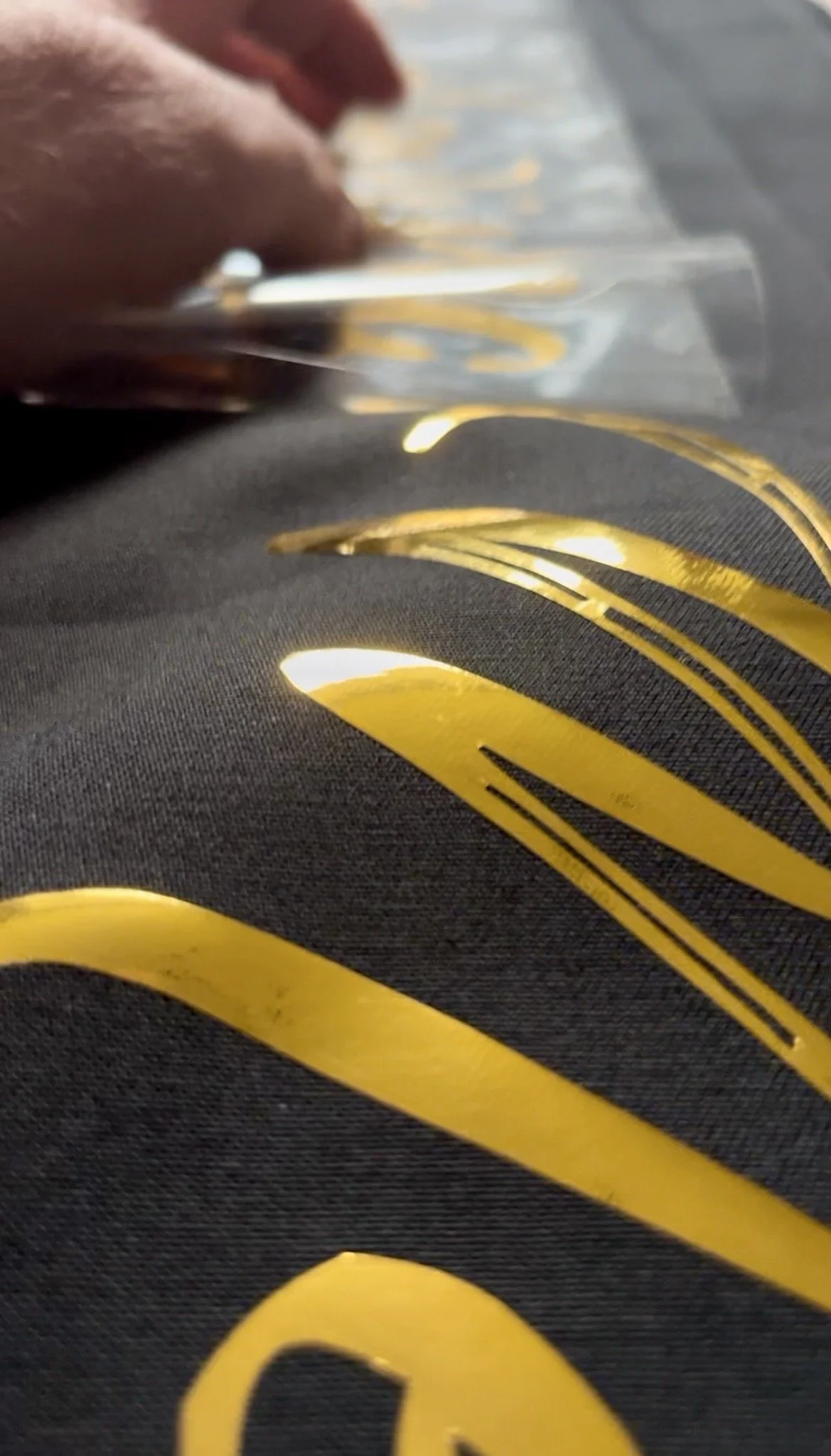
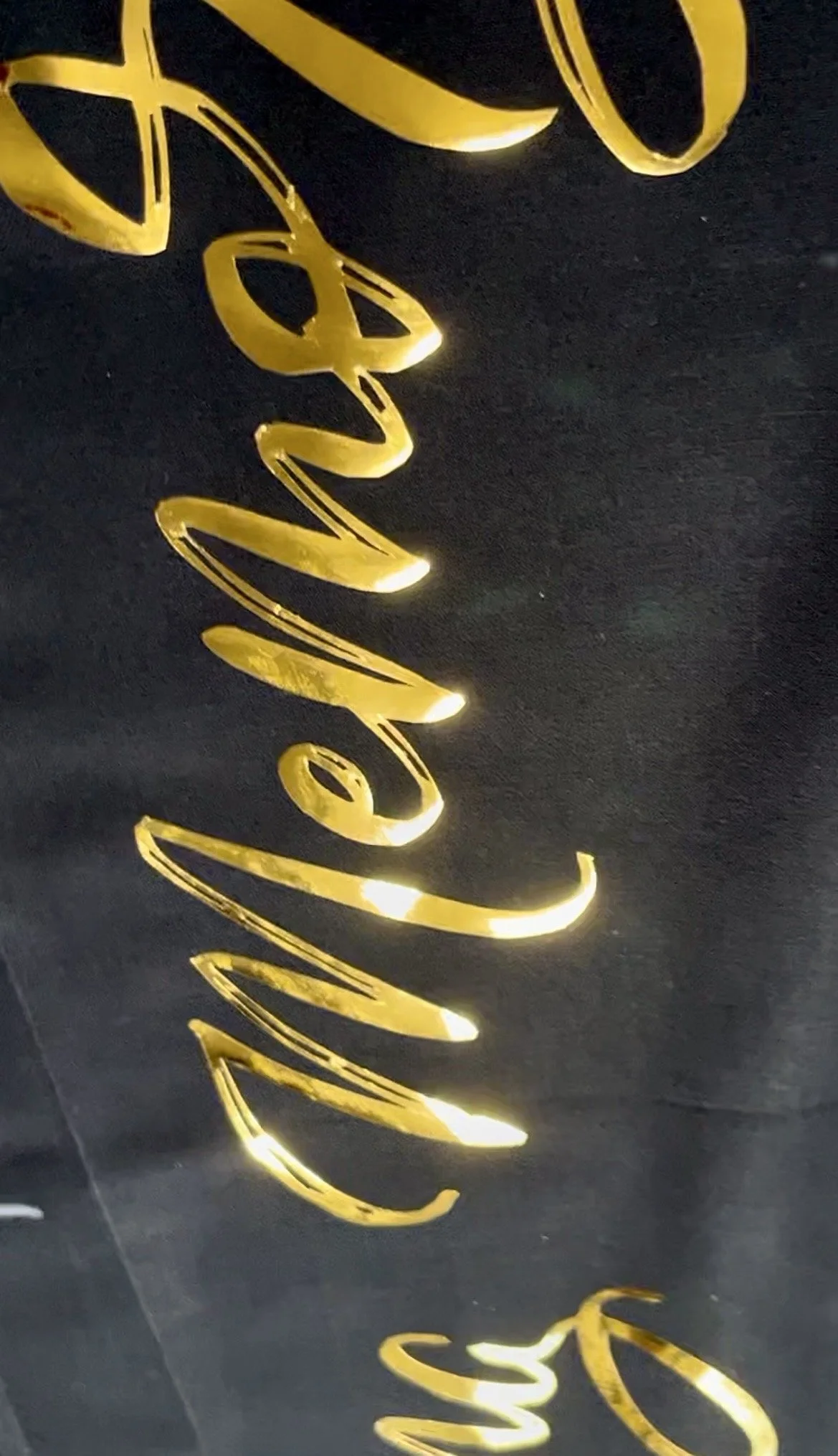
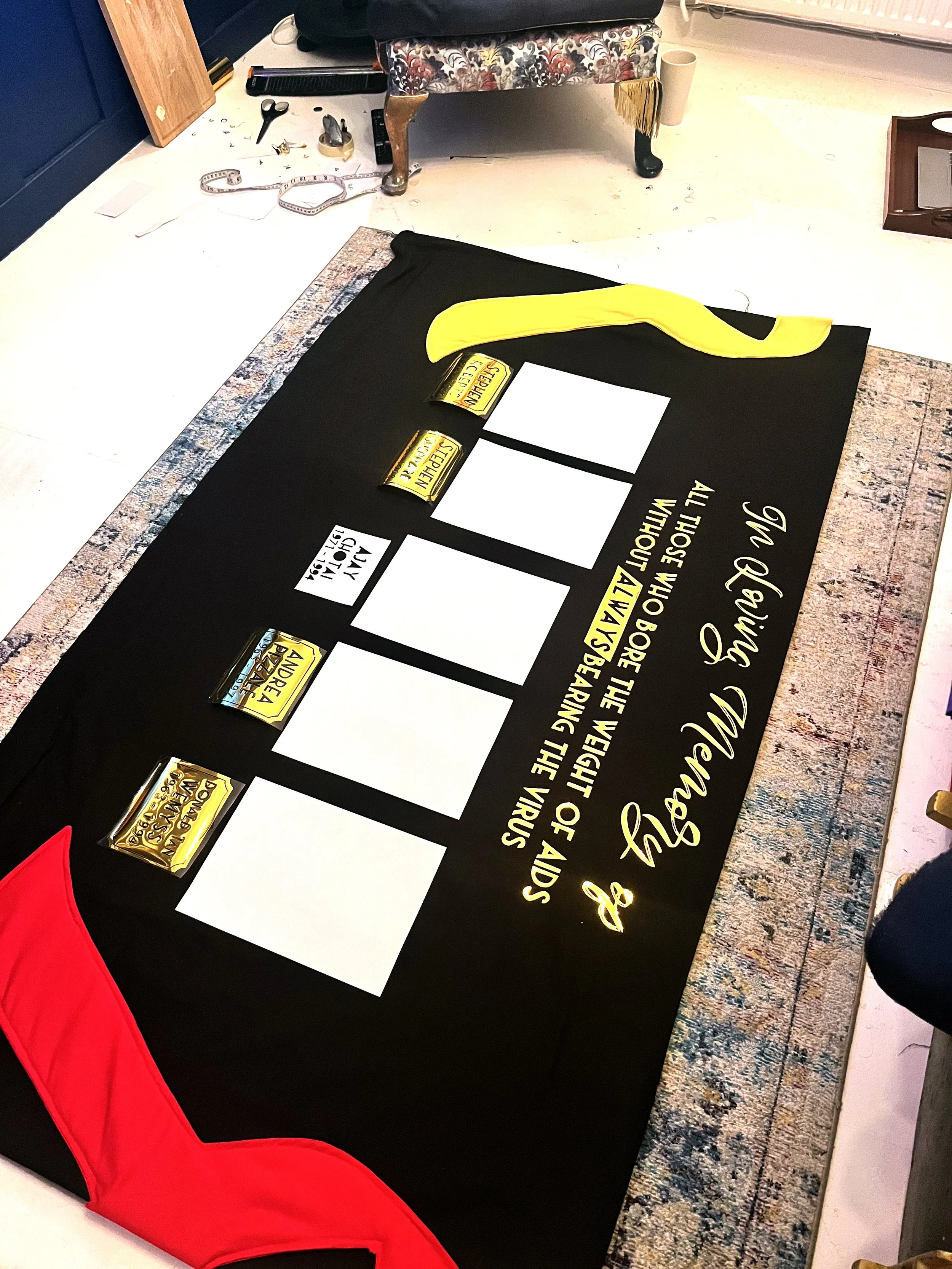
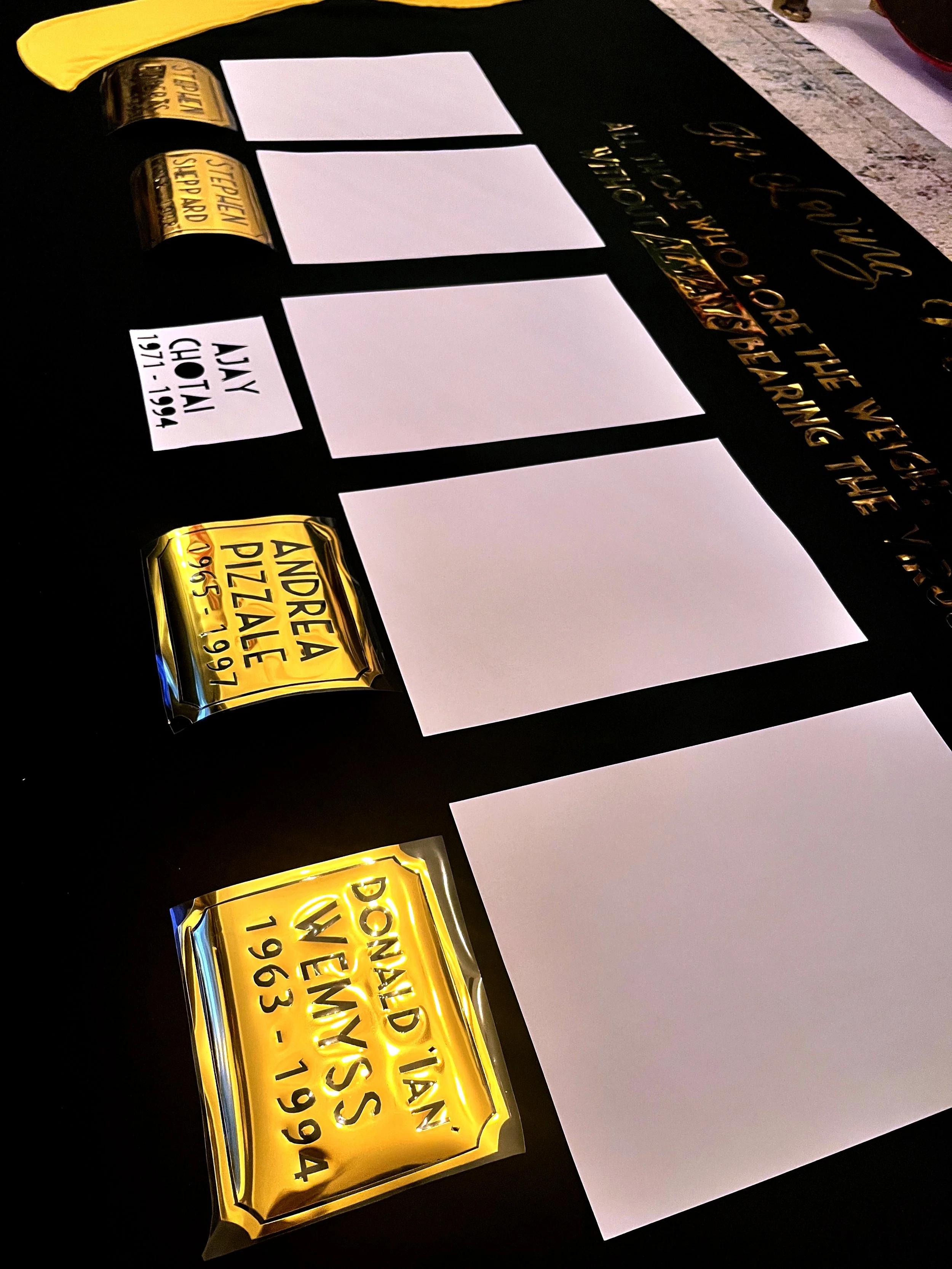
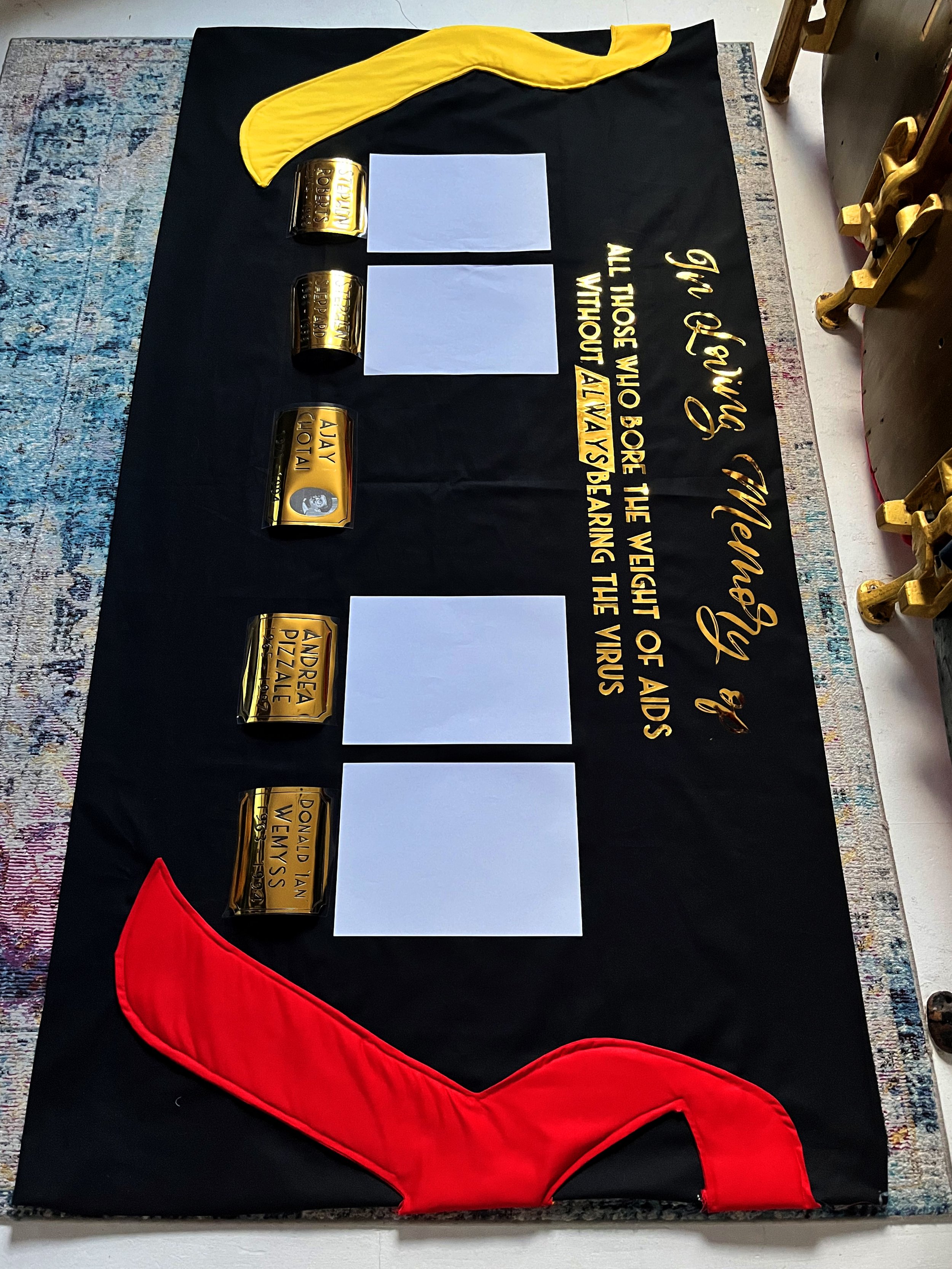
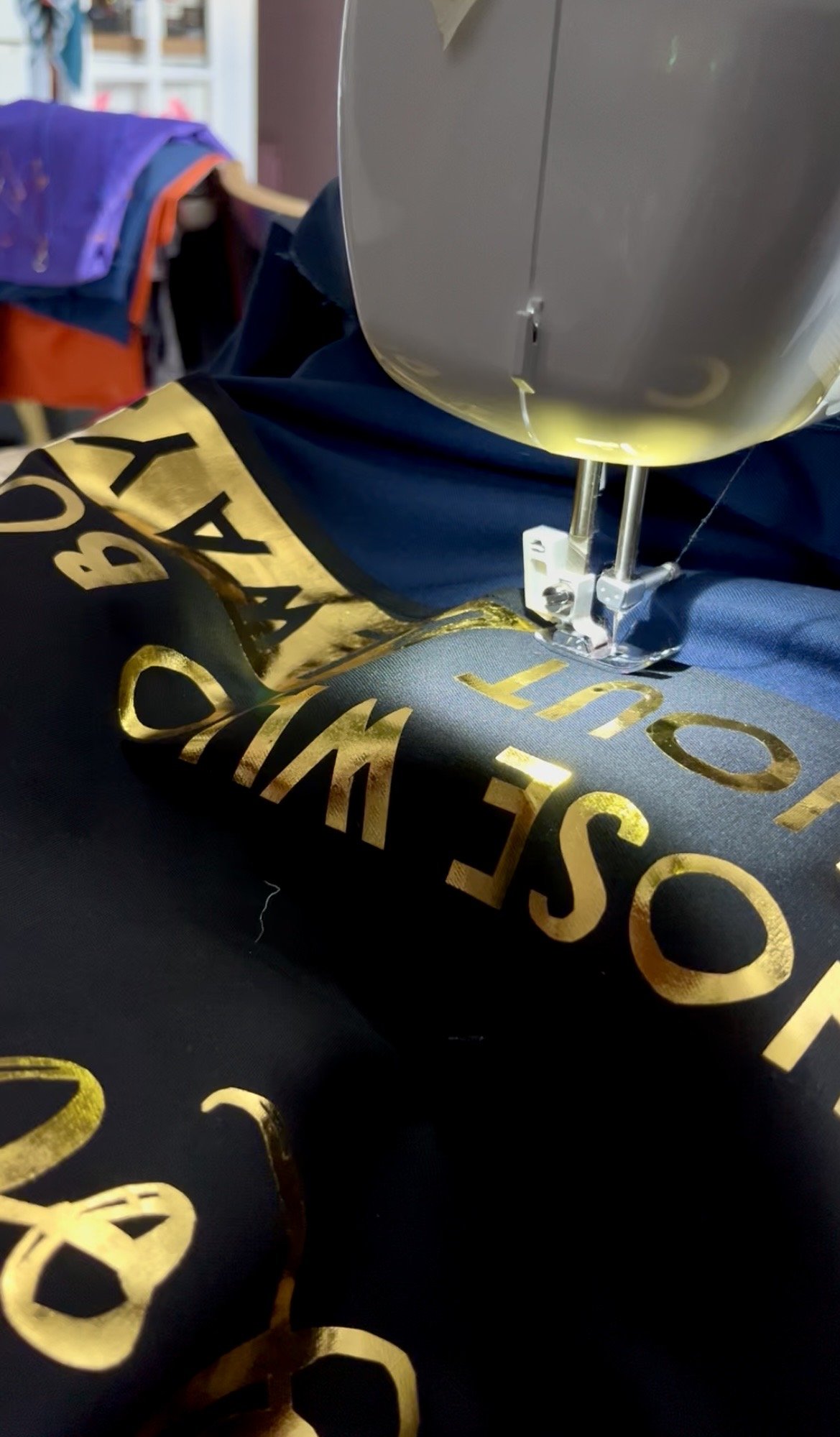
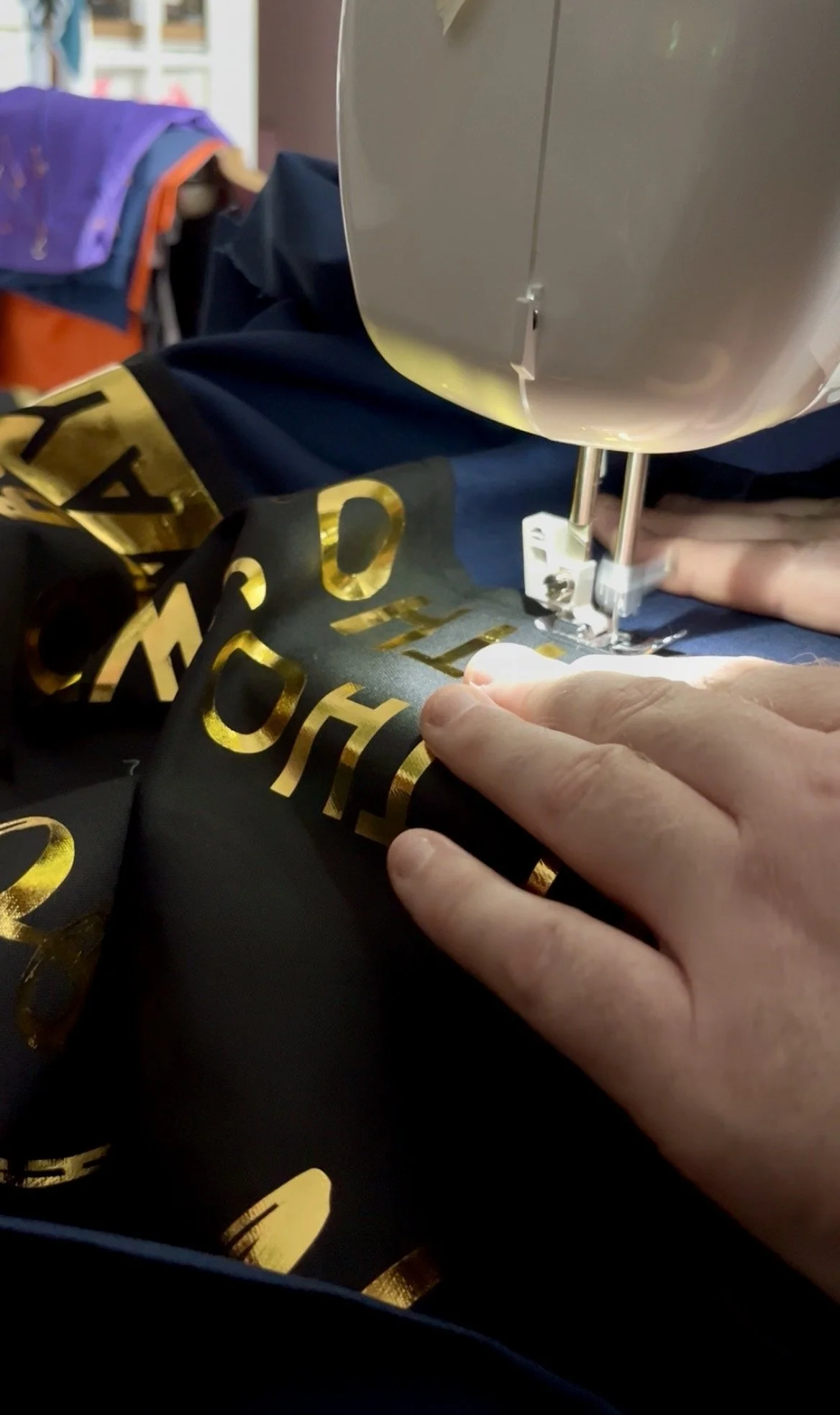
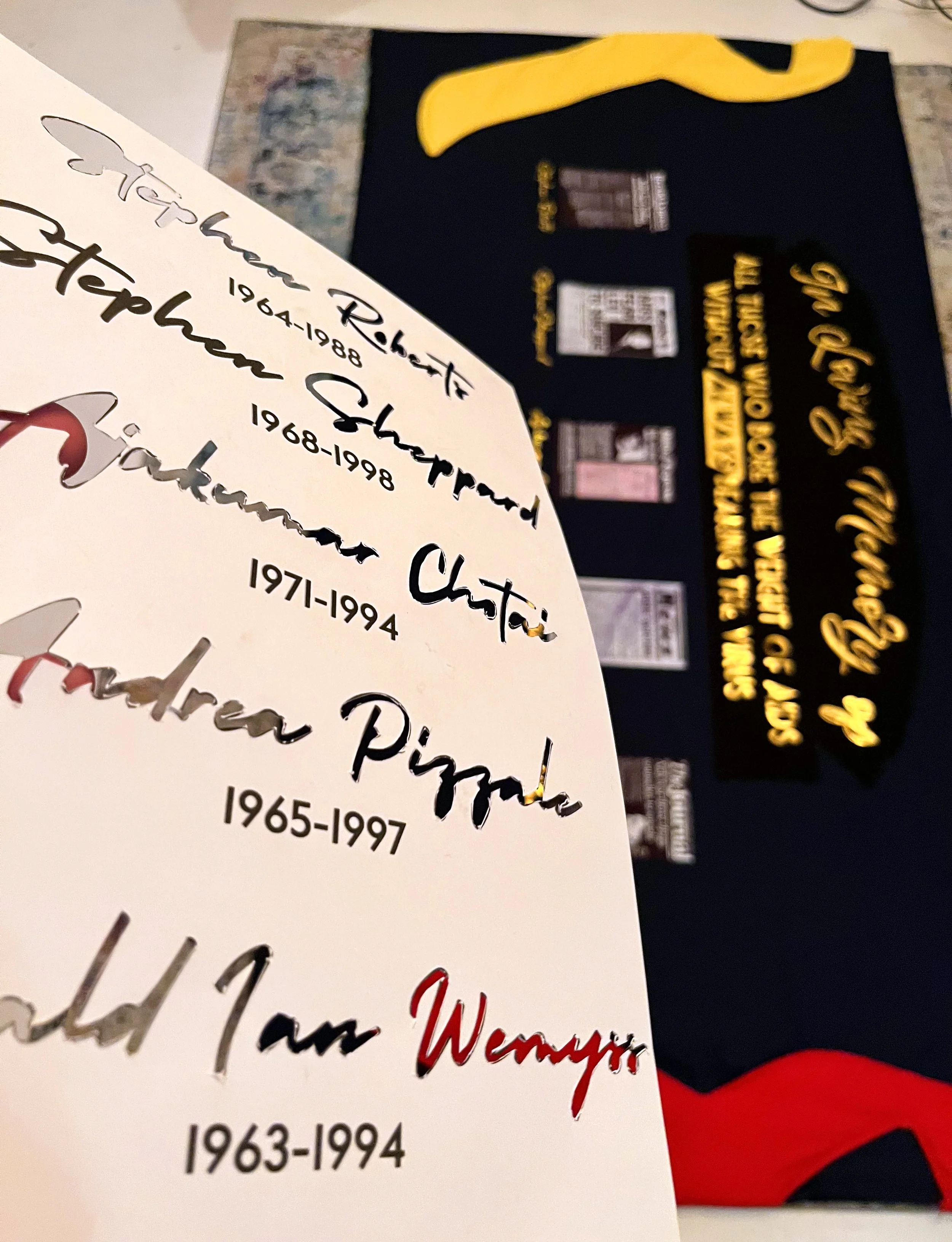
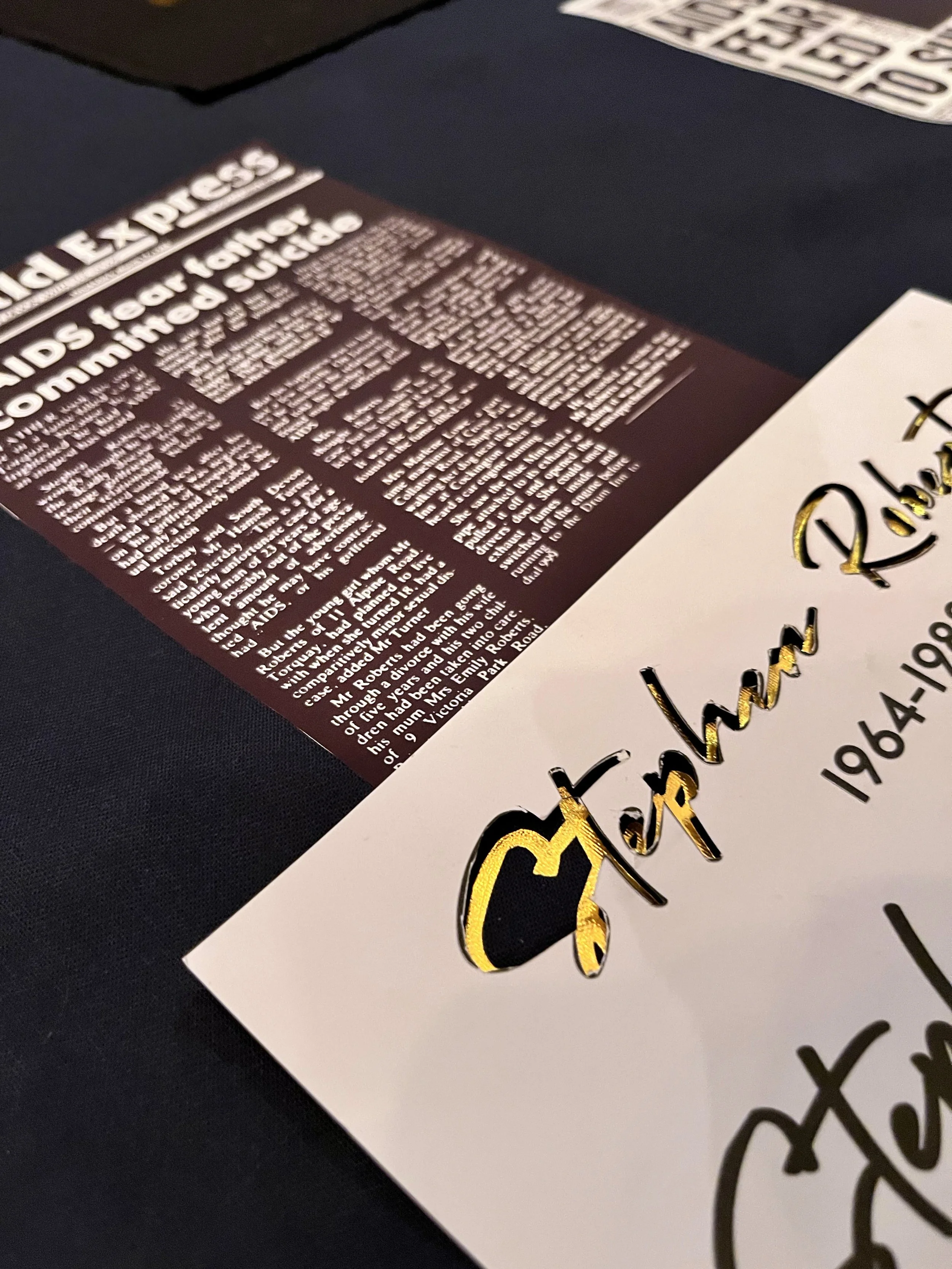
The names had all been hand-cut, which at first worried me — would a slightly imperfect curve make the whole thing look sloppy? But I could also picture the names if they’d been machine-cut, and realised the painstaking, fiddly handwork actually suited the quilt: it spoke of time and care invested in each person. Over hours I began to recall each of them having featured on my podcast, conjuring lives beyond the stories we told on air; the list became a quiet roll-call of people with histories and foibles we might never fully know. The layout hinted at the obituaries section of a newspaper, although this time on the front page and not toward the back. And where I couldn’t place a photograph I affixed a foam claret rose as a kind of stand-in for the modest clip art often found there in the 1980s and 90s. Their names were cut from black glitter vinyl — newspaper-print dark at a distance, but catching the light with a subtle twinkle — a small, moving sparkle to honour a life lived and equally a protest, but also a celebration of their life.

IN LOVING
MEMORY OF
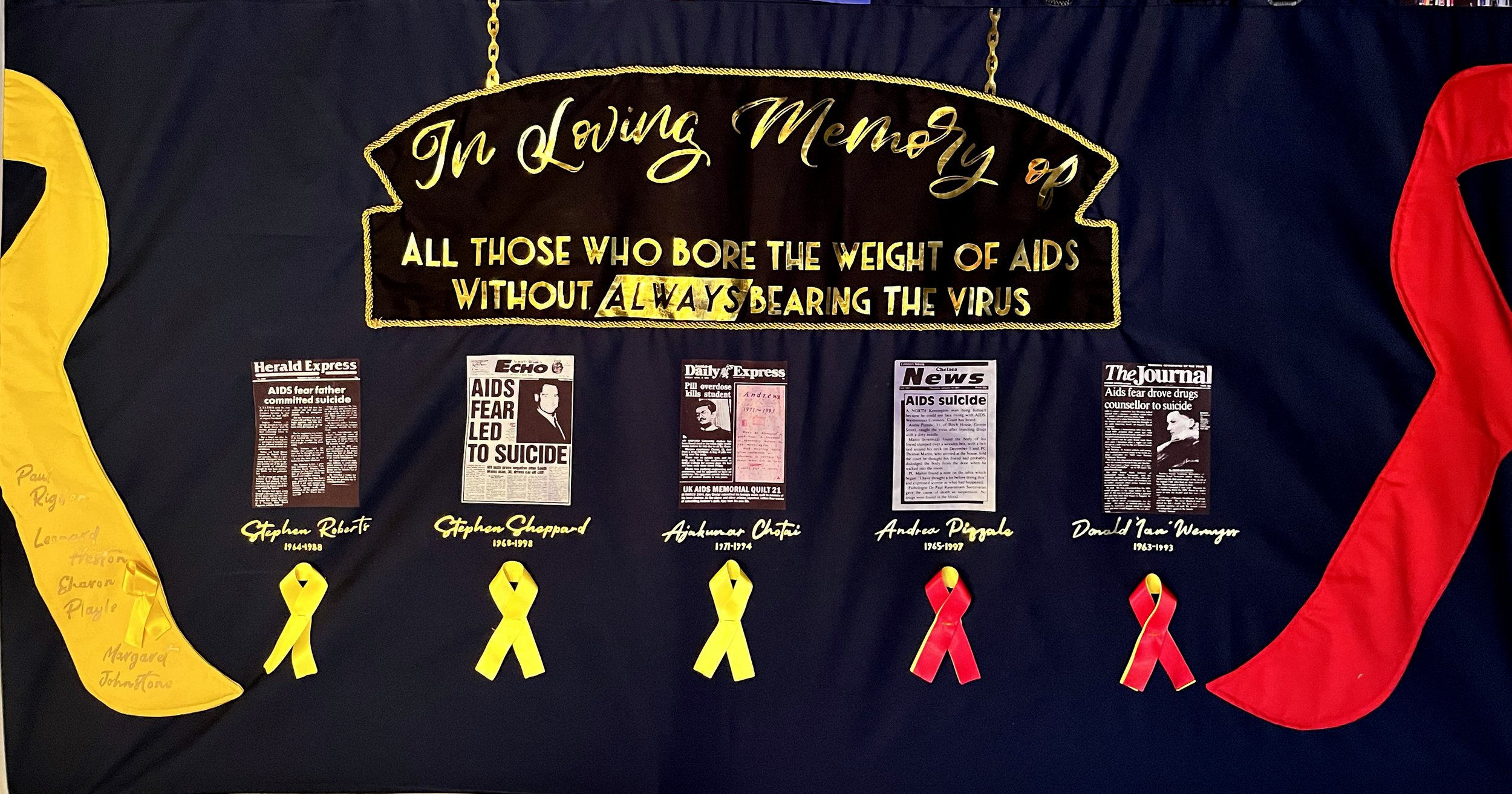
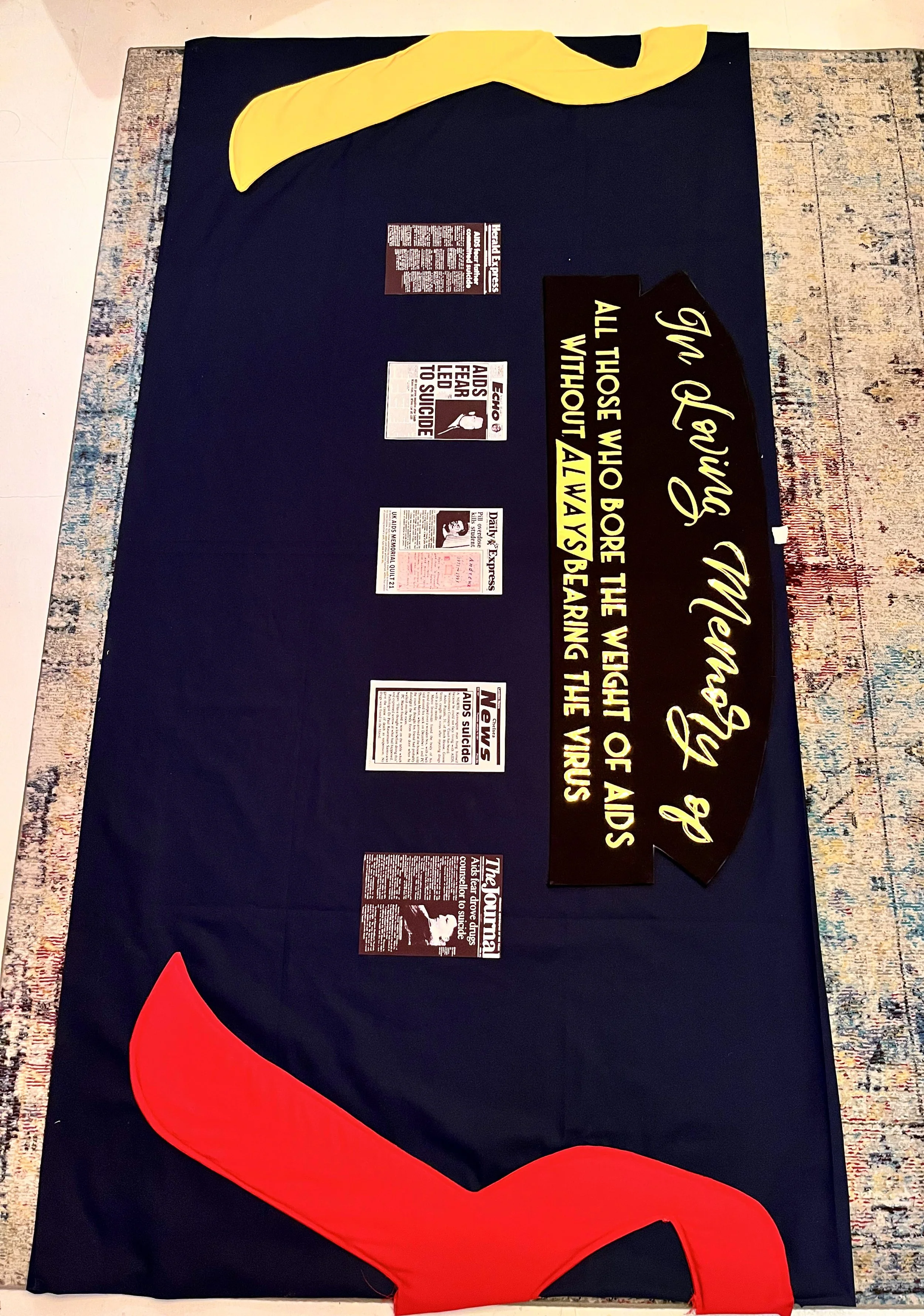
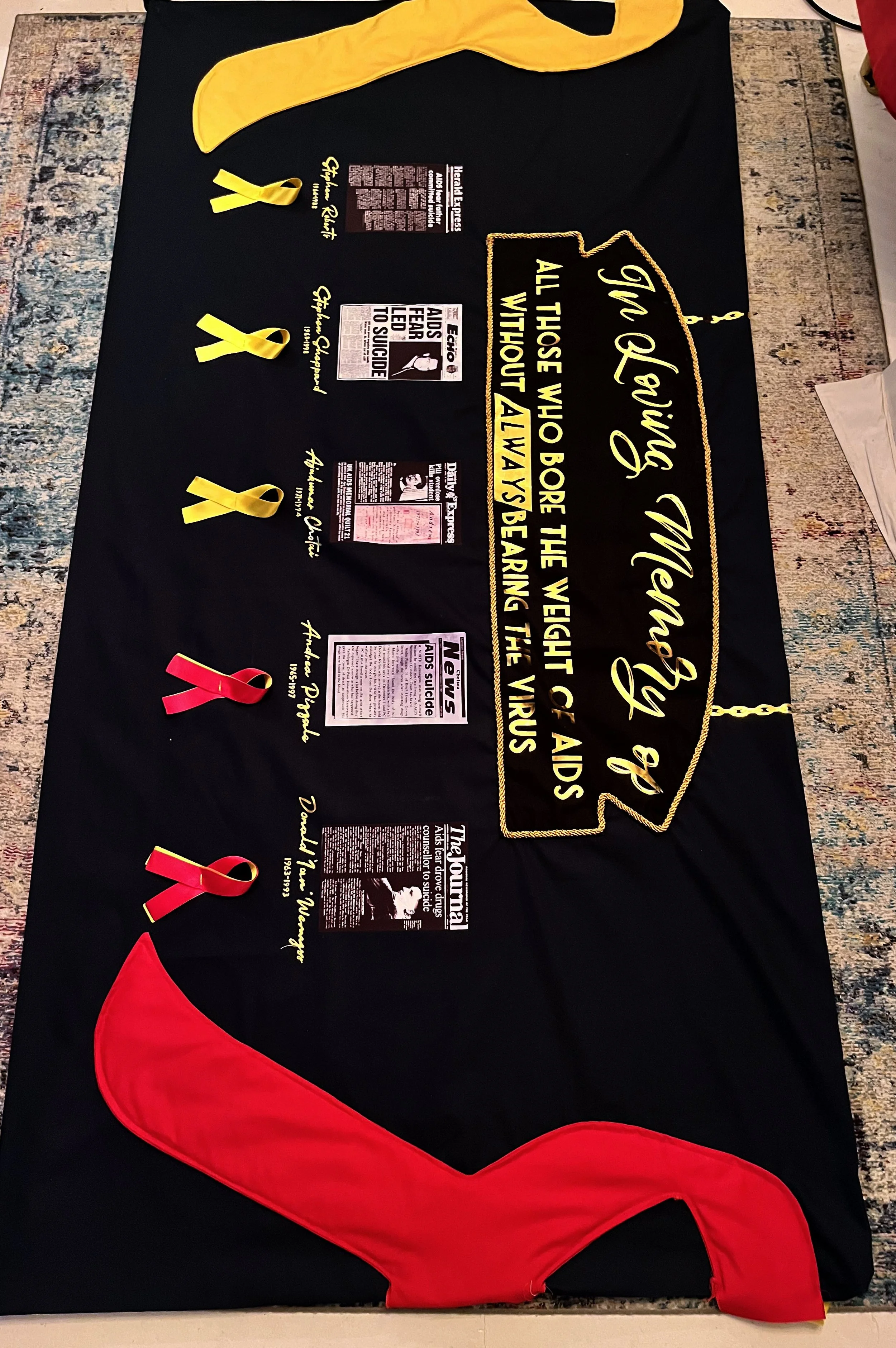
Having researched and presented a podcast episode on suicides driven by fear of HIV/AIDS, I encountered a distressing and often overlooked strand of the pandemic: people who took their own lives convinced they were infected, only for post-mortem or inquest findings to show they were not HIV-positive.
At several inquests coroners remarked that the relentless, sometimes sensational public-health campaigns of the 1980s and 1990s — epitomised by stark imagery such as the falling headstone from the “Don’t Die of Ignorance” campaign — likely fuelled profound terror and catastrophic misinterpretation for vulnerable individuals.
These cases reveal how well-intentioned mass messaging, when steeped in fear rather than measured information and accessible support, can have devastating unintended consequences; they deserve recognition as part of the broader AIDS story and a sober lesson for how we communicate risk in future public-health crises.
IDEA: Rough sketch
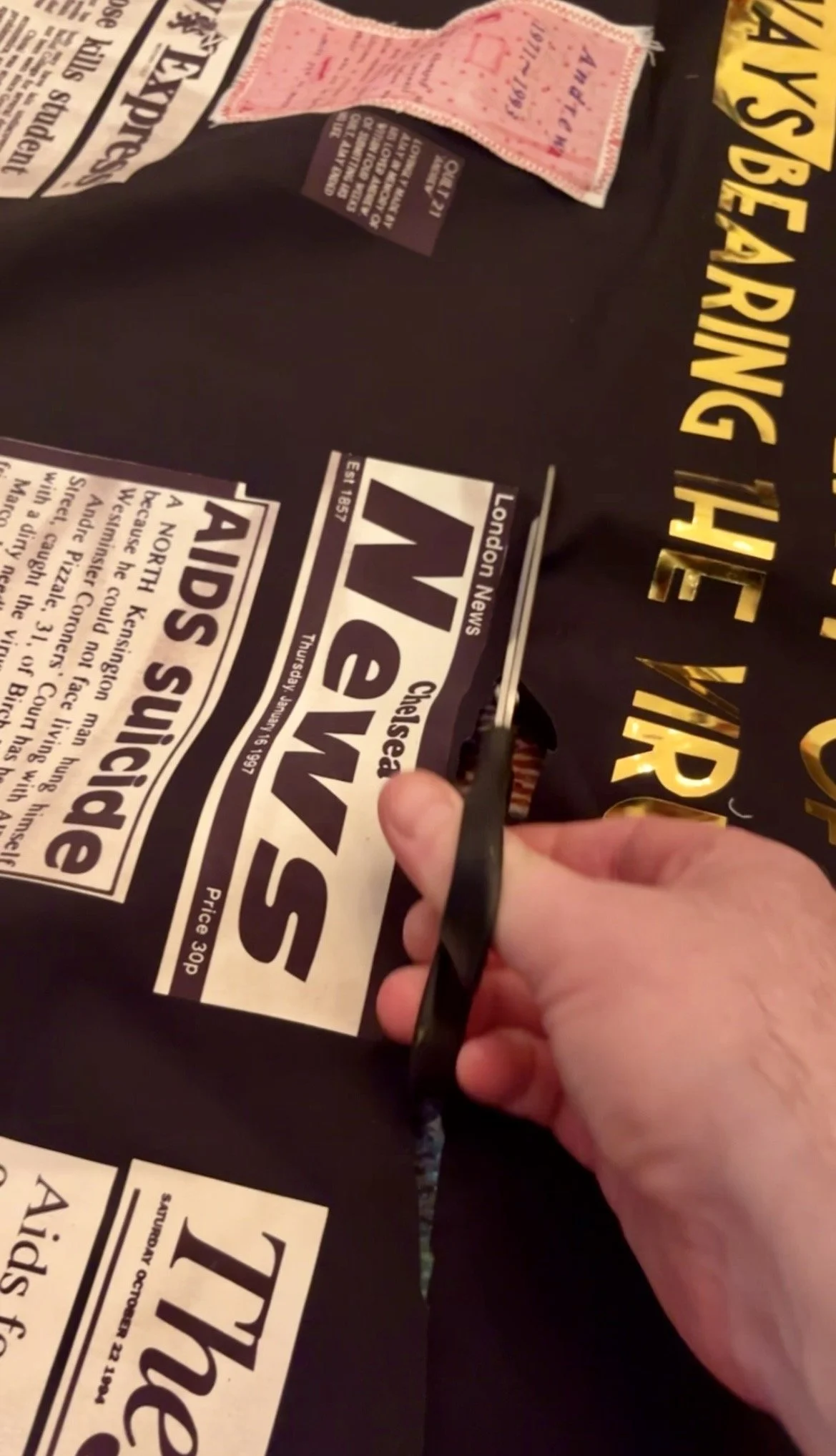
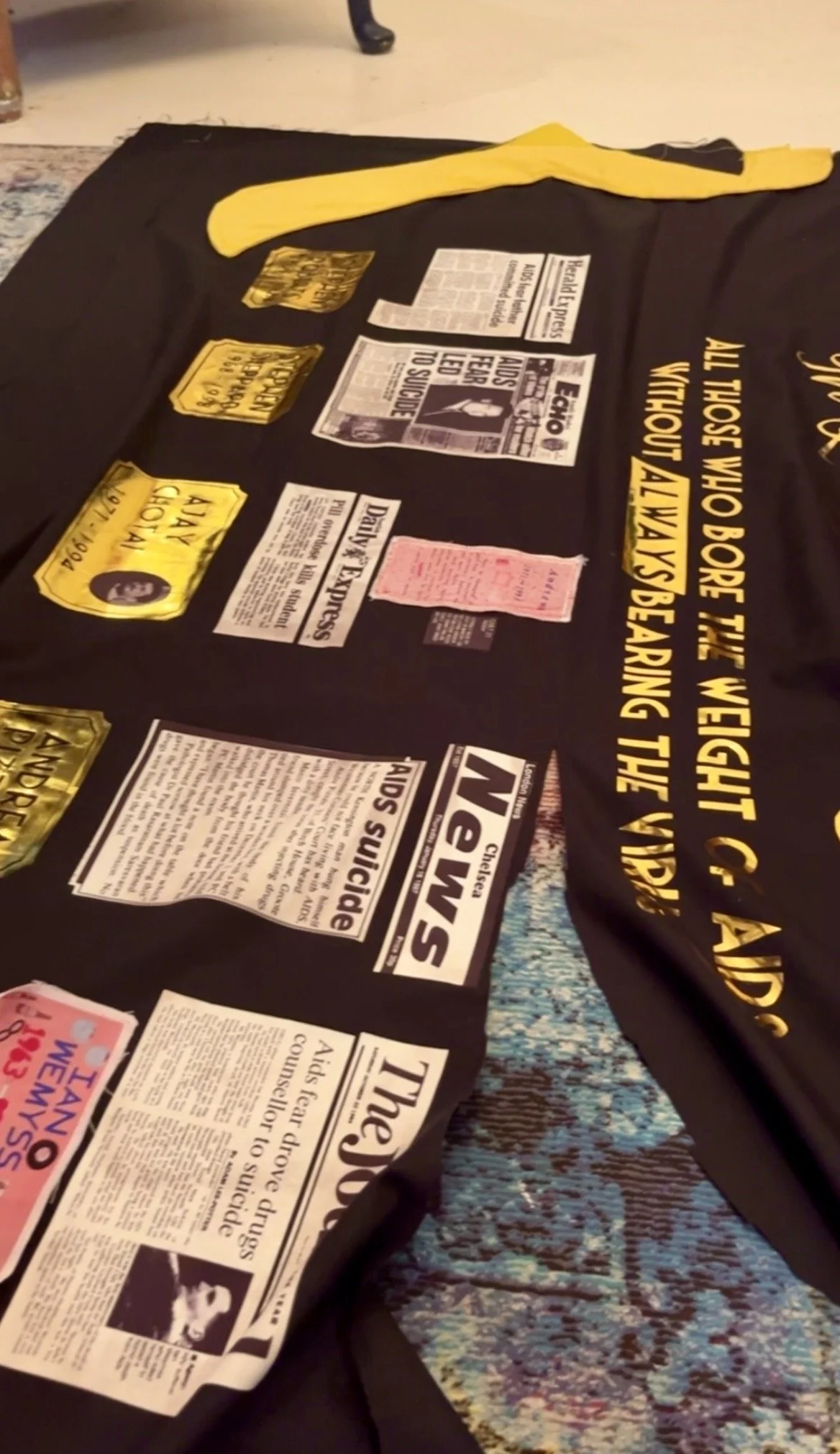
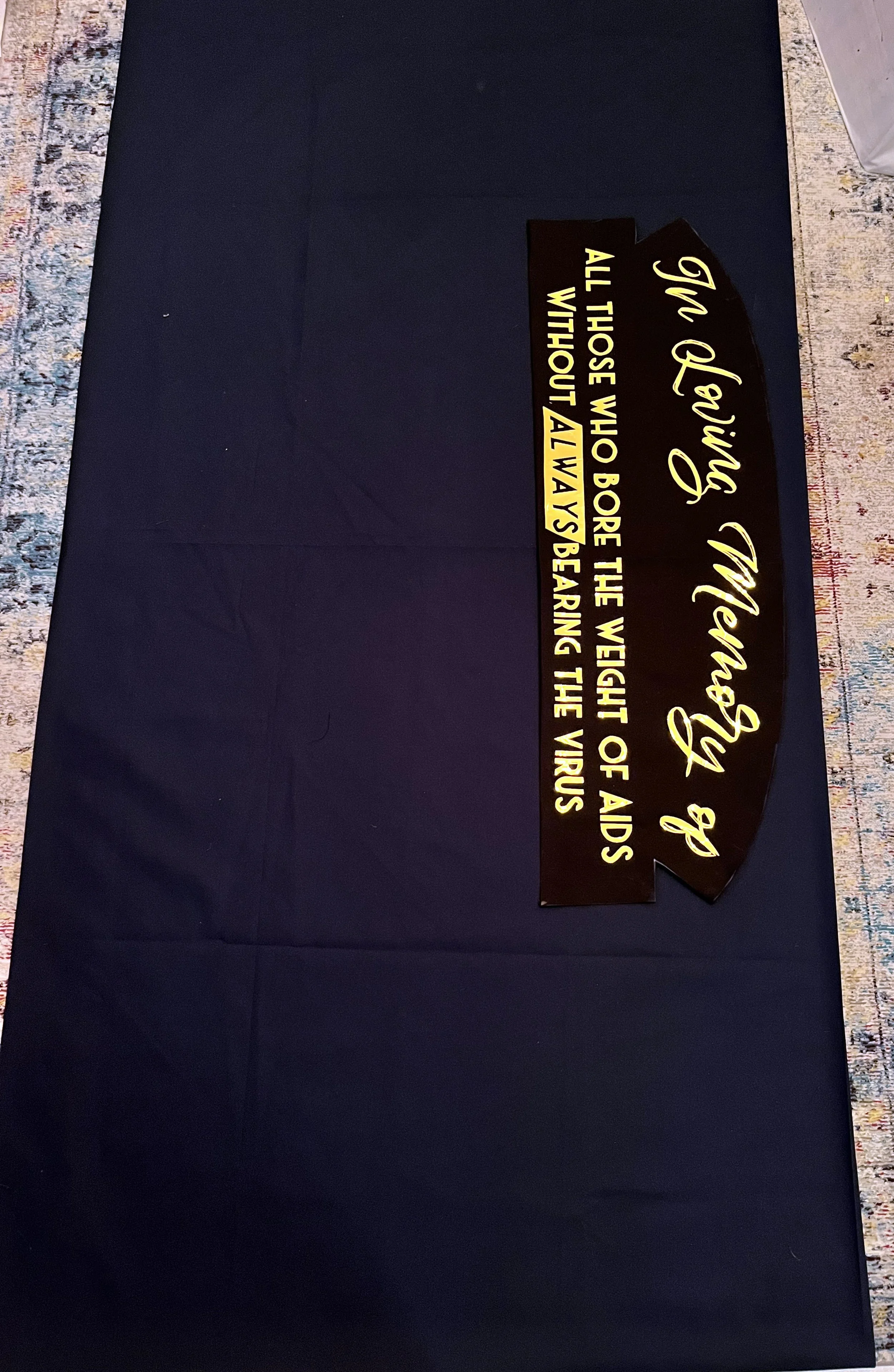
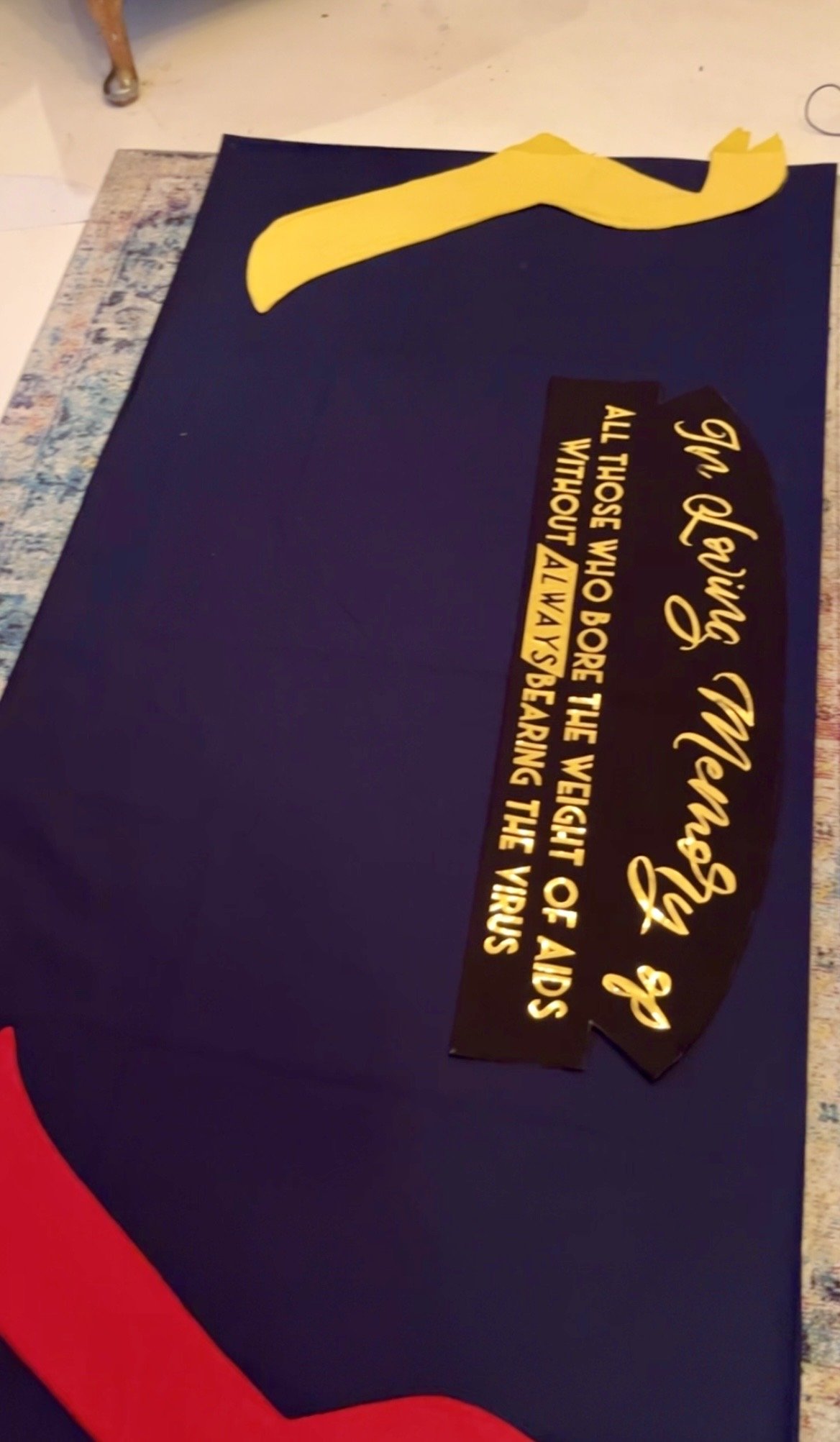
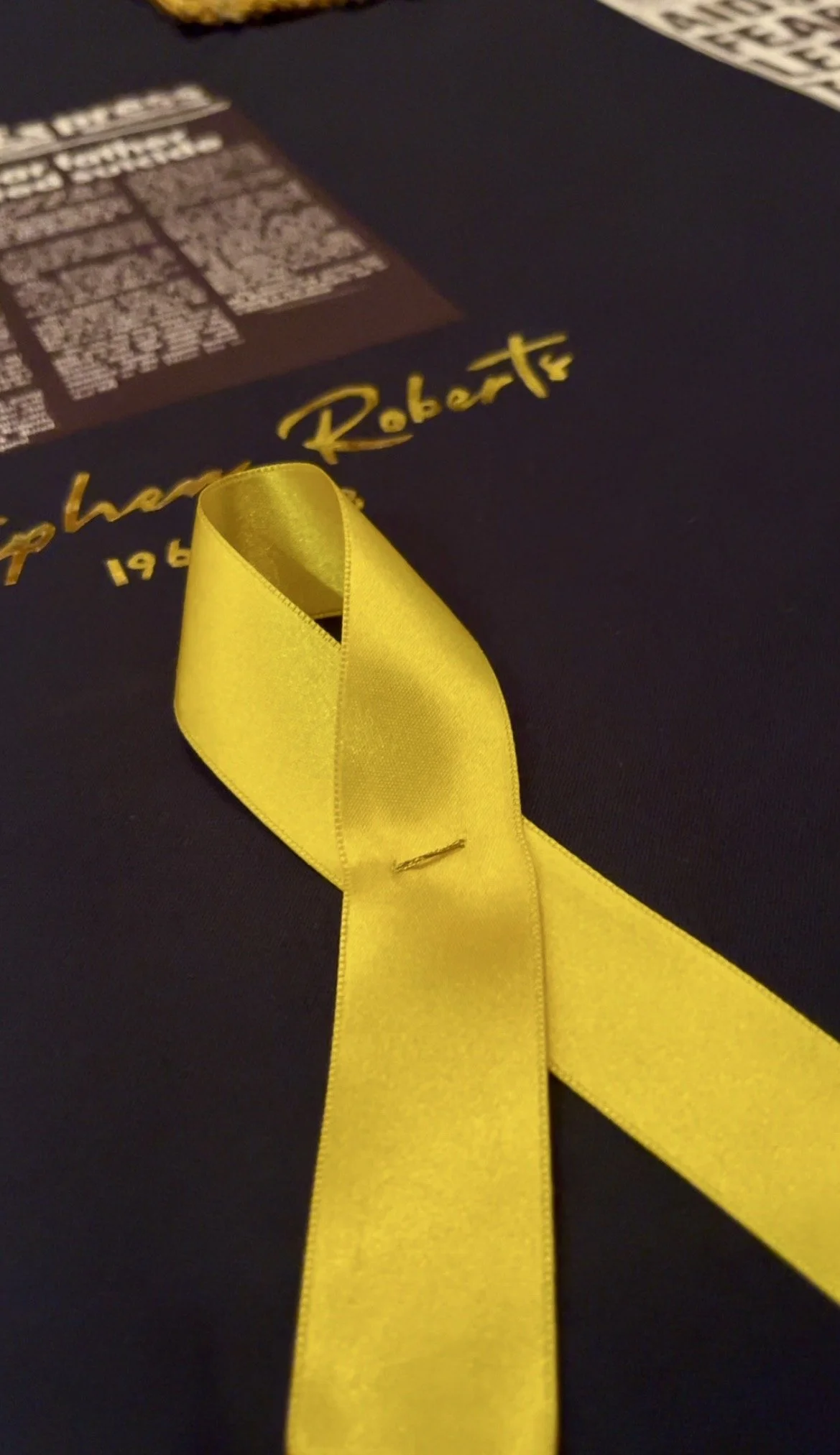
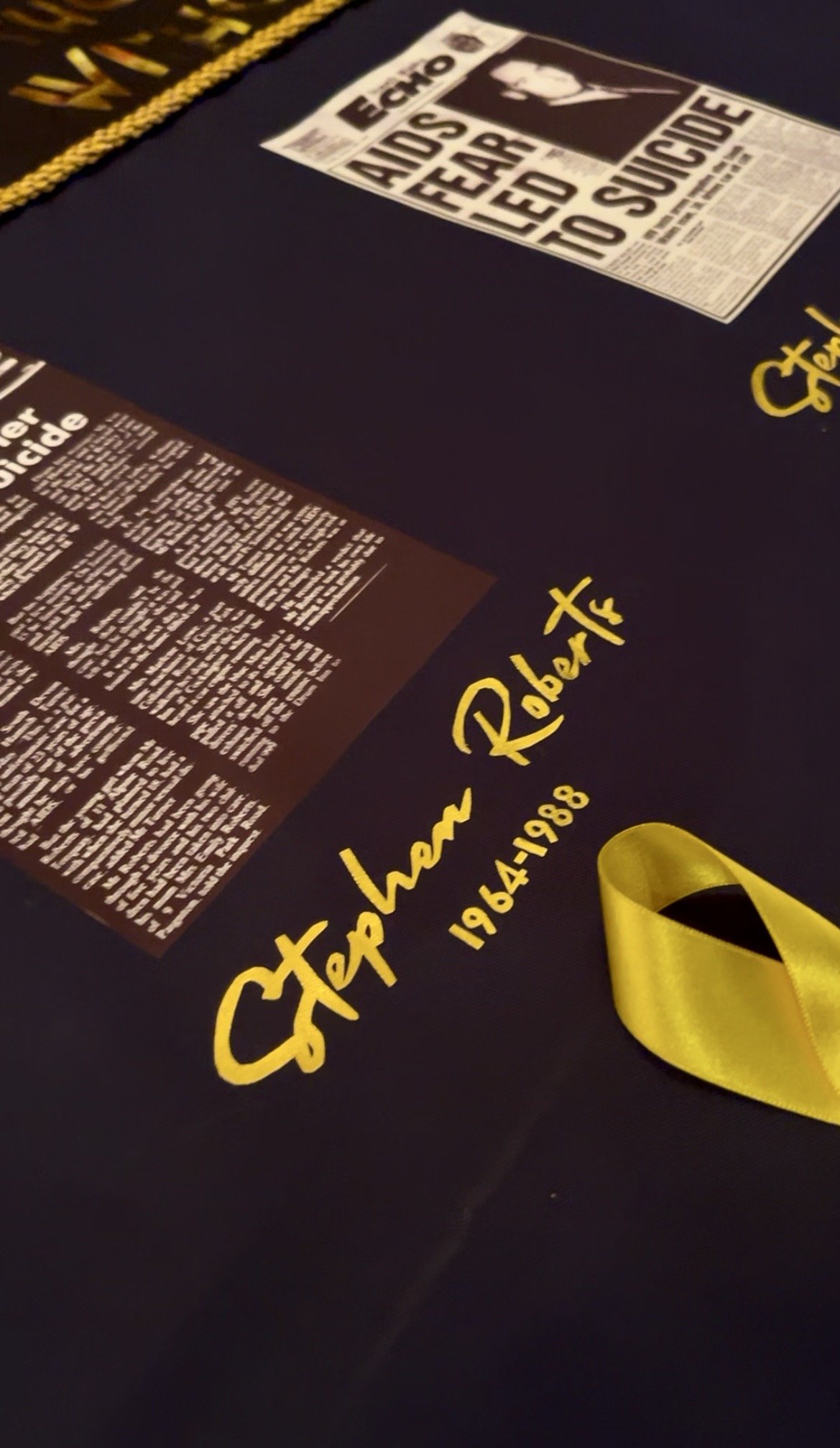
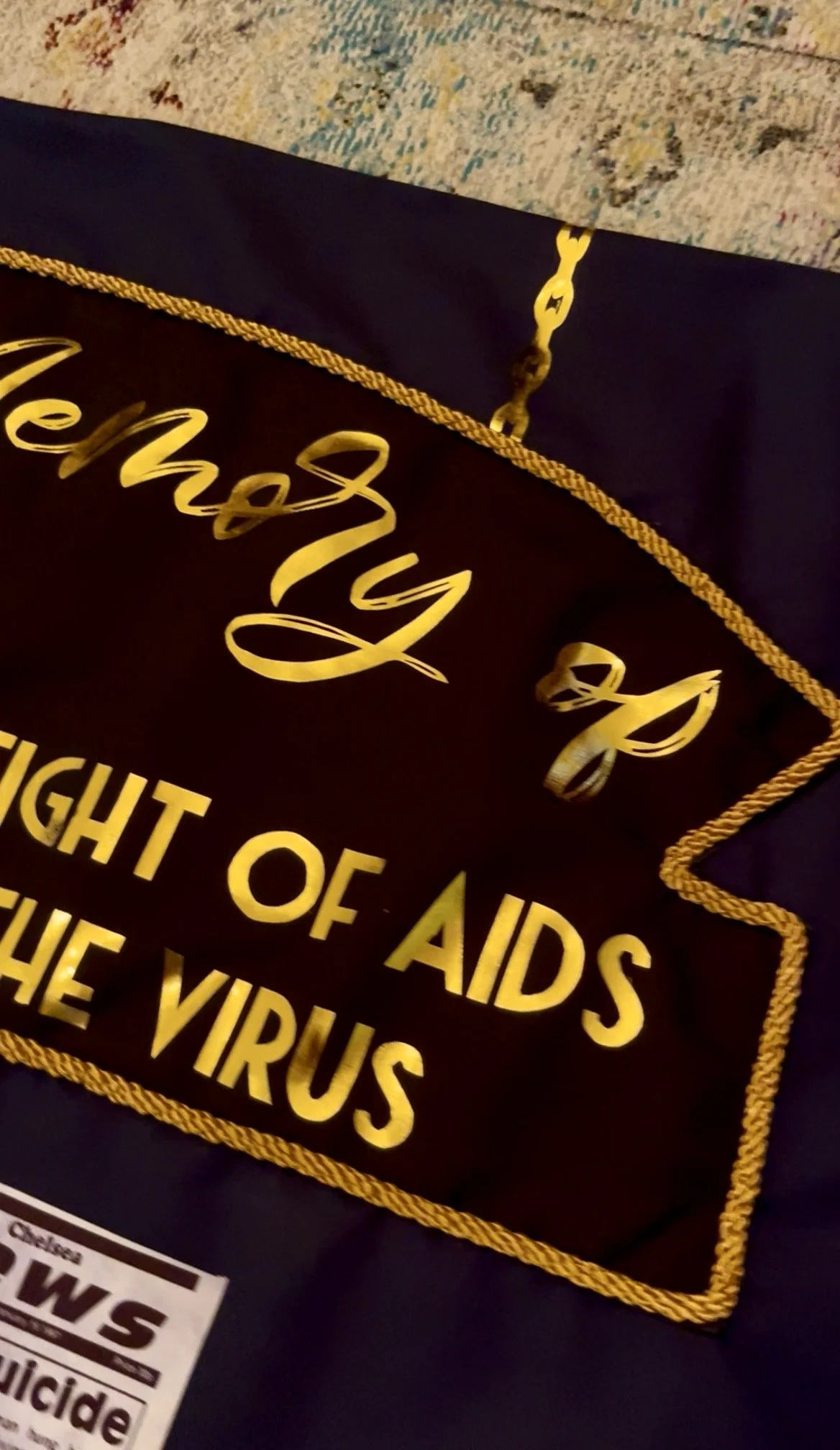
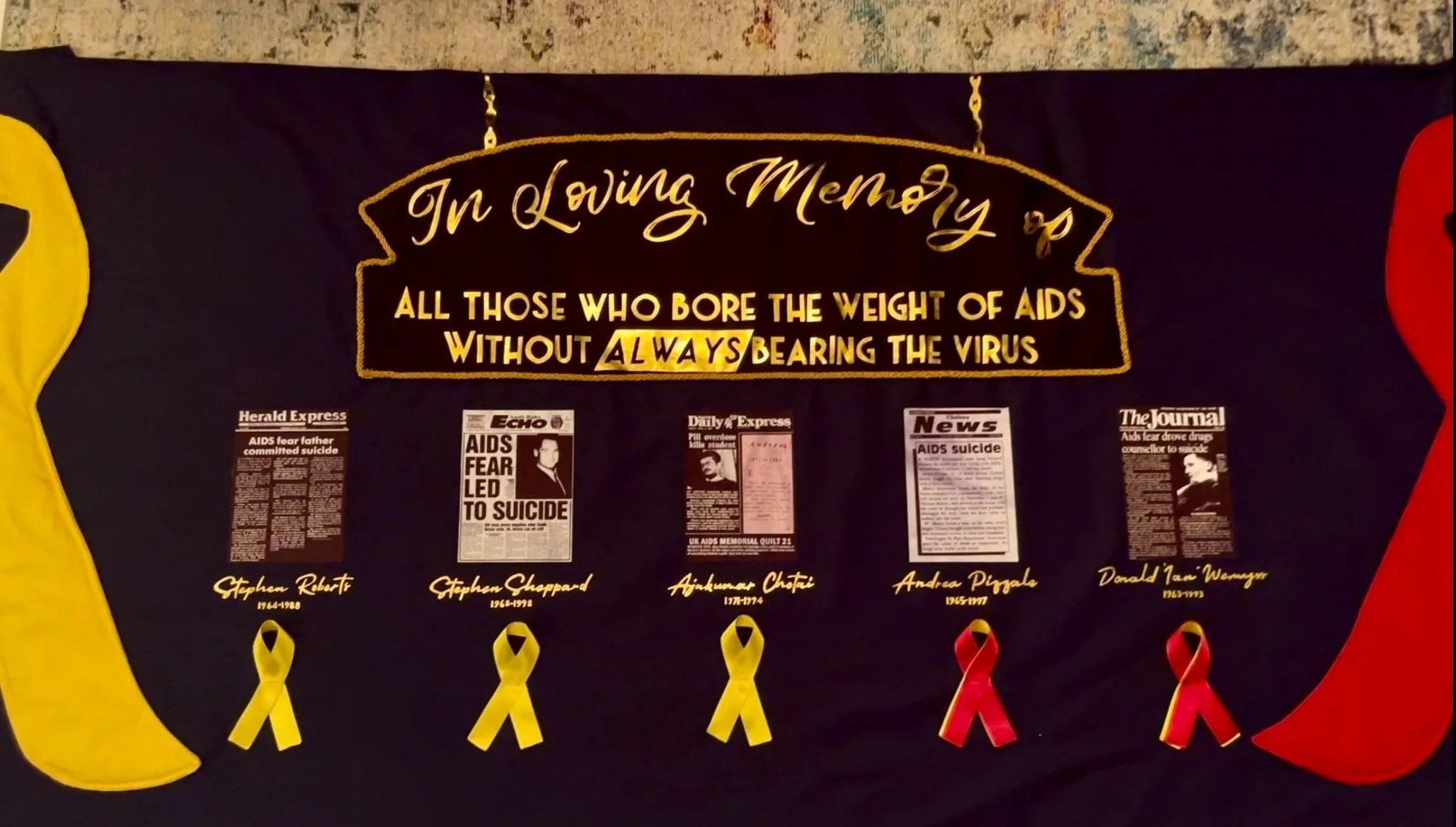
It was for this reason I felt these individuals should form part of the UK AIDS Quilt as a national memorial: the fact some may find the individual stories uncomfortable only strengthens the case for their inclusion. The panel balances symbols of remembrance and prevention — the red ribbon of HIV/AIDS and the yellow ribbon of suicide prevention mirrored on either side — reflecting the dual nature of loss and the urgent need for awareness. To ensure the quilt both educates and shares intimate stories, I included press cuttings for each individual and placed a yellow ribbon beneath every name; where someone had a confirmed HIV/AIDS diagnosis and took their own life, a red and yellow ribbon is intertwined beneath their name, acknowledging both the illness and the circumstances of their death with care and clarity.
IVAN COHEN
1955 - 1987
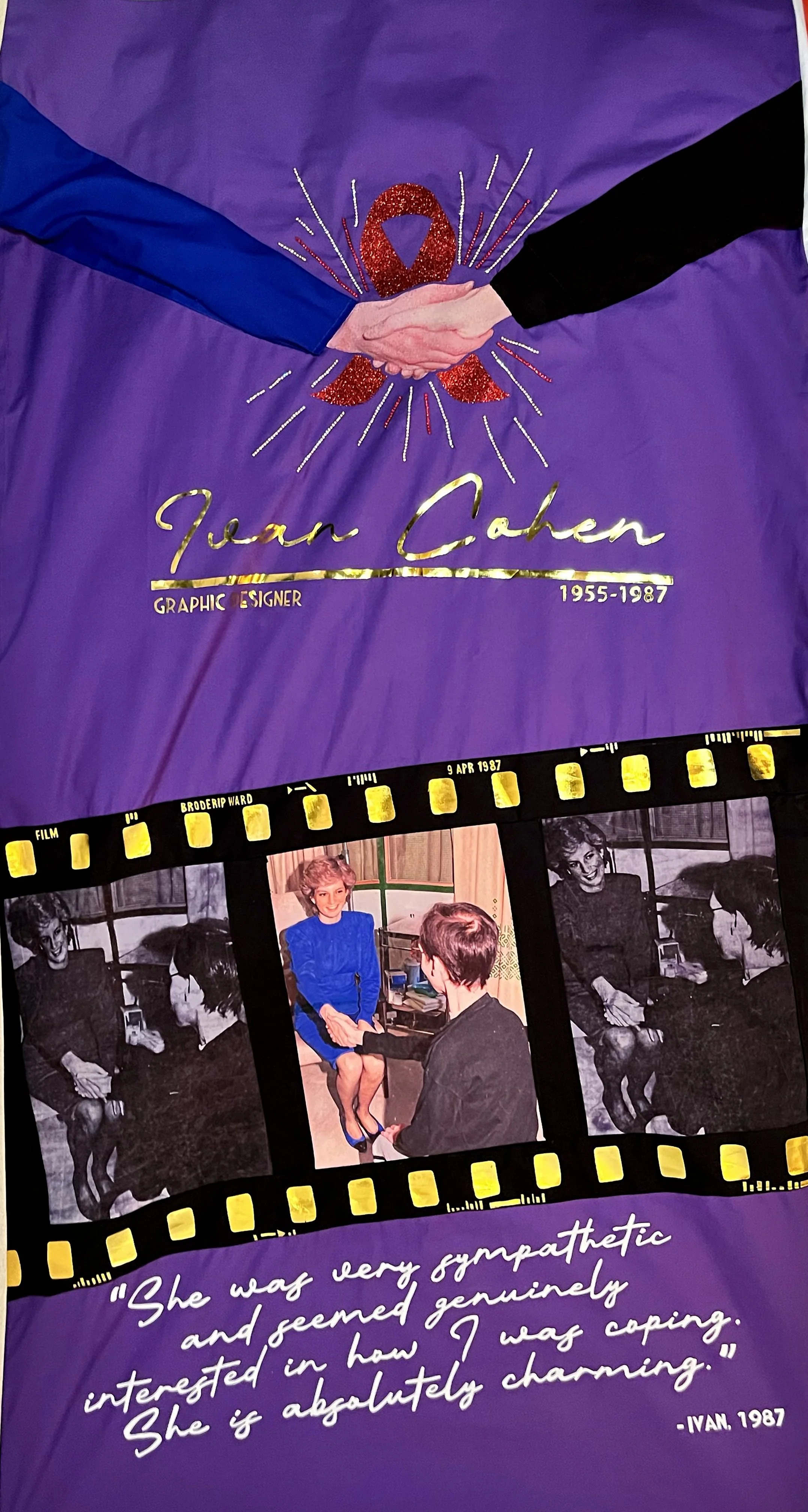
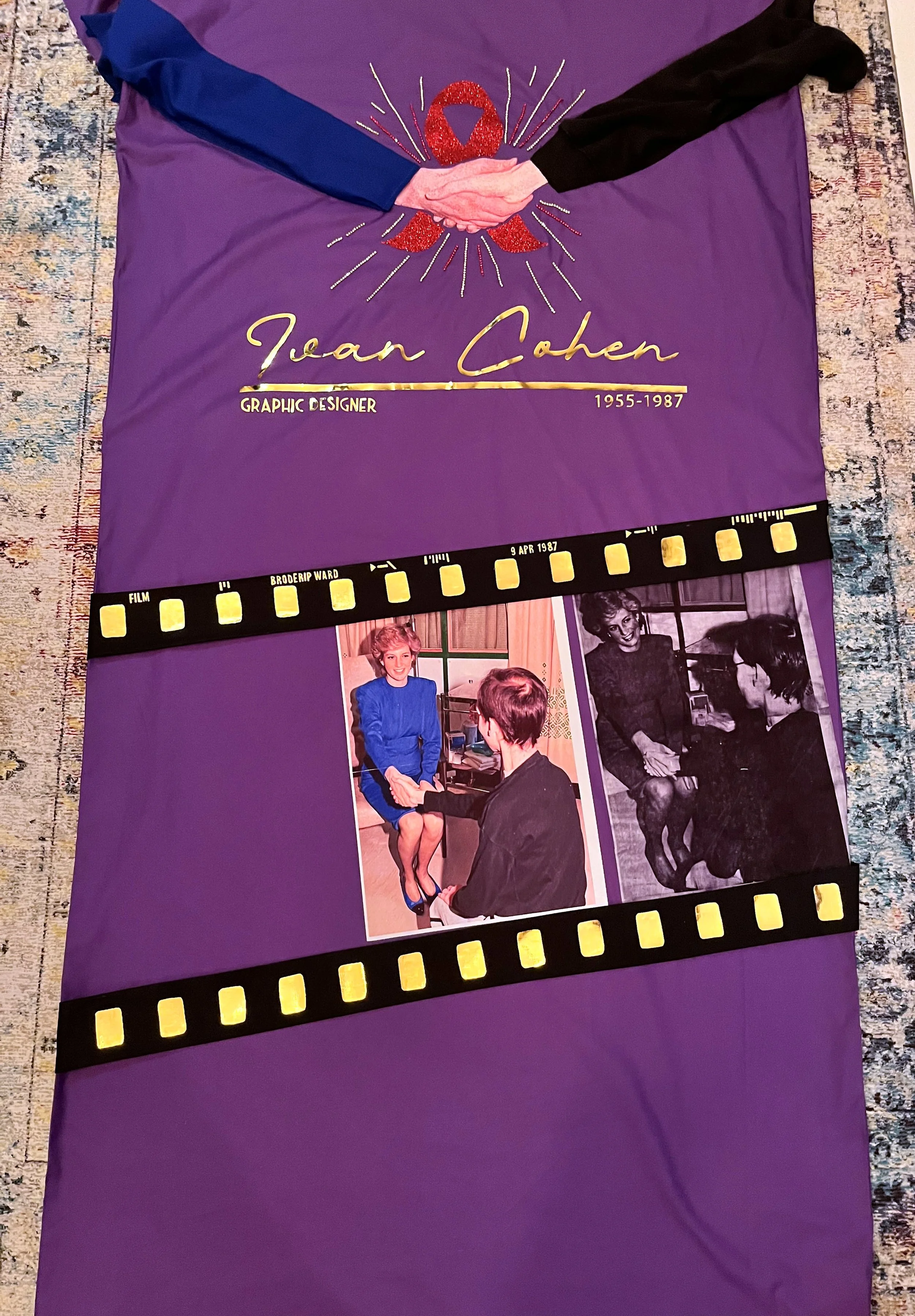
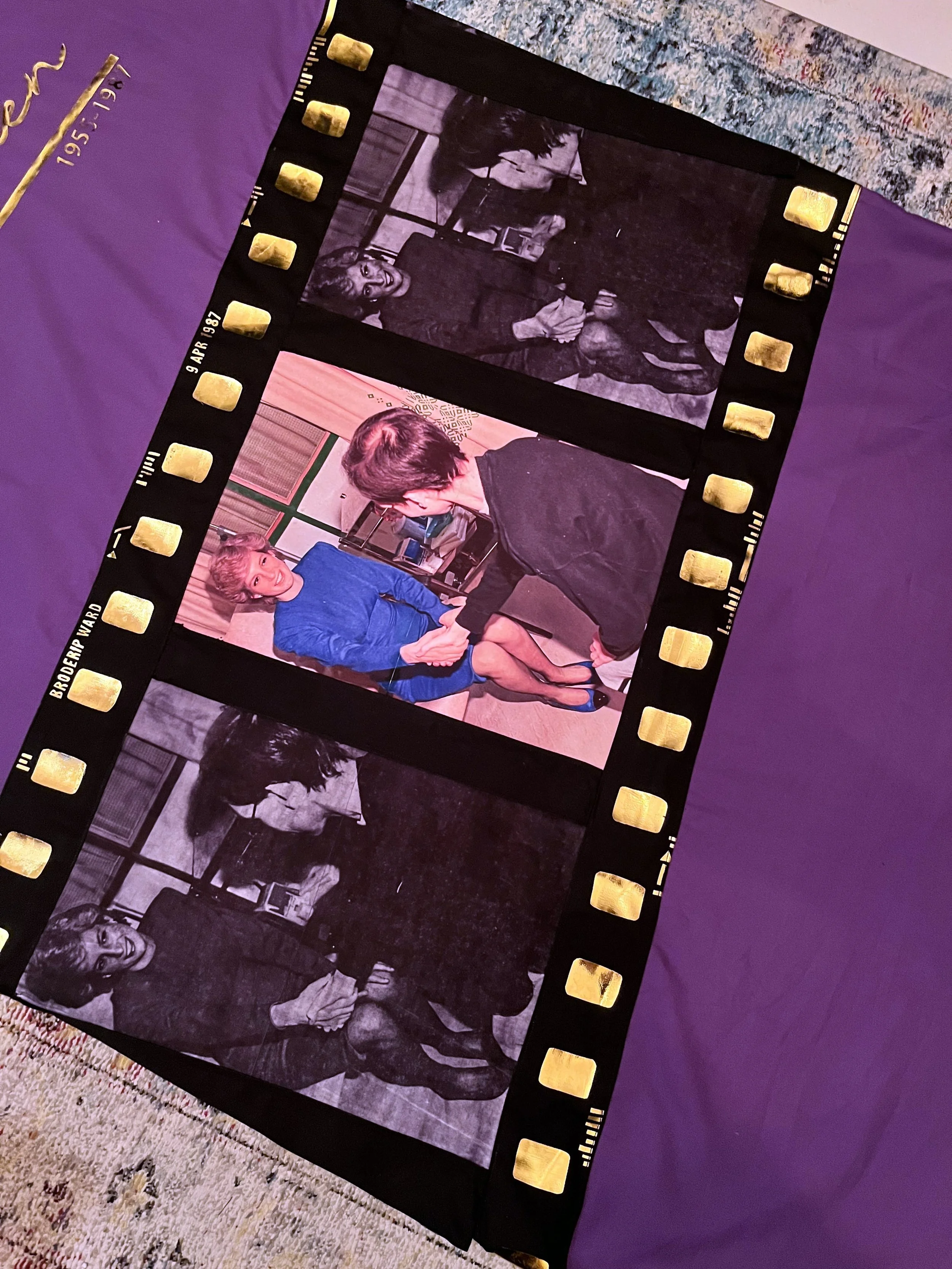
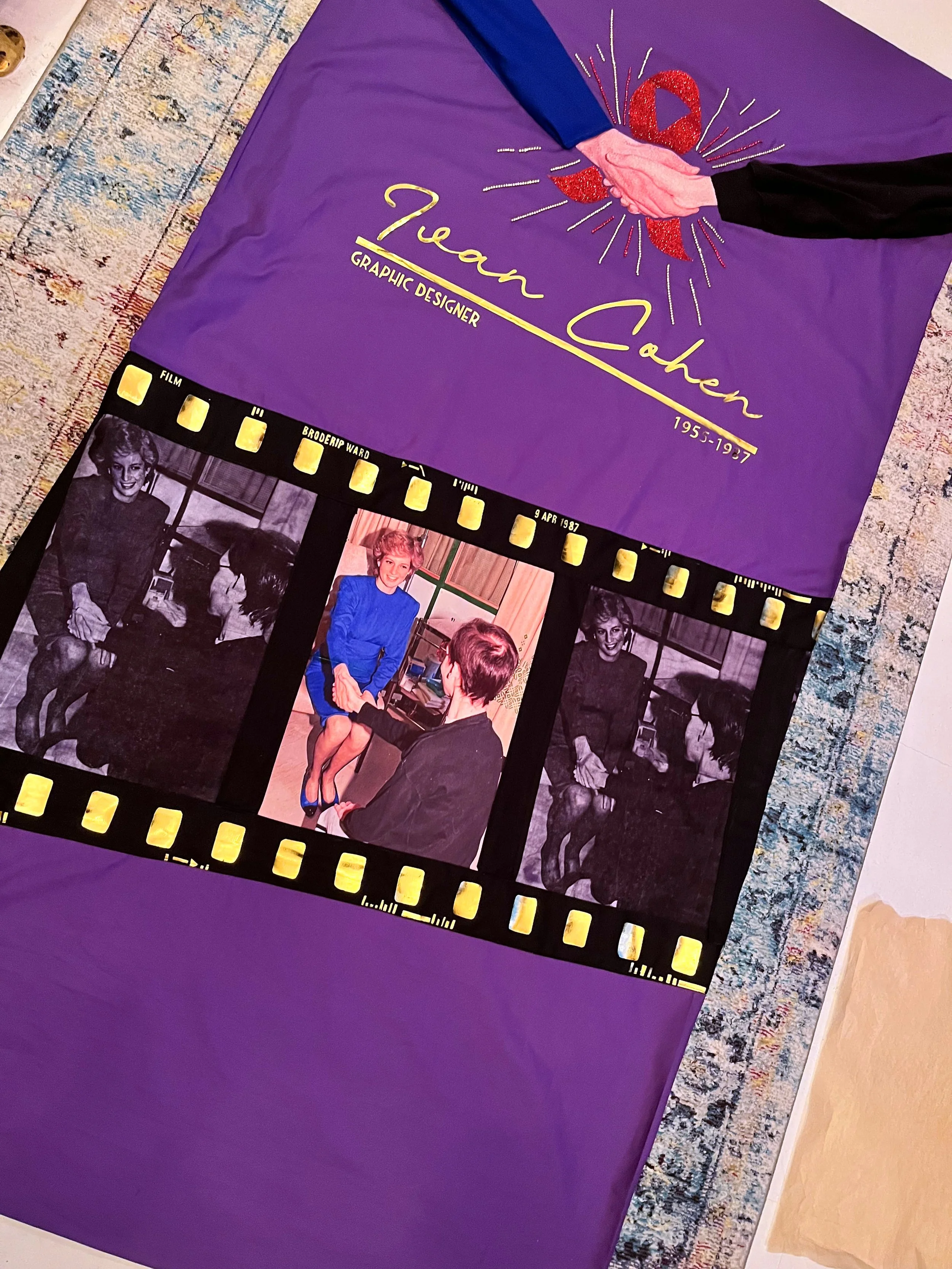
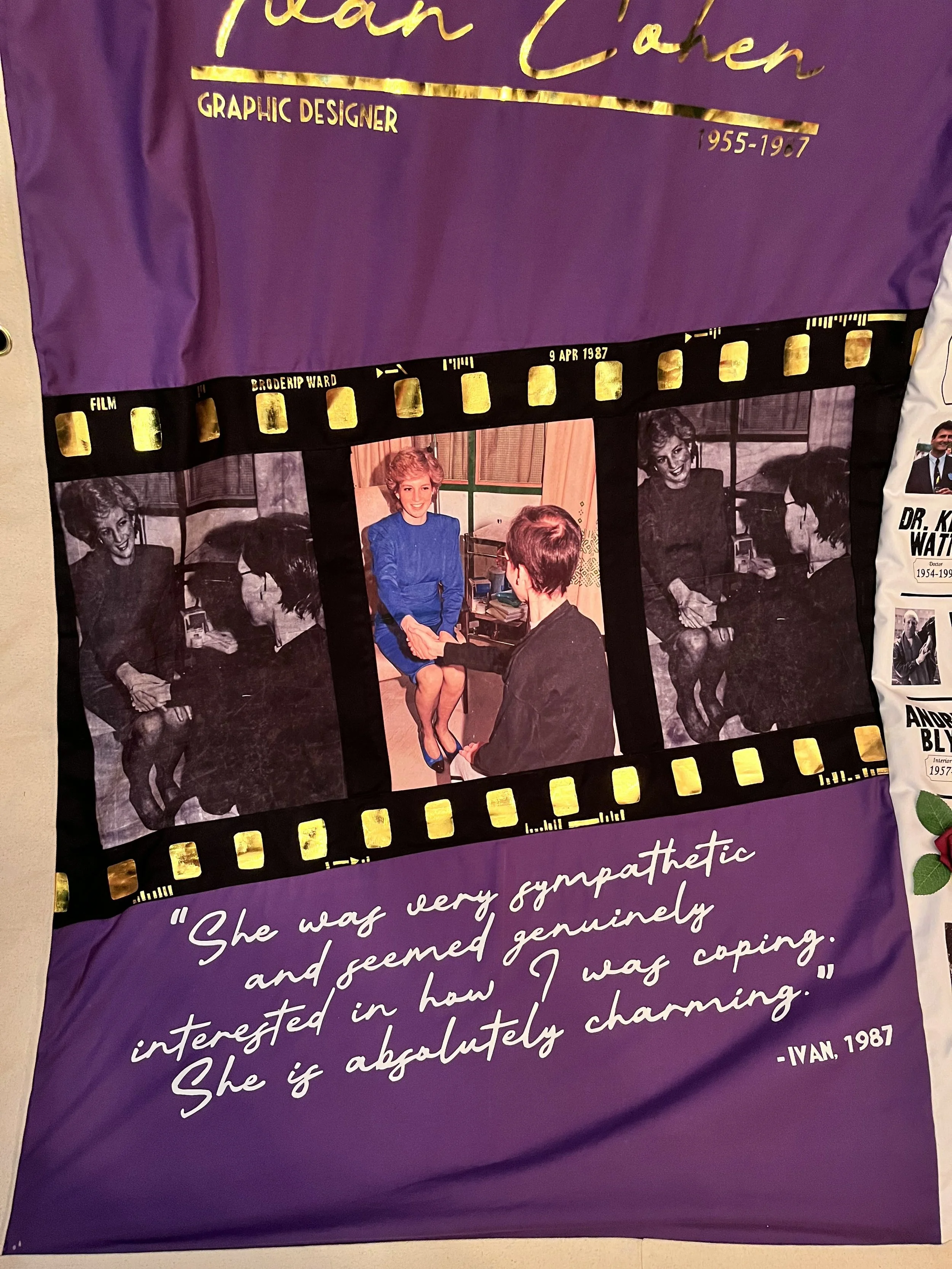
You’ve most likely seen this young man, even if you were unaware of his name: Ivan Cohen. This photograph of Ivan with the late Princess Diana at the opening of the UK’s first dedicated AIDS ward, the Broderip in London in February 1987, is one of the most enduring images used to illustrate her compassion, yet for me the true hero of the picture is Ivan.
Ivan insisted on being photographed with his back to the camera to protect himself and his family from the crushing stigma that surrounded HIV/AIDS at the time — a quiet act that speaks volumes. There is no overstating his courage in stepping forward when other patients declined to be photographed; his choice helped humanise a crisis too often met with fear and shame. Today, as stigma has lessened and visitors come to the quilt not to judge but to remember, it feels right that Ivan is acknowledged: a young, brave man whose life was cut far too short, and whose dignity in the face of prejudice still matters.
Buried in a Jewish cemetery, I initially thought to incorporate colours that might nod to his heritage and beliefs for the quilt, but I quickly abandoned that idea—without knowing how deeply he held his faith, it felt intrusive to assign aspects of his identity that his family might prefer to honour themselves.
Initial sketch…
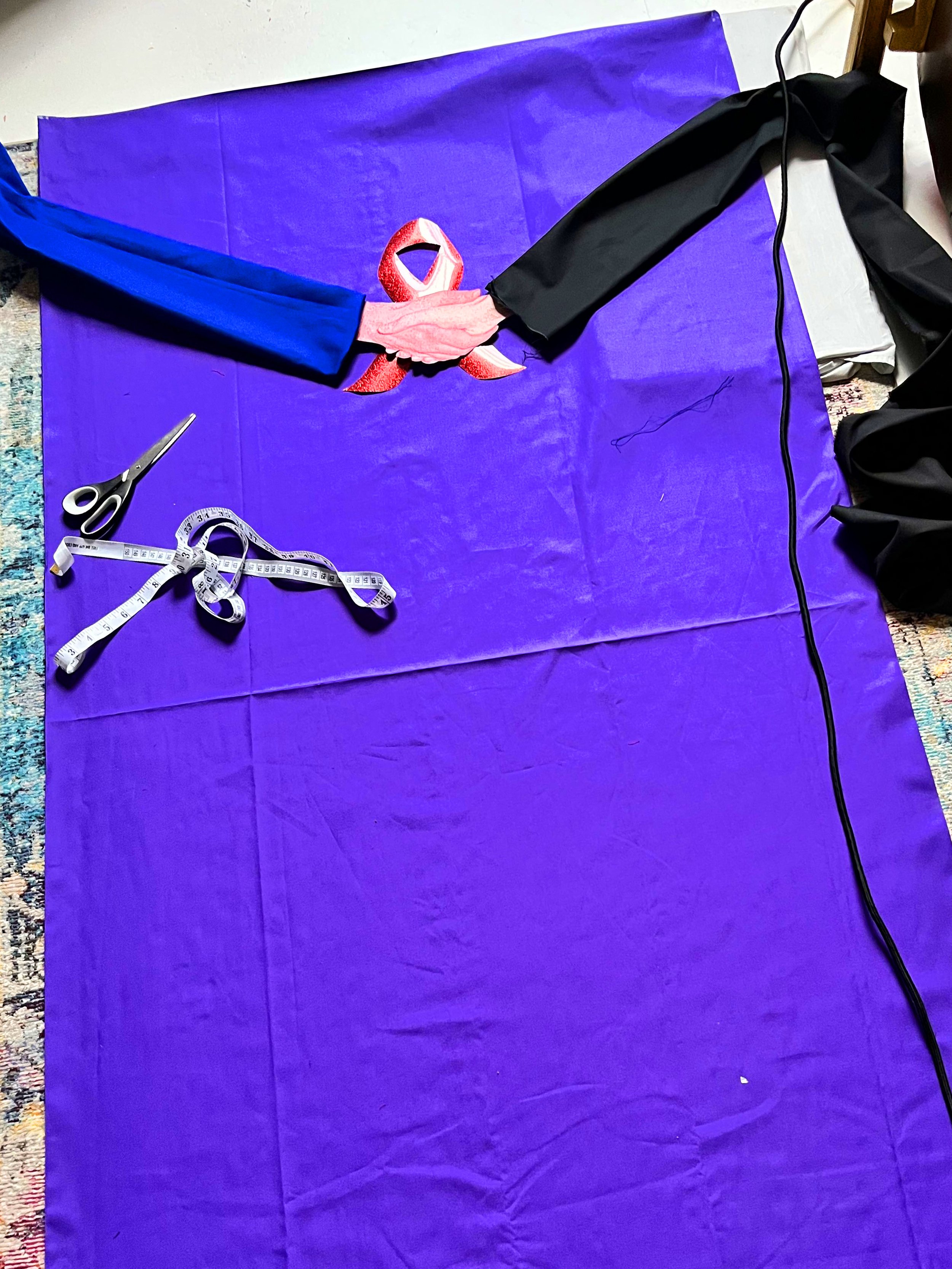
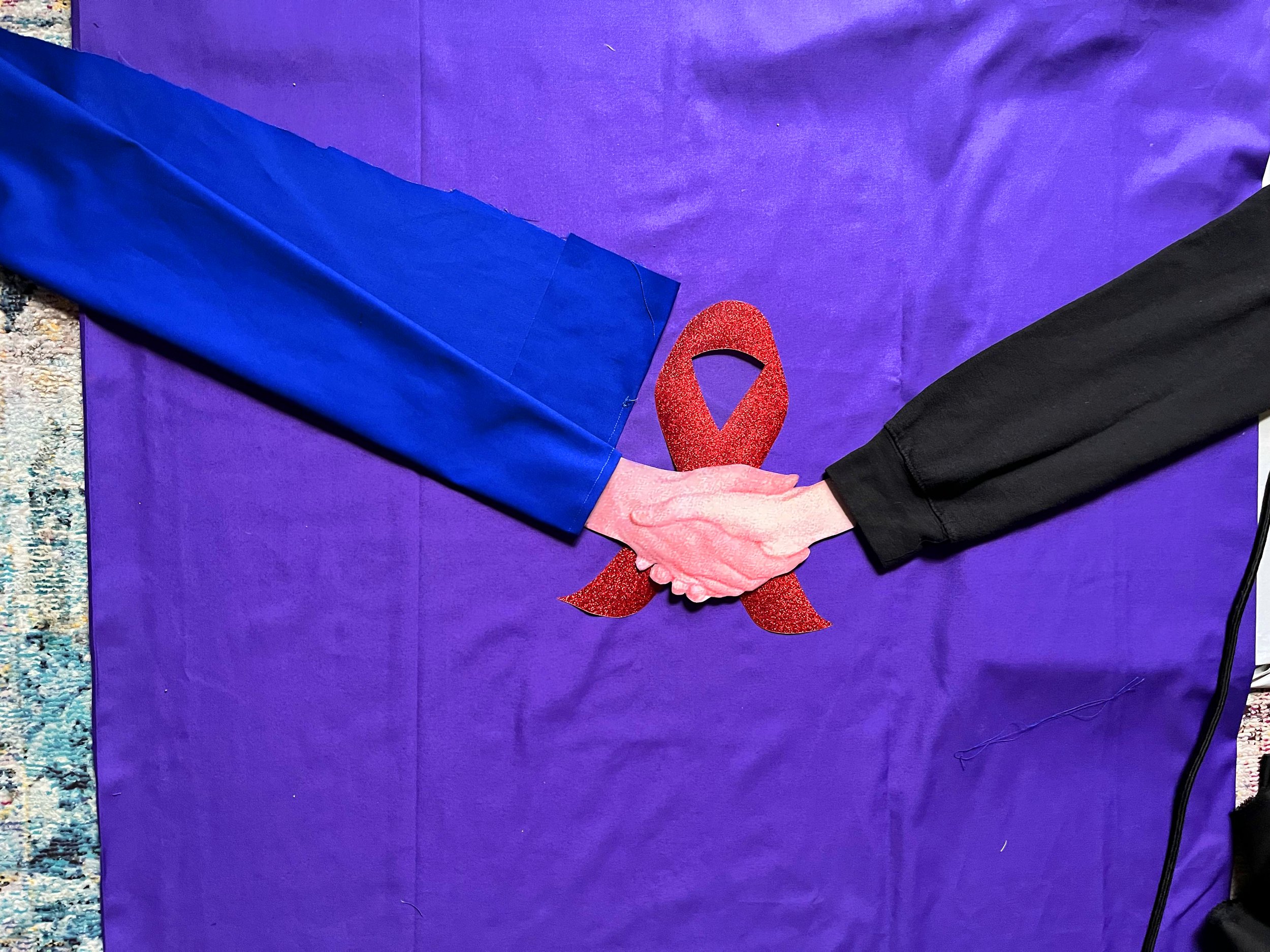
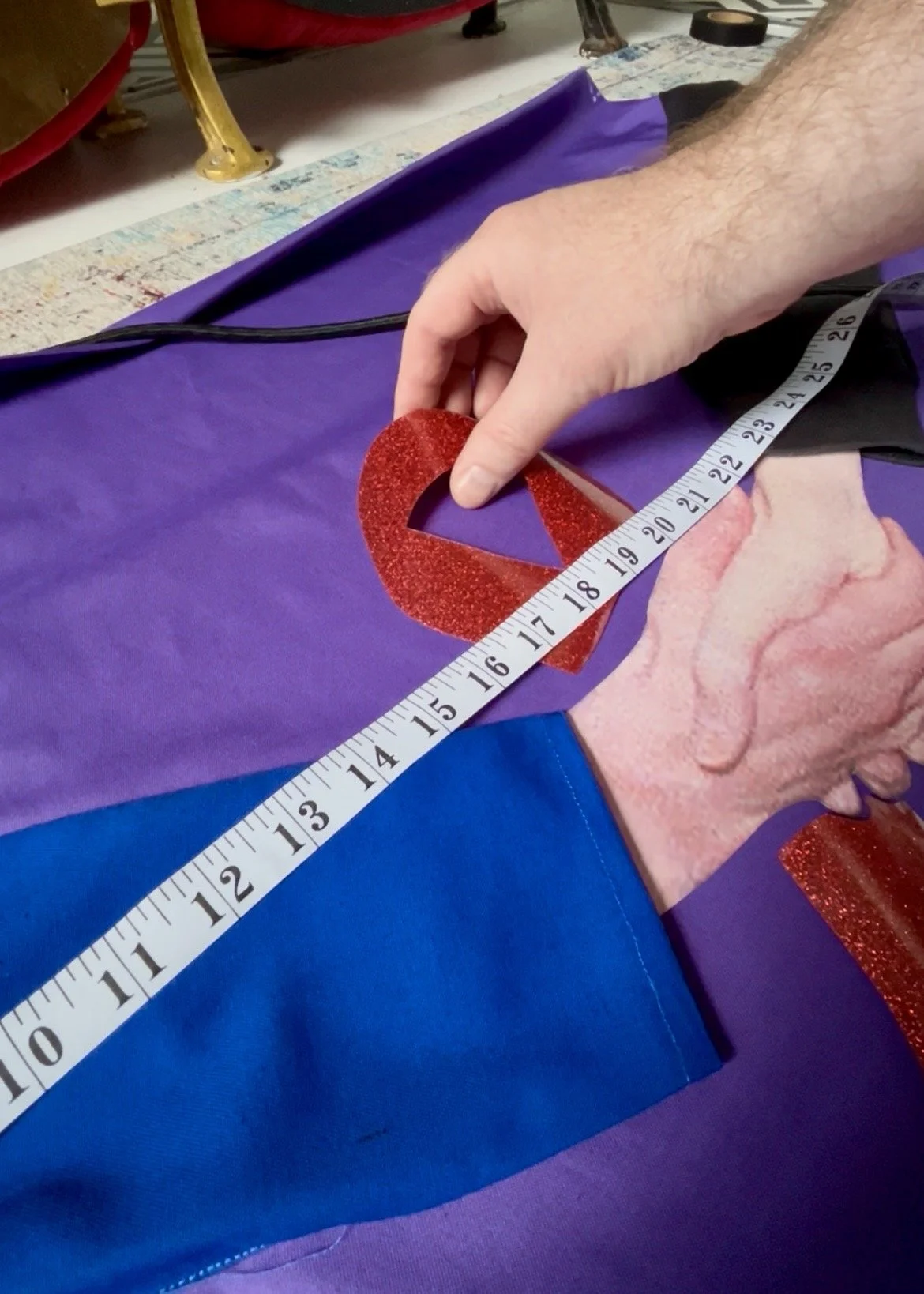
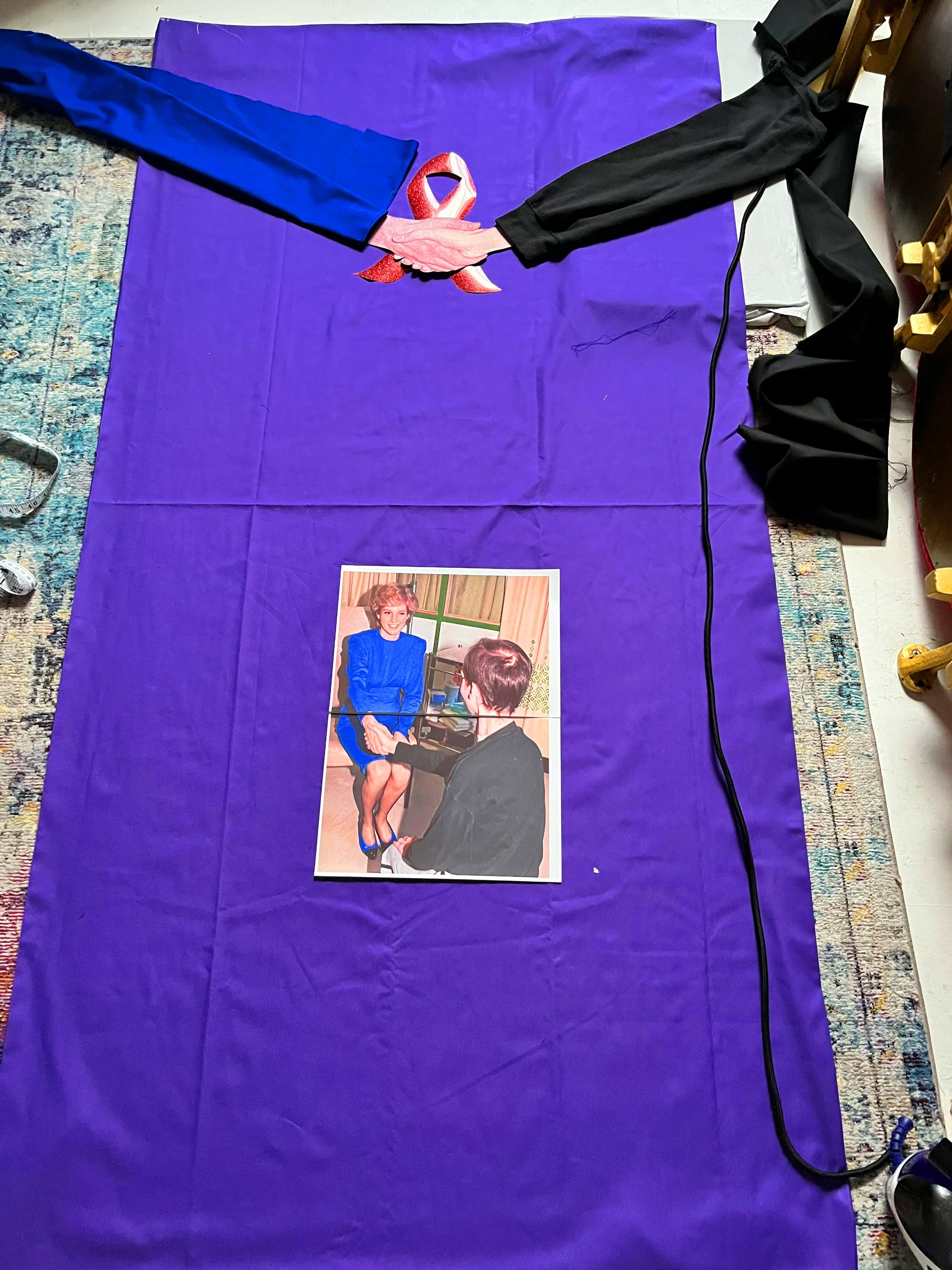
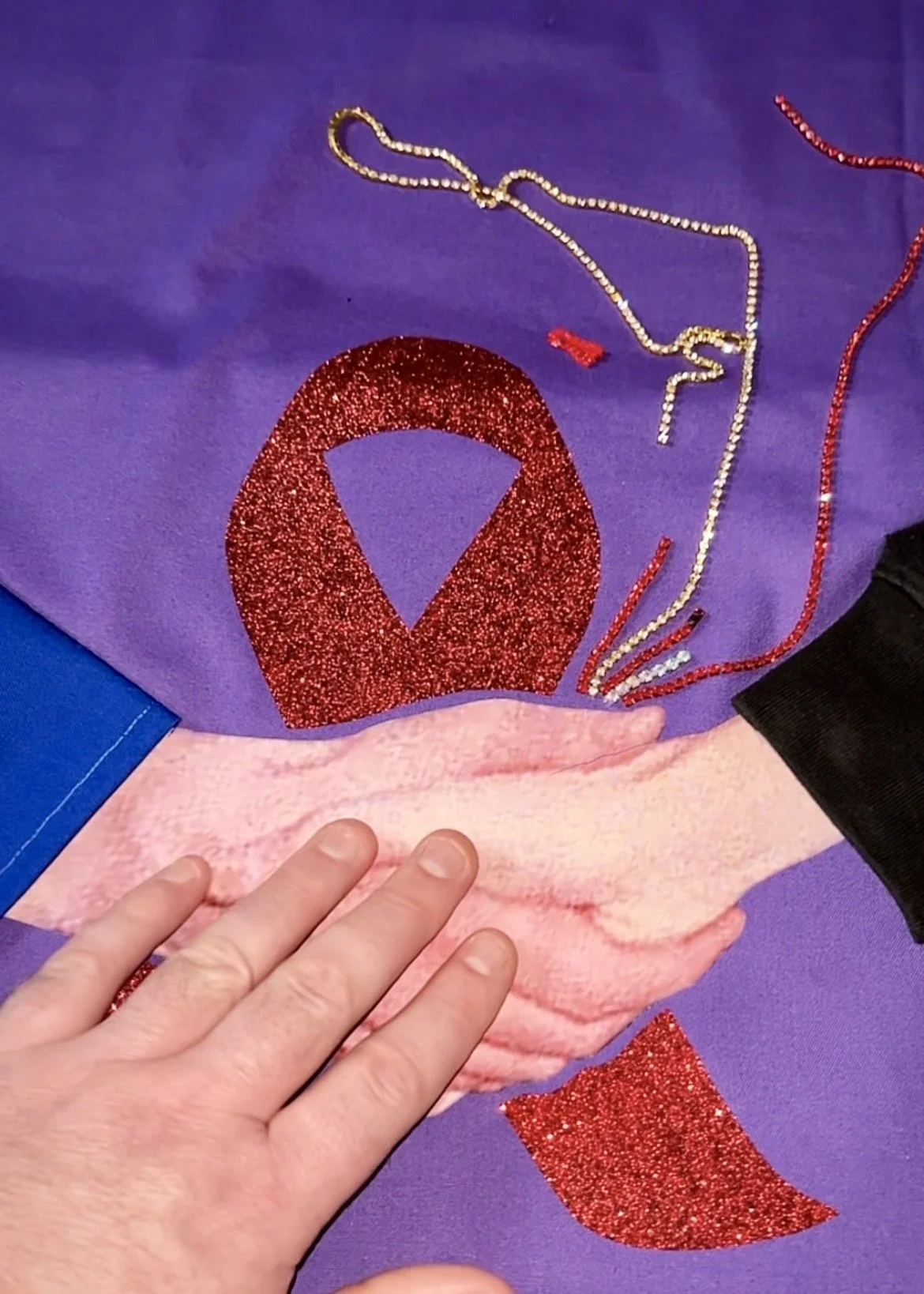
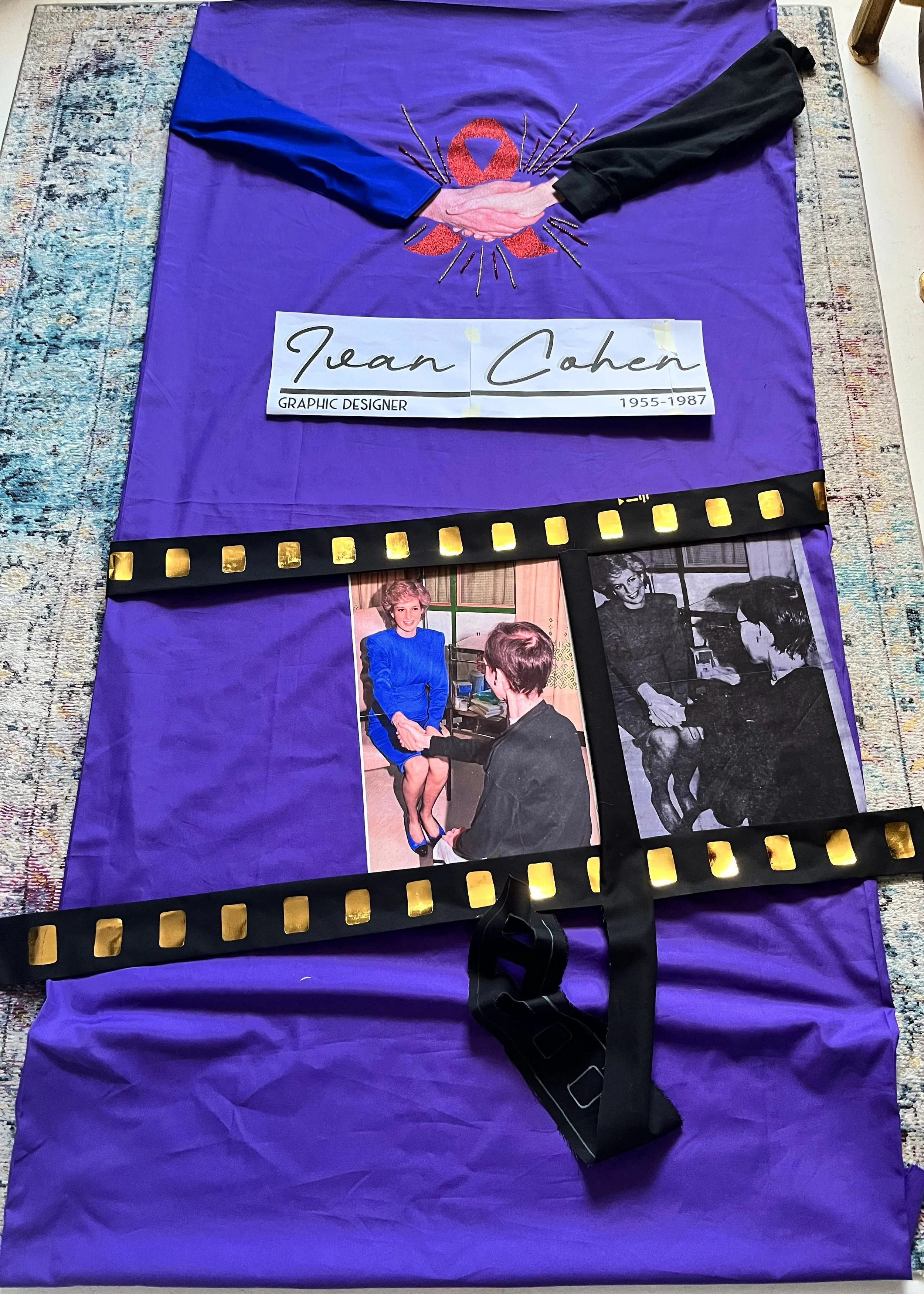
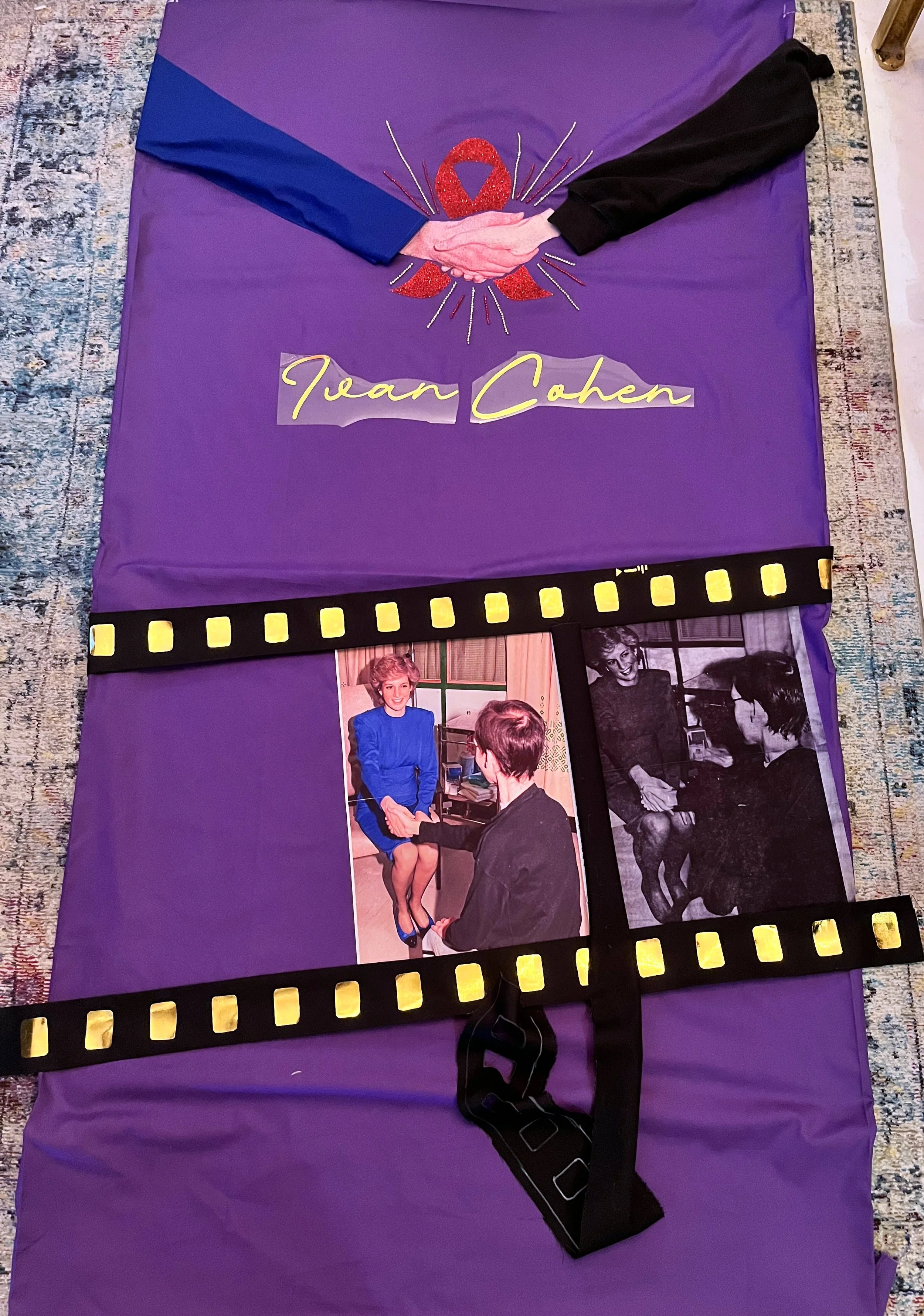
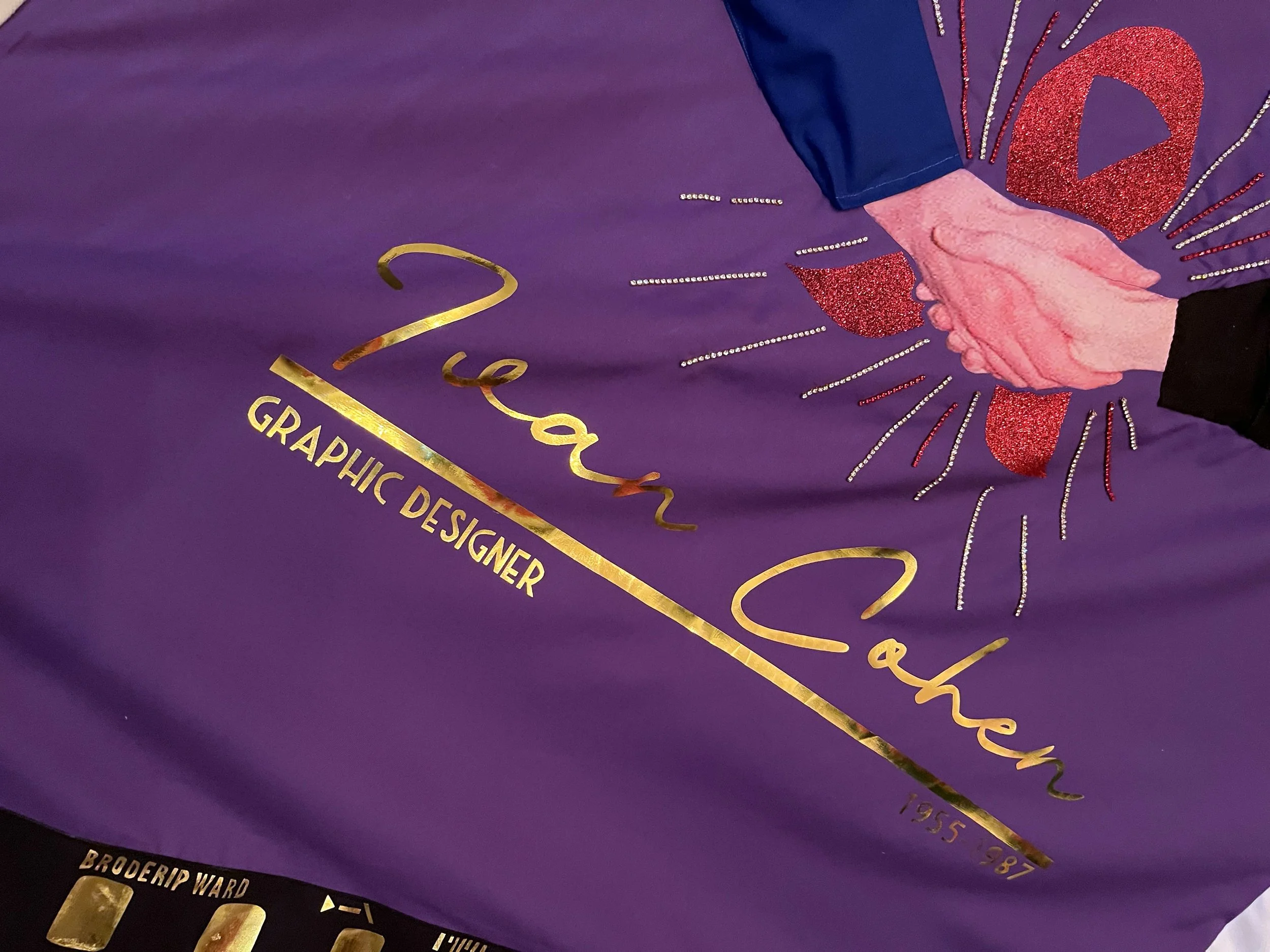
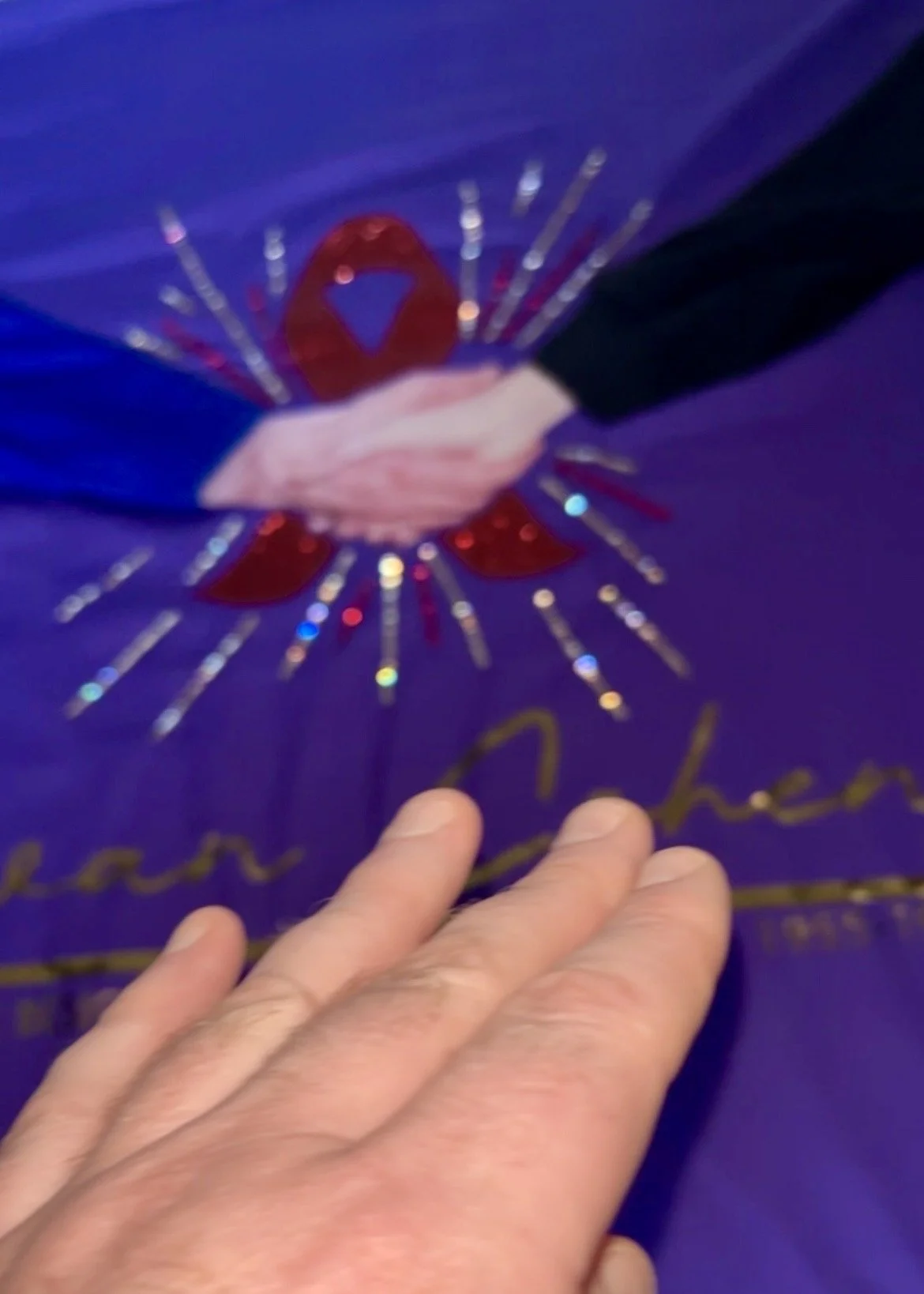
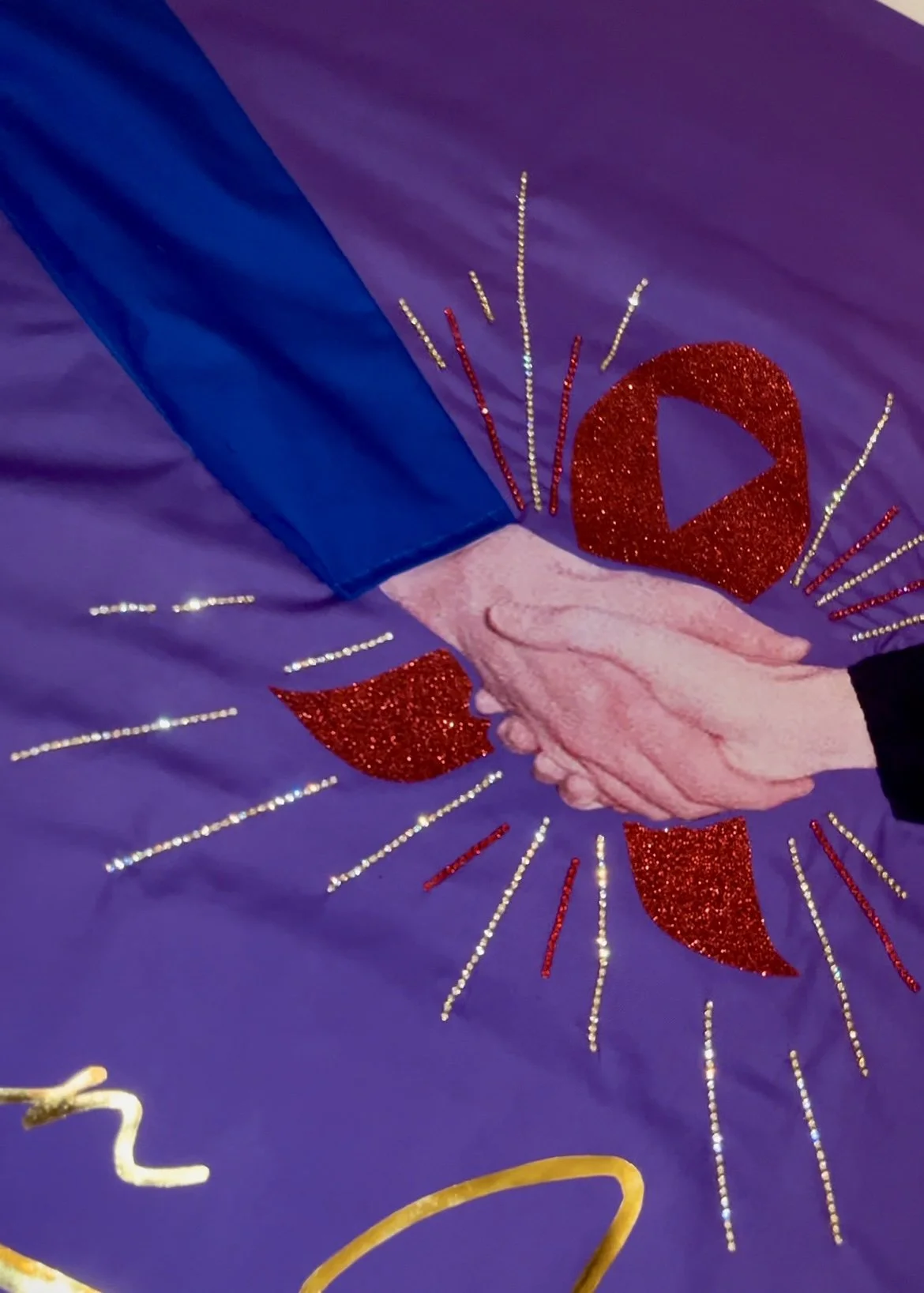
As a stranger who only came to know Ivan through research, I chose instead a purple background, a colour historically associated with royalty and one that offered a striking contrast to the arm of Princess Diana in the image of their handshake. The black sleeve representing Ivan’s arm came from a sweater I had occasionally worn; the hands are taken from the original photograph, slightly re‑angled to emphasise the connection. Behind their hands sits a red AIDS ribbon cut from red glitter vinyl, studded with red and gold diamantes to create a burst of energy and catch the light, adding movement and a touch of sparkle—an attempt to give the viewer, perhaps, a small, bittersweet smile.
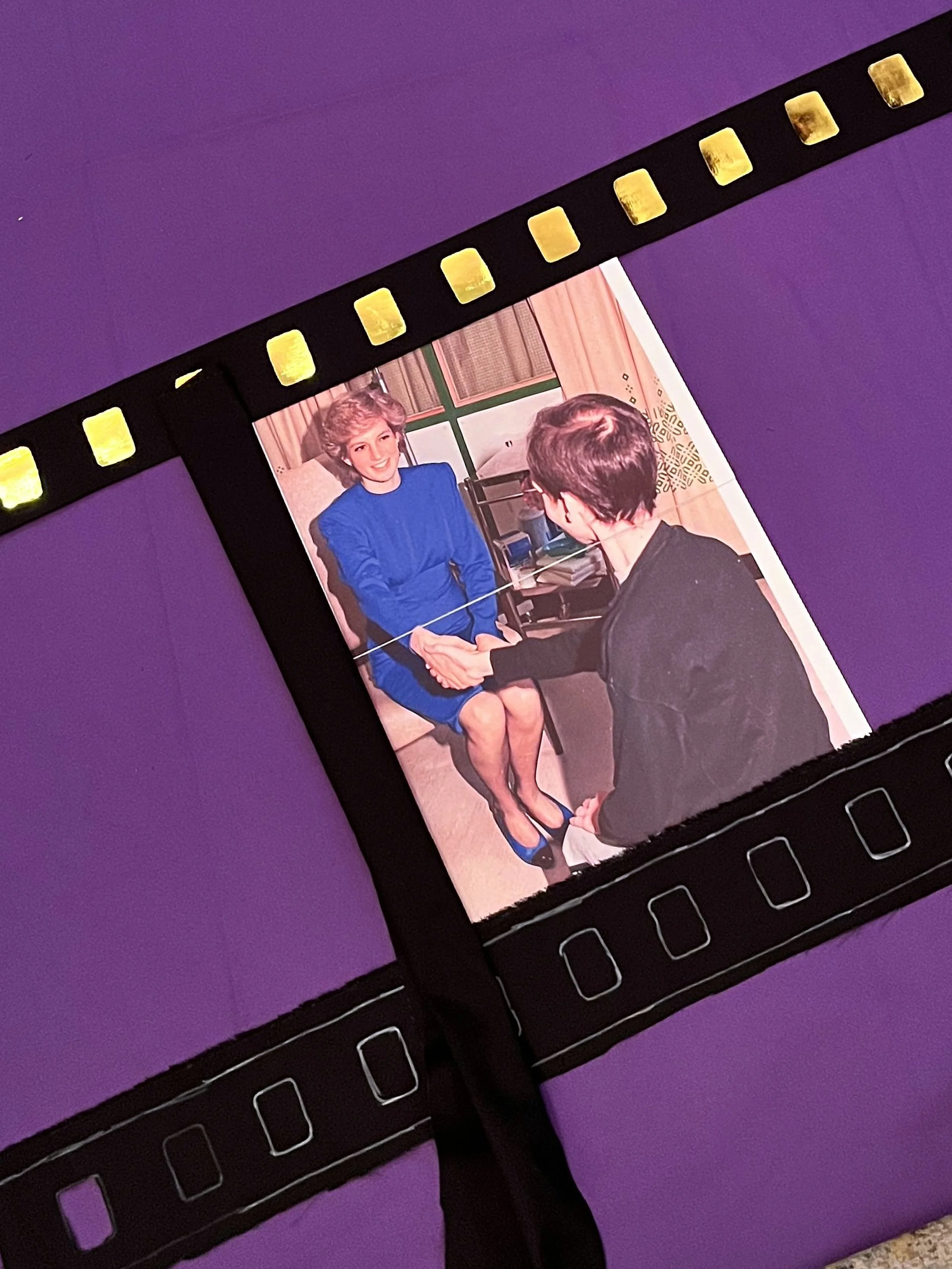
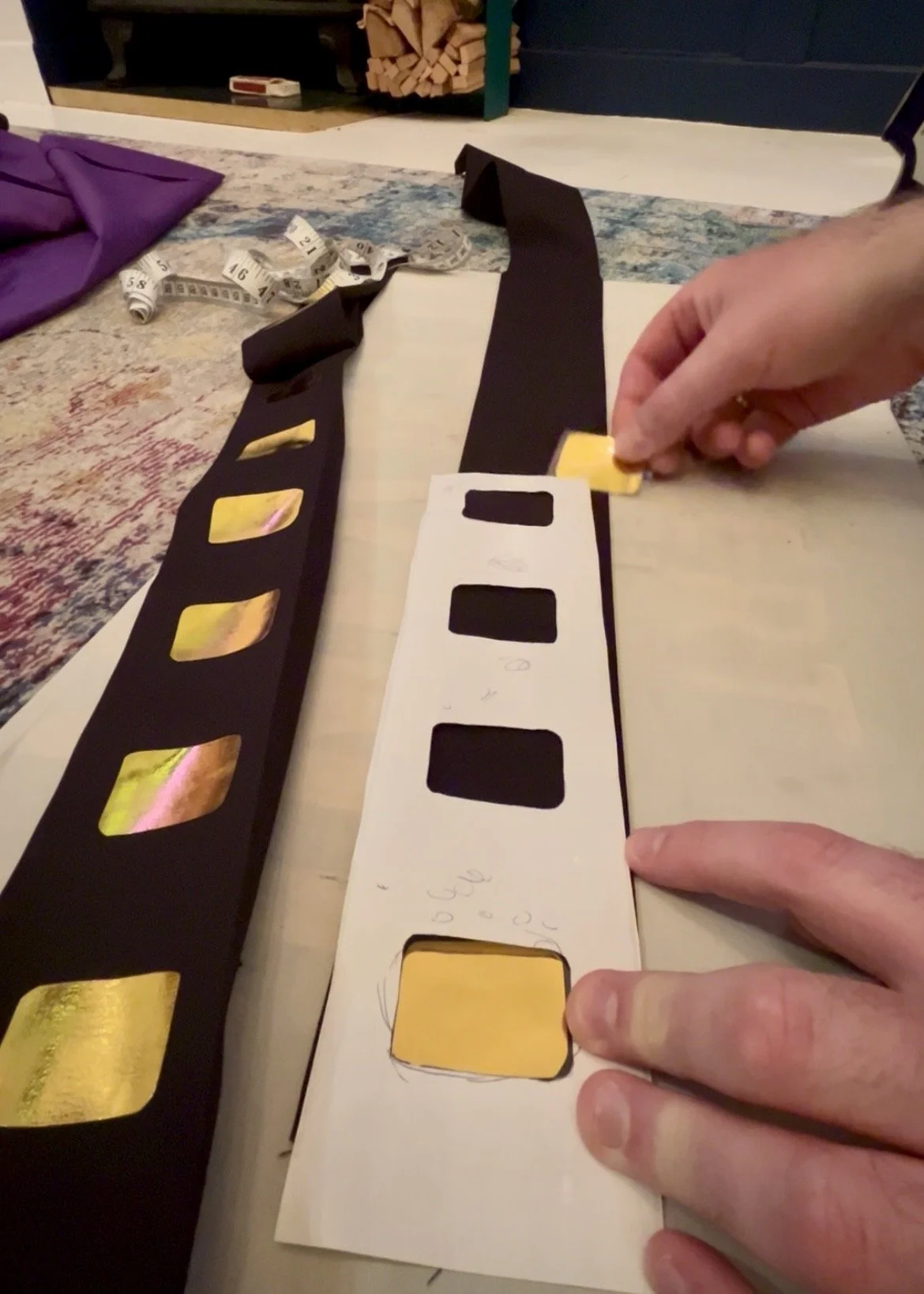
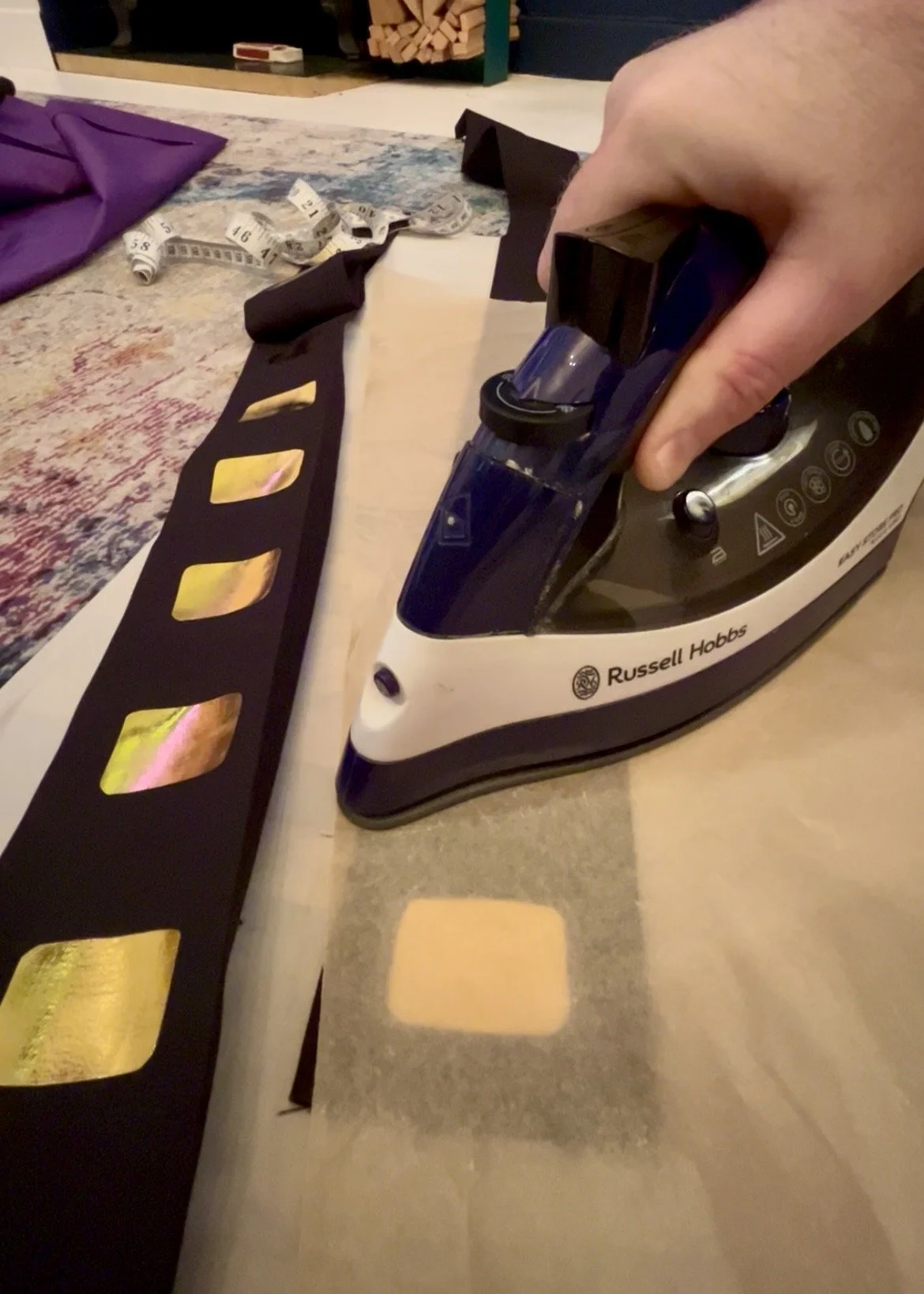
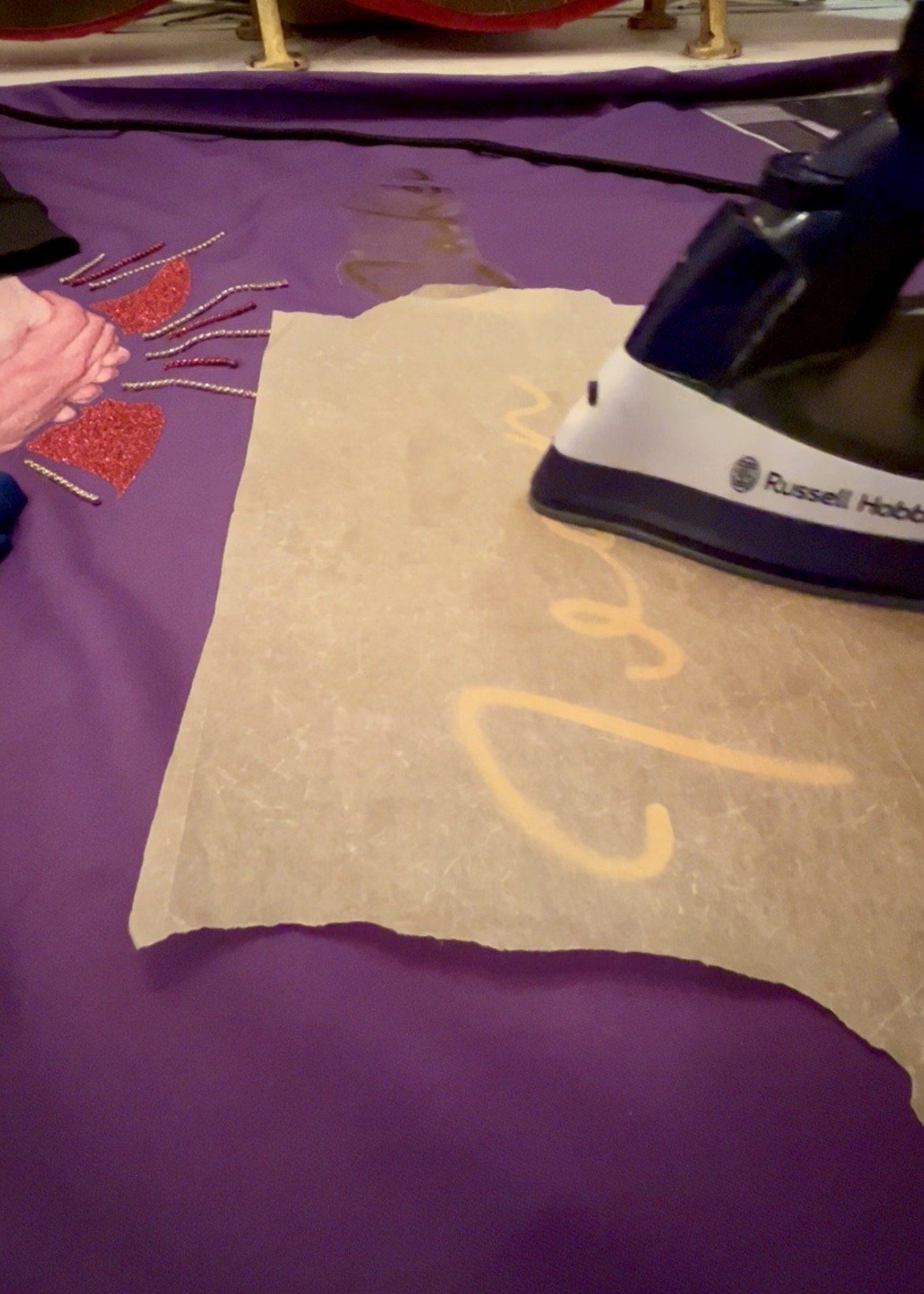
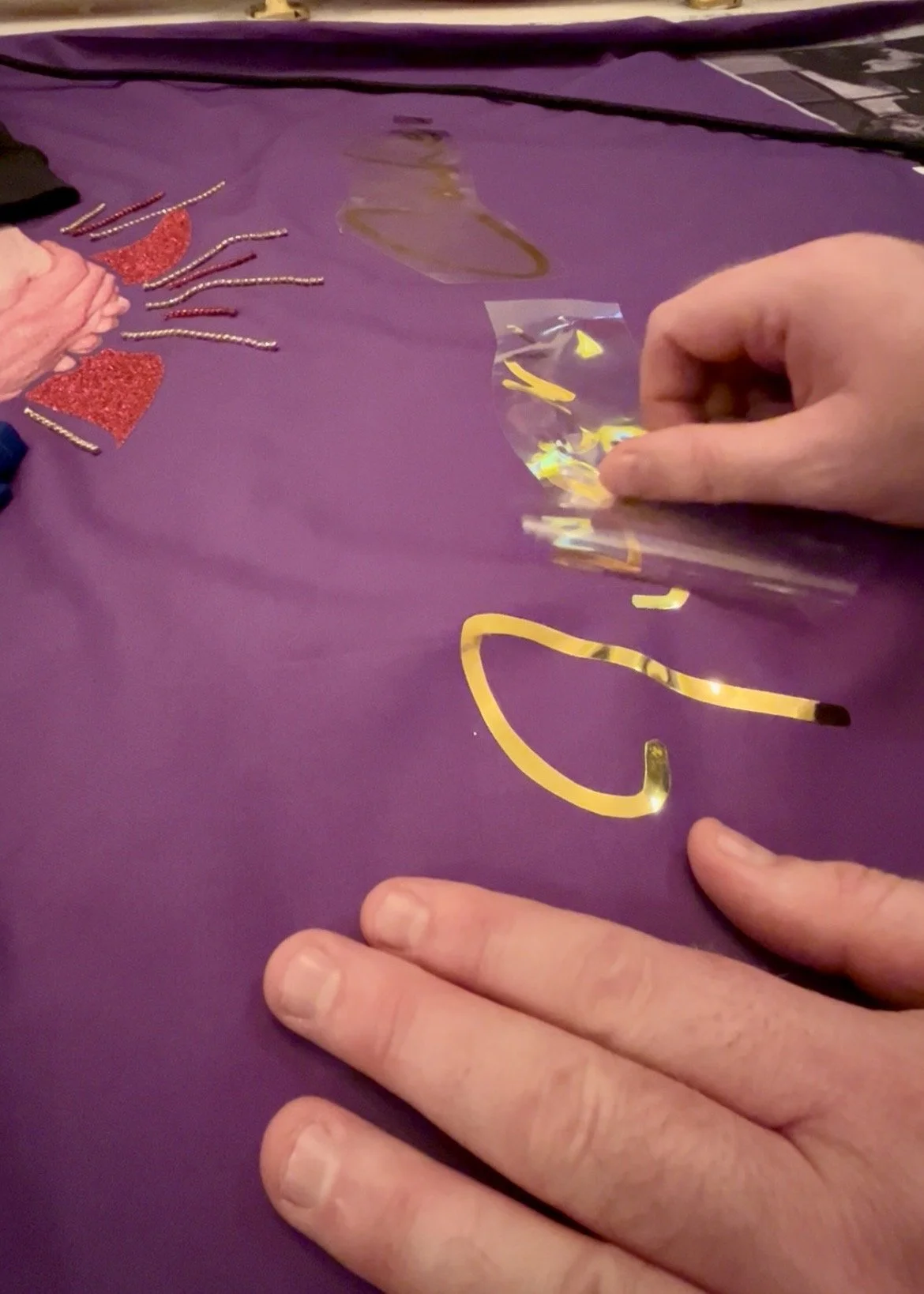
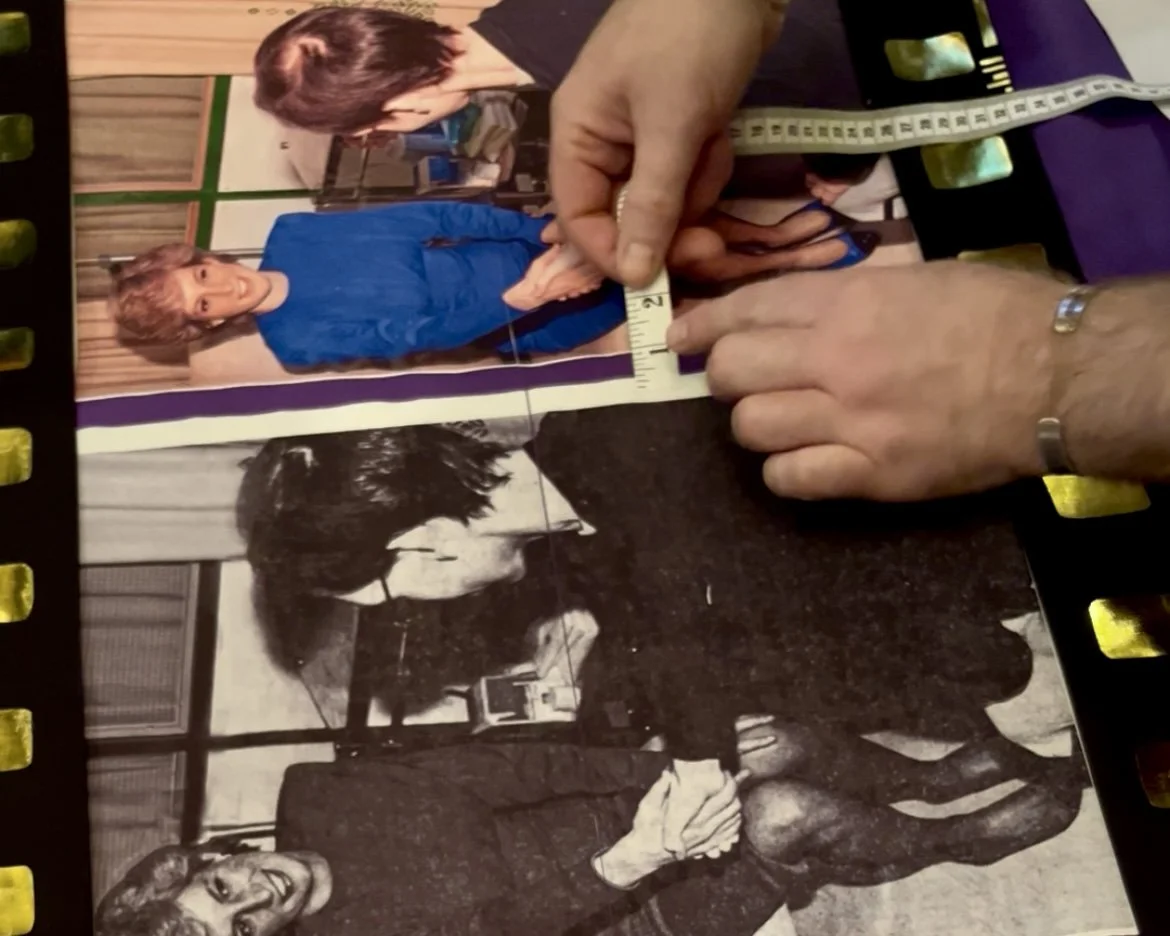
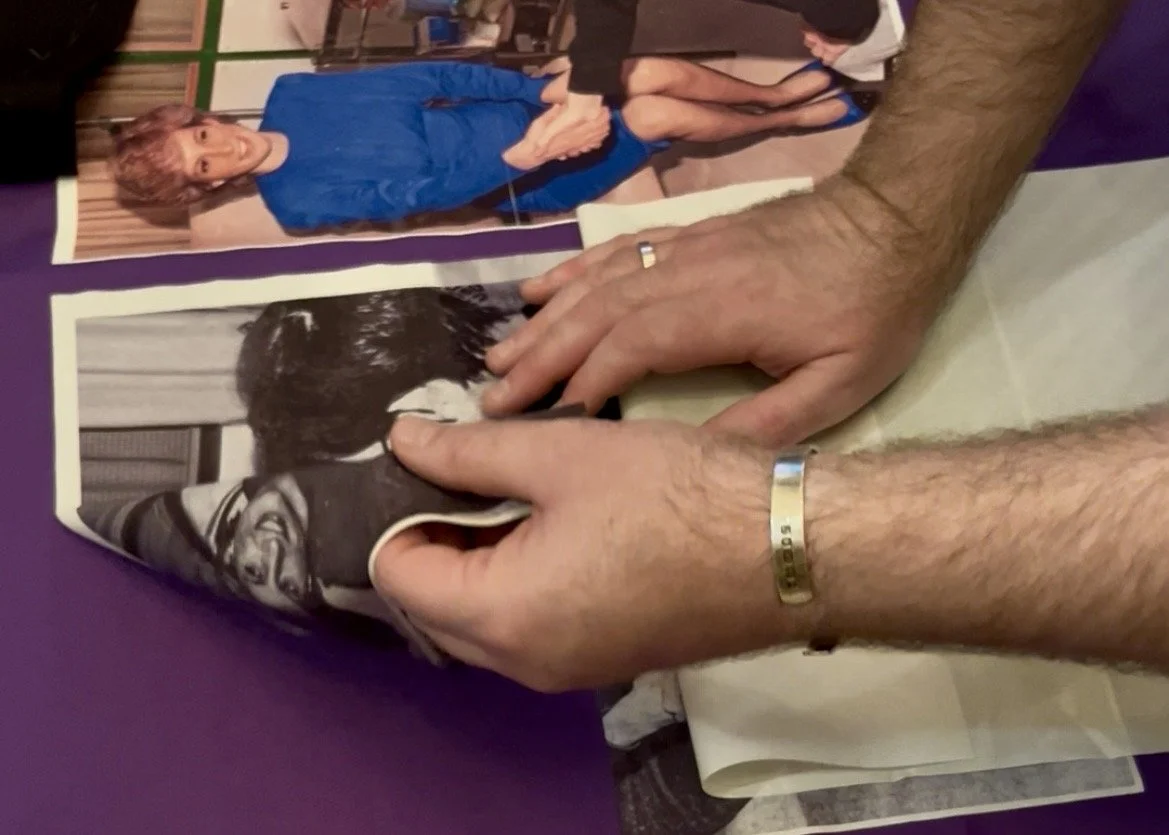
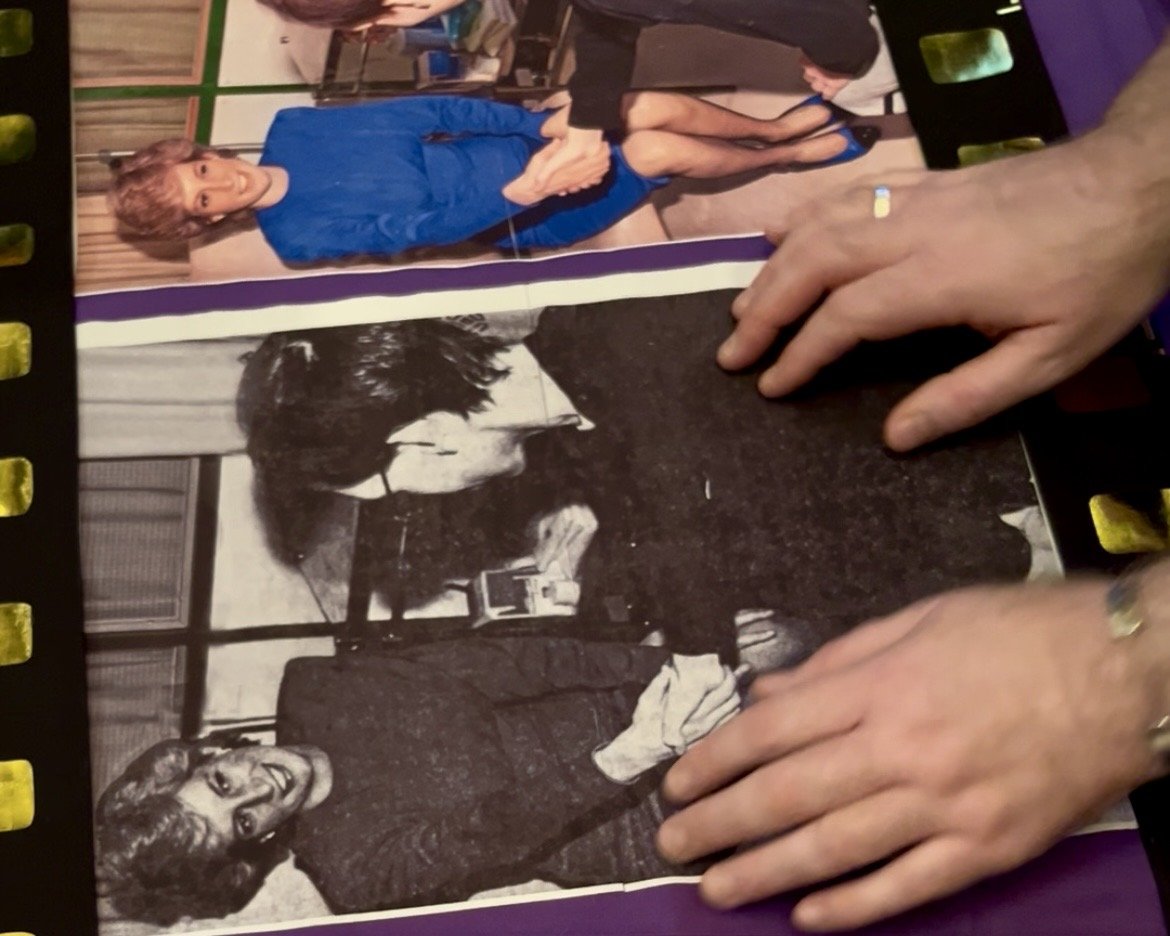
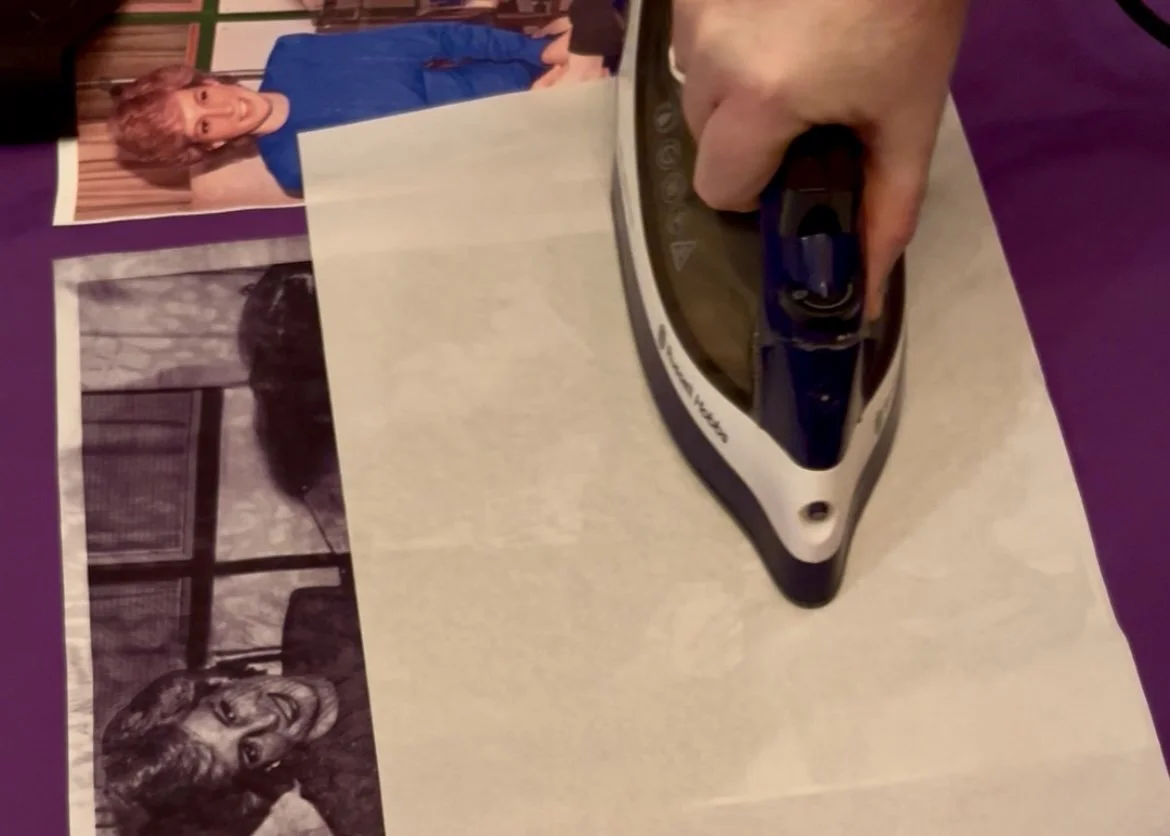
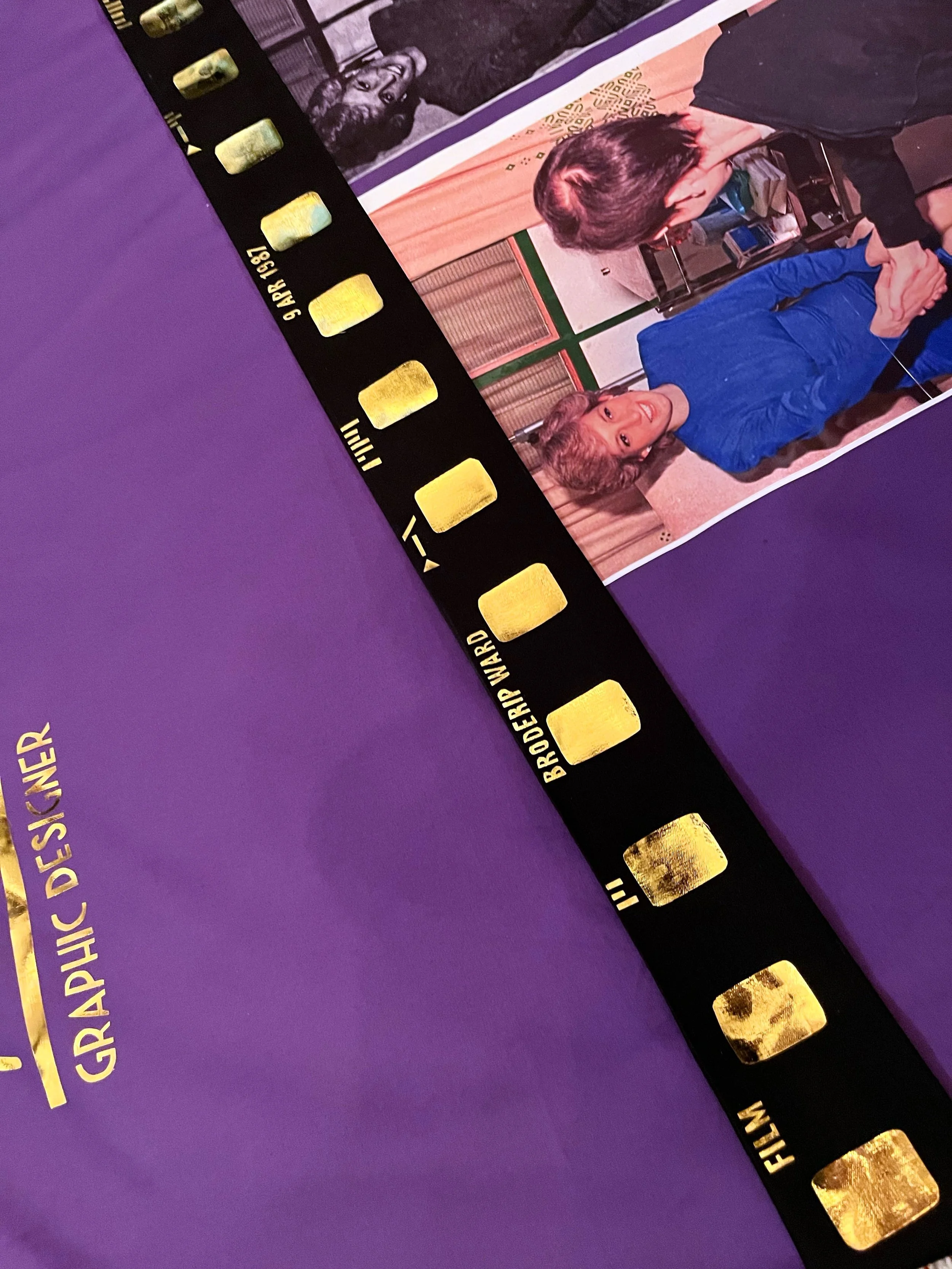
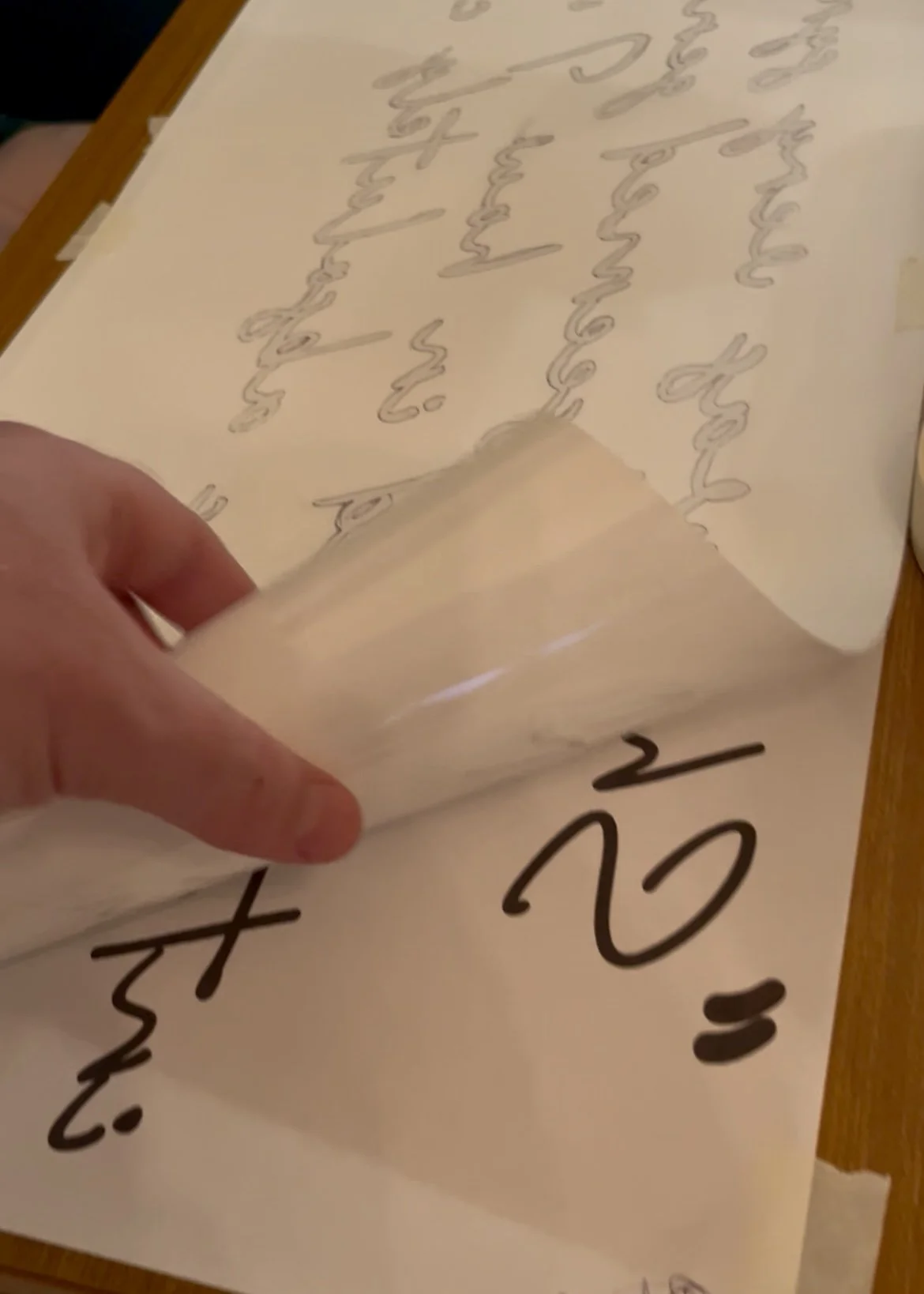
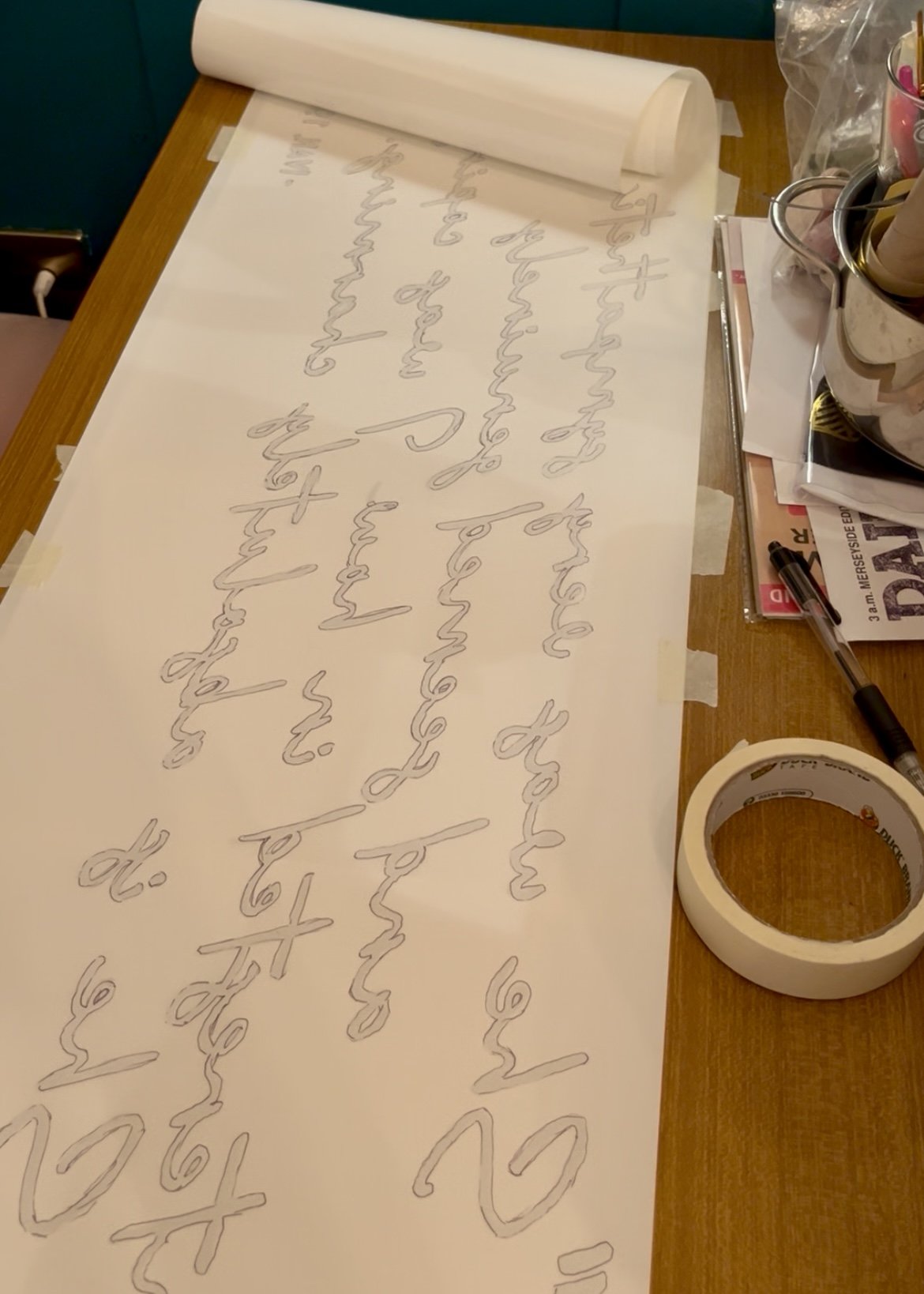
A last-minute change to my sketch placed the famous photograph of Ivan and the princess inside a photographer’s negative — a subtle wordplay on “negative” versus image, intended to confront stigma in a ‘positive’ way. The composition includes two versions of the photograph identified by the princess’s head slightly tilted: a colour photograph at the centre flanked by two black-and-white prints deliberately developed on the wrong paper to achieve a semi-translucent, negative-like effect. Ivan’s name and occupation, Graphic Designer, appear in gold vinyl along with his life dates, with a tabloid quote he gave at the time of the Princess’s visit running along the bottom in white, anchoring the piece with a candid, humanising statement, in Ivan’s own words.
ROGER YOUD
1956 - 1985
Second sketch…
Initial idea…
There is a bitter irony in the way the British press exposed Roger in 1985 as the “Monsall Patient” — portrayed as the first and last man forcibly detained at Monsall Hospital simply for having an AIDS diagnosis and “expressing” a wish to go home — a sensationalism that both flogged newspapers and fanned homophobia, yet also fixed Roger’s name into the ledger of those lost in the pandemic’s early years.
Speaking to me for a special podcast episode, Roger’s brother and close friend were keen to share more about this young man detained against his will. Although with support from national HIV/AIDS charities in 1985 Roger won his appeal and the legal right to discharge himself, but weakened by illness he remained under hospital care until his untimely passing in December 1985.
Roger had an absolute passion for vinyl and by day worked as a clerk at a furrier, by night he immersed himself in Manchester’s evolving gay scene, DJing in local bars, tending the bar or collecting glasses, forging friendships with colleagues who in turn formed a rota to visit him in shifts when illness took him into hospital, ensuring someone was always at his bedside.
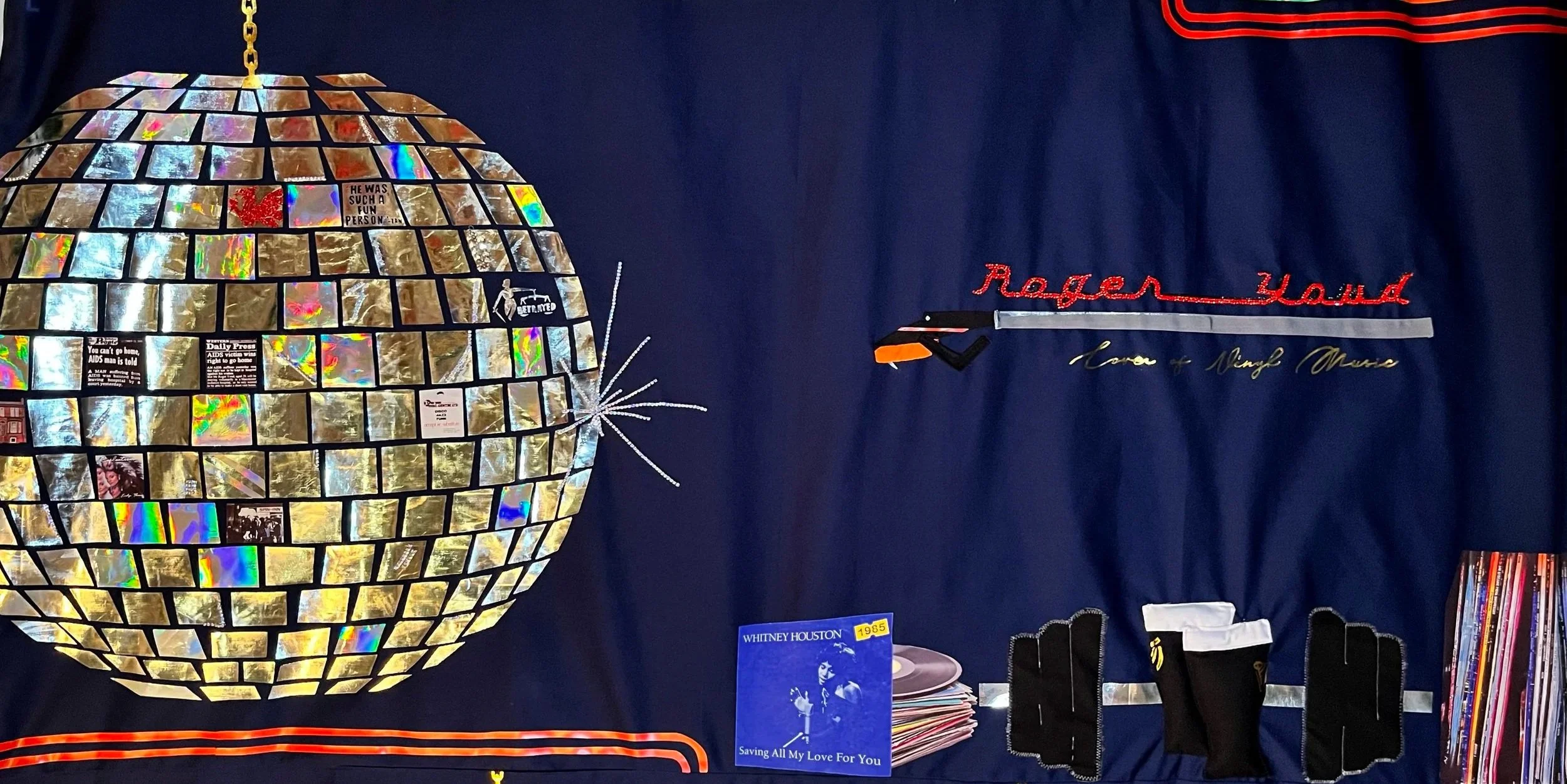
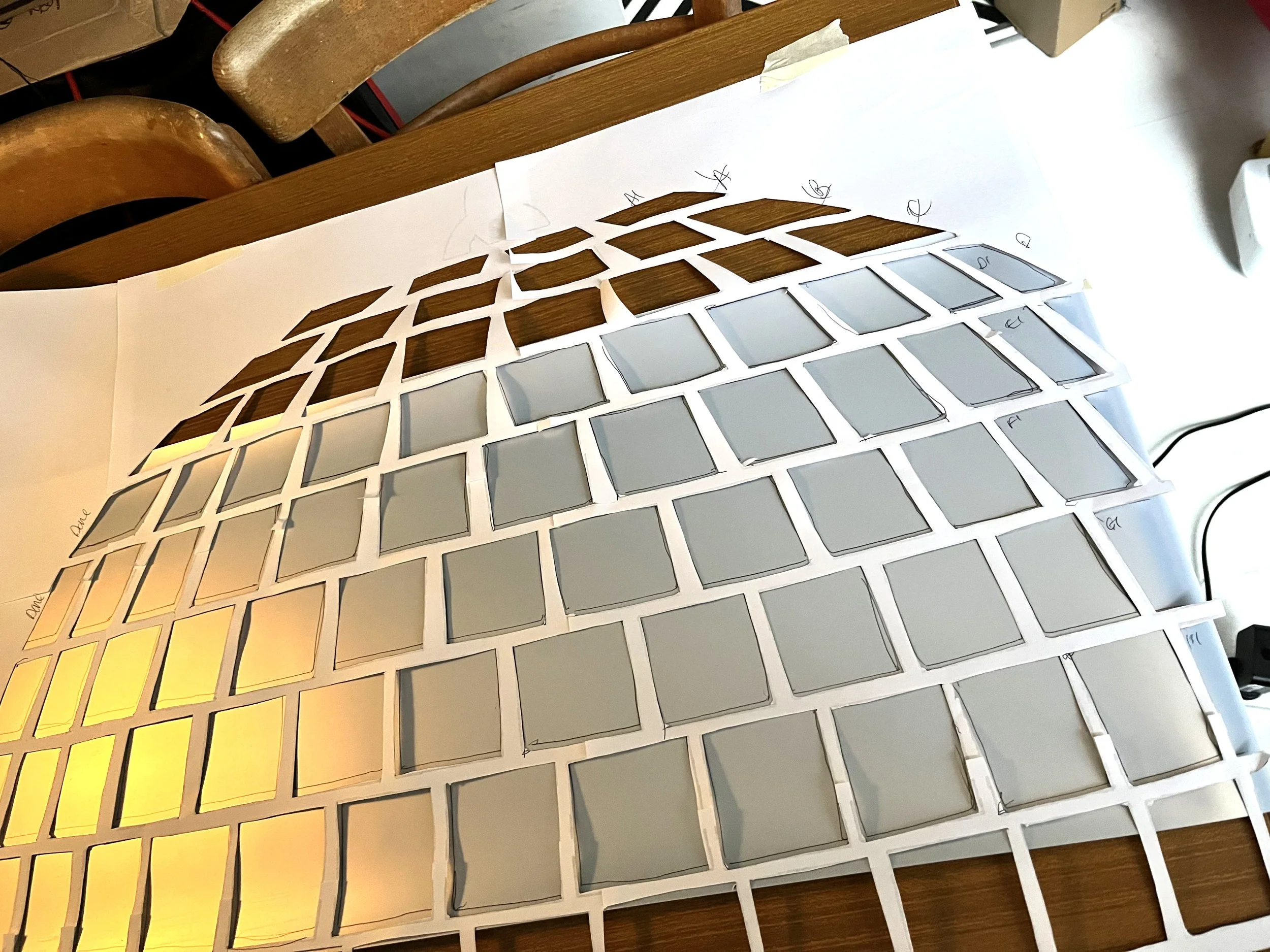
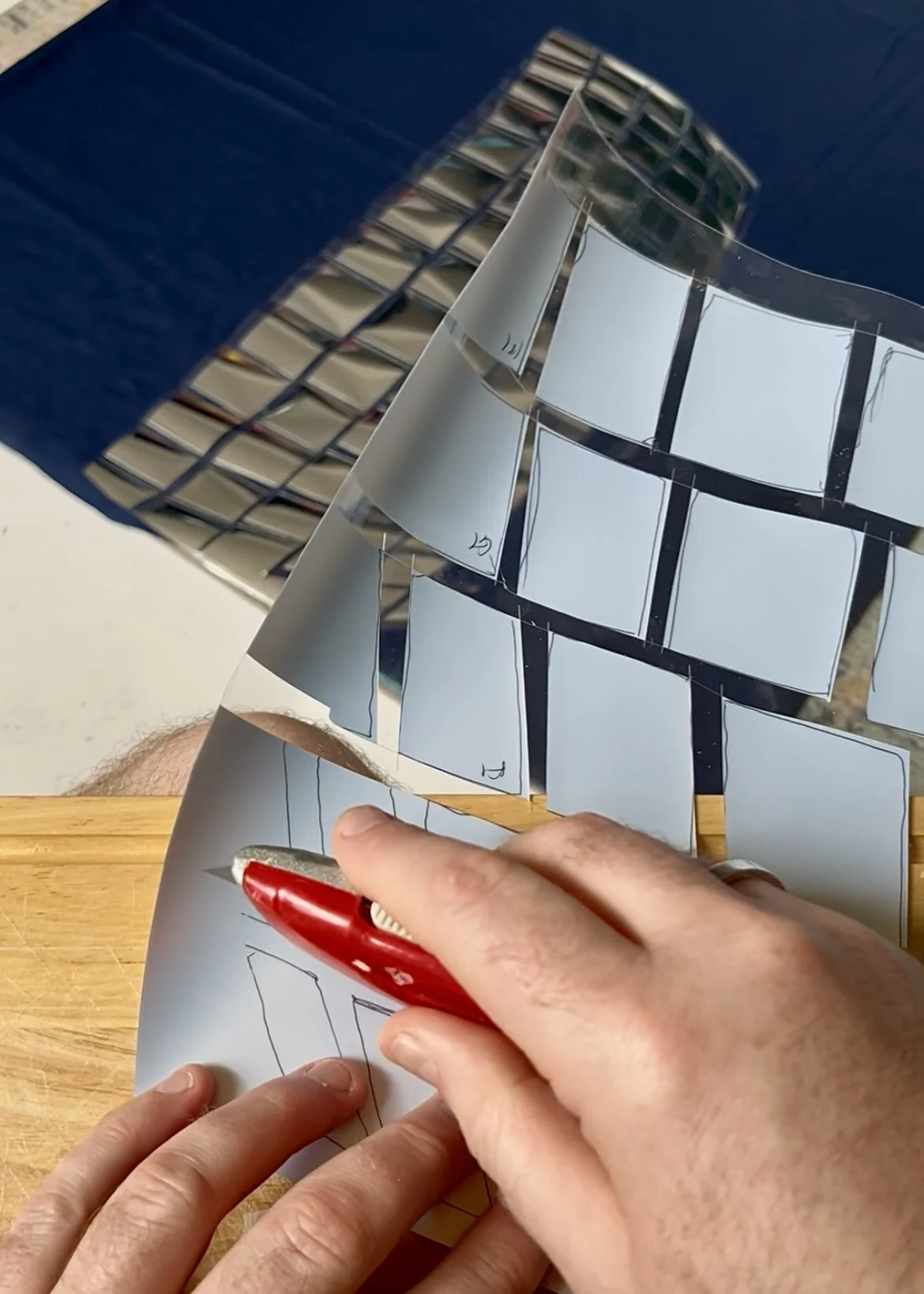
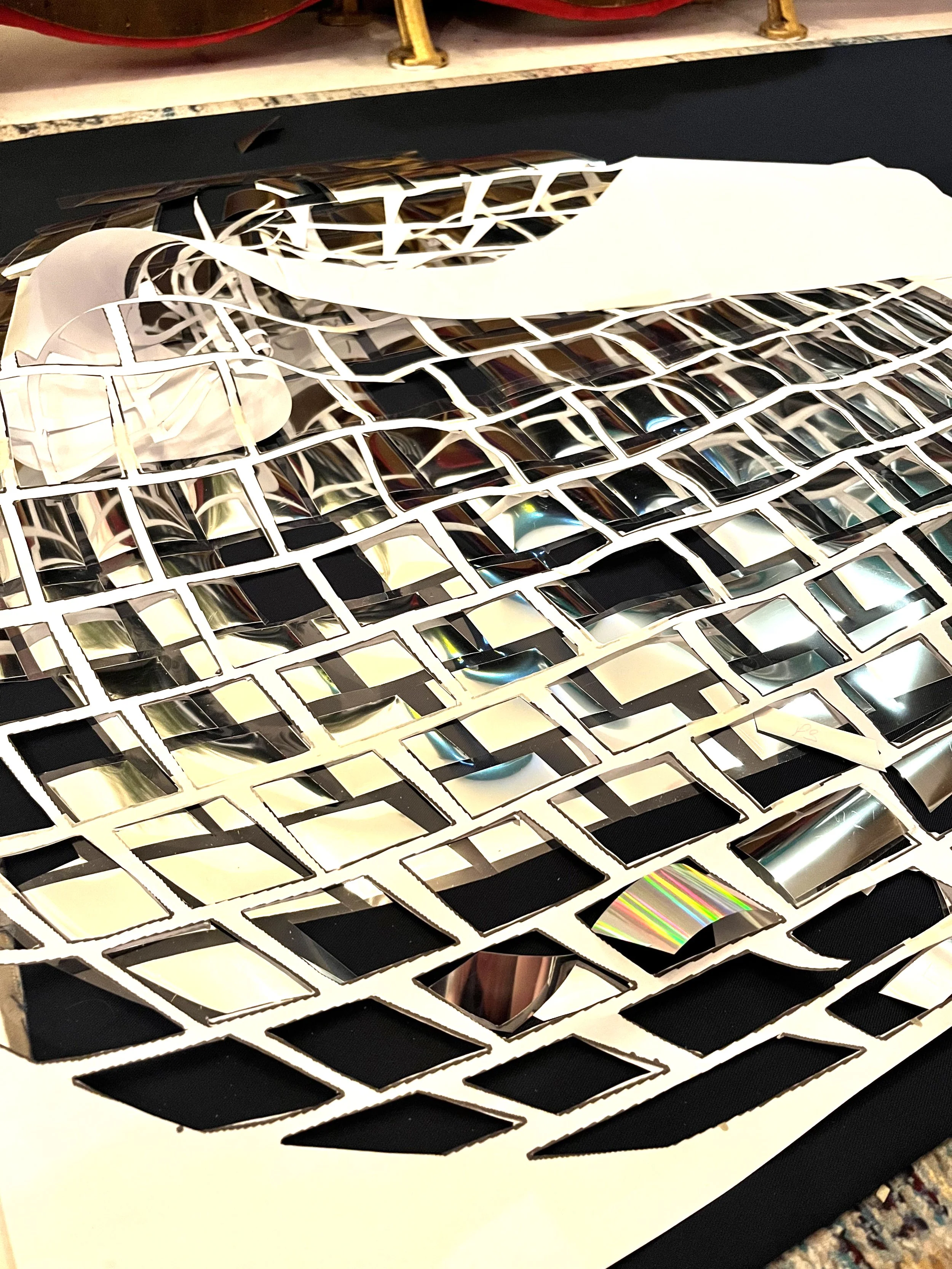
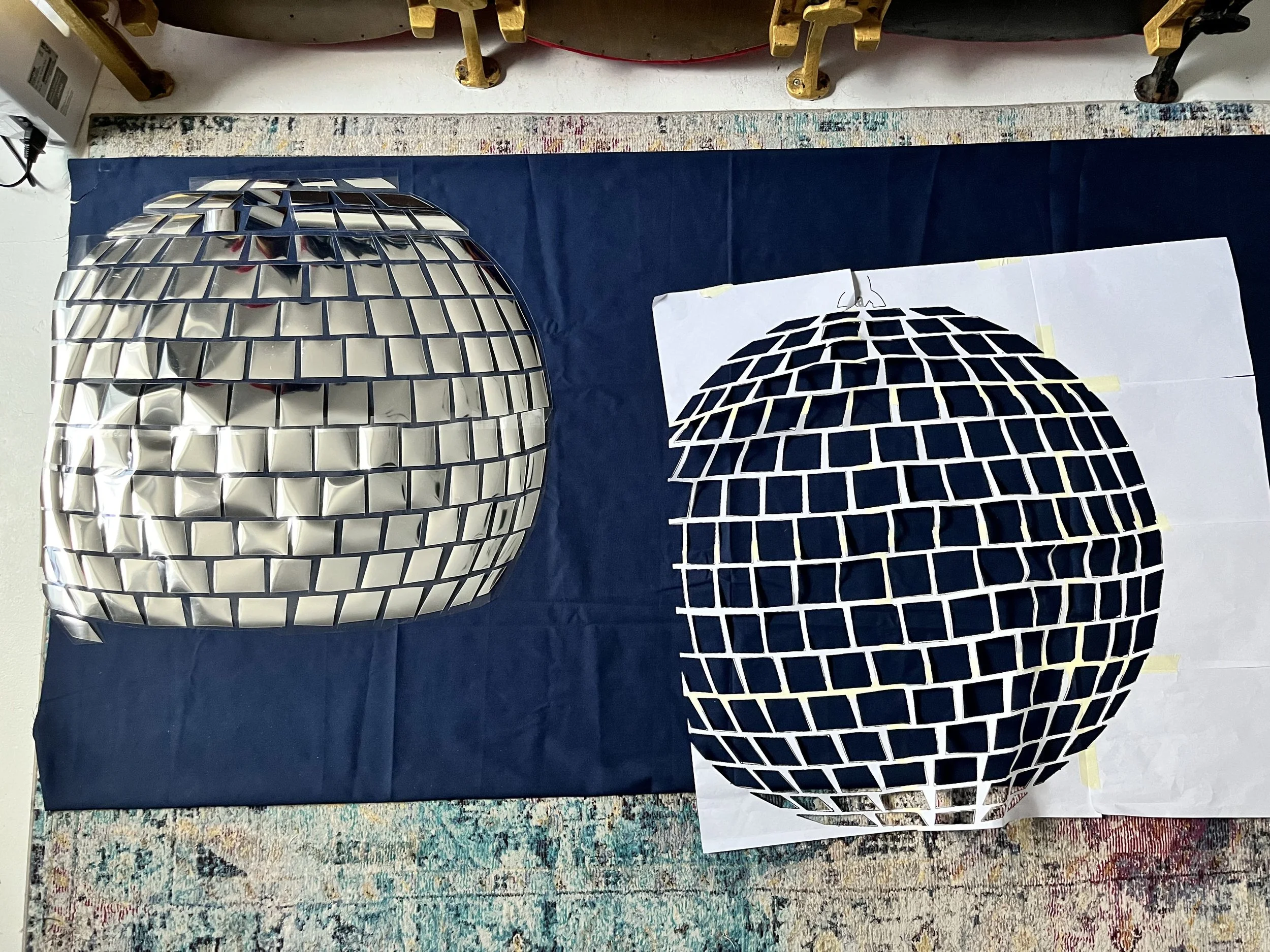
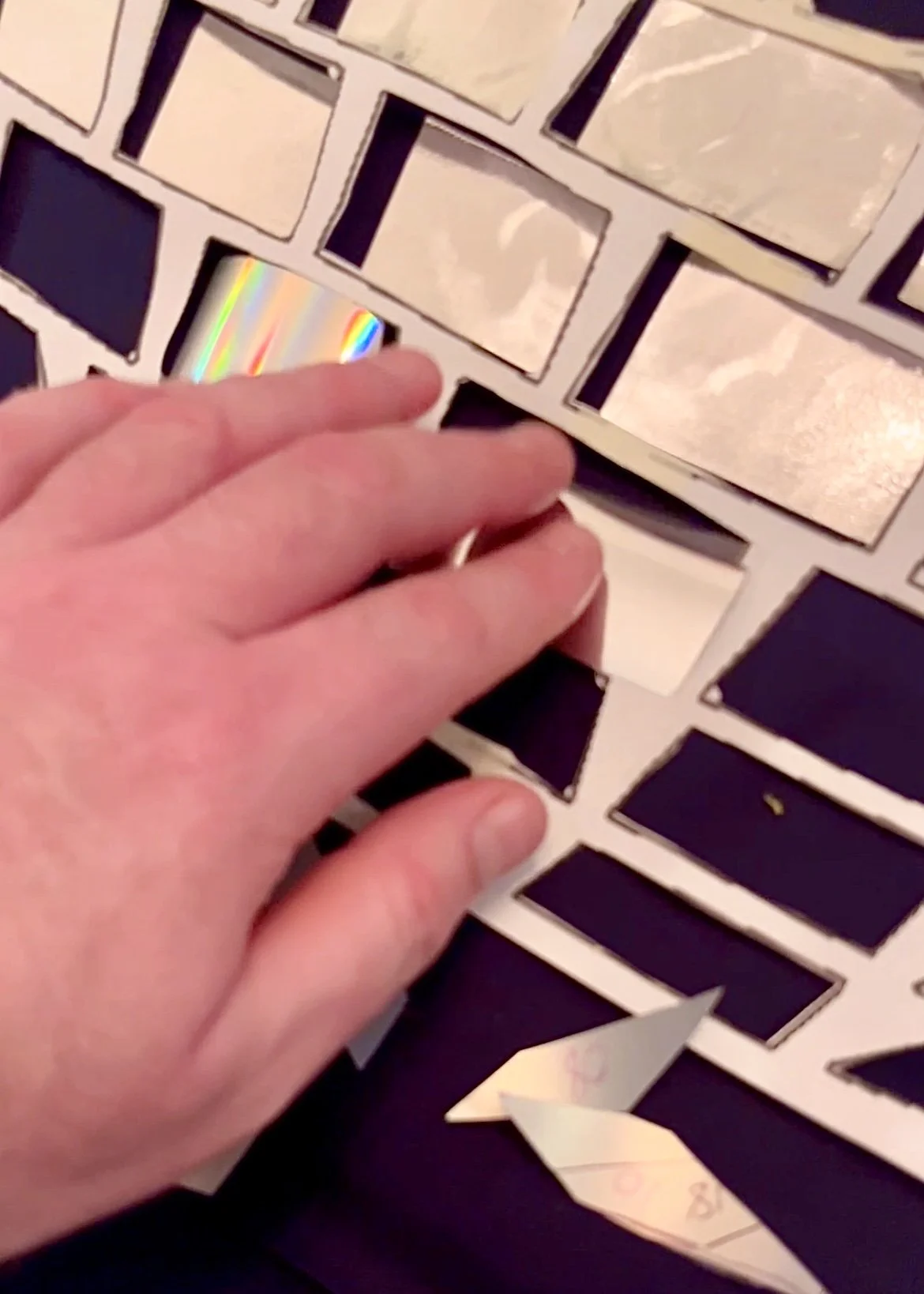
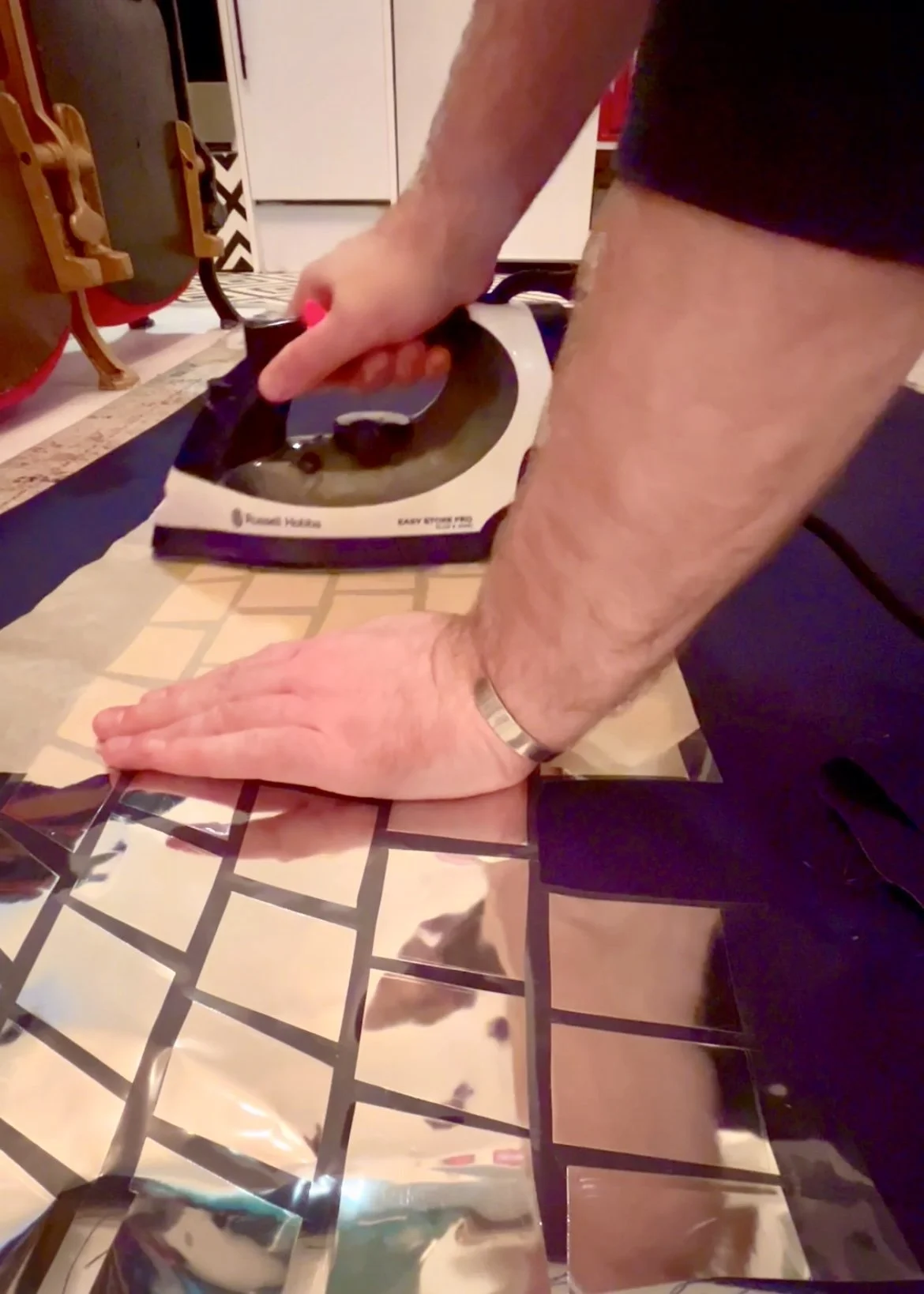
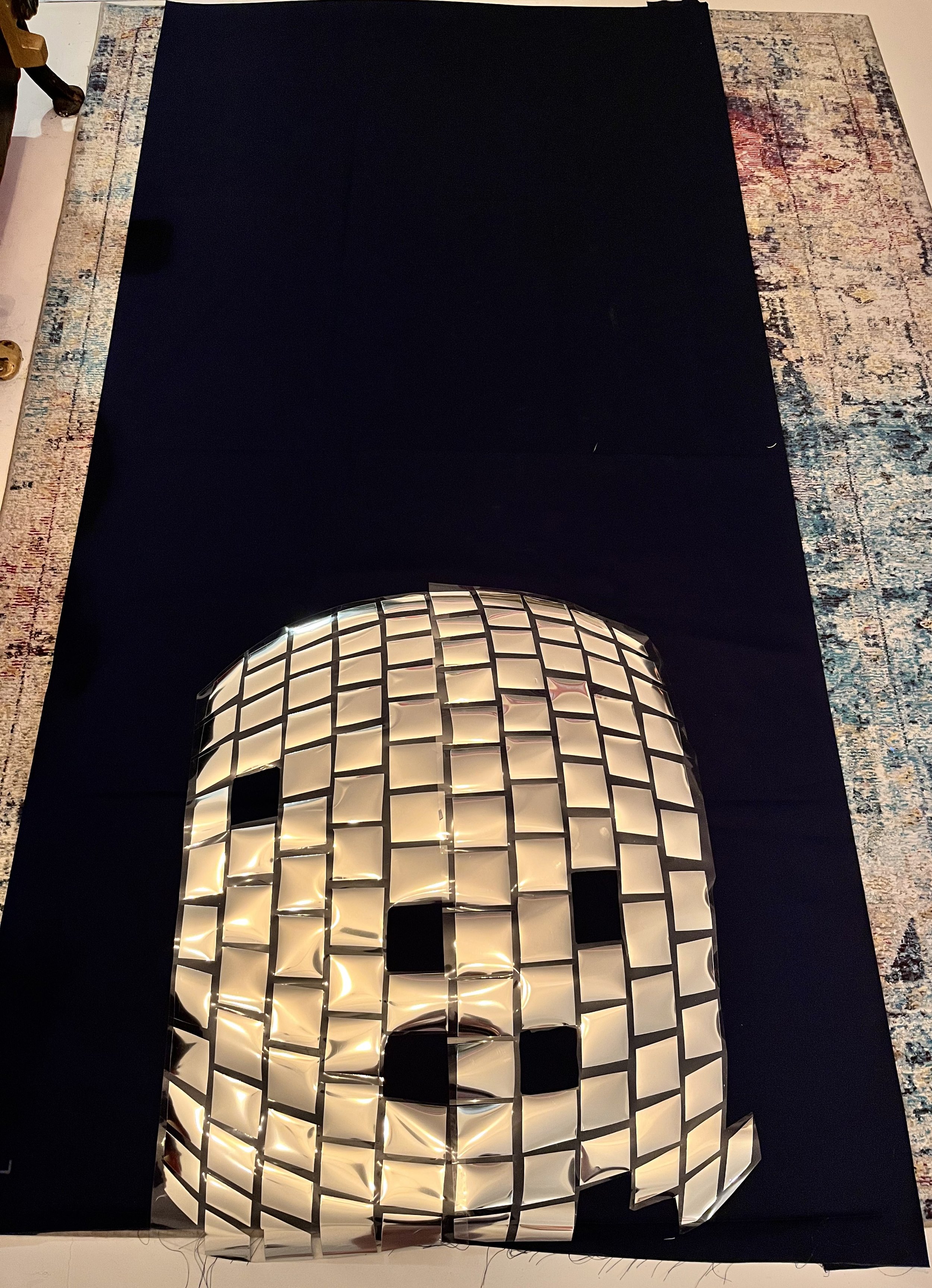
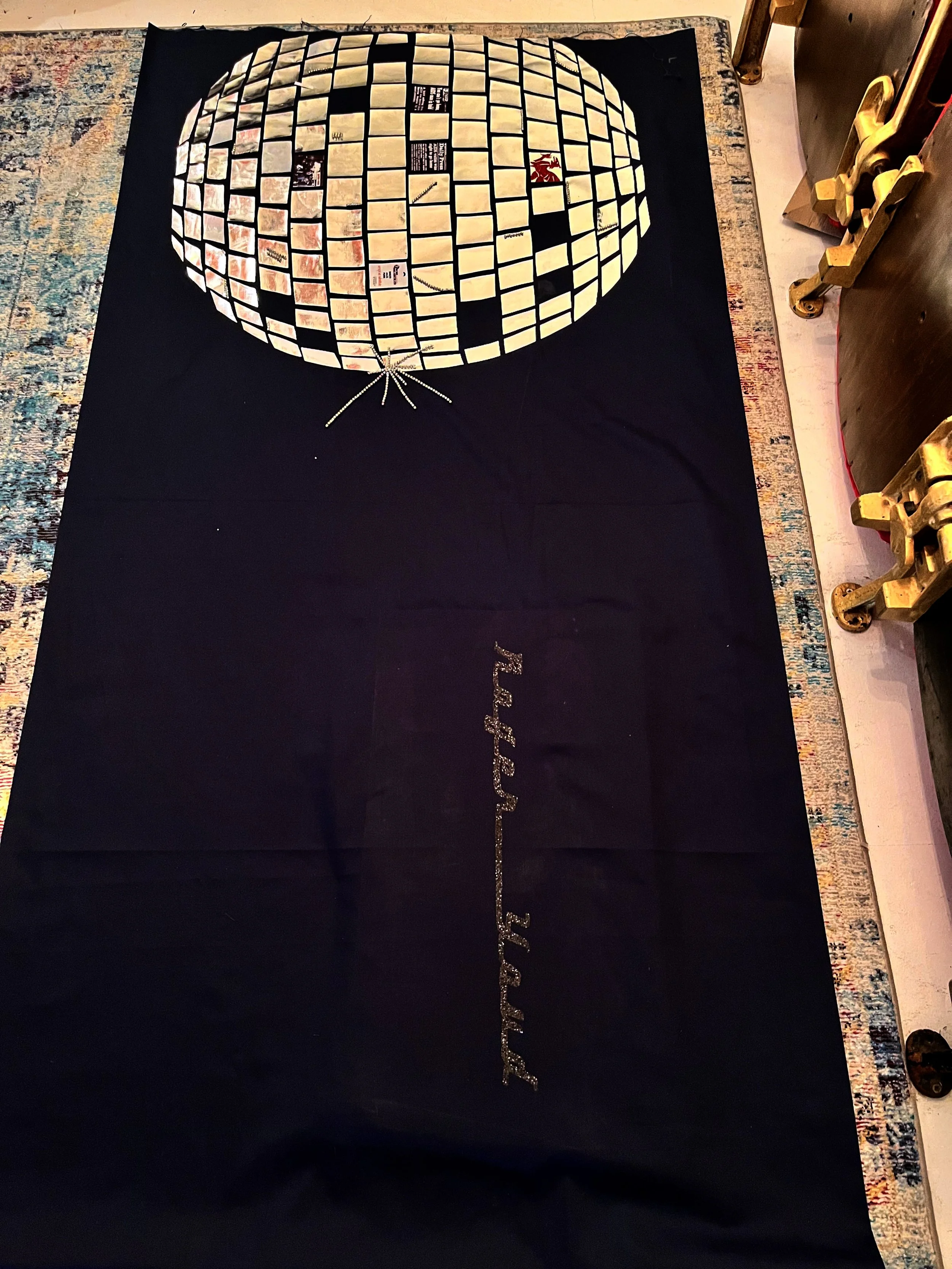
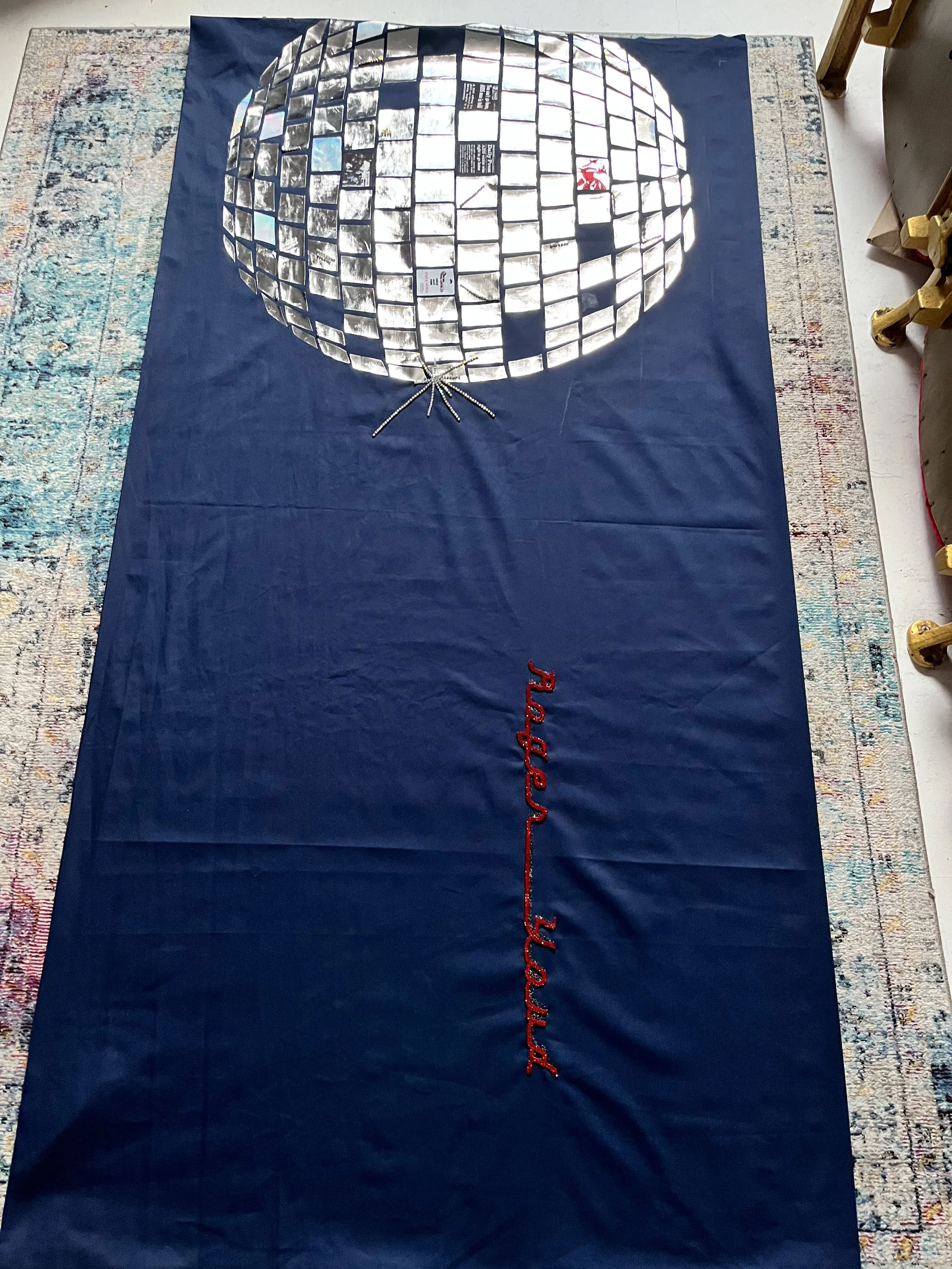
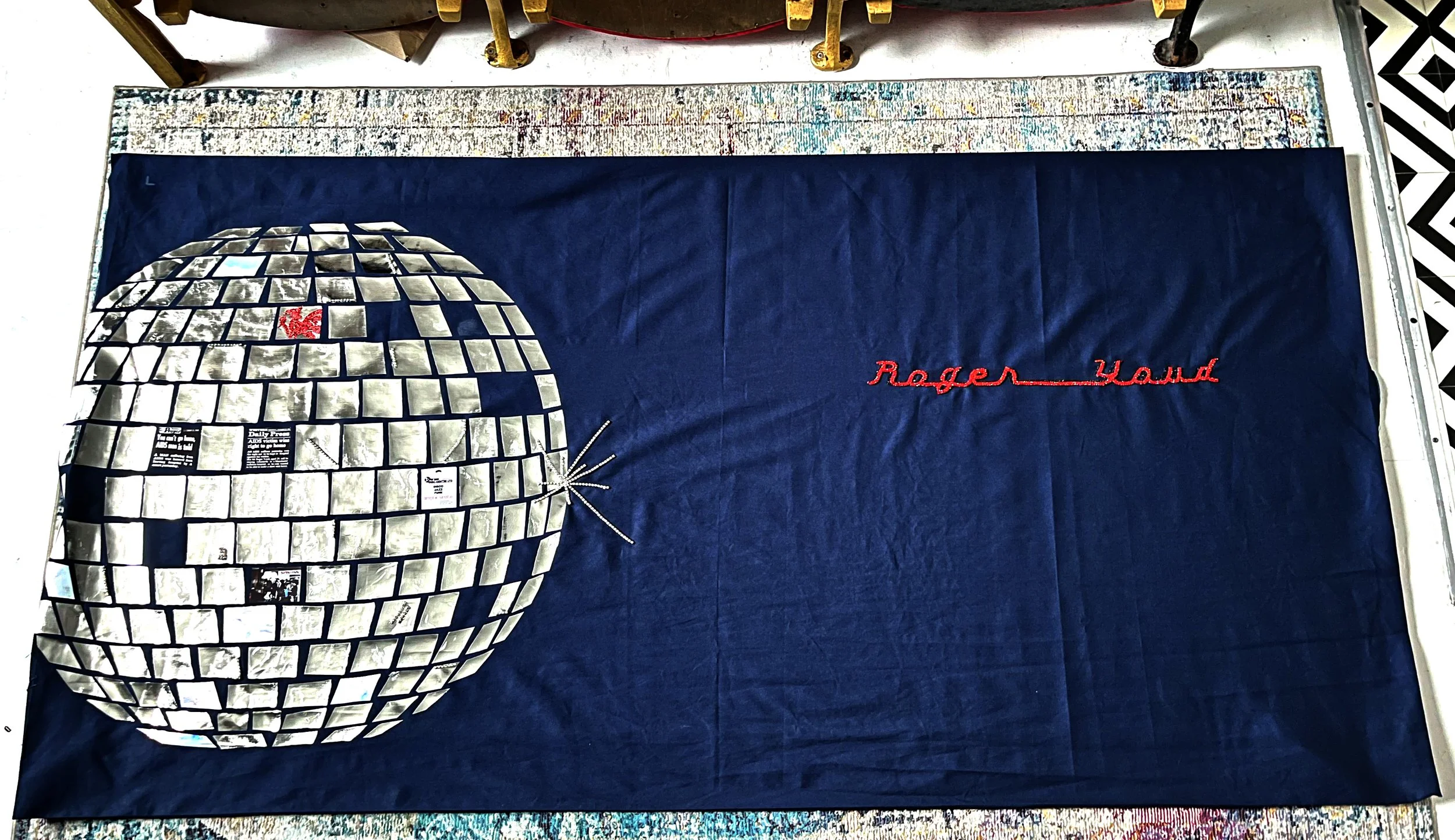
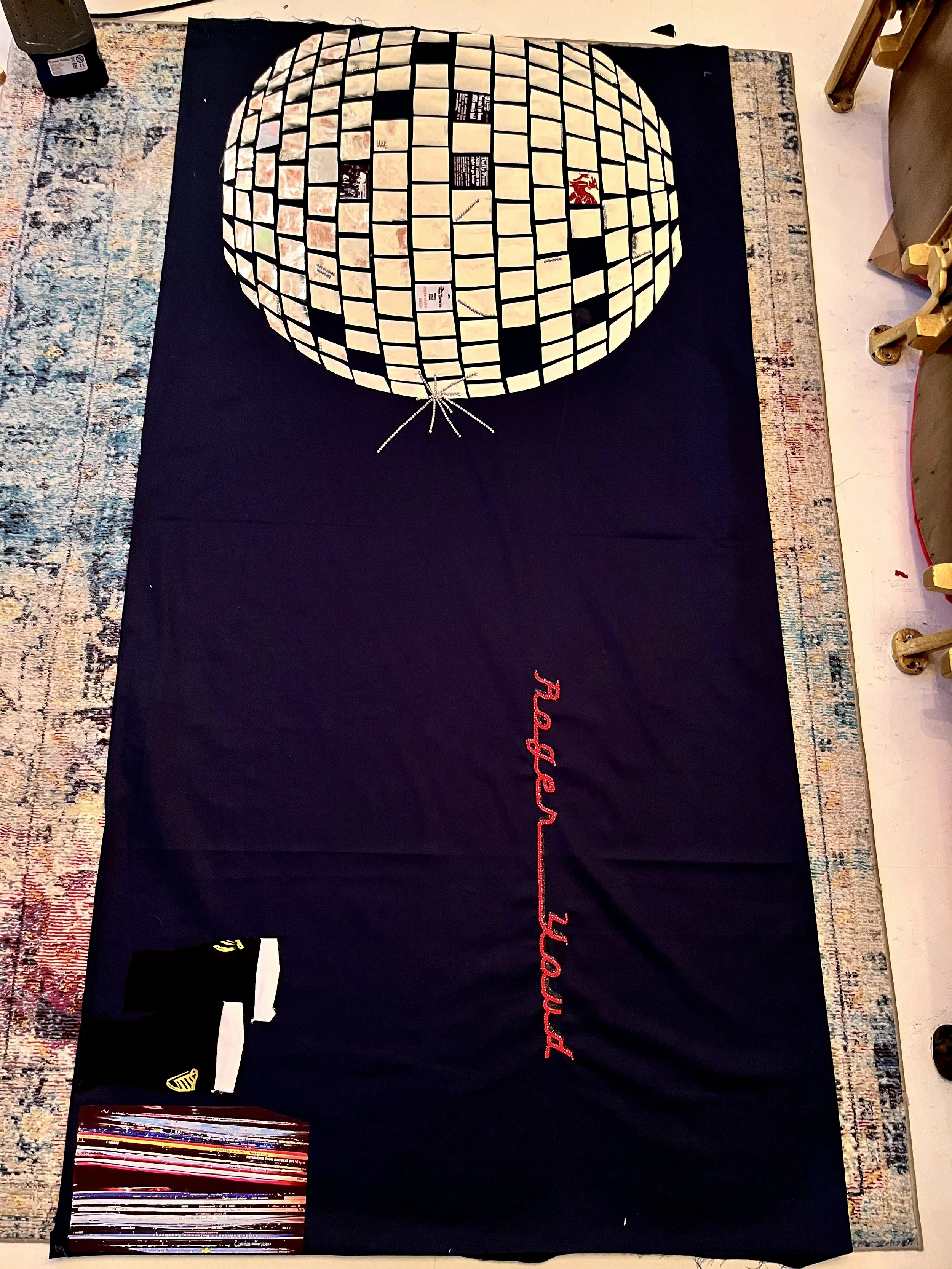
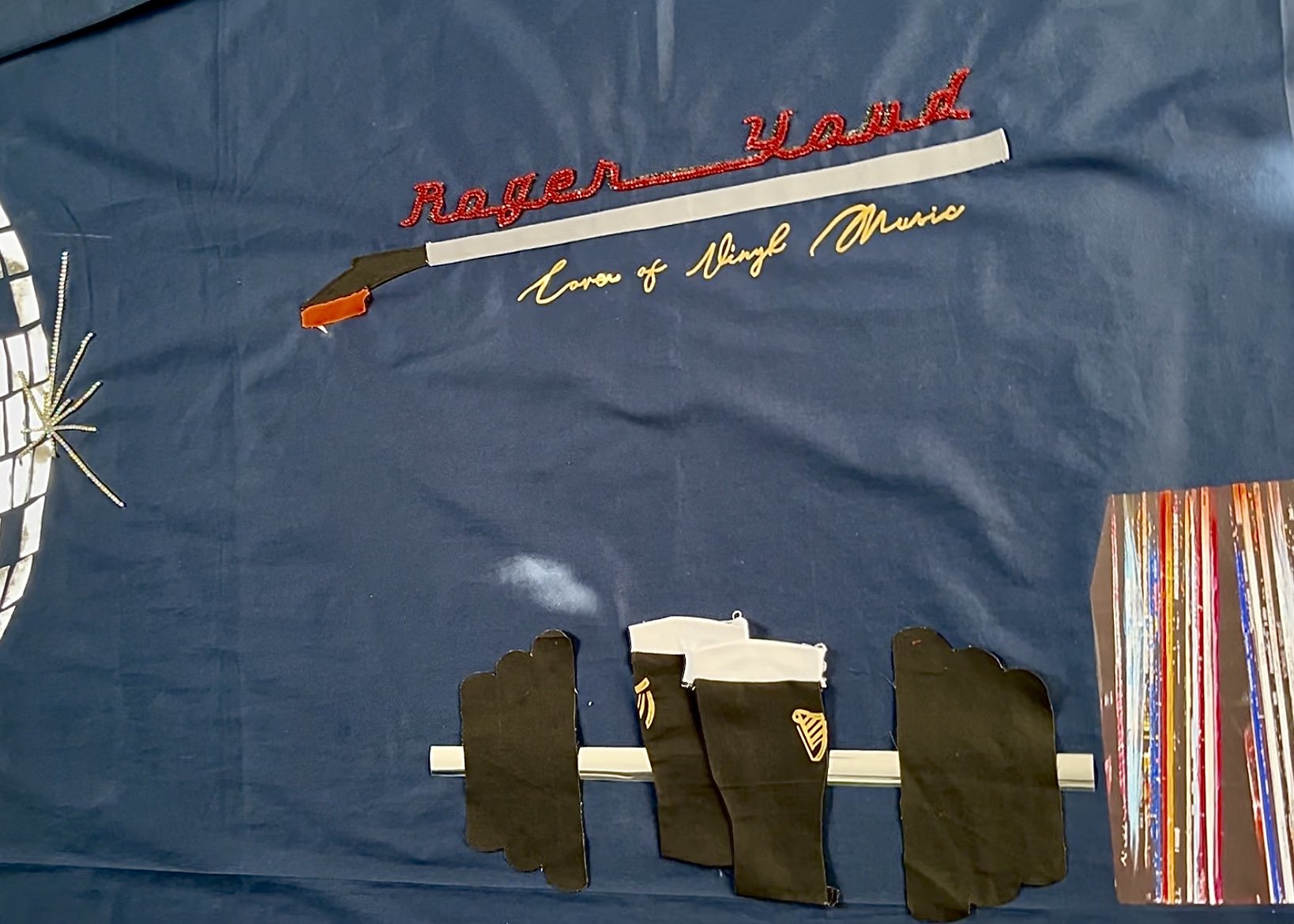
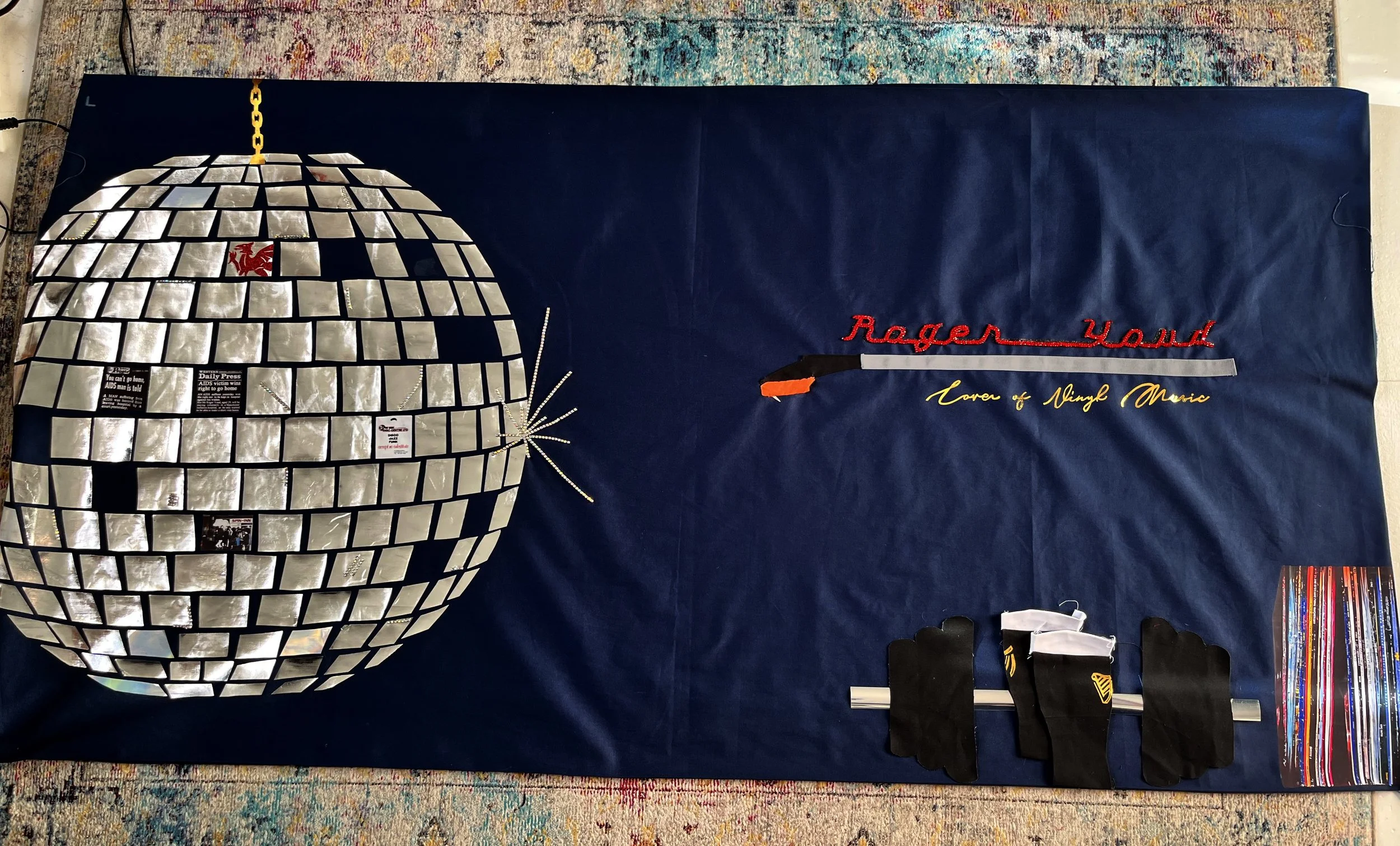
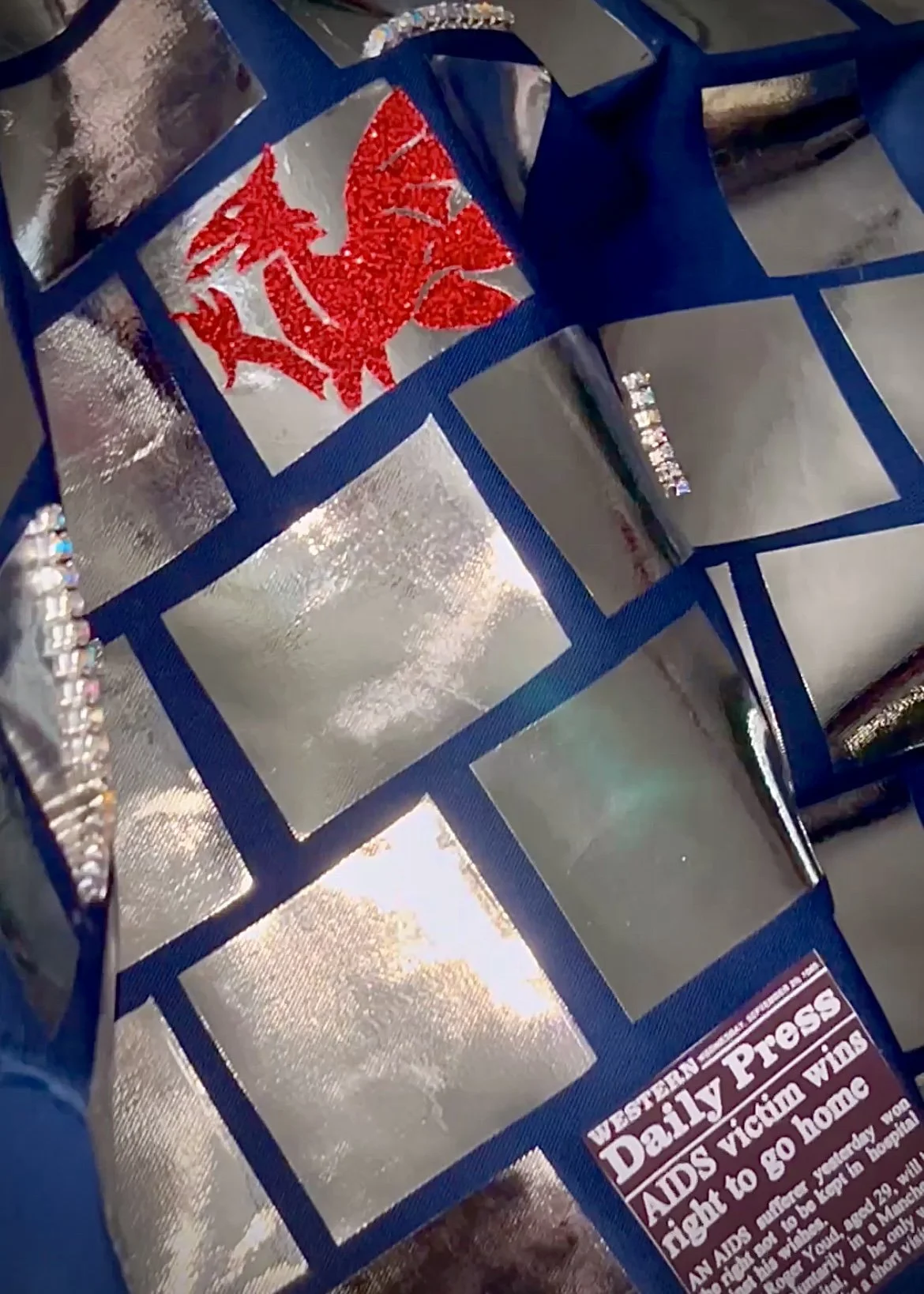
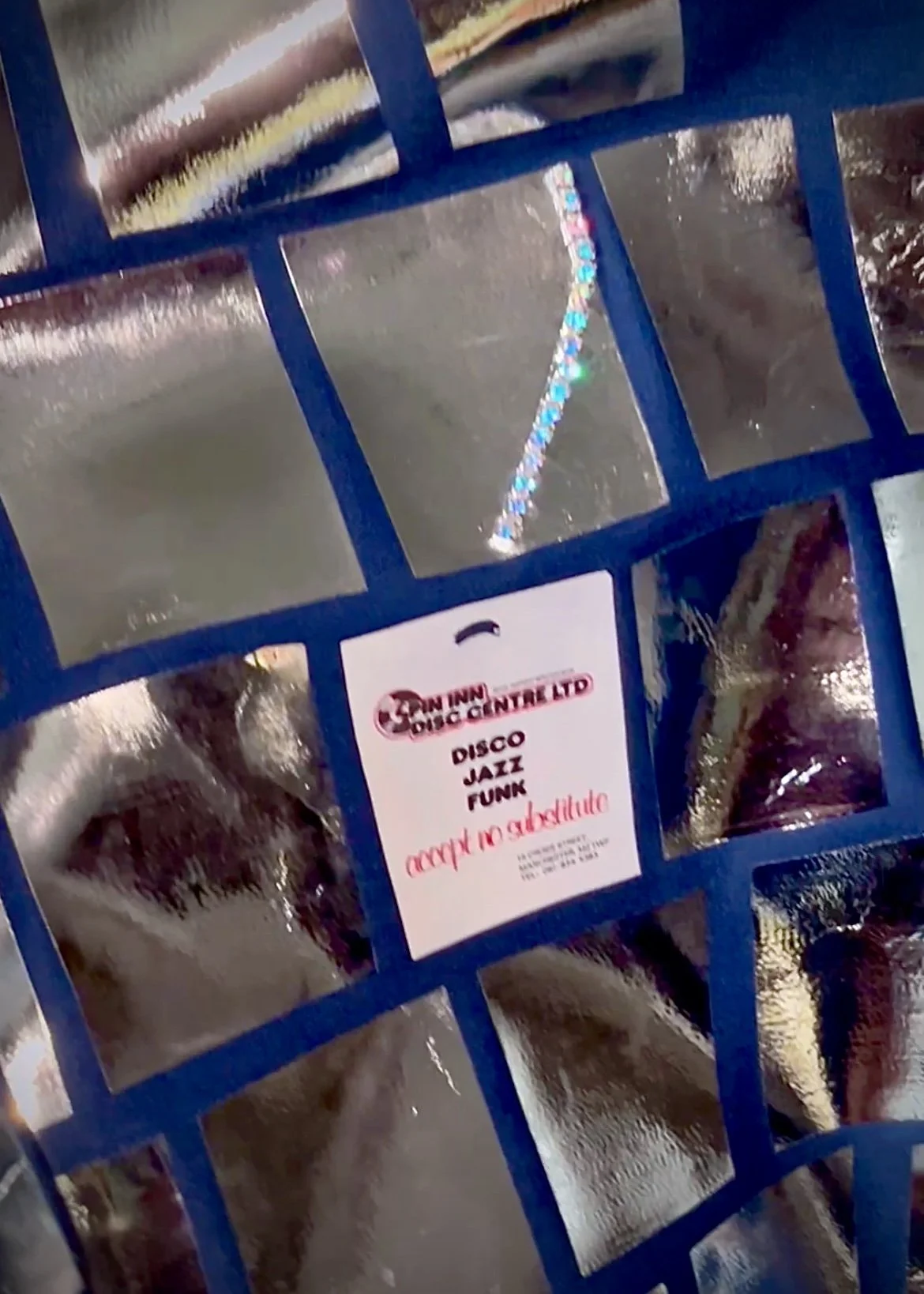
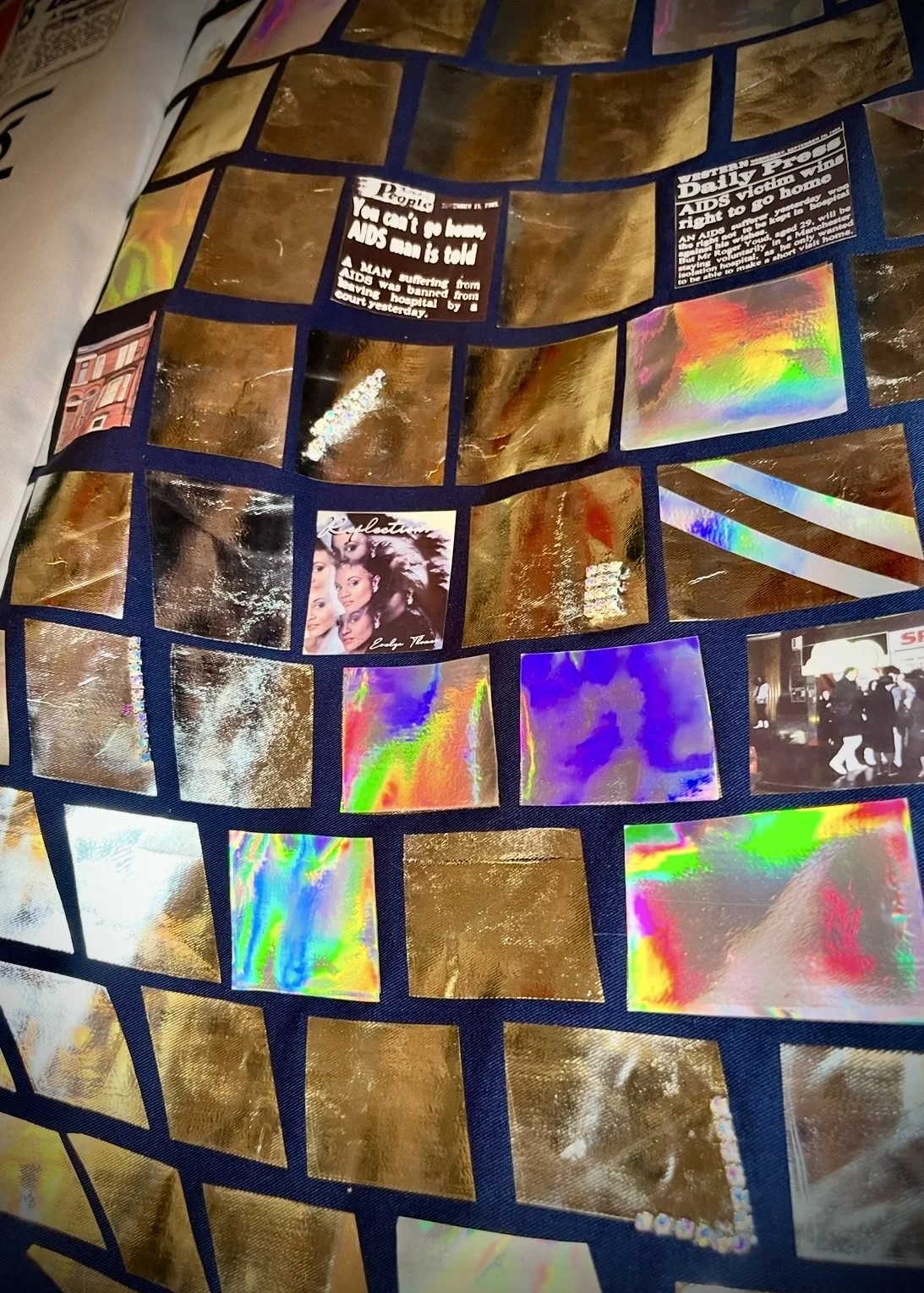
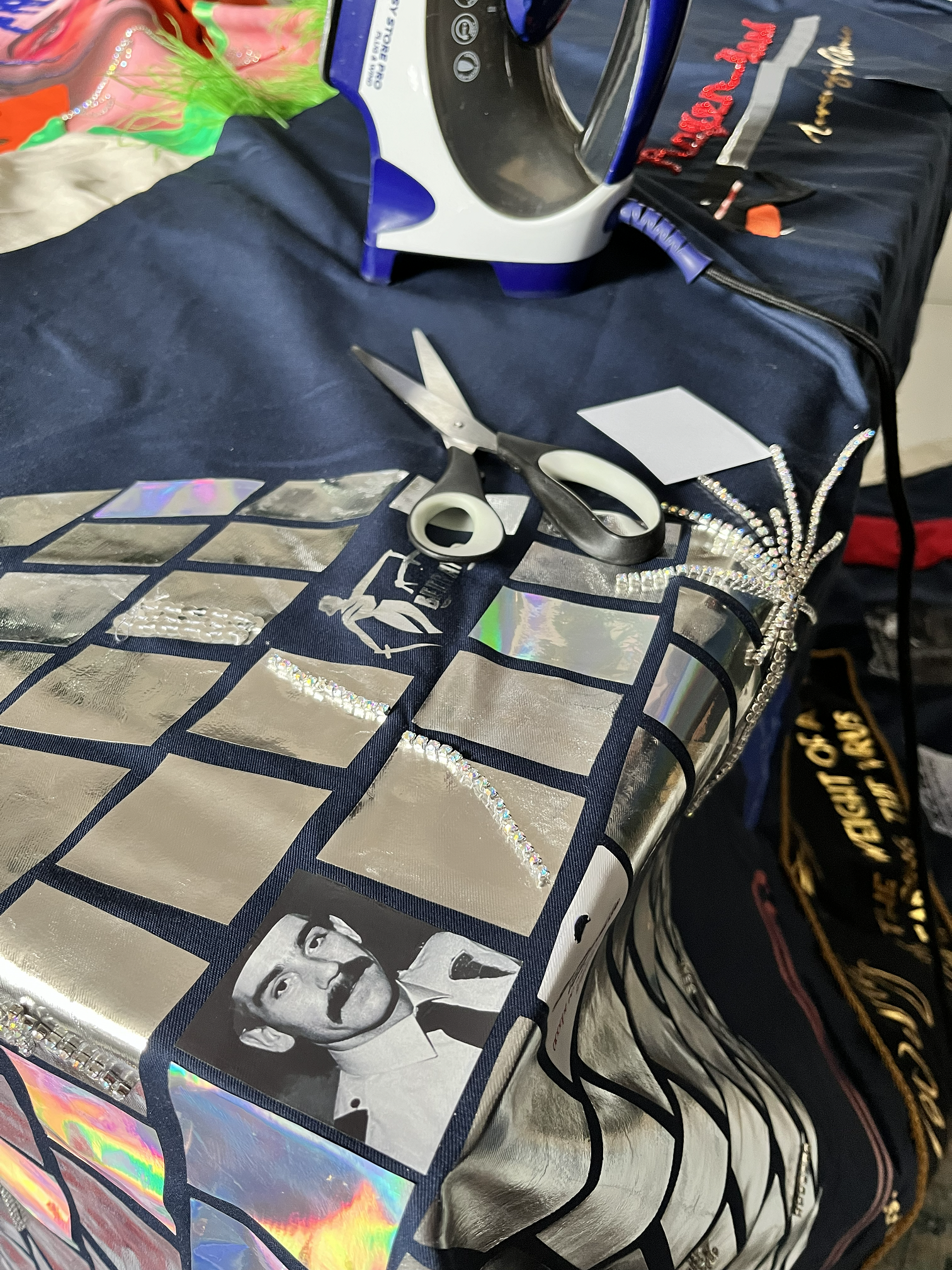
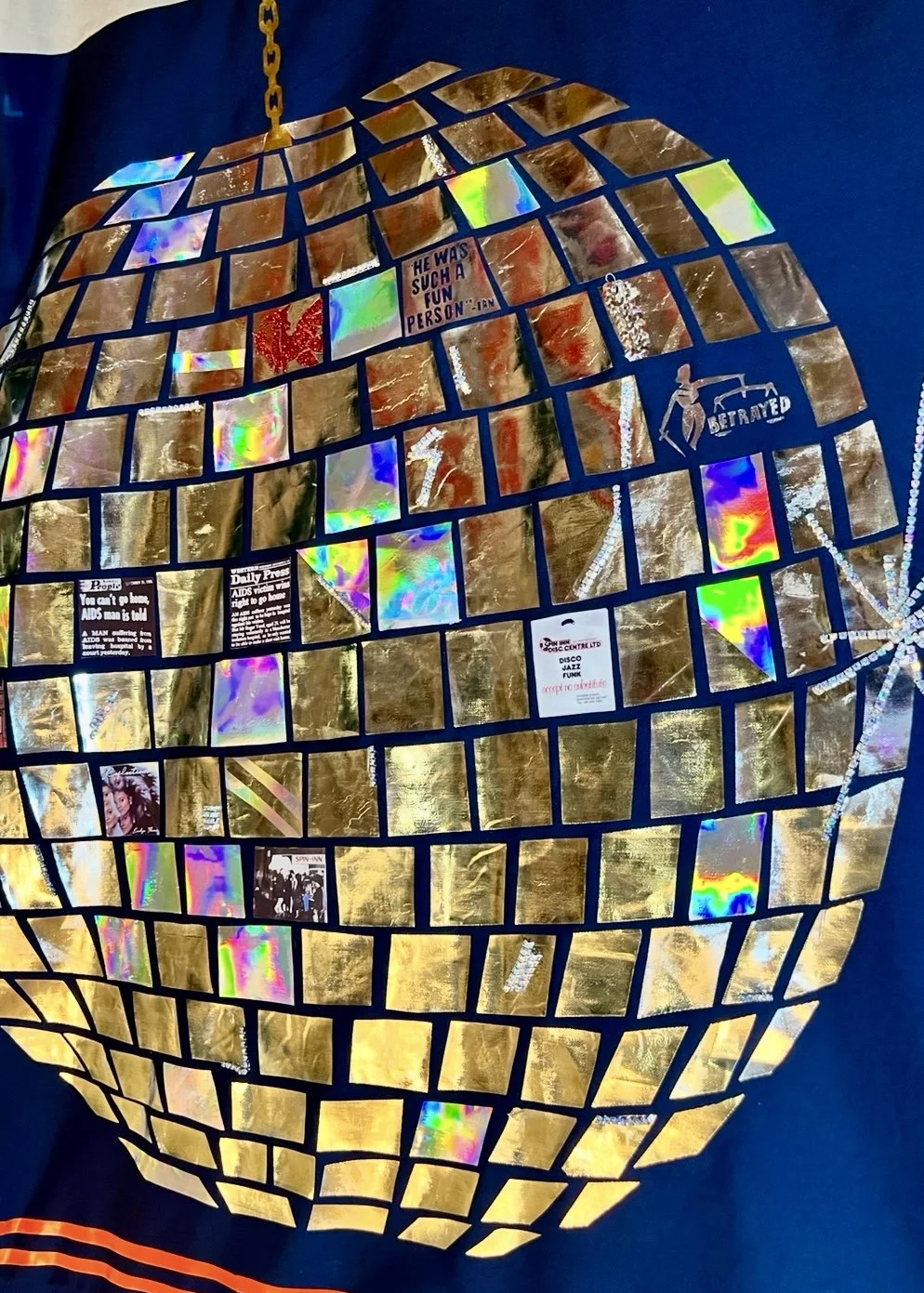
I went with a disco ball design as a means to keep Roger’s life on the quilt private — you have to be up close to learn more about him. The mirror ball, a relic of the 70s disco scene that would still have spun into the 80s, serves as a literal and metaphorical reflection; as someone living with HIV, it is likely Roger did a great deal of inward looking, no doubt reflecting on his life and his detainment while lying in the isolation ward before he moved to the main ward.
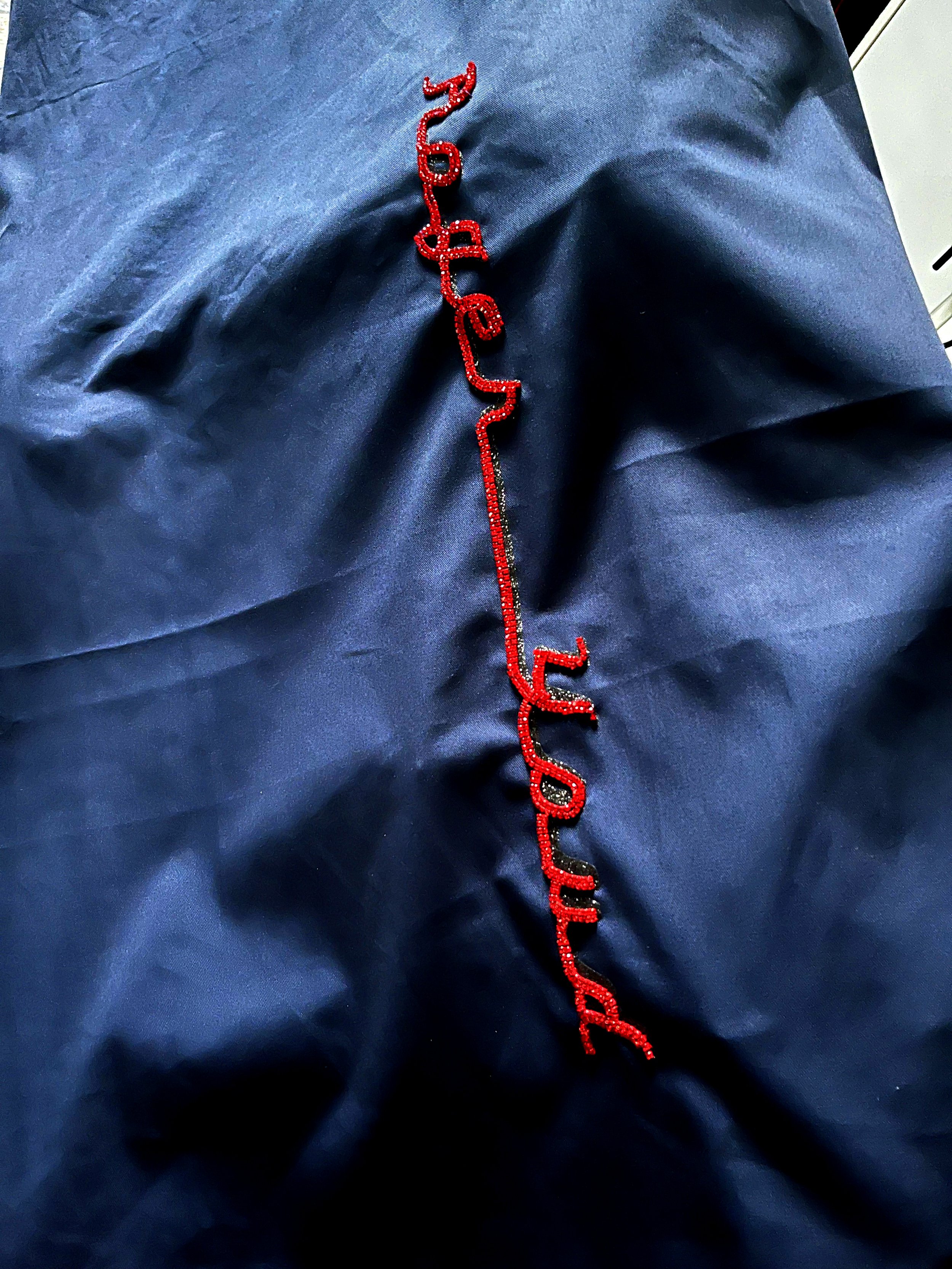
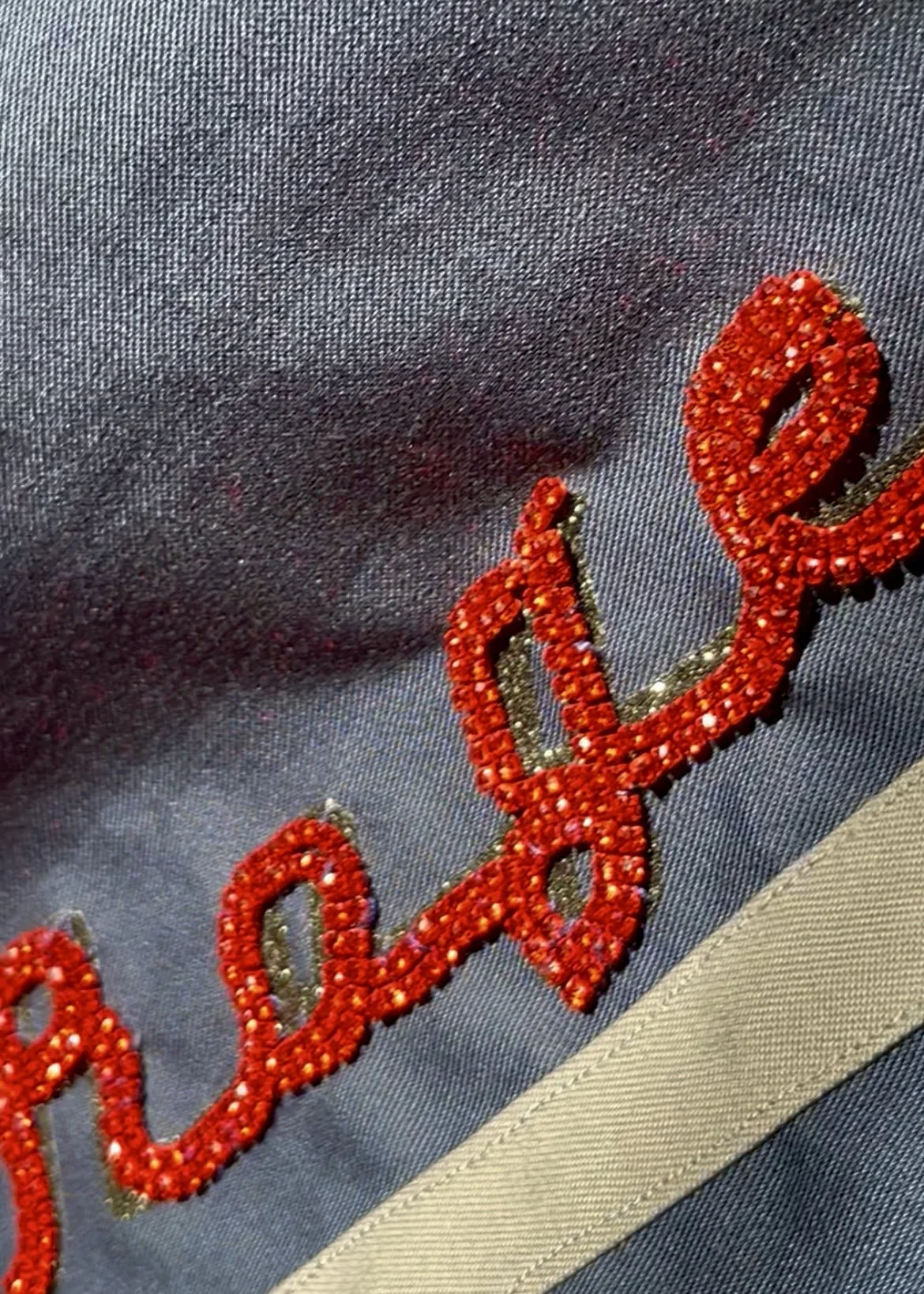
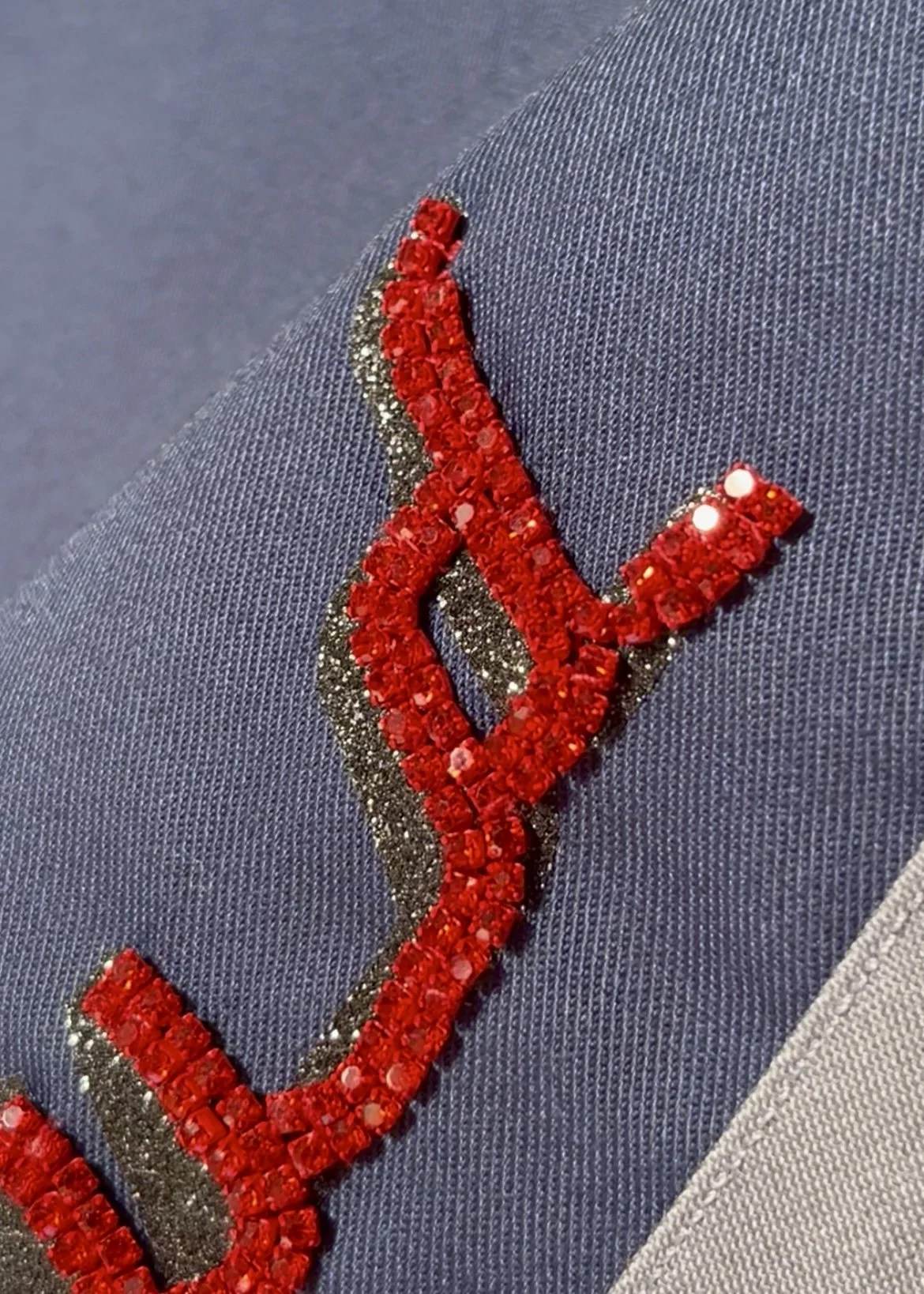
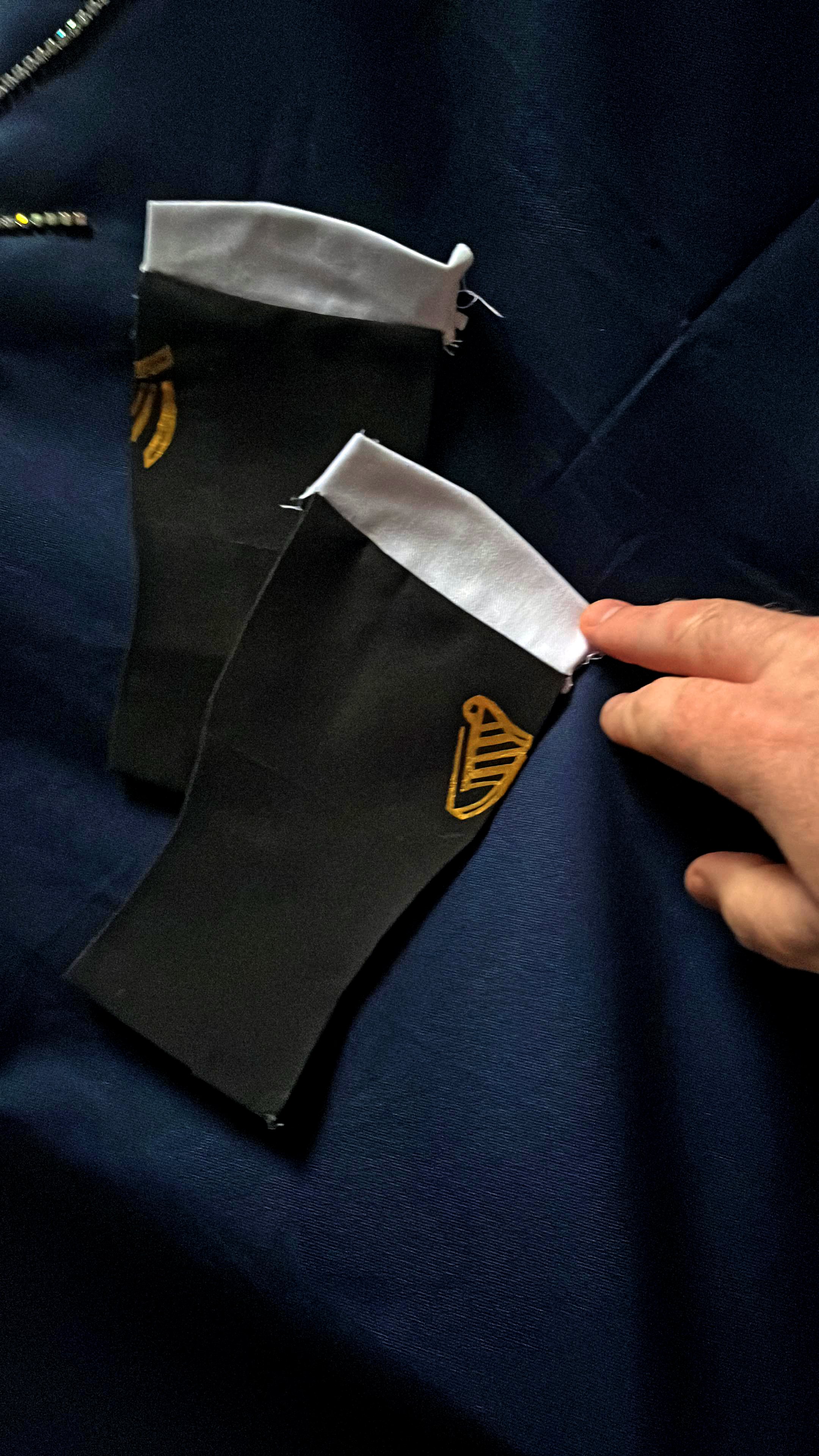
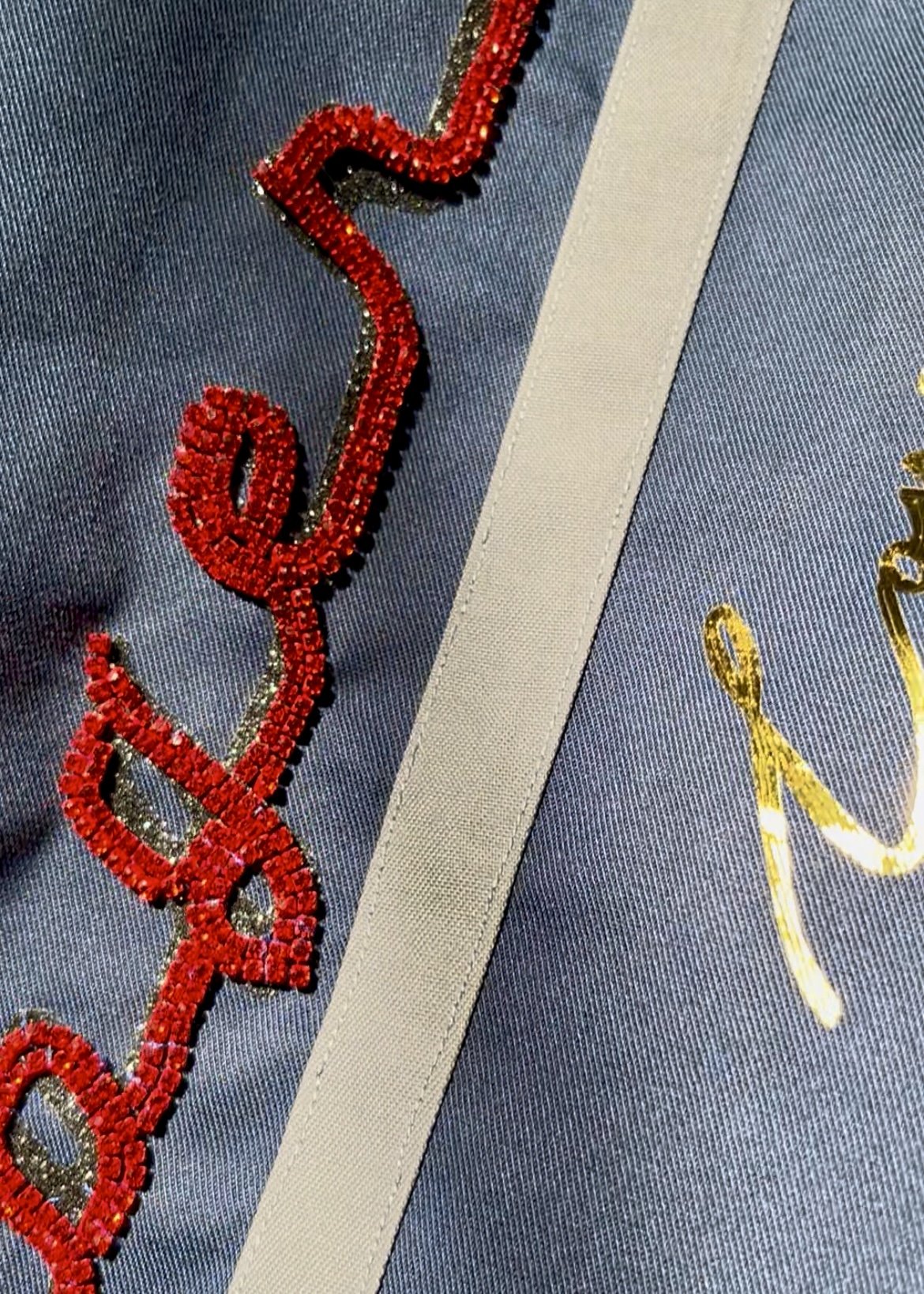
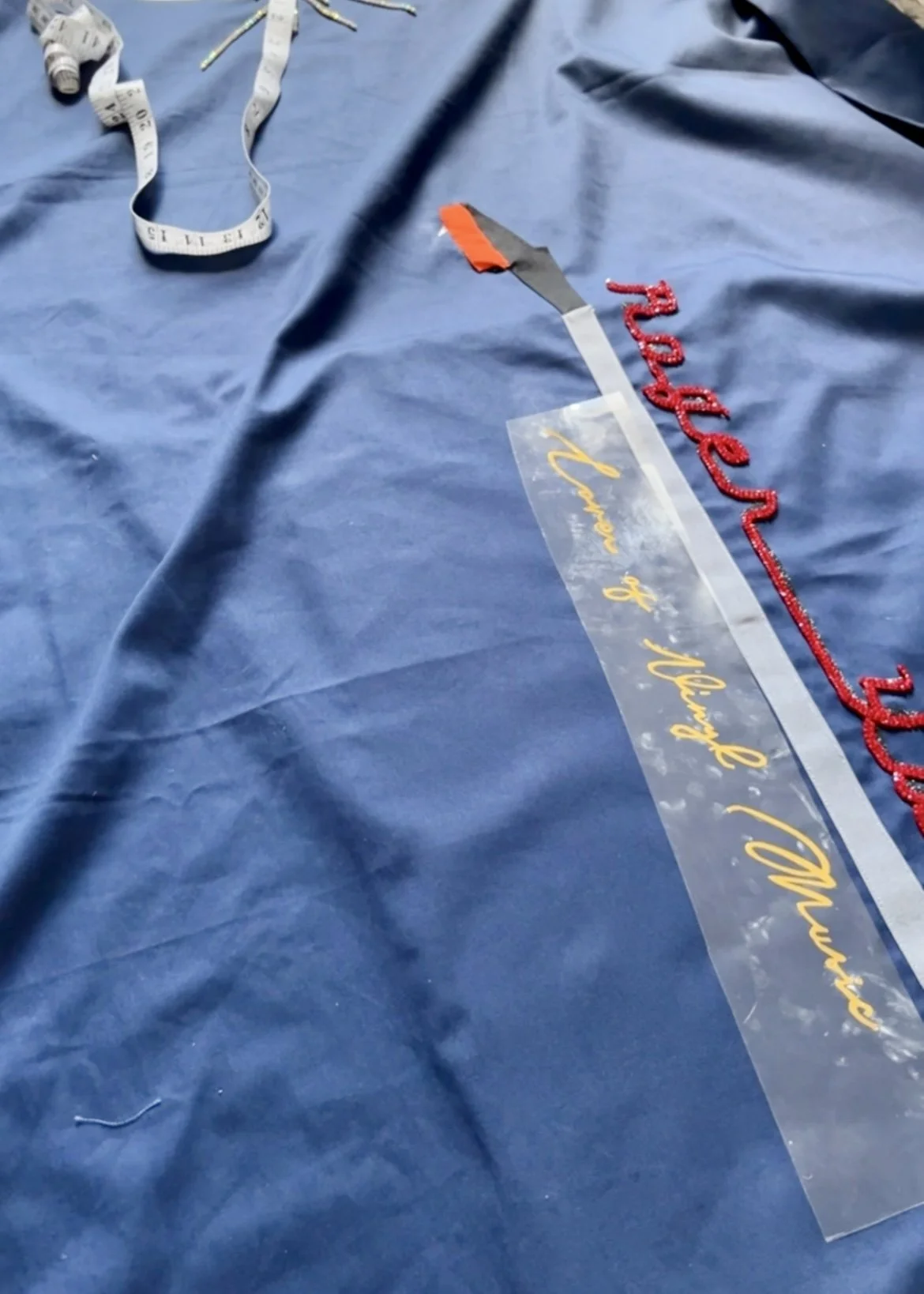
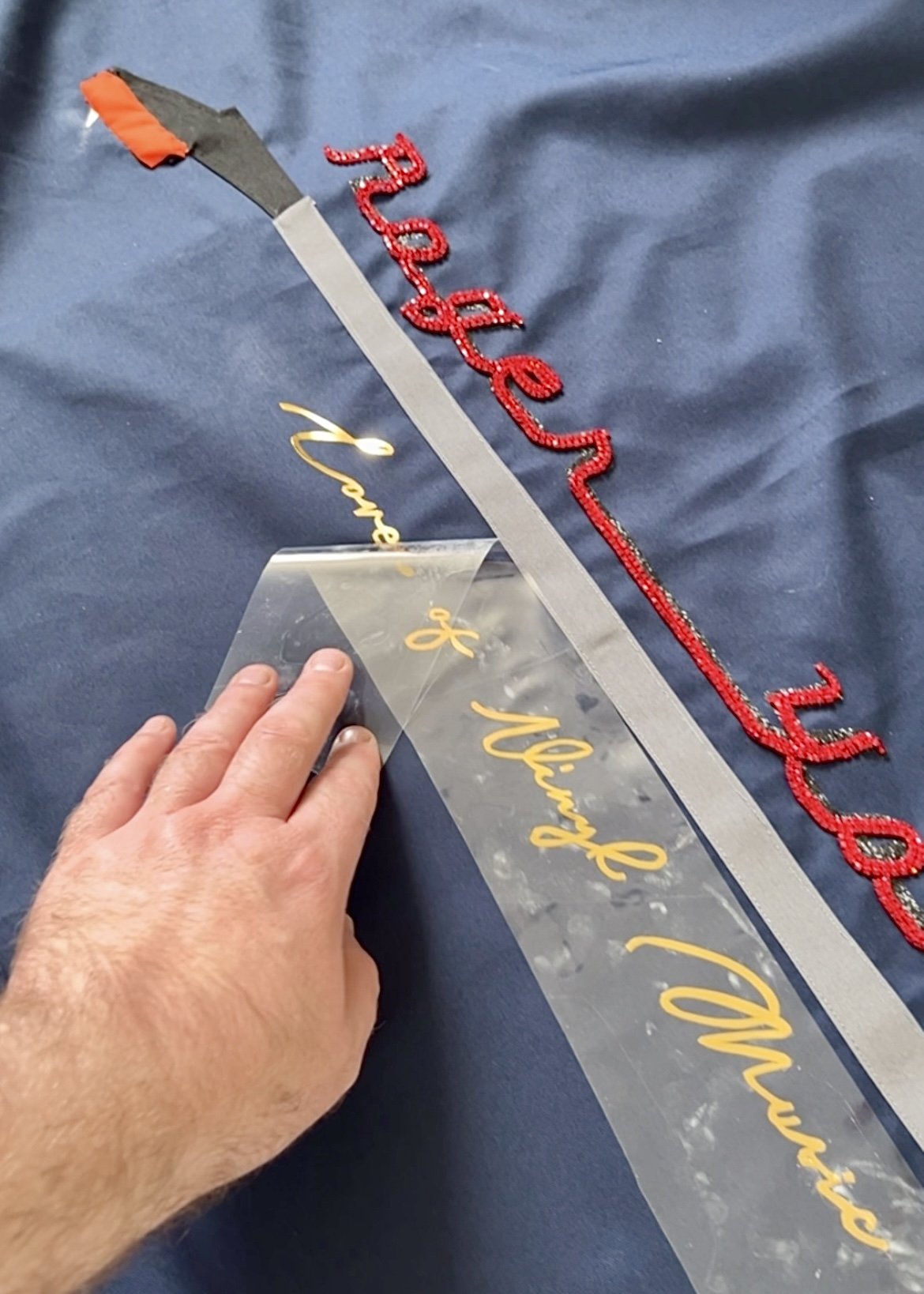
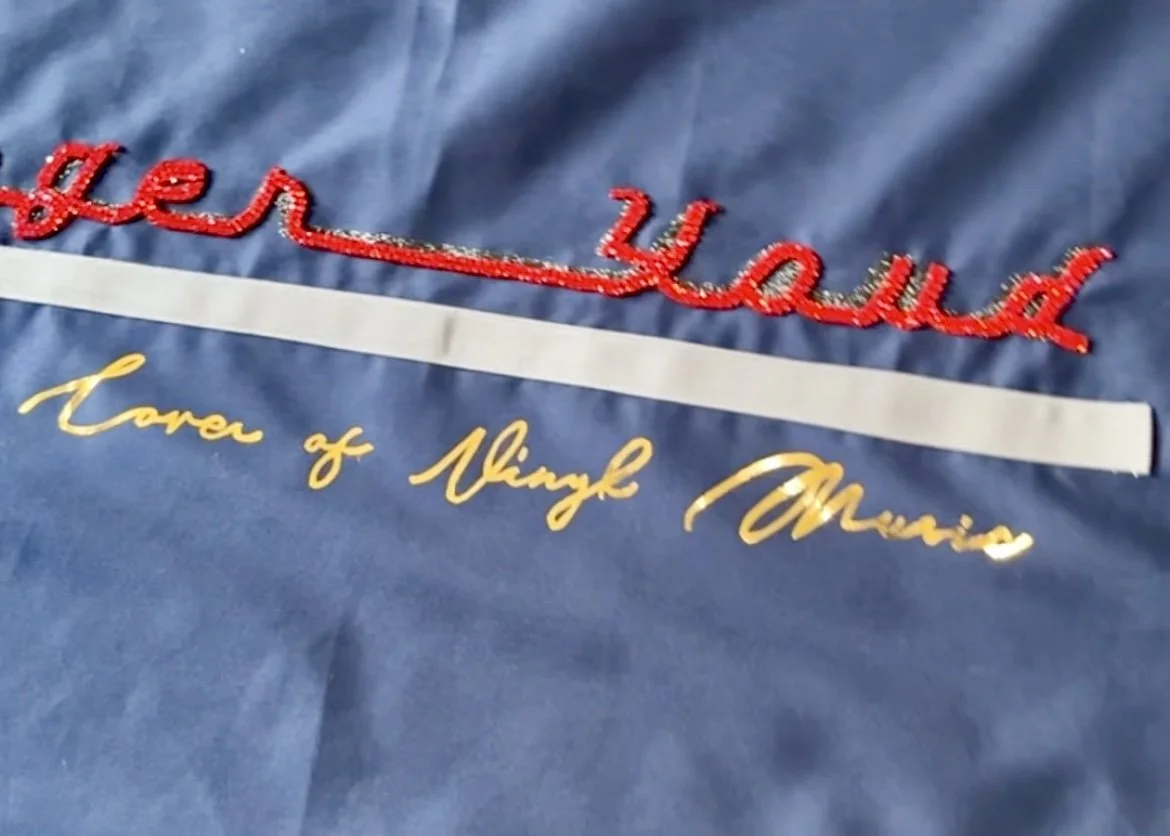
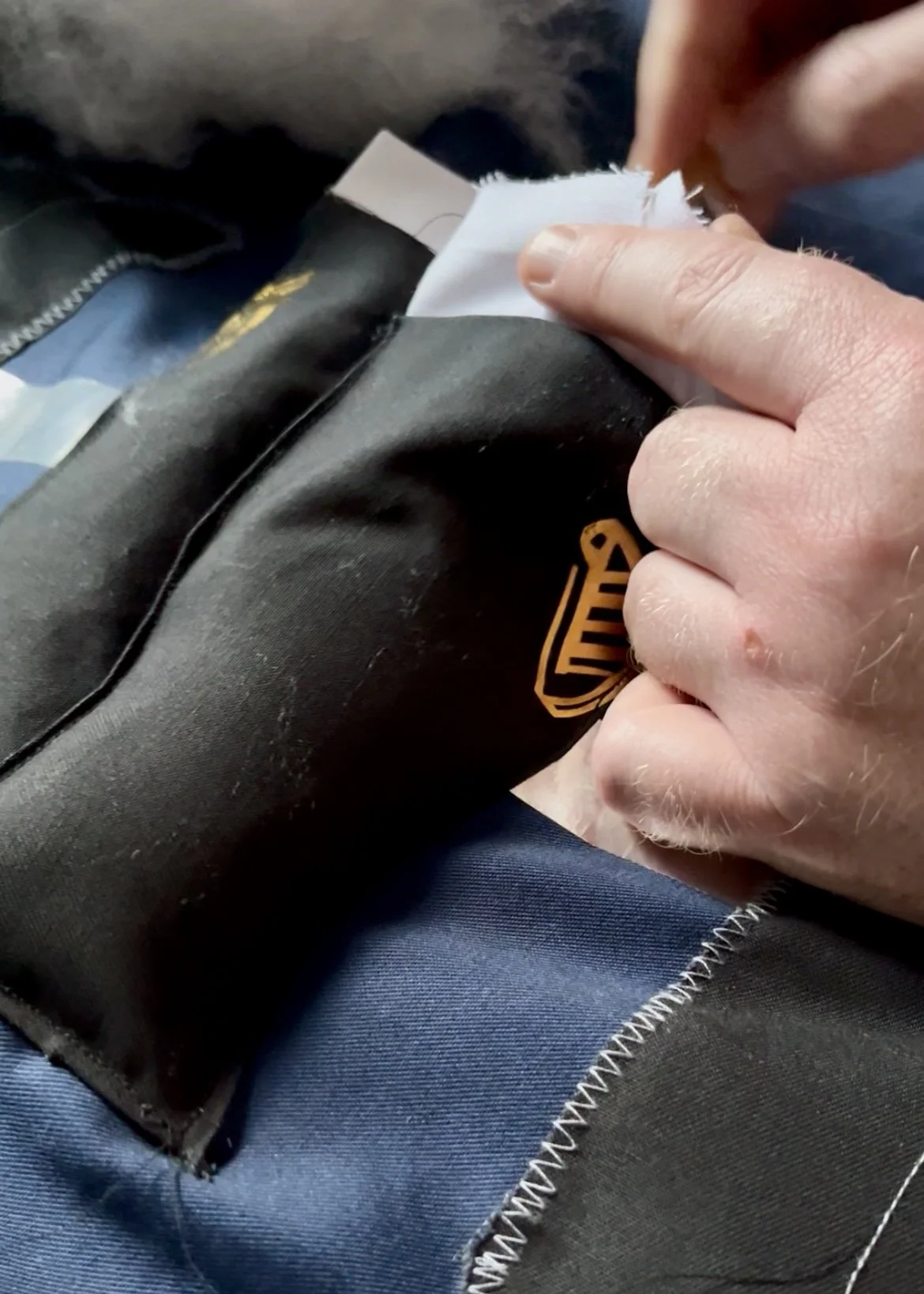
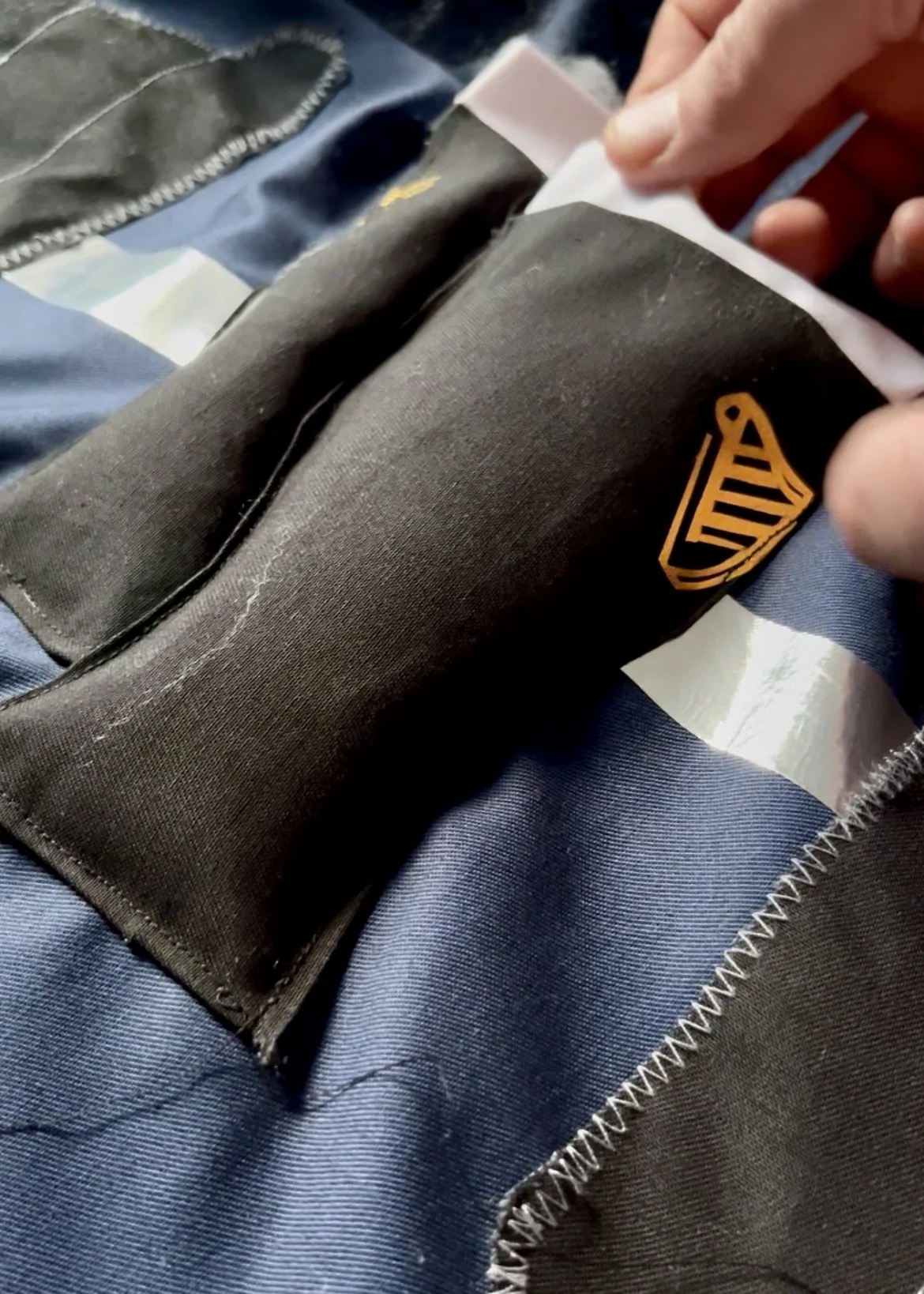
Stacks of vinyl represent his passion for music, two Guinness and gym weights a nod to the times he went to the gym several times a week with his close friend Ian, the pair jokingly calling themselves “sisters” in affectionate banter and partaking in a post-gym Guinness. Learning Roger was a private person, I omitted his dates of birth and death and made his name slightly smaller than on other quilts, yet set it in red diamantes so it still catches the light — giving his name life, sparkle and movement, red to symbolise the Welsh dragon as his place of birth. The Whitney Houston single with a price sticker and the year “1985” marks the track that was number one in the UK at the time of his death, and the arm of a record player separates his name from where I’d usually place an occupation; in gold vinyl it simply reads “Lover of vinyl music.”
In some of the panes of the mirror ball are fragments of a carrier bag and the shop front from ‘Spin Inn’, his favourite vinyl music shop in Manchester, a photograph of his home at the time, the glossy sleeve of Evelyn Thomas’s single "Reflections," two press clippings documenting his detainment and, contrastingly, a clipped headline announcing his successful appeal; a small red Welsh dragon is lodged between shards, while a miniature Lady Justice with the word “Betrayal” stretched across both scale pans (at the request of his brother), reflections learnt from research and those who knew Roger best.

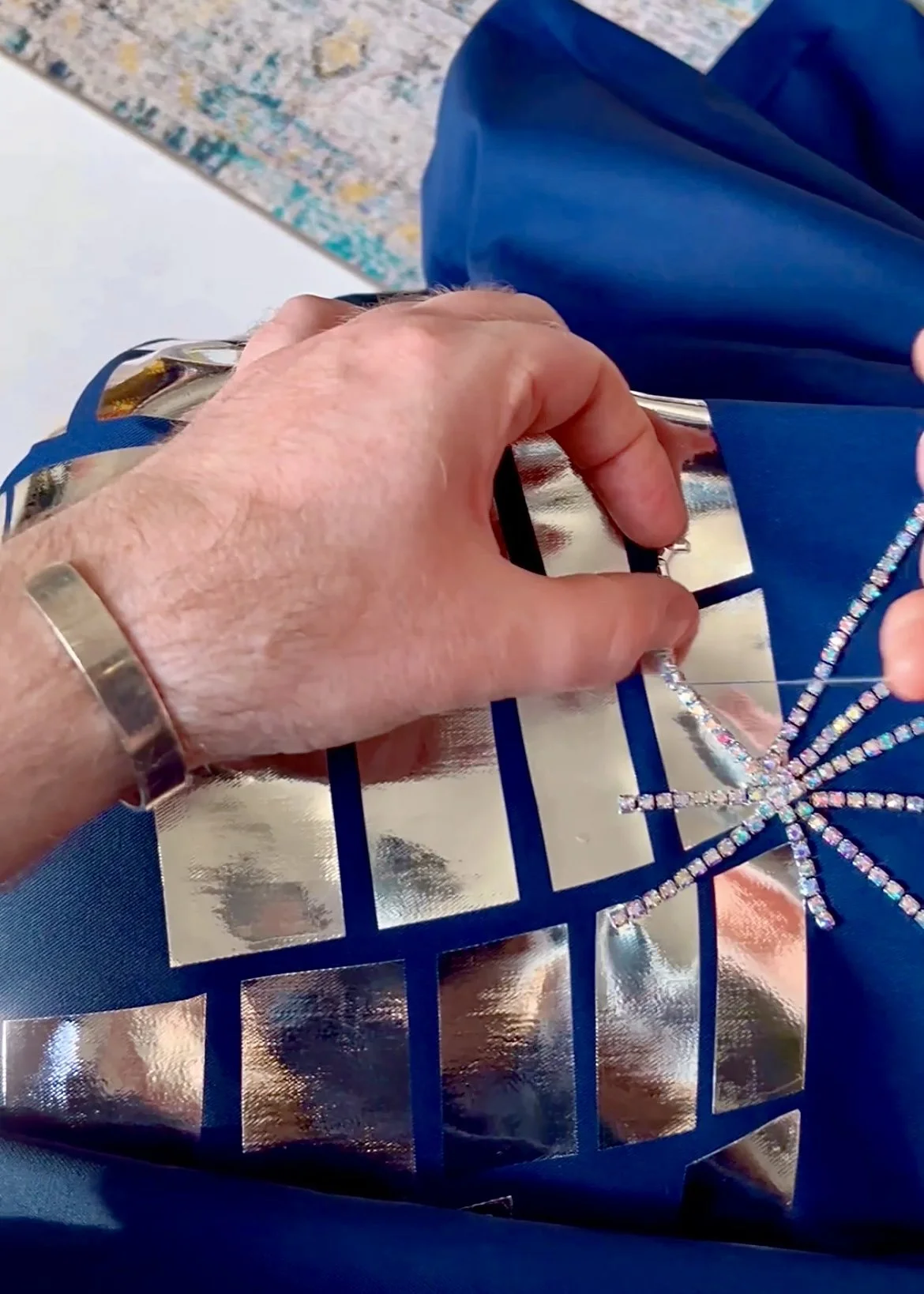
SHANE SNAPE
1959 - 1992
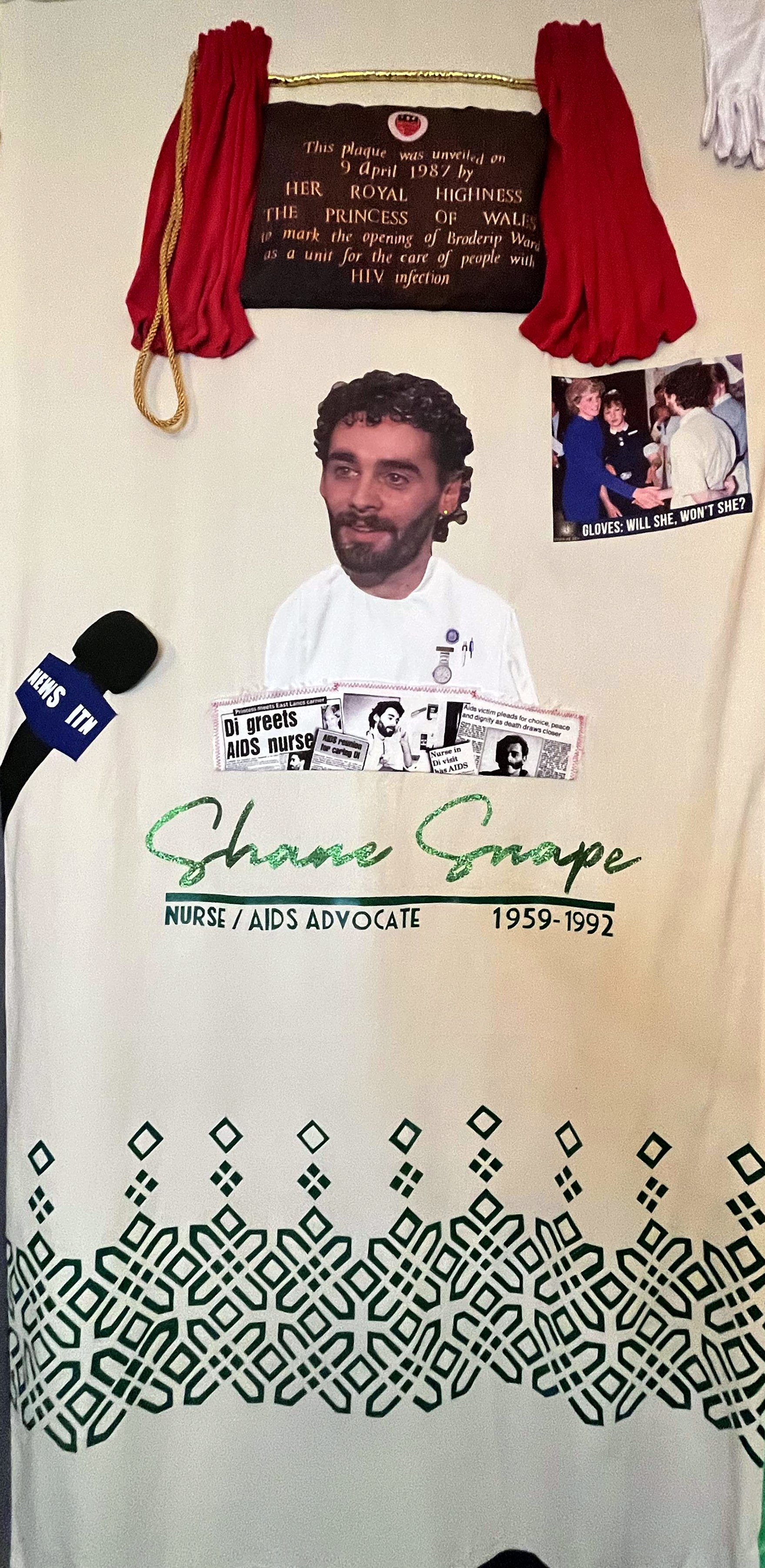
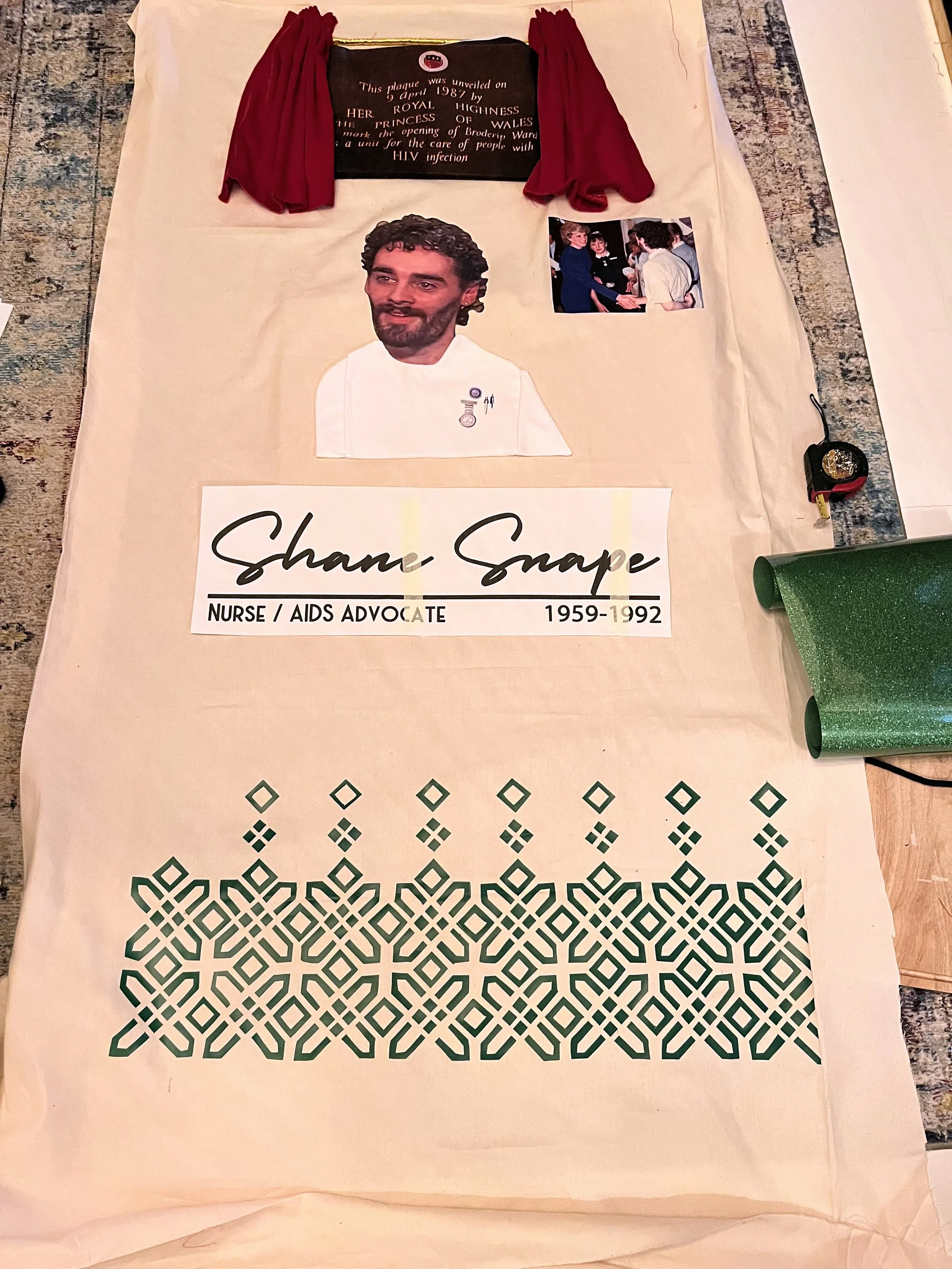
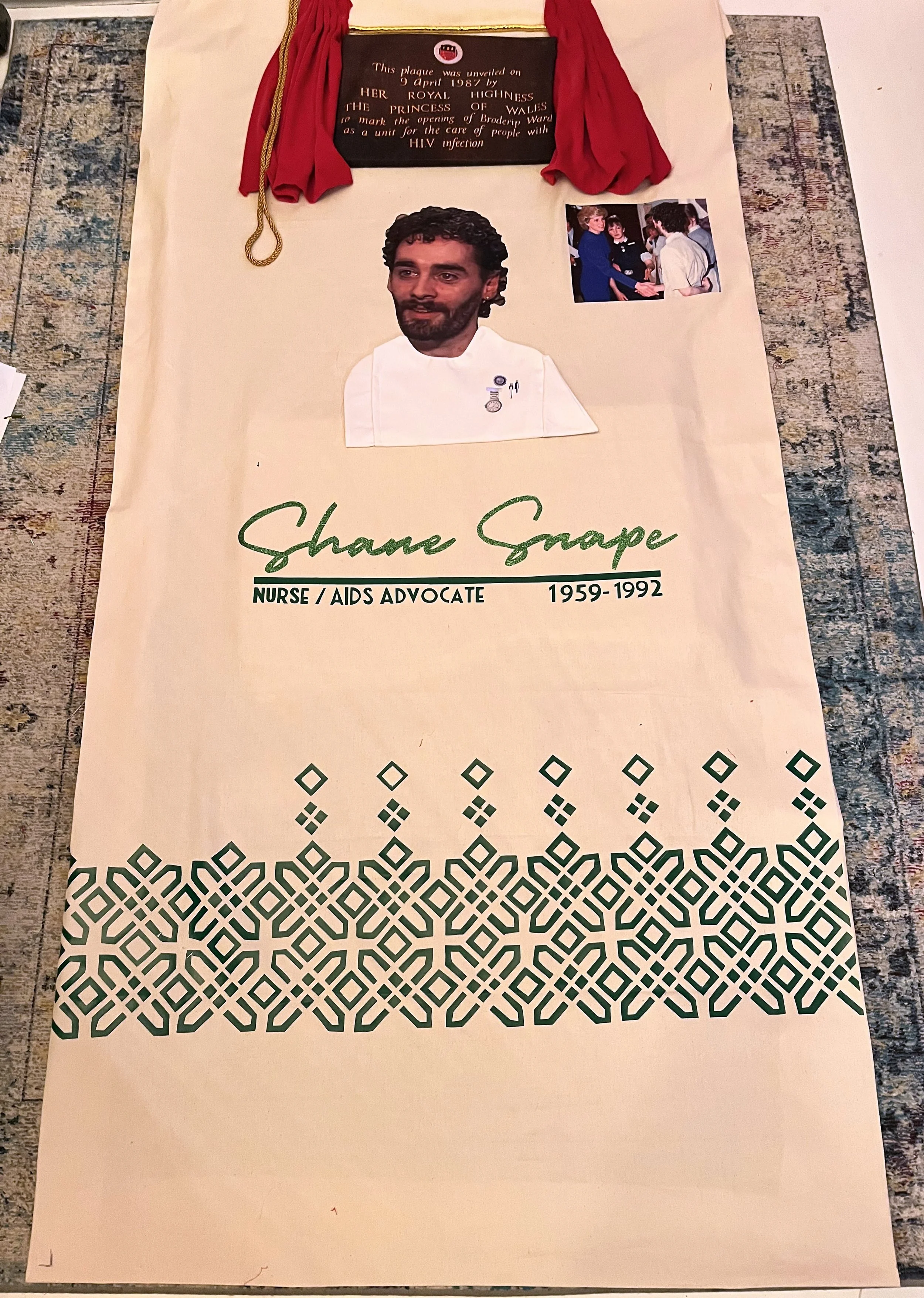
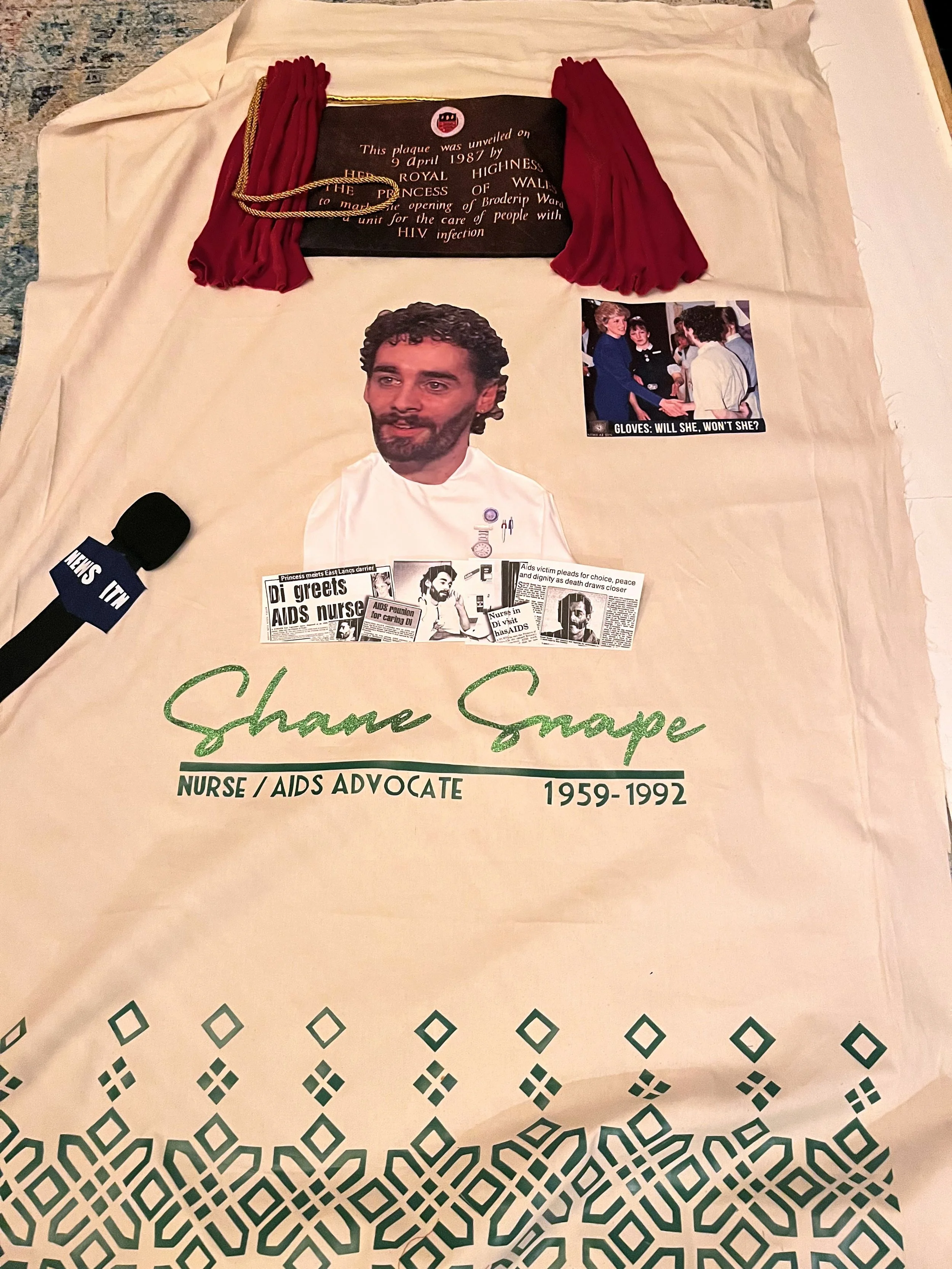
Shane Snape was a state‑qualified nurse who played a key role in establishing the Broderip Ward, the UK’s first dedicated AIDS unit, which opened at London’s Middlesex Hospital in February 1987.
On the day Princess Diana formally opened the ward, Shane and patient Ivan Cohen crossed paths: Ivan was receiving care while Shane stood among the nursing staff, and Shane later revealed to the Princess and assembled media that he himself was living with HIV, a disclosure that underscored the ward’s human reality and the bravery of those who both cared for and were cared for during the early years of the epidemic.
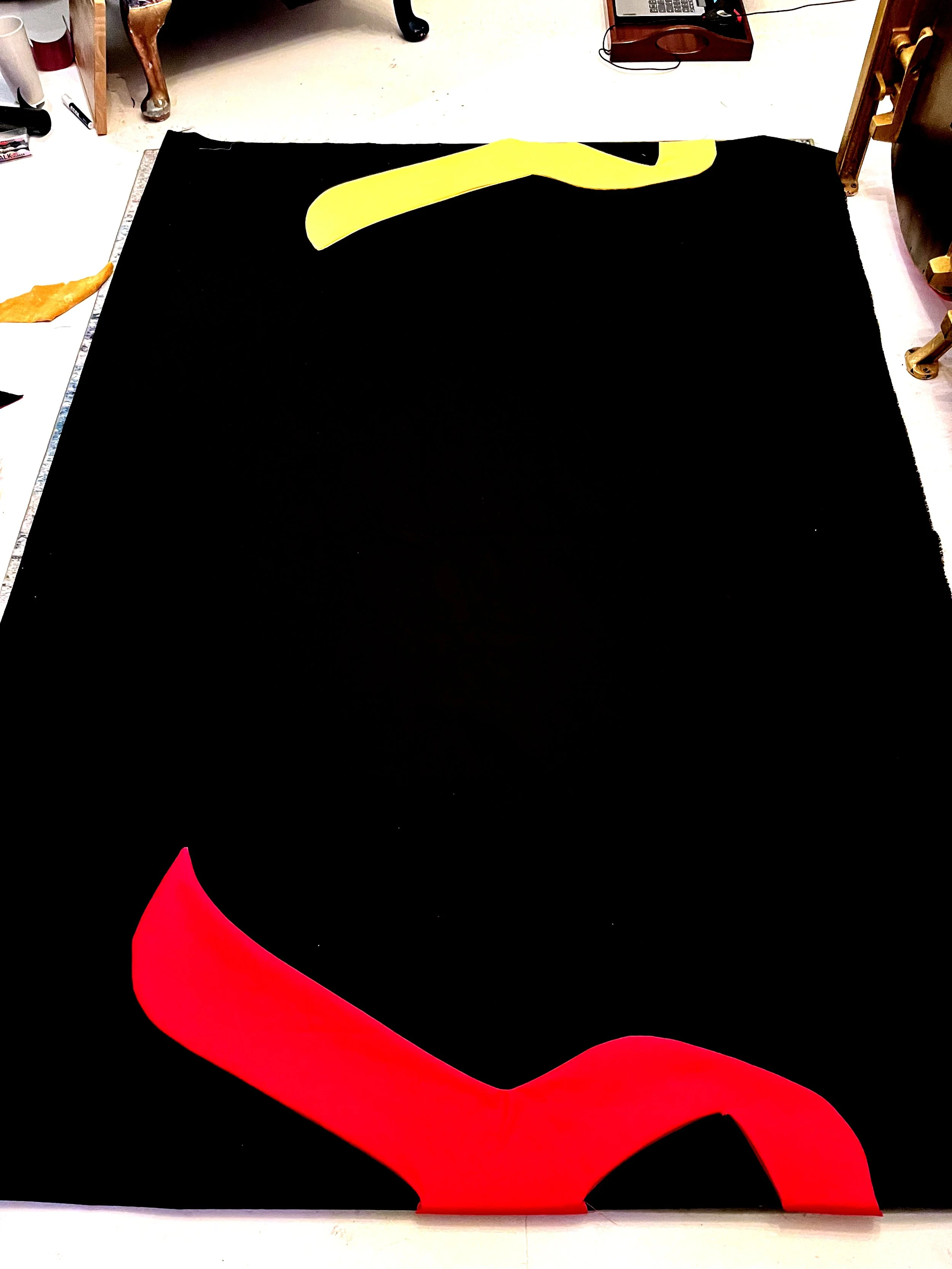
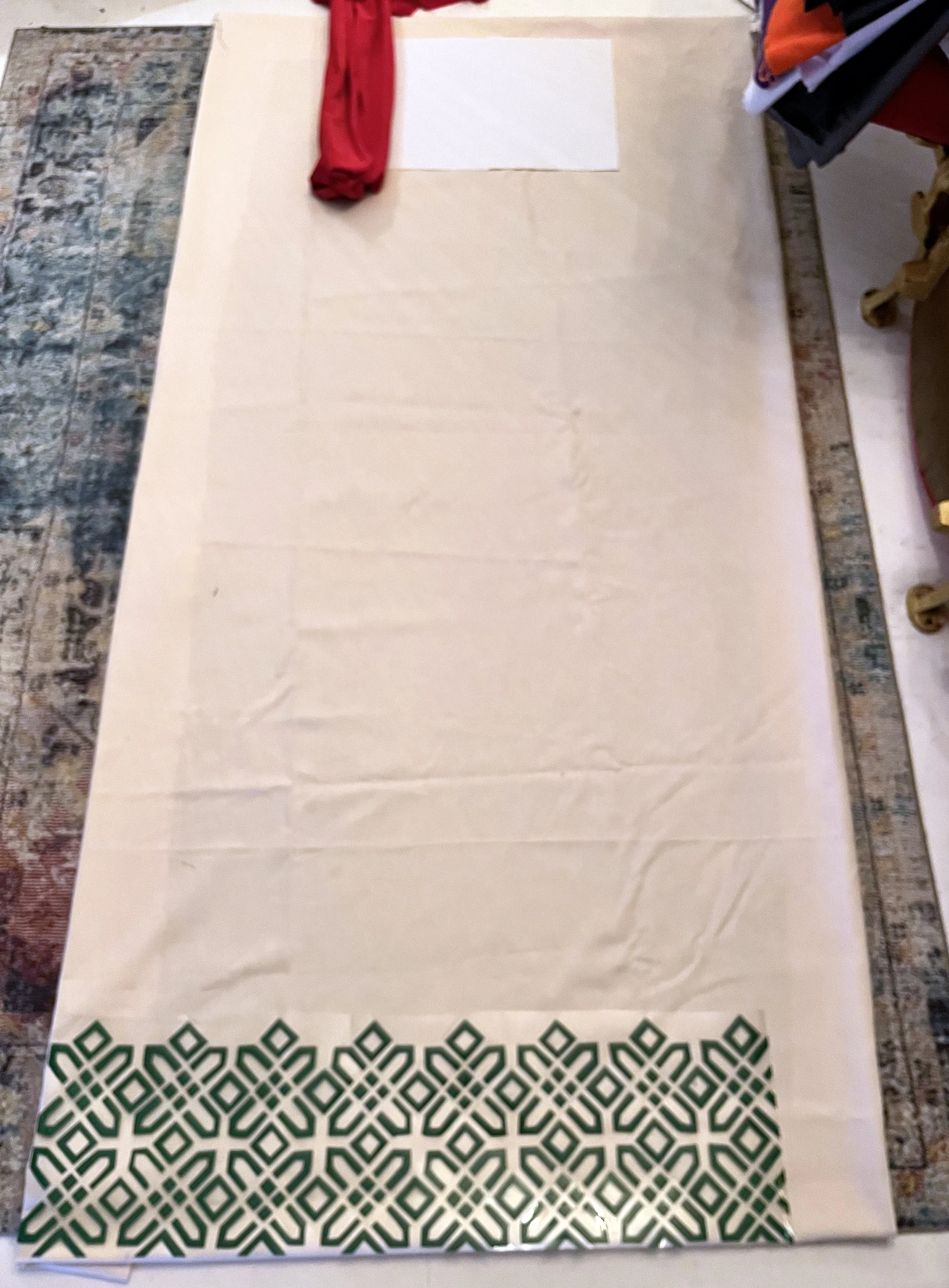
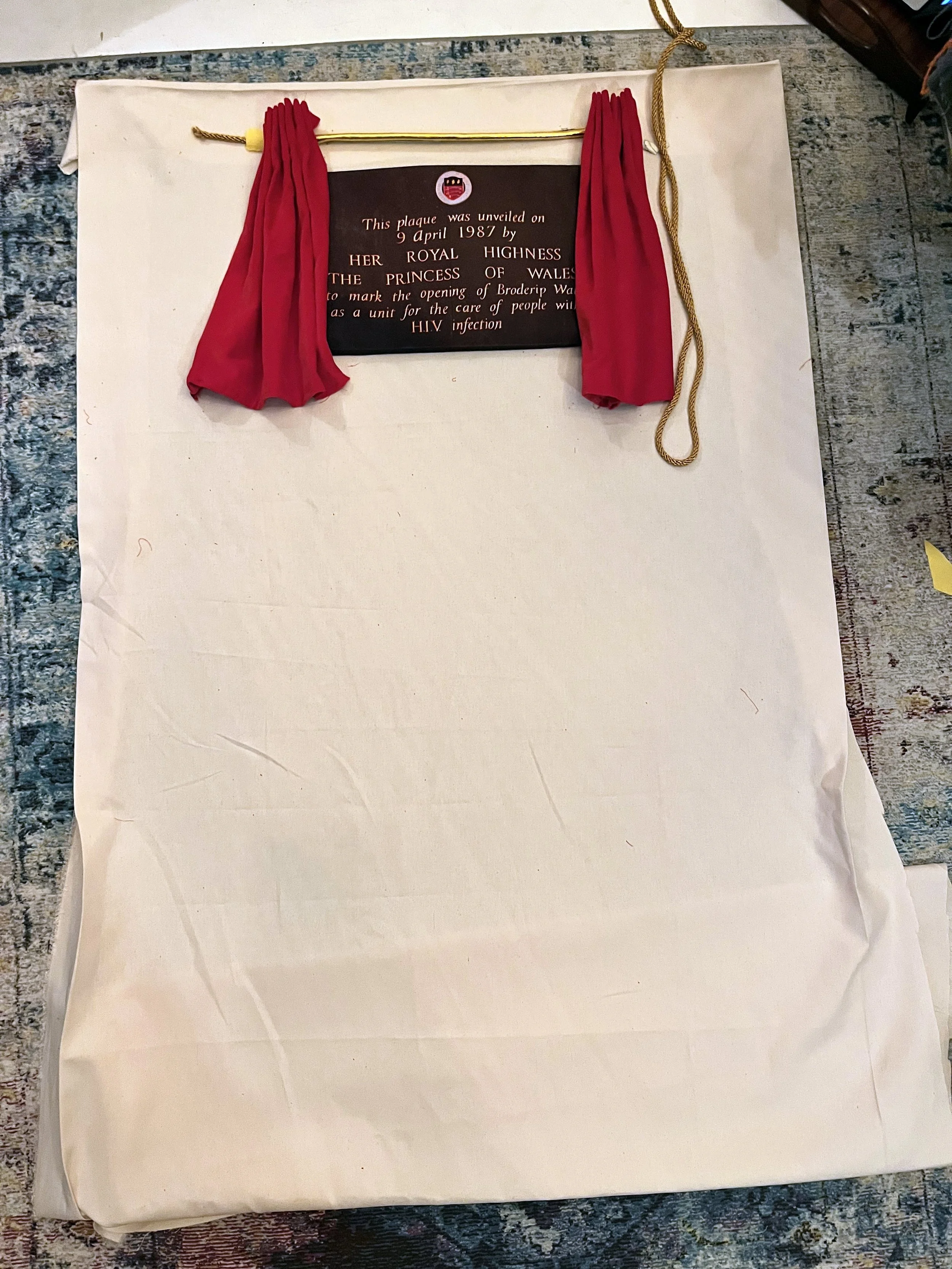
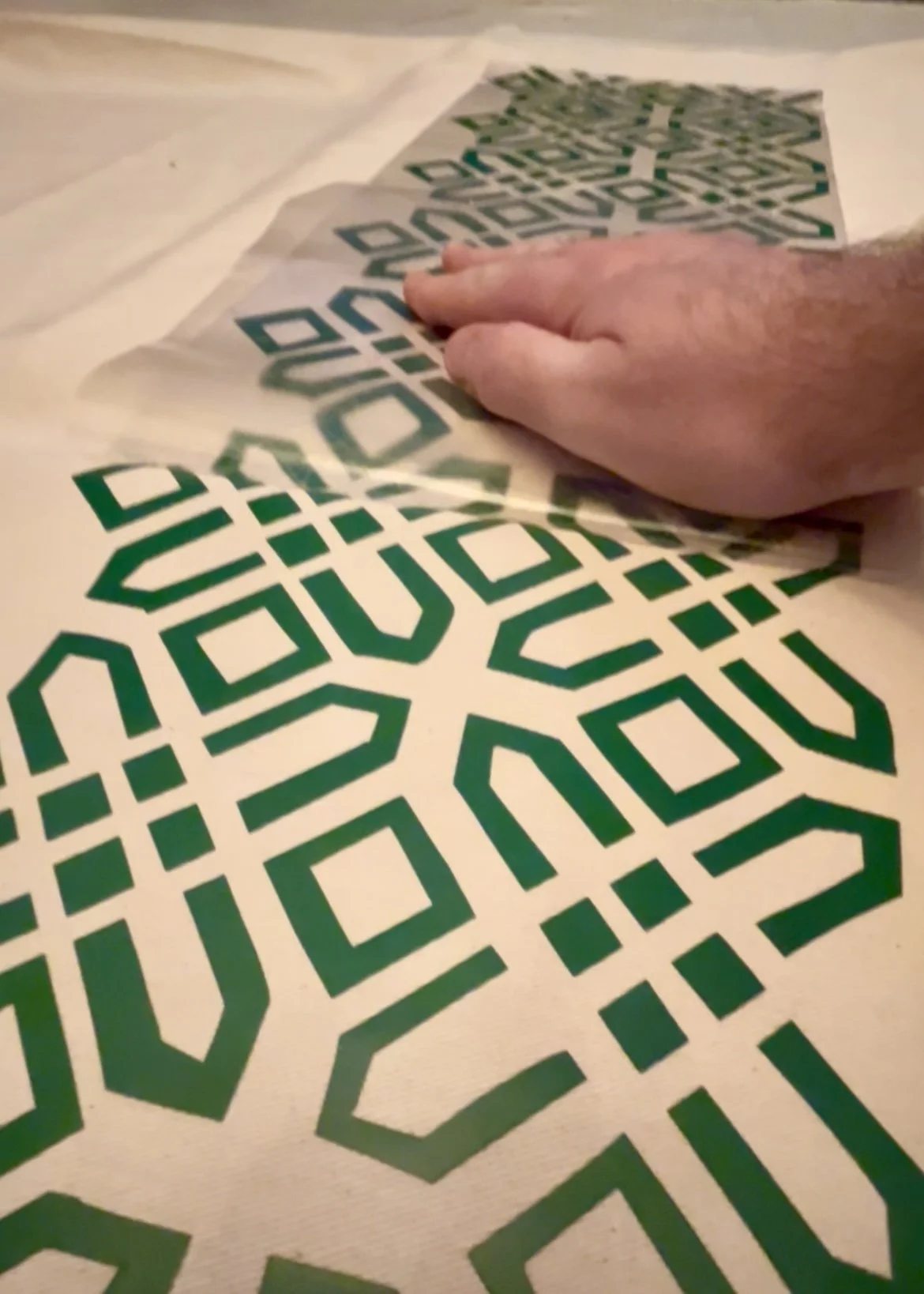
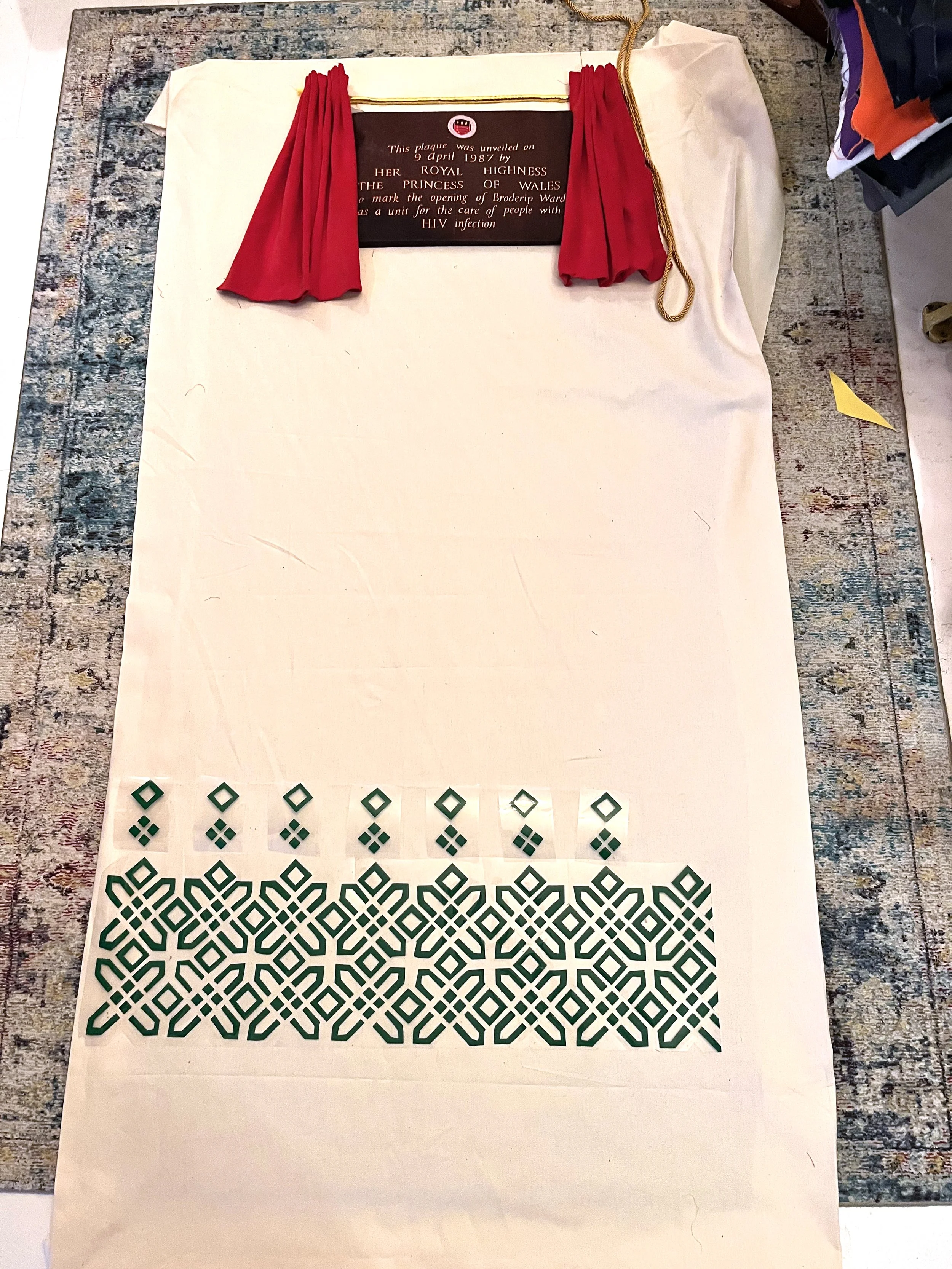
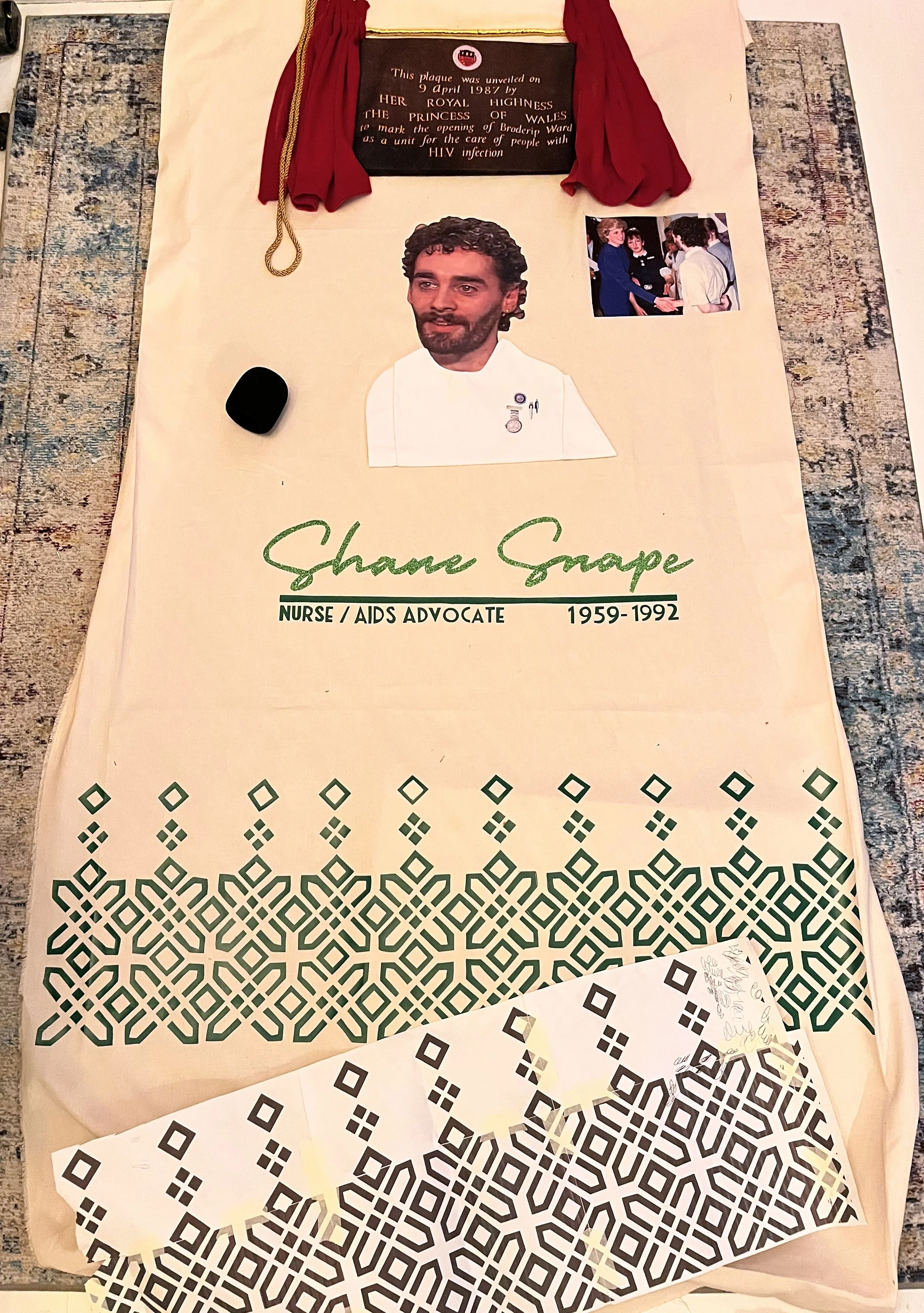
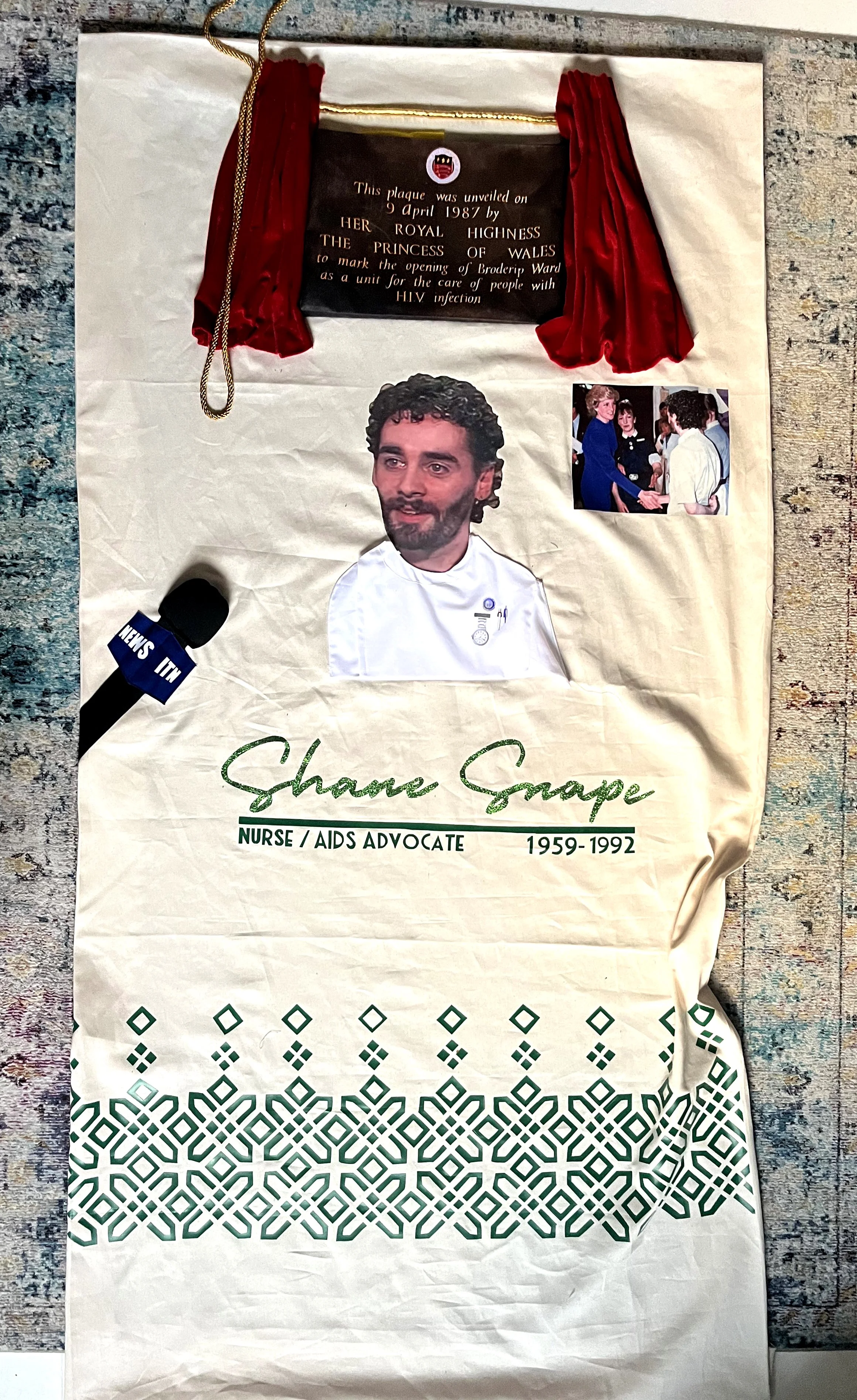
With Shane’s panel I deviated from my original sketch when it dawned on me that the Broderip Ward could be embodied by the fabric curtain that hung from the windows and wrapped the bed bays: a cream cloth stamped with a bottle‑green motif I had to recreate from photographs.
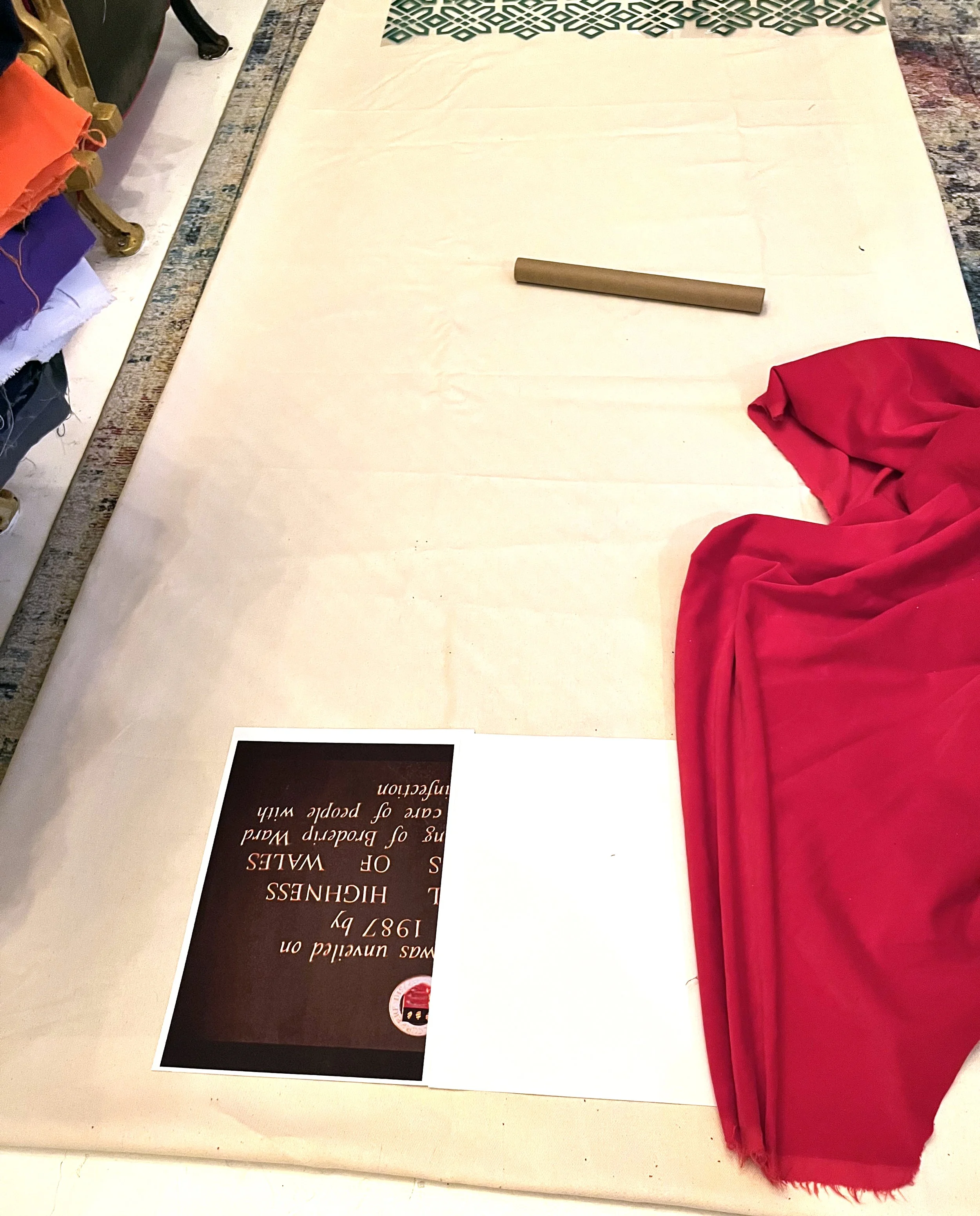
Above I applied a 3D fabric plaque that Princess Diana unveiled on the day, eded with a gold cord and red velvet swags; as Shane spoke to ITN and shared his diagnosis he also responded to the sensationalist speculation that had mounted since the Princess announced she was opening the AIDS ward — would she wear gloves? She didn’t, of course, so I sewed a pair of white, elbow‑length gloves, the sort royals might wear, to the top of the quilt, a quiet, literal gesture that she didnt wear gloves.


Canvas Edge
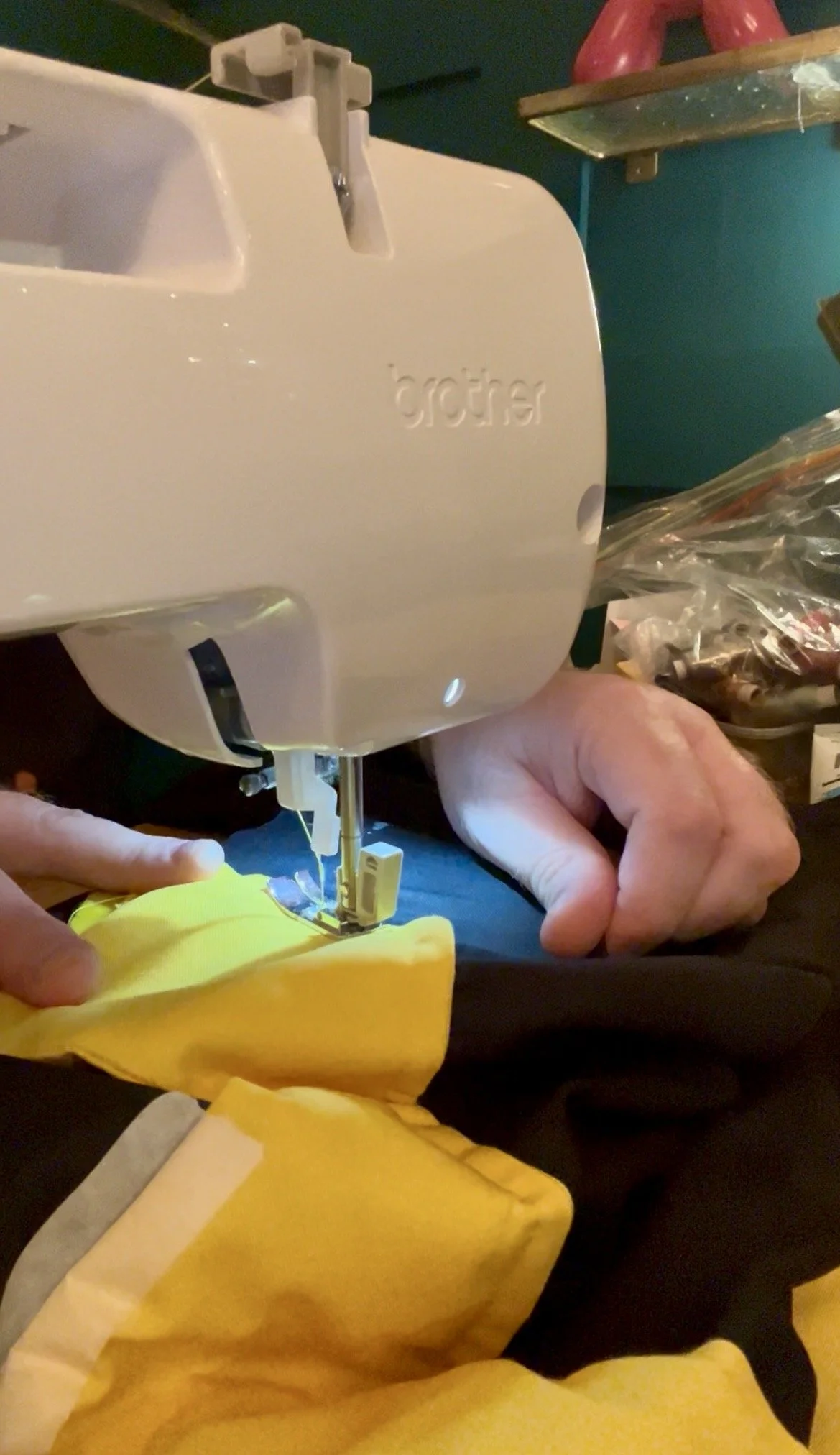
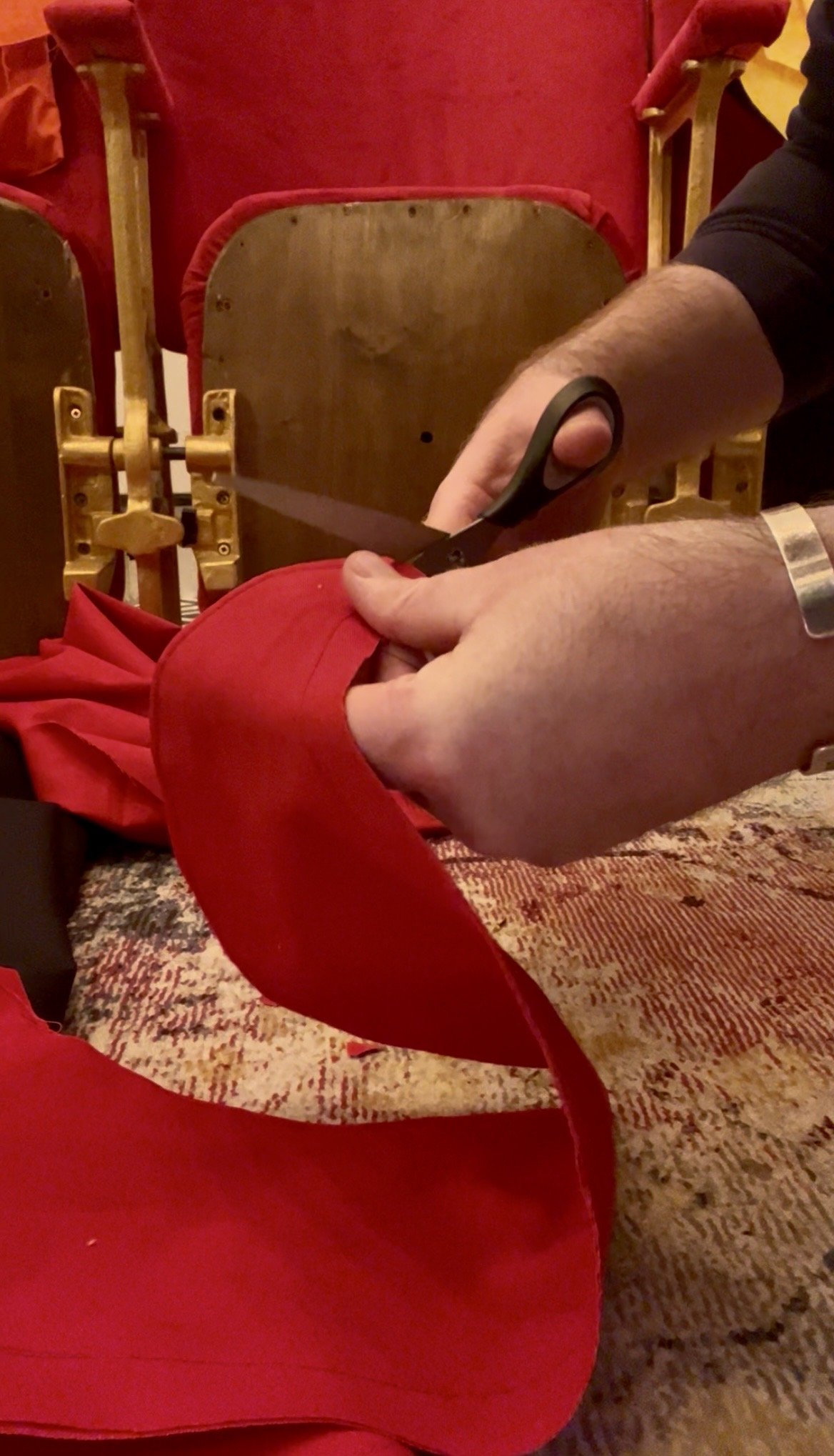
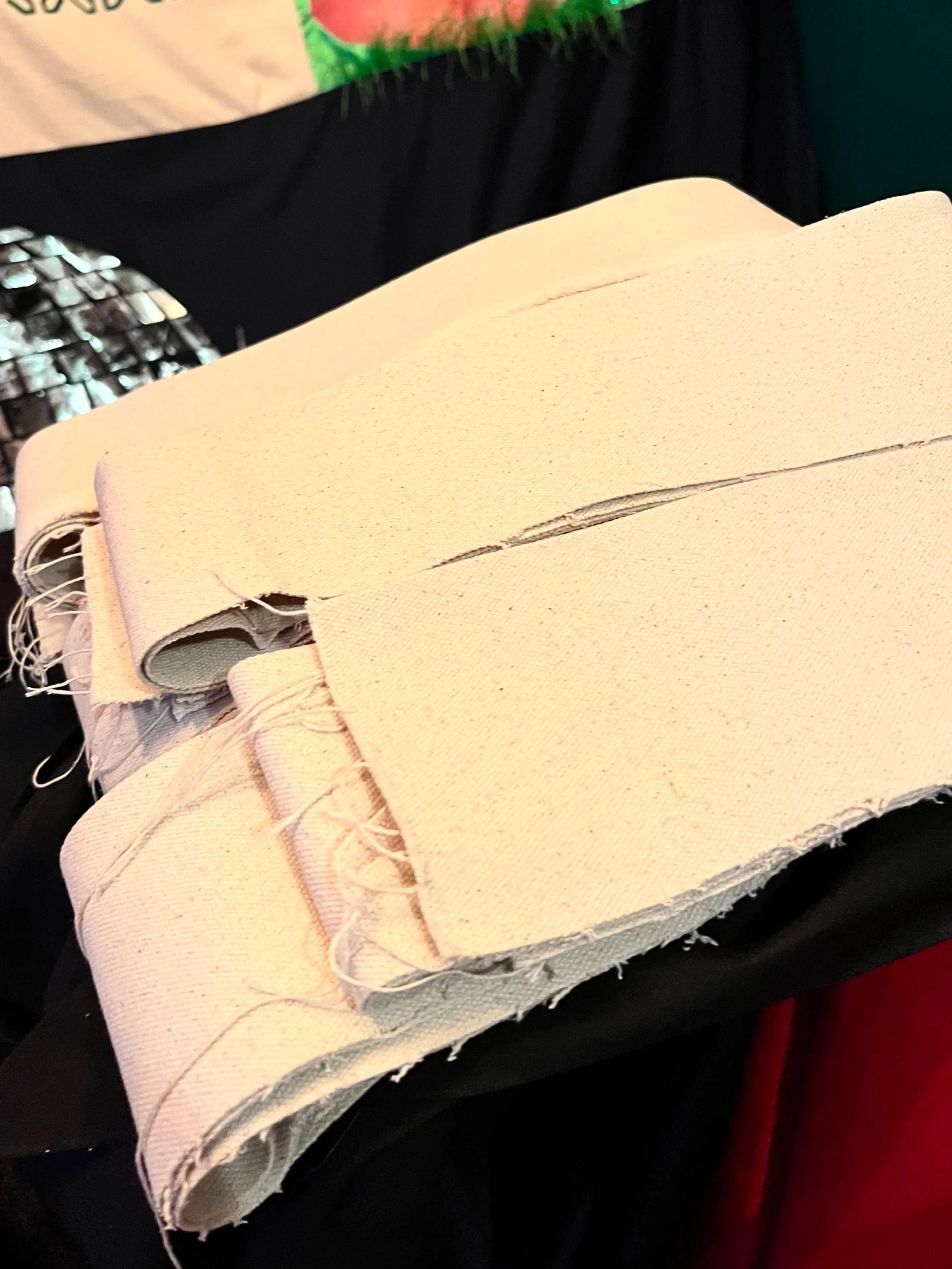
Having completed all eight panels and successfully stitched them together to form a 12-foot by 12-foot quilt with surprising ease — beginners’ luck — I now faced the finishing touch: attaching a three‑inch canvas edge around the entire perimeter to protect the quilt during display. The canvas trim would reinforce the border and prevent wear, while evenly spaced brass eyelets every three feet would allow the quilt to be displayed flat or suspended for vertical viewing, ensuring both durability and versatility without compromising the quilt’s clean lines.
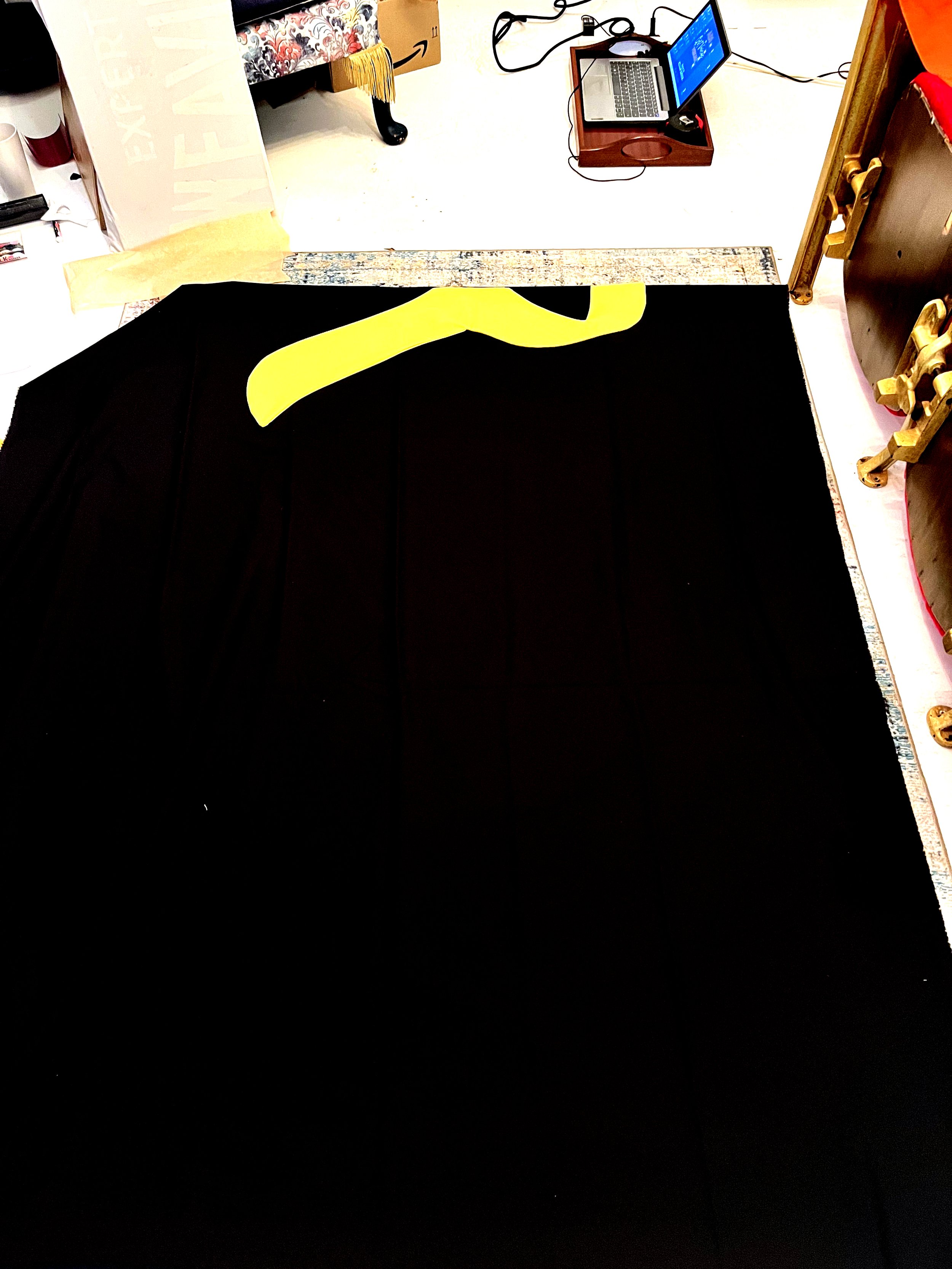
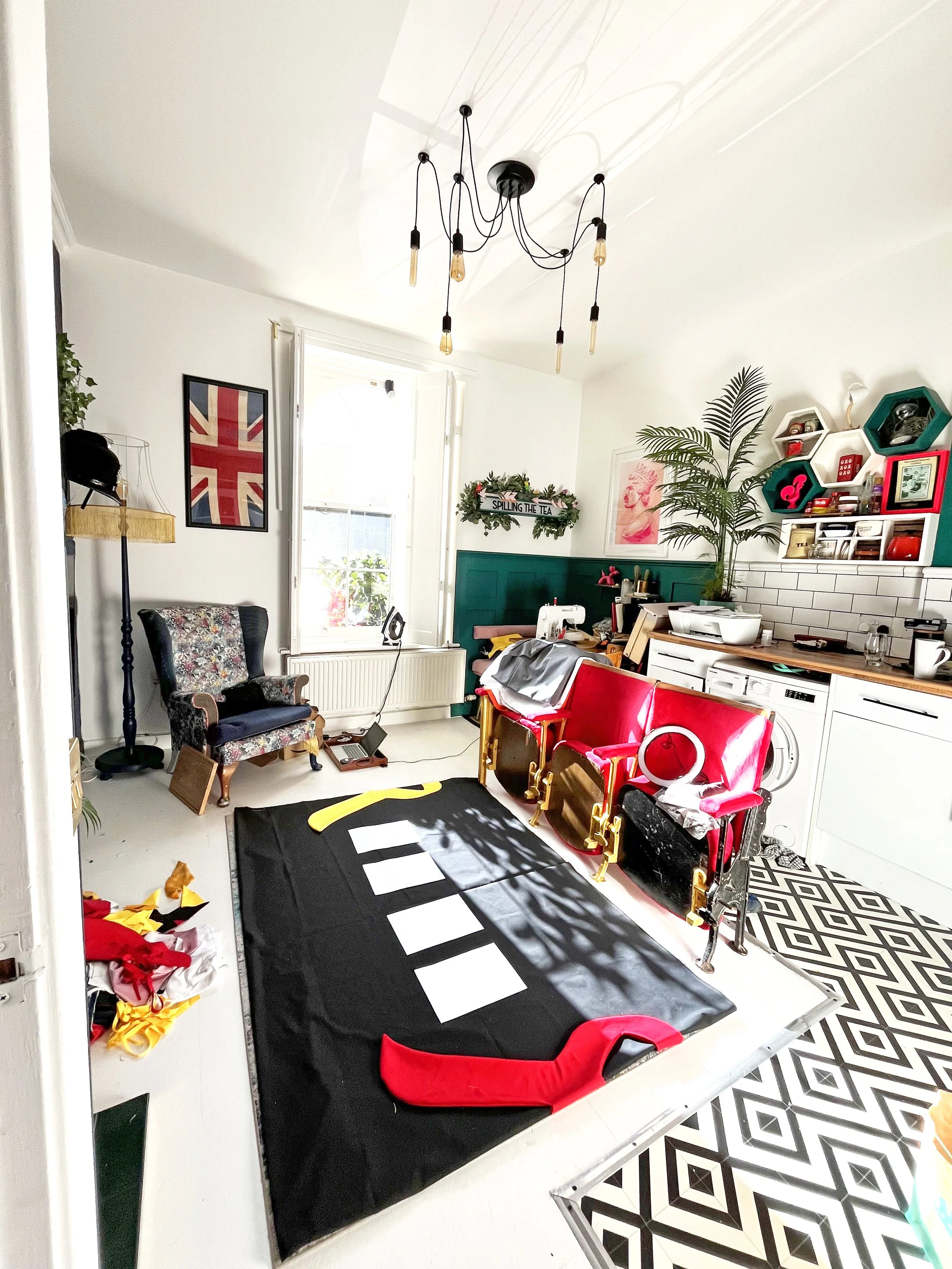
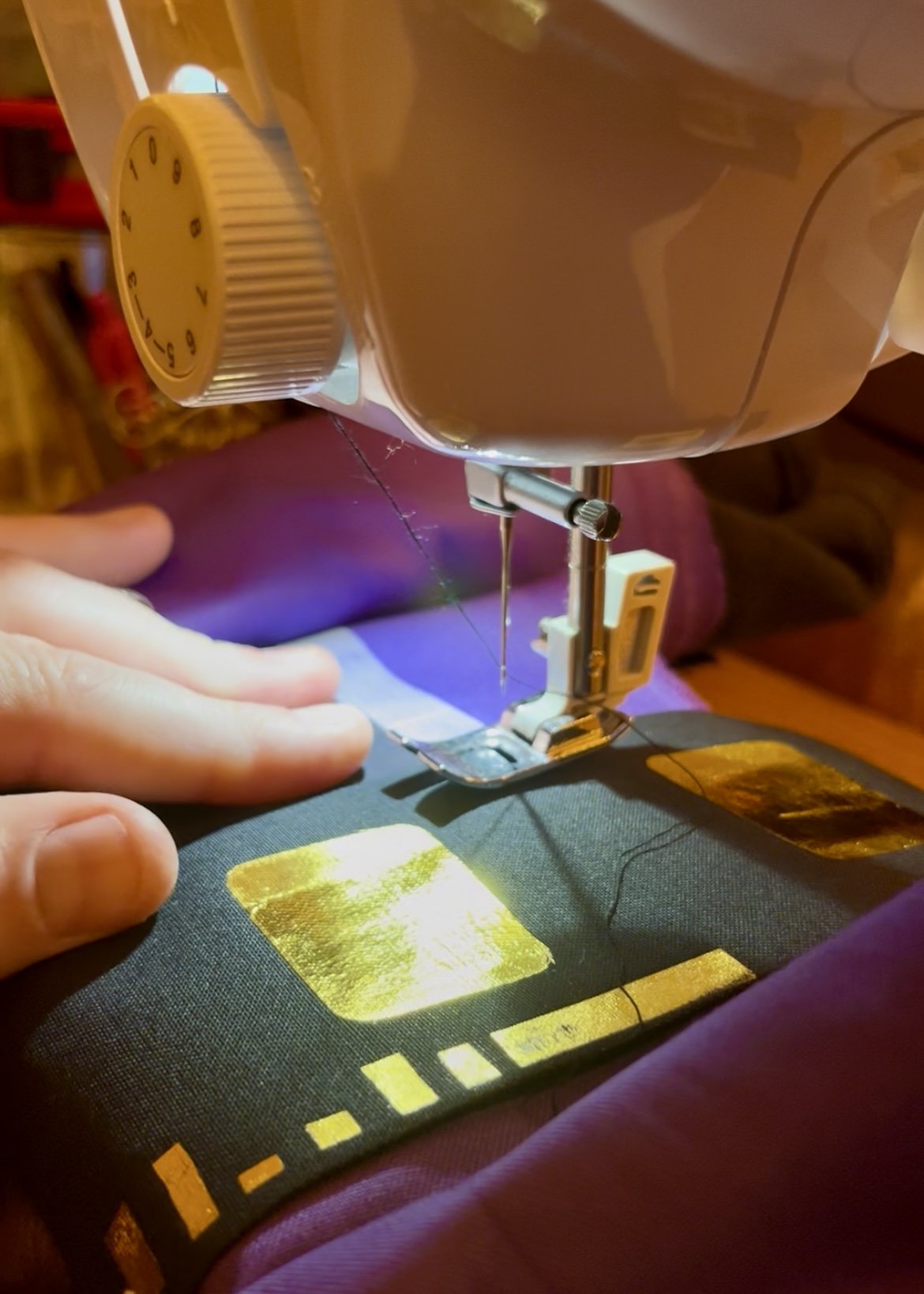
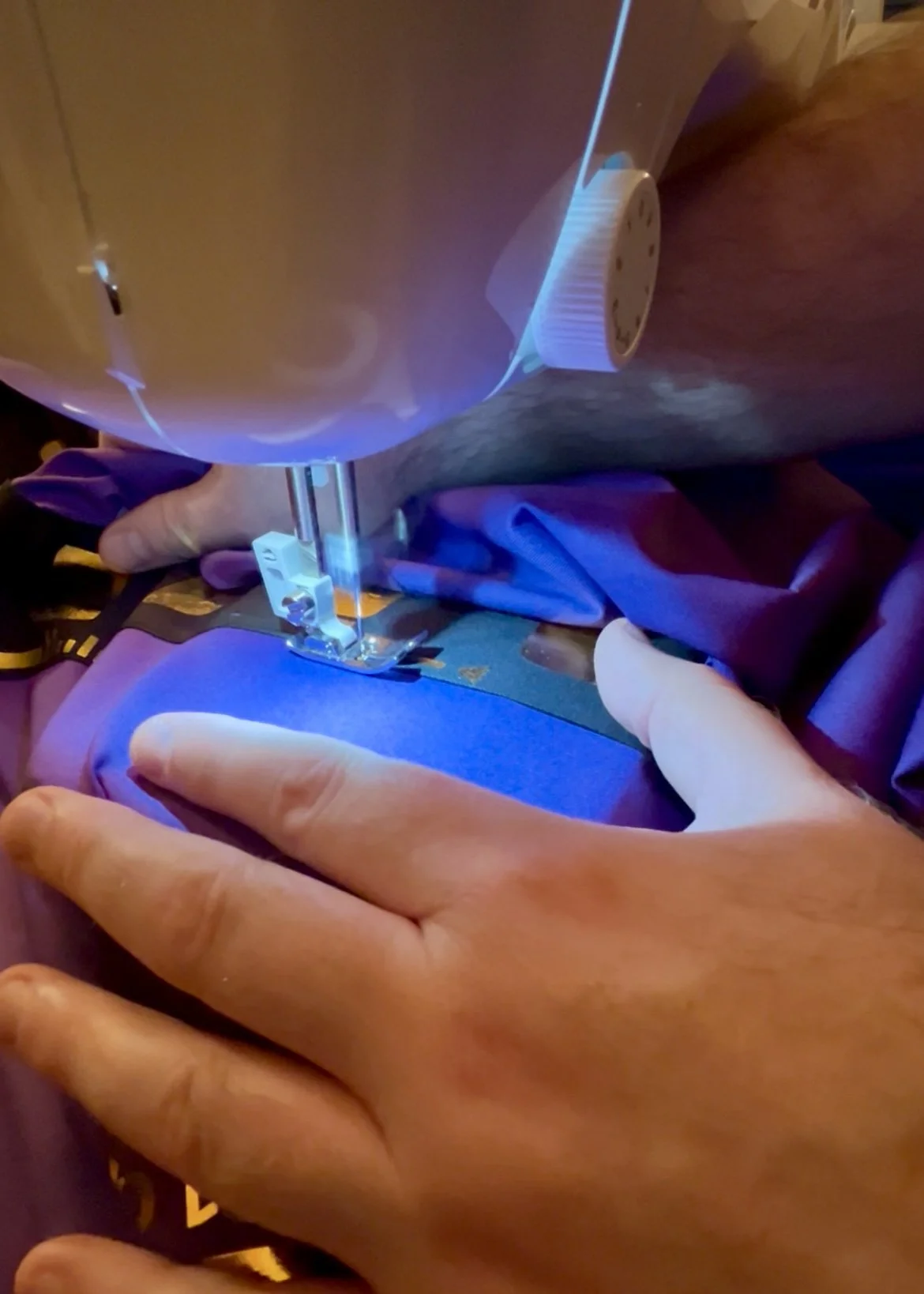
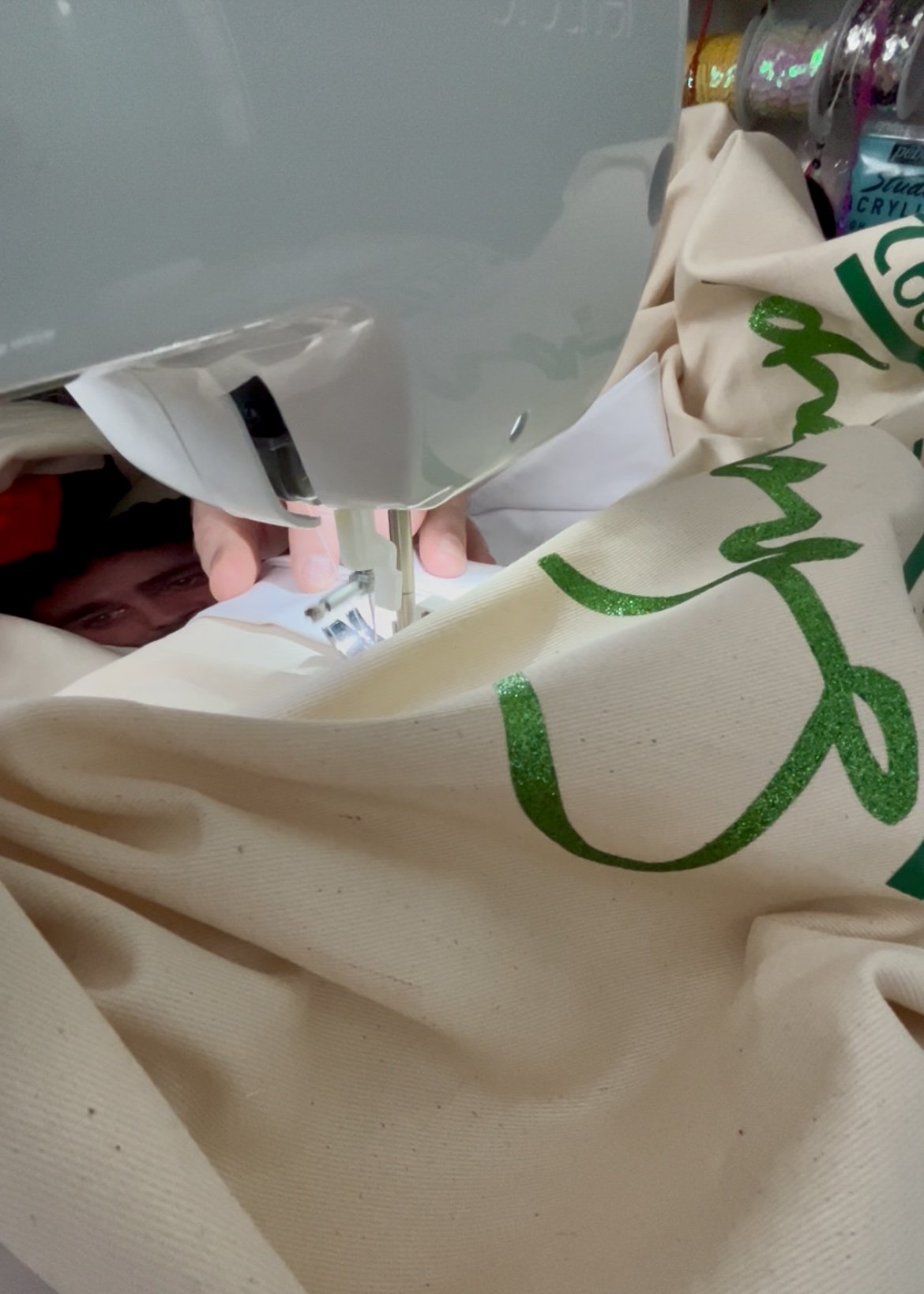
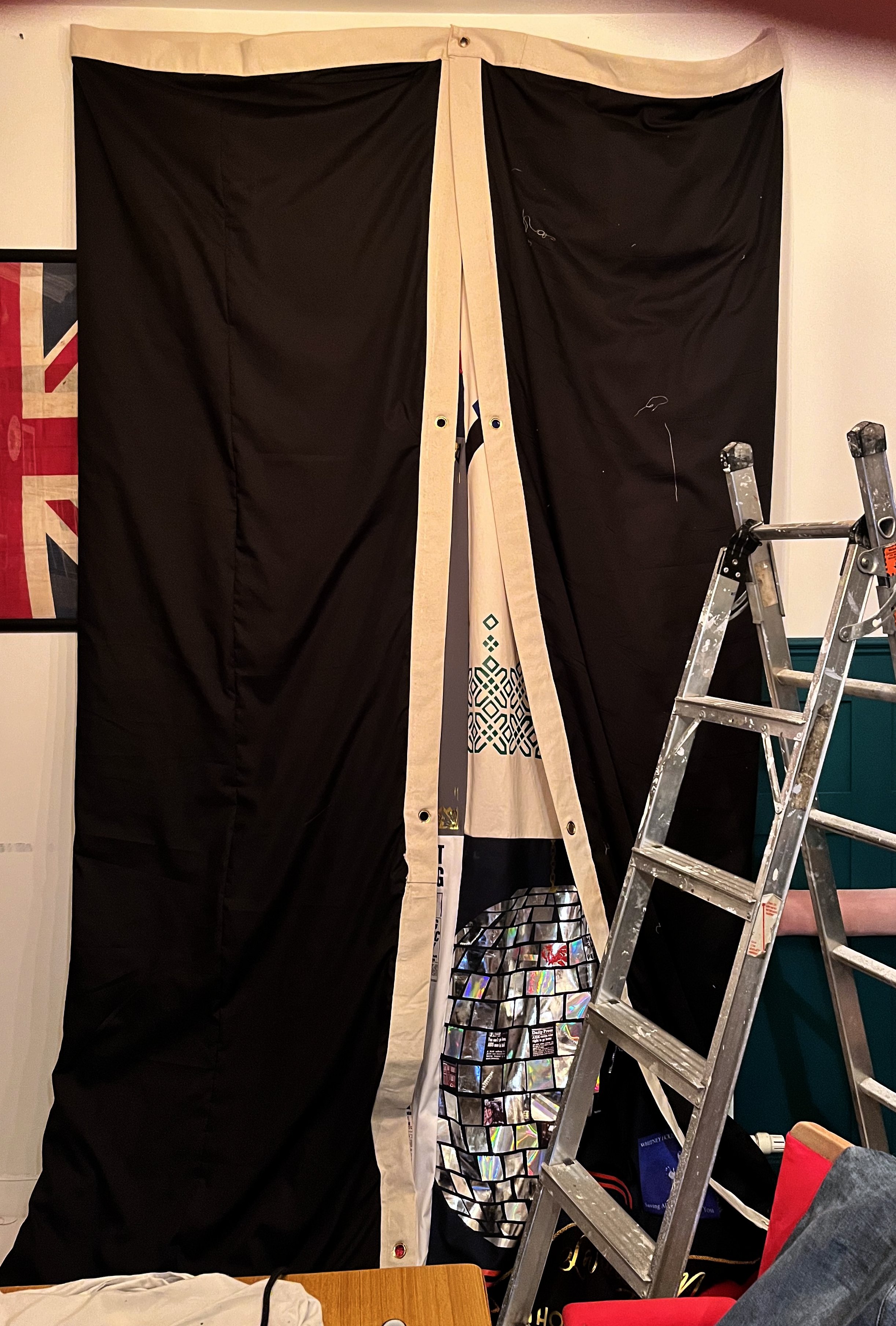
But before that, I had to attach a back to protect the quilt and stop stitches snagging when it was handled or put on display, as well as to give it longevity. I used black cotton for the backing, but my 12 ft by 14 ft lounge comes with fixed units and cinema seats bolted to the floor, so I couldn’t lay the whole quilt out flat to sew on the backing. With almost no sewing experience I had to improvise: the simplest solution was to suspend the entire quilt from the lounge wall, working on it vertical rather than horizontal. This allowed me to align the edges and tack the backing in place before placing my sewing machine table to the quilts edge.
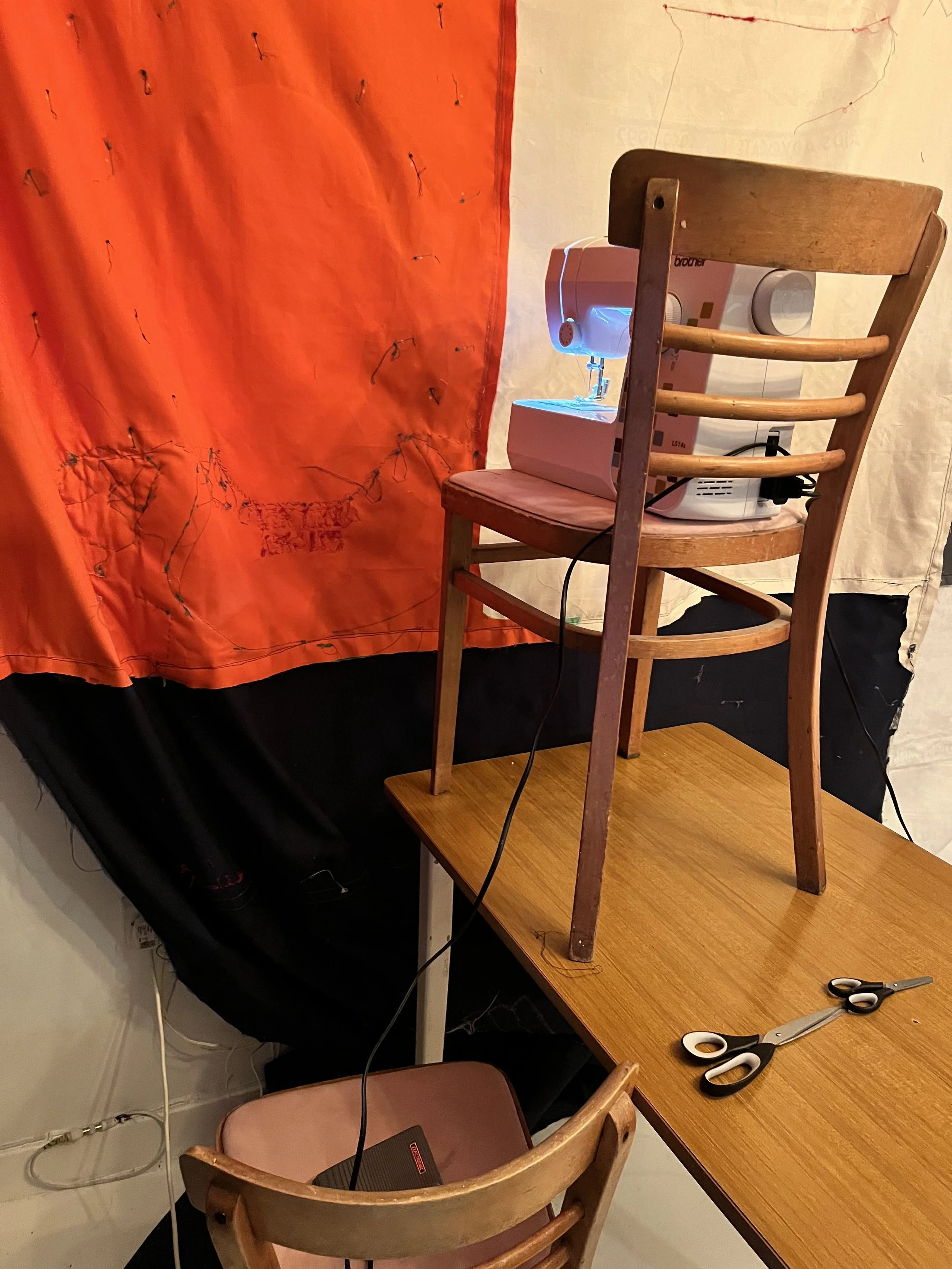
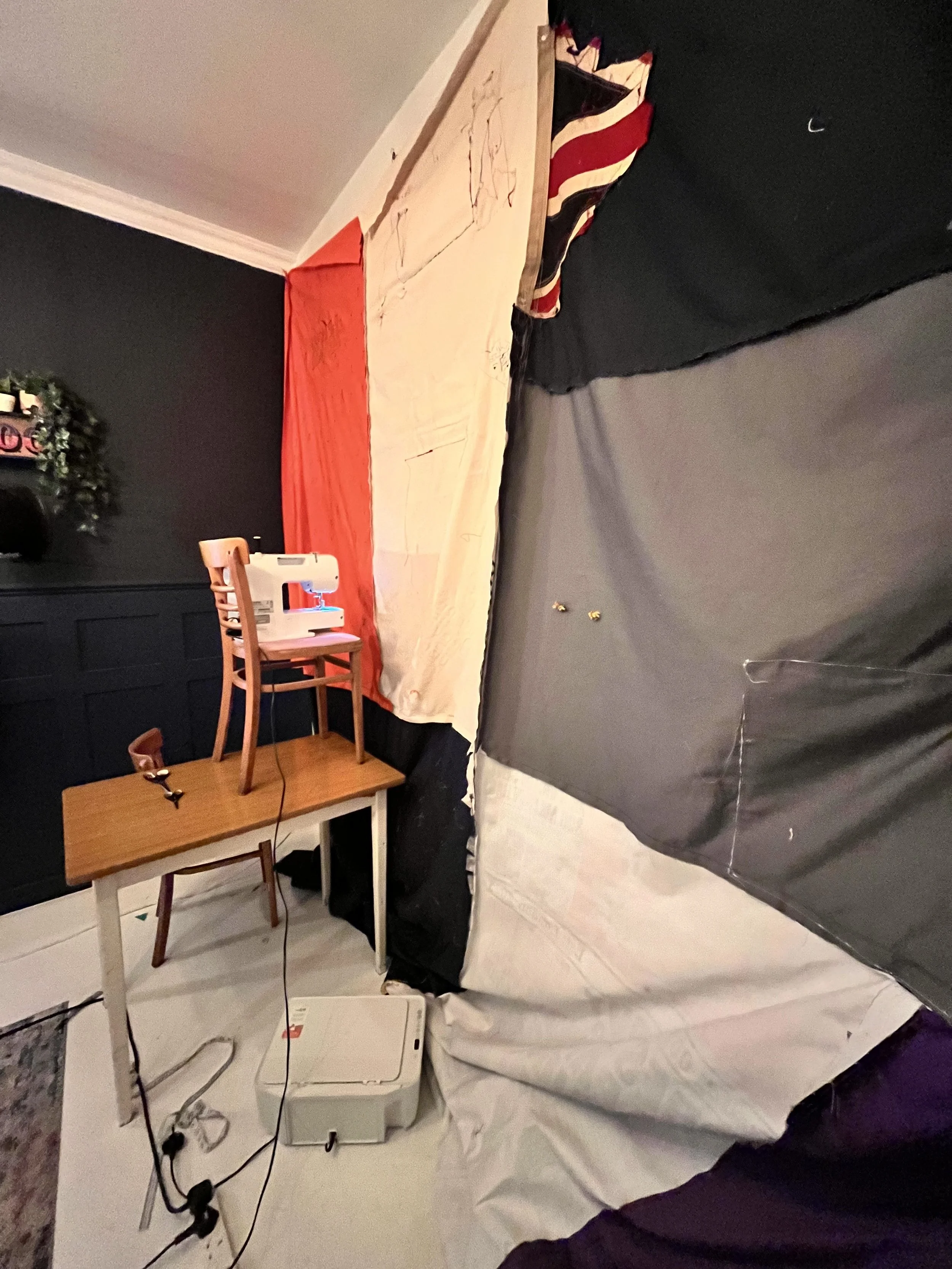

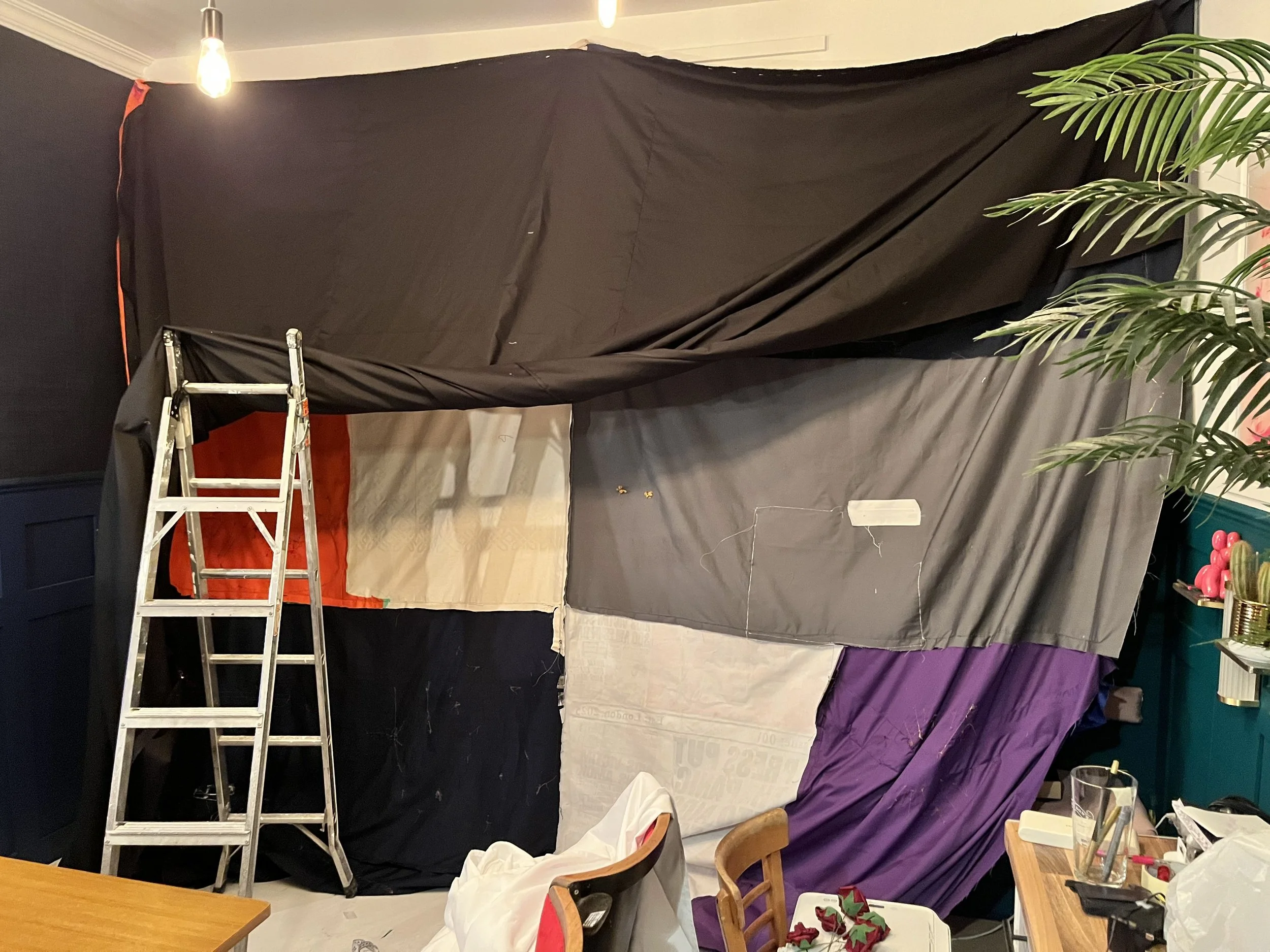
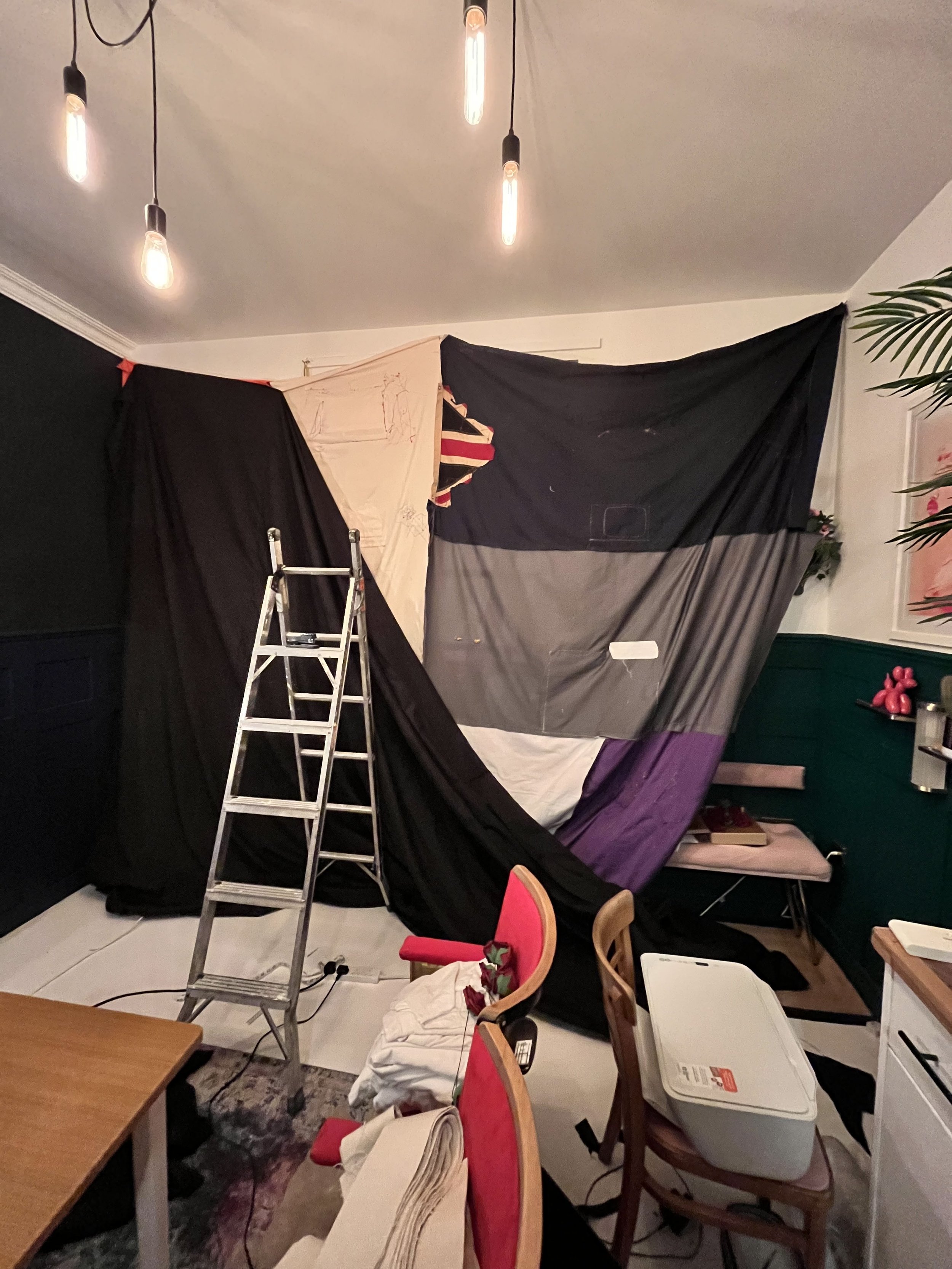
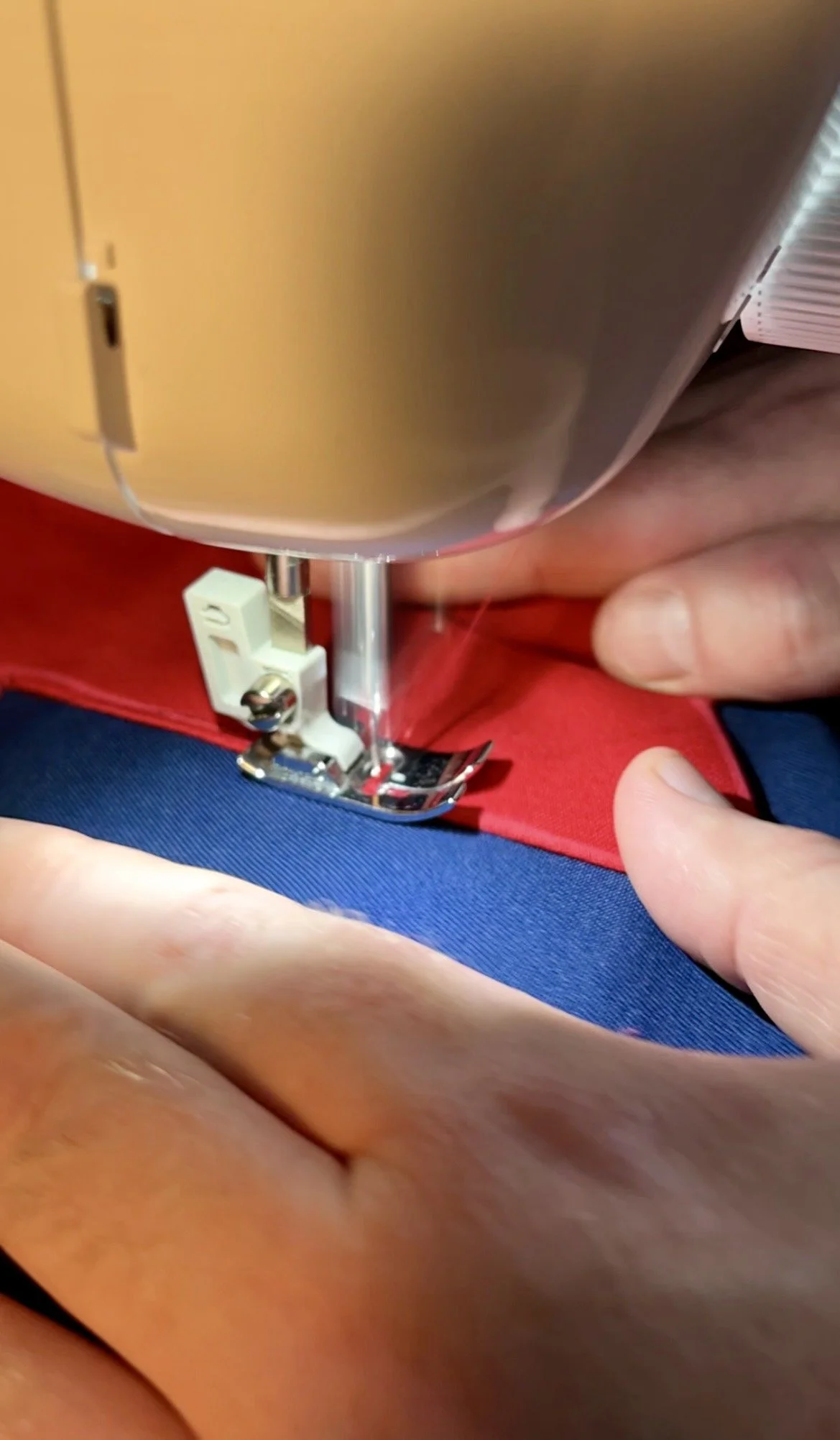
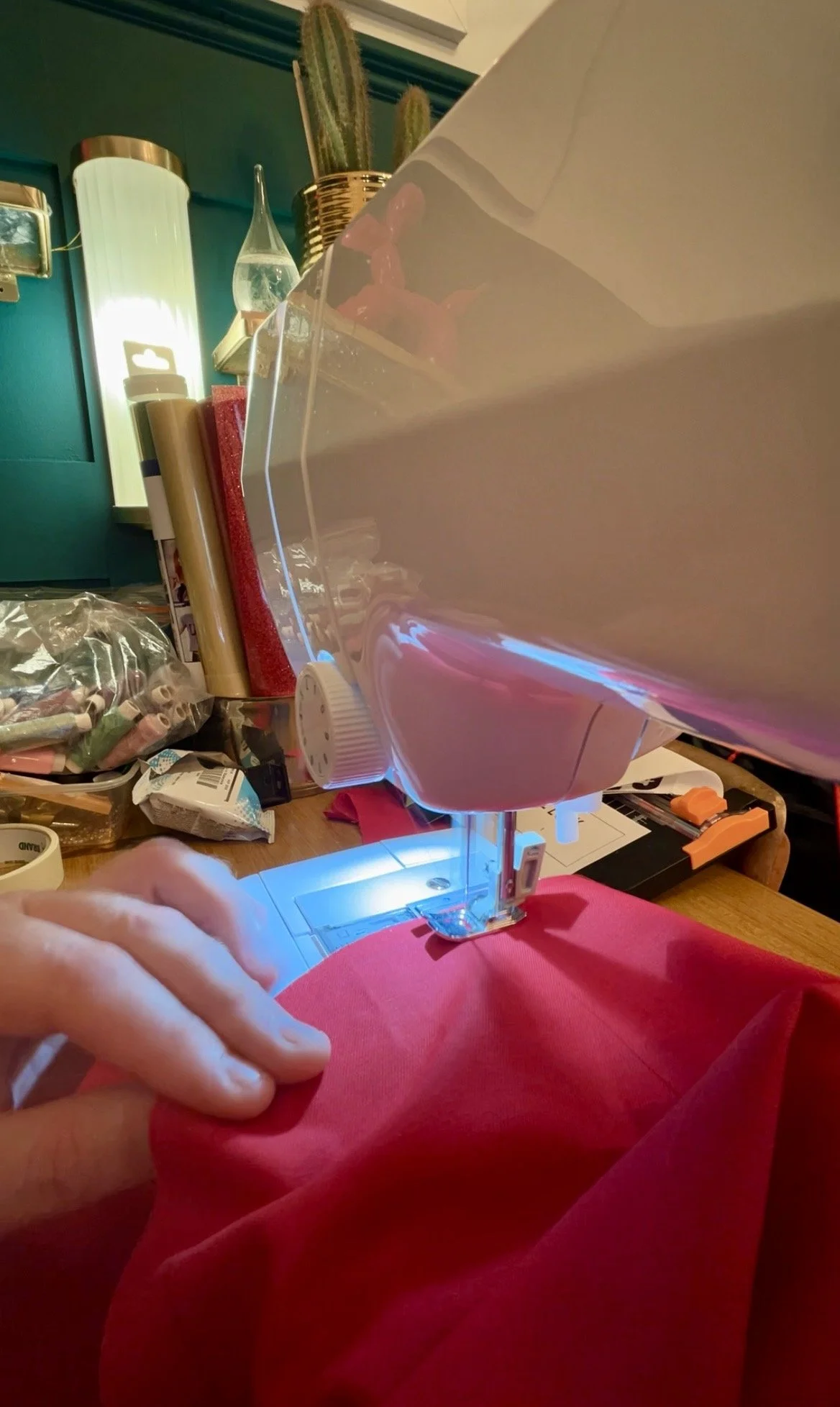
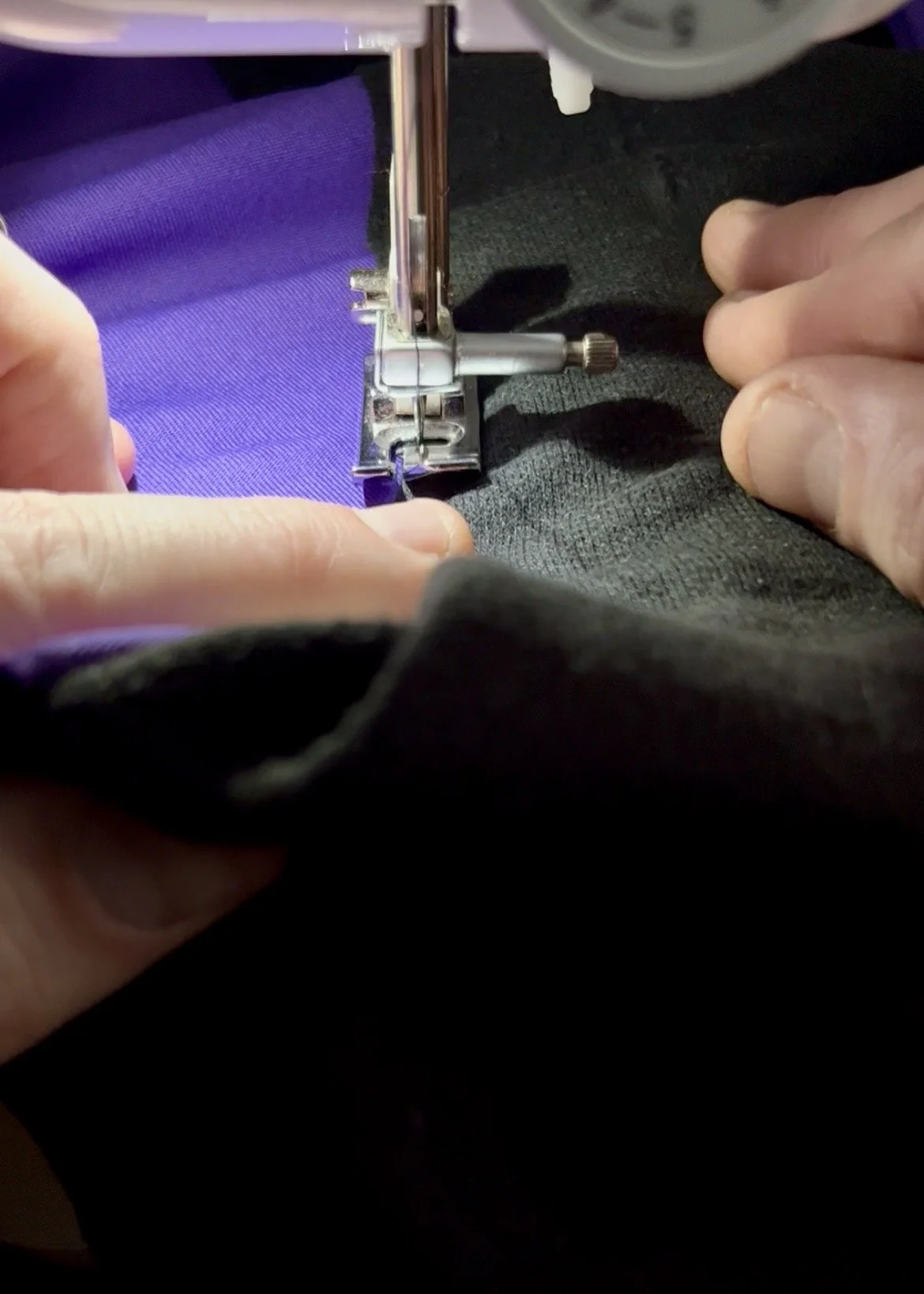
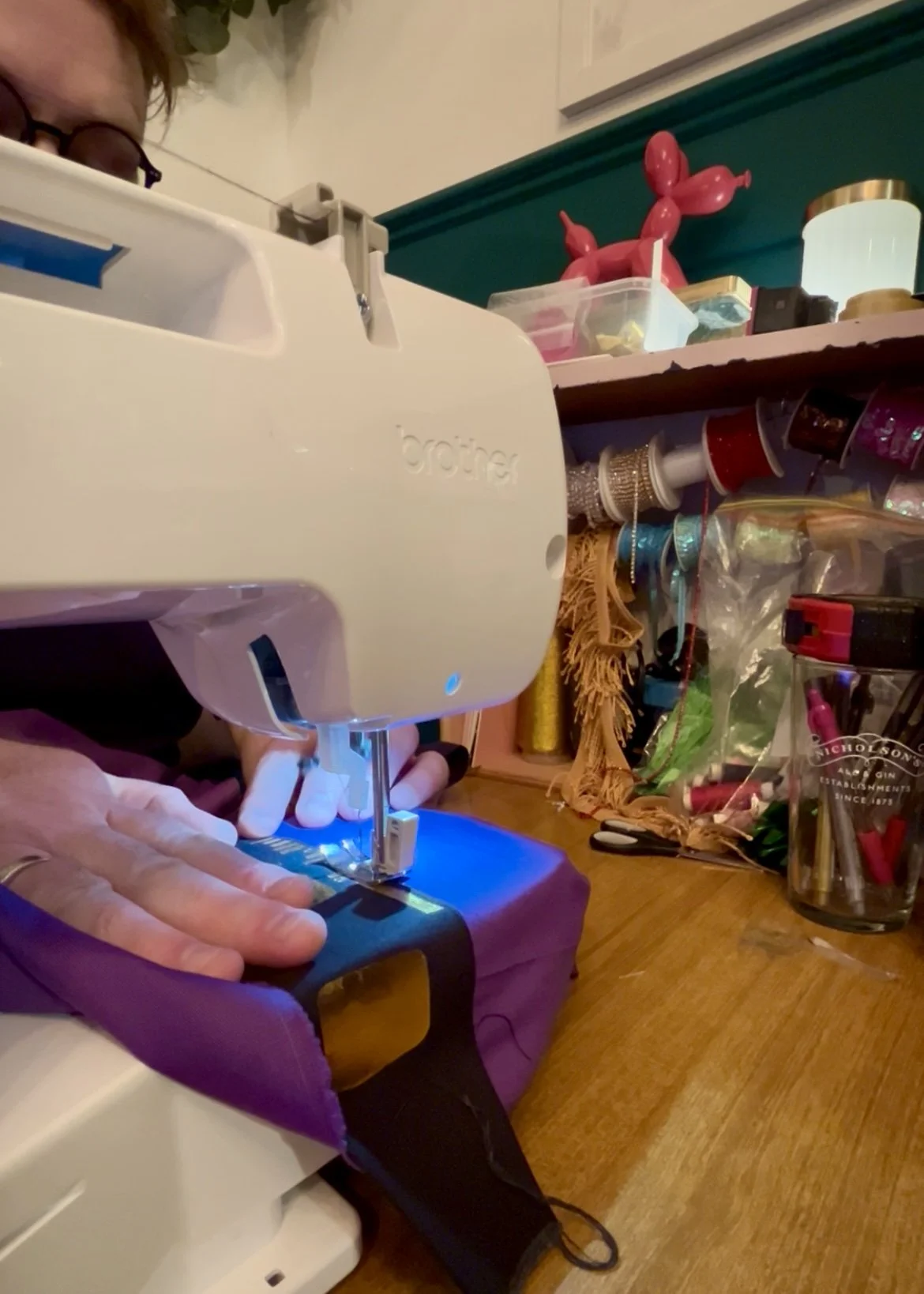
Once the backing was on and my messy handstitching was hidden from view, I turned my attention to the canvas edge. The fabric was pleasant to handle, but every strip needed to be ironed after cutting to create a crisp crease for easier attachment and stitching. The only drawback was the canvas’s thickness: even with a new sewing machine, overlapping sections were hard to feed through and I broke 6 denim grade needles, and the lighter modern machines—less robust than those of previous decades—allowed the thread to nest at the back. Fortunately the stitching held firm despite the untidy reverse. What set me back a couple of days, and delayed delivery to the UK AIDS Memorial Quilt, was having to hand-cut sixteen holes so the brass eyelets could be hammered in, but after being awake for 36 hours the job was finally completed.
The only problem I had was that the quilt’s three-inch canvas border on every side made the 12 ft piece too large for my 12 ft wall, so I couldn’t photograph it without it looking crinkled and wrinkled; to make matters trickier, I’d only lightly ironed it vertically until the day I came to deliver, and the final prep involved four lint rollers to remove every last fluff and stray thread — a repetitive, almost meditative task that, once finished, felt incredibly satisfying. Further, the quilt was blocking the only 6 ft by 10 ft window in my lounge, so I had no natural light; still, I took several snaps of the quilt, intending to retake better pictures when it goes on display and, hopefully, in natural light.
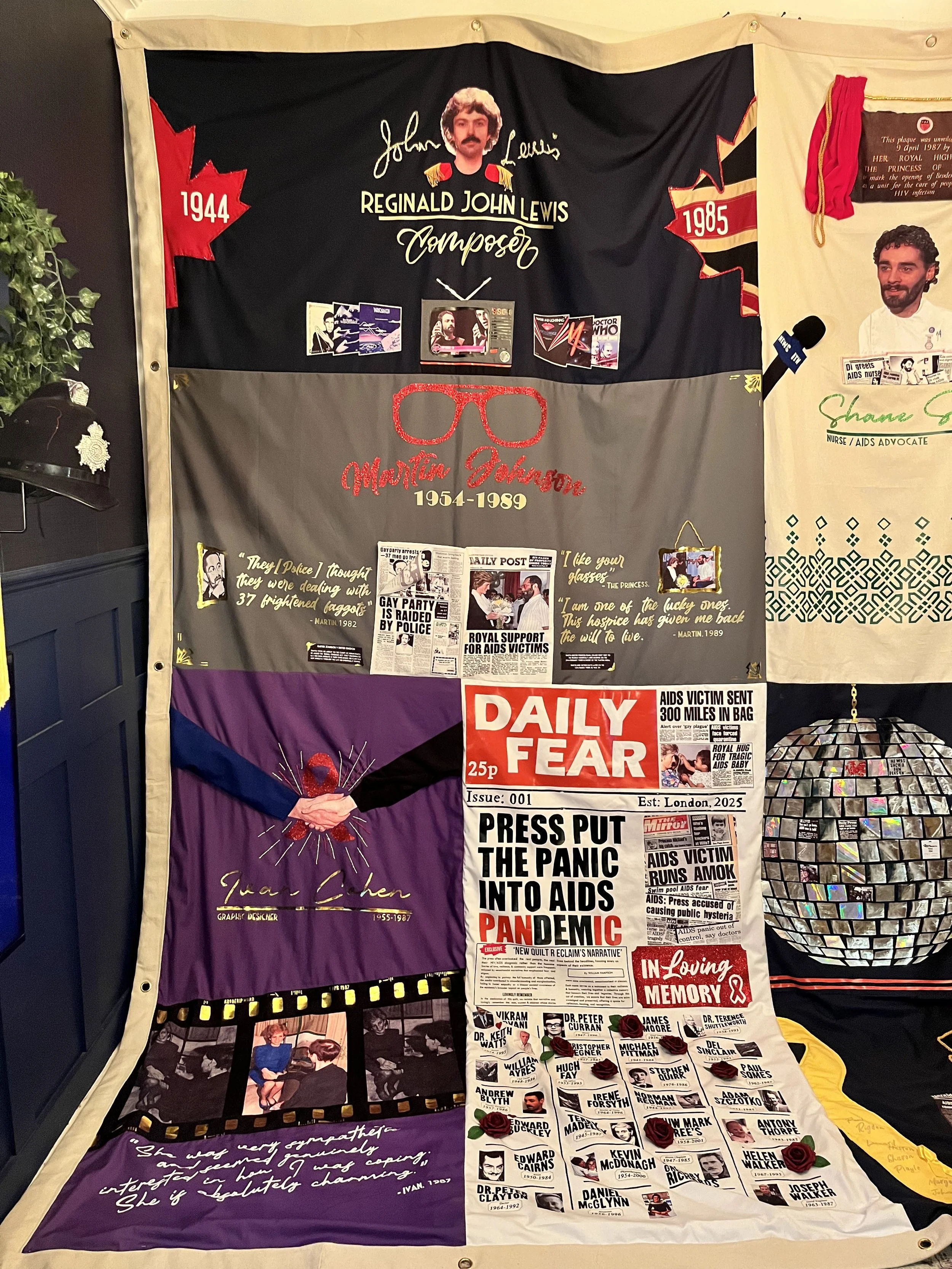
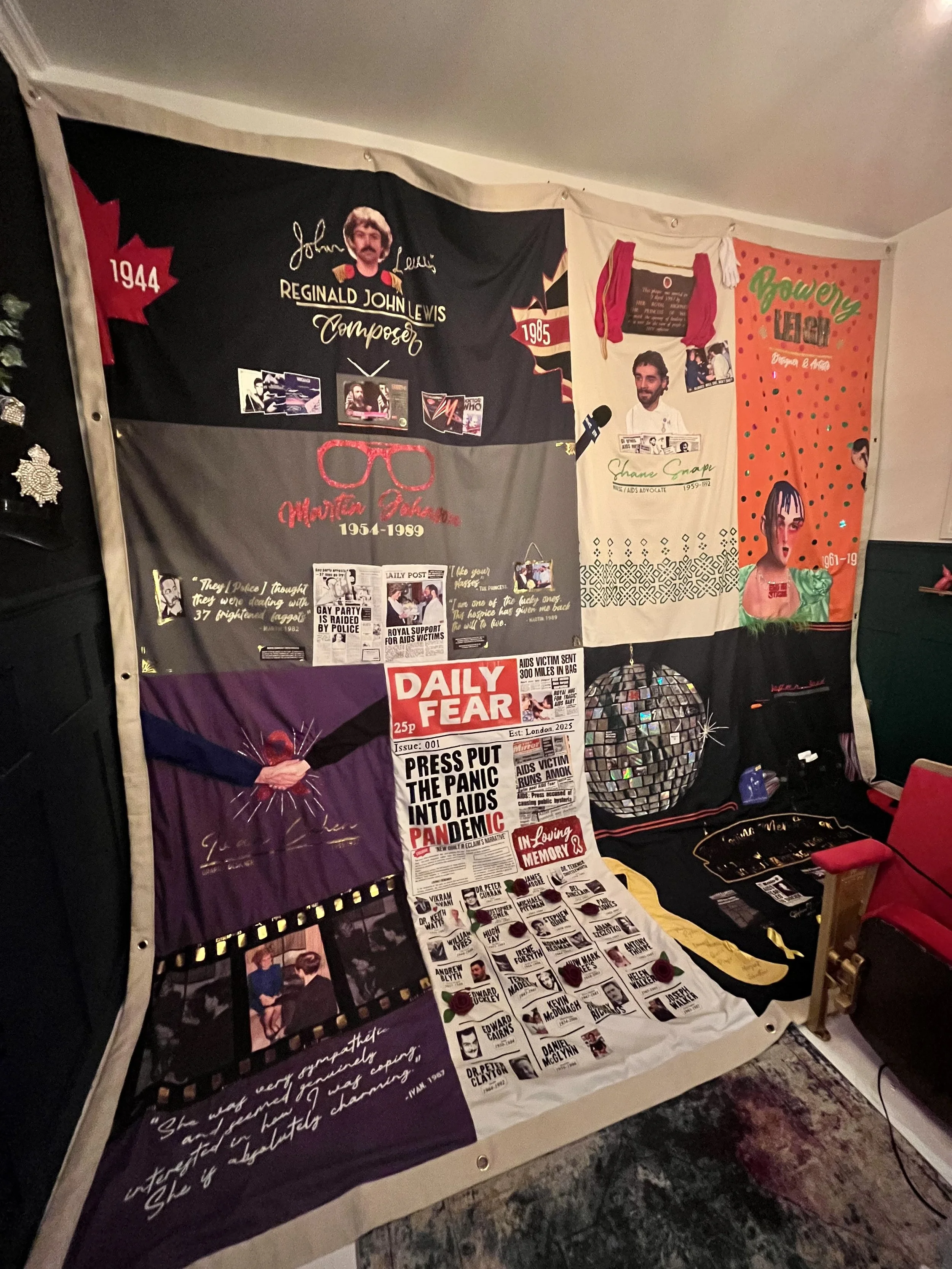
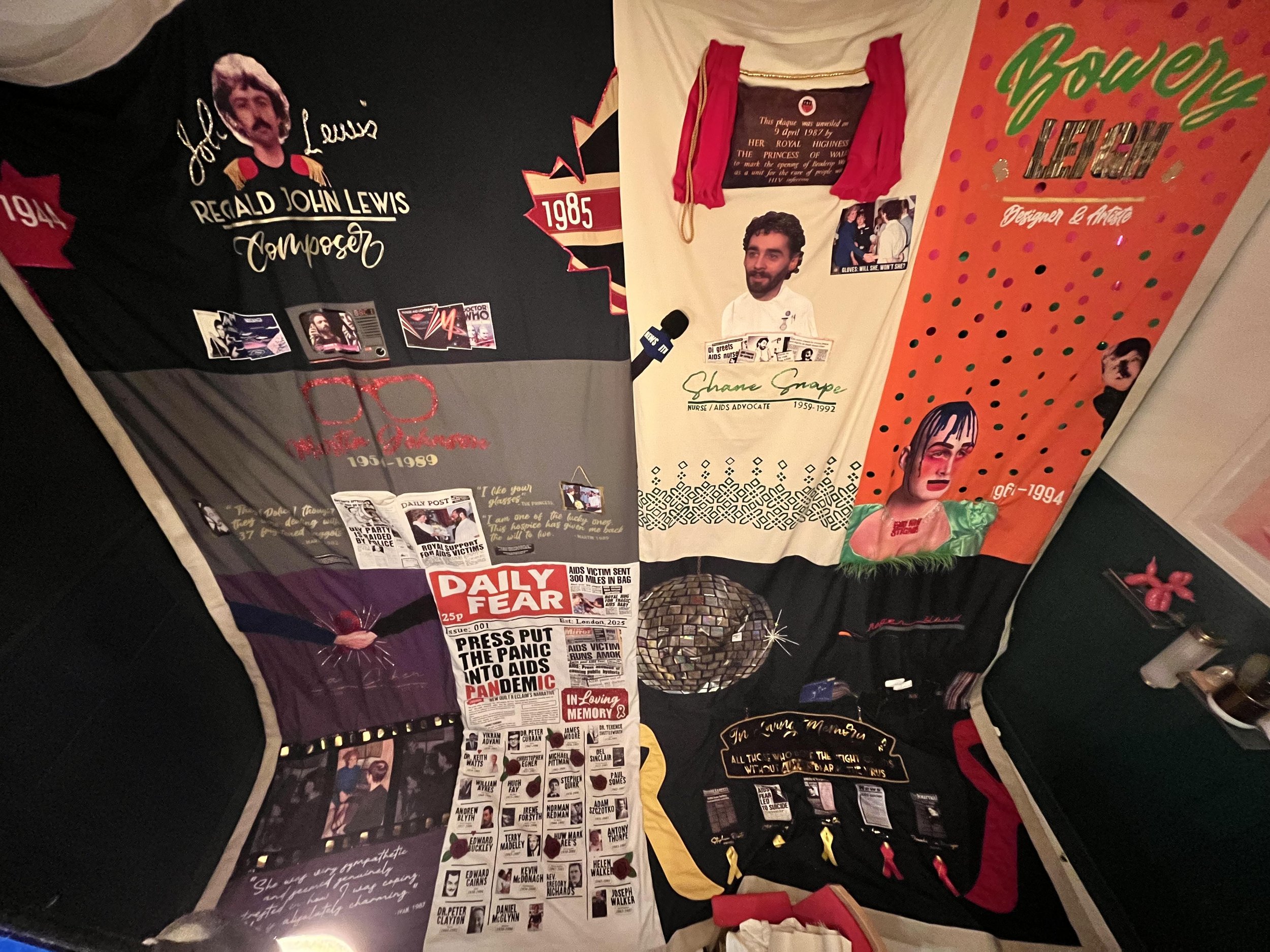
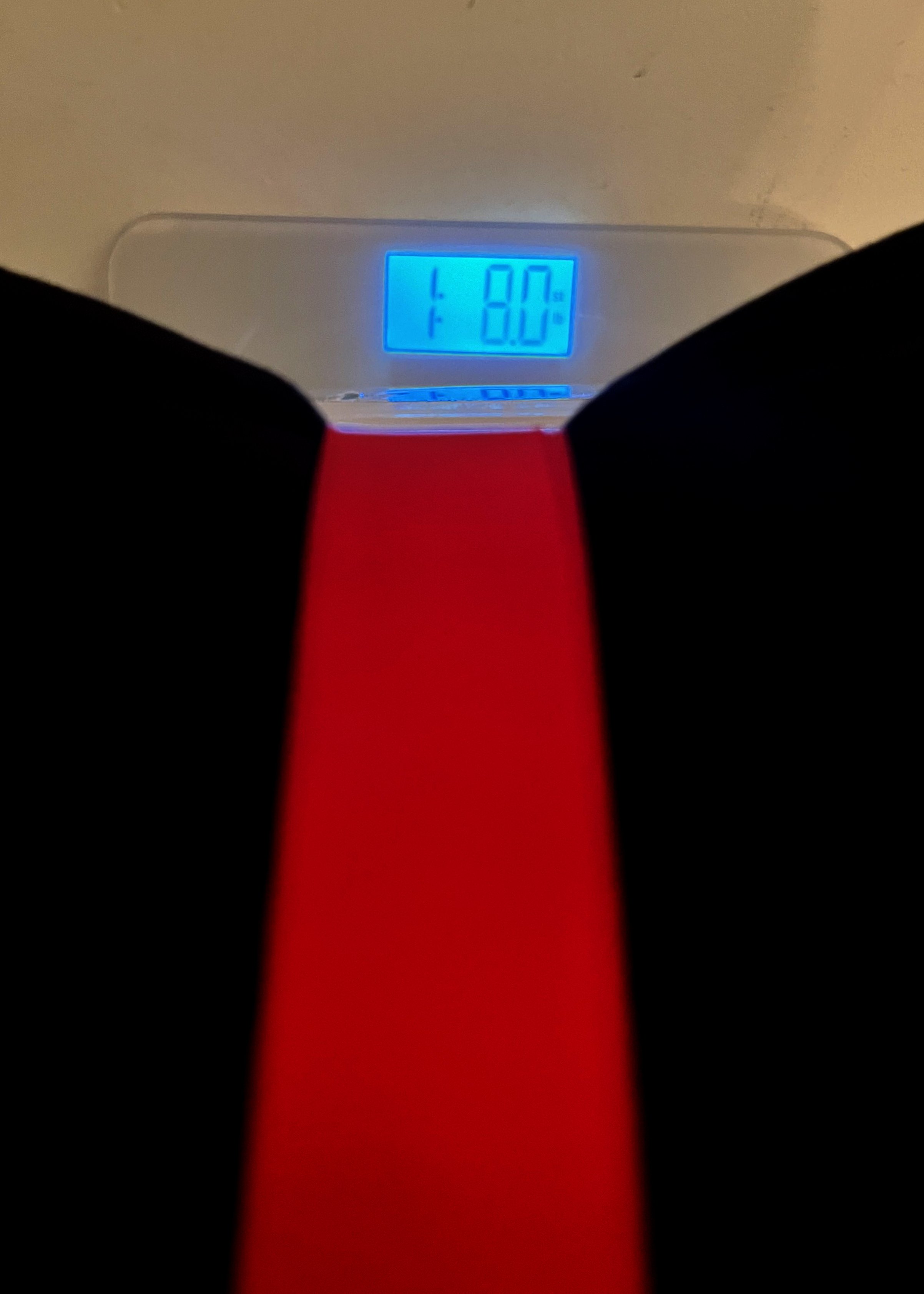
With the quilt lint-rolled front and back, I laterally folded it while it hung vertically on my wall; handling it — up and down the ladder, on and off the wall — made me acutely aware of how surprisingly heavy it was. That weight felt was confirmed when I placed it on the scales: 1 stone 8 pounds. Once folded, it went by taxi to Positive East—where the UK AIDS Memorial Quilt is currently housed and awaiting funds to secure a permanent home—for World AIDS Day 2025. I regret not keeping it for another week or two to tweak a few details I’ve since noticed in photographs for this blog, but I was determined to meet my eight-week deadline and hand it over for WAD2025; the longer I’d held it, the more I might have tampered — or even been tempted to redesign one or two panels.
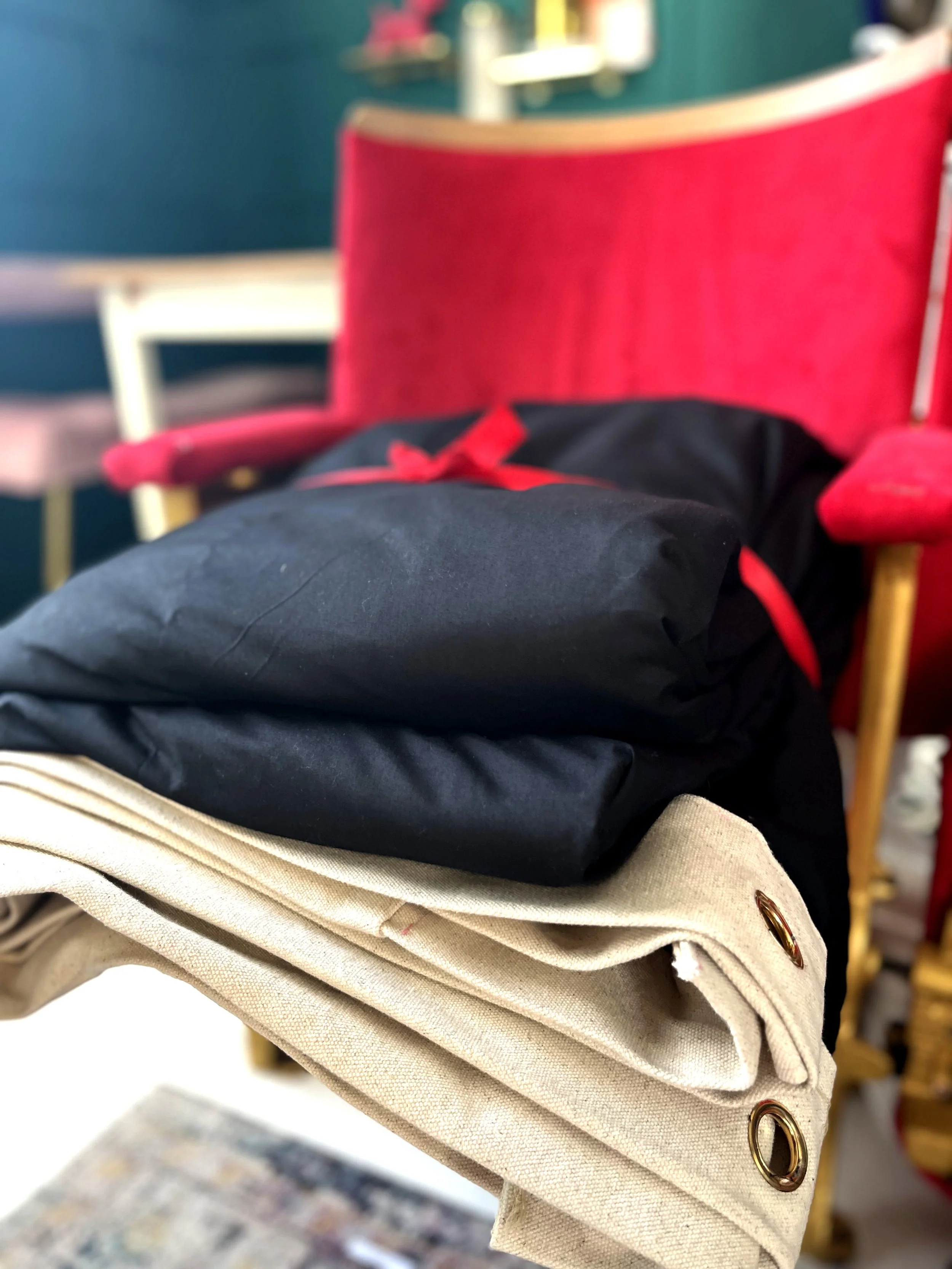
When you submit a memorial panel or quilt to join the UK AIDS Memorial Quilt, you transfer ownership to the coalition of charities that care for the quilt. As the coalition assumes responsibility for preservation, display and stewardship, any questions or requests concerning this particular quilt, you’re directed to contact the UK AIDS Memorial Quilt team.
UPDATE: Quilt 47’s First Display
07/06/2026
AIDS Quilt UK - Wakefield
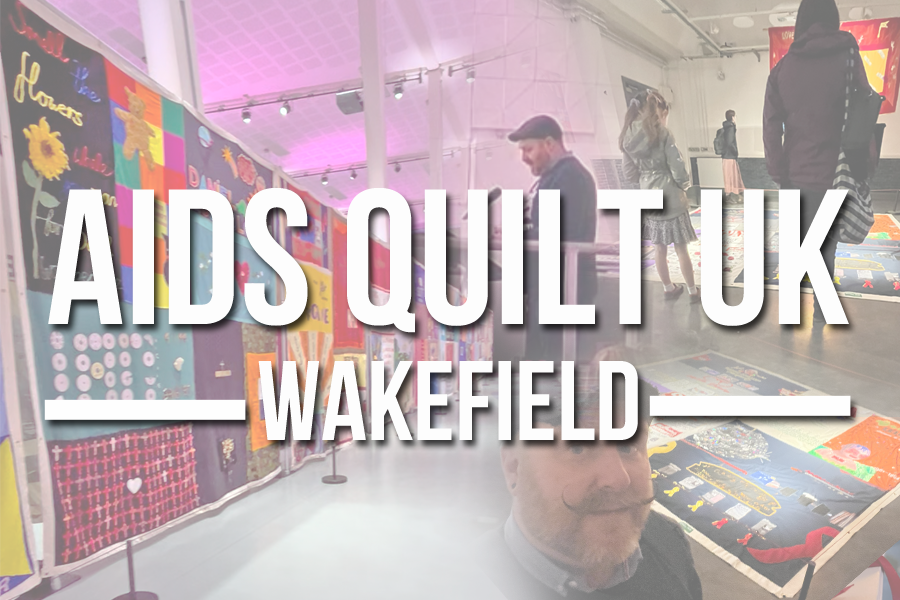
The UK AIDS Memorial Quilt left London for Wakefield for the first time since 1994, arriving in Wakefield as a powerful act of remembrance and solidarity; the Quilt—now comprising 43 quilts and 24 individual panels representing over 500 people lost to HIV/AIDS, saw 43 blocks displayed at Wakefield Exchange. Read More…