Quilts: (WX) Wakefield Exchange
WAKEFIELD
4-7 June 2026
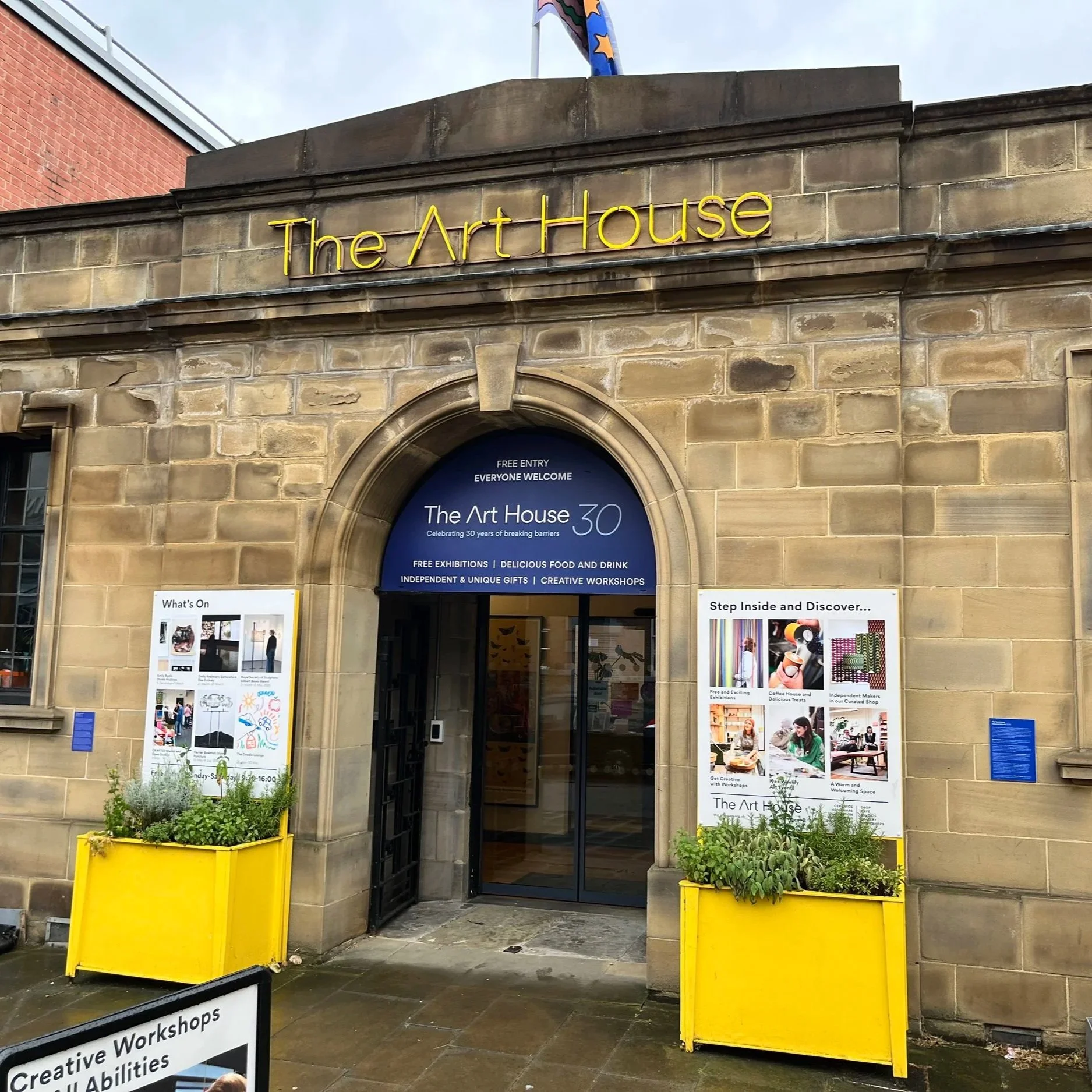
The UK AIDS Memorial Quilt left London for Wakefield for the first time since 1994, arriving in Wakefield as a powerful act of remembrance and solidarity; the Quilt—now comprising 43 quilts and 24 individual panels representing over 500 people lost to HIV/AIDS, saw 43 blocks displayed at Wakefield Exchange, The Art House, Theatre Royal and several partner venues across the city host. The display ran from 3–7 June, offering a rare chance to honour lives and activism, to reflect on the social and cultural work that birthed the Quilt, and to bring communities together through art, creativity and shared remembrance.
Quilt 47
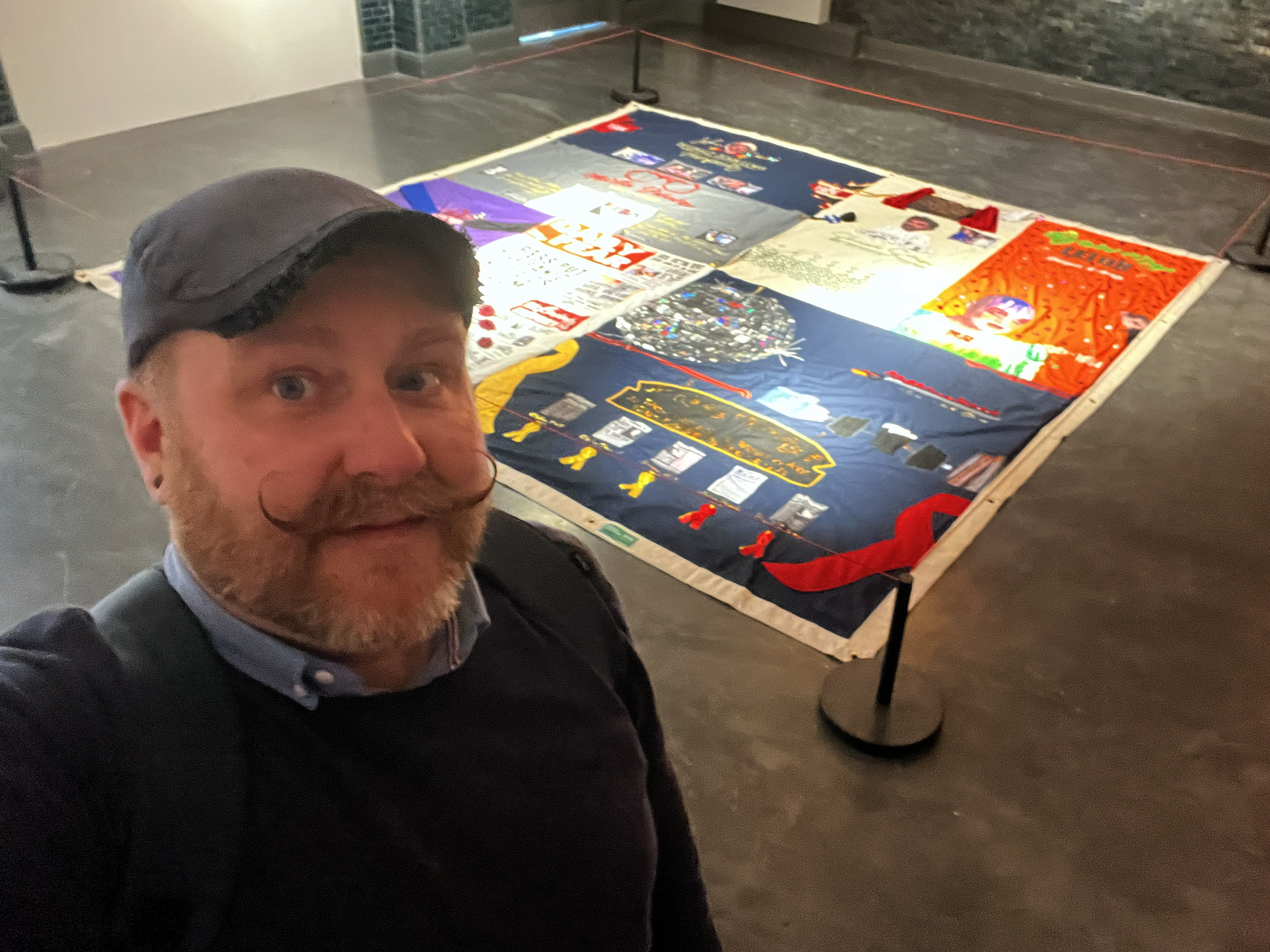
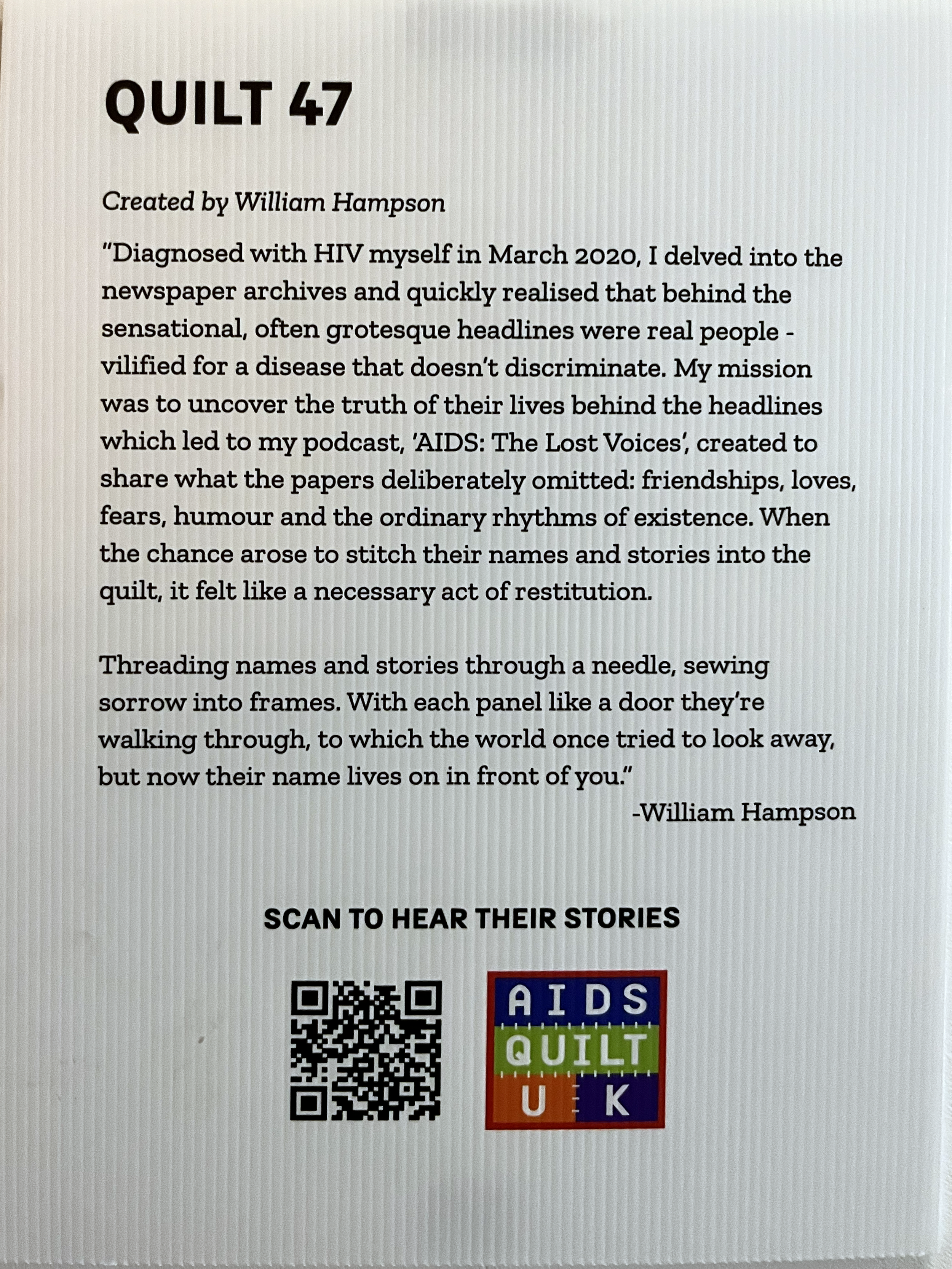
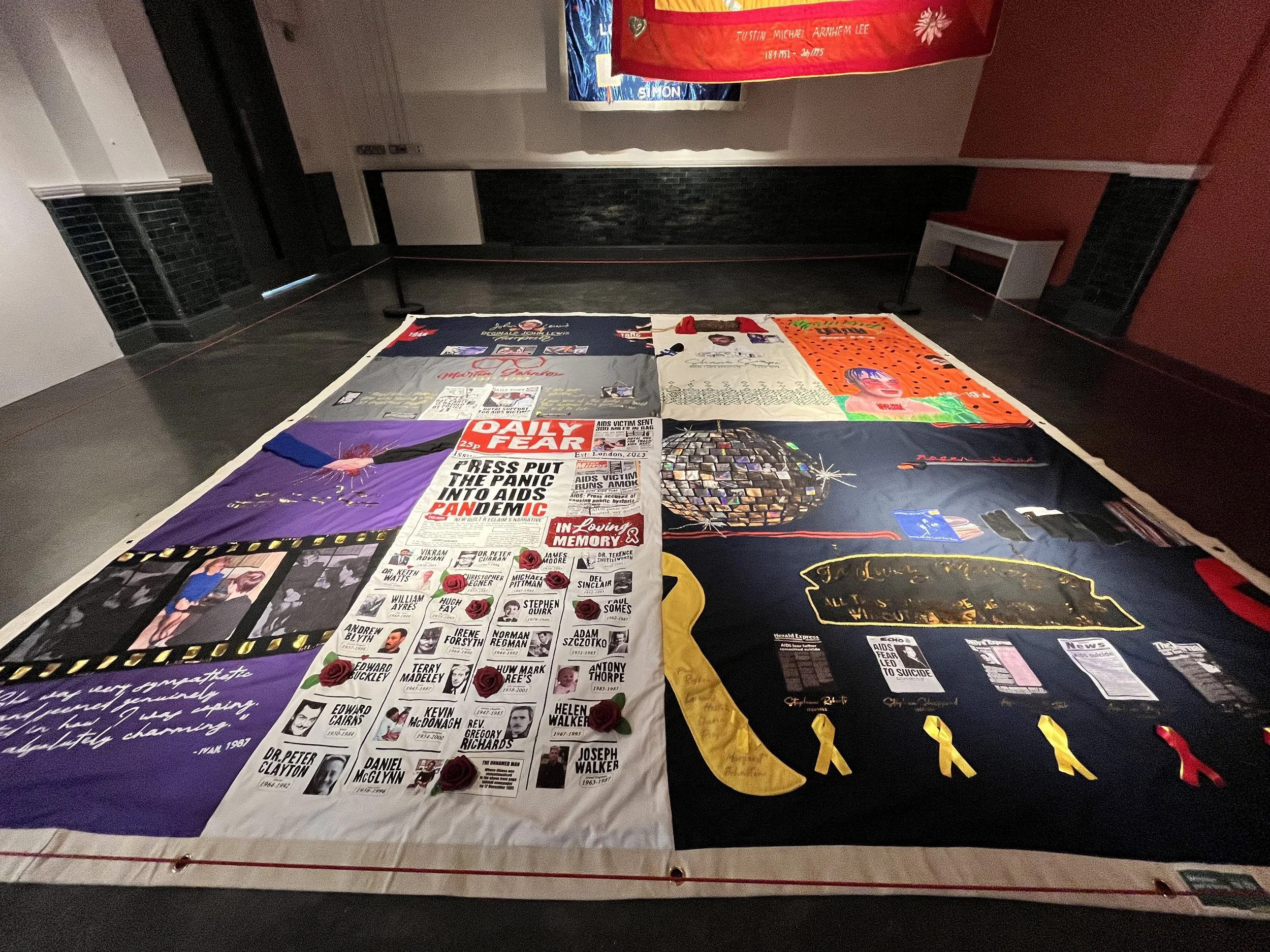
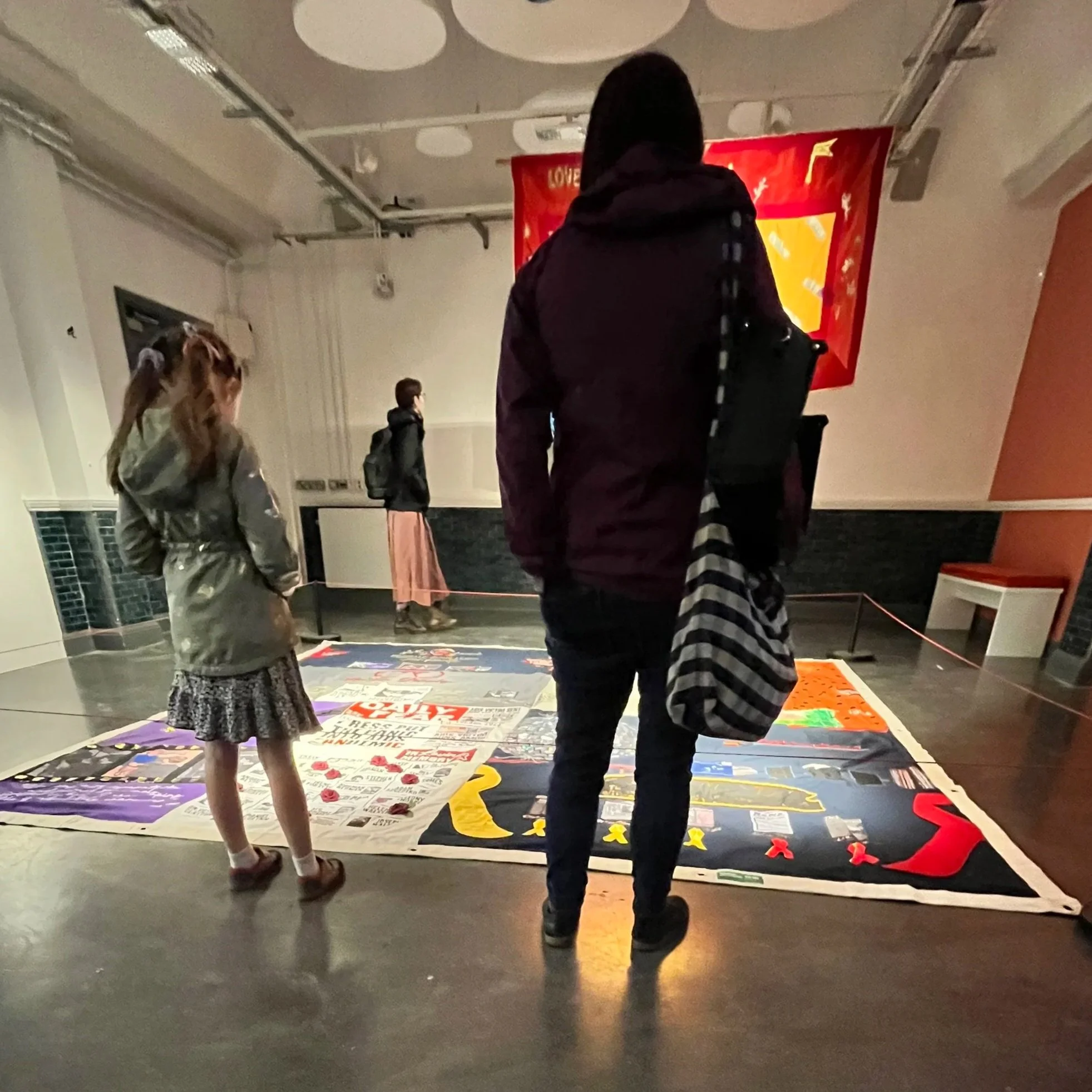
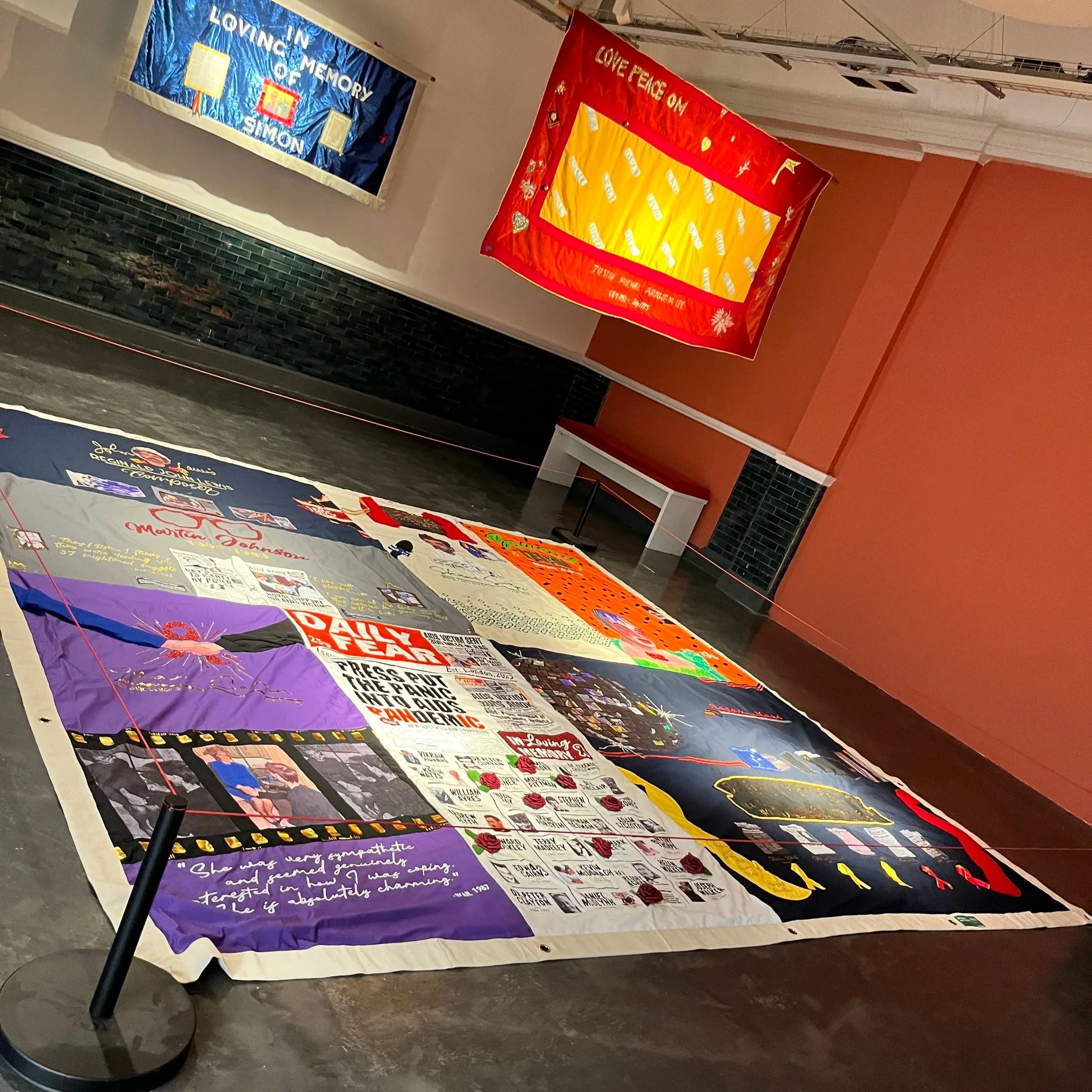
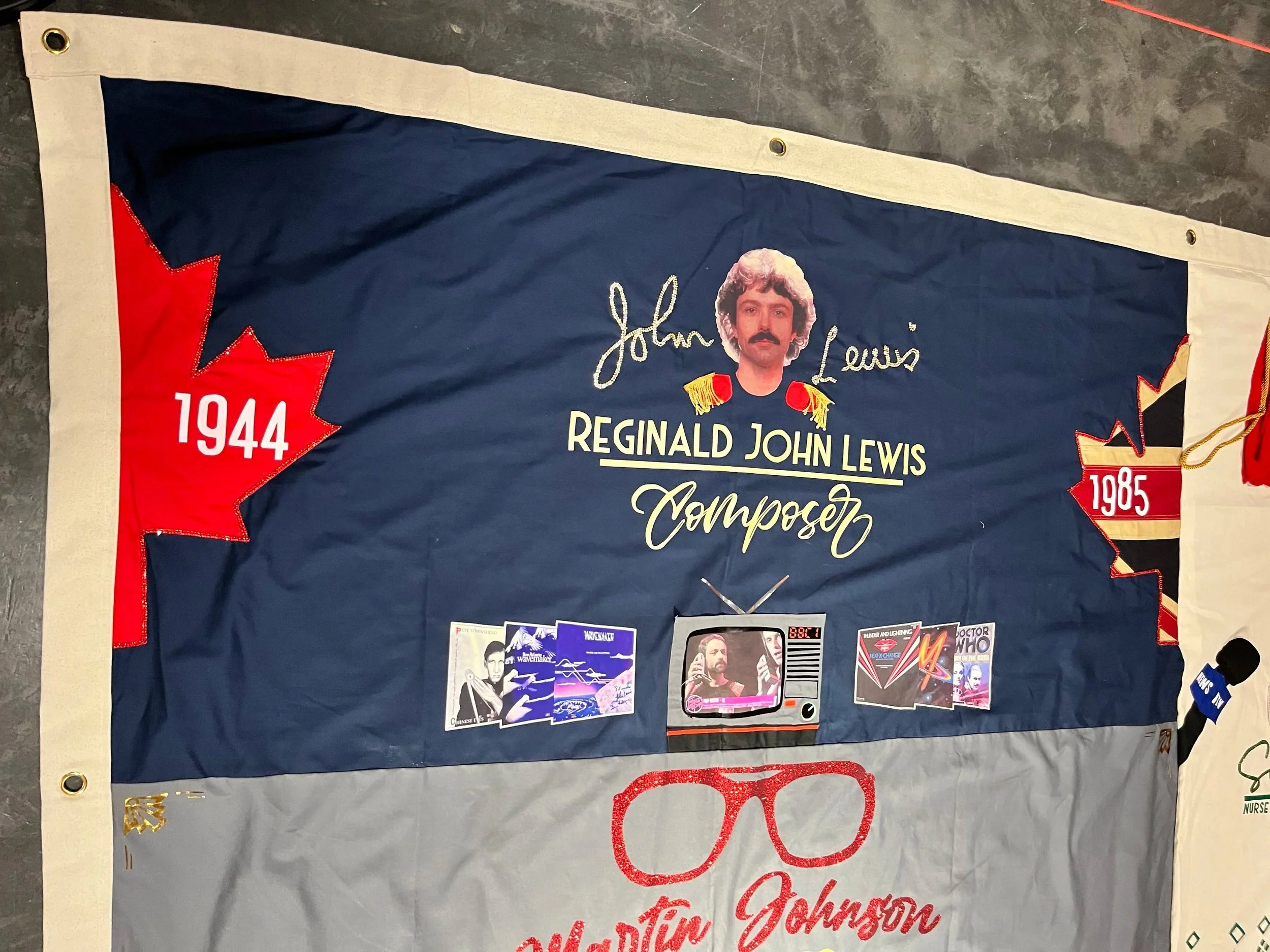
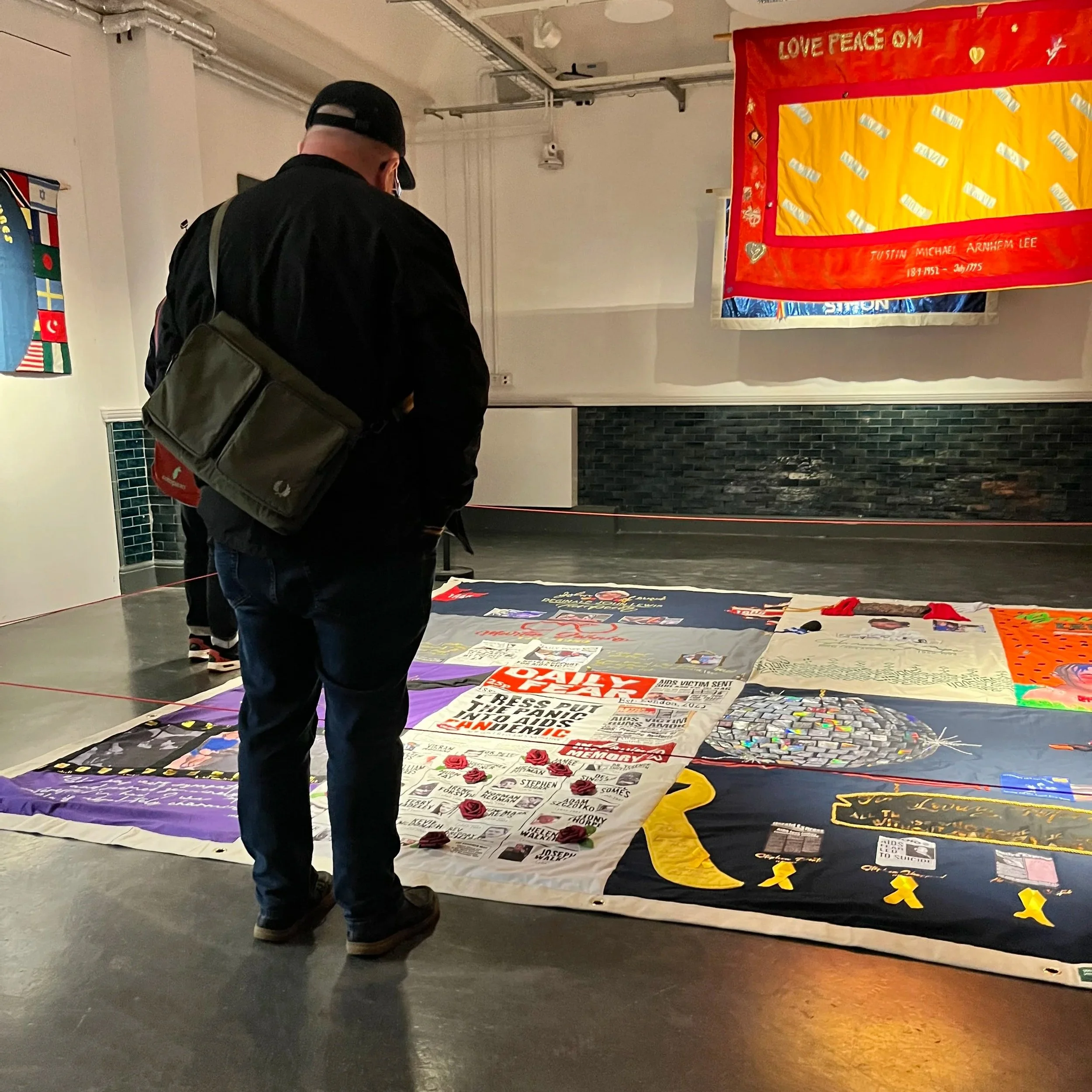
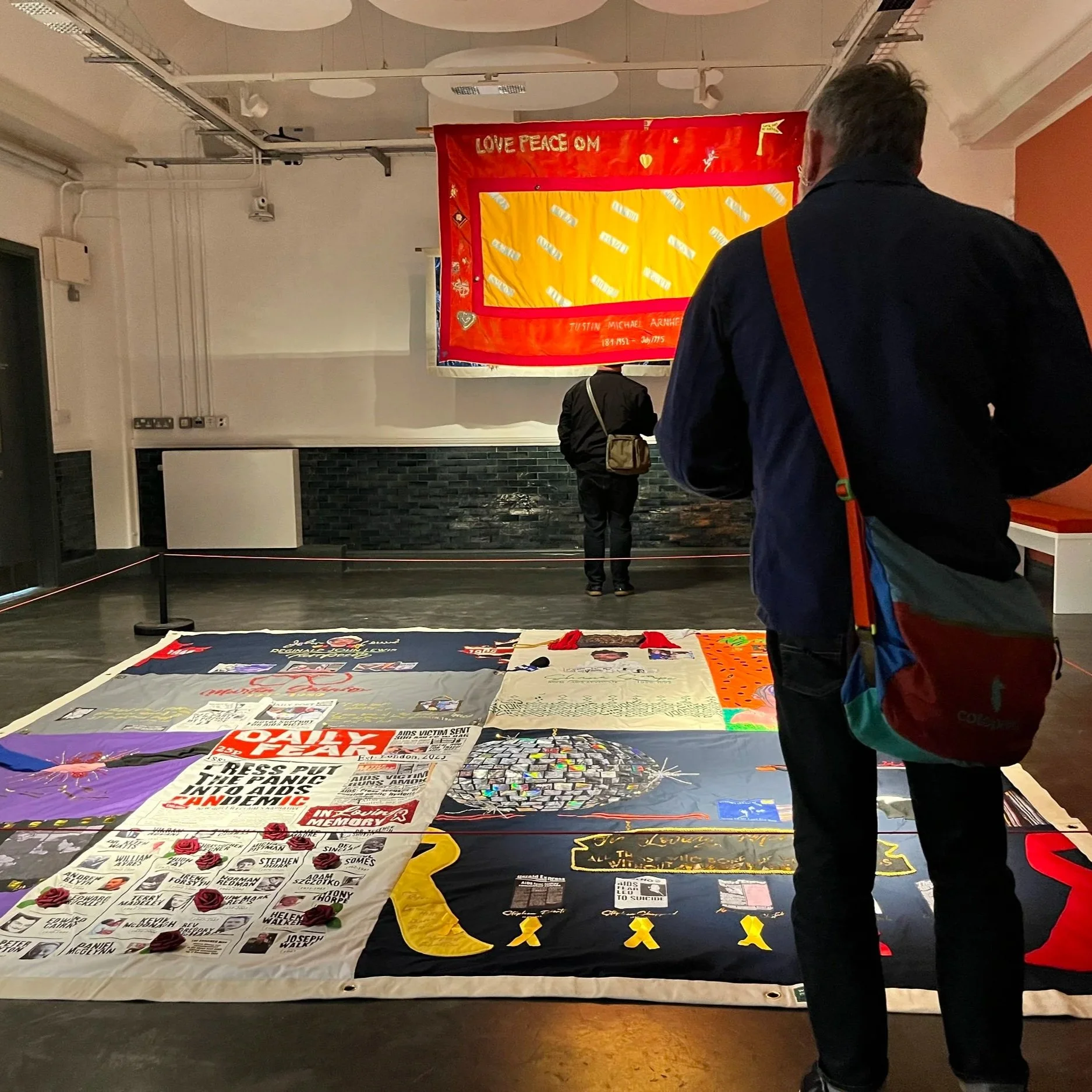
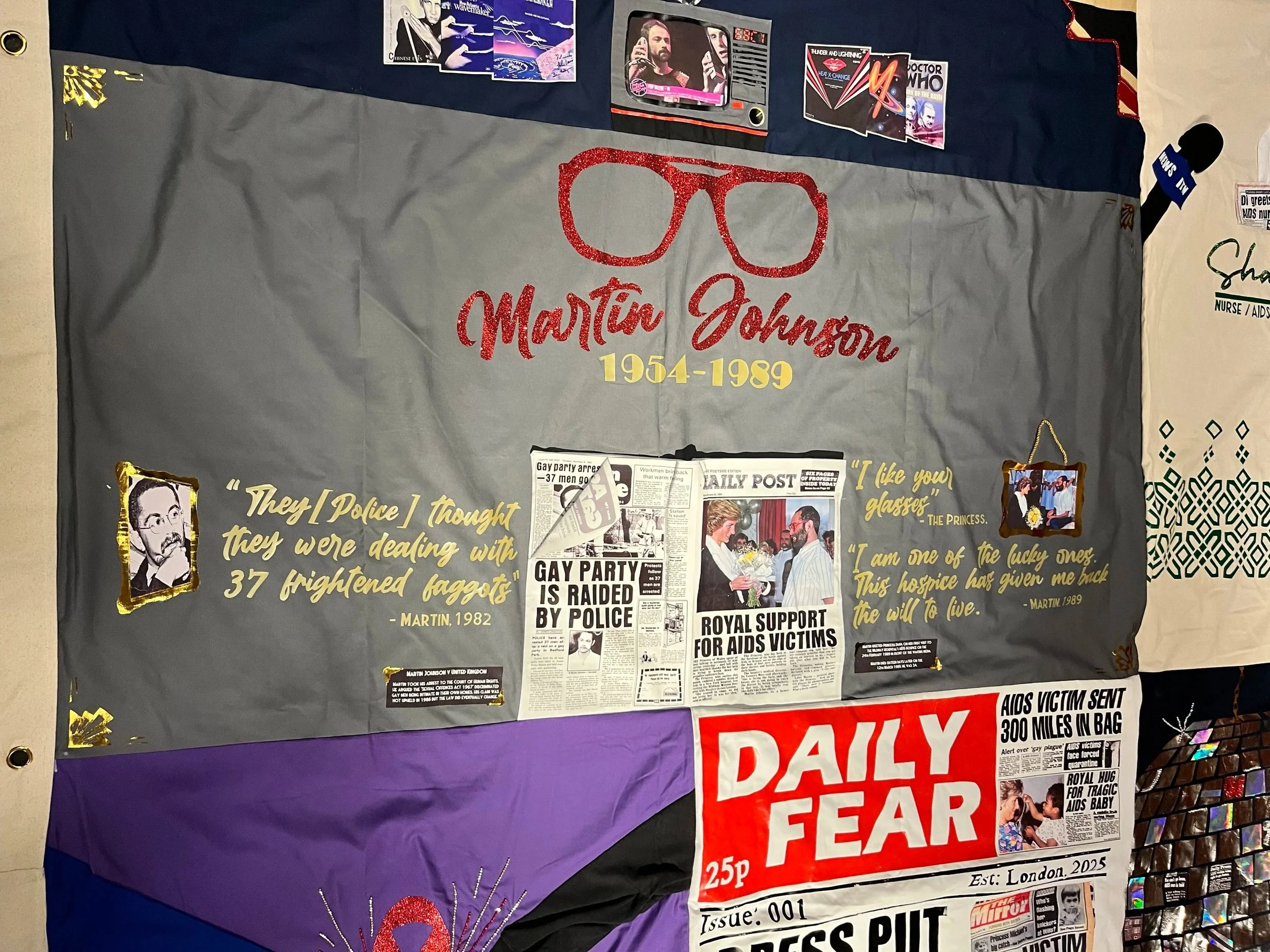
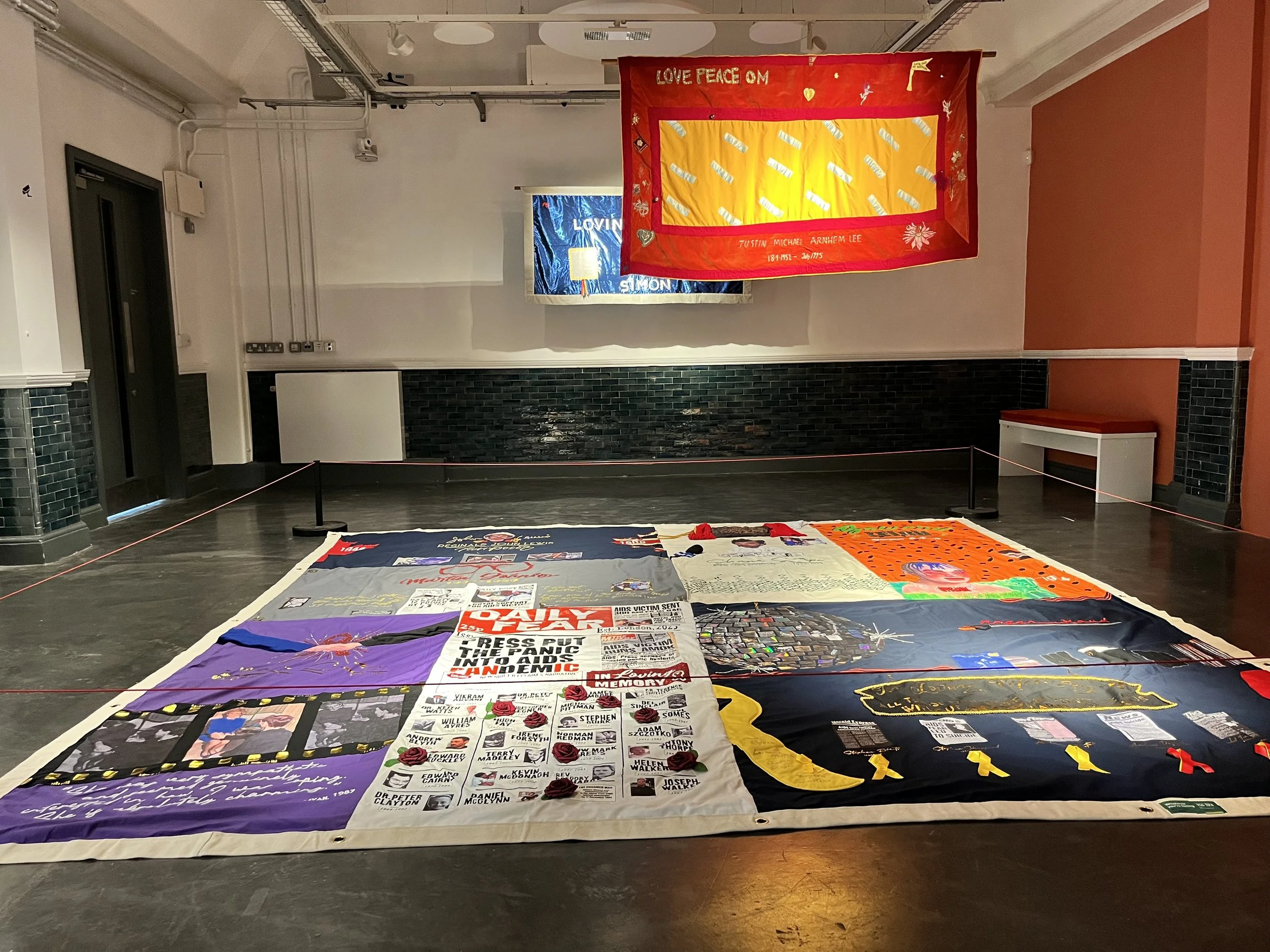
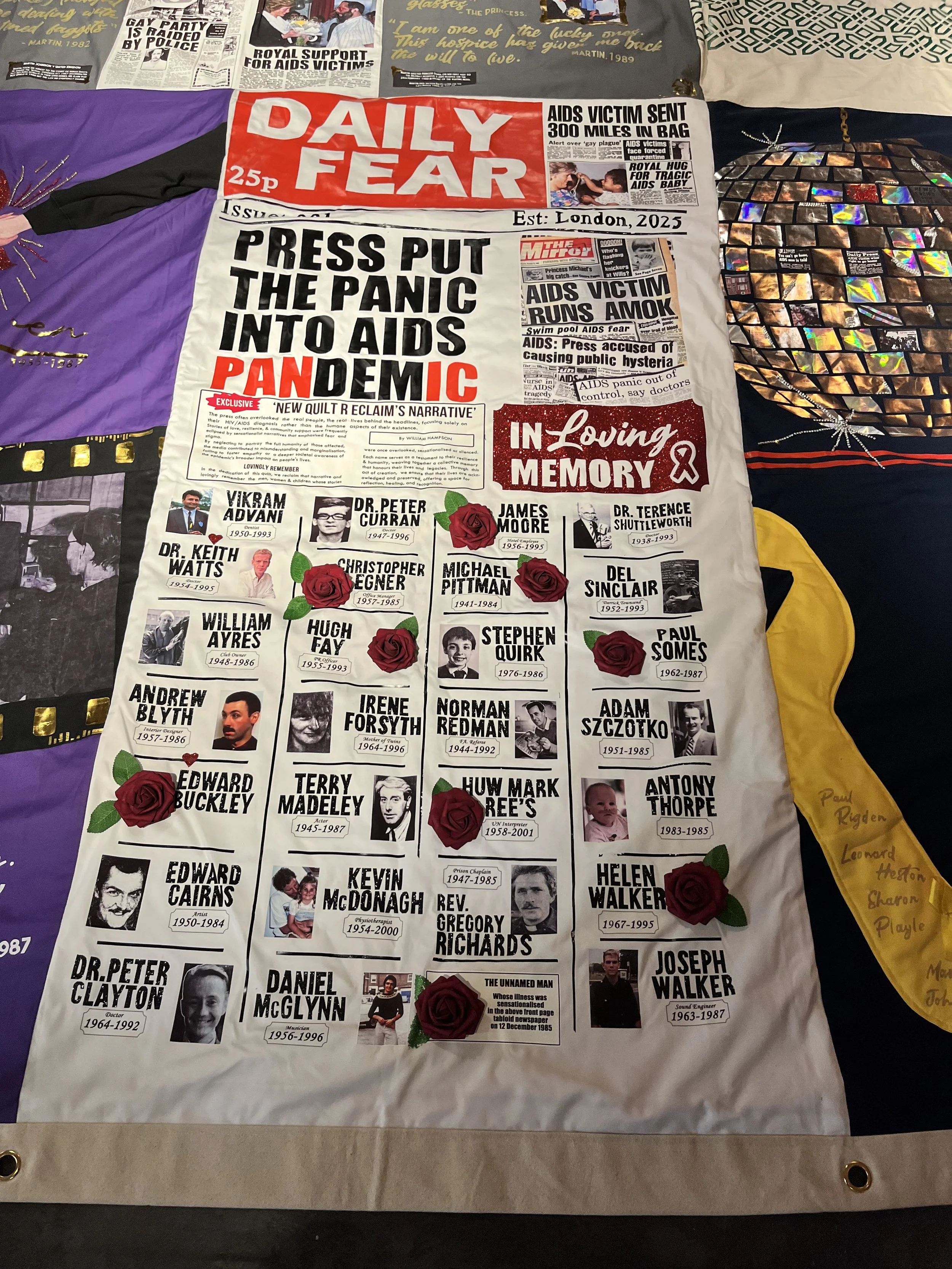
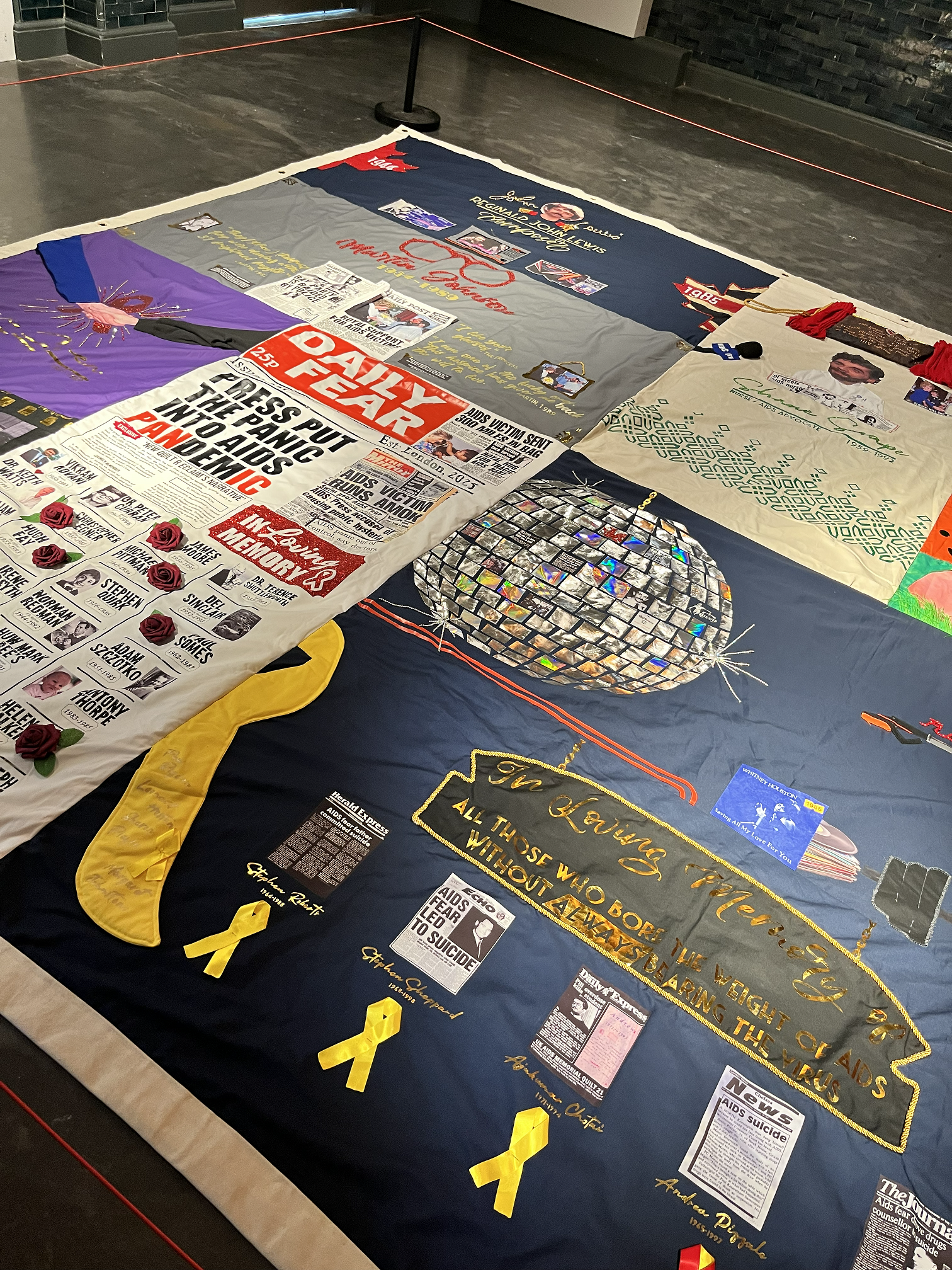
Having created Quilt 47 — commemorating 43 individual names and submitted to the AIDS Quilt UK for World AIDS Day 2025 — its first display was at The Art House, Wakefield, where it was shown alongside three individual panels. It was the first time I saw the quilt laid out in its entirety, having lacked the space in my lounge, and I was taken aback by its scale.
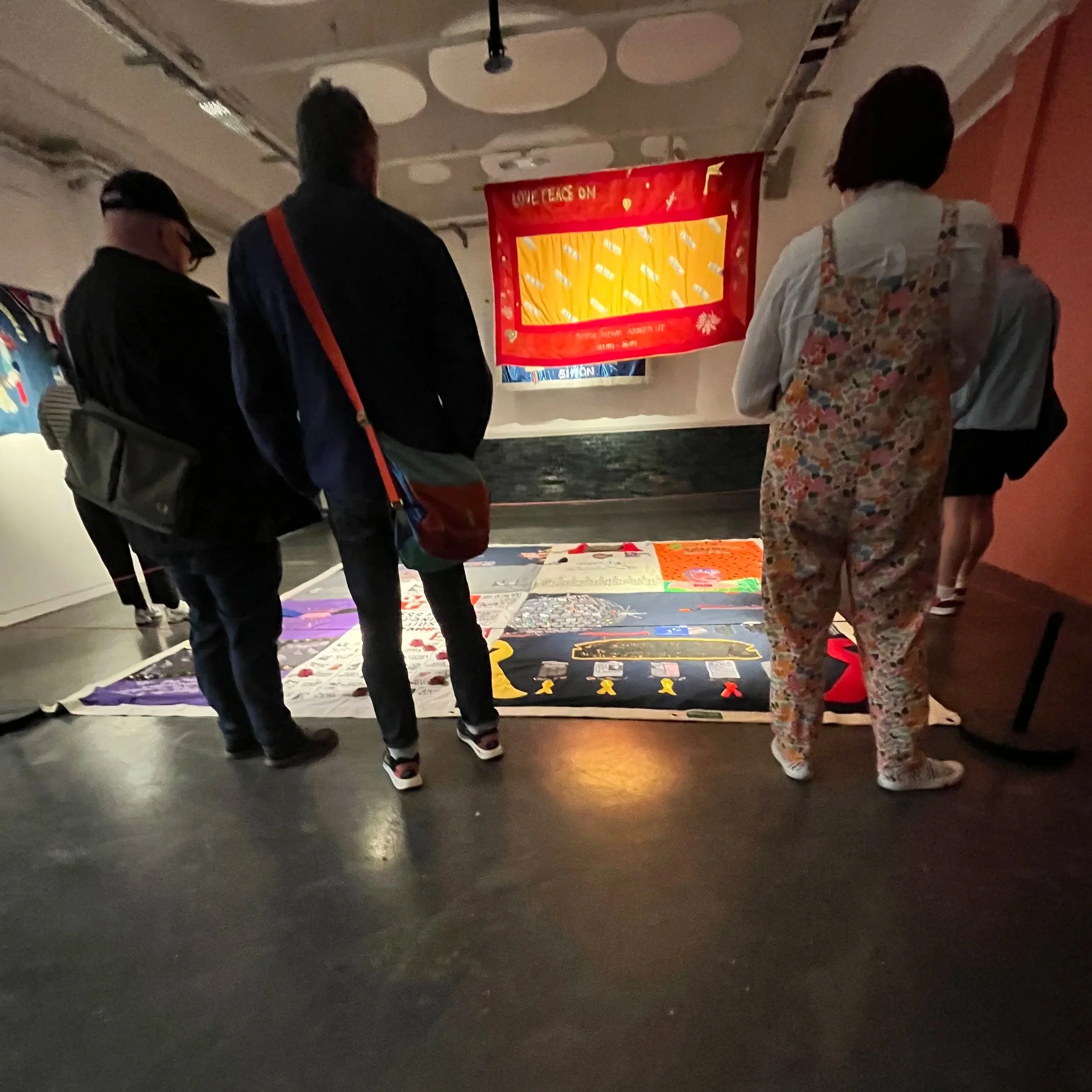
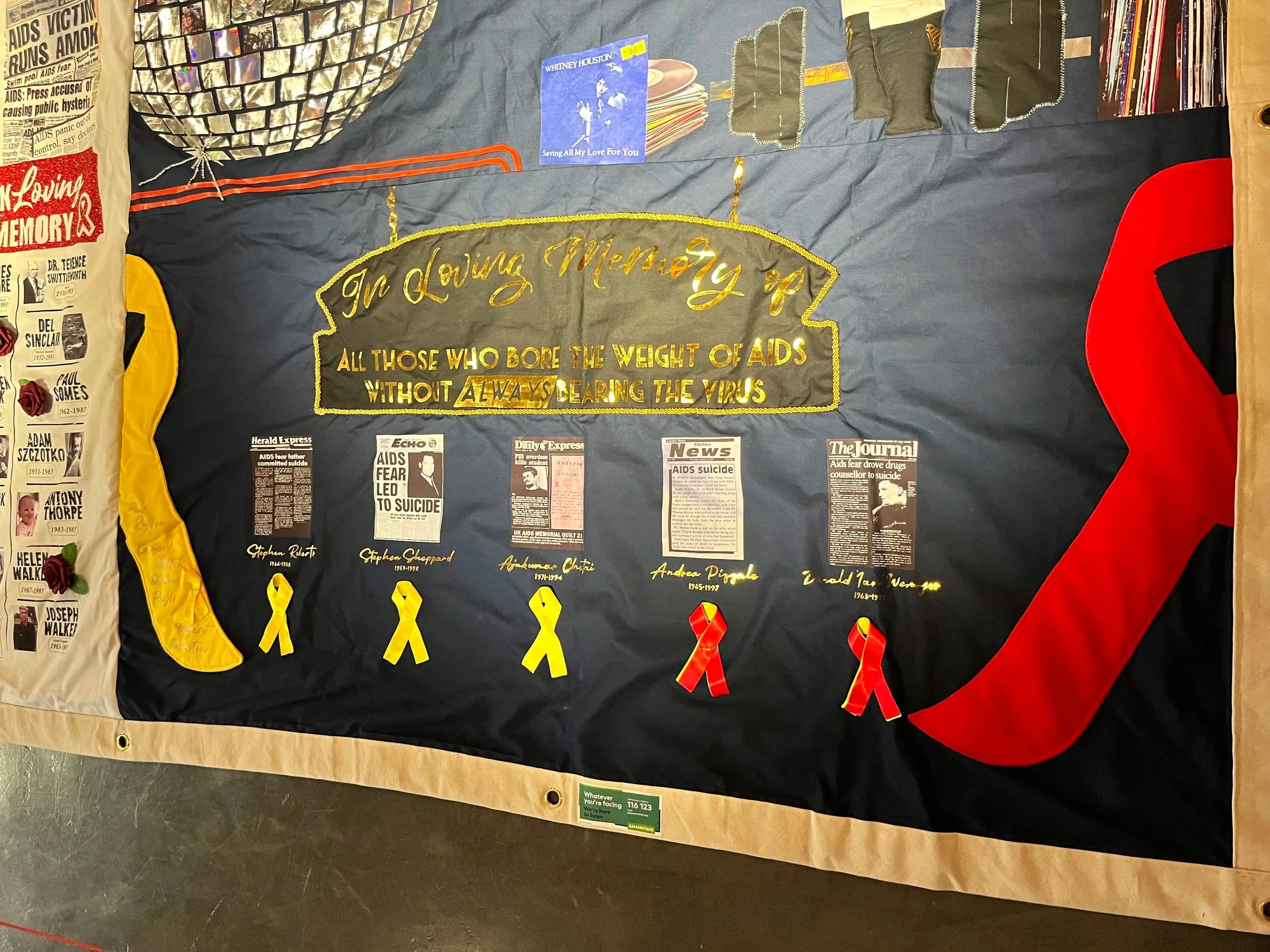
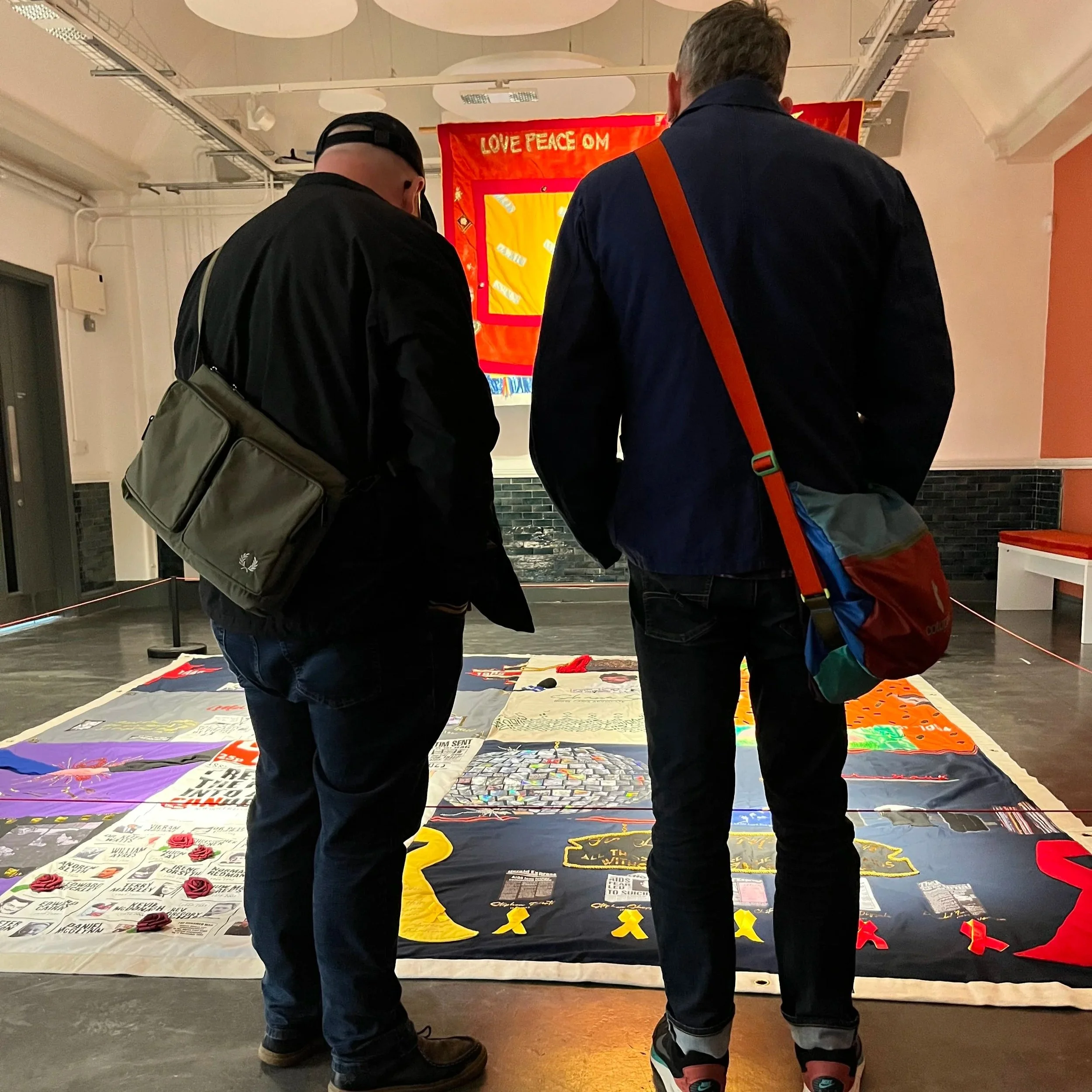
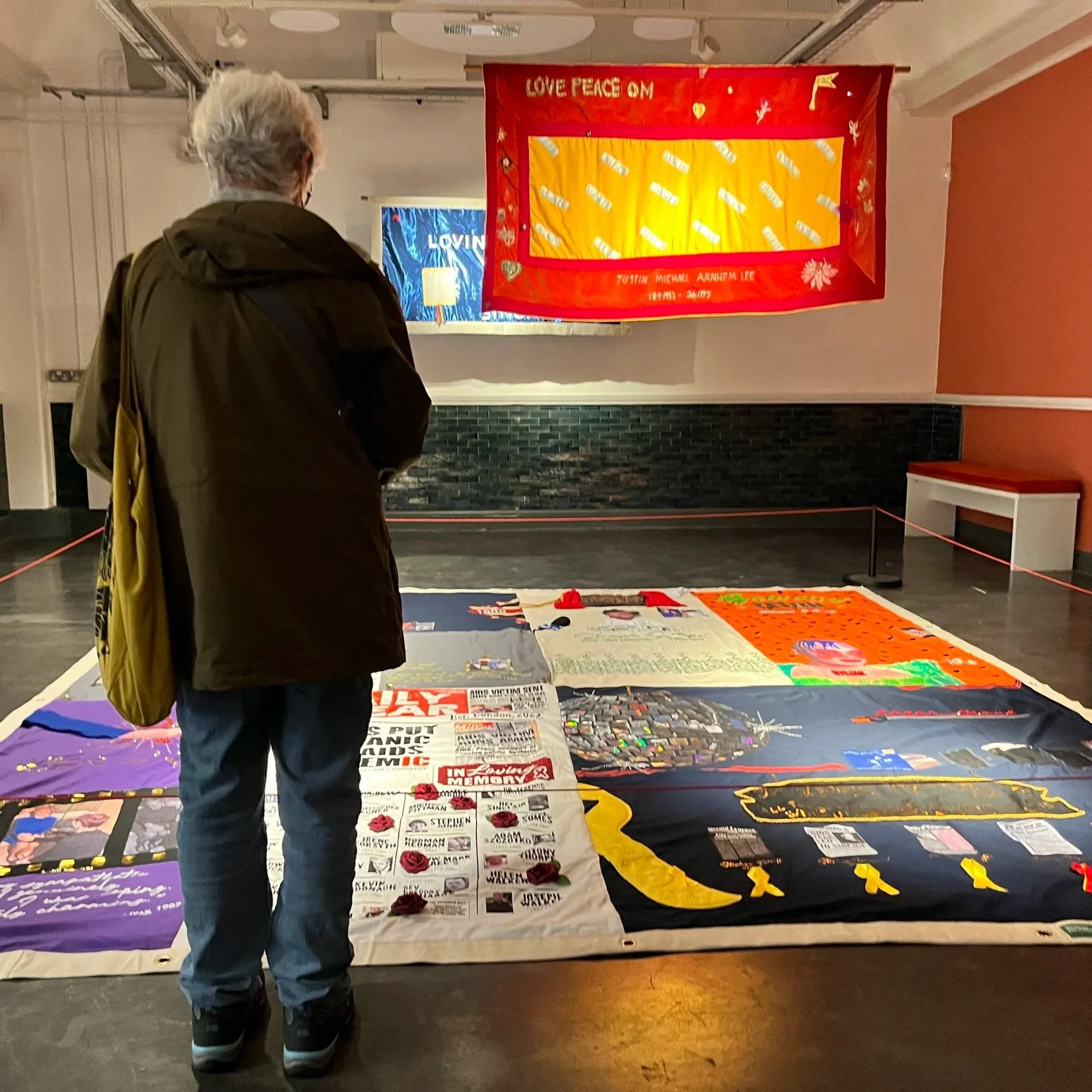
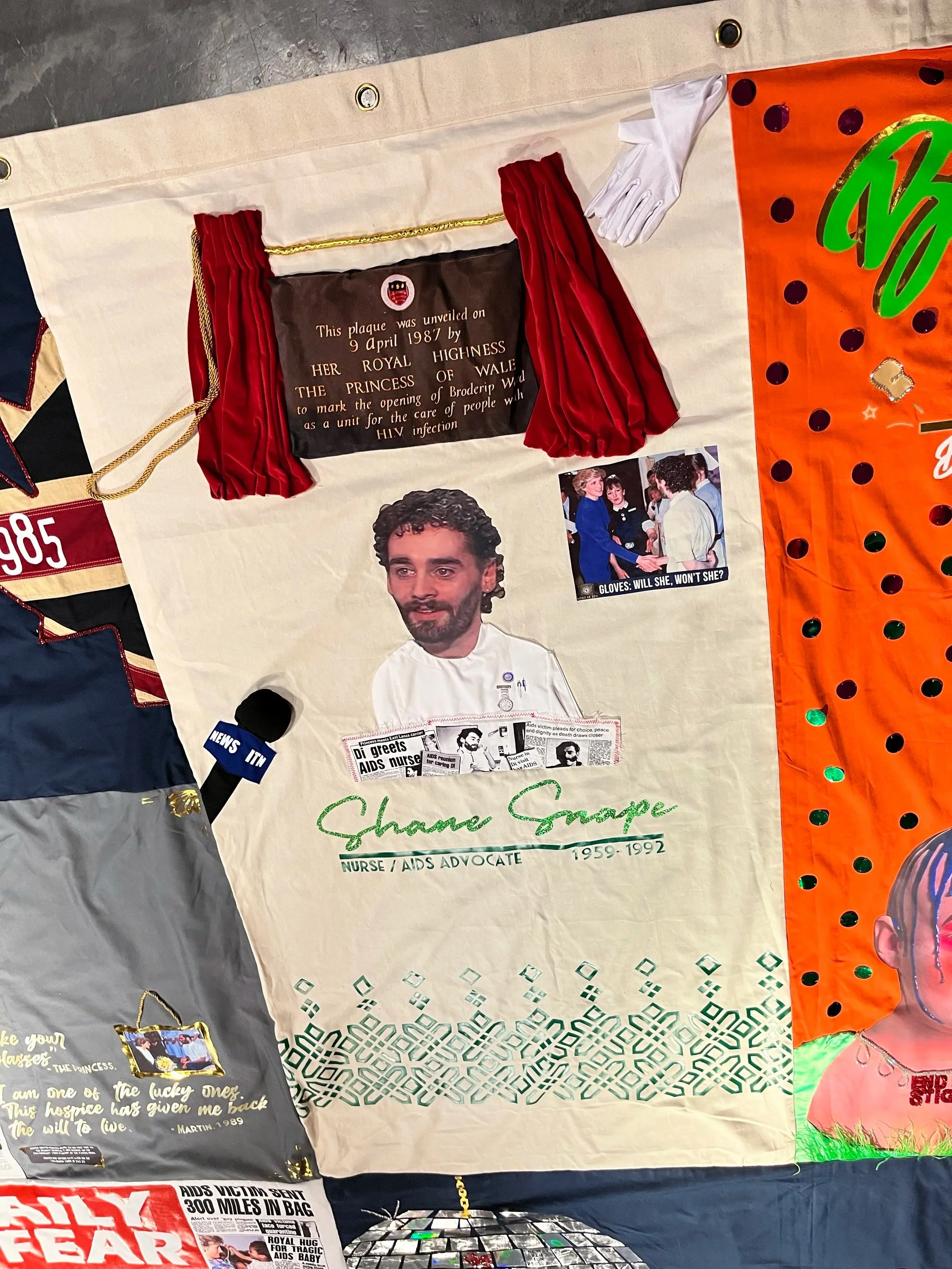
With seating encircling Quilt 47 in the Tiled Gallery, I sat for a while across several days, quietly observing the responses of those who passed through. What delighted me most was that conversation rarely turned to the quilt’s design; instead people stopped at the names, saying things like “Isn’t it upsetting when you think” and “Look, Antony Thorpe, only a baby.” A grandmother and her granddaughter lingered, sharing the story of Ivan Cohen and his encounter with Princess Diana when she opened the Broderip Ward in 1987; she also gently explained the panel depicting suicide and the meaning of the red and yellow ribbon to the inquisitive child, turning the display into a space of memory, inquiry and careful education.
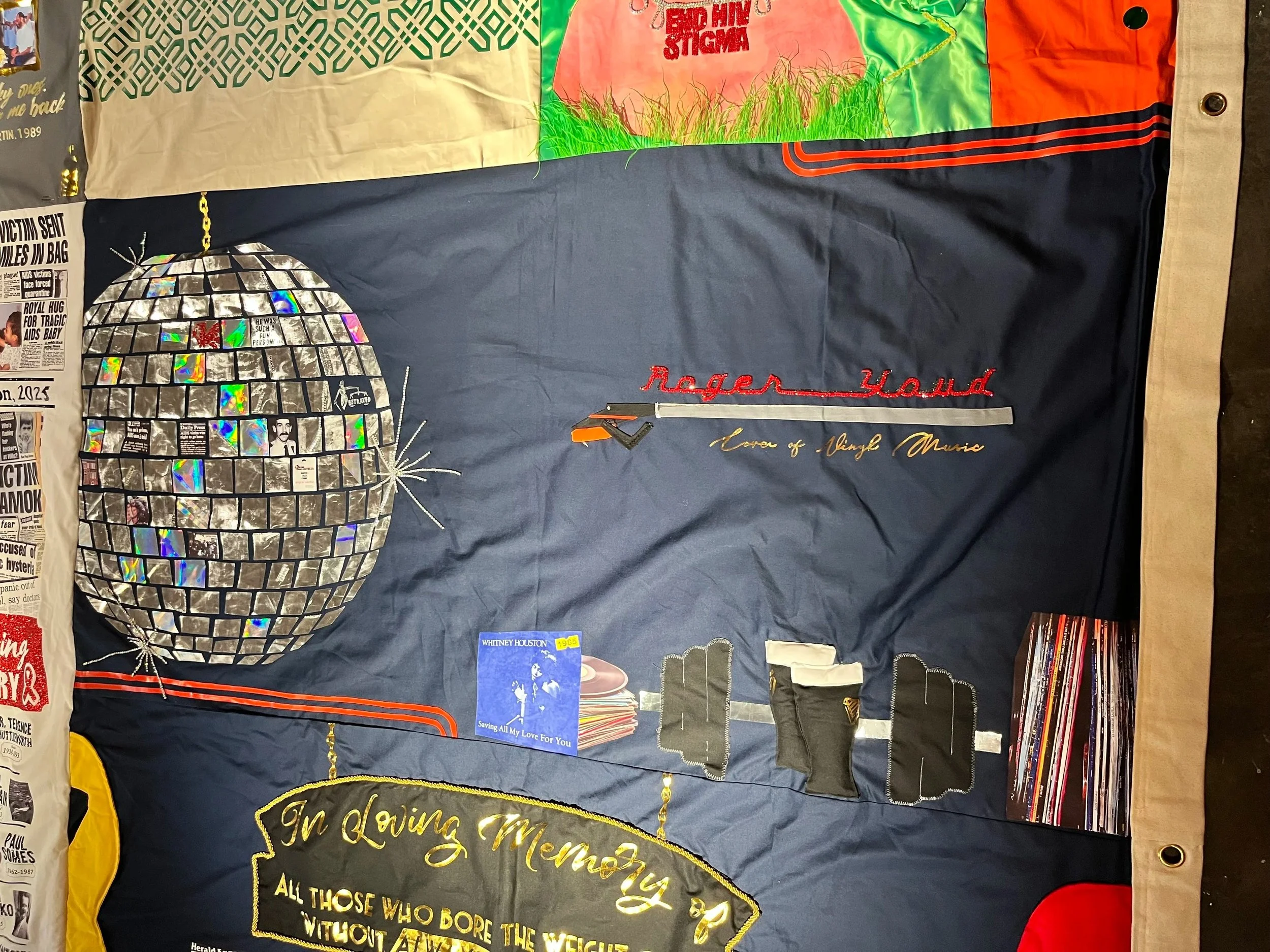
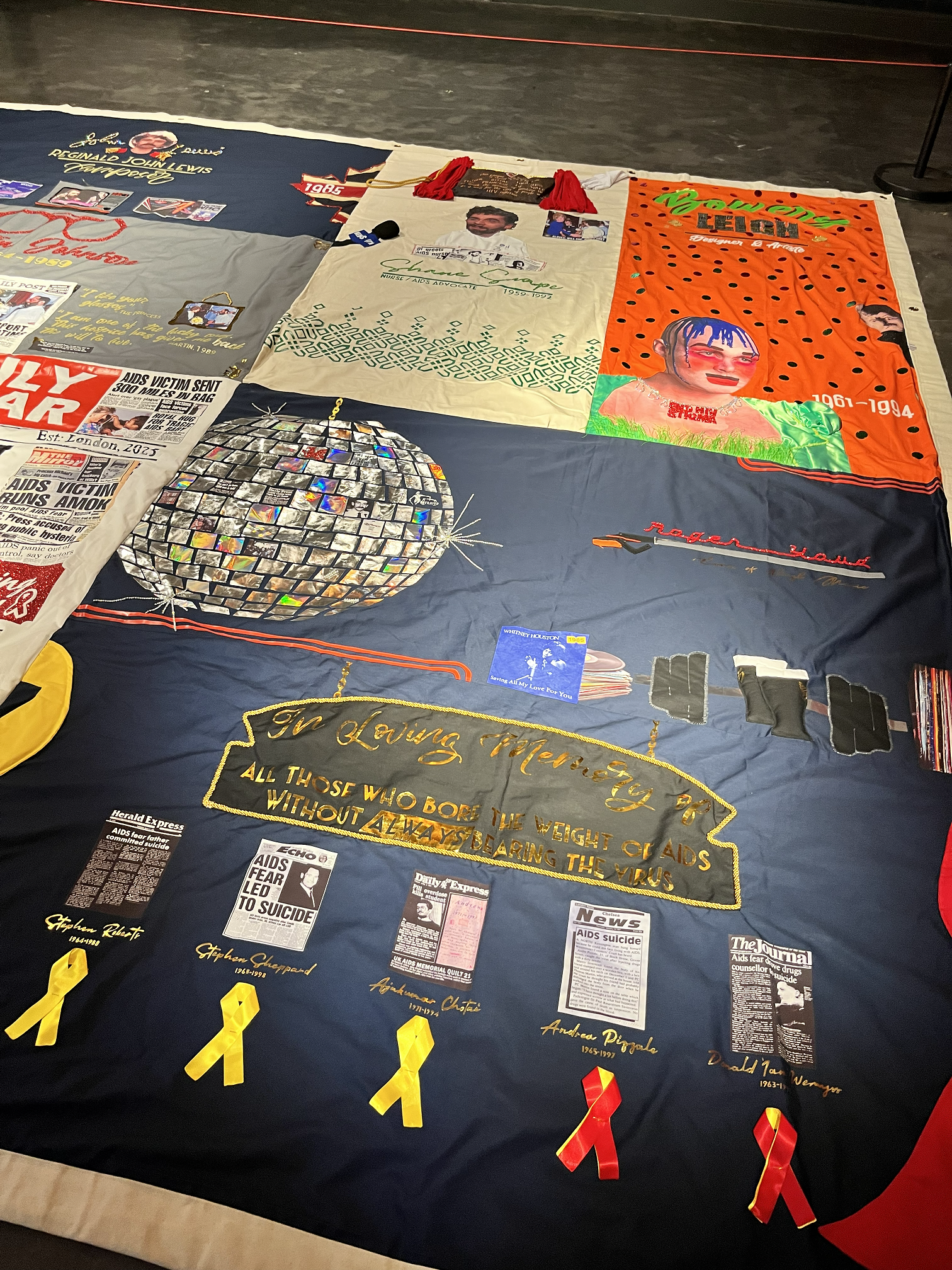
Two men paused at the Roger Youd panel; “I know that name,” one told the other while pointing, and when he turned to his mobile to conduct a search, his memory came back—Roger had been unlawfully detained in Monsall Hospital in 1985. Others passed quietly through the room; at one point a small queue formed to view the quilts, people lingering to read the names and the accompanying details was causing the line to back up. Some stood alone, tracing stitched letters with their eyes, occasionally calling a name aloud as if to give it company “Stephen Quirk”, “Paul Somes” “Irene”, while elsewhere visitors exchanged soft murmurs or moved on in silence, each encounter folding thoughts into the collective stillness.
Wakefield Exchange
Having visited the AIDS Quilt UK at the Tate in the summer of 2025 and having interacted with the quilt digitally through researching the names memorialised upon it, I thought I’d seen every panel. But with each visit to the quilt in Wakefield — I lost count of how many times I swung by — each repeat visit unearthing another name, another flourish, another life insisting on being seen.
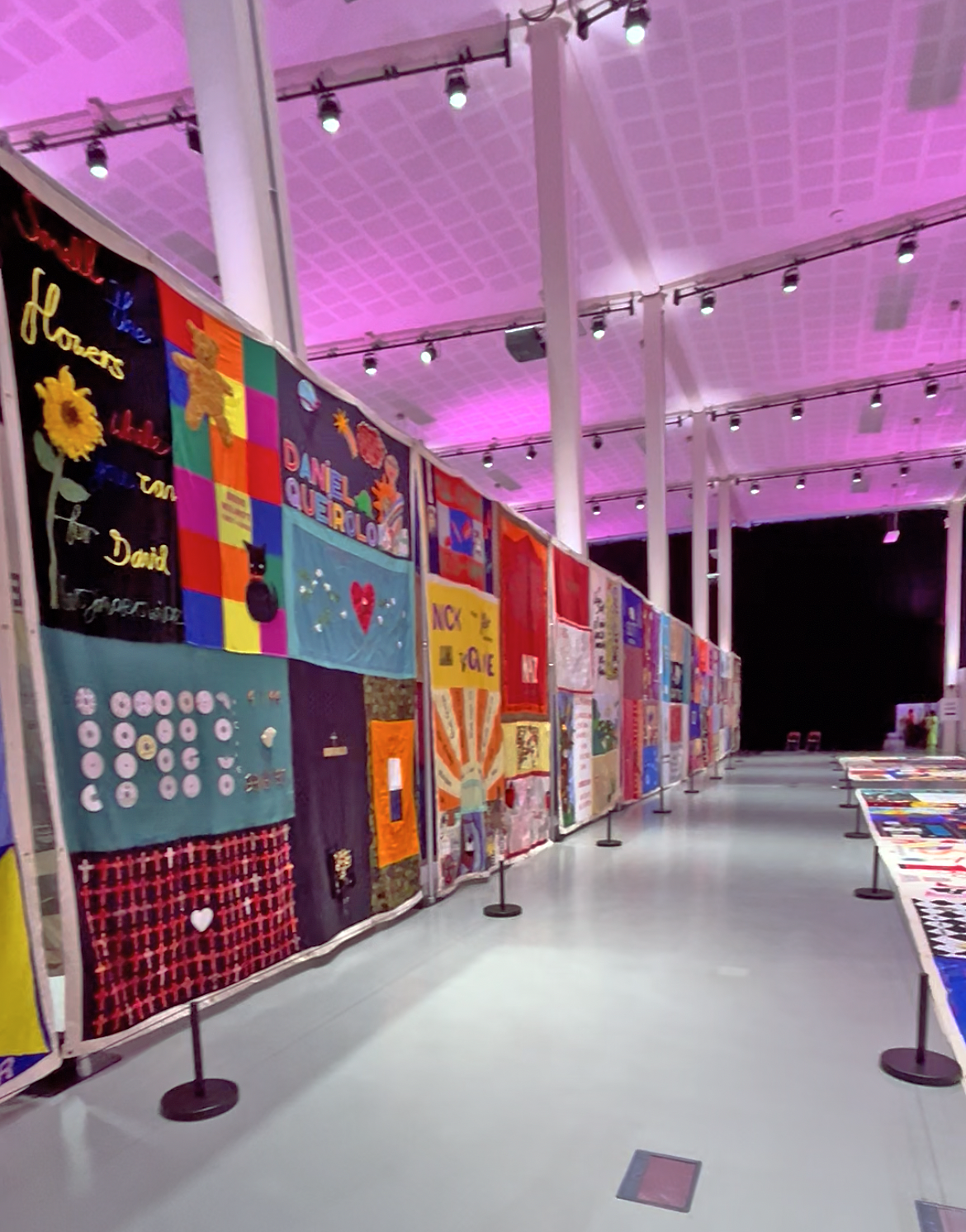
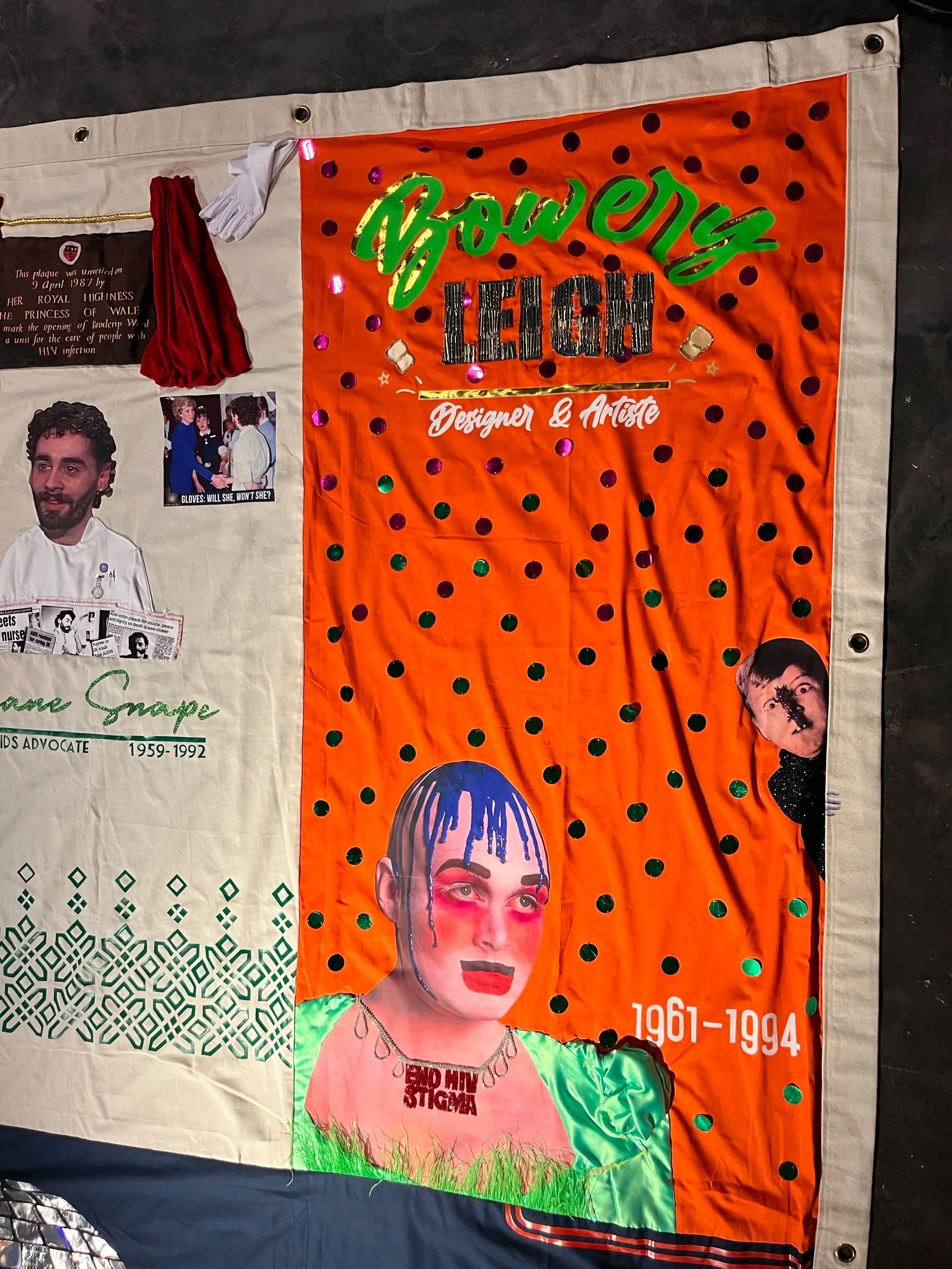
The Quilt was suspended on both sides of the exhibition space, while two rows of quilts displayed flat along the length of the hall, their vast presence defining the room. The white-walled gallery was beautifully lit with a blend of soft pink and gallery lighting, which made the colours and sparkles sing, animating each individual memorialised. What was striking was the scale: each quilt measured 12 ft x 12 ft, a monumental square that rendered even the tallest observer comparatively small, inviting not only looking but circumnavigation and quiet, contemplative proximity.
Volunteers stood by not only to hand out tissues but to answer questions; I overheard one woman ask, “So why fabric quilts?” and the volunteer began, “Well, here’s the story…,” explaining how protests in San Francisco during the 1980s responded to the US government's slow reaction to the AIDS pandemic. Activists used placards and hand-made signs, and when those signs were later laid out together they resembled a patchwork quilt — disparate pieces joined to make a single, visible whole — and that visual metaphor inspired the quilt projects that followed, turning mourning and protest into a communal act of remembrance and resistance.
While each quilt in the collection holds its own story, one that stayed with me was the episode I featured on my podcast ‘AIDS: The Lost Voices’ when featuring four episodes in a mini series ‘Behind the Stitches’ looking at names on the AIDS Quilt UK, and one that has stayed with me is that of Andrew (Quilt 21) and Ajakumar (Quilt 47).
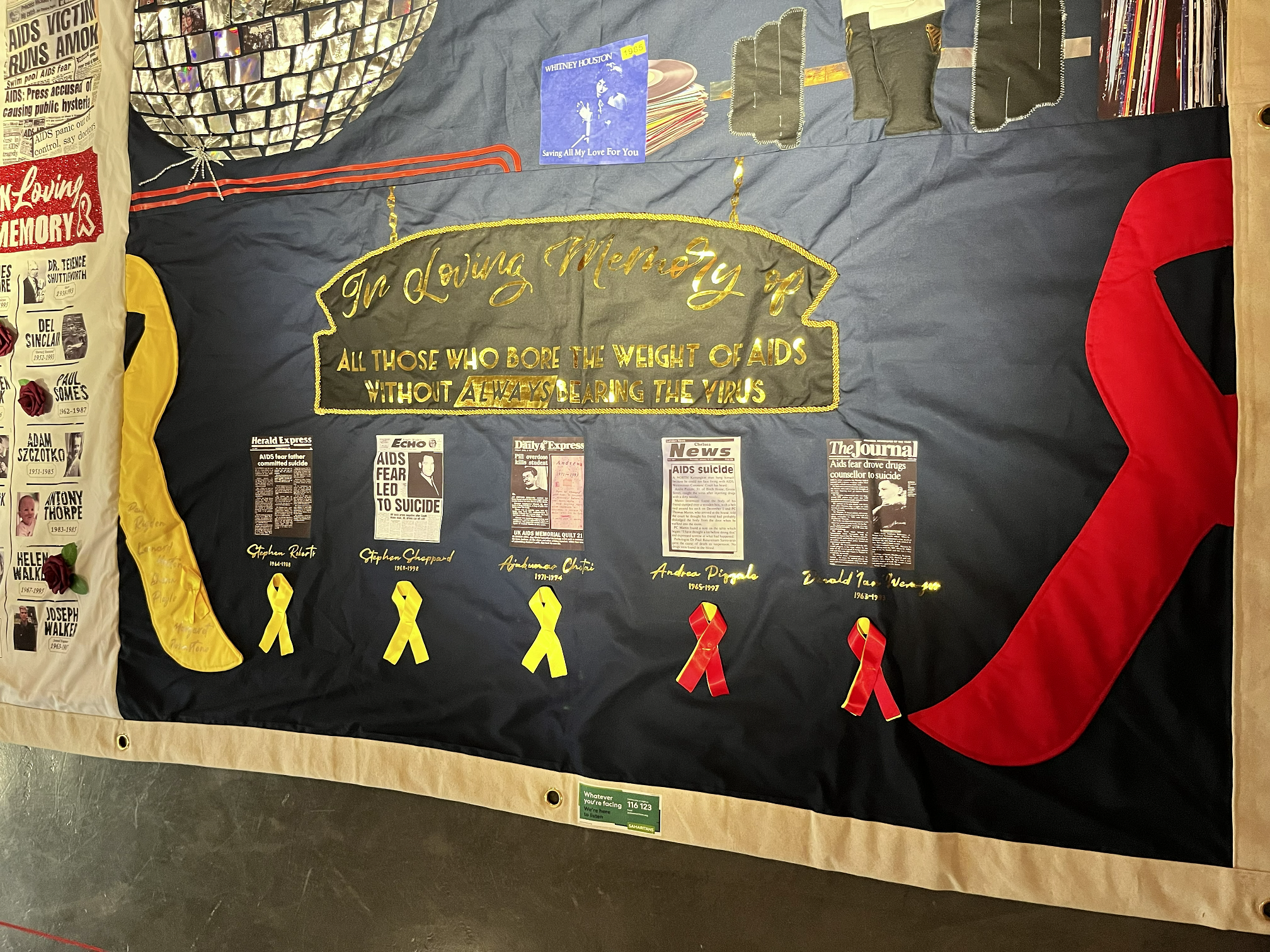
Both studying at Oxford University, a friendship soon deepened into a loving relationship that the pair kept carefully secret. When Andrew fell ill he returned to his parents, who were not accepting of their bond, and he died of AIDS-related complications. In his grief, AJ lovingly crafted a memorial panel: a hand-stitched quote from Andrew’s favourite book, the gold chains the pair had exchanged as lovers, a friendship band and the ring Andrew had given AJ on their first anniversary, and a tape of Andrew’s favourite songs — some of which had been played at his funeral — arranged so that memory, love and loss sat together on the quilt.
Within four weeks of submitting the panel and a letter that detailed more of their relationship, AJ took his own life. Newspaper reports noted there was no suicide note and, despite friends saying AJ had shown no obvious problems, suggested he might have been worried about final exams eight weeks away. Reading AJ’s letter, however, I am convinced he was struggling with Andrew’s loss — not only with living without him but with the rejection AJ felt from Andrew’s parents and the wider non-acceptance of Andrew’s sexuality. The fact AJ placed intimate items, including jewellery he referred to in his letter, to remain together on the quilt suggests he had already been contemplating ending his life and wanted those possessions kept intact rather than discarded when his room was cleared. It is therefore painful but plausible that the panel for Andrew and the enclosed letter were AJ’s way of saying goodbye.
In creating Quilt 47 and through my podcast research I became aware of many who had taken their own lives driven by a fear of being HIV/AIDs positive — a fear later confirmed by immediate family members and by public inquests into their deaths. It felt important, therefore, that these individuals be memorialised on the quilt, even when subsequent testing proved them HIV‑negative; coroners frequently recorded the cause as ‘due to an irrational fear of AIDS given the amount of advertising’. In the panel titled “In Loving Memory” I placed Ajakumar Chotai at its centre, ensuring the memory of both A.J. and Andrew and their story is not hidden but held openly within the quilt, a quiet testament to the devastating power of stigma and the need for compassionate remembrance.

My invitation to read the names of Quilt 47 came at the last minute and, knowing it would be emotionally difficult, I slept on it overnight. By morning I accepted; the delay had made little difference — I felt compelled to accept such an honour, having come to know the individual lives lost through my research and storytelling. Yet nothing prepares you for the day itself: the hush that fell in the hall, the weight of each name as it leaves your lips, the sudden closeness of strangers bound together by such loss of life, and the strange fierce clarity with which every ordinary life you’ve narrated becomes, in that moment, profoundly present.
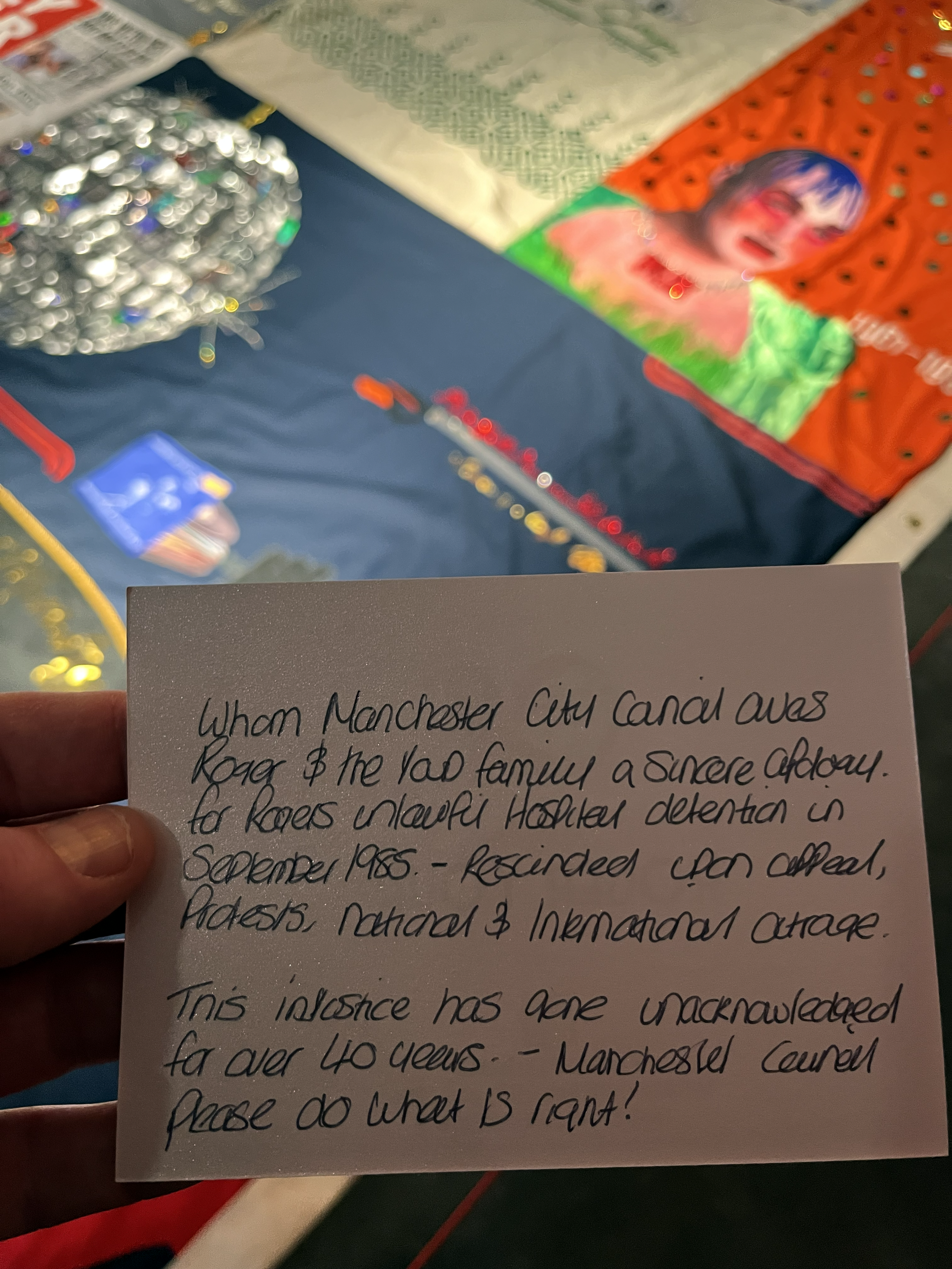
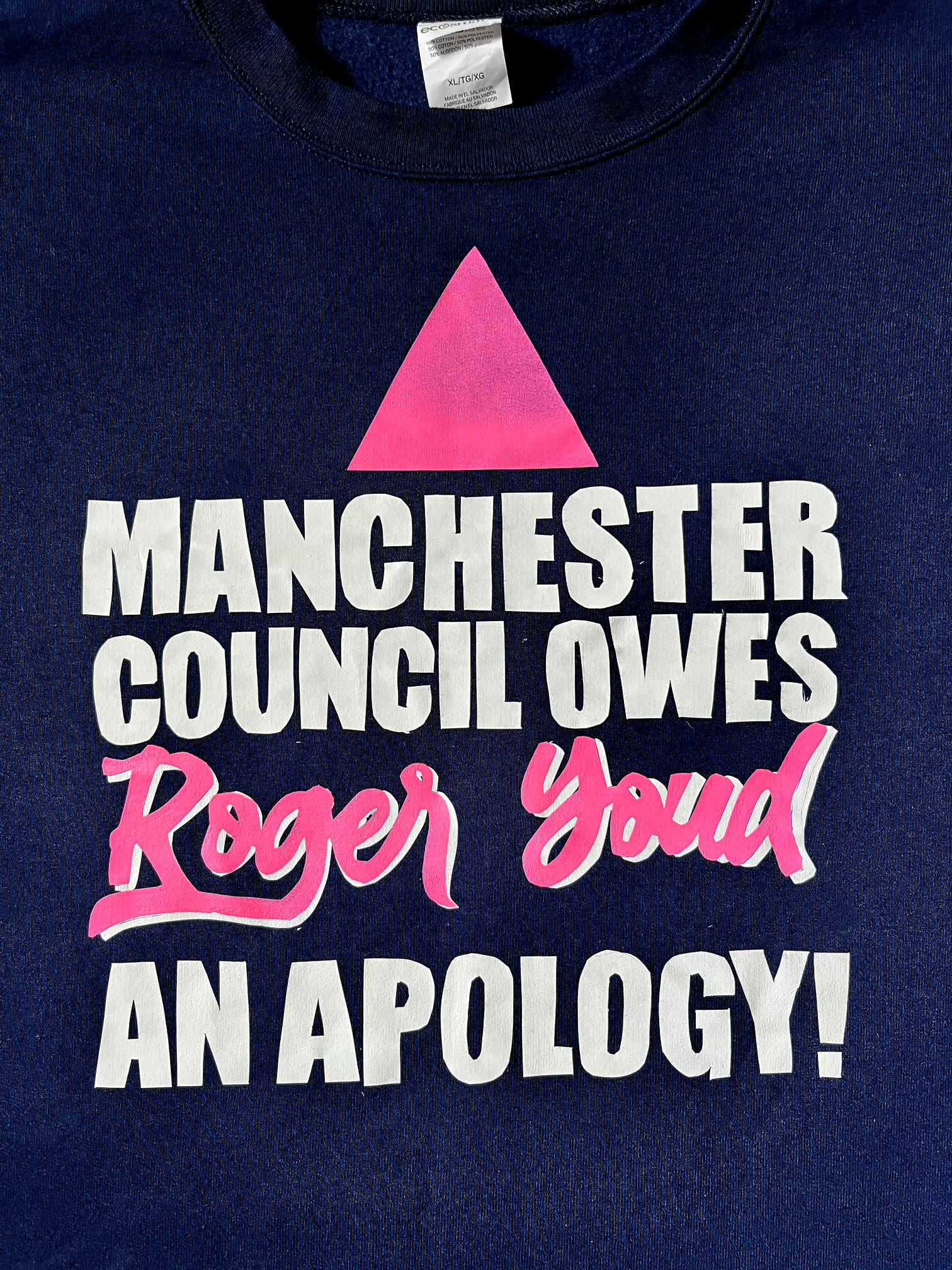
Given the AIDS Quilt began as an act of protest and remains one today, reading the name of Roger Youd felt like a moment to demand accountability: Manchester Council should apologise to Roger and the Youd family for his unlawful detainment at Monsall Hospital in 1985 - and Rogers brother and his family would be present.
I did not wish to cause upset among fellow readers or the AIDS Quilt organisers, and thankfully, after the ceremony three readers and volunteers who were aware of Roger’s case approached me—some to thank me for raising it, others to urge that an apology be sought—while a fourth, a member of the public who vividly recalled Roger’s detainment, asked what he could do to help secure an apology for Roger and his family.
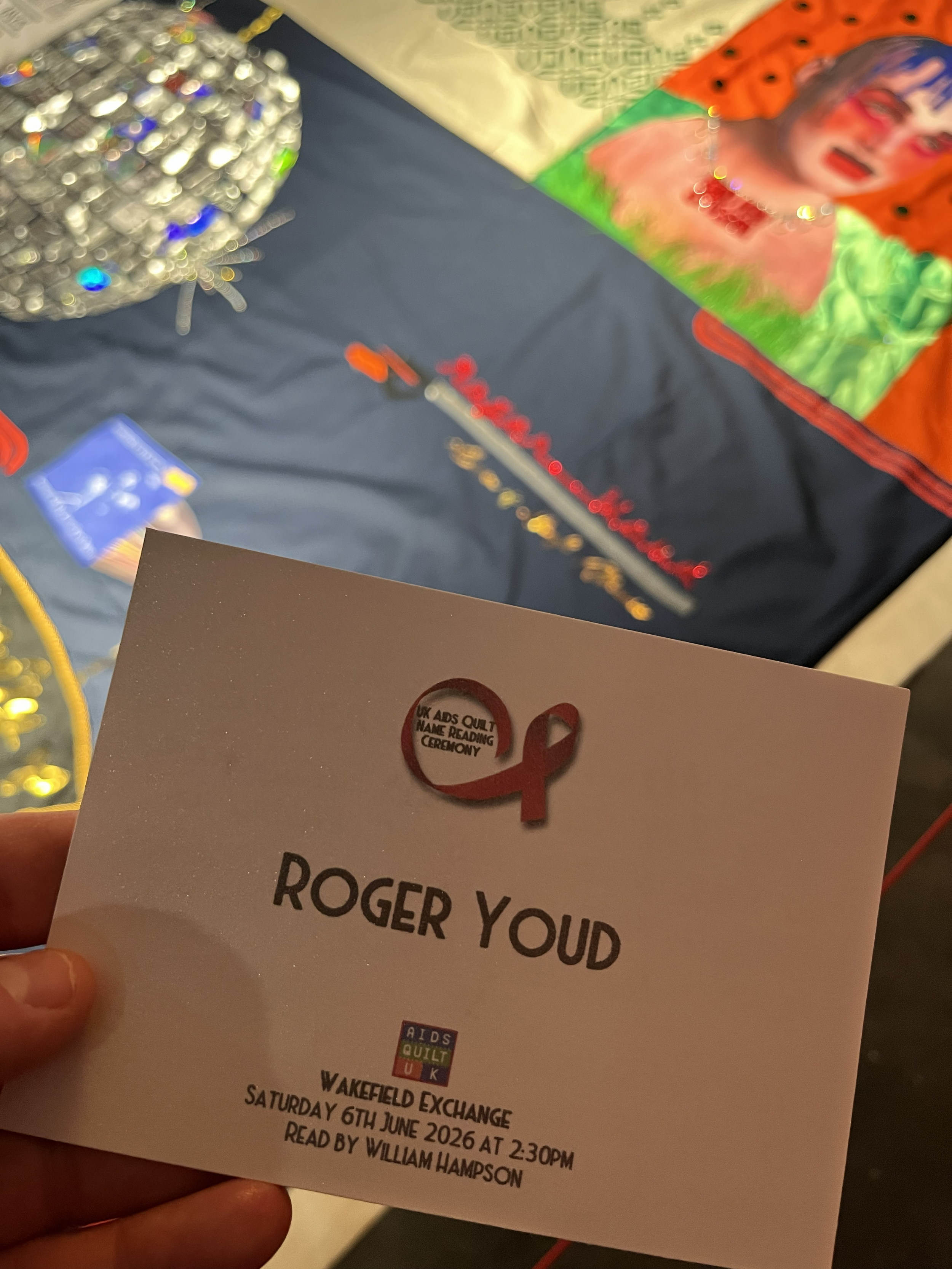
Just over an hour before the Reading of the Names I went to Quilt 47 and sat with Roger’s panel, writing on the back of his bespoke pearlised name card. Each name on Quilt 47 had been transferred to individual cards, and as I held the pen I felt, oddly and quietly, that Roger – a spiritual man – might oversee what I wrote down. Part of me questioned whether anything at all would come of it, yet the act itself felt meaningful: a way of sharing my intentions for him, of making tangible the small promises and thoughts I carried on his behalf in pursuit of an apology for him and his family.
Placing Roger’s name back in the order they were arranged, I then whispered each name to Quilt 47 before tying them up with the ribbon and promising I’d do them all proud in delivering each name in their memory.
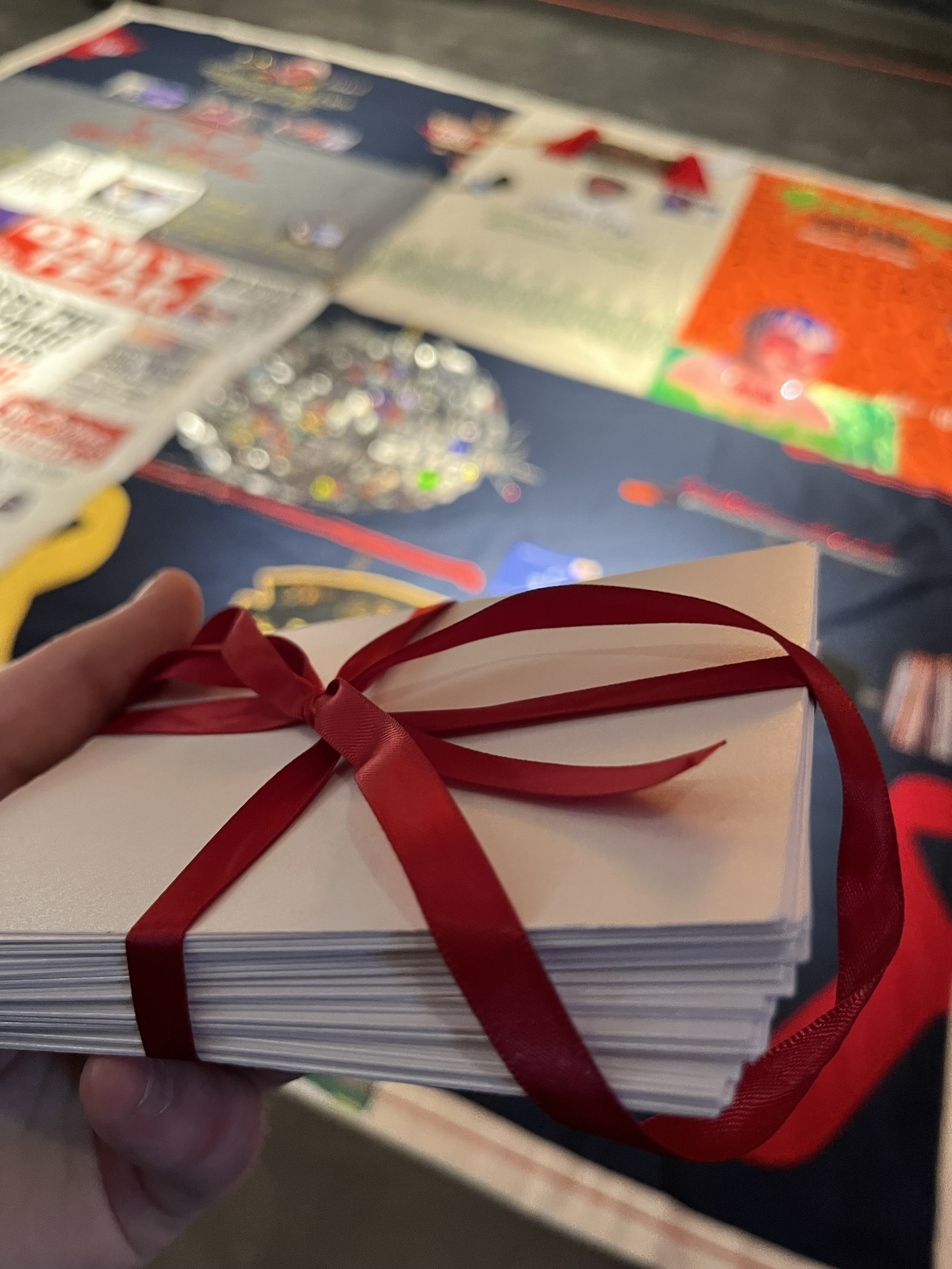
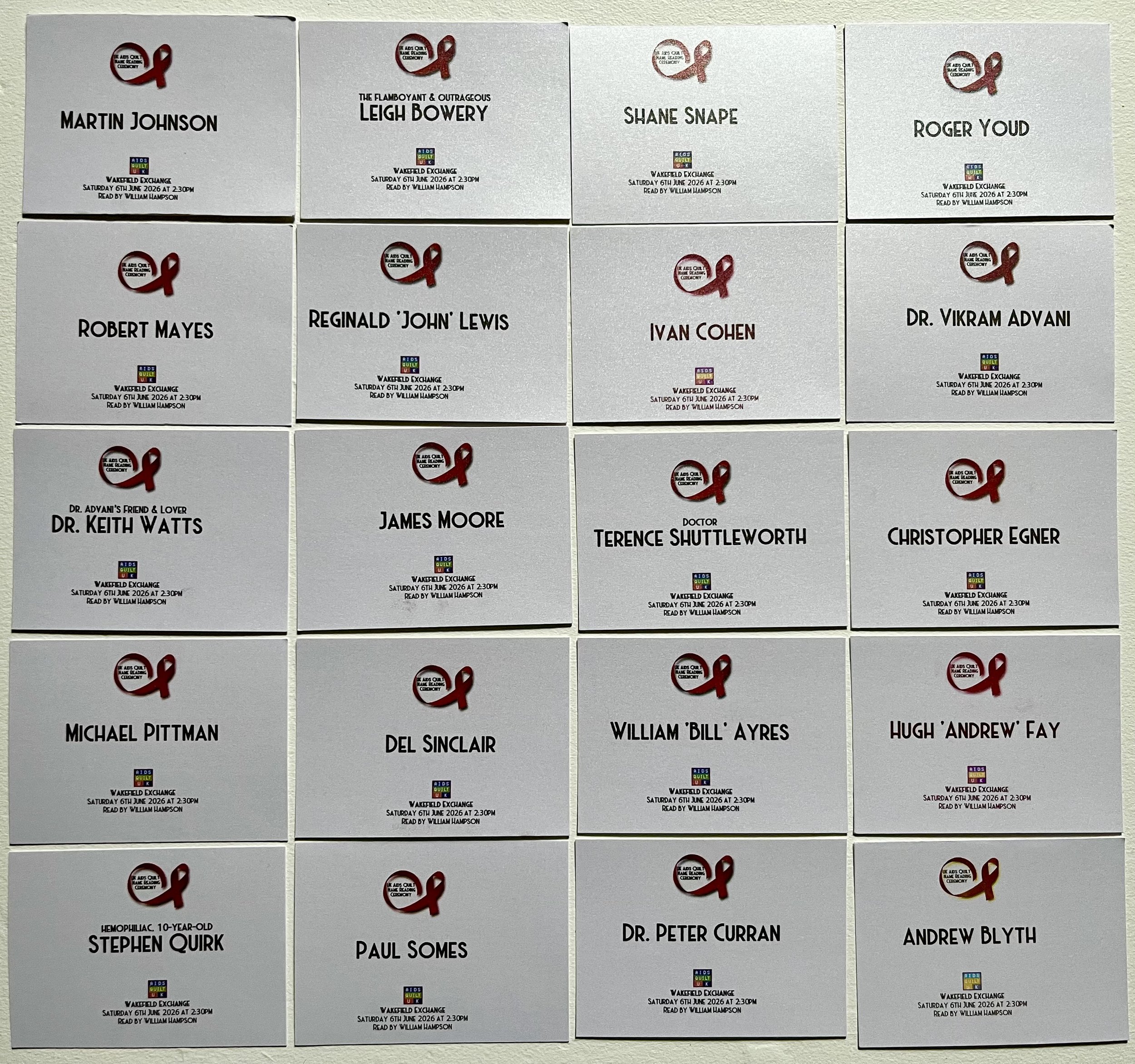
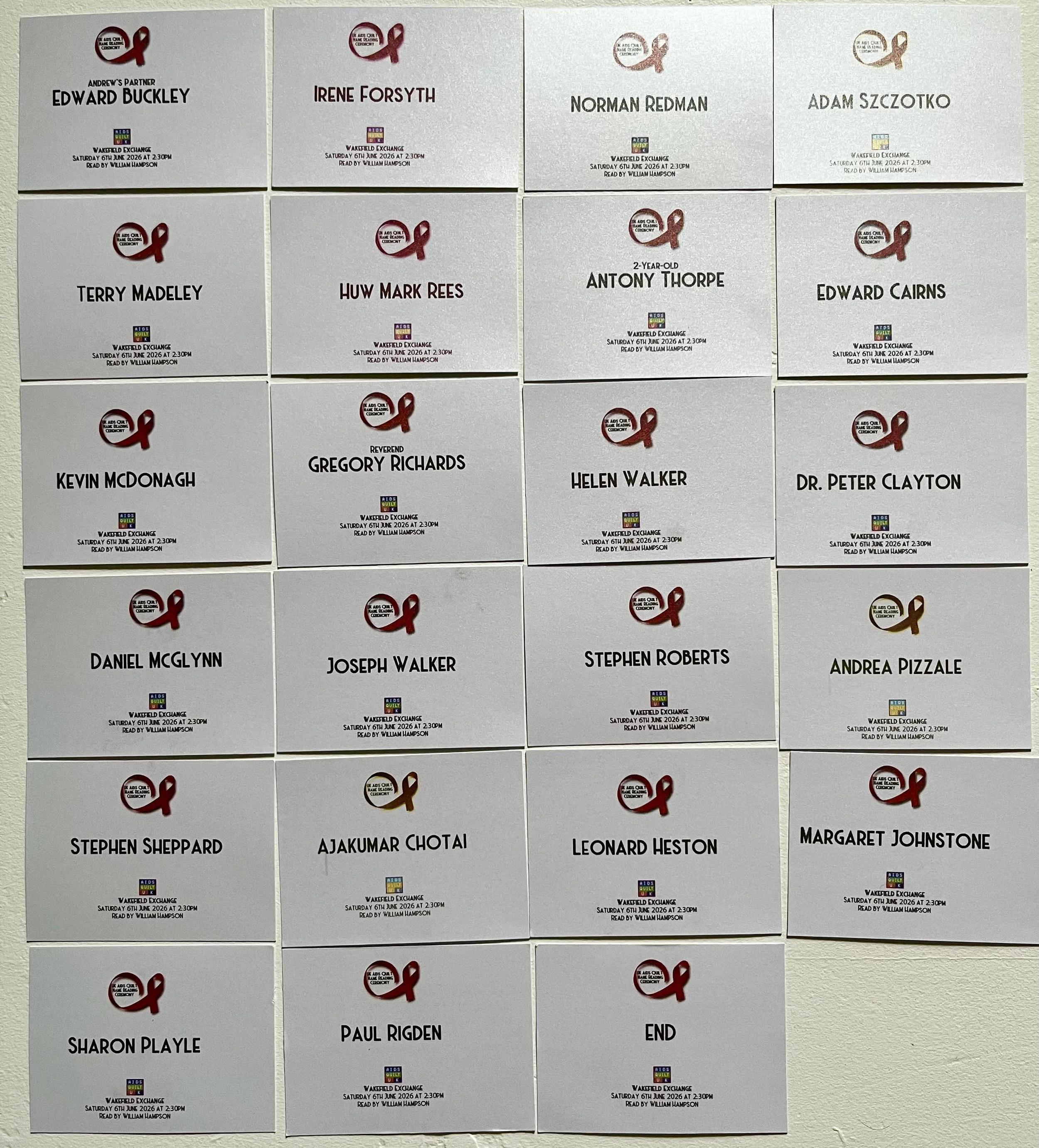
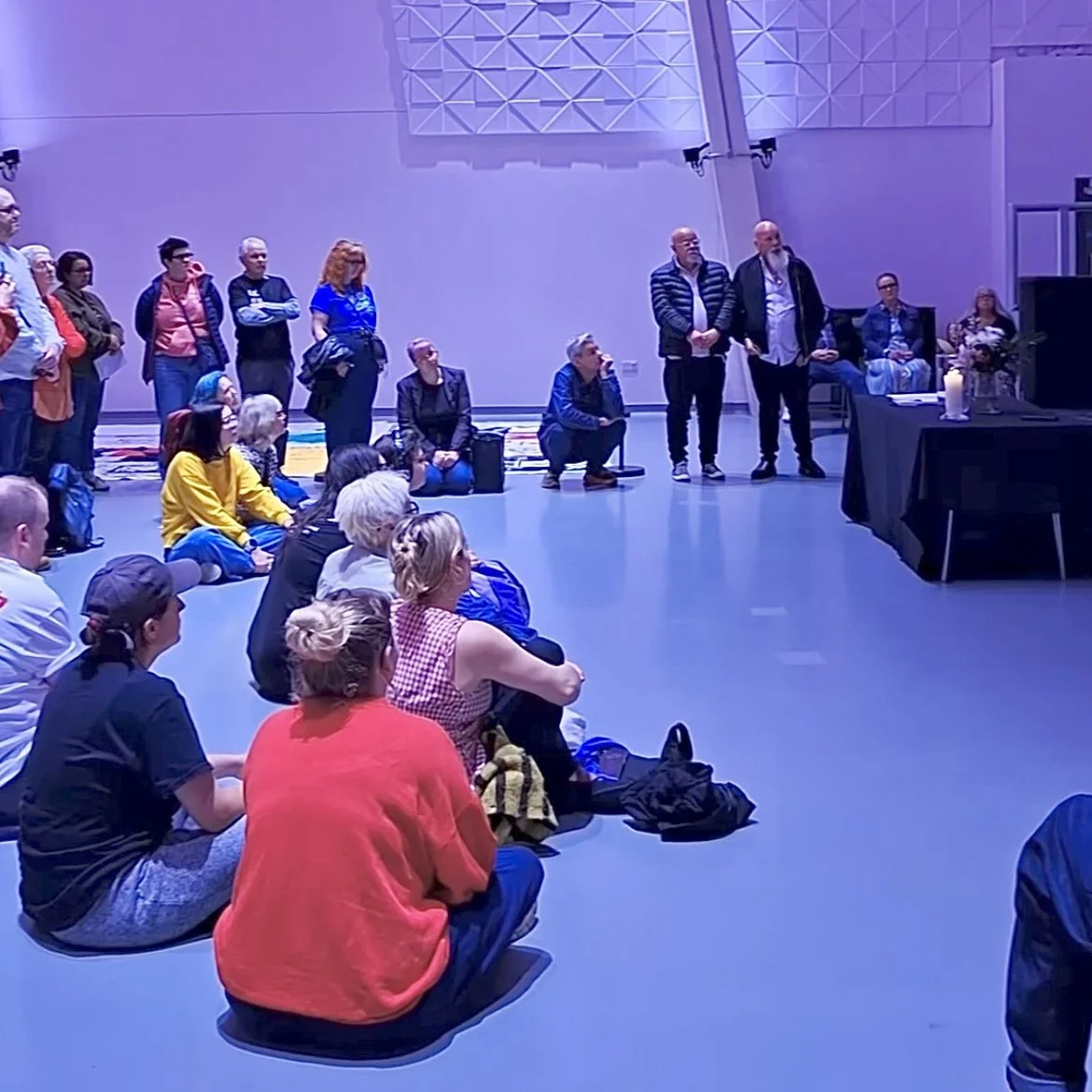
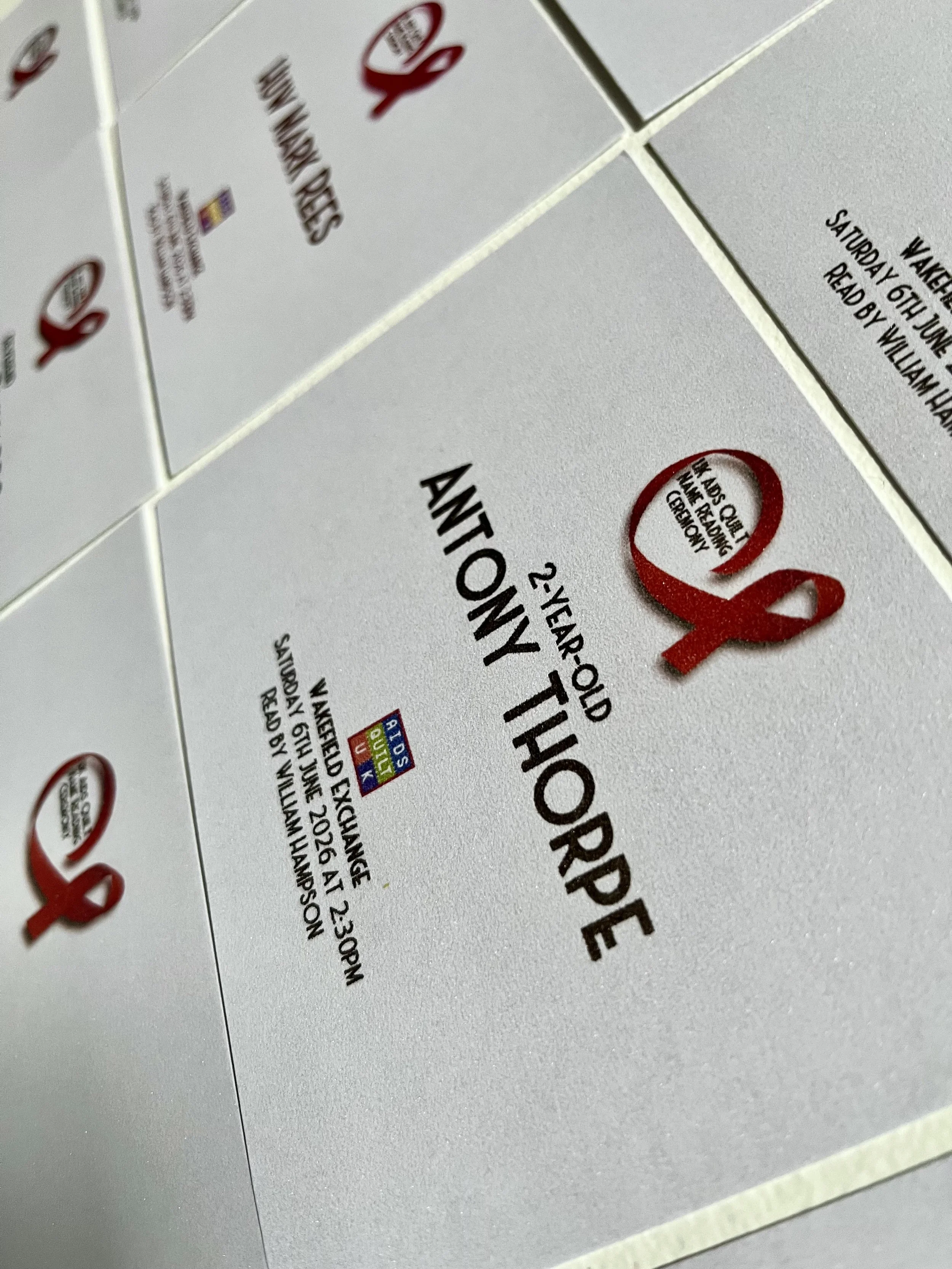
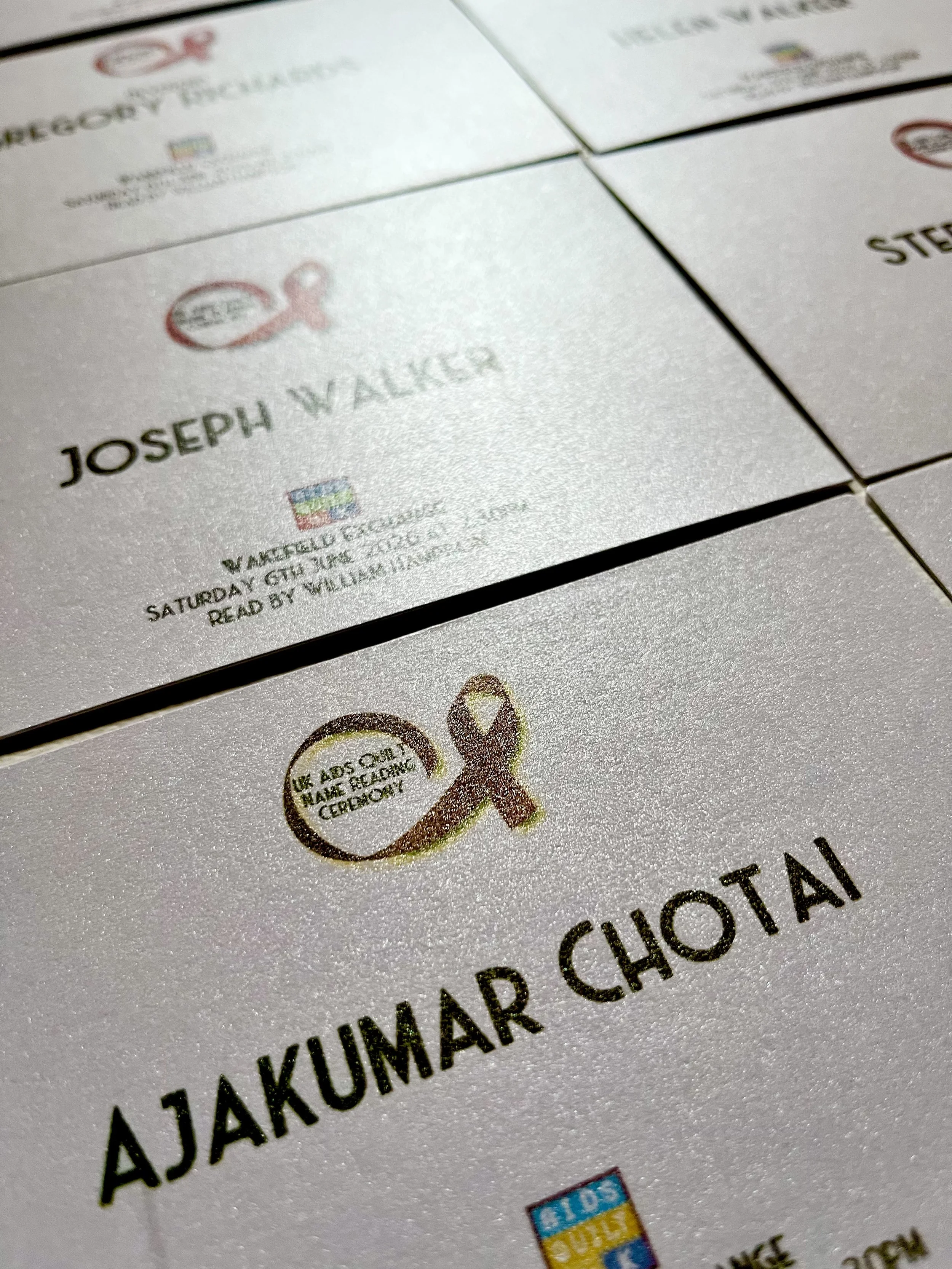
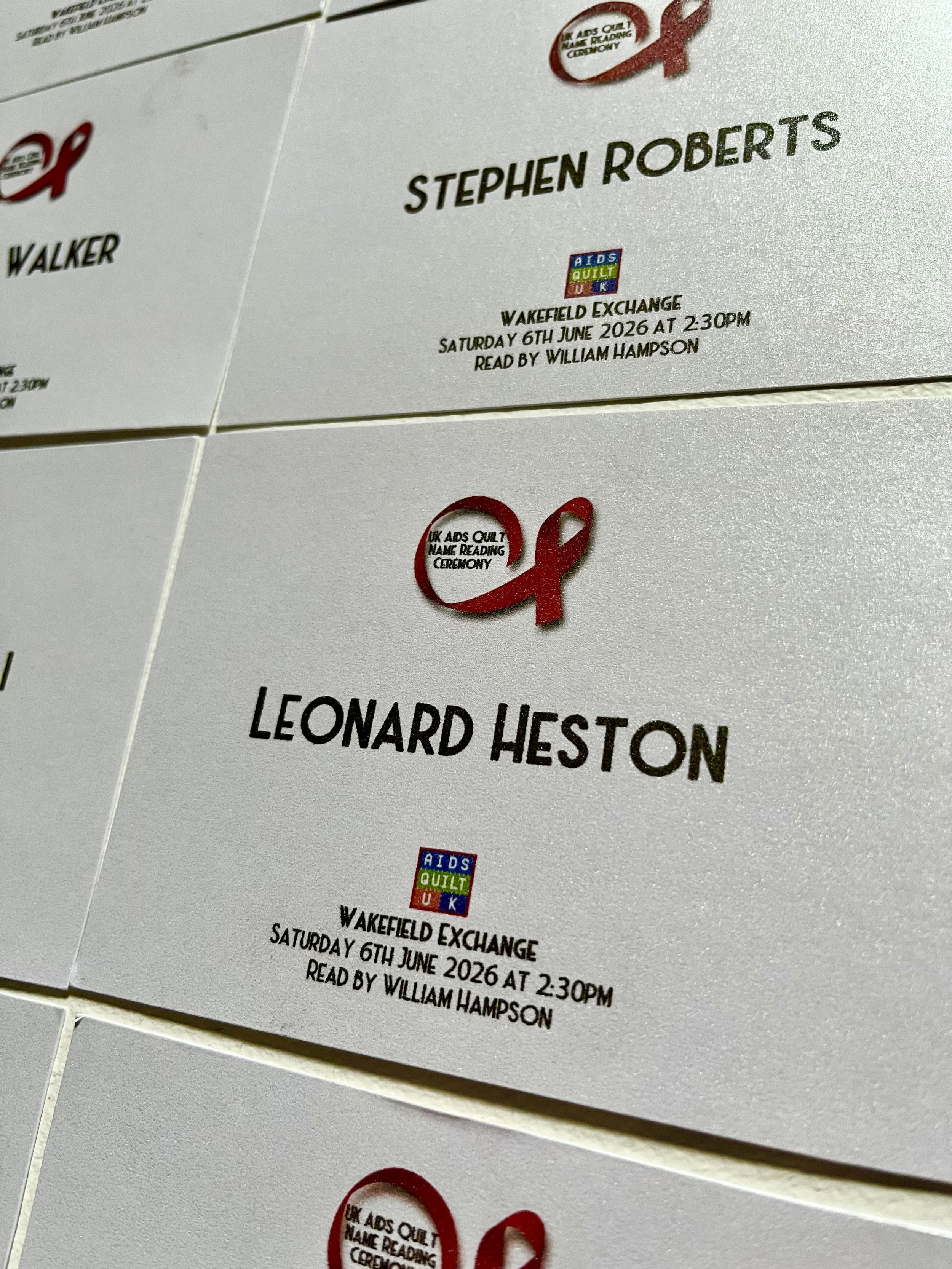
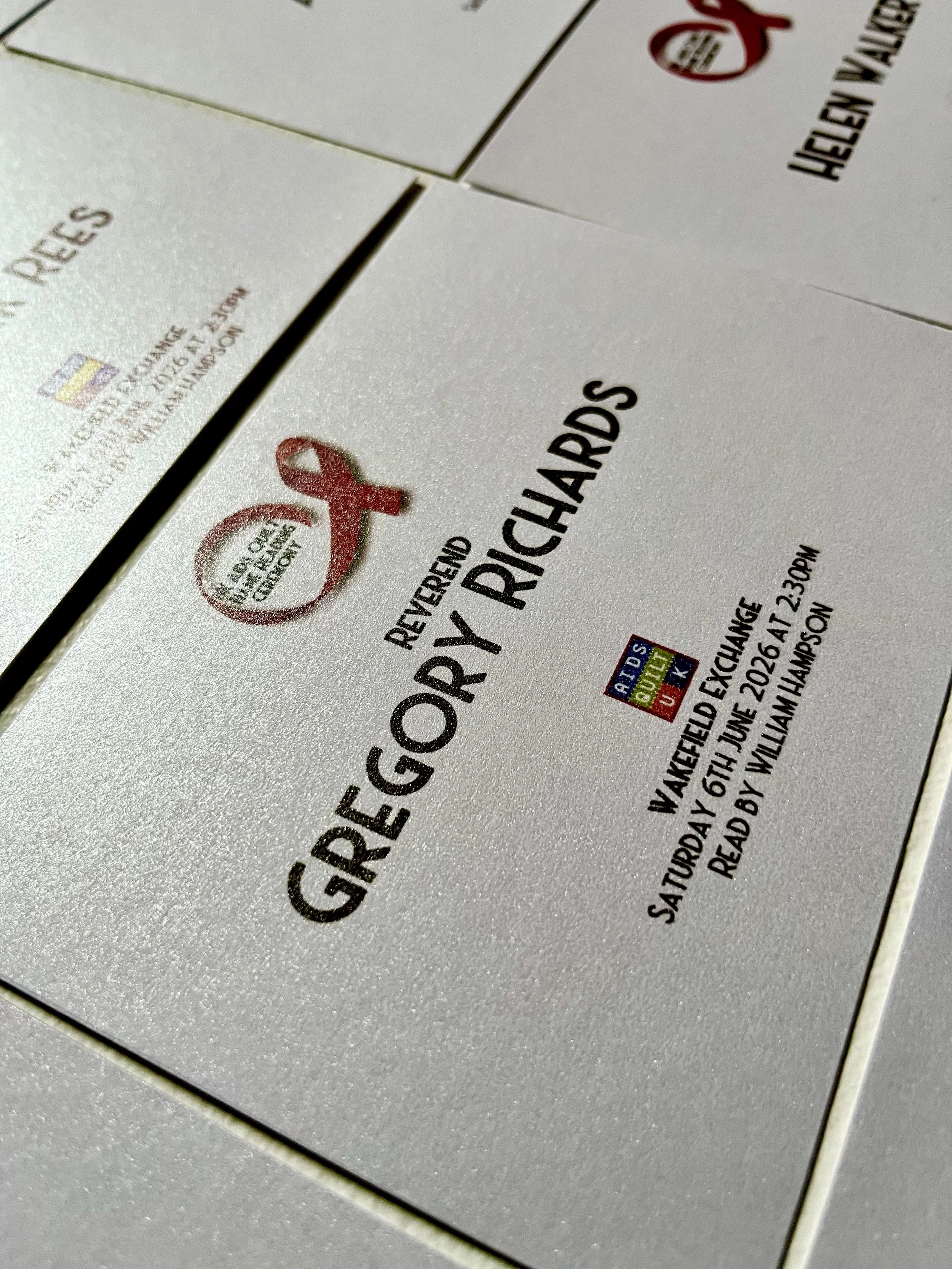
At the end of the quilt a stage had been erected and people aware of the Reading of Names Ceremony started to gather, wait and sit on the floor. The ceremony got underway at 14:30 with Siobhan, Chair of the AIDS Quilt UK Partnership, giving a welcome speech before inviting Kate of the AIDS Quilt UK to light a large candle. A poem followed titled ‘Quilt 48’ by a local poet and then the reading of the names.
Those reading names had been advised before arriving in Wakefield and prior to the ceremony on what to do if the emotion caught us while delivering the names. Nobody warned me about the tears that came before even stepping onto the stage; as soon as the readings began I couldn’t hold back the tears. I pretended to bend down to tie my shoelace, hidden by the seat in front, so I could wipe my eyes, giggling at myself, and then, once I’d composed myself, they came again.
I then spotted Carlton, Roger Youd’s brother, in the crowd and we exchanged a quiet nod—suddenly the responsibility I had willingly accepted to read those names felt even weightier. We went on stage in pairs; my buddy read his names eloquently and I followed.
It was only when I stood on that stage, in front of the microphone, that I could make out the people stood still either side of the quilt stretching down the entire hall of the Wakefield Exchange. I began delivering the names and, when I came to Roger Youd, I could not bring myself to look at either Carlton — the emotion threatened to overwhelm me and might have undermined the remaining 39 names — nor at the quilt organisers, whom I feared might see my call for an apology as spoiling the ceremony. That worry proved largely groundless: three fellow readers and AIDS Quilt UK volunteers came to me afterwards, each saying how significant it was to hear an explicit demand for an apology for Roger and his family, because they remembered his unlawful detention in Monsall Hospital in 1985.
Two took photos of my sweater that read '“Manchester Council Owes Roger Youd An Apology!” A member of the public who had observed the ceremony also approached me to say well done for calling for acknowledgement and an apology on Roger’s behalf, insisting it was long overdue after recalling his detention so vividly at the time.
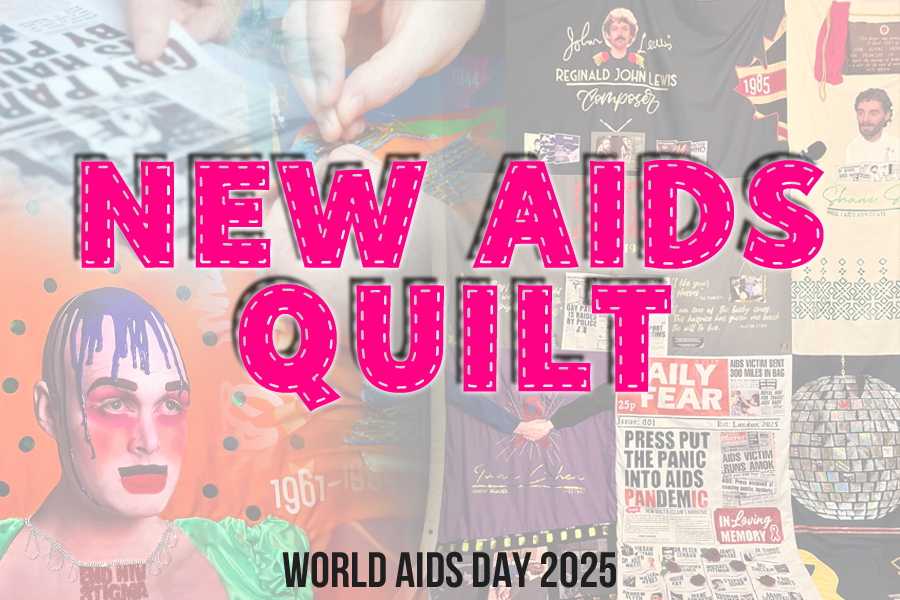
NEW AIDS QUILT: WAD25
For World AIDS Day 2025 I undertook an eight‑week challenge to create eight new AIDS panels, each a piece of a single 12 ft by 12 ft display‑ready quilt intended to join the UK AIDS Memorial Quilt. The panels commemorated individuals featured in my podcast "AIDS: The Lost Voices" individual names, dates and symbols chosen to reflect lives, activism and the quieter moments lost to the epidemic.